Check out more from the gallery below.
Stay informed on our latest news!

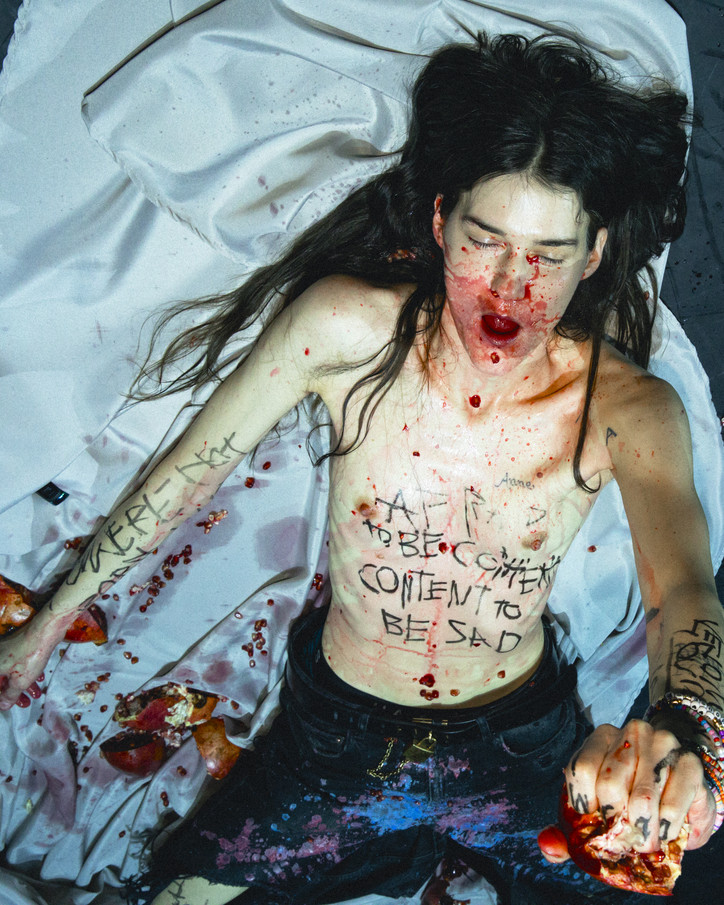
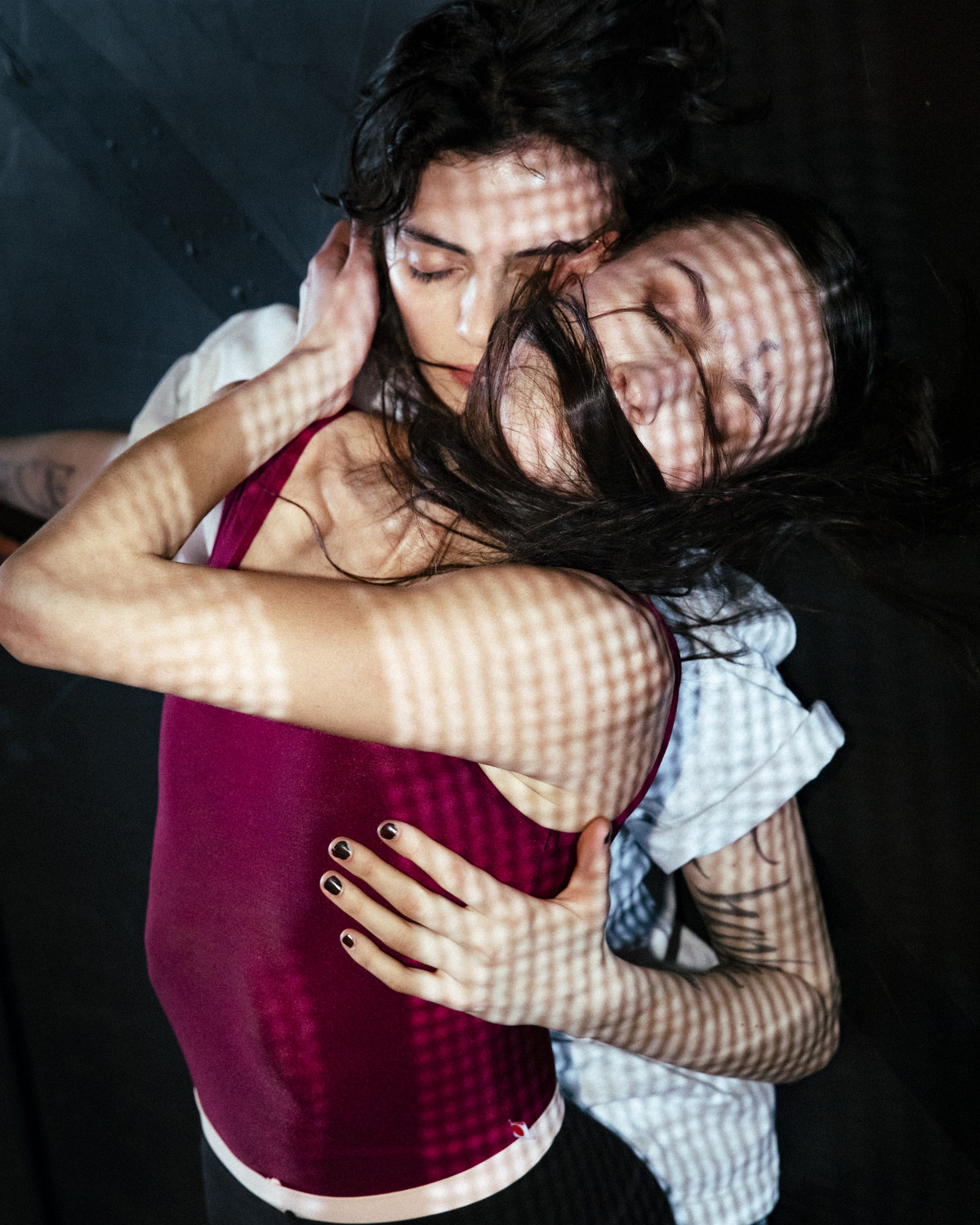
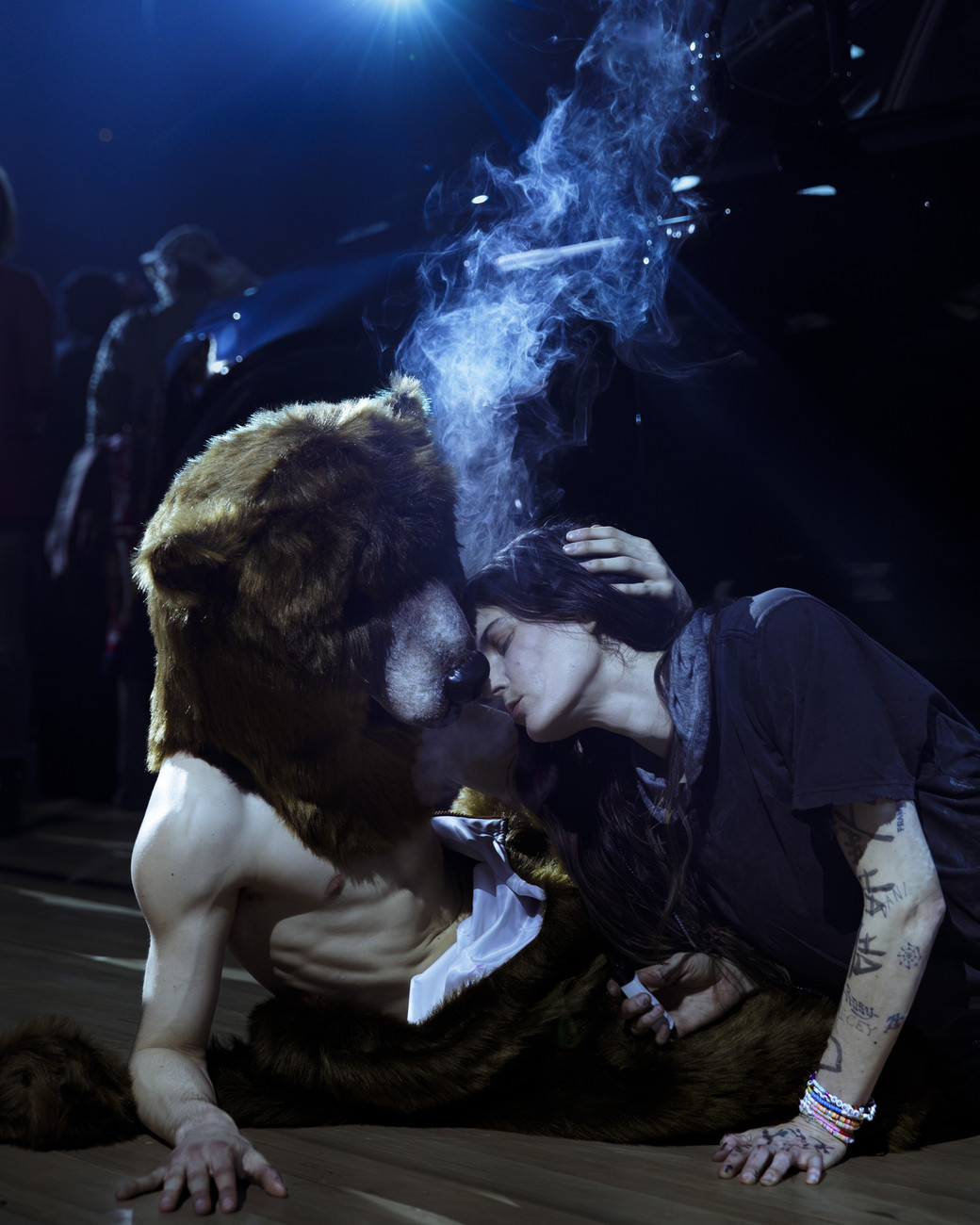
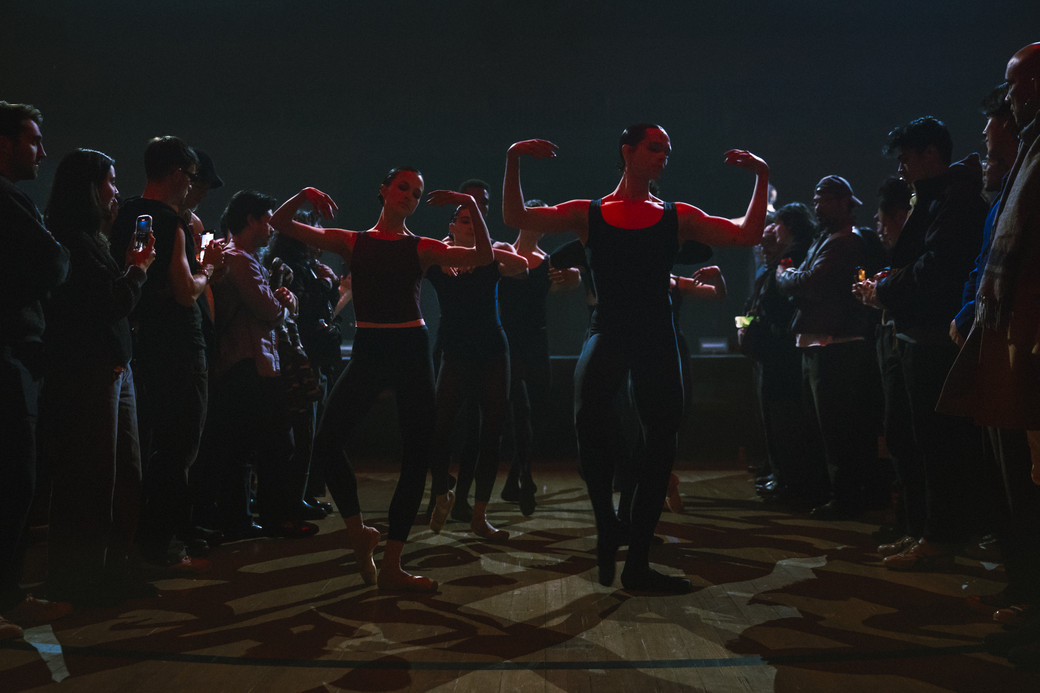
(PICTURED Eliza Douglas)
DOOM: House of Hope carries forward some conceptual undercurrents of past projects, like her celebrated exhibition and performance Faust for the German Pavilion at the 2017 Venice Biennale, for which she was awarded the Golden Lion Award. Faust drew its gravity in large part from Imhof’s repeated cast of model-esque performers, whose movements upset the dynamics of the grand, fascist-era space. DOOM follows a similar formula of inversions, but with extravagant American flair.
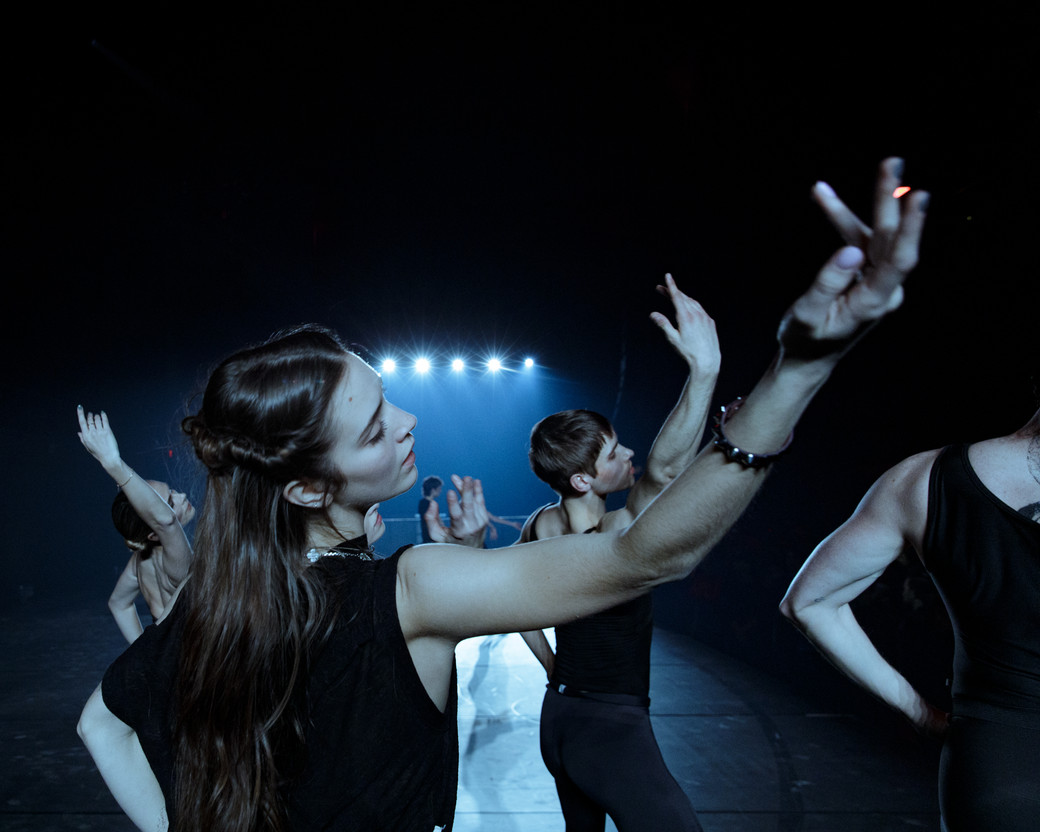
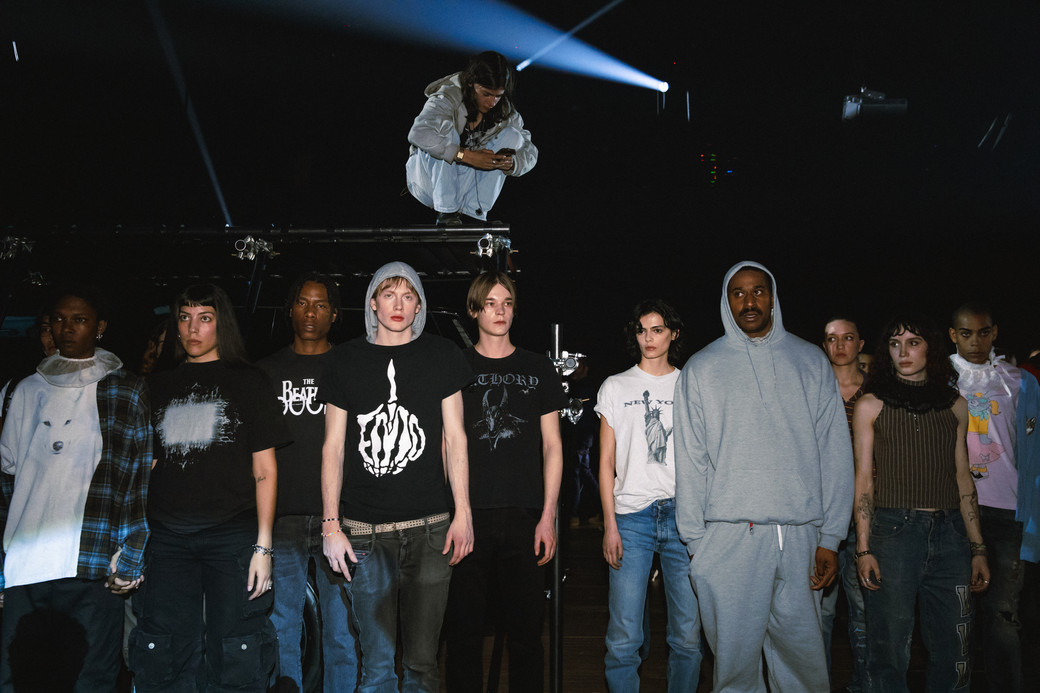
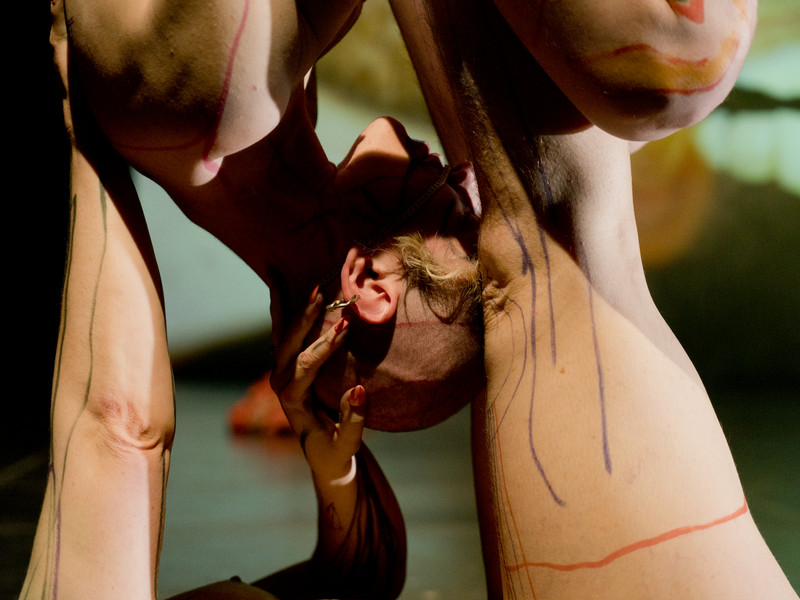
As a choreographer with a distinct movement vernacular, Imhof is especially sensitive to the subtle power structures at play on the body as it moves through contemporary space, all while dancing on the distinctions between disciplines, professions, and creative hierarchies. Drawing on Imhof’s signature aesthetic universe, DOOM was propelled by a squadron of about 45 performers, enacting the trappings and tropes of identity with visual cues lifted from the Berlin nightclub scene and an ostensibly 21st century-flavored malaise: beautiful, disaffected youth as Imhof’s primary media.


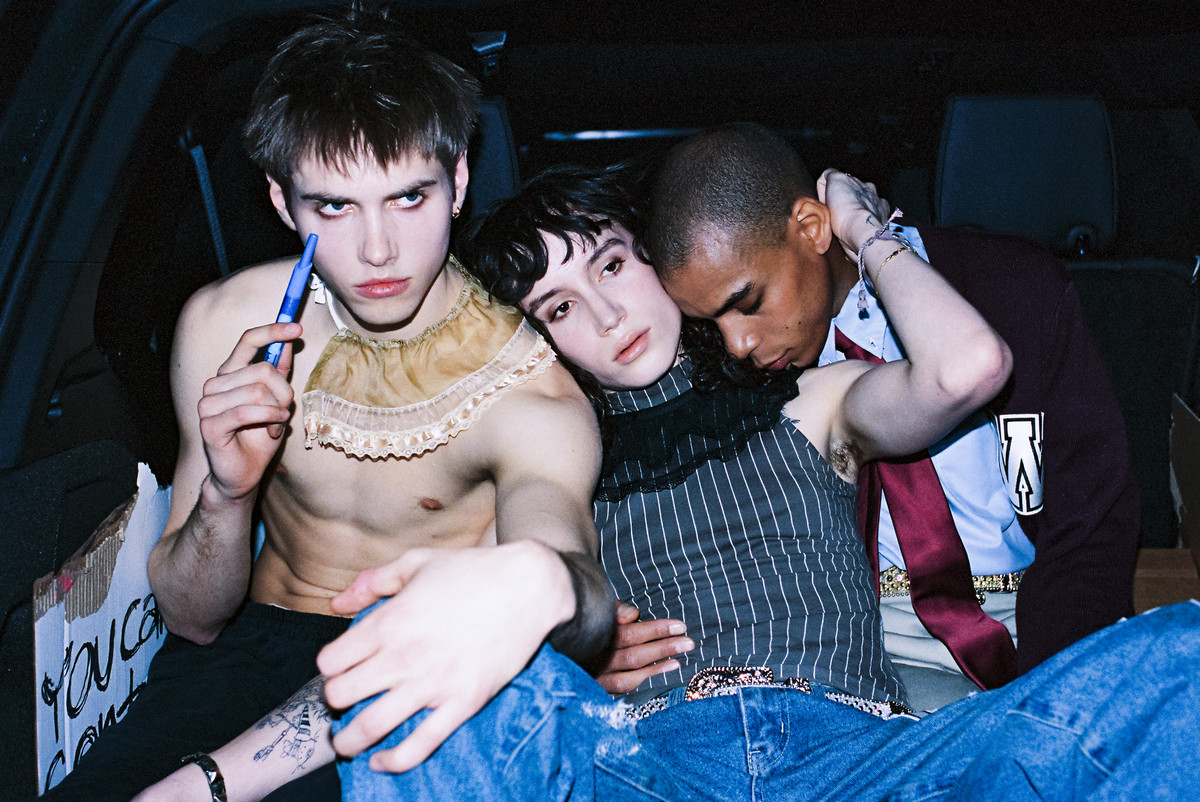
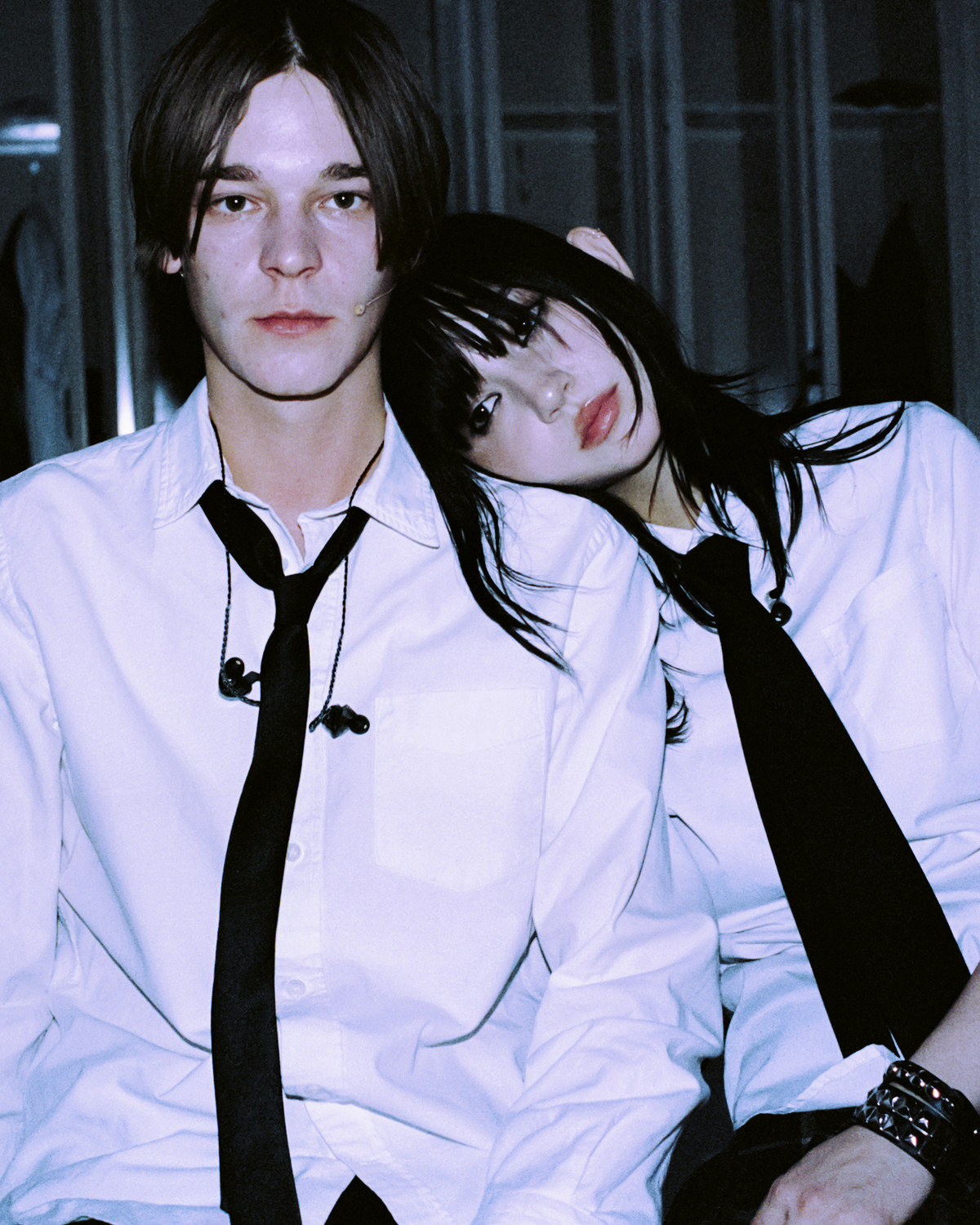
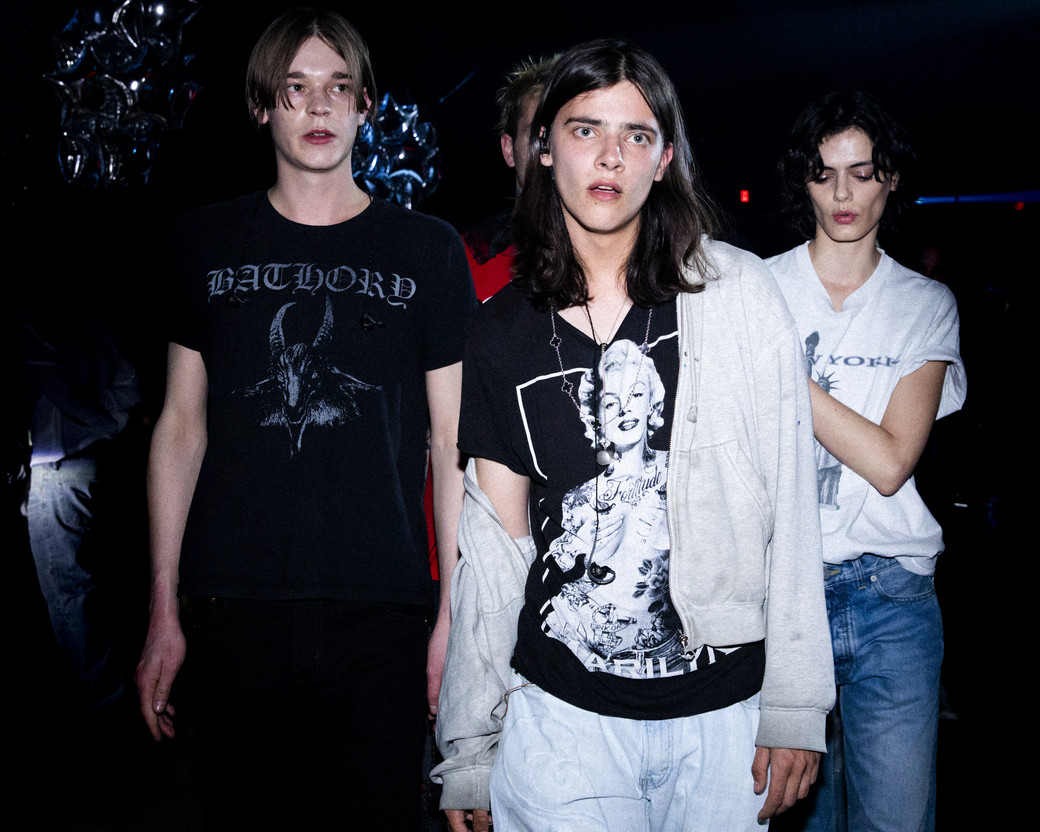
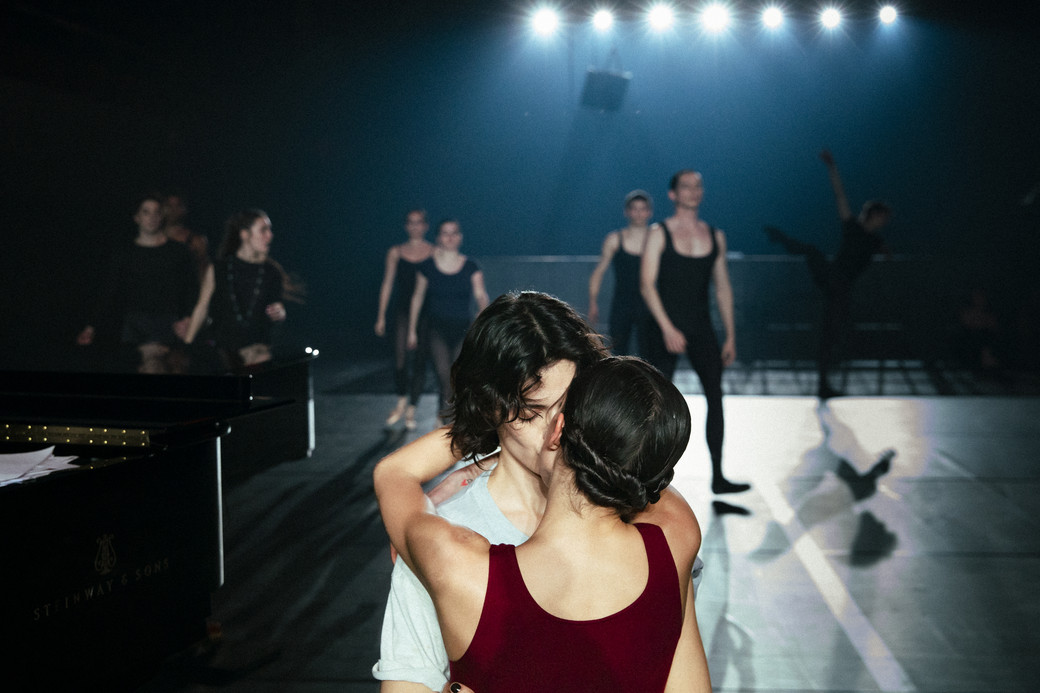
(LEFT Toon Lobach, Efron Danzig, and Jourdynn Sherman RIGHT Casper von Bulow (center))
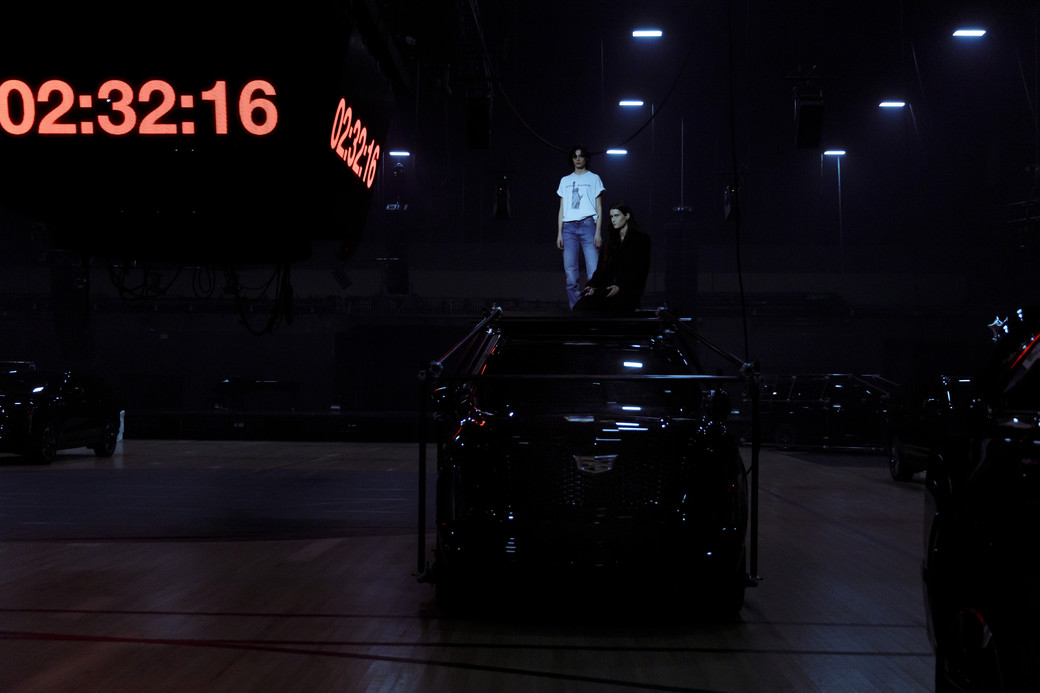
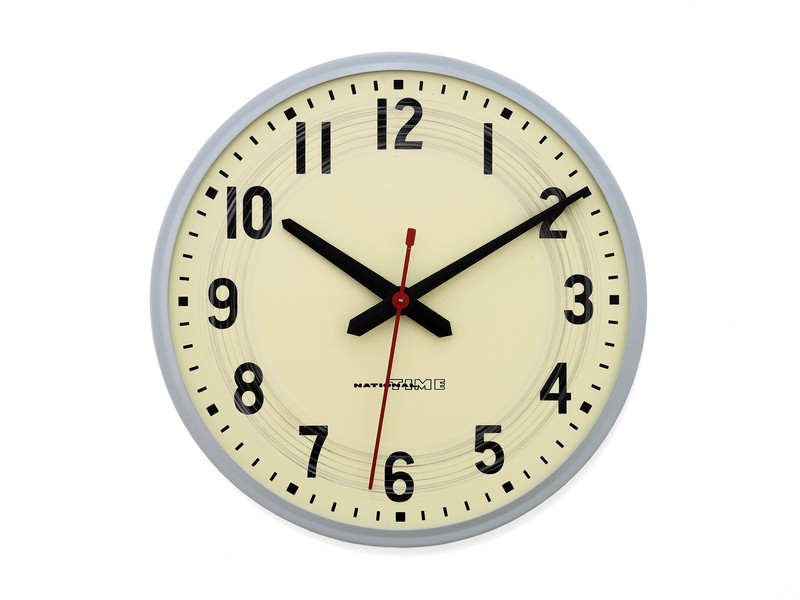
The massive Armory drill hall, so soaring and dimly lit that at points you could not see its end, featured a Jumbotron at its center ticking down the three-hour run of show like a Doomsday clock, certainly lifting from Matthew Barney’s recent project Secondary. Dispersed across the floor like a fleet of black military tanks were 26 Cadillac Escalades, the American presidential vehicle of choice.
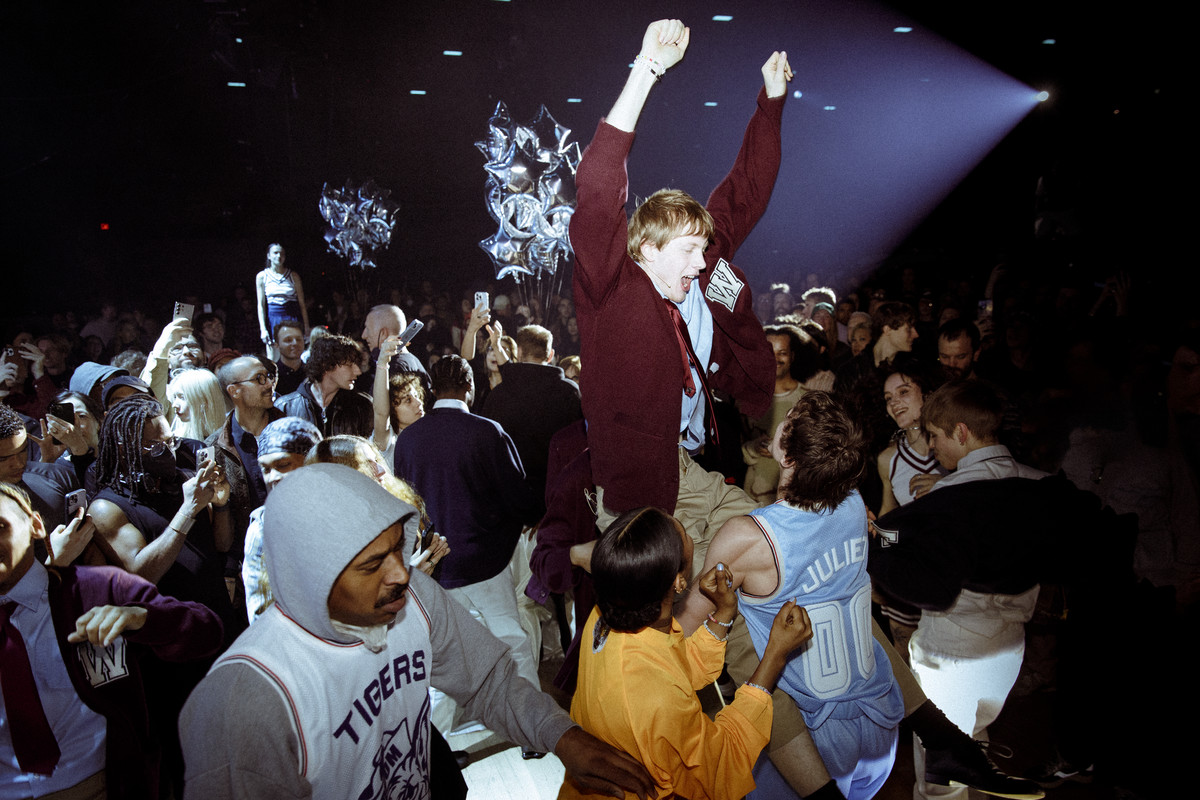
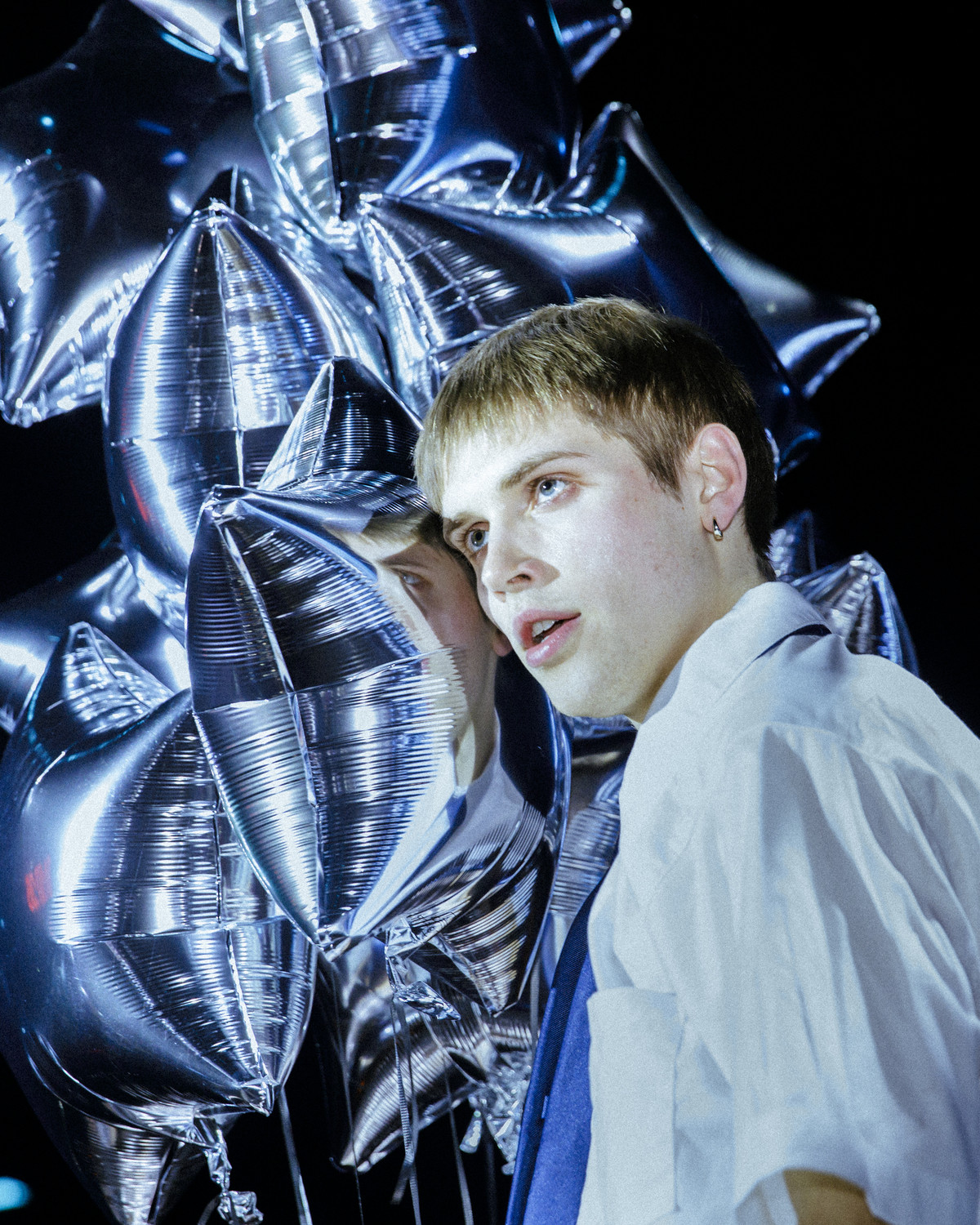
After a long wait, the back wall of the Armory parted and Imhof’s cast entered on a literal catwalk of stage risers. The Jumbotron began ticking down. Climbing atop the Escalades, performers chanted over a dark soundscape, “We hope, we’re doomed,” and “I want discipline, I won’t disappear.” The barricades were removed and audience members flooded into the hall to follow the line of performers. The unexpected free-roam offered a moment of exhilaration; where are we supposed to go? I meandered over to an arrangement on the far right wall of clothed tables clad with star-shaped balloons and silver tinsel strung across the wall, where folks were seated at tables as if at a prom. Are they the audience or part of the performance? Am I supposed to be here right now? Either way, being destabilized and disoriented is fun. From the massive SUVs to the dueling high school sports team paraphernalia, Imhof hammed up the Americana factor so hard that it brought some levity to a rather melancholic project.


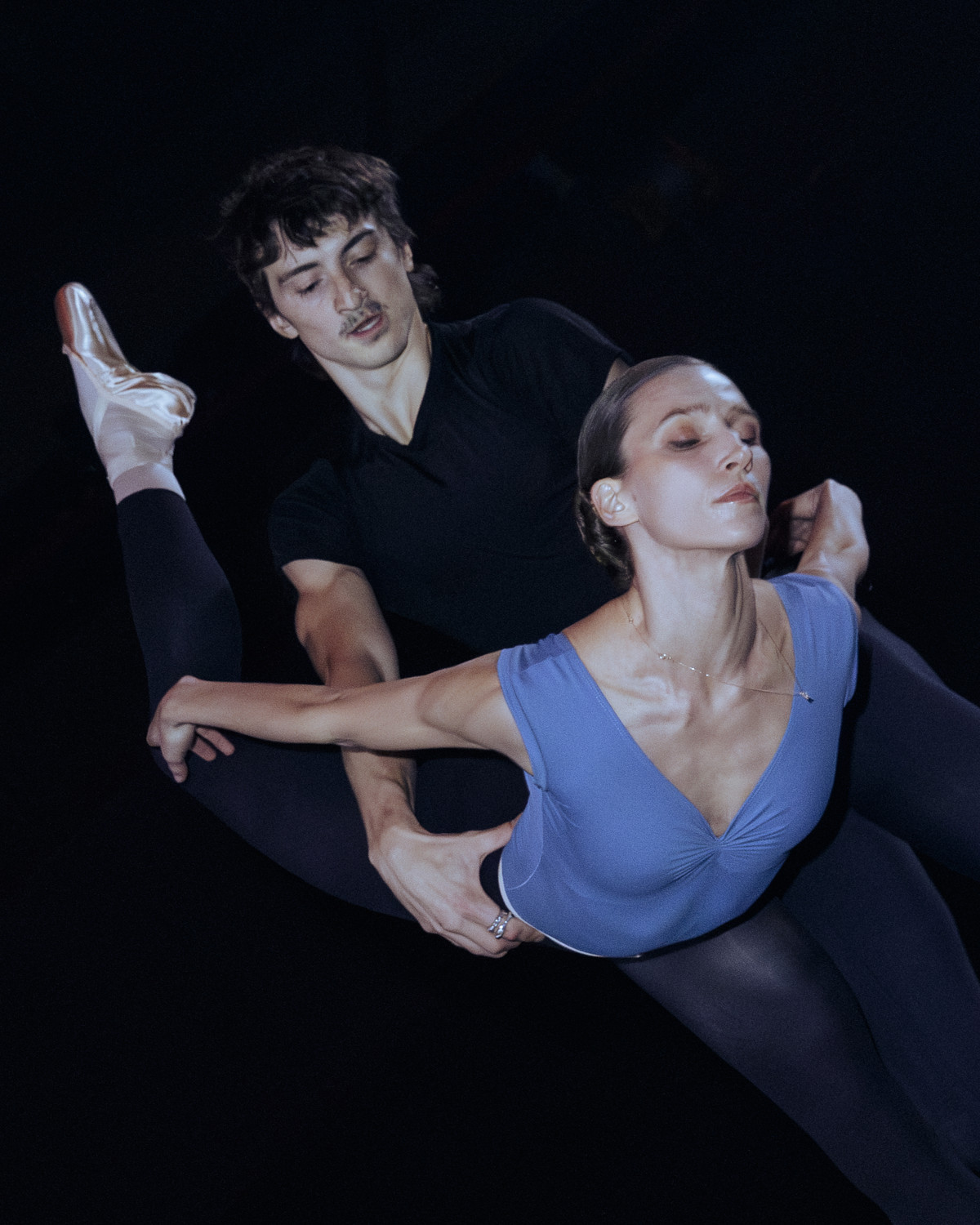
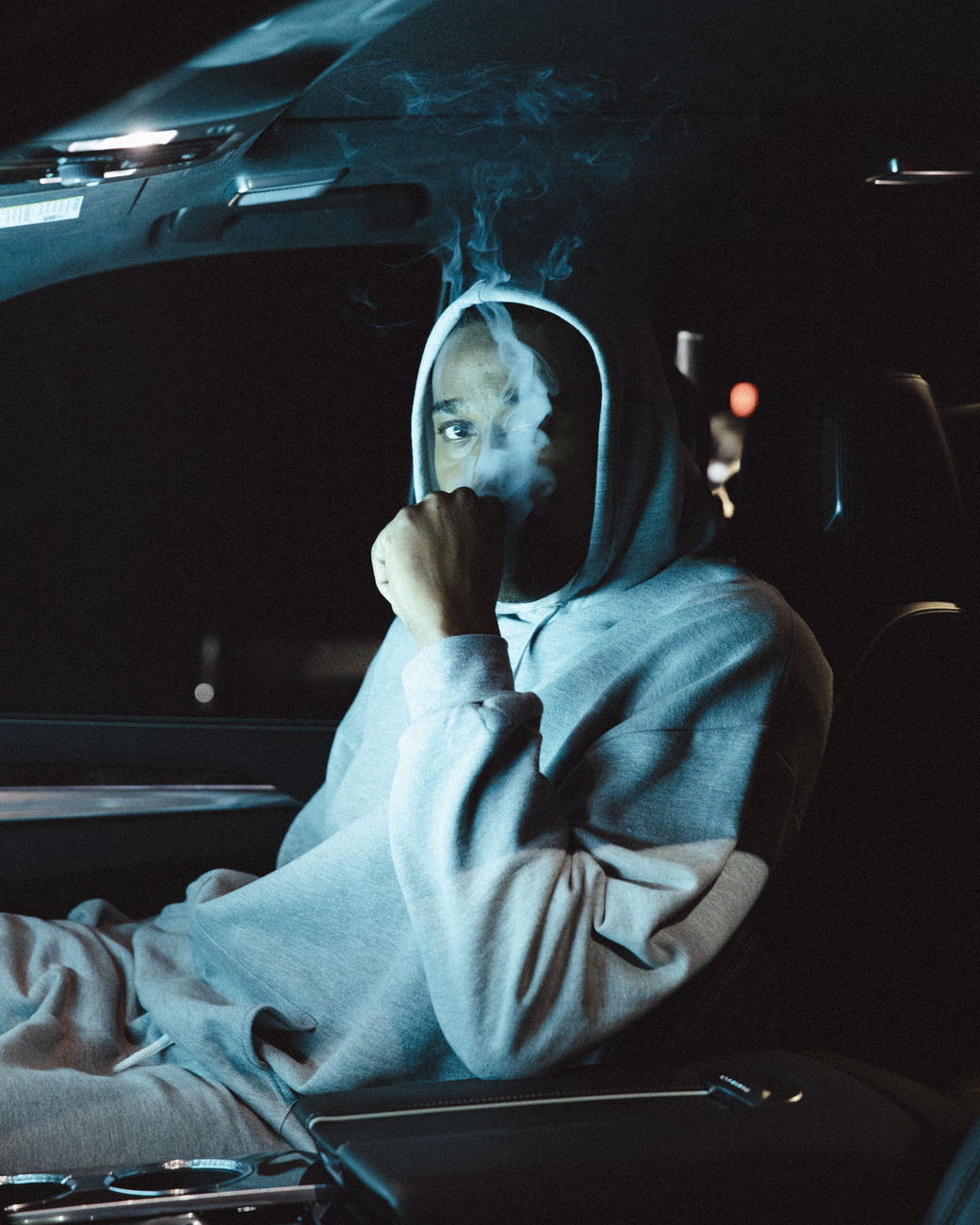
(LEFT Toon Lobach RIGHT Michael de la Nuez and Devon Teuscher)
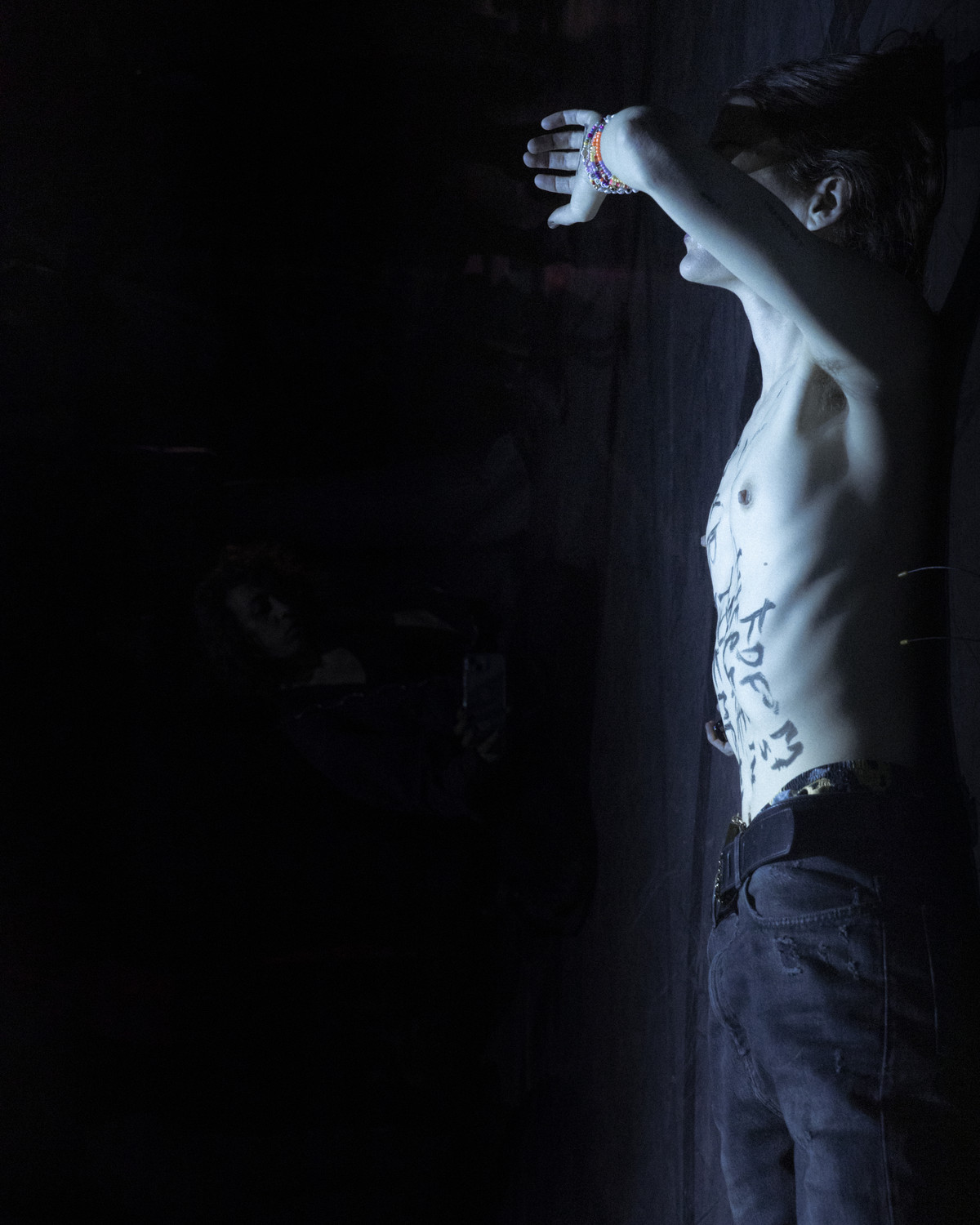
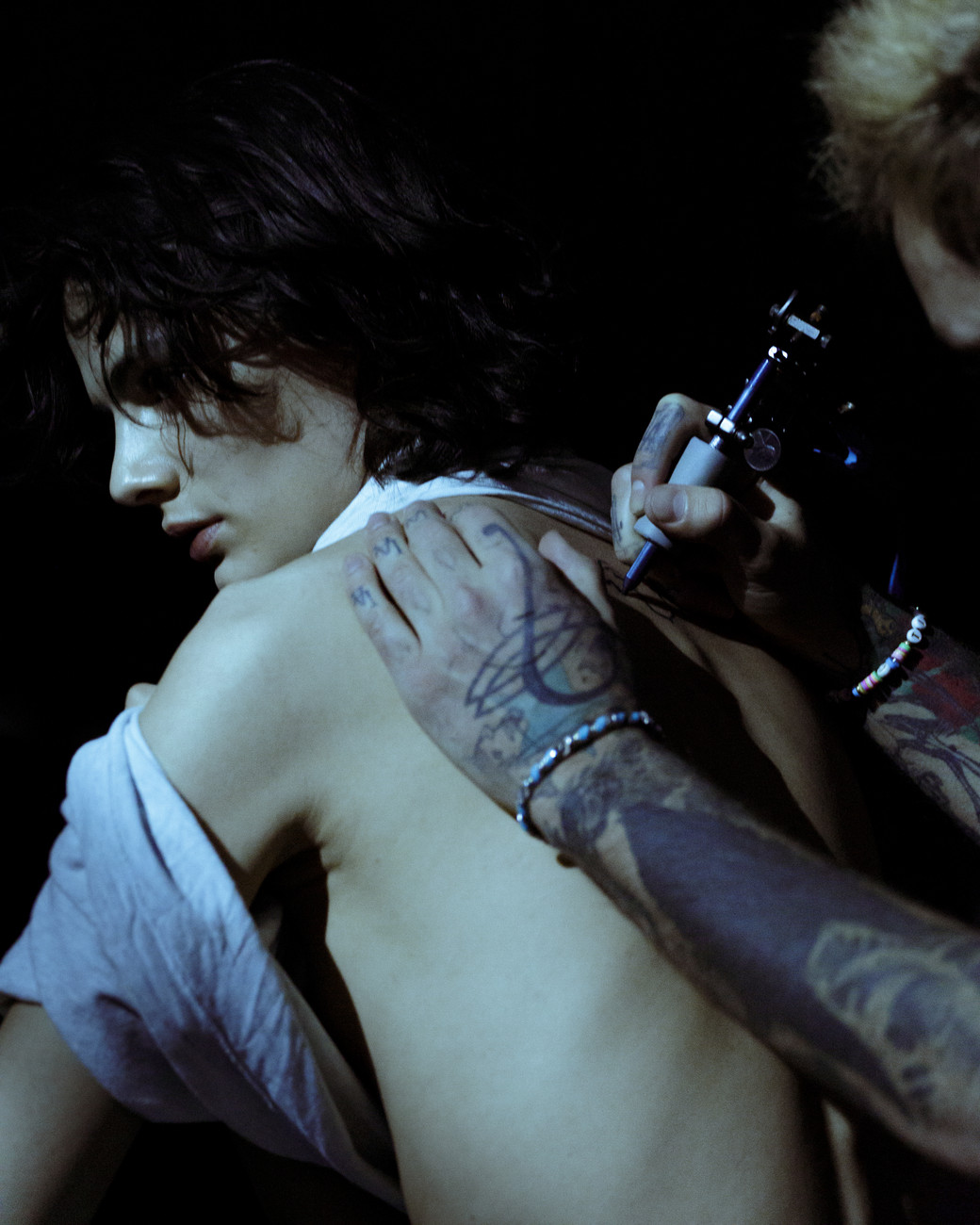
More narrative in nature than most of Imhof’s works, DOOM takes shape through the reverse unfolding of Romeo and Juliet—beginning with their double suicide— performed by rotating, gender-bending sets of actors. Certain Shakespearean lines are distinct, but interspersed with enough modern randomness that the unfolding of scenes is rendered surreal. There was certainly an occasional cringe-factor that made some moments difficult to watch. I recoiled when Talia Ryder recited Juliet’s final lines and, instead of stabbing herself, downed a nip of Fireball, then launched into a sedated rendition of Jeremih’s “Paradise,” all while nearby another actor was getting their back tattooed. But as the audience meandered around Imhof’s mise-en-scène, there were many more understated activities to see and hear. Lines from Romeo and Juliet were broken up with Arthur Rimbaud, the obituaries of dance critics Clive Barnes and Arlene Croce, sections of Jill Johnston’s The Disintegration of a Critic, and passages from infamous pieces of performance criticism across The New York Times, The New Yorker, and The Guardian.
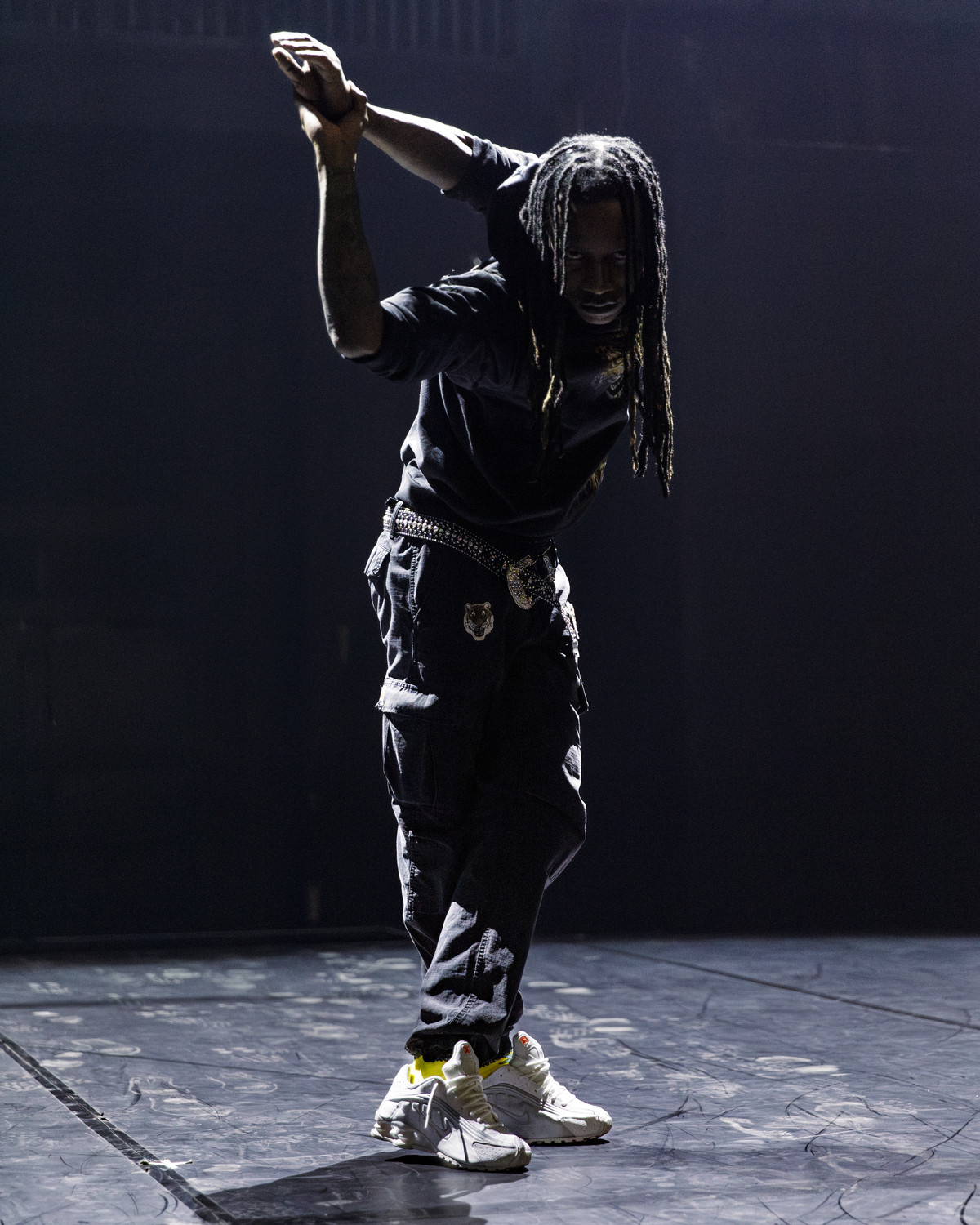
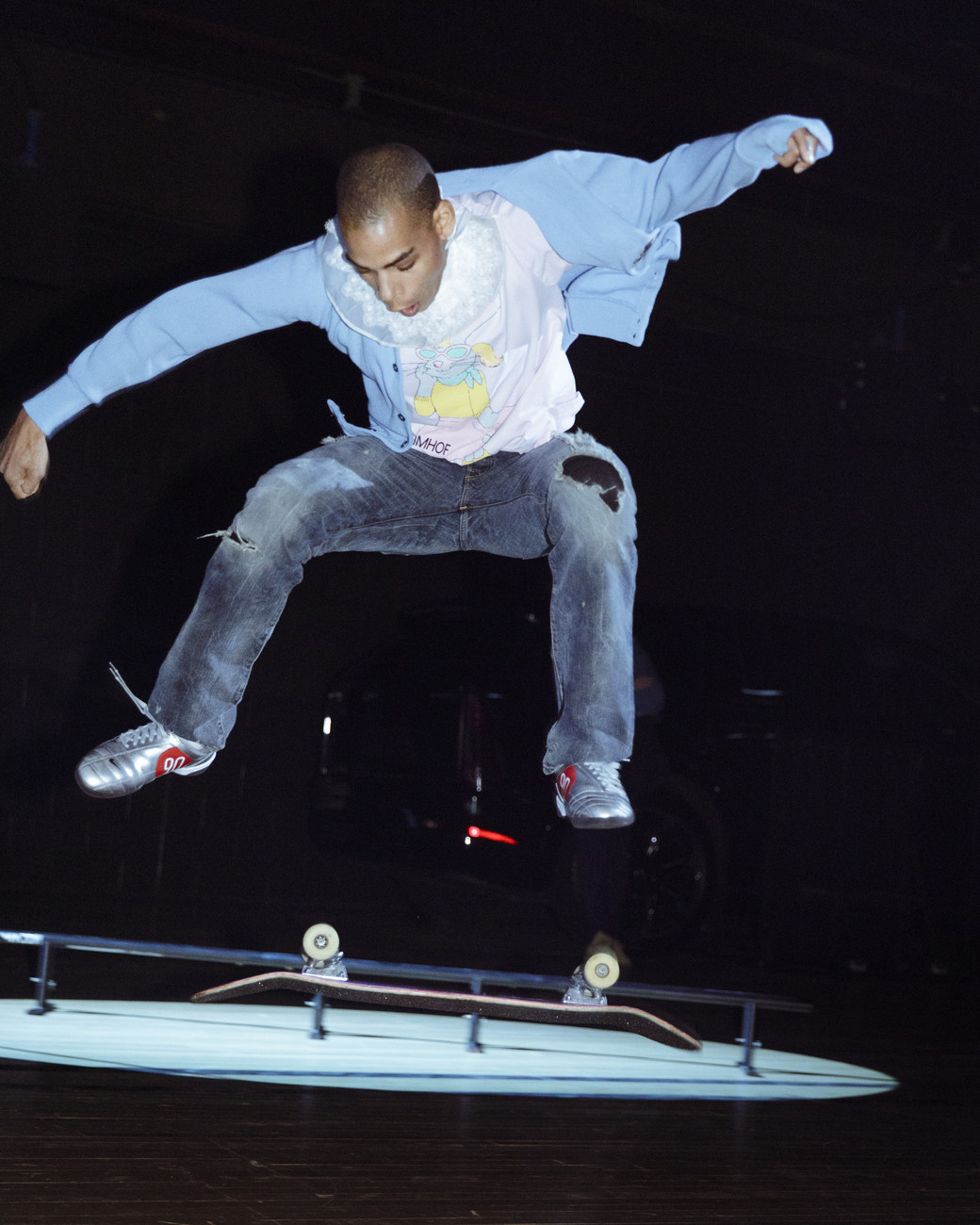
Performers draped themselves across the Escalade roofs, whispering, vaping, and texting in statuesque posture. Dancers from American Ballet Theater, Flexn, and Line Dance communities glided across the gymnasium flooring, some moments live-streamed (but not recorded) to the Jumbotron from performers’ phones. Slowed renditions of Radiohead’s Talk Show Host and The Doors’ The End formed a moody sonic backdrop. Off to the sides of the drill hall, audience members wandered into staged locker rooms where performers enacted more intimate scenes, or changed clothes and ran with purpose to the next act, all of it dripping with voyeurism. Together we drifted in Imhof’s dark, self-contained world, at times over-the-top and trying-too-hard but often rebounding into schmaltzy, entertaining, even humorous territory.


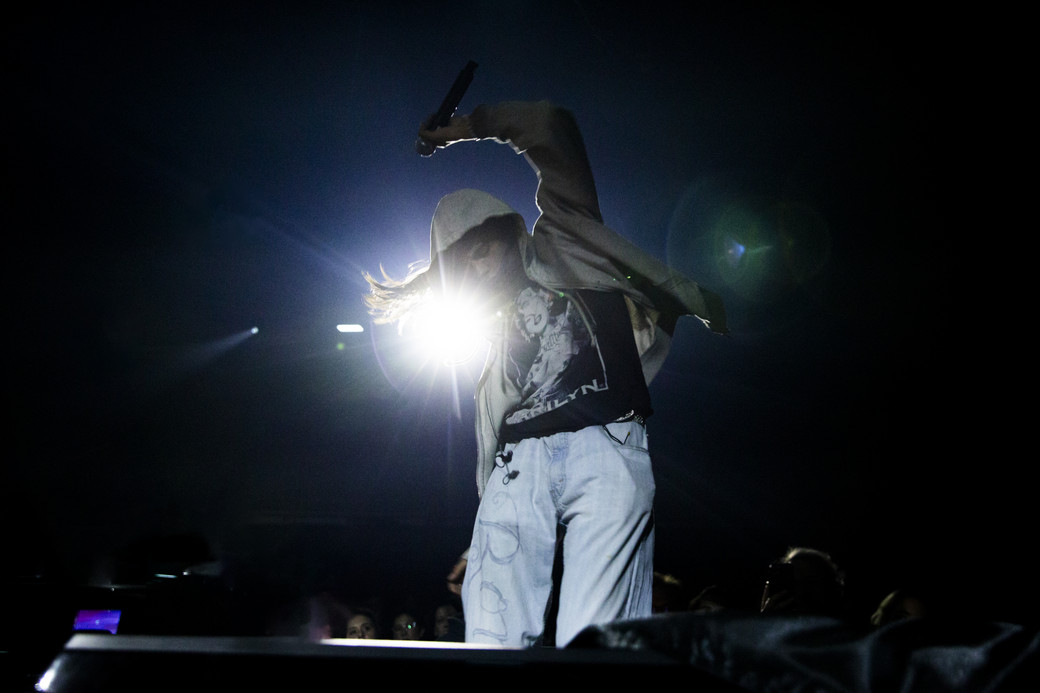
(LEFT Jakob Eilinghoff and Lia Wang RIGHT Eliza Douglas)
Clearly DOOM is meant less to entertain than to challenge—even upset—its audience. The three-hour runtime was an endurance exercise in itself, but as durational performance goes, I witnessed many people taking breaks, sitting on the floor, slouching into chairs, ducking out of the drill hall for air or water, and coming back in for more. The format also enjoyably allowed friends to mill around and check in with each other, finding conversational pockets and small nooks in the set, inviting curiosity and exploration. Sometimes this was rewarded with a memorable scene: in my head I can still see a seated actor in a bear mascot suit cradling Eliza Douglas’ head in their lap while she vapes. Or the tinny rogue sounds of a pirate radio station heard through an open Escalade trunk.
In moments where the performances lulled, it became most interesting to watch the movement of the audience. I appreciated the migration of bodies from one theatrical point to the next; at least for shorties like me, this democratized the viewing and gave more opportunities for a decent vantage point. The evening was also an amusing theater of rich Upper East Side parents chasing around clubby, androgynous youth. Self-aware of the Instagram image archive that the project will produce, at one point a monologue ensues deriding perpetual photo-takers and the contemporary use of cameras. In that moment, funnily, everyone in the audience put their phones away, at least for a little while.


(LEFT Remy Young and Sihana Shalaj RIGHT Xavier Days)
Imhof also gives unusually high levels of agency to her performers. They are credited multiple times over in the show notes: in musical credits, quoted sources, design, and so on. They carried through the space easily, relaxed, seemingly un-demanded of. As Aruna D’Souza writes in her review, Imhof’s notes for her performers might be, “Hold a pose until you are bored with it,” or “move until the gesture is pathetic or ridiculous and then push on further past that point.” One of the performers, Lia Wang, plays her own music with a full band, and the pianist Jacob Madden performs some of his original compositions.
“It was kind of a fashion show, but that’s okay,” a friend responded when I asked for her opinion of the opening night performance. Yeah, I thought, it was okay actually, because it never purported vehemently to be anything that it isn’t. In all of its sullen melodrama, DOOM put on full display Imhof’s unique sensitivity to the shifting power dynamics of viewership. To me, the project exists fully in the realm of theater: whether it is opera, ballet, fashion show, or concert, it is most certainly dramaturgy. I heard some comments indicating that viewers felt isolated by the experience; but perhaps this is precisely the point. In contemporary moments of heightened isolation, must we always strive to be the insiders? Can we afford to simply be onlookers?
As a grand and dizzying spectacle, DOOM uniquely platforms the acts and affects of collective youth apathy and its evasive subcultures with impressive degrees of authenticity. She feels very much in intimate community with her performers. And with them, Imhof explores the darker underbellies of nostalgia and how it intertwines with the longing for a better world. DOOM is certainly punctuated with overwrought moments, but nonetheless, to me the work is ultimately an enjoyable momentary embrace of the death drive and apocalyptic turn, especially as we perform optimism and future-oriented creative work on the daily. When else do we have full permission to turn backwards towards the sometimes embarrassing but equally lovely angst of our youth?

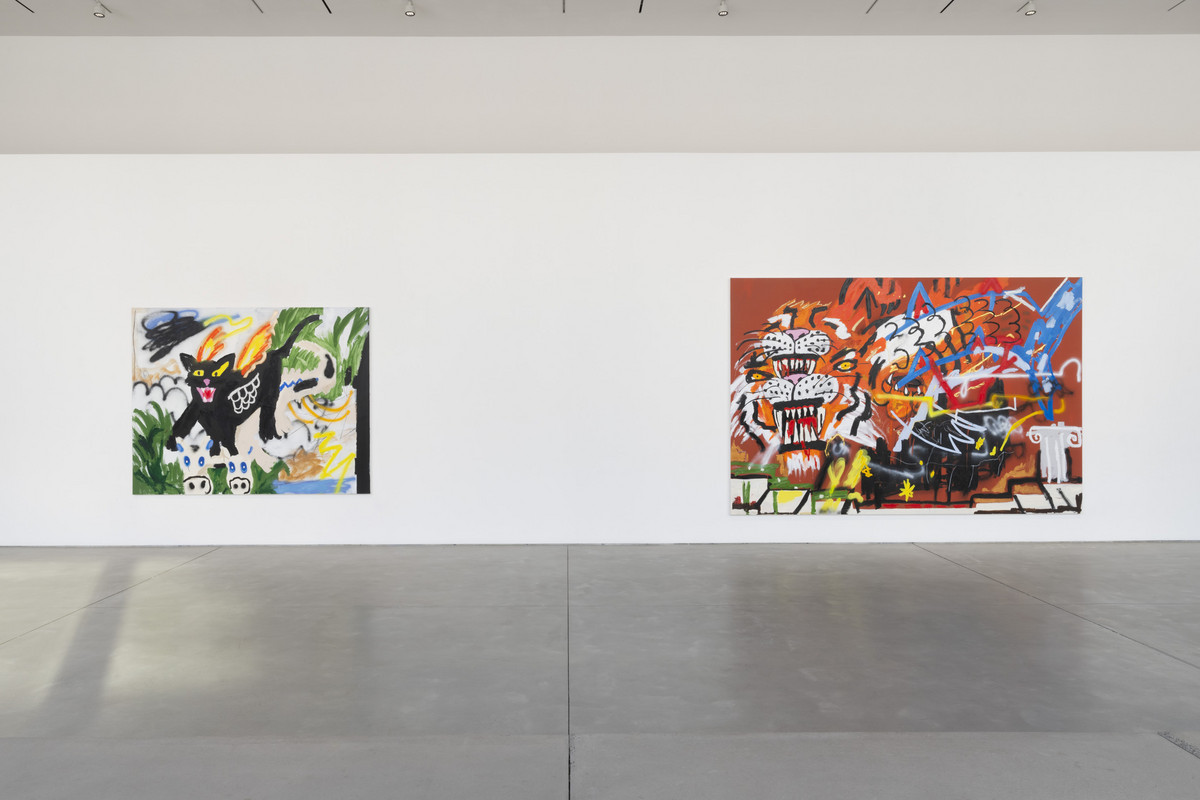
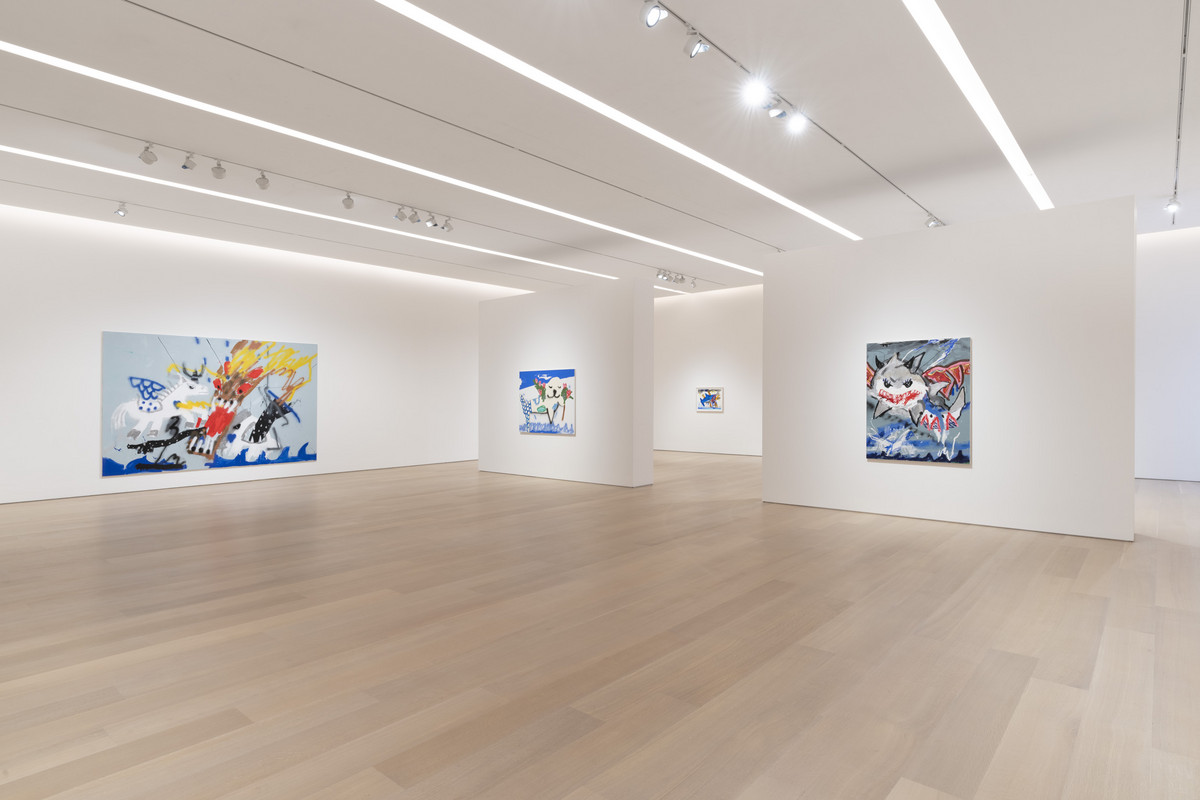
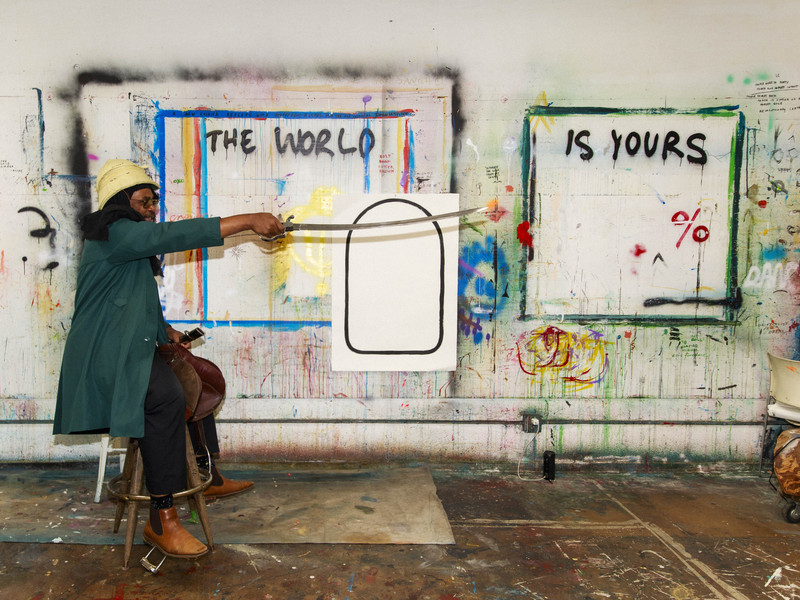
During a recent conversation, Nava described his process as one of unrelenting exploration. “I can’t really explain what they are,” he admitted. “I go for it with a lot of trial and error.” His paintings often begin with no clear subject in mind—just spontaneous marks that evolve into shapes and figures. “Sometimes it’s wolves, sometimes tigers, dragons, or death,” he said. “I go more for energy than subject.”
This organic approach drives Nava’s creative process. Paintings might start with a simple color gesture—a patch of blue or green—that mutates into something altogether different. “The painting starts doing its own thing,” he explained. “I don’t architecturally design a piece. I don’t paint like that.” Instead, Nava embraces spontaneity, building layers through impulsive movements and instinctual choices.
The new exhibition at Pace reveals an emerging fascination with certain recurring figures. “The bunnies started from abstraction,” Nava noted. “A cloud of paint turned into a cotton tail, and then they became two-headed rabbits with horns.” Other pieces emerged similarly, with vague ideas transforming into vibrant, chaotic compositions filled with fantastical creatures and imagined worlds.


While Nava’s art appears unrestrained, he admits that refinement is part of the process. “It’s a lot of trial and error,” he said. “Sometimes I’ll paint something, hate it, and paint over it again.” His sketchbooks are filled with rapid marks and ideas, some of which evolve into larger works, while others simply remain experiments.
Nava’s practice is obsessive—a constant need to create. “I can’t help myself,” he said. “If I’m away from the studio too long, something feels missing.” He compared this drive to being in “the zone,” likening it to athletes hitting their peak performance.

This sense of instinctual flow extends to how Nava views his work. While some viewers connect his paintings to themes of childhood healing and emotional release, Nava resists fixed interpretations. “People want me to say my paintings are about one thing,” he explained. “But it’s not that simple. It’s a mix of everything—experimentation, obsession, and a constant search for that feeling of being fully immersed.”
For Nava, painting is an endless process of discovery. “If an idea starts to feel boring or forced, I know it’s time to move on,” he said. “I trust that the work will naturally evolve.”
Nava’s new exhibition at Pace Gallery captures this raw, unfiltered energy. Each canvas pulses with life—dragons, seals, and mythic beasts emerging from chaotic marks and vibrant splashes of color. It’s a world where imagination reigns, and where, as Nava puts it, “the painting starts making itself.”
Robert Nava: After Hours
540 West 25th Street,
New York, NY
10001
March 14 –April 26, 2025

Shakht admires them for their natural beauty, a quality that floats across her body of work. One of the defining elements of Shakht’s work is her exploration of the body as both a subject and an object of meaning. Her soft yet quietly commanding style of portraiture addresses the ways the female body is perceived, challenging traditional and often sexualised portrayals by subverting the notion that the women’s place in art is as the ‘muse’.
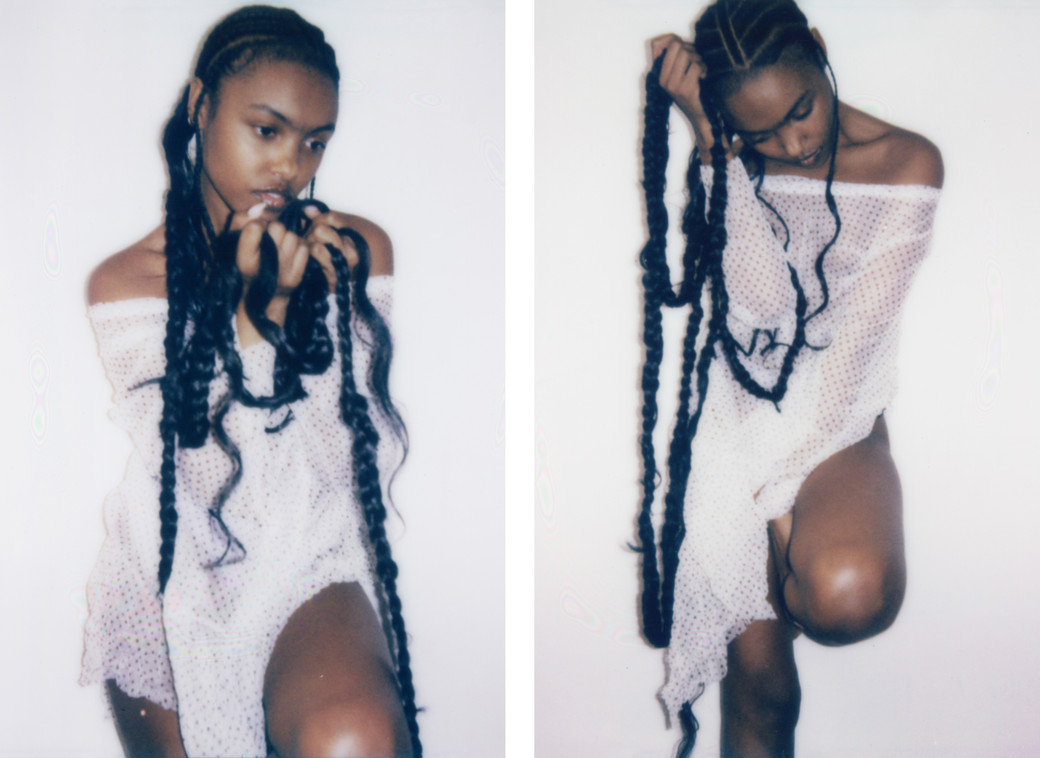
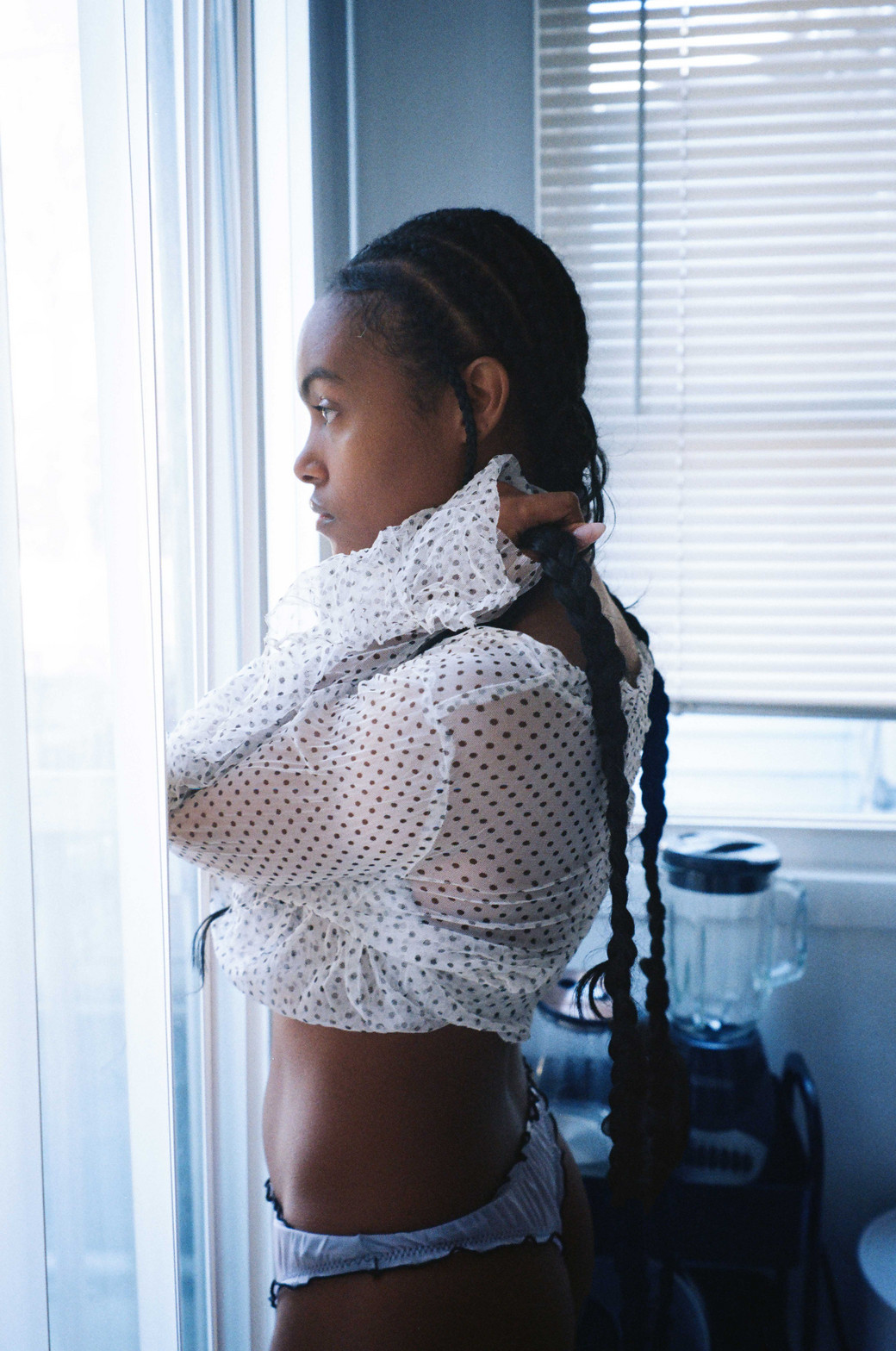
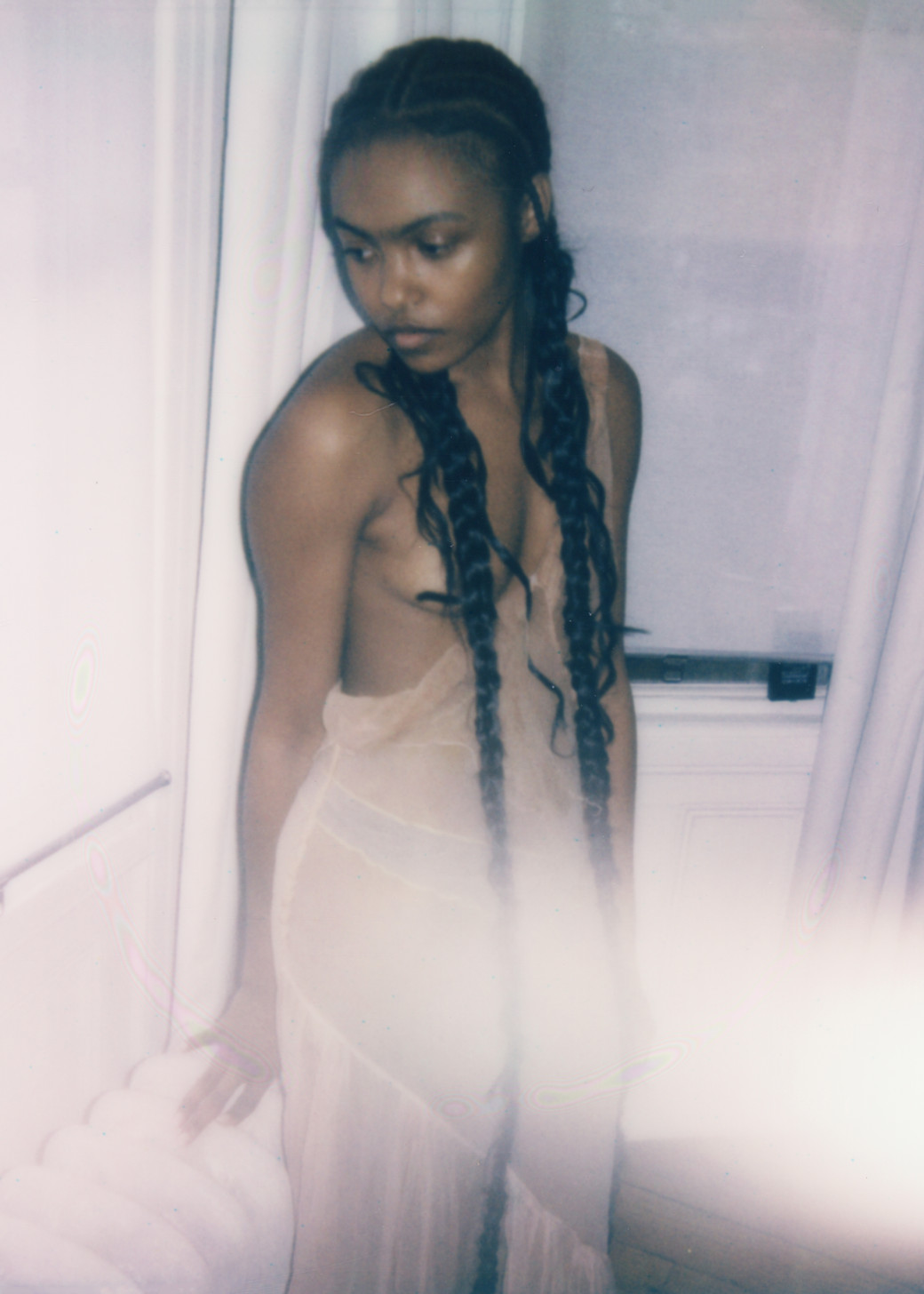
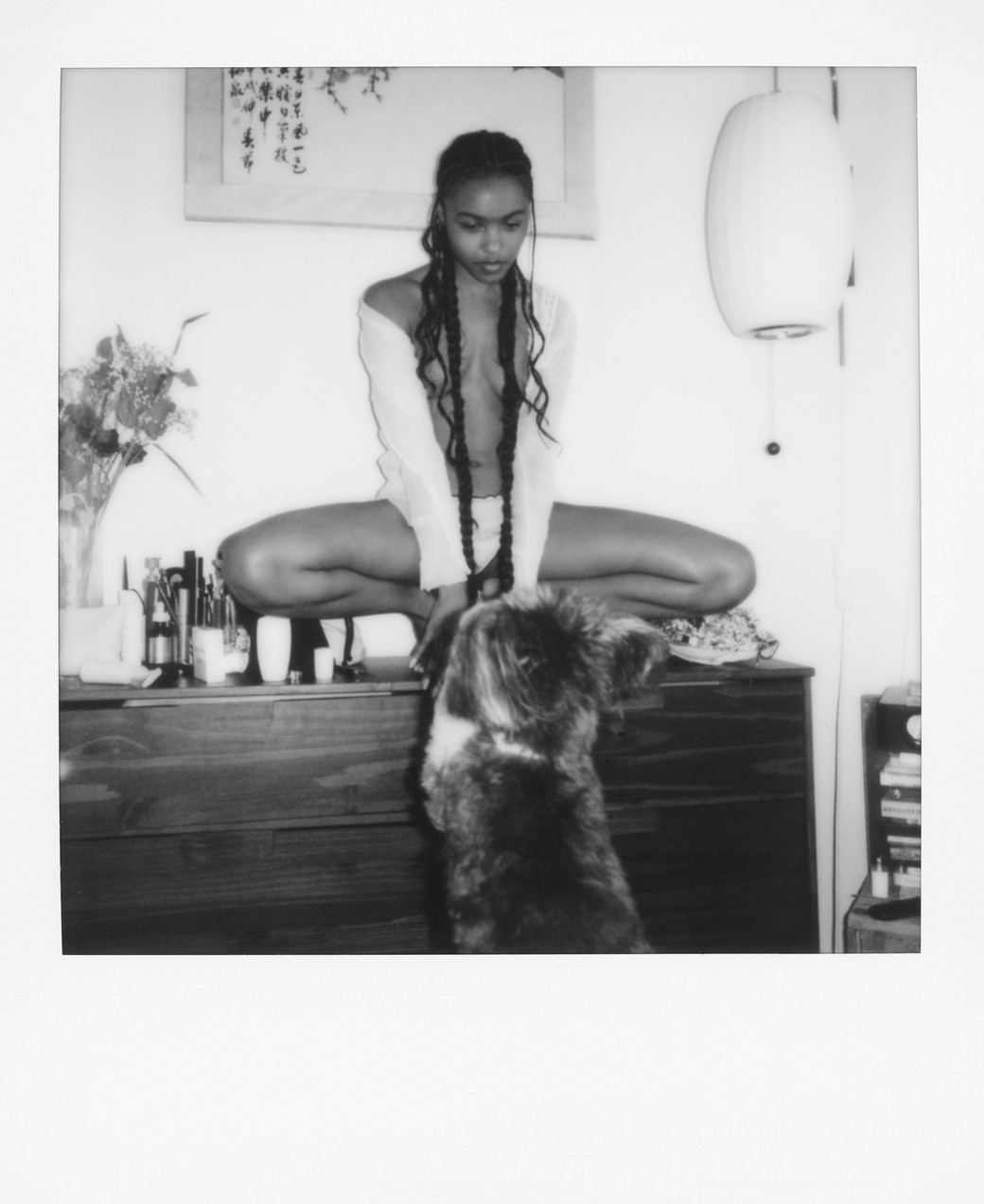
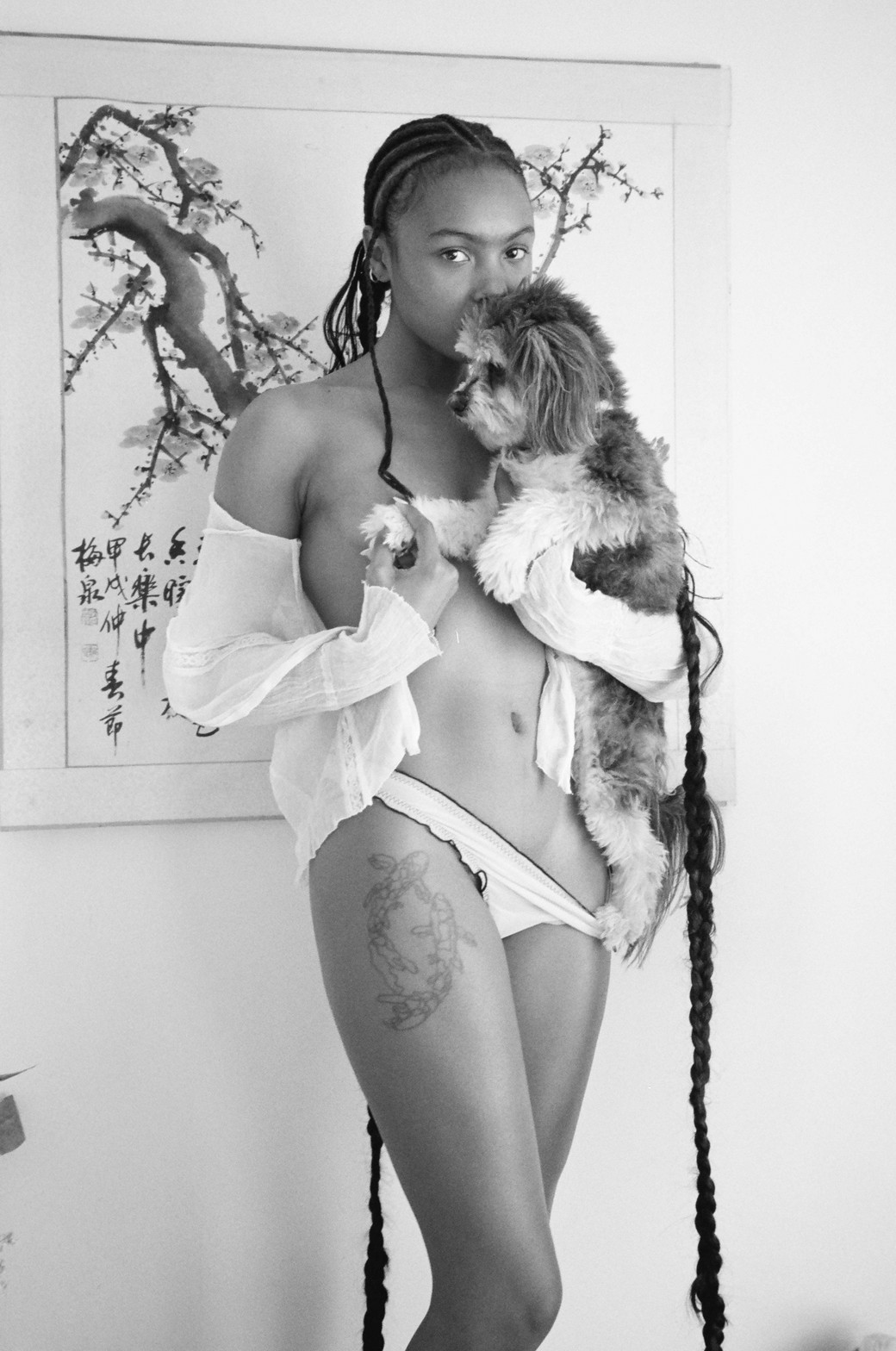
Her most recent project, Destiny, does just that. As she describes it, the photo essay is about “exploring the raw emotions women are often discouraged from expressing—anger, rage, and sadness—while also embracing playfulness, self-exploration, and boredom.” Shot during a transitional time for both Destiny, the model, and Shakht herself, the series portrays intimate moments of vulnerability and curiosity.


In true Shakht style, Slavic influences are woven through each image like a near-forgotten myth. Shakht's models often embody the Slavic idea of the rusalka or siren-like figure: an ethereal, otherworldly presence.
Destiny holds this tension between softness and severity. Styling within the images was very deliberate. Shakht and Destiny worked together, intentionally matching the underwear, which has a kind of the waviness to it, to match Destiny’s hair. Light plays a crucial role within the styling to evoke this Slavic sensibility. Wrapped in sheer fabrics, Destiny bathes in this very diffused, silvery tone, similar to the way moonlight reflects off dark waters in Slavic fairytales. Her presence is not passive; it is charged, enigmatic, untouchable.
Shakht explained that Japanese photographer, Nobuyoshi Araki, was a shared reference for both herself and Destiny.
Like Shakht, Araki sees the world through a lens that does not blink. His work moves between desire and loss, capturing Tokyo’s undercurrents of eroticism, loneliness, and fleeting beauty.


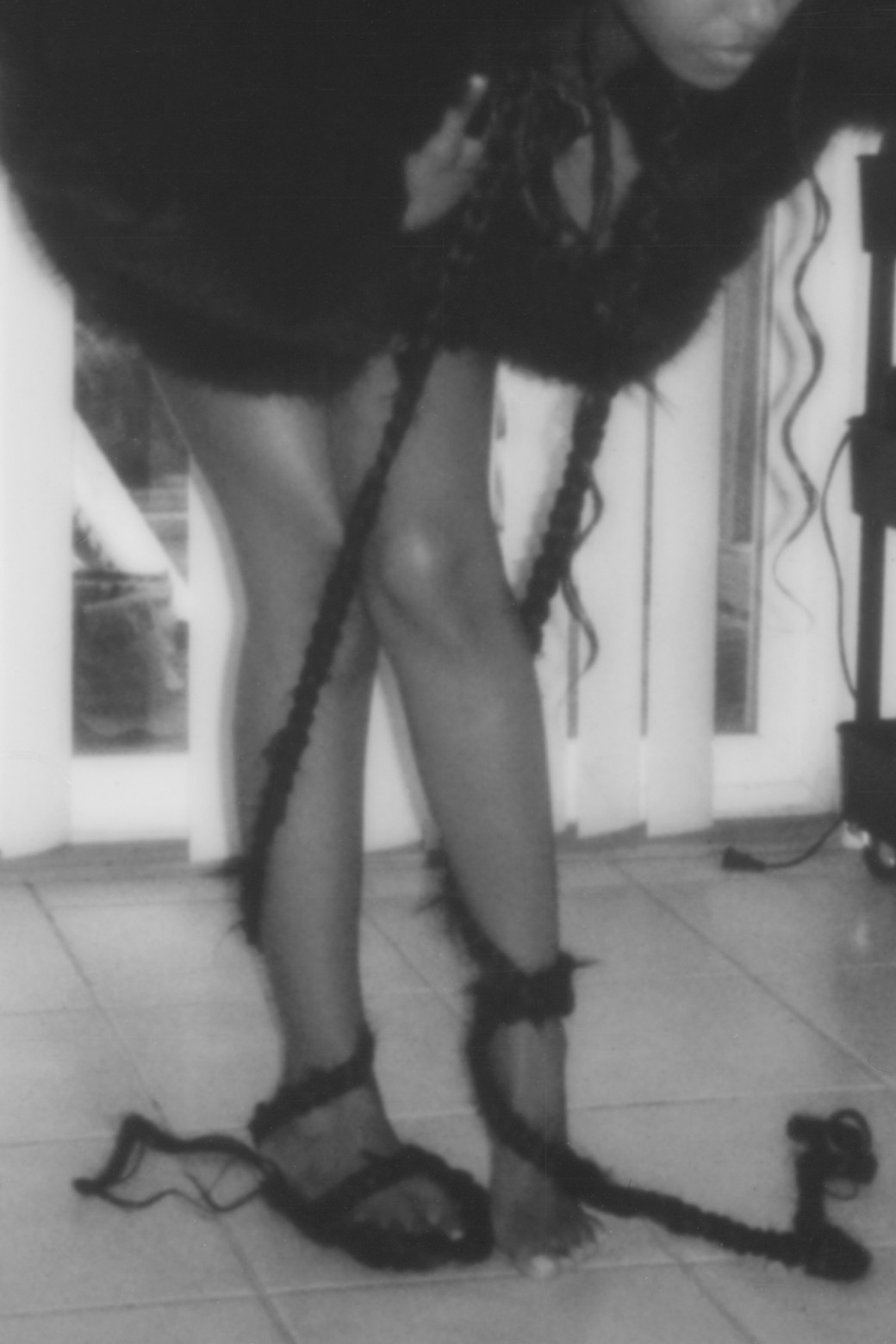
The similarities between Nobuyoshi Araki’s Kinbaku series and Shakht’s photo essay lie not just in their shared exploration of subjection, but in their approach to power, intimacy, and the act of looking itself. Both artists use the bound body as a visual and emotional focal point, creating images that oscillate between vulnerability and strength, submission and agency.
Hair plays a big part in the storytelling of Destiny. Shakht explained that braiding artist Tre’Nae Larez helped shape the narrative with two seven-foot-long braids, further deepening this exploration of identity. Braids, within Destiny, much like in Kinbaku, are not physical restraints but metaphors for emotional entanglement or the complex dynamics of desire.
Kristina’s subversion of the role of the muse is arguably her greatest power as an artist. The pouty lips, porcelain skin and haunting gazes that envelop women in the Pre Raphaelite and Renaissance art of her childhood, Kristina saw through. She’s redefined the gaze and the act of seeing, creating images where the model's autonomy is not only acknowledged but celebrated, in doing so giving voice to the quiet moments that often go unnoticed in the grand narrative of femininity. Moments of introspection, intrigue and contemplation. She acknowledges that these elements are not opposites, but rather coexisting forces that shape the complexity of the female form and experience.