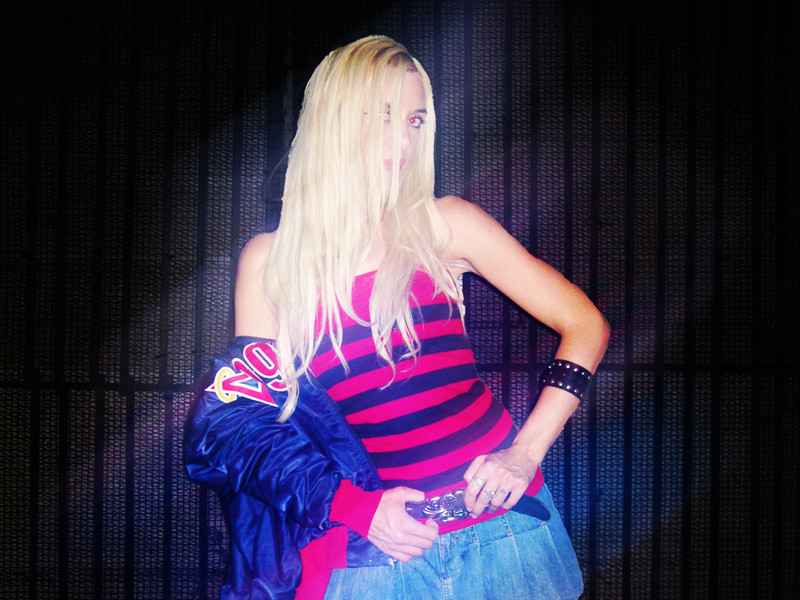
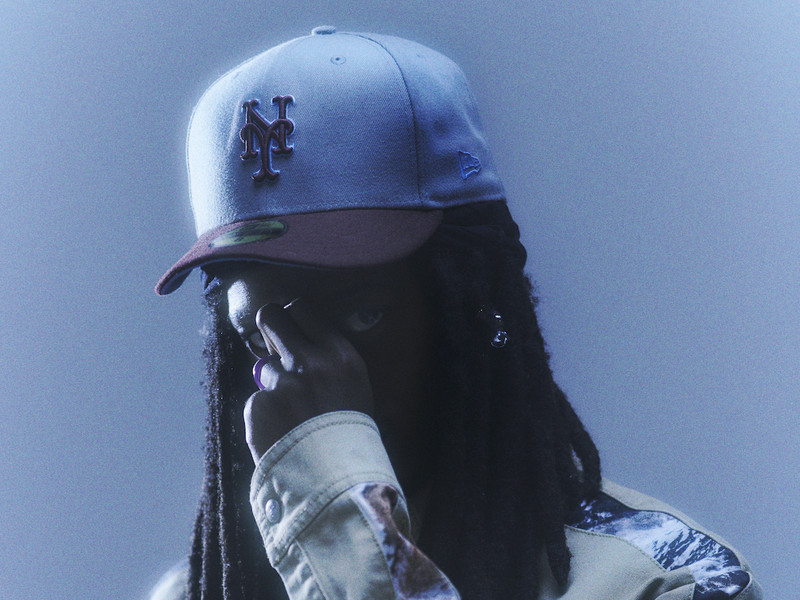
Do you feel as though studying at a conservatory gives you any sort of advantage in the industry?
G—Yeah, one-hundred percent. Because of the people you meet there. We met so many great, forward-thinking musicians who are doing so many great things. We've all kind of been on the same musical journey together in London. So I think conservatoire kind of enables that. But you gotta take what you're given from conservatoire and translate it into something that's going to be exciting. You don't just go to conservatoire and then you're there, you know what I mean?
T—You still need to have an idea of what you want to do. I think a good thing about going to Guildhall over a music course at a university is that everyone was just really serious, which I found really good. But the other side is that a lot of people can be really disconnected when it comes to creativity and composition—that sort of stuff. It's all about getting really good at your instrument.
G—The teaching is such that you can just be swamped with practicing, and then four years fly by, and you're a great cellist, but...
T—That's why it's a bit unusual that we came out of this doing pop music because most people go there just for classical music. But if you know you want to do pop music and at the same time really want to craft what you're doing, I think it's good.
What was your exposure to music like growing up?
T—I grew up with two parents playing and practicing musical theatre songs. My dad plays the piano, so I learned that quite early. All the classical stuff. But I was never really into the classical stuff; it really stressed me out. And then I got a computer and GarageBand, and as soon as I got that, it was pretty instant that it was my favorite thing to do. And because of the internet and being on the computer all the time, I just got exposed to loads of different music. I was massively obsessed with dubstep. That was the thing that made me want to make music, hearing all these sounds on these remixes that were being done around 2010. And then a few years after that I was into James Blake. And as soon as I realized those two things existed, because they were quite opposite to each other, it became anything is possible.
You said that classical music stresses you out. Why is that?
T—Well I was doing piano grades, and I found it really stressful to play music that had already been written. I'm a bit of an over-thinker, and to play something by memory, I could just trick myself so easily into self-sabotage. And the exams, yeah they were just absolutely horrible. Like going into an old church with an old person I didn't know and having a whole year-and-a-half's work being judged during an exam that depends on how well I slept the night before—it's just like too stressful. So I ended up canceling the last grade because I couldn't sleep; I was worried about it too much. It's more the playing of it. Listening I don't mind.
And what about you Georgia? What was your exposure like?
G—My mum was a violinist. She was self-taught, and she played a lot of Irish folk music. I remember getting a violin for my fifth birthday, and I was taught classically from then. I didn't really enjoy it very much until I joined a string orchestra and started playing with people. There were quite a lot of great string youth groups where I grew up randomly. It was great, and I loved that aspect of it—playing with people in big orchestras. I was also listening to a lot of different music. I was really into dance music while I was playing all this classical music, which I wouldn't really listen to, as I do now. Then, I decided to do a jazz degree because I knew that I wanted to do something more creative than play in an orchestra all my life, even though I knew I didn't want to be a jazz violinist. I learnt loads.
You've said before, Georgia, that you like musing about other people within a song. I'm curious about how much of it is imaginative and how much of it is factual. I'm thinking specifically about the song "Hayley," but you can apply it to any of your other biographical songs.
G—It's all factual and biographical, with room for some metaphorical imagination.
What's the process like of trying to get into the headspace of someone else?
G—I think at first it was just that it was easier to write about other people than myself. That's kind of why I was doing it. I would write poems first, and they would be little snapshots of people. Maybe I just hadn't matured enough to write about myself.
Do you feel like you've transitioned and are now focusing your lyrics on yourself?
G—In the new EP, yeah. It's more reflective. I feel more comfortable about writing about myself.
You've also said that this EP is more male whereas the last one was more female. What did you mean by that comment?
G—Well, I think what I meant by the male and female thing is that they're a dichotomy. They're binary from each other. They're coming from very different places, different sides of a coin. Just different in character.
How would you describe their characters?
G—The first EP is kind of carefree and cheeky. Kinda easy going and easy flowing. The second one is definitely more—Taylor said in another interview that this EP has more testosterone, which I quite liked. It's angrier. If the first one's soft, the other one's hard.
Taylor, speaking of angrier, harder qualities, your production could be characterized by combining harsh, electronic sounds with more lush, maybe even posh, classical instrumentation. Do you think of yourself as mashing high brow with low brow together? Is there a particular effect you're hoping to achieve?
T—I think it's just who I am. It comes from the fact that when I was younger, I quickly became into really opposite sorts of music. During the first year of Guildhall actually I felt really weird about pop music. I had to write this essay on John Cage, and I just decided that I was going to stop making song-based music; it just didn't make sense anymore. There's always this friction, for me, between stuff that's really commercial and stuff that's pushing the boundaries. I value both, and I don't really know how I sit with what both have to offer, but I kinda know deep down that they're probably both truthful. I don't think one can exist without the other. So it just makes sense to play with both sides in music.