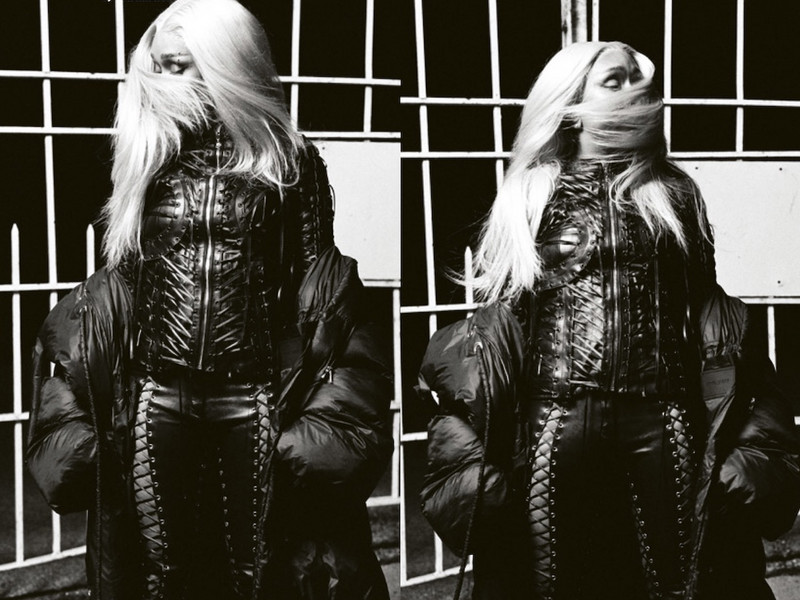
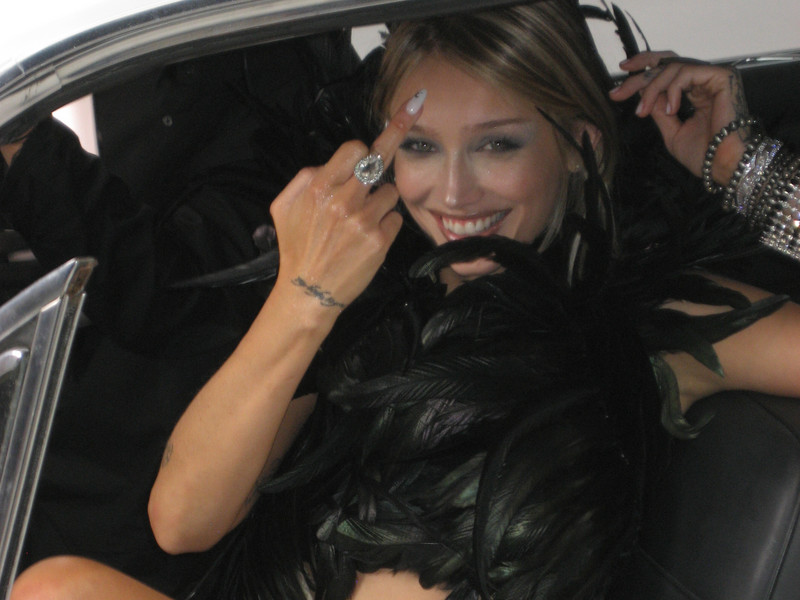
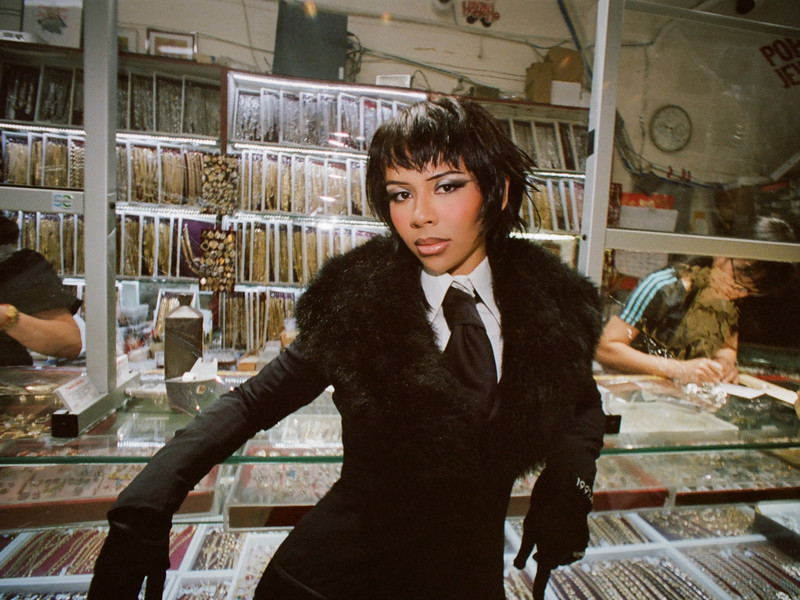
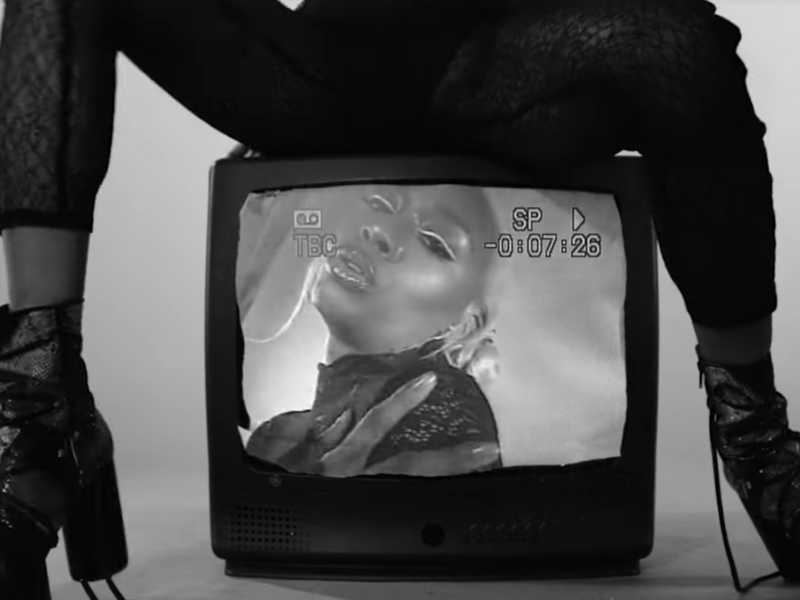
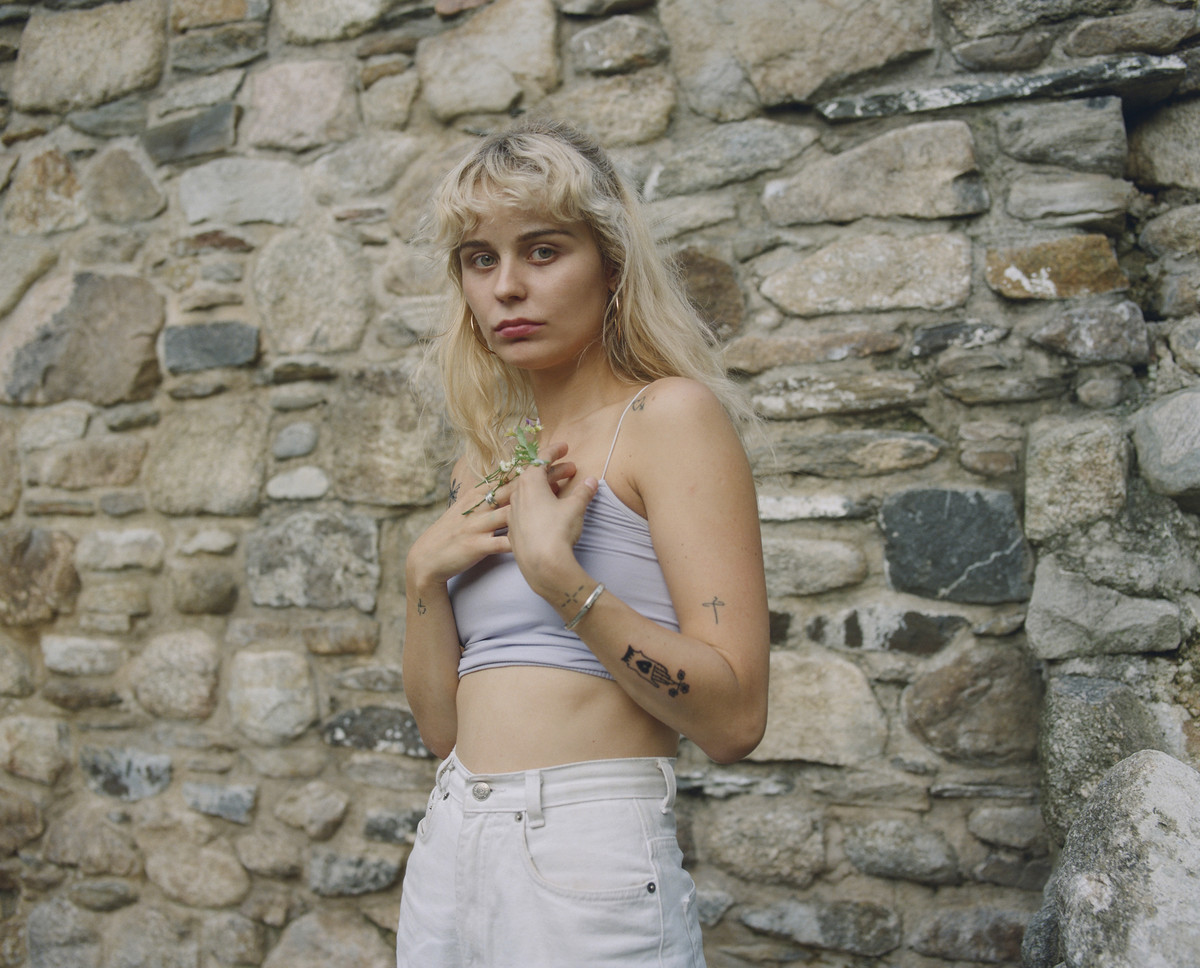
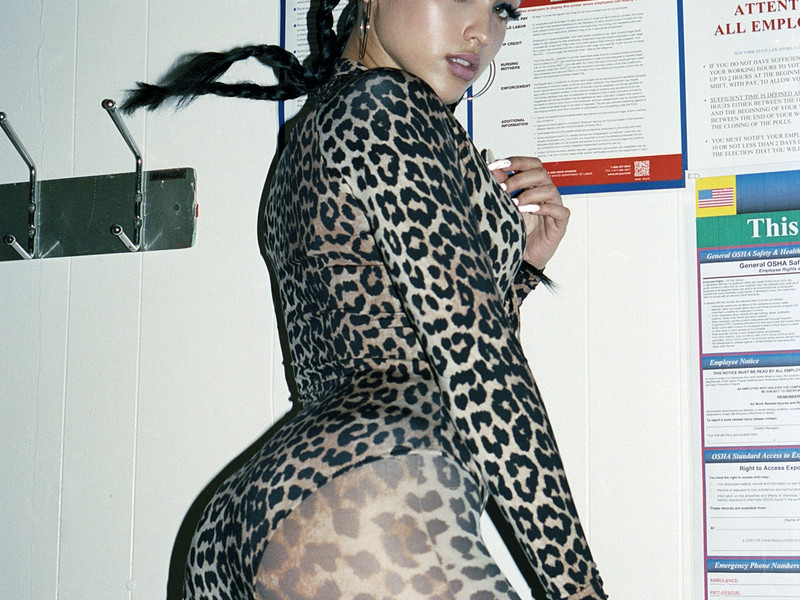
Ruched top and skirt by Norma Kamali, shoes are stylist's own.
You were talking about LA and locations. When did you start living in LA permanently?
The day I moved to LA was the day after I left Puff’s office and asked if he would take me as a solo artist. And when he said that he wouldn’t, I left New York and went to LA because we had just finished recording the album. And I stayed, and never went back.
I know you were displaced by Hurricane Katrina. You’ve been in all these difference cities and locations. How do you think where you’re located has played a role in your art?
Location does affect music for me. I guess I was just spoiled. I didn’t realize how spoiled I was in New Orleans until I left. I didn’t realize how special it was until I didn’t have it anymore, and I realized that there were just certain things that I didn’t have access to anymore. And New Orleans was very much that for me. I’ve lived in a lot of different places. I love New York, and I think there are great things about LA. But there is just nothing like the people in New Orleans, and I missed that camaraderie, that neighborhood, that place where everyone raised you and everyone knows you. If you say somebody’s last name in New Orleans, they probably know your whole damn family.
I miss that. Because every other place is just so big. LA is so massive, and New York is this grandiose idea. New Orleans is a small city, and even though it’s a city, it’s very much like a town. I do believe that location matters, and New Orleans, for me, was safety.
A small town girl. I’m from the South too, so I definitely know what that’s like. Did you write most of the album in LA?
In New Orleans. I went home. I didn’t think I was gonna do more music. I did my [album] trilogy—we did thirty visuals with no budget and no label, and I was exhausted. I felt like I had did all that and I didn’t really go anywhere; like I was pushing and pushing, and it really wasn’t getting me anywhere. I was like, ‘Okay, I’m proud of what I put out, but maybe I should take a break.’ I had been animating with Adult Swim. It was a good job, and I was like, ‘Maybe this is it.’ Then I went home and I realized that I had missed everything. I was 18 when Katrina happened, and then Danity Kane happened. So, I never got an opportunity as a young adult to put New Orleans into my music—to really take my city and go and do great things. For example, Chance the Rapper with Chicago; Big Freedia, how she was able to take New Orleans; Beyonce and Houston, Texas; Janelle Monae and Atlanta—I never had that opportunity. So, when I went home, all those things started coming back—working in those different studios and seeing all my musicians and friends—and I realized I had never told that story. It was gone before I could even tell it. Usually people early on in their career have the opportunity to really encompass that, but I was homeless. I had no connections. I couldn’t get Trombone Shorty and all those people who had been with my father, and all those Mardi Gras Indians—I couldn’t get those people because they were gone.
But I went home and all those people were back. So, I started to walk the streets and write and record, and I realized that I’m not done yet. I have a story to tell, and I finally get to tell it. I finally get to show people who I was long before Danity Kane. Before Making the Band, I was an artist. Before Making the Band, I was already in a culture that was so thick and rich, and I would’ve put that into my earlier music had I been able to do it. But we didn’t have a home to do that with. So, I just got reacquainted. One song turned into three, three songs turned into five. And then I went and talked to my uncle’s tribe, the Washitaw Indians and I asked for permission to tell our story. I wasn’t gonna do it if I didn’t get permission from the tribe. And I decided to go on this path, and that’s how this album came about.
How was it different going back to New Orleans? Both mentally and even physically being there.
It’s not the same, but it is in a way. It still smells the same. The accent is still the same, the food still tastes the same. But you can see that it’s gentrified, you know? It’s not the old New Orleans I know, but any piece of New Orleans is enough. Any slice of it is better than no slice at all. And it’s what I know. My father is rooted in it, my grandfather played with Fats Domino, my great uncle is in the Hall of Fame for sewing all the Mardi Gras costumes. So, it’s all I know. And I love it when I walk the streets. They know my dad, they respect my father. On the album, a lot of the interludes are my father’s own music. His band was really popular in the city, and it just feels good. I don’t think people realize how much I didn’t get a chance to have that. It was stripped from us. But as an adult going back, I realized how much it did affect us and dictate the rest of my life. I wanted to pay homage to that.