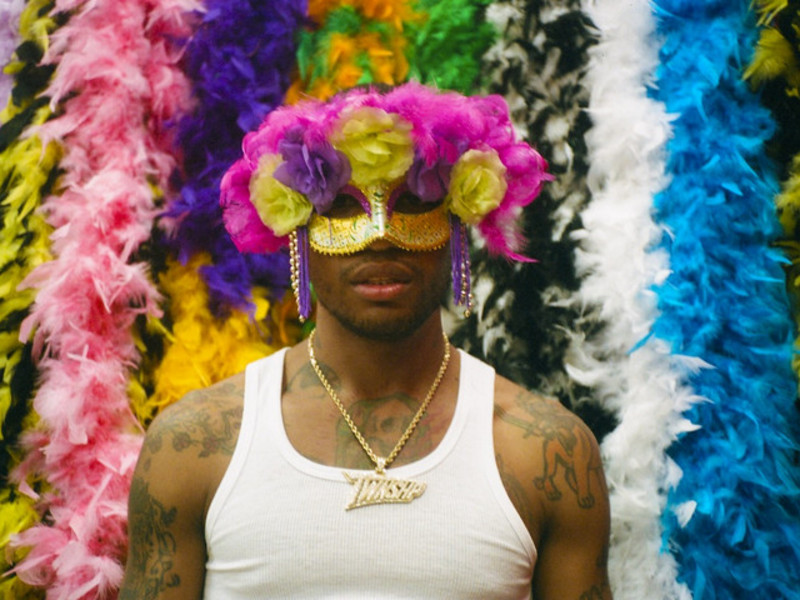
I feel like talk about mental health is reaching a peak right now.
It’s really critical. I think that healing—individual, family, and community healing—is a piece of social transformation. I have qualms with the word 'revolution,' but in a moment when we are looking for ways to find more unity and connectivity and truly transform some really toxic social practices, I think the piece that’s always left out is the healing element. We talk about economic structures and new education structures and new political structures, and I think the piece that is actually integral to any new infrastructure being functional for all people involved is the healing element. I think the latest statistic I read was that two out of three kids have developmental trauma. That can be anything from explicit physical abuse to emotional abuse to neglect, and to think that two-thirds of the population is walking around really doing their best to cope with unaddressed trauma—unaddressed trauma affects how you experience the world.
So, if your upbringing taught you that people you should be able to depend on are not those people, and could possibly hurt you, that really paints a horrible picture of the world. It's gonna feel threatening and like a place where you can’t depend on your fellow citizens, where you do have to create a silo of protection. I’m really curious about how the paradigms of healing can be applied—of course at the individual level, the family level, community level and the collective level—because I think well-being is much more than just economic or political well-being. And I really feel like, particularly in our culture, it’s still very taboo to talk about healing and mental health, really. I feel like that piece of just finding as many various methods of addressing the need for healing as there are people who are in need of healing, that feels like an area that I’d like to explore so that I can serve in that way. Because we’re hurtin’ out here, you know?
I wish they taught this stuff in school. Being in school myself, I often feel like I’m taking classes that won’t really help me in the long run.
Isn’t it fun? It’s the same way that we don’t learn economic literacy in high school. To me, that’s so integral—how to track if your finances are in order. How to balance a checkbook, and savings, or retirement—these things that seem so fundamental to having a healthy adult life. Likewise, we don’t learn about tracking our well-being. I don’t know how often in the day the average person—with you, me, our friends, our colleagues—checks in just to see how we’re doing. That’s not built into our concern pyramid, you know? Are you okay, and if not, what are we gonna do about it? How do you ask for help? Not even help as in going to see a therapist, but just support—having a paradigm to articulate how you’re doing, truly. That feels so integral for the education of being a sustainable grown-up.
But it feels like every man for themselves most of the time.
Yeah, and a lot of pressure to 'buck up' and figure it out. Your parents worked hard, your grandparents worked hard, there are people who are worse off than you, which is all beautiful. But we also know that that is not a sustainable existence. Pushing yourself to the limit nonstop makes you sick, and it makes you die. It makes you more likely to get a whole array of diseases. Constant stress is a major factor in your likelihood of getting cancer. You’d think that just that knowledge would change our paradigm around well-being. And it’s starting to happen, for sure. The noise is getting louder around that, actually, every person being healthy and happy is very important. You don’t have to carry the world on your shoulders. A lot of the working class—whatever that means—a lot of people who have hourly wage jobs don’t have an option, which is terrifying. But that’s part of what I mean when I say that economic and political reform isn’t enough. Because those individuals and their kids are dealing with the trauma of just working yourself to death. So, even when you get the easier job, there’s still work to do, you know?
Why are you hesitant to use the word 'revolution'?
The part of revolution that troubles me is the idea of overthrow. I’m more comfortable with the word transformation because that means no one loses. That means that everything that’s here, everyone that’s here—we work with. I don’t like the idea of overthrowing—like, I’m gonna rise to power and my worldview is now what’s informing your life. That, to me, is not sustainable. And even in history—look anywhere that revolution has taken place. It has not sustained. It has not sustained here. I mean, this is a home front of a 'revolution' against the British, and how did that work out? Genocide was involved, and a lot of death was involved.
But I’m into the idea of transformation. I’d like to reach toward what I don’t understand how to do yet, and it involves—this sounds kinda cliche, but it involves loving and accepting someone you disagree with and even resent. Loving and accepting them because they’re human and essentially made of the same ingredients as you. I’m sure if you would’ve had their life experience, the world might make sense to you. So, it means participating in the co-creation of better options. Like, let’s say there’s a vehement Trump supporter somewhere who wants teachers to be armed. That triggers a lot of stuff for me, and I feel really resentful towards that and angry about it. But just because my policy suddenly wins the day, that person doesn’t go away. They’re still in the world, in their town with the same concerns, same experiences, same feelings that led them to want that policy in the first place.
Then it becomes cyclical.
Yeah, again, that back-and-forth of 'revolution,' and winning and arm-wrestling. It feels like a great invitation and challenge right now to decide that our solutions should be all-inclusive. The same way that people of color and minorities have been asking for policies to be all-inclusive. Like, pursue your bottom line, but it’s gotta include my well-being. And it’s hard for me to even get my head around what I’m saying, but it feels really critical if we’re gonna live with each other.
That does seem like the main issue right now.
It’s hard. It’s hard to sit around someone you disagree with and go, 'Okay, let me let go of what I thought the solution was and try to hear what you need, and what I need, and keep carving and co-creating until we find something that encompasses both.' You have to start at a place of, 'I’m glad you’re here on this earth and I value you because you are here, even if I hate what you’re talking about right now.' I always think of something that Howard Thurman and Martin Luther King said, which is about learning to love the person and hate the disease. So, still wanting the best for the person and recognizing that what you’re dealing with is illness. There’s probably a chain reaction that started somewhere in their life where they don’t feel safe, or who knows. And it’s not to project and it’s not to judge—again, I have no answers to any of this shit—but it feels like a very fruitful path of inquiry because clearly if it’s 2018 and two-thirds of our youth population has suffered trauma, then something is really wrong. There’s a lot of ill-being around here, and that feels like a good place to really start working if we want a healthy, sustainable society as a whole. We have to have healthy people.
Is your life your music? In other words, I know you stayed in that Italian castle during the making of this album.
Ha! That was insane, yeah.