At The Circus

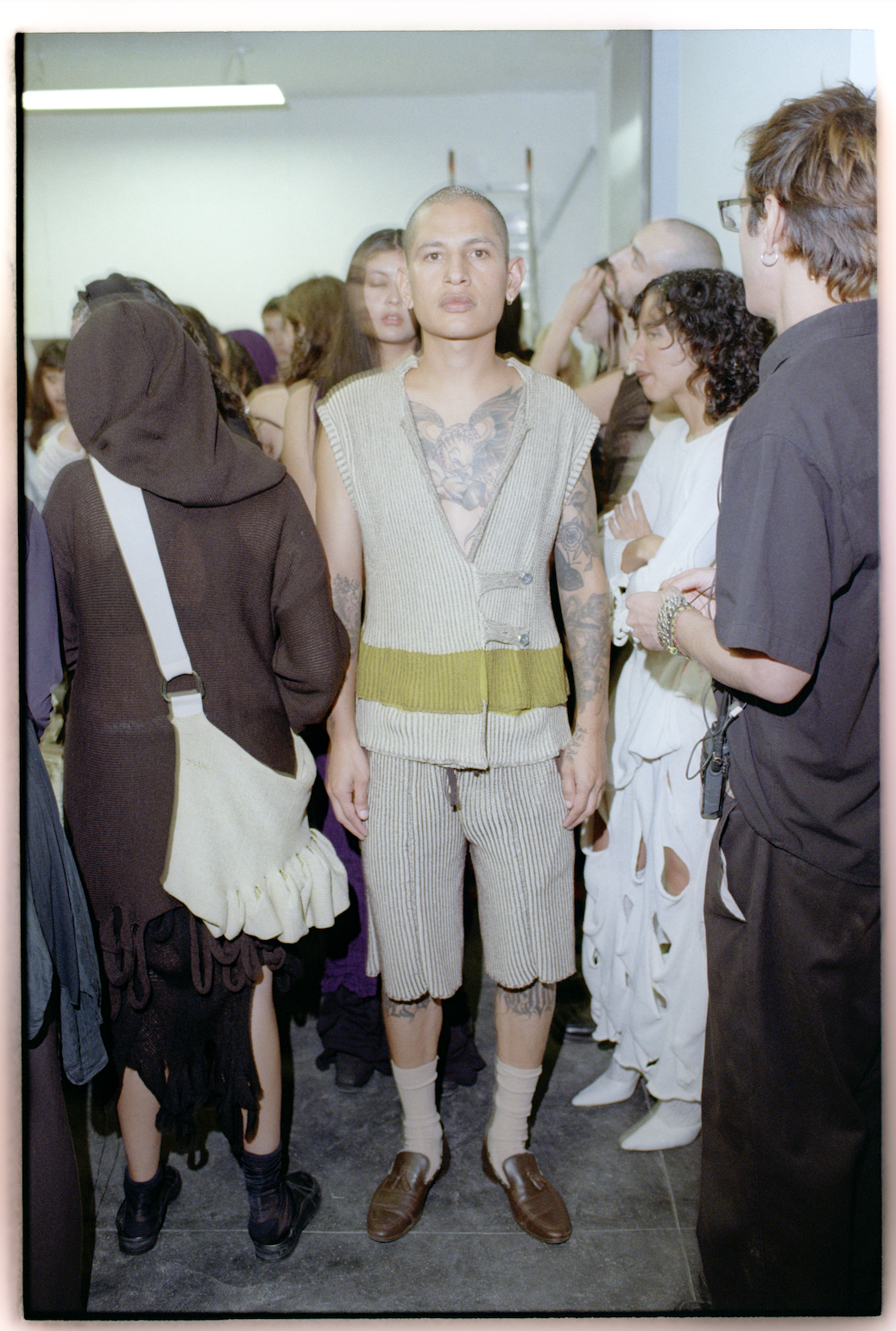
Oh and the peacock feathered suit was killer. See it, and our other favorite looks from backstage at the presentation, below.
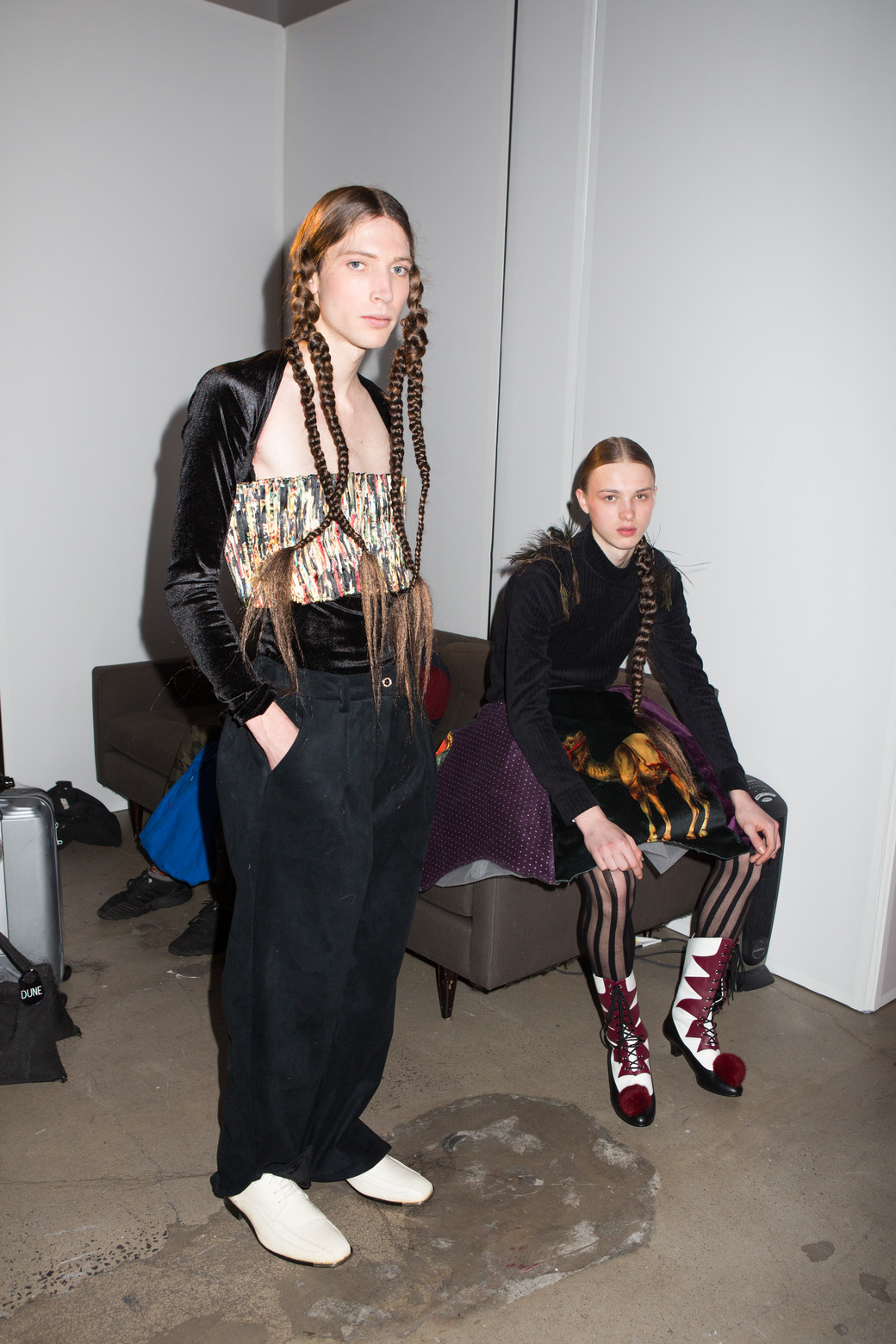
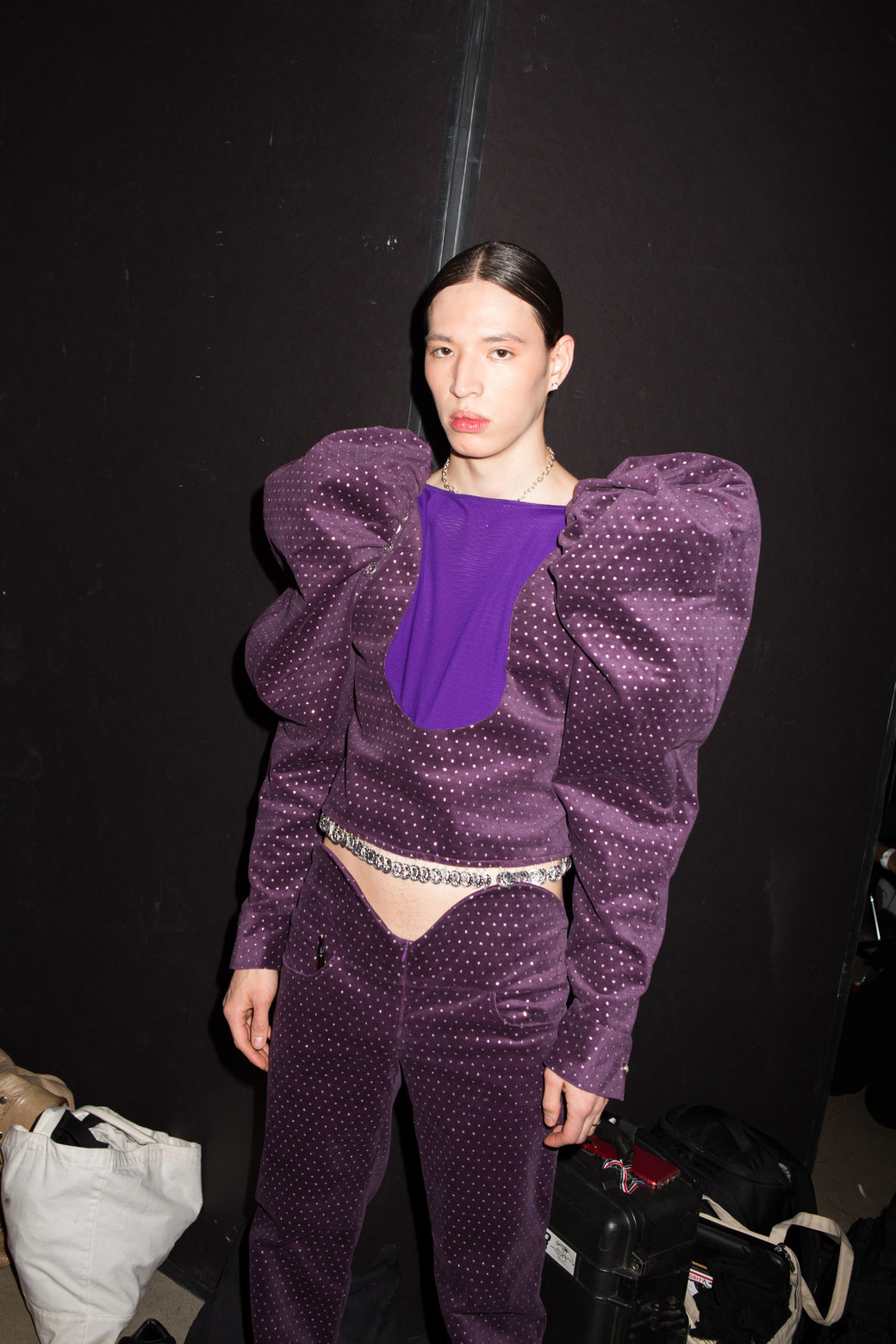


Oh and the peacock feathered suit was killer. See it, and our other favorite looks from backstage at the presentation, below.

It’s been quite a year, judging from the sizable crowd she’s drawn to the show, which is open to the public. As the doors are pulled up, the eager throngs of waiting people quickly fill the space — standing room only — creating a human U-shape around the runway. A simple pulsing beat sets the tone, metronome-like, and the crowd quiets, their eyes drawn to the sandbags tied to the ceiling, each dispersing a stream of sand onto the floor below.
The soundtrack swells with an electric hum and a guitar riff (which I will later learn to be the opening notes to “Huesos Viejos” by Davila 666) strikes the room — and out walks the first model, clad in Paniagua’s futuristic knitwear.
Runway video by Andrea C. Nieto and Emilianna Vazquez
Visually dystopian yet conceptually utopian, the organic forms of Krystal Paniagua’s eponymous label continue to be ahead of their time. This may be the designer’s first runway in Mexico City, but it feels as if she’s been here forever: the crowd is filled with close friends and loved ones excitedly holding out their phones and handycams for the perfect closeup of one of the brand’s handmade looks — now with jersey pieces interspersed with Paniagua’s signature knits.
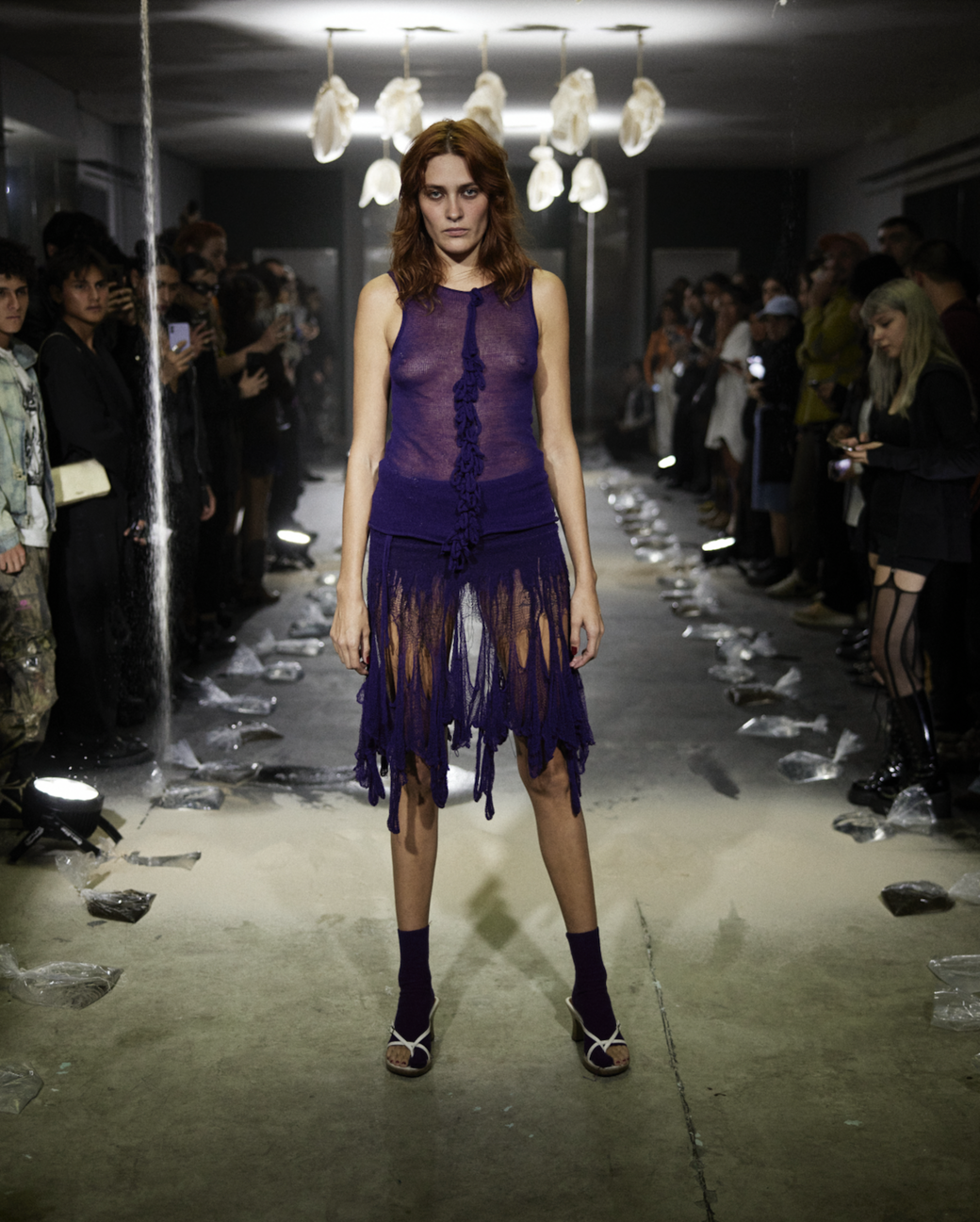
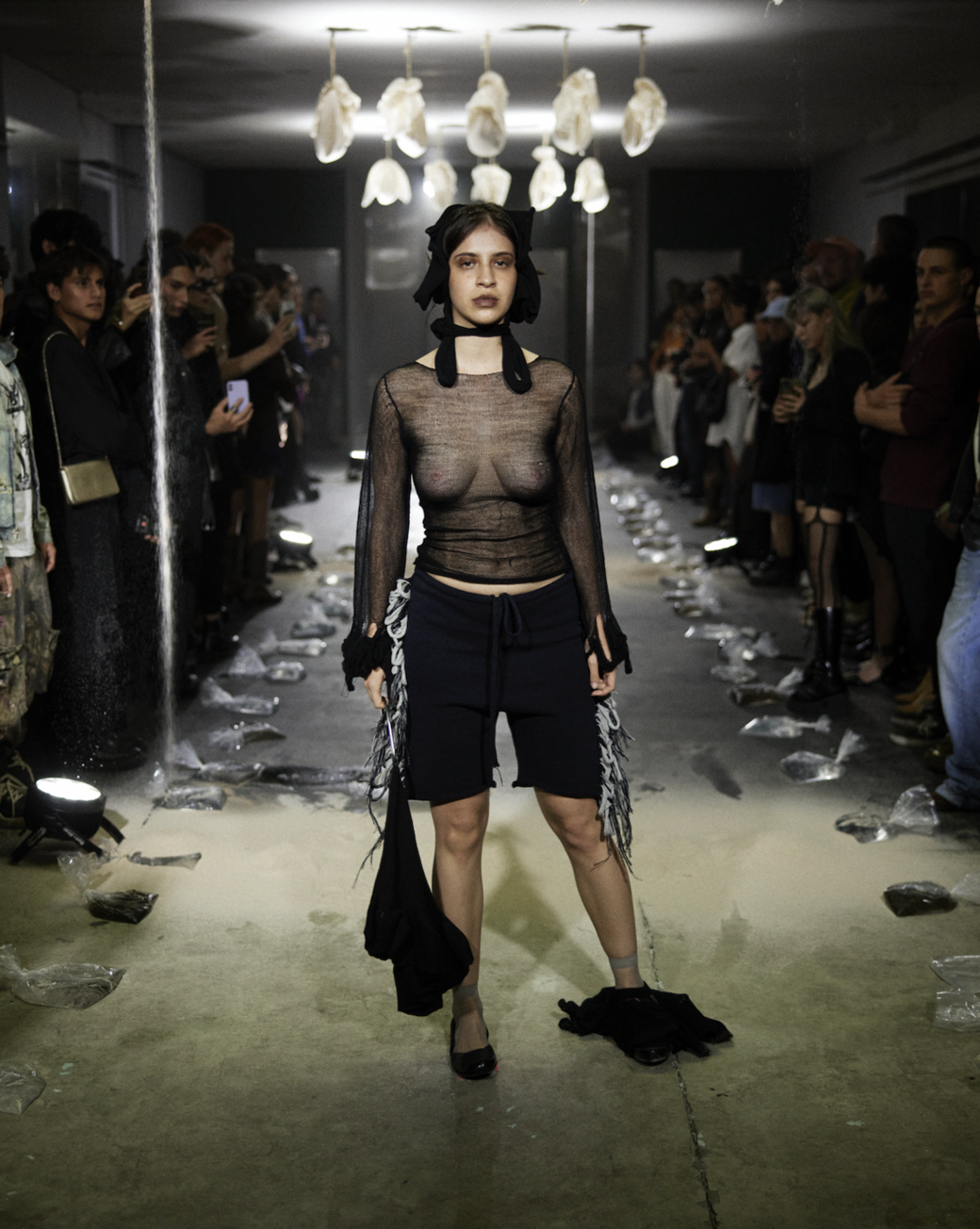
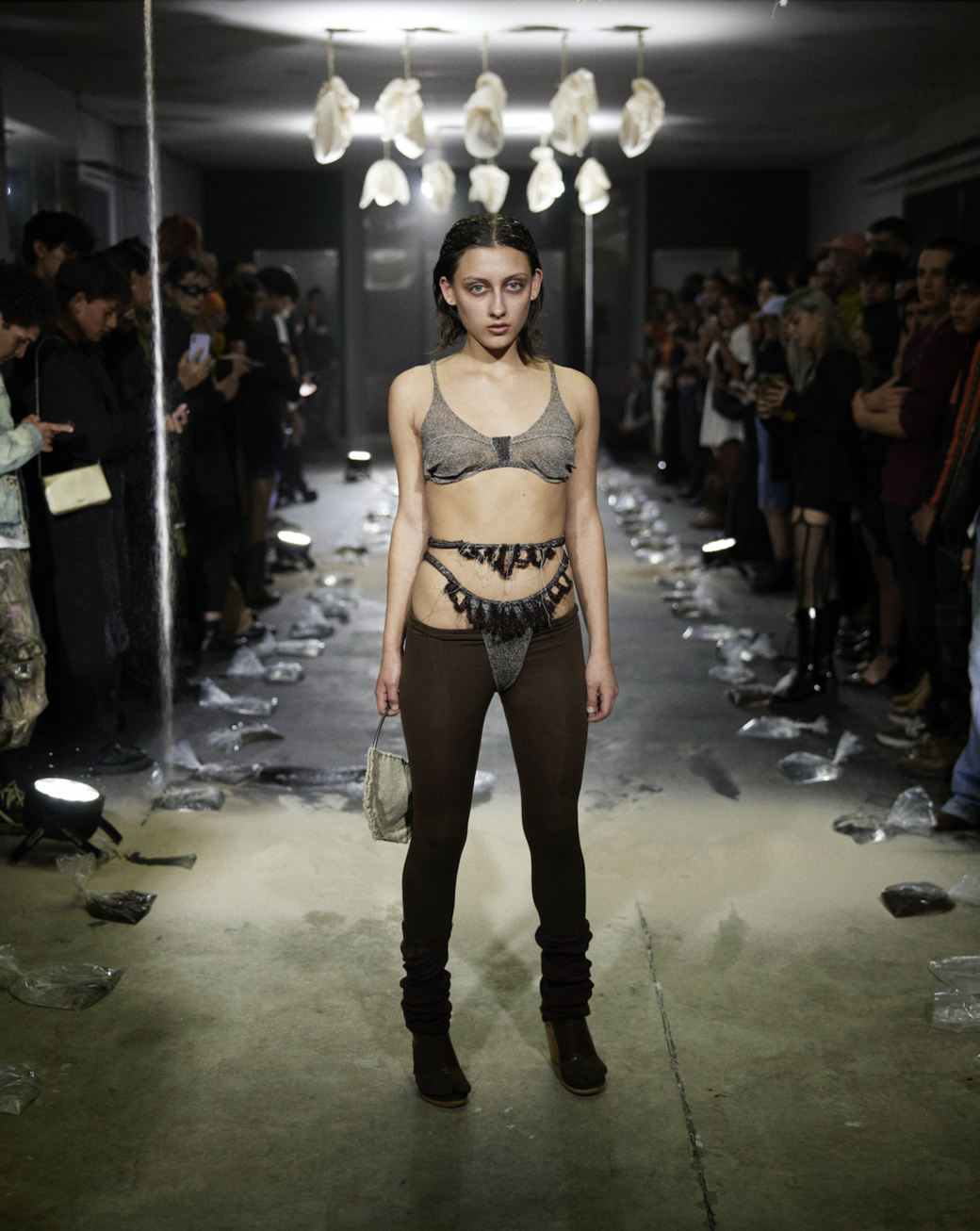
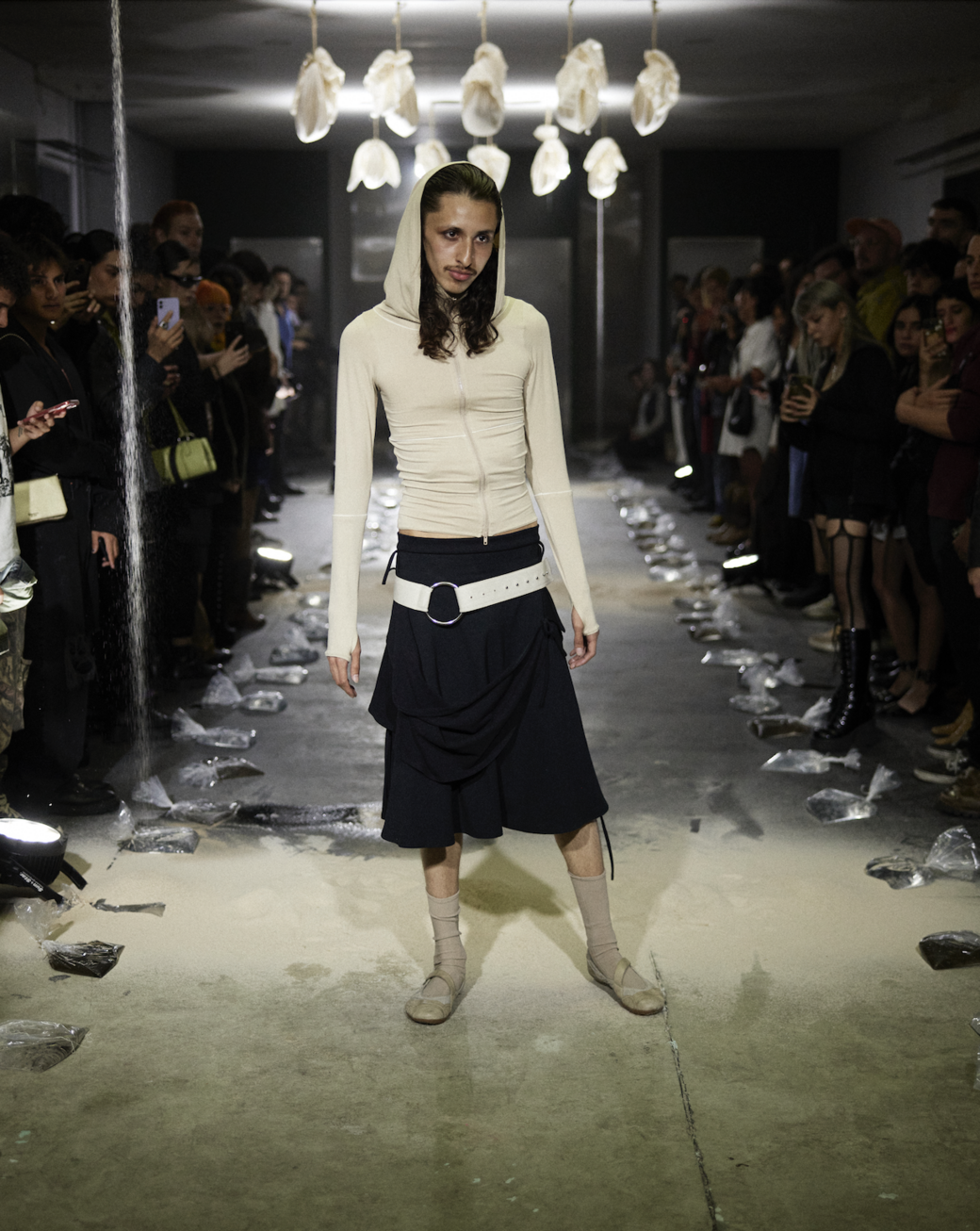
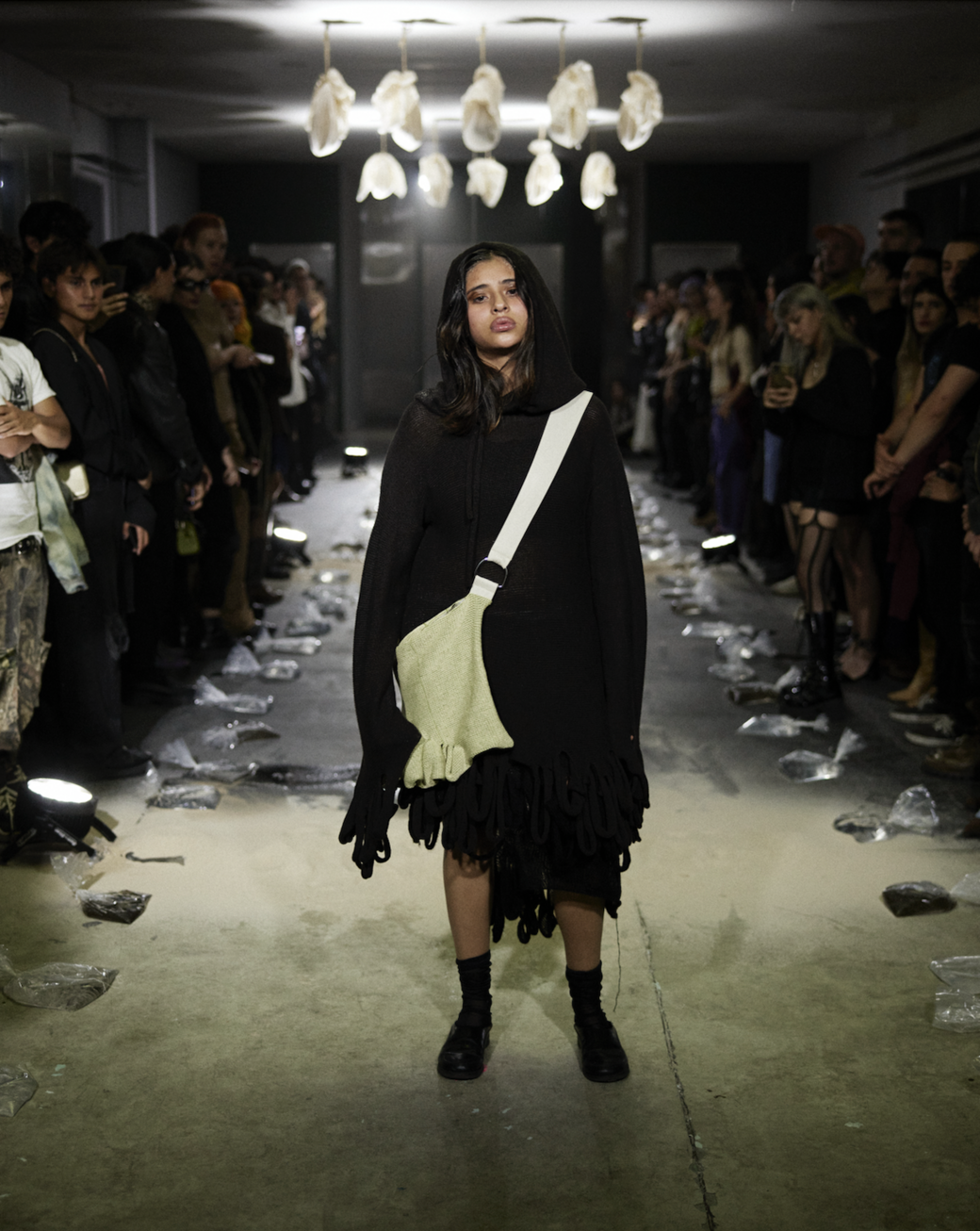
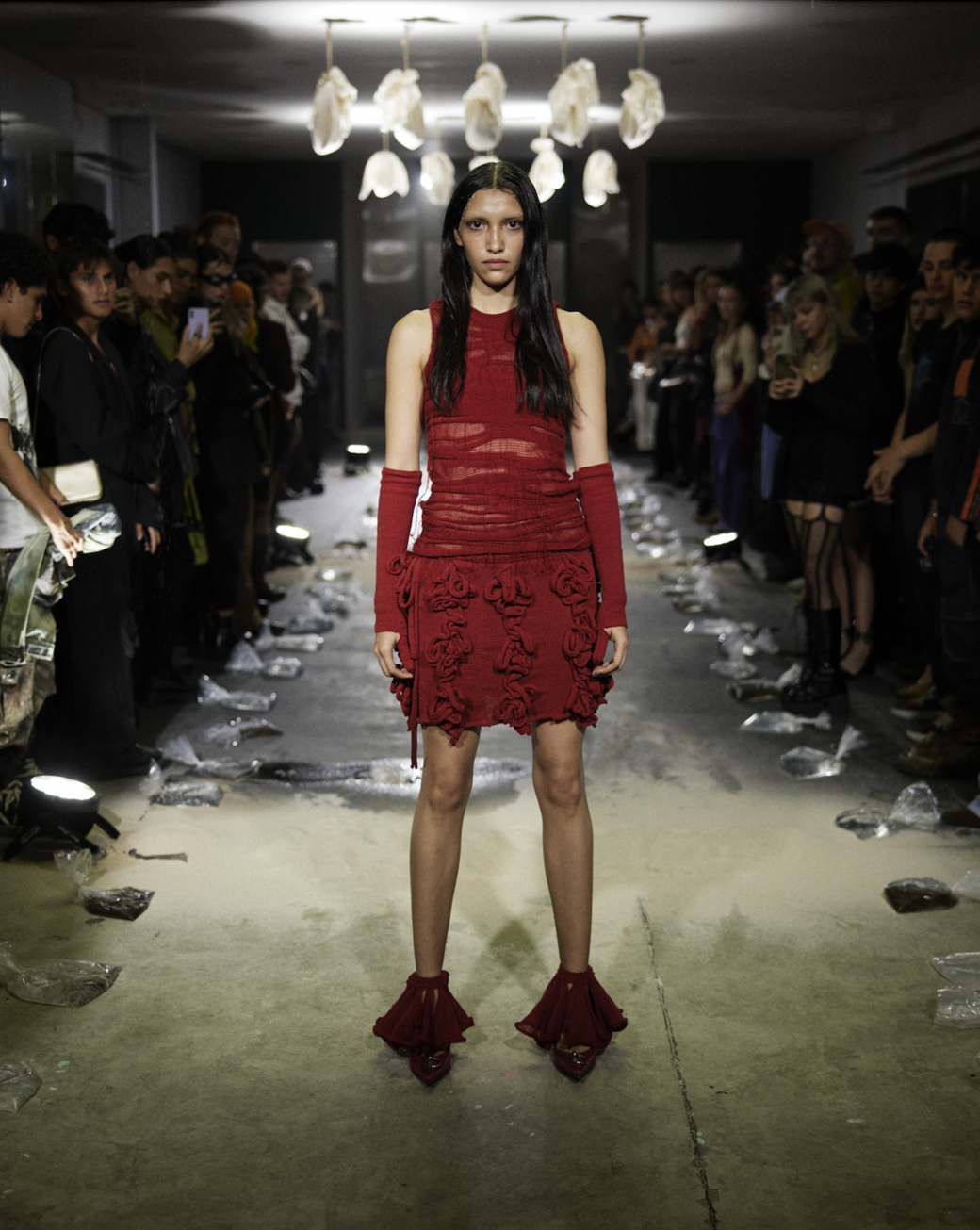
As model after model comes down the runway, there’s a statement to be made: Krystal Paniagua is here to speak to Mexico City, and likewise, the city is watching her. But it’s not just the city that’s embraced the designer: her clothes have been spotted on Alexa Demie, Dua Lipa, Nathy Peluso, Kylie Jenner and Minji from New Jeans, just to name-drop a few.
But there’s something for Paniagua about this year, this place: something that feels new and transformational. “This is the first time that I feel like I'm actually supported by people that want to be part of the team,” she confides on the roof of her studio, where we met to talk a few days before the show.
“It’s no longer just about me working on my own — it's about the people around me and how I want to represent their lifestyles and make clothes that can fit every context of their lives.”
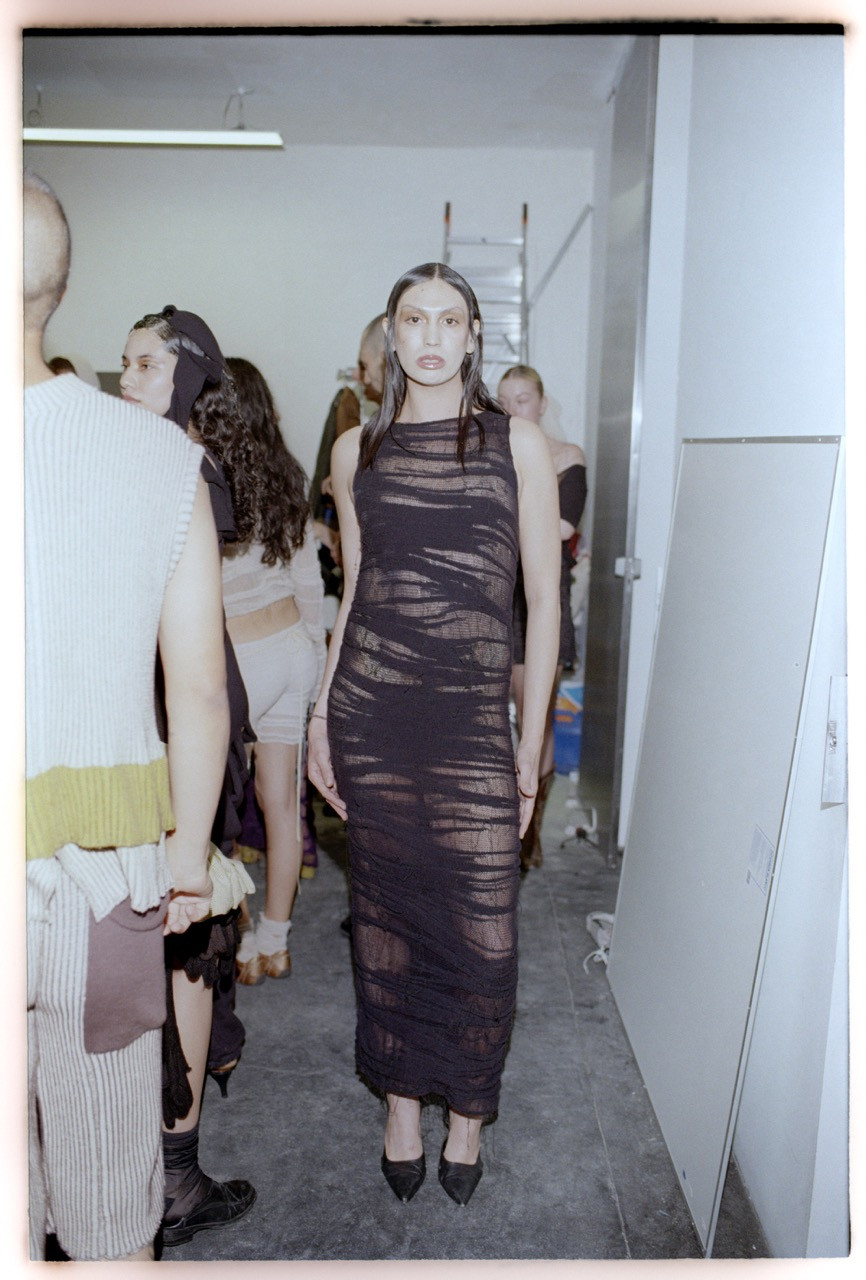
Photos by Patricio Malagón
As we spoke about the months leading up to the show, a theme arose: evolution through connection. “I think here is truly where I’ve evolved…” shared Paniagua. “...to an openness to work with other people, to let go of the ego and allow people to be part of the world.”
It’s clear to me as someone who met Krystal over a year ago that she is in a state of metamorphosis. Gone, or rather transformed, is the woman I had met: there’s a new look in her eyes — a fire for her vision of the brand. She talks passionately about her relationship with her new environment, how the brand has grown into a community. “I'm excited,” she confided. “Having people that care about the same things that I do, where we're all trying to lift up each other — it’s such a special environment, in the sense that everyone cares. They all want to see it grow.”
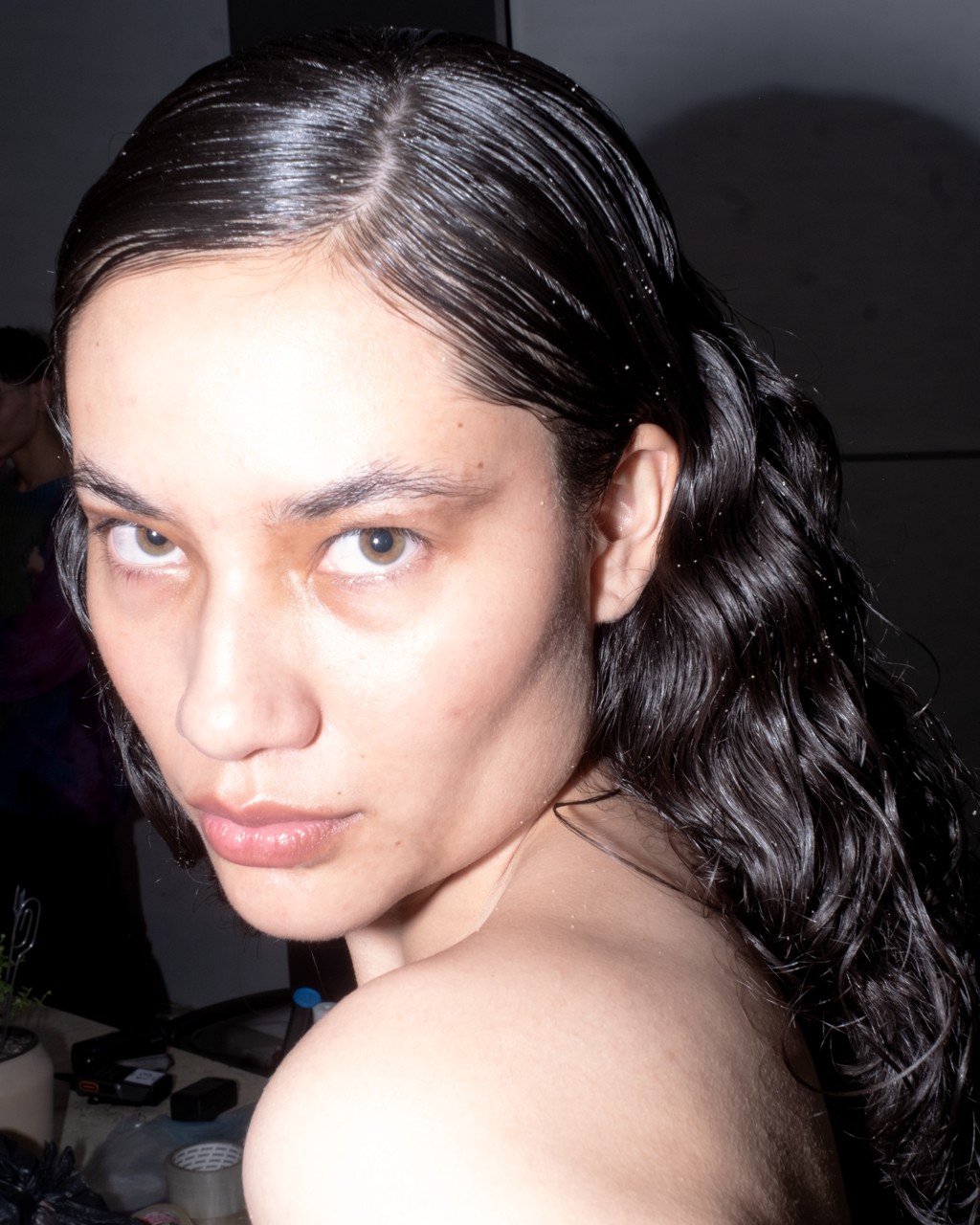
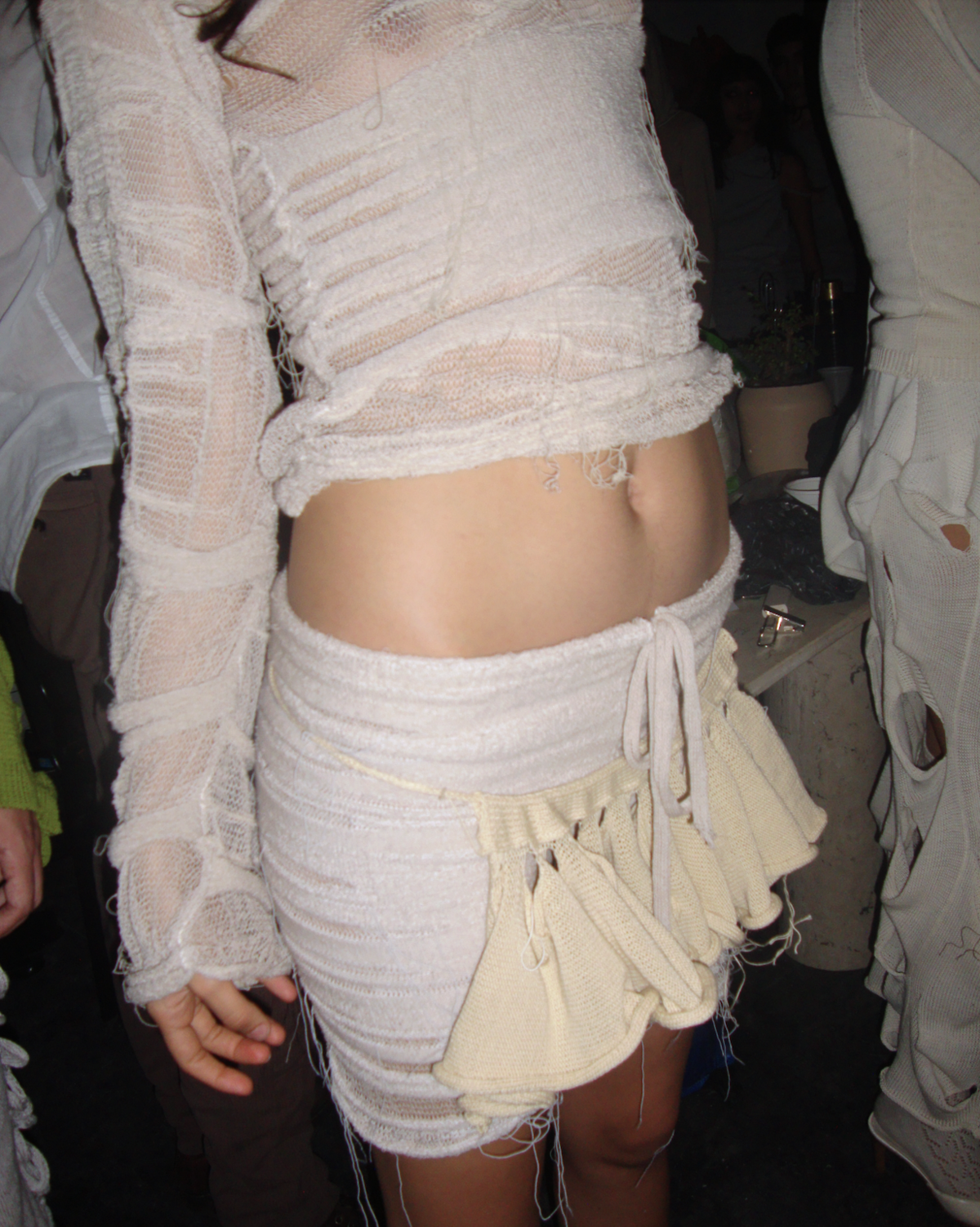
Photos by Ramon Saturnino
And this growth is not in isolation: the fashion landscape of Mexico City is blossoming more than ever, building upon a longstanding legacy of influential clothing design and production locally, across Mexico, and beyond. Swiftly growing local brands like CRUDA, Sentimiento, Roberto Sánchez, Scent, Grieve, Ketvoid, Tercermundo and more are sold locally and abroad, while design-forward concept stores like Hi-Bye, MARSELLA 68, VENA, and WiG are all making their mark on the city and beyond.
It’s fitting then that Paniagua’s first show was crafted in partnership with WiG — a symbol of the symbiotic nature of the city and its creatives. Founded by Hernán Esquinca and Malena Foyo, the store’s elevated industrial interior was a seamless match for the designer’s flowing clothing; a sensually brutalist container for the raw futurism of the collection. “I have been a fan of Krystal’s work since a few years ago and, having presented her new collection in the store, it made a lot of sense and was a dream come true,” shared Esquinca. “I feel that her brand represents what WiG wants to share of what we are doing in México and the community that we are solidifying.”

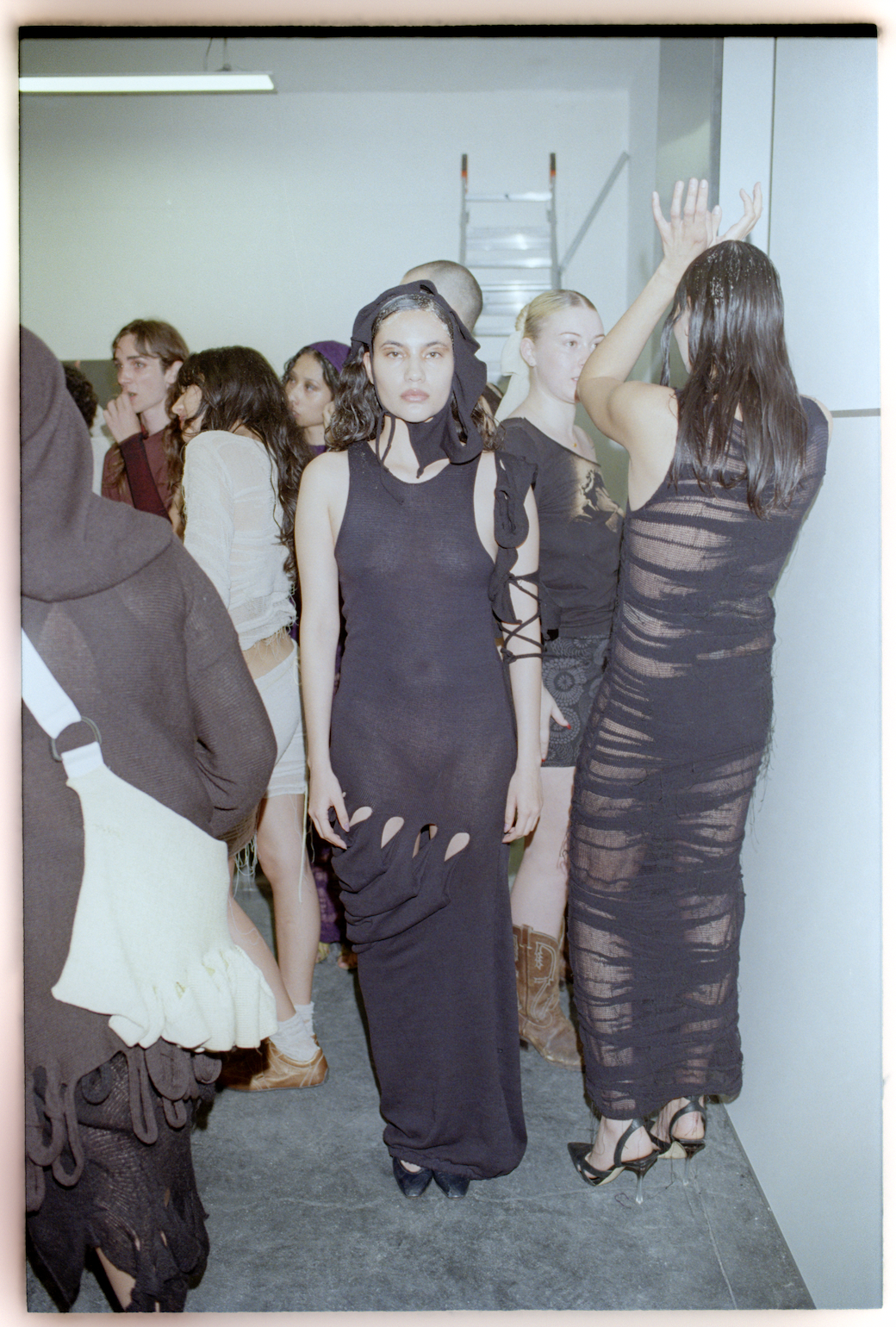
Photos by Patricio Malagón
As we spoke about the collection, Paniagua reflected on her current state of mind and its relationship to the collection. “The whole basis of my work is adaptation: being able to evolve, to adjust to the lifestyle that you're in. In this collection, we're exploring how time can move in a loop — how you actually return to where you began but also evolve at the same time.” This concept was threaded throughout the collection and the runway, from sandbags that mirrored hourglasses to the actual loops of textile that adorned many of the pieces.
First Look: KRYSTAL PANIAGUA SS24 CAMPAIGN FILM
In the end, it all comes down to this idea of evolution: how we all change and grow and connect and metamorphose into better, more expanded versions of ourselves. For Paniagua, the show was a manifestation of myriad references and self-iterations, from the set design’s nod to the beaches of her native Puerto Rico, where she held her first ever runway, to the show’s soundtrack, crafted by Samuel Valles Emazón with snippets of the designer’s voice.
For Paniagua, this kind of evolution doesn’t exist in isolation, but in the midst of a community biome: conversations and connections in the studio and beyond that lead to a sum greater than the parts. “I want to show that we can all be free together and that there’s space for each of us to grow. I hope it inspires people to try new things: they don’t have to be a fashion designer — just be inspired to start a cafe or a painting or whatever they want, because they felt like they were allowed to see and to learn.”
Download the Krystal Paniagua 2023 Runway Mix by Samuel Valles Emazón
SHOW CREDITS

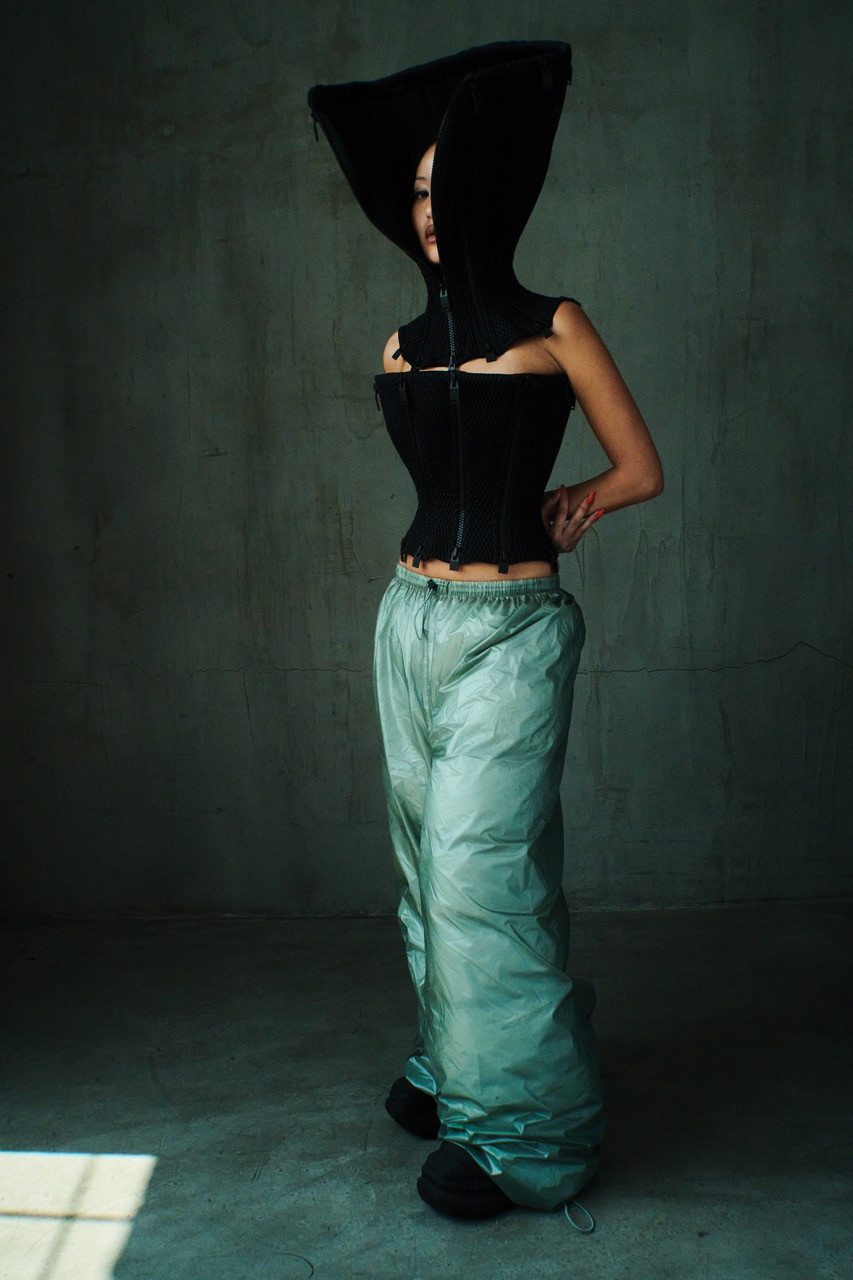
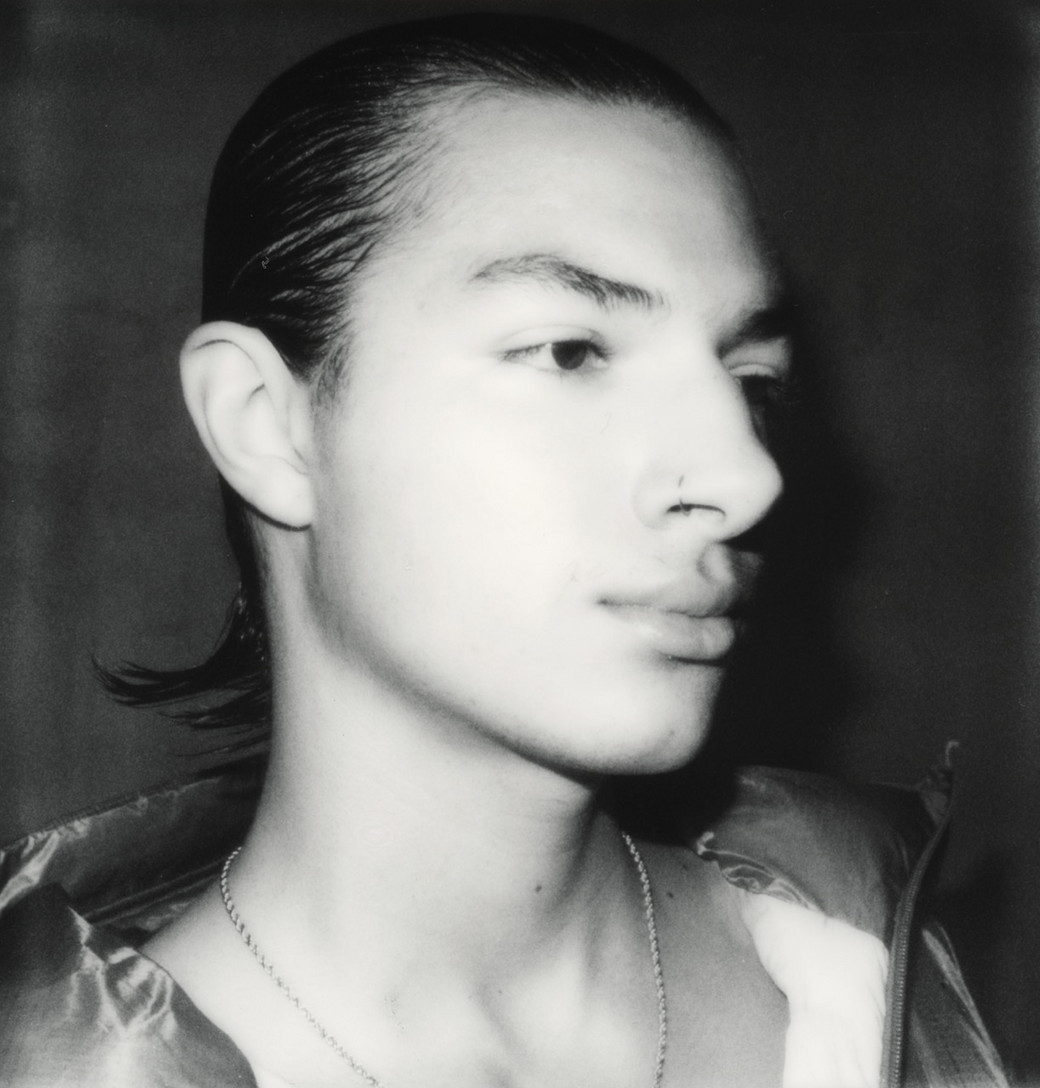
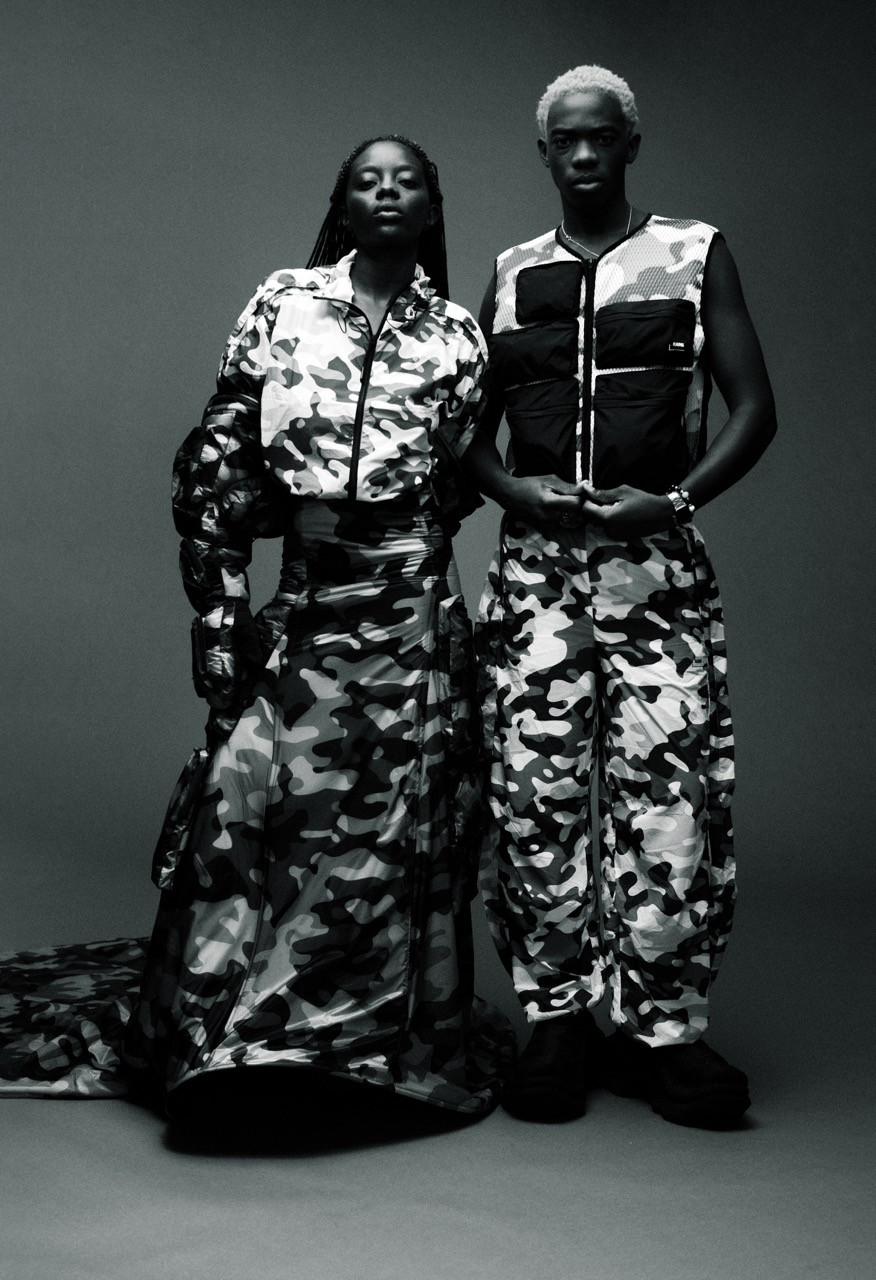
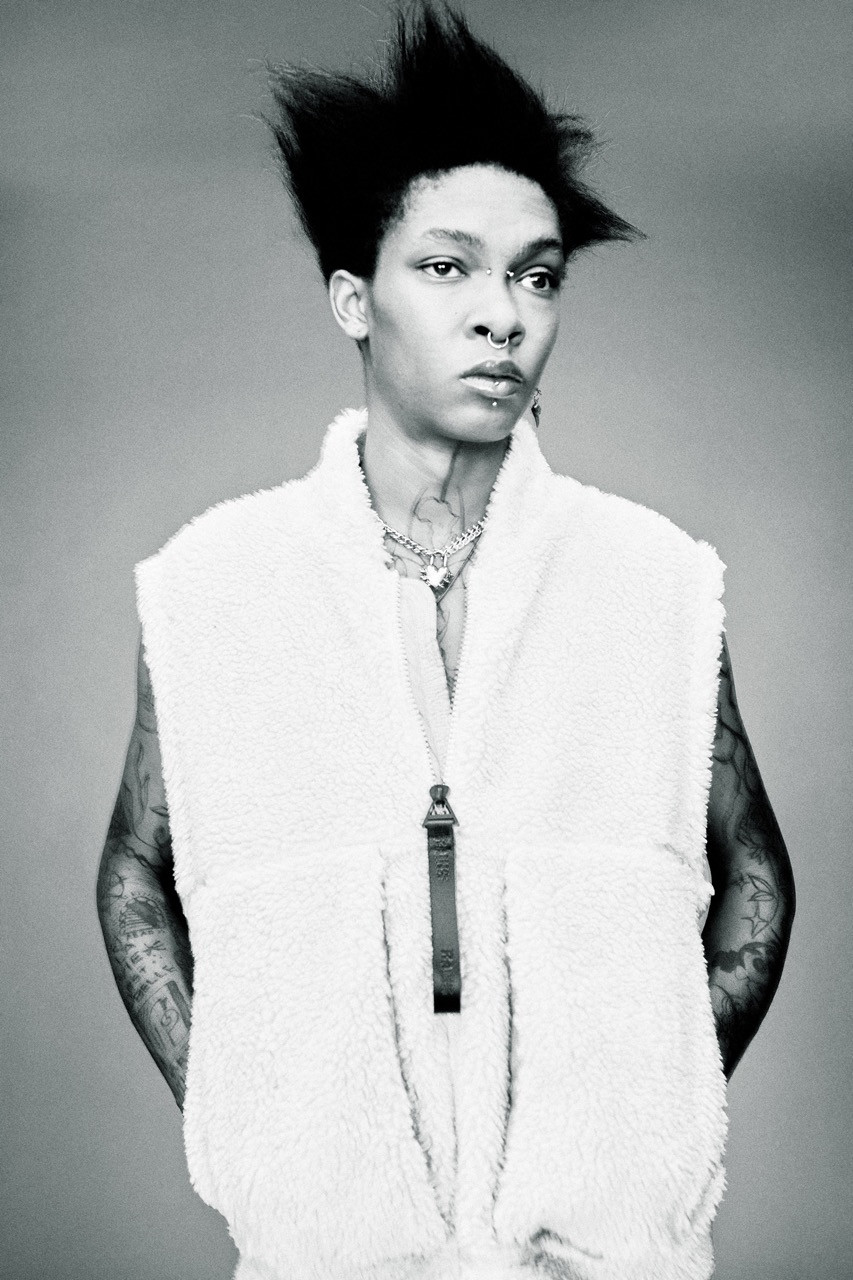
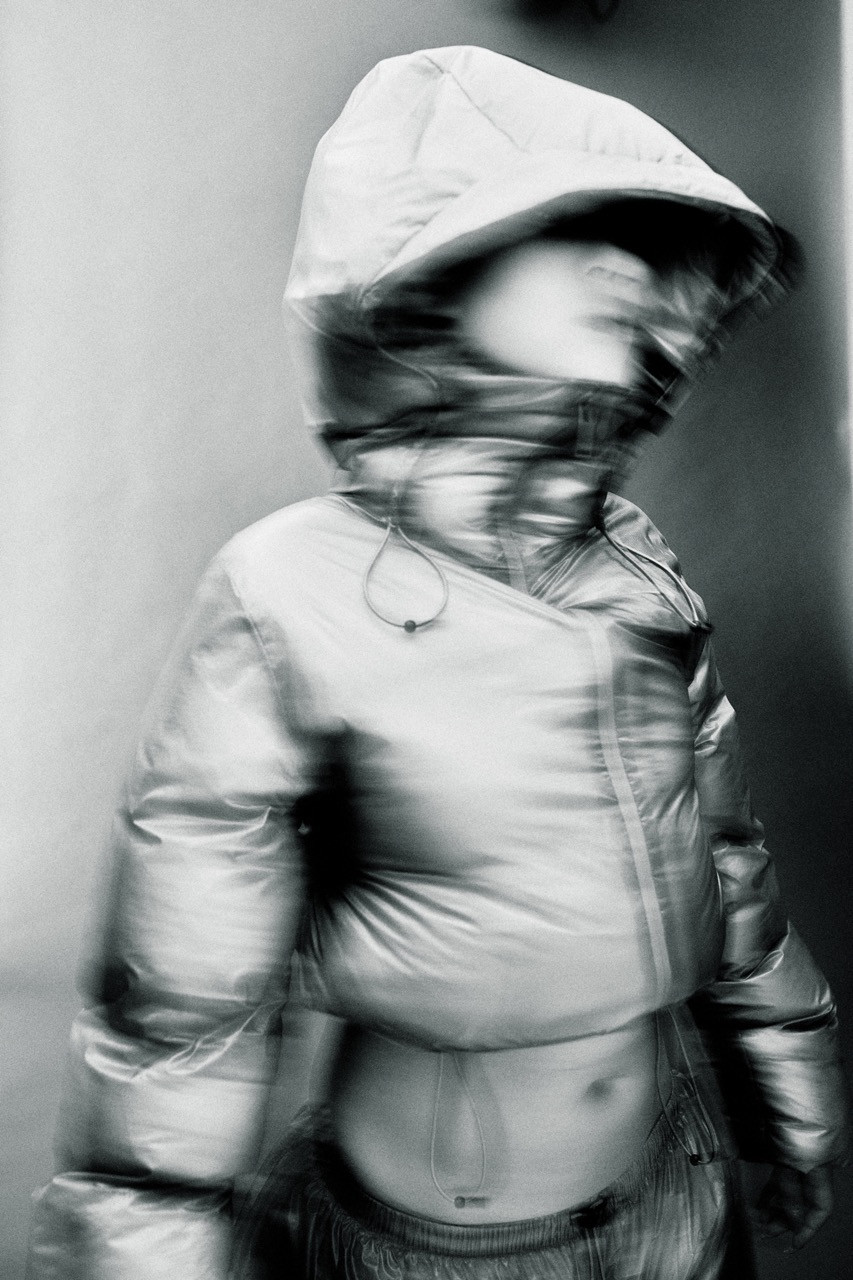

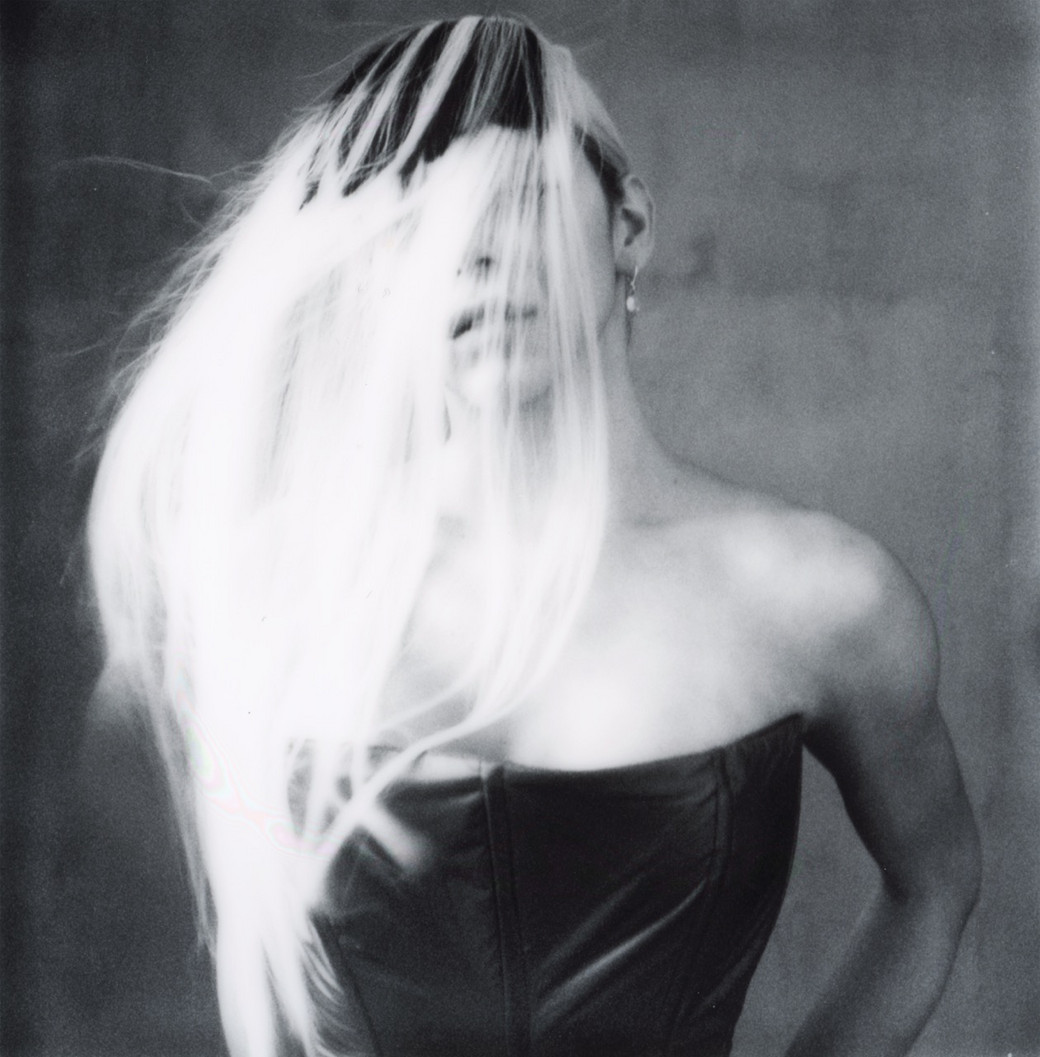
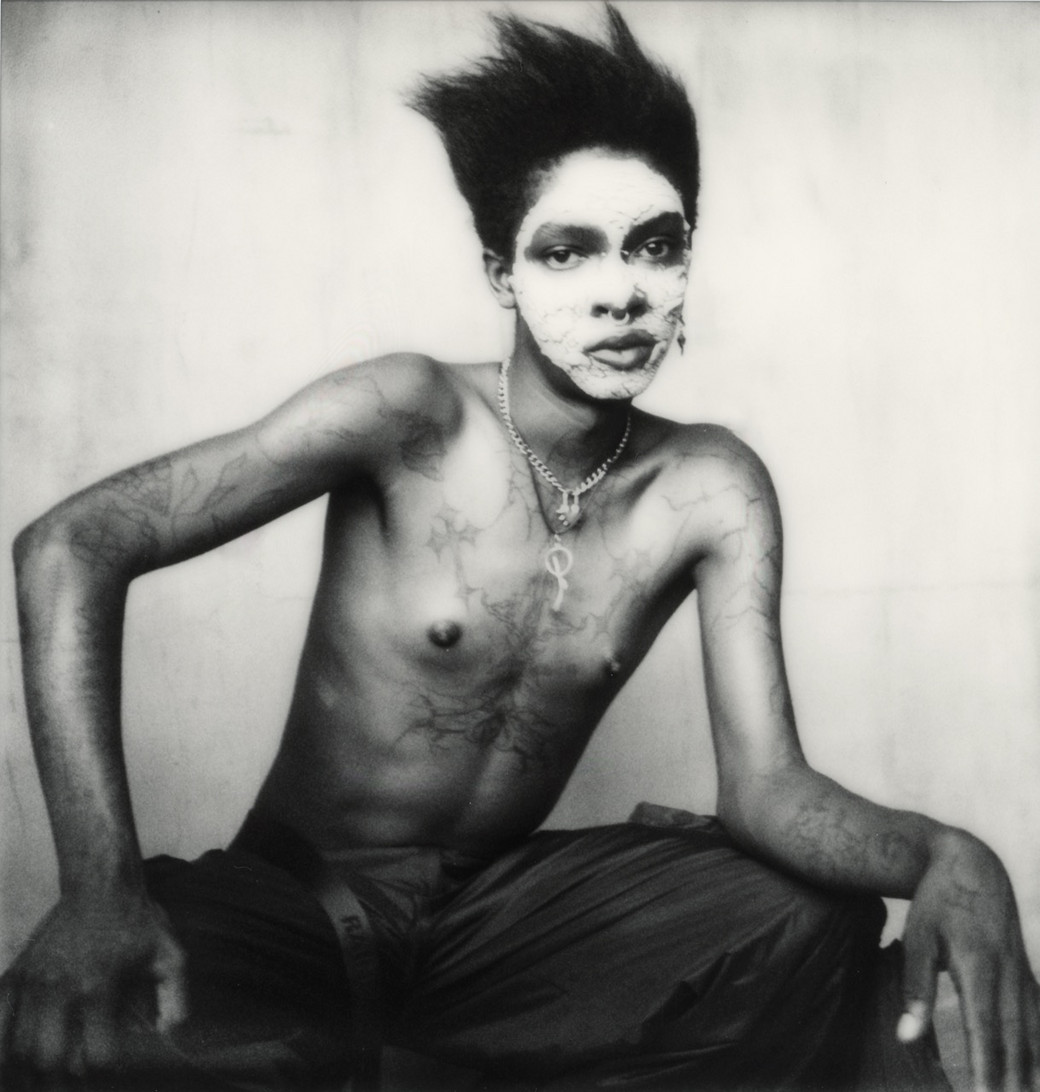
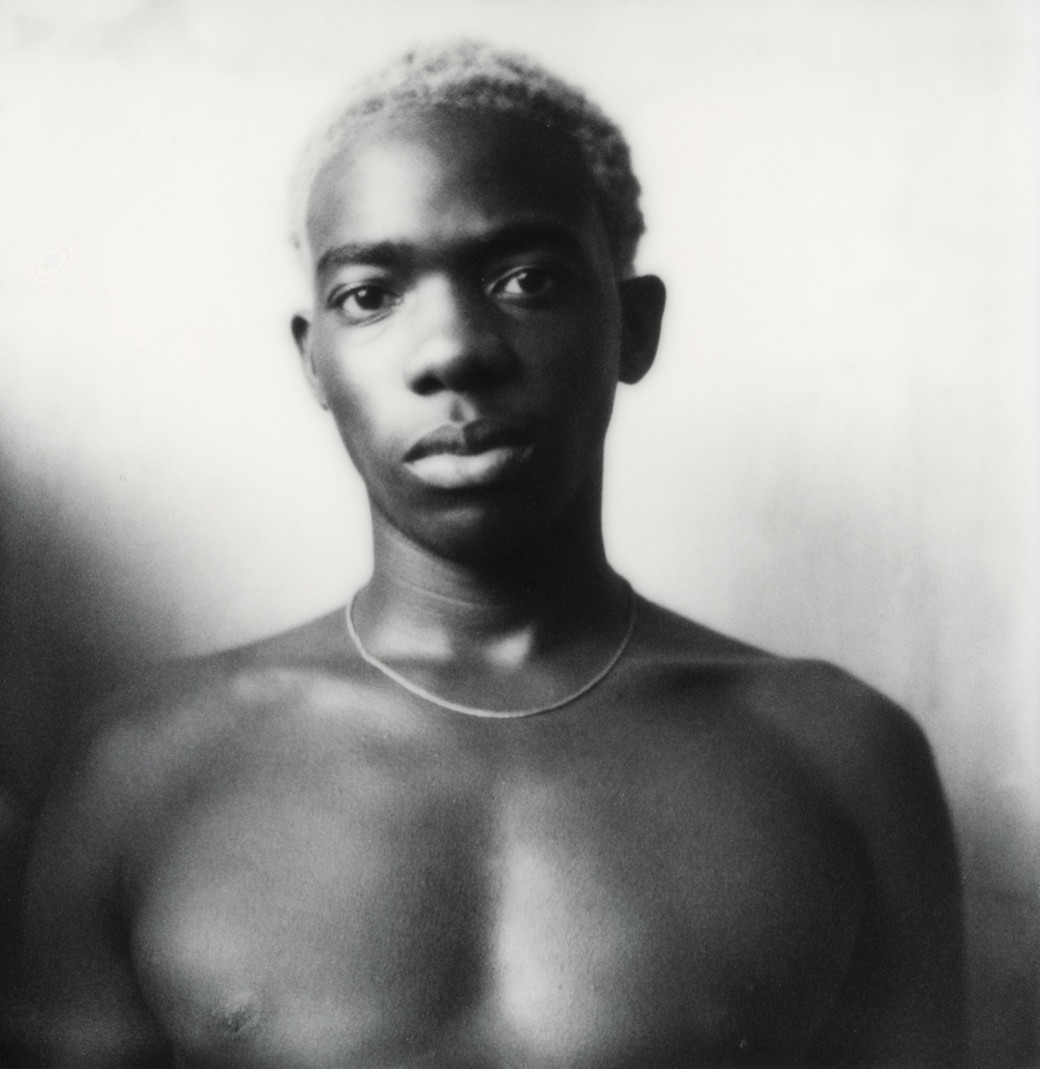
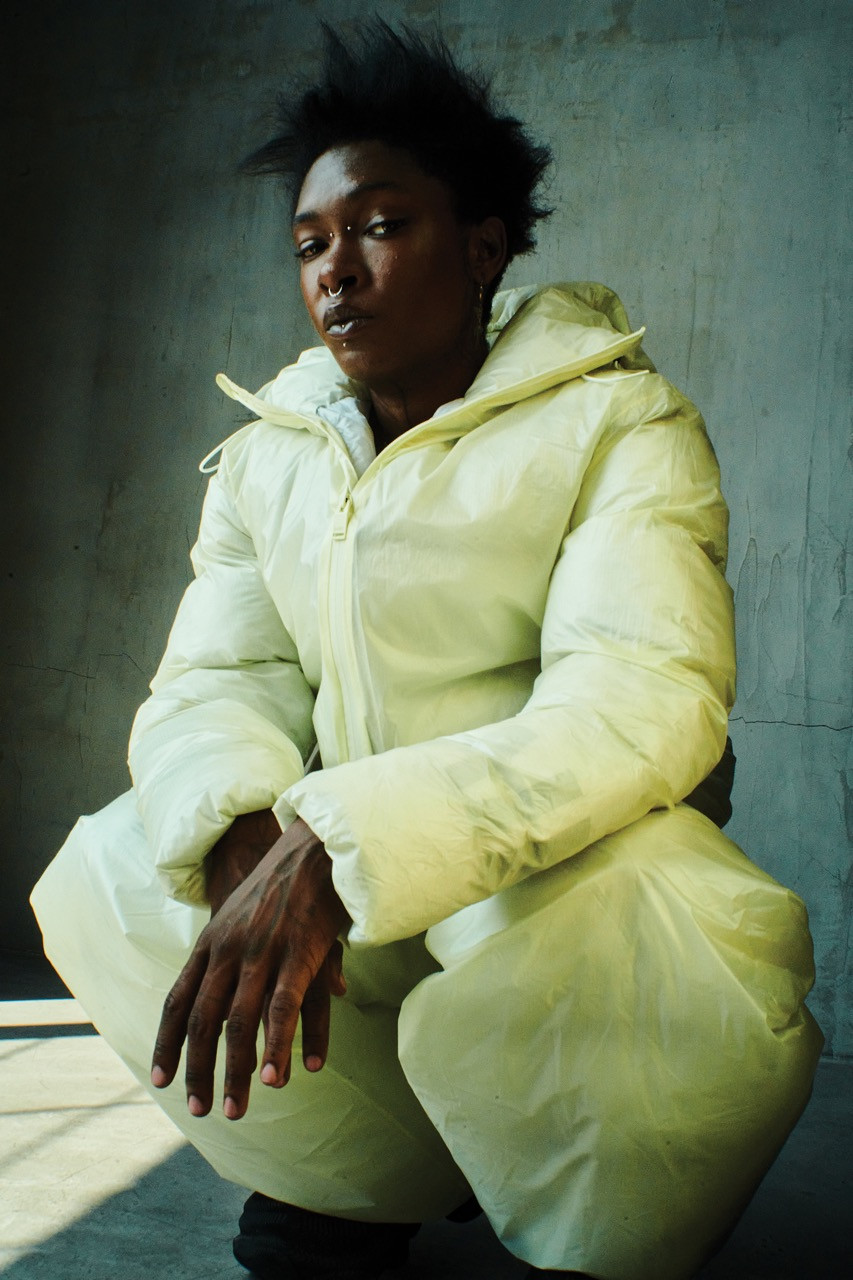
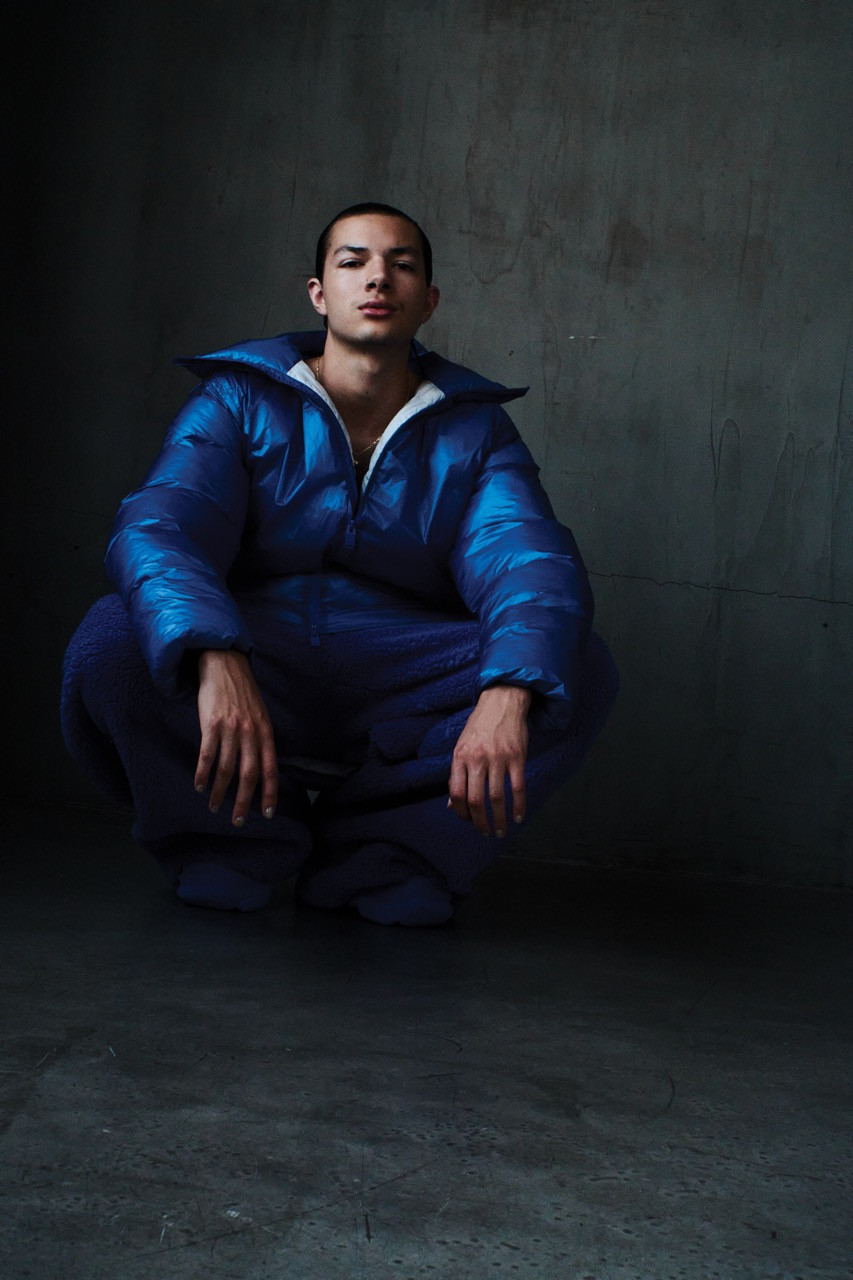
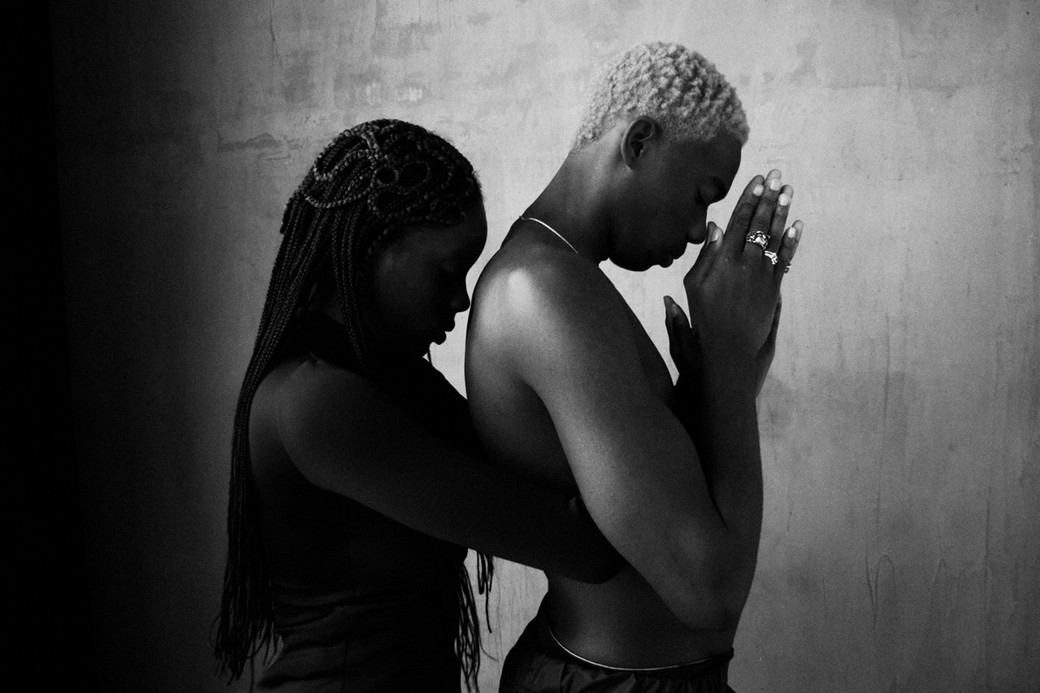
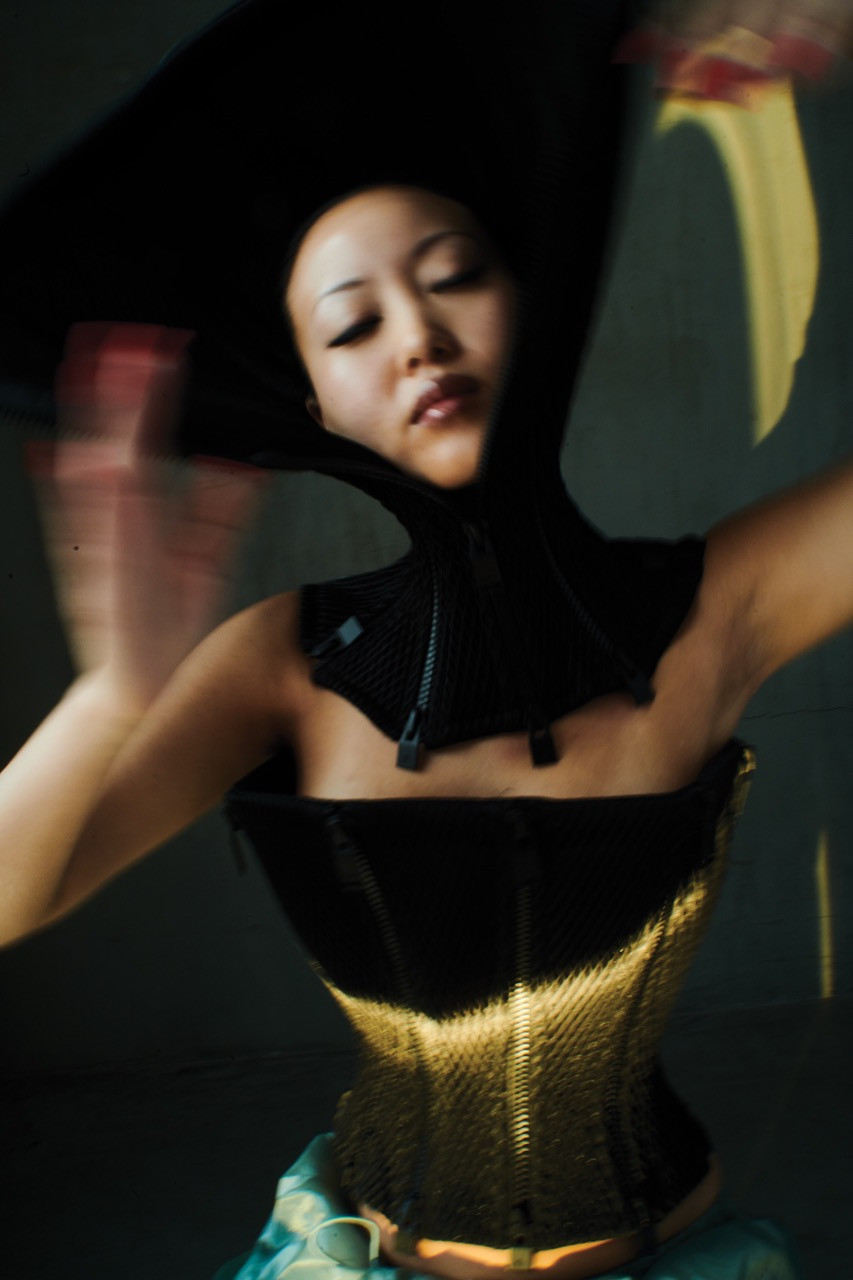
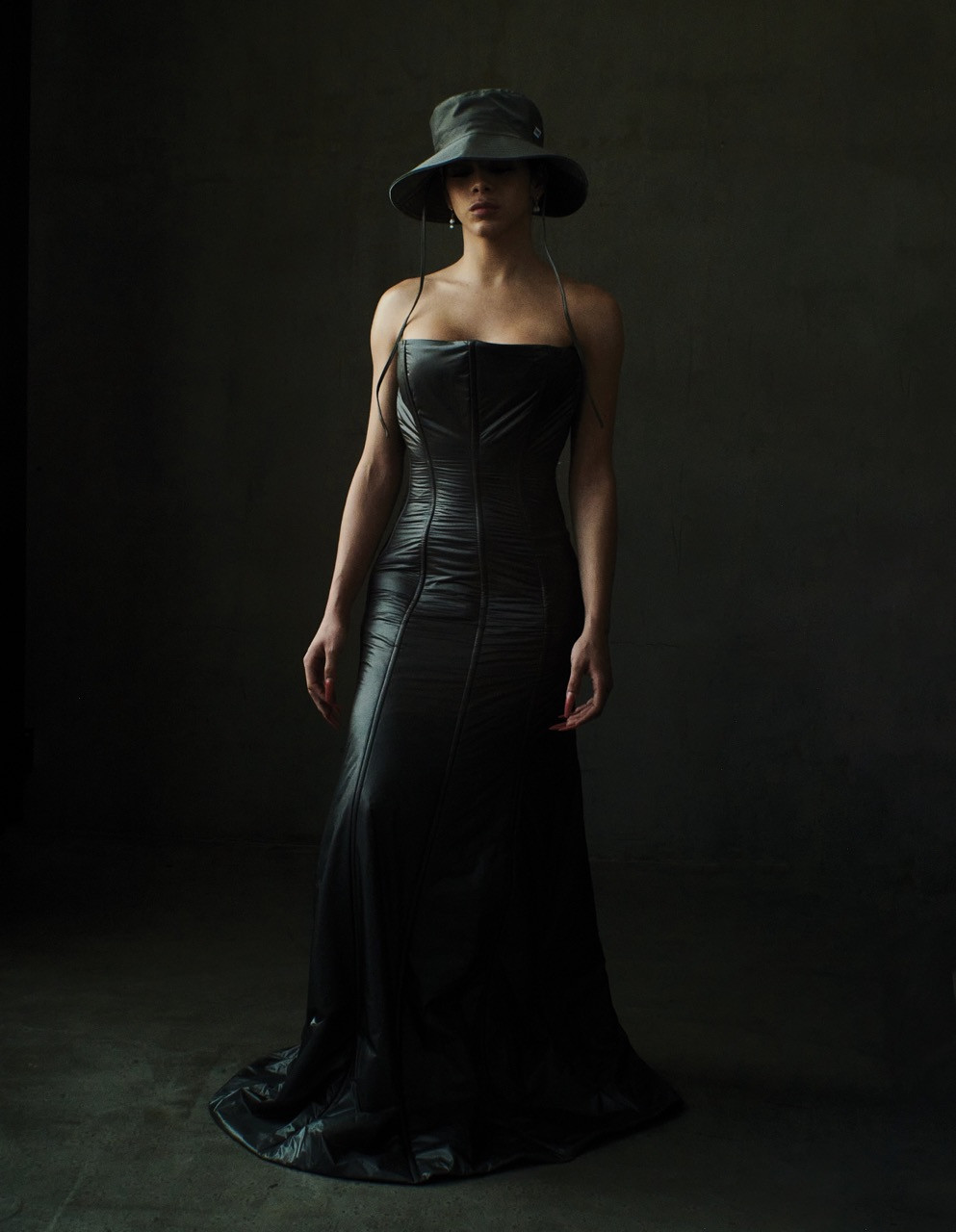
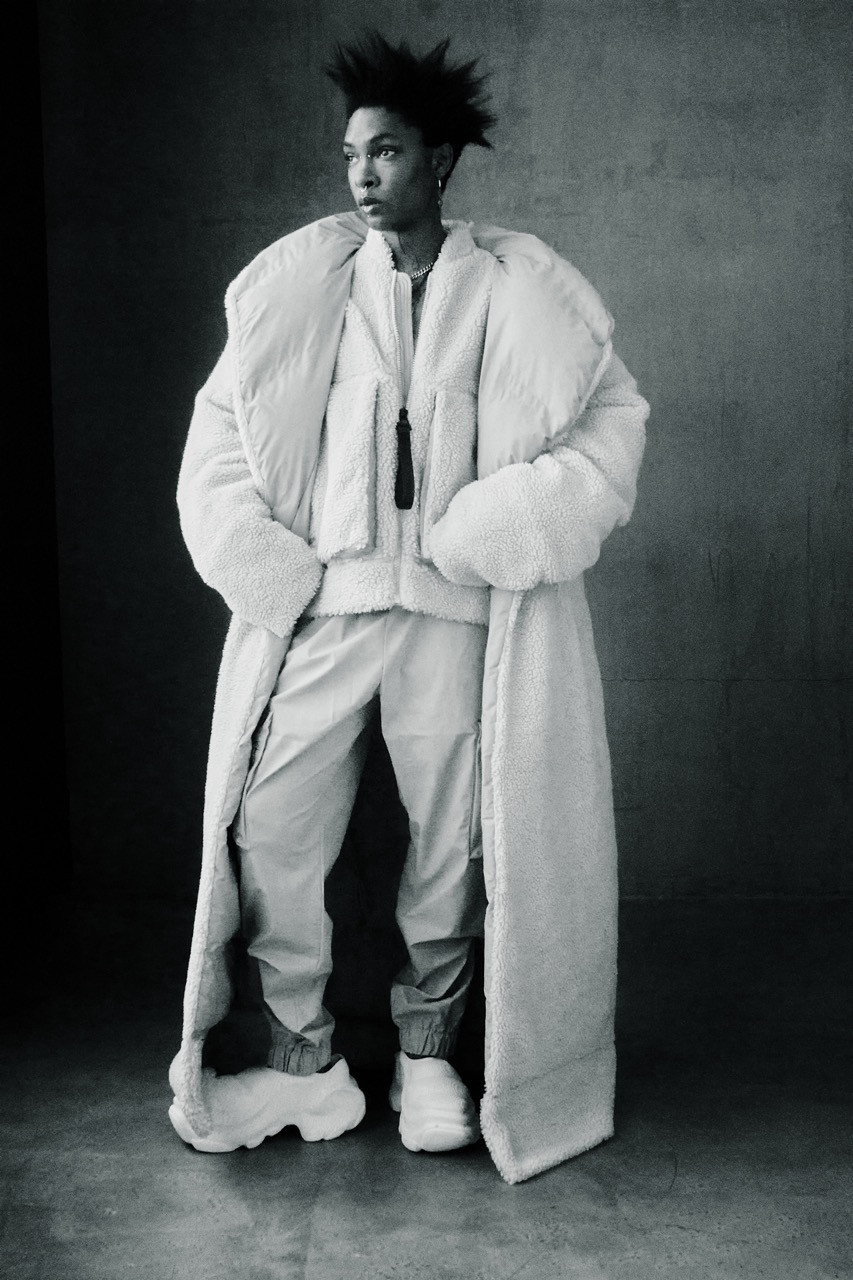
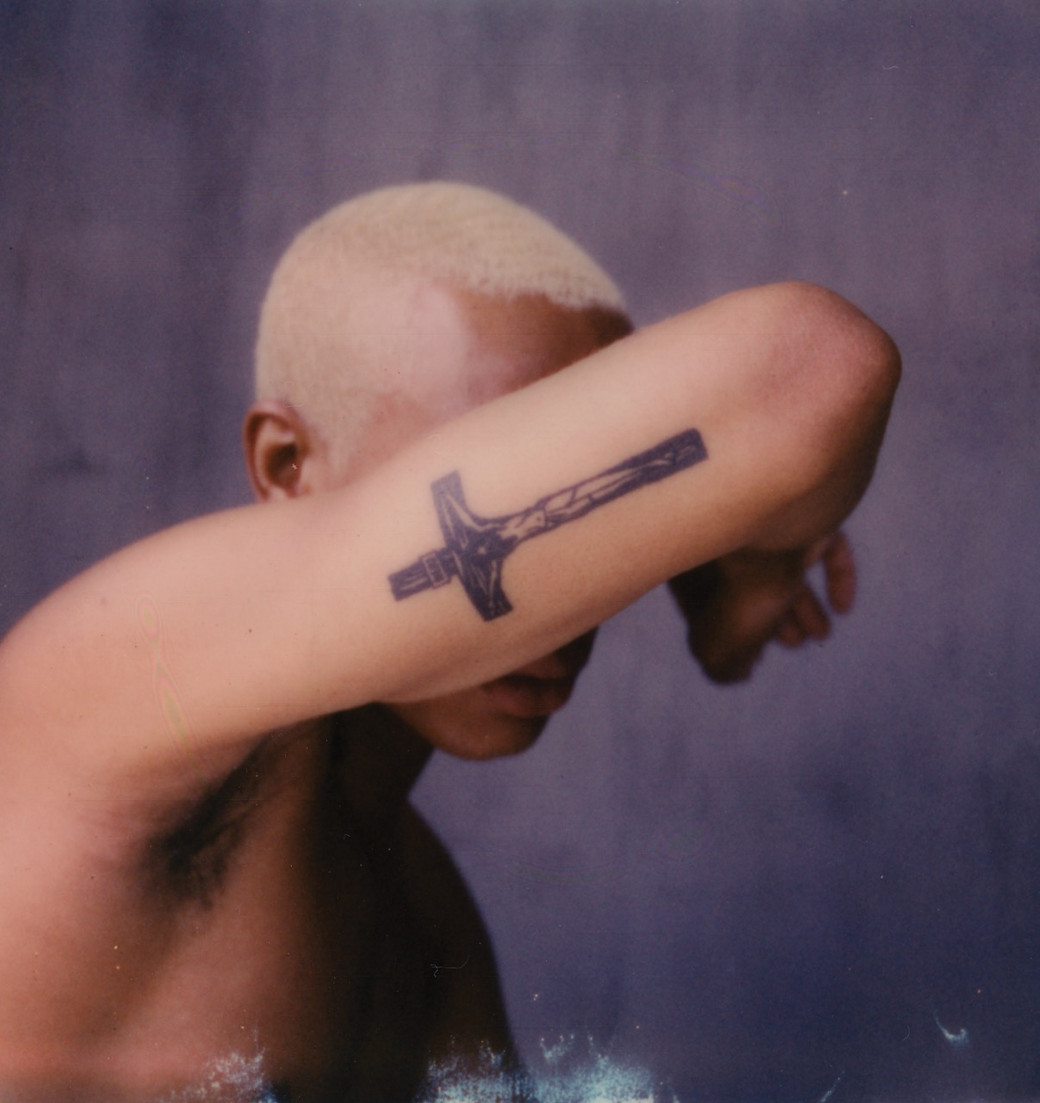

The designer has candidly confessed that he creates for his own sake, "not for the consumer.” A kid that got kicked out of Swiss boarding school now dressing those who've similarly been dismissed — or liberated. It's all a matter of interpretation, like Levy's garments.
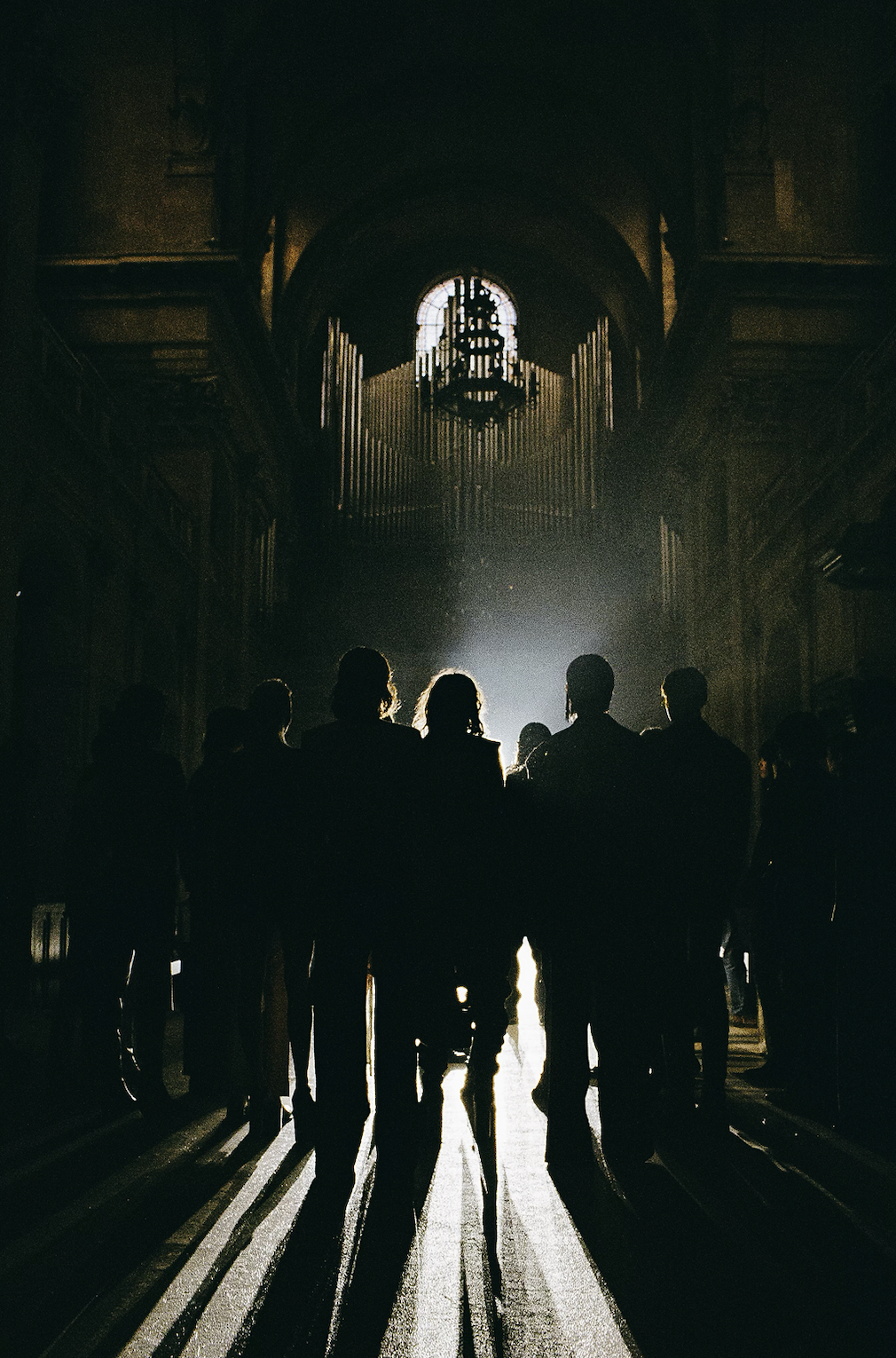
The presentation, held at the historically suppressed Protestant church, l'Oratoire du Louvre, was chosen for its grand scale and play with light and darkness. It commenced with a performance by Mae Markl, a murder that left no bloodshed, as the baby doll beside her lingerie-clad body was artificial. This served as a nod to the fragility within, doubling as an extension of the brand's rejection of reproduction.
The funeral procession showcased a lineup seamlessly connected by a sharply tailored red thread. Silk danced in juxtaposition with heavy leather usage, a thoughtfully devised contrast, while impeccably polished suits were adorned with an abundance of safety pins throughout the entire collection. Skirts, some featuring unfinished raw linings, were daringly short, and stockings climbed provocatively along exposed legs.
When asked about his design approach, reminiscent of Kathy Acker's calculated linguistic artistry in 1970s LA, Levy detailed his transversal process, beginning with a painting or collage. "Then I craft a jacket. I befriend it. I continue this process one piece at a time until I've assembled a room full of friends conversing in the same language, an insider communication with external objects."
His expressions are as compile as his garments. And so is his feelings towards Paris, refusal and approval constantly overlapping one another, much like the leather and the silk. He confesses that he feels, "constantly bogged down by Europe and Paris. [He] loves it, then hates it, then loves it, then hates it again and leaves. Then [He] comes back to show [his] work." The pain is important to his process.
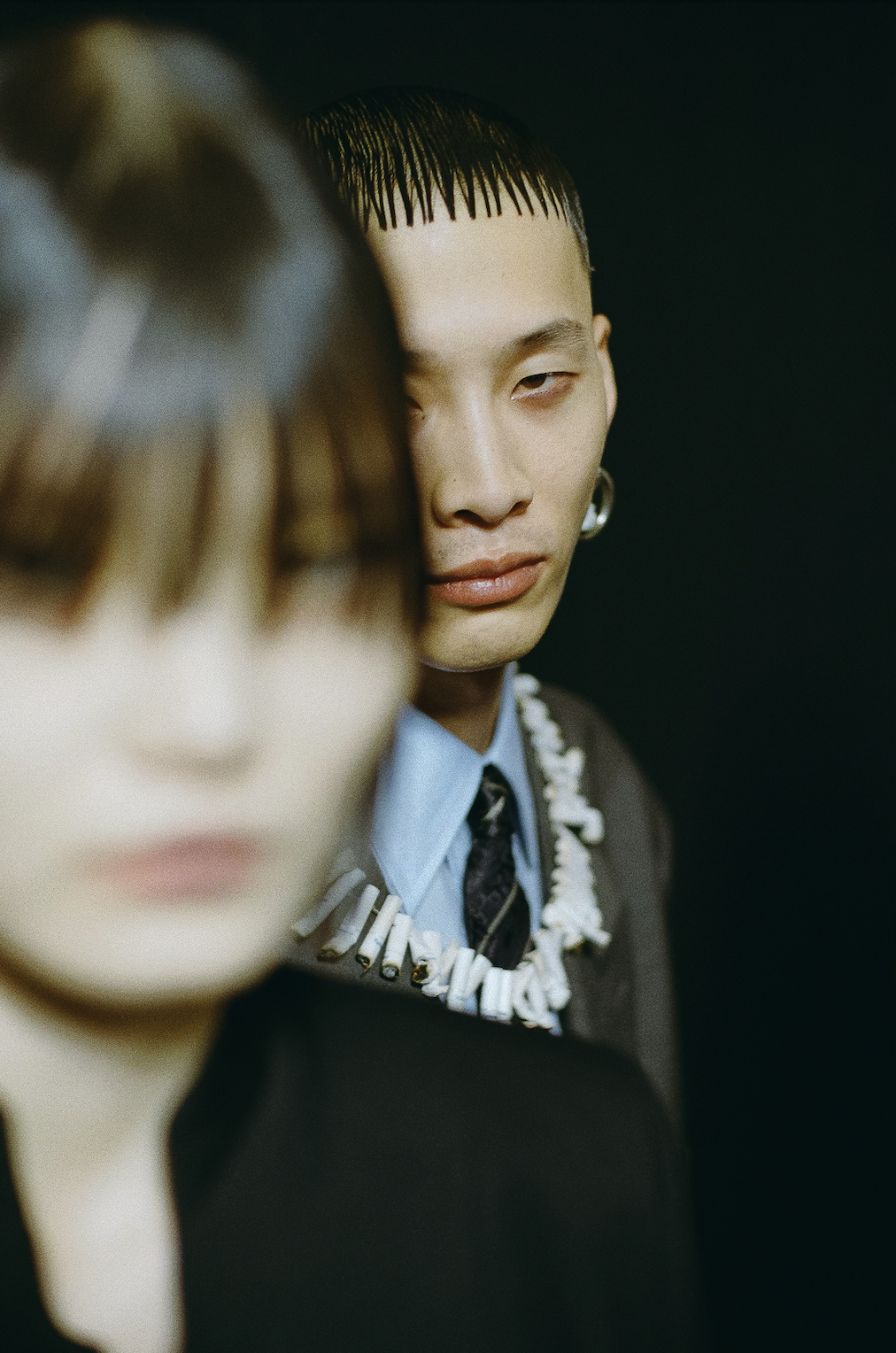
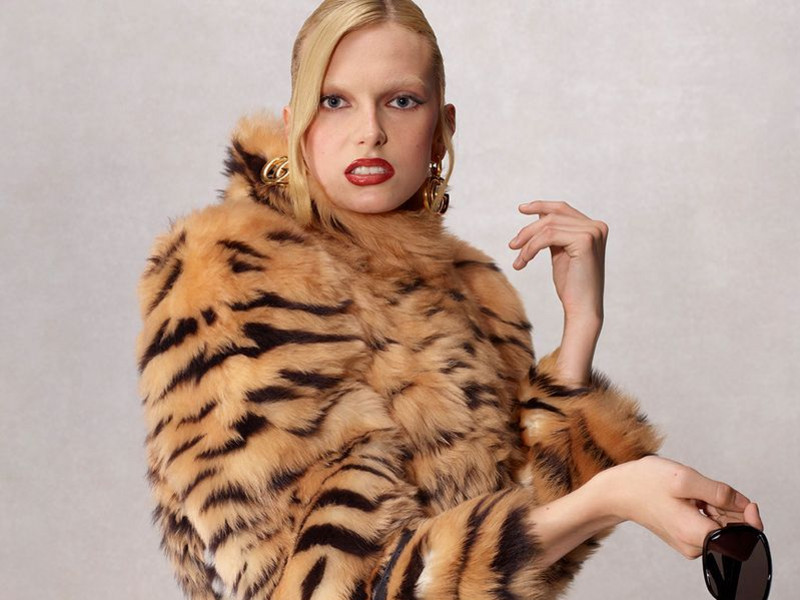
Despite Levy's anarchic approach and the high price tags attached to his creations, the collection remained surprisingly wearable. Meticulous attention was bestowed upon every detail, and David Friend's styling skillfully bridged the gap between lambskin and virgin wool, balancing the wild with the delicate. Key details included studded belts, spoon earrings, corsets, collars made of cigarette buds and Christian pins, and even Narcotics Anonymous tags that adorned a chainmail bralette — pastiches composed of found objects with their own histories.
In a world where everything seems like a simulacrum, and novelty appears as mere nostalgia, is this then, the new "new"?