At The Circus

Oh and the peacock feathered suit was killer. See it, and our other favorite looks from backstage at the presentation, below.
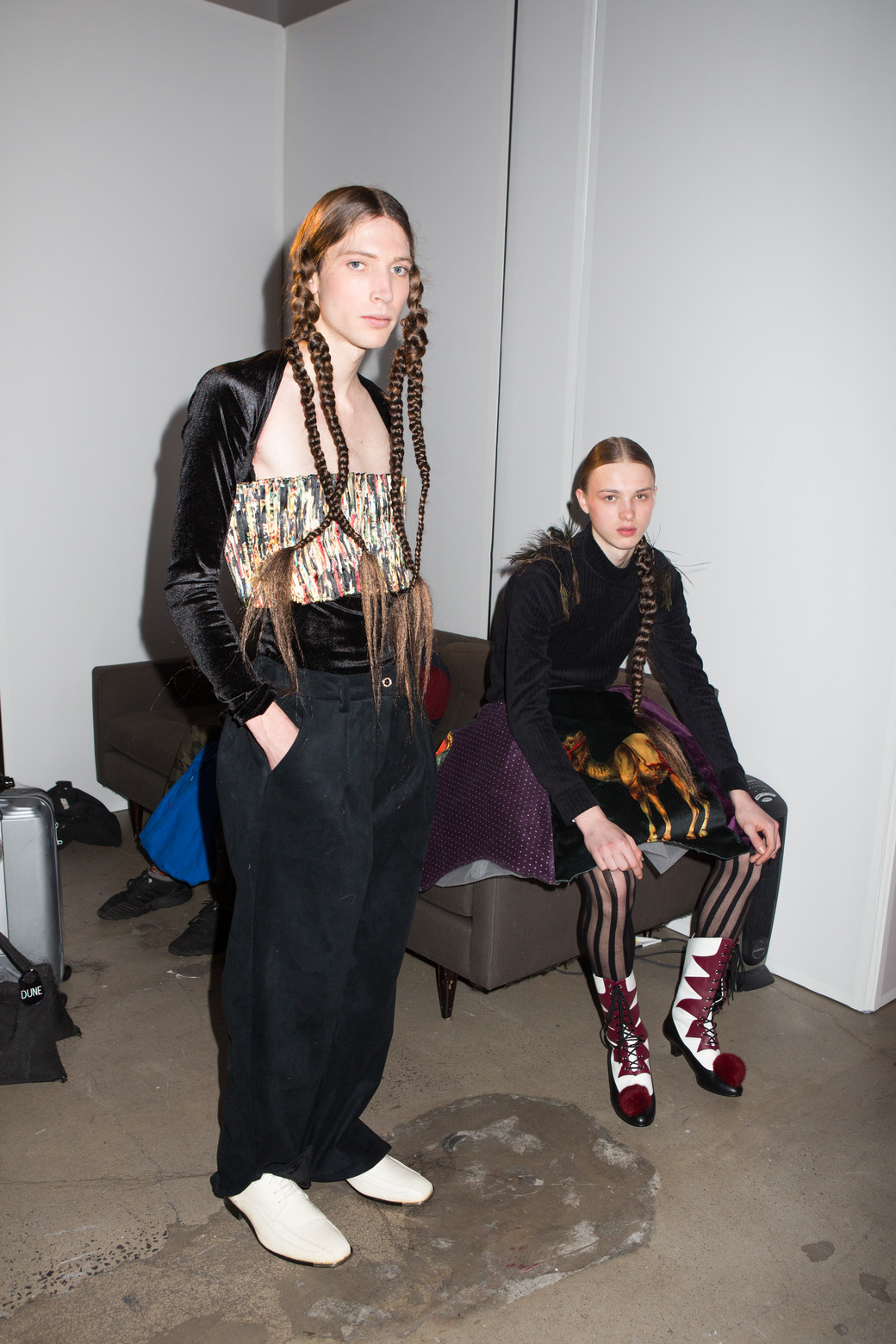
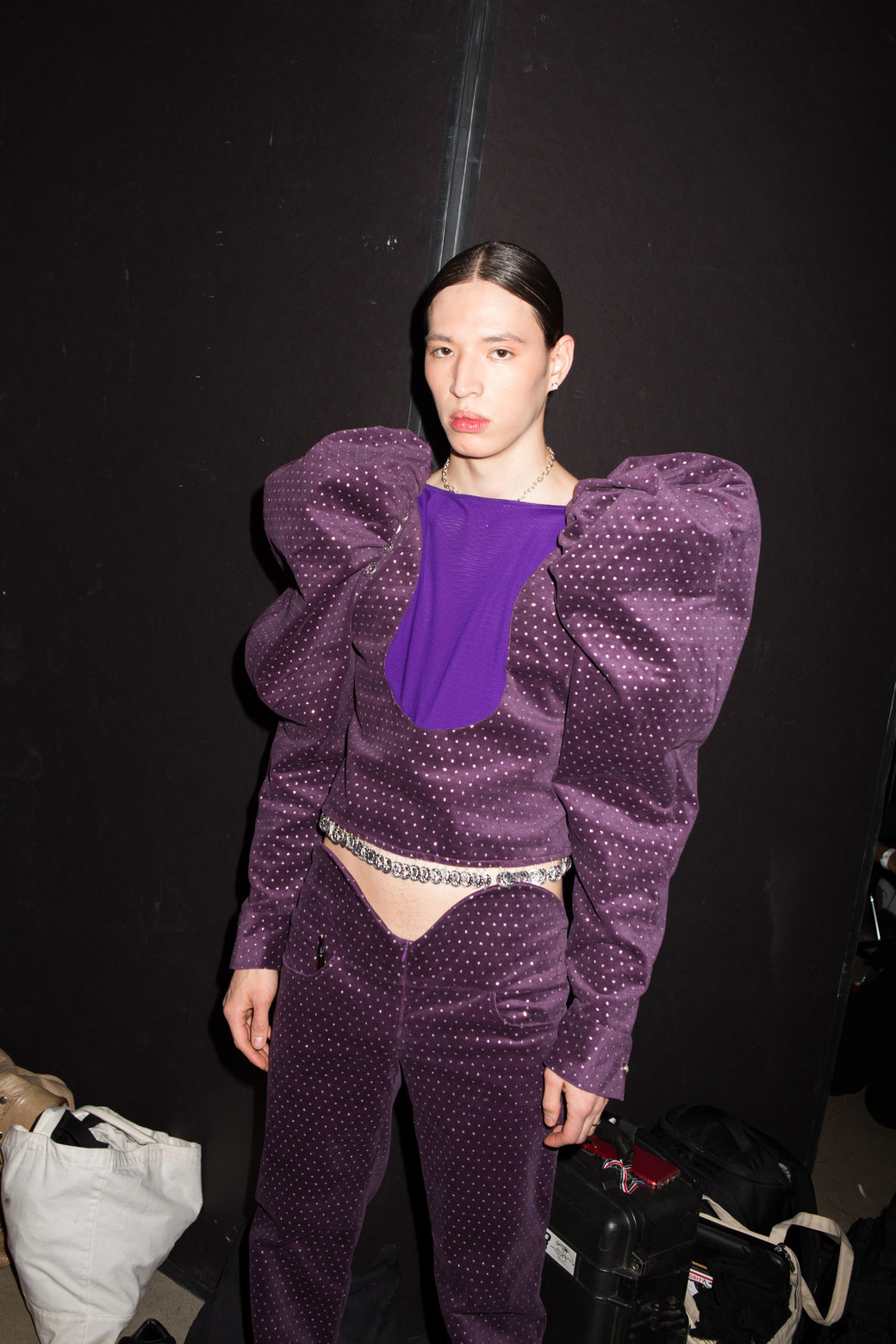


Oh and the peacock feathered suit was killer. See it, and our other favorite looks from backstage at the presentation, below.

Nearly eight years ago, Strangenberg found common ground in her creative pursuit upon meeting and collaborating with Paul McCarthy, a multidisciplinary artist whose decades of work largely interrogates American influence, including mass media and consumerism. Over the years, the two have continued to share artistic understandings, pursuing the question of provocation versus existentialism. Which one holds greater value? Captured through an often absurdist lens, their art centers on stomach-turning scenes of smeared blood and human shit, backdropped by nude intimacy and experiential sound.
Beginning with their loose adaptation of The Night Porter, an erotic psychological thriller of an ex-Nazi SS officer whose past haunts him while entangled with his newfound love, Night Vater is McCarthy and Strangenberg’s take on the cult classic, in which they transform the narrative to reflect the darkness that lies in Hollywood. After years of on-and-off production, Night Vater crystallized the attempt at understanding the infliction of existence, later seeping into their A&E characters, Adam and Eve, interchangeably, Adolf Hitler and Eva Braun. Titled, The Drawing Sessions, McCarthy paints Strangenberg, both in the A&E characters, for hours on end, delving deeper into the psyche of the subjects. These intense sessions evoked the artists to create a film of the Garden of Eden, where McCarthy adorns the infamous two-inch stache and Strangenberg bears a slight resemblance to Eva. However, this film subverts the known context and is set in the Los Angeles desert.
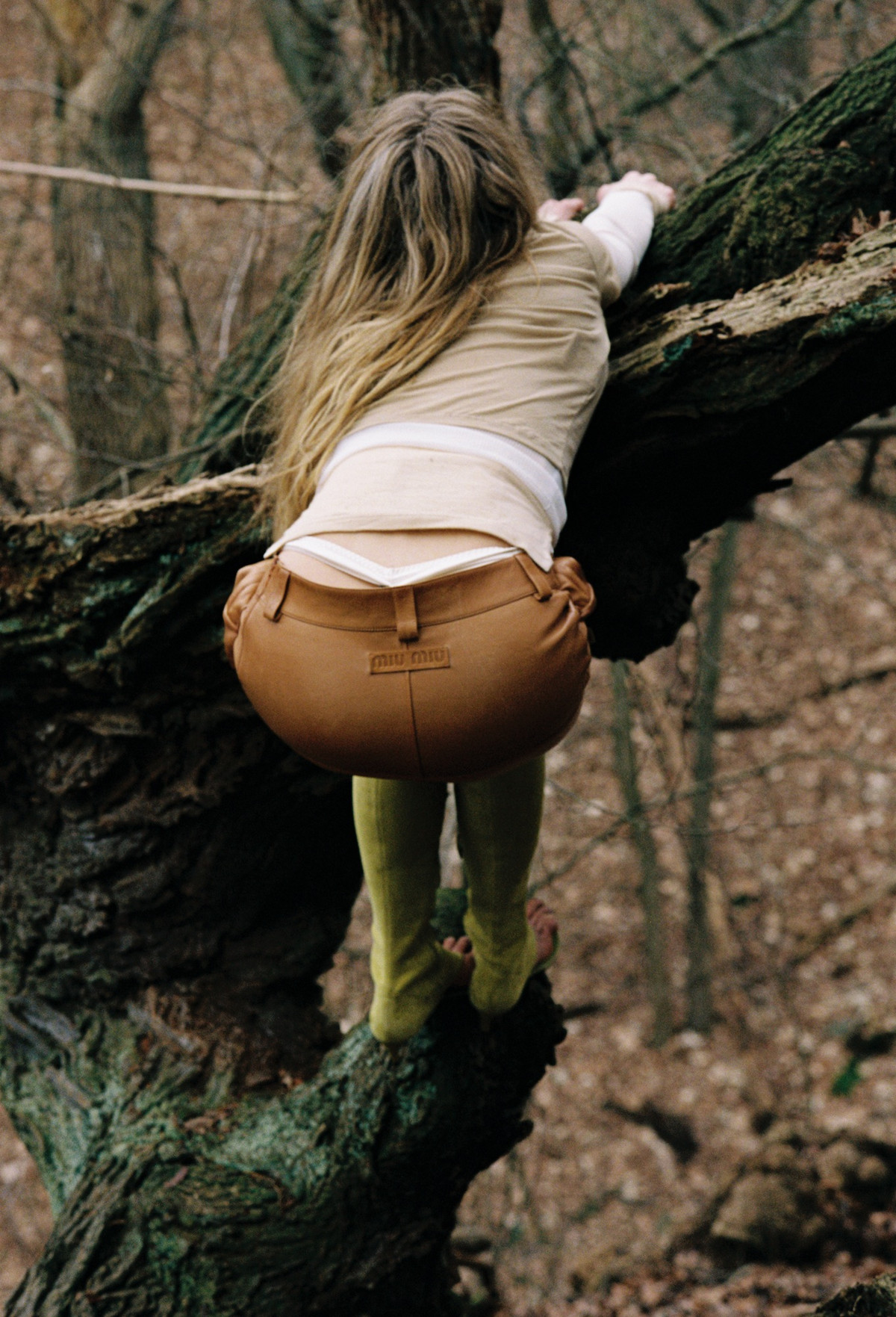
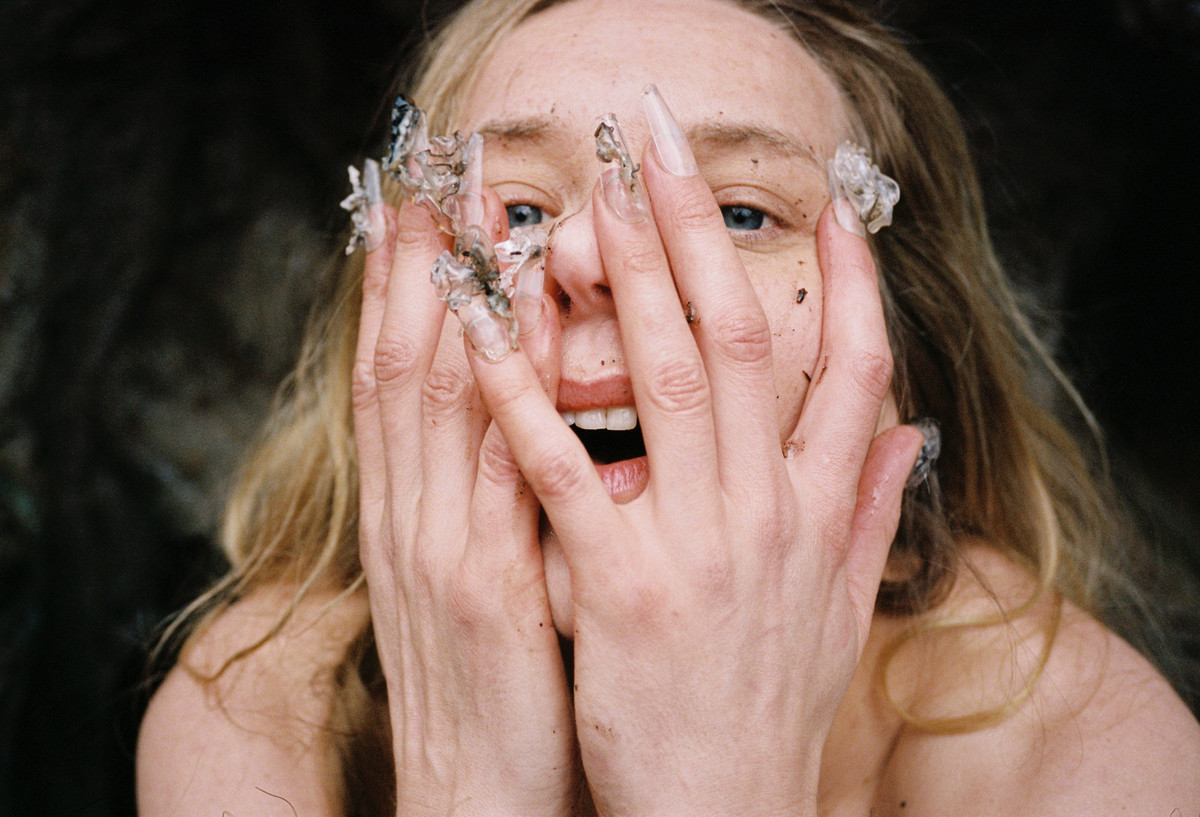
LILITH wears FULL LOOK by MIU MIU
Strangenberg attests to art acting as a door into the inner part of oneself, where the true self lives. While her early readings of Dostoyevsky have complicated these understandings, the German artist continues onward, unraveling the thread that is life. Experiencing Strangenberg and McCarthy’s collective art feels like a dream where all senses are heightened, and the limits of what a person can visually take are pushed. Over Zoom, both artists indulge in conversation about how they met, the attempt at making an image, and the ultimate question of provocation versus existentialism.
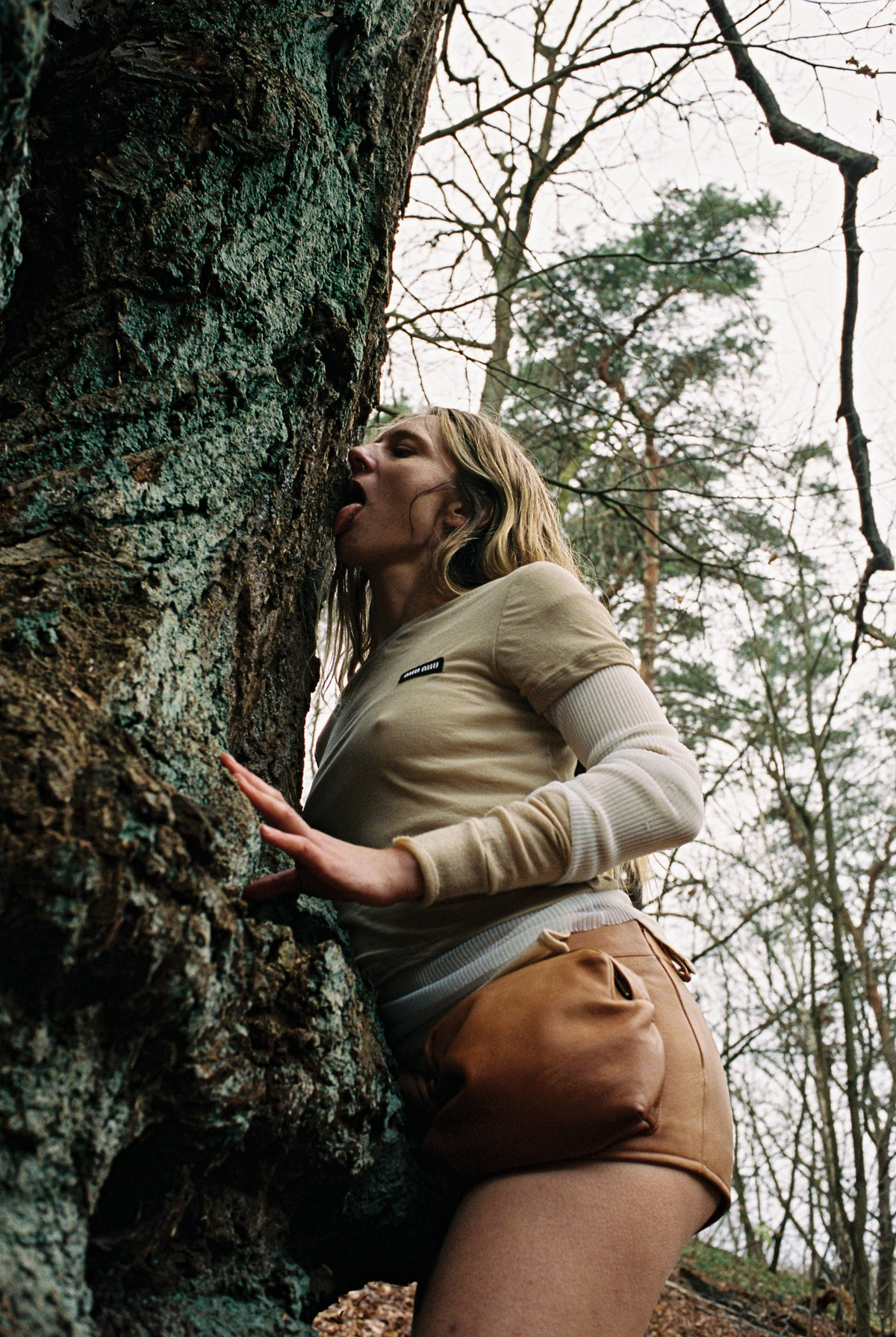
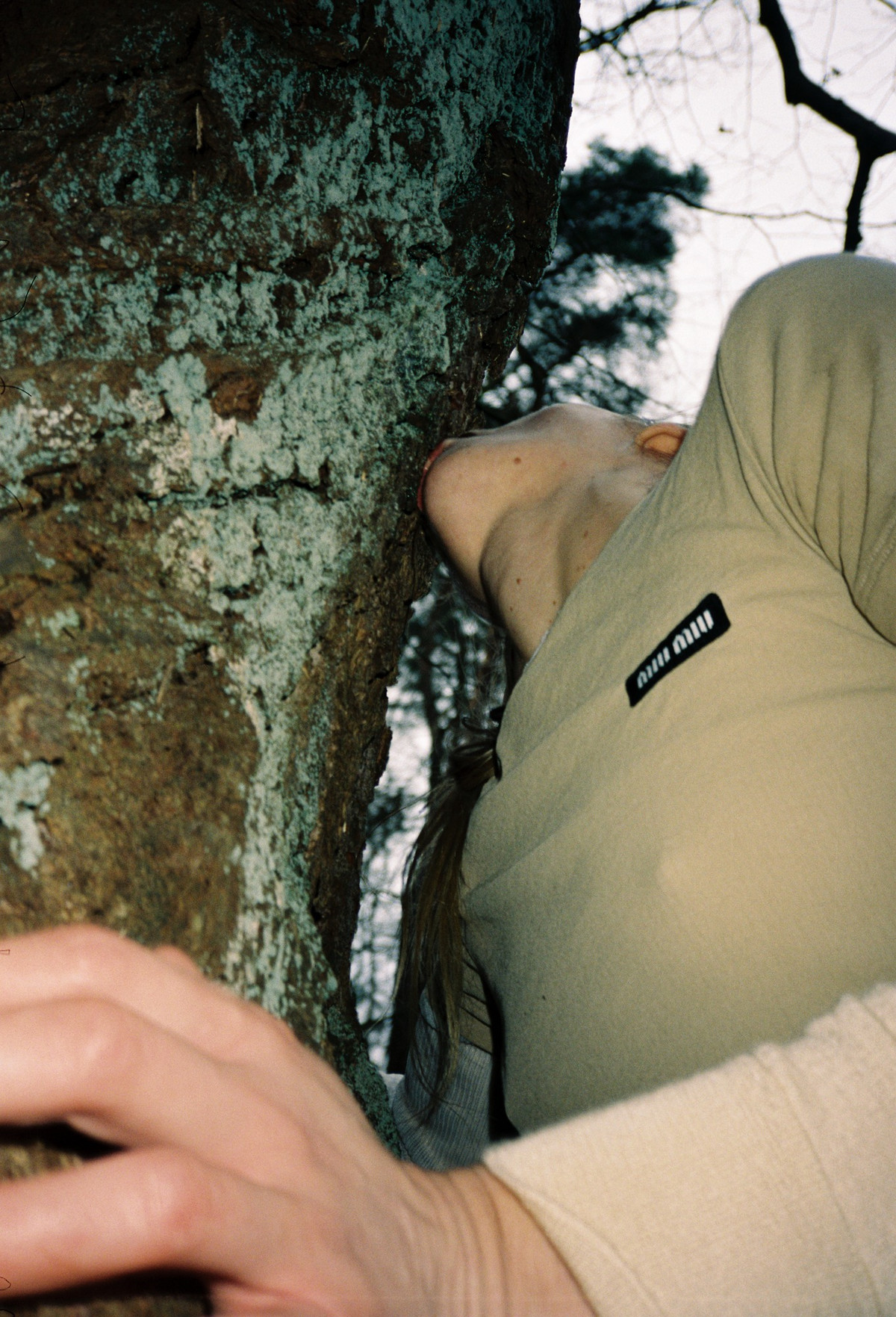
Lilith wears FULL LOOK by MIU MIU
Lilith Strangenberg— It was 2015. I was part of the Berlin Volksbühne theatre. Paul was invited to do a sort of show there, and decided to work with some actors from the company, so this is how I came in. We kind of reshot some already existing scenes from the exhibition Paul showed there, some videos which we reenacted. This is how we met, but only for a couple of days. The work was pretty interesting for both of us, and we decided to talk about a film project, The Night Porter, the film by Liliana Cavani; we thought about doing a sort of re-imagination of that film.
Paul McCarthy— We came up with the idea to do a remake of The Night Porter while we were rehearsing a scene in the bathtub. The bathroom had tile on the walls, and somebody said, “it reminds me of The Night Porter,” then I jokingly said, I think it was a joke, “we should remake the film.” It took how many years before we did it?
We actually shot the film and did it in 2019.
Yeah. I wrote a script and we performed in a large set called “The Maze” that we had built in my studio. The performances took place over 30 days.
When the idea came up, it was a pretty magical moment because we were in this little bathroom in the theater. I had a short wig, and I kind of looked like the character [Charlotte Rampling in The Night Porter]. And then, as you mentioned, there was this architecture of the room that reminded us of The Night Porter.
The collaboration between the two of us has been going on since 2015. Drawings and sculptures came out of Night Porter, or NV (Night Vater) and A&E. Lilith said in the bathroom that Night Porter was one of her favorite films, and I said it was one of my favorite films. It took a long time to get it together to do Night Vater – four years.
The narrative of Night Vater is similar to Night Porter, but shifted. In NV, Max is a Hollywood slimy predator producer living in Los Angeles, not a Nazi officer. Lucia is a young girl coming from Germany to meet Max to audition for a film. She is not a young girl in a concentration camp. Towards the end of shooting, we were trying to resolve how and where the suicide of Max and Lucia would take place. We thought we could do the suicide scene in the woods outside of LA. Being in the woods brought up the subject of Adam and Eve, A&E or Adolf and Eva. And then it was a question: "Do we really take on that subject of Adolf and Eva?” Once the doors opened, once Pandora's box opened, what were we going to do? Also, at the end of shooting The Night Porter, we changed the name to Night Vater, or Night Father, which had to do with me being much older than Max in Night Porter, which we thought was interesting. It disrupted the expectation of a love story and introduced the subject of incest. You're not really sure if I am Lucia’s father, or I'm not. It's confusing as to who these characters of Max and Lucia are. Is it a love story of a father and a daughter, or not? Is it part of their erotic buffoon play?
I was just thinking that, the first time that we went into those A&E characters, was during those long drawing sessions we did, which is an interesting way to learn something about a new character, and over a period of two years, we just did drawings as Adolf and Eva, before we even started to shoot the actual film, the A&E film. So when we started filming, we had already practiced a lot, so we knew so much in a very primal way. While drawing, we kind of went deep inside the psyche of those characters.
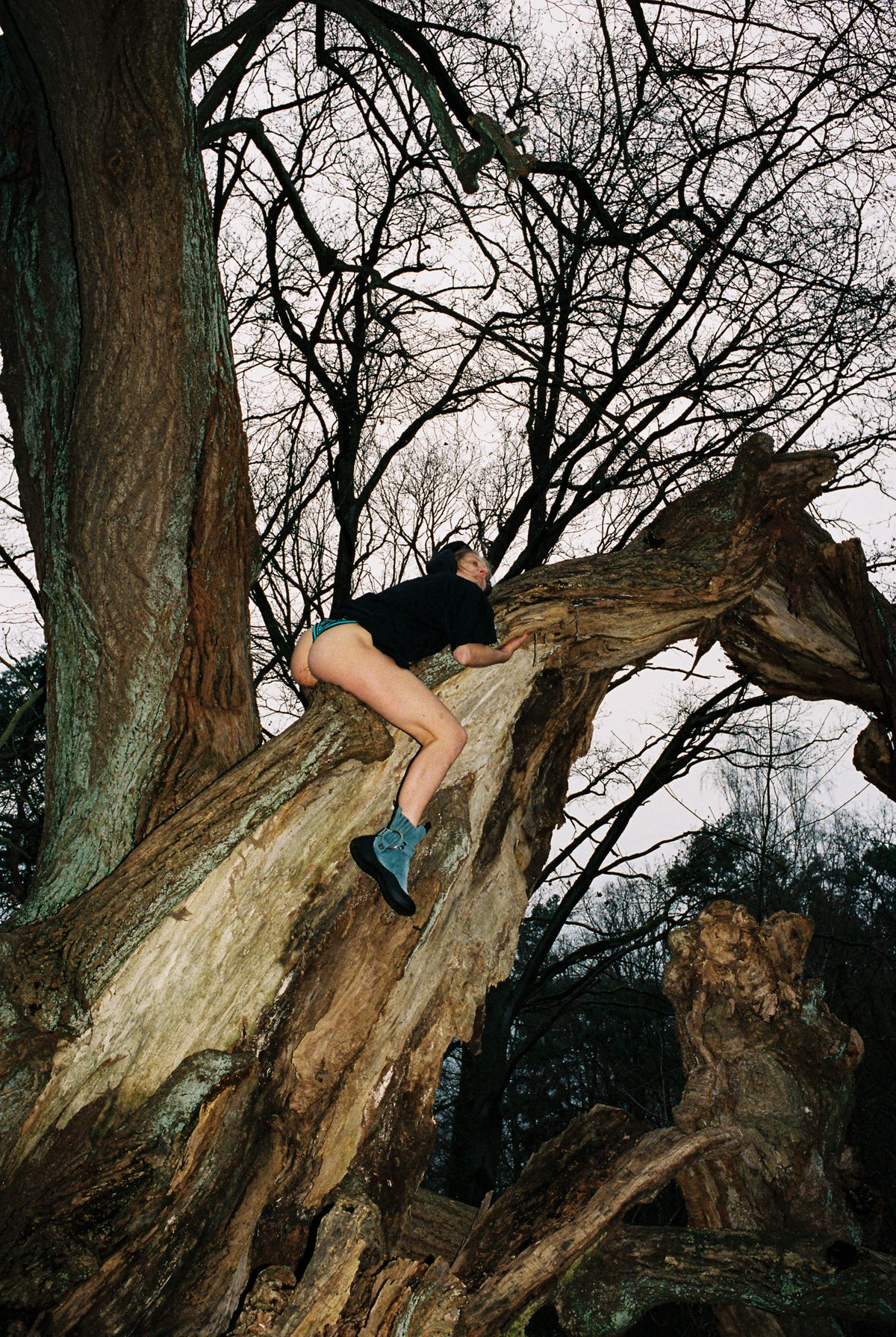
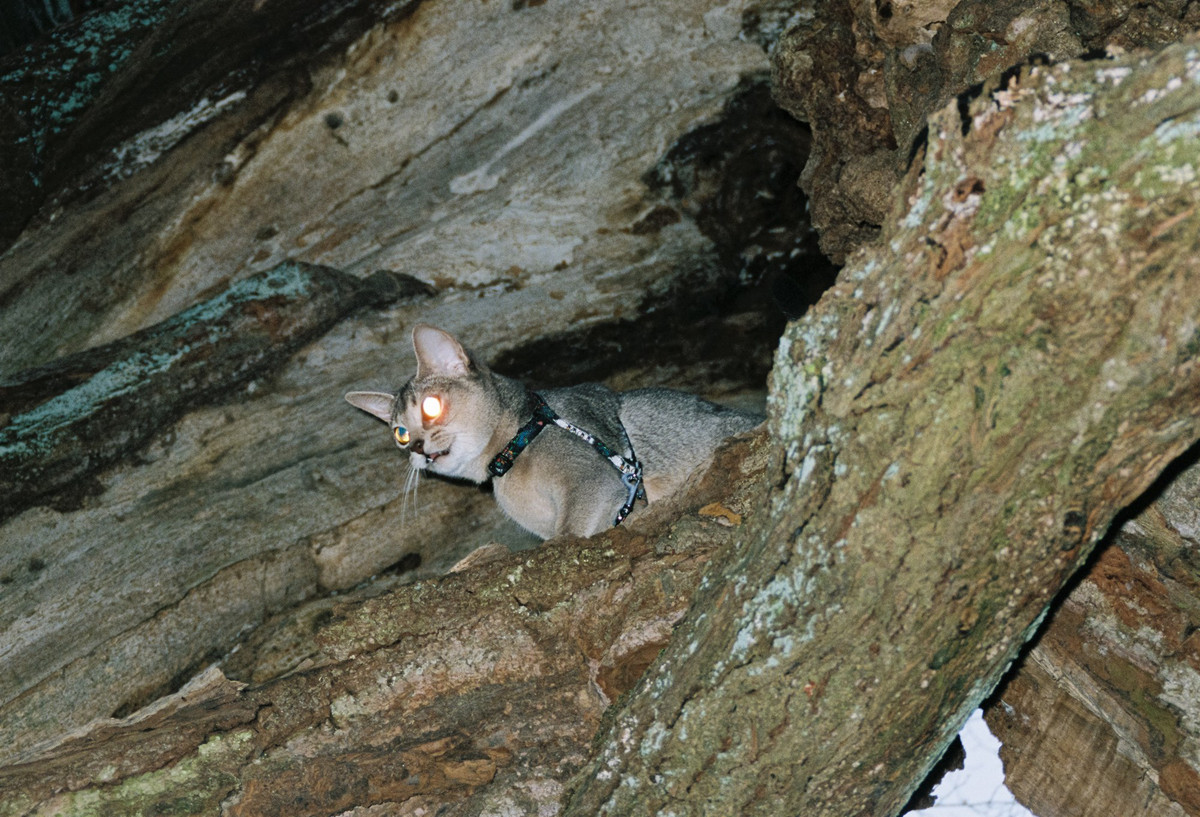
LILITH wears HAT by J.KIM, DRESS and SHOES by JW ANDERSON, UNDERPANTS by EKATERINA ZELENTSOVA
That's also part of trying to understand what it is that we've been doing, because there was The Night Porter, then there are the drawings. The drawing actions are titled The Drawing Sessions. The sessions sometimes lasted eight to twelve hours. It's always been hard for me to explain how or why it works – it’s a subconscious dive. The six-by-ten feet drawings are always done on a large table. The drawings become like a stage or an arena. The characters develop there. There is no script. It is an improvisation.
I understand the drawings and also the films as windows or doors, and I think it's inside of all of us, inside of all human beings. There are certain parts that we always try to hide or repress, certain parts that we never reveal to the outside, in society, or normality or reality. I feel like maybe it's an inner animal. I think the drawings, and what we did in the drawing sessions, [speaks to] what art is; I understand it as a sort of door or an entrance relieving this inner animal – the silent secret nocturnal part inside of us. It's a realm where reason is not guiding anymore, more like an endless dream — a delirious state.
It's easier to some degree to talk about the films; these video productions are conceived as a series, or a long feature which is five to eight hours. I think of them as a continuum. We repeat certain actions, scenes over and over. They change each time. It’s part of an attempt to dig deeper. There is a structure, a skeleton that has been mapped out in the script that helps move the narrative. It is the improvisation that is critical. In the drawing sessions, there's this thing that whatever Lilith is doing as a character, it's almost as if what she's doing manifests itself in the drawing, but not literally. I think we both lose ourselves. It flows in a circle. Delirium. After we shot The Night Porter, we couldn't begin to shoot A&E because Covid happened. I don't know exactly what happened in the woods that day, but Lillith improvised with what was there. And whatever the environment was, whatever the ground was, she entered a kind of zone. When someone says action? She can go into it, a free zone, free in the sense of creativity making art, free to make a language. It's an attempt. If there's anything that is about the two of us, it's the agreement to attempt to make this language that is poetics – it's about art and the importance of art. There’s a freedom that has to exist within it.
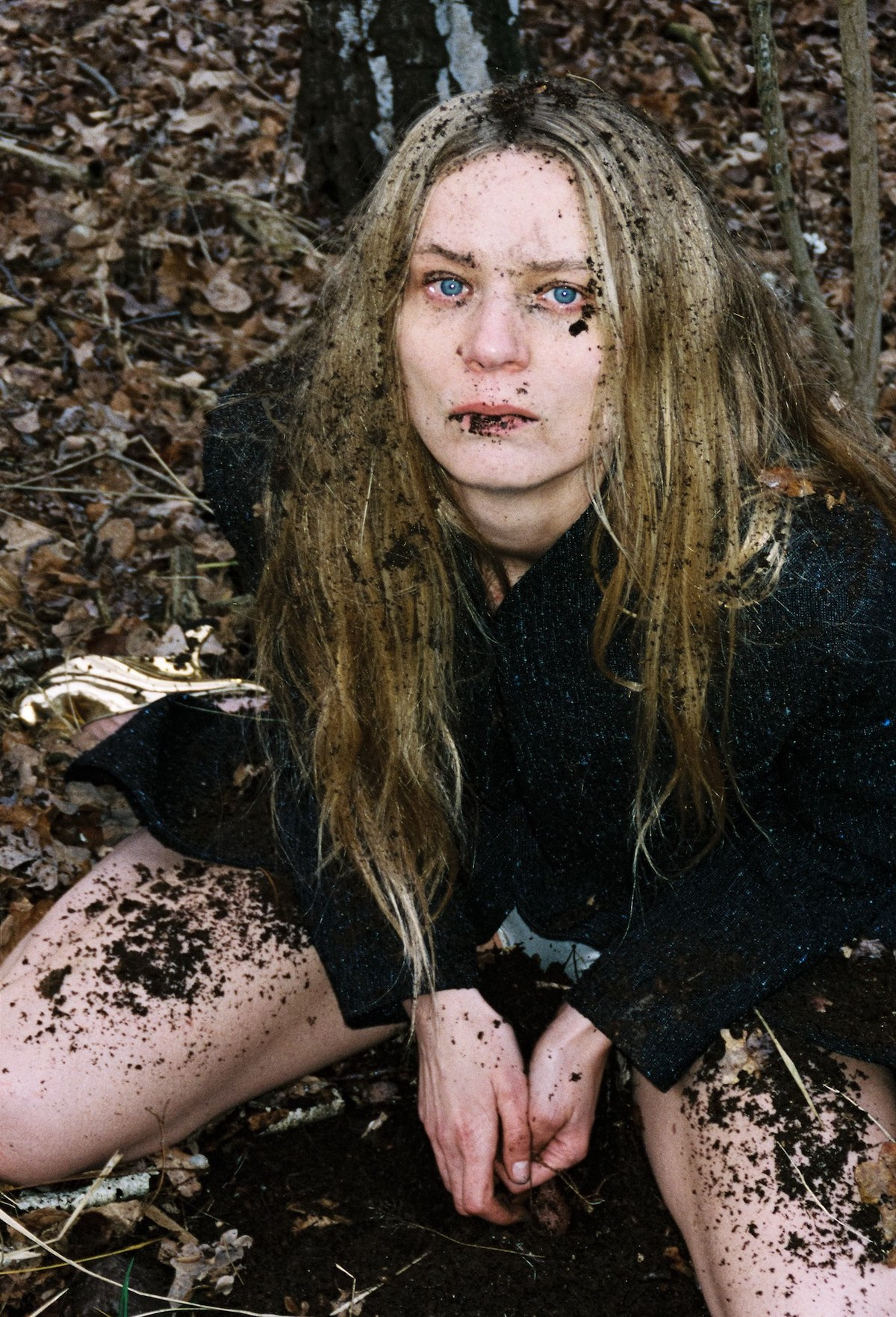
What I mostly experienced when we did the drawings and when we filmed is that creation, it's very unpredictable and chaotic, and you cannot really control it . It’s like desires: they just appear, and then they are gone. With creation, that's the same thing; it’s more like with dreams, the minute you wake up or want to control or understand it, it's already gone. Just escapes. For the magazine shoot, I felt that the forest was also a form of a gate, a door into the subconscious, or into the realm of fantasies, dreams, or psyche. The opposite of what we experience in a city or in a town.
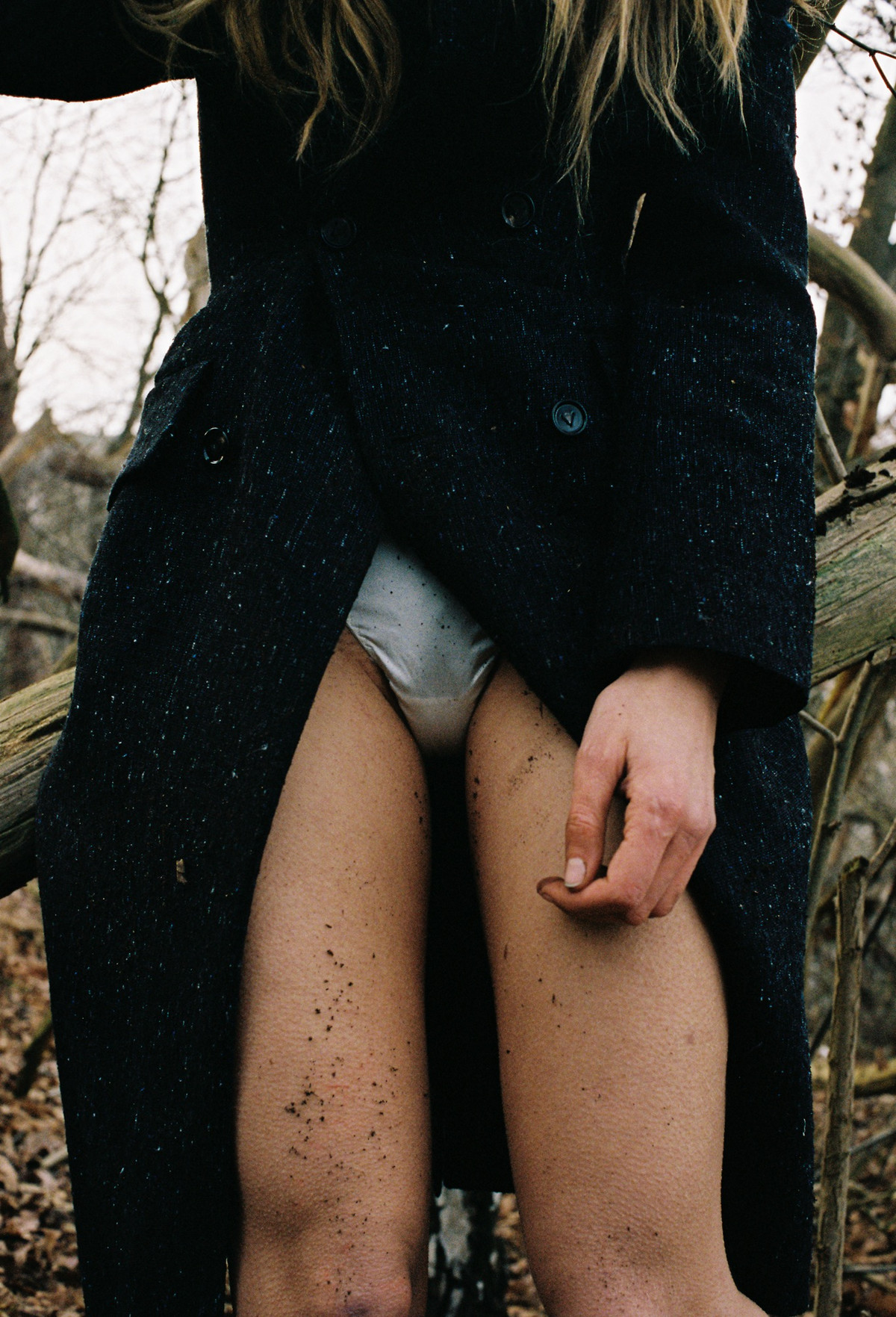

It's also that a forest is a living thing. It is something that's of the ground, the Earth. There’s something about going back into nature and back into something primal and the association that we have to the forest, the animal coinciding with nature. Even at some point, I like referring to ourselves as certain animals, a cat, a pig, or a hog.
What interested me about the nature we filmed in was that it was so dry over there, and there were all those dead trees lying on the ground and they looked like skeletons. Not a very lush version of the Garden of Eden, a cruel and violent dystopian version. It’s winter here in Germany, and it's cold and endlessly gray. It’s January, and the trees have no leaves; they are naked. You look at them, and you understand so much about each tree; why he bent to one side, or torn, or why is he strangely so positioned. As if it reveals the whole story of its life. You see the tree's skeleton. Its soul. I believe they have their own personalities.
What’s happening now is it’s been raining so much in California that the landscape will change in the spring. The area that we shot A&E, the area that we shot A&E in was quite dry — harsh. This year it will be green with more flowers.
Deleuze [Gilles Deleuze] did an interview like this once. He did an interview on ABC, where someone would give him a letter, and he would give them a word.
He goes right down the list. Yeah. There are way more words, but here we go. Oh, one thing that’s interesting – I counted the number of days that we've actually performed, and it's 100 days right on the dot. Not counting Berlin, it's 100 days.
Oh, wow.


Okay. Erotic, scripts, improvisation, desire, father, daughter, Adolf, Adam, Eva, Eve, Marilyn Monroe, Lillith, Paul, fascism, America, Germany, acting, art, erotic, transgression, provocation versus existentialism, sex, shit, shitting, shitting on the face, shifting shitting on the face, shit smearing, peeing on the face, peeing on the dick, sandwich, ketchup, champagne, blood, butter, dick, biting, biting ears, biting tongue, bashing head, stabbing, shooting, nature, architecture, prosthetic, a series of words which is much longer.
You give me one, and I give you one.
A&E.
America and Europe.
Bursts.
Birth. Mickey Mouse.
Death.
Over and over, again and again.
Purity.
Language.
Aggressivity.
Erotic.
Innocence.
Love.
Scream.
Mouth.
Dick.
Cunt.
Soul. Goddess.
Female.
Mother.
Nipple. Father.
Dick.
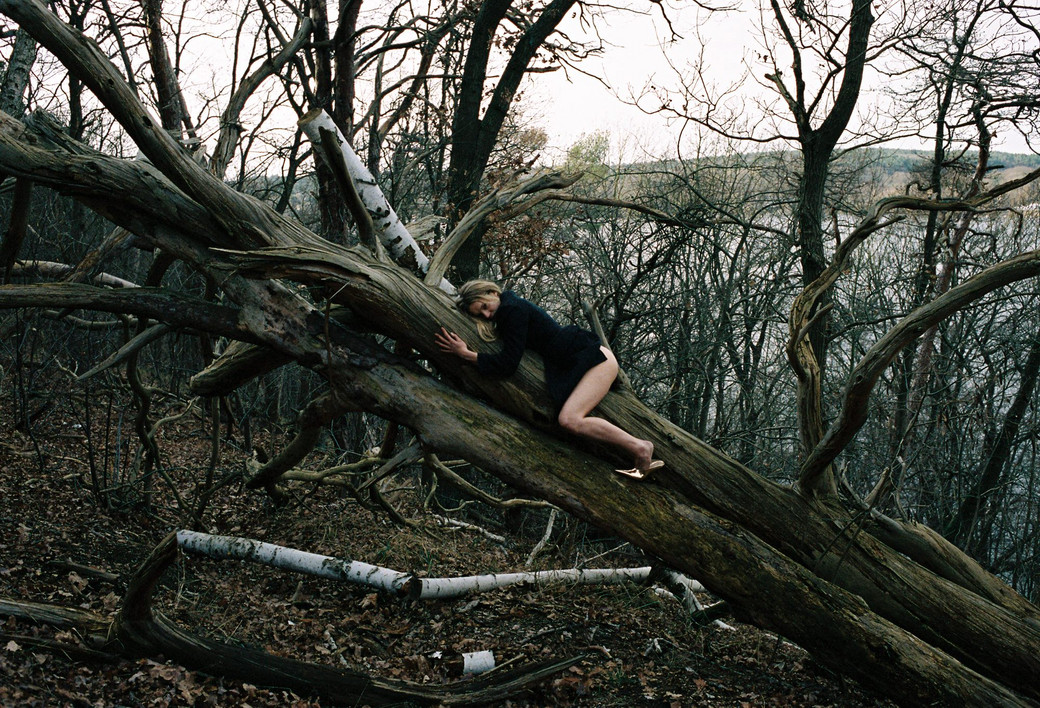
Hey Paul, you know what, I was reading a book about masochism. It's the book I showed you, and there are three books, actually. The one I read is about 1,000 pages big. It's mostly about the writer of Venus in Furs, Leopold von Sacher-Masoch. And a lot of different writers write an essay on masochism. I wish you could read it. It's super interesting.
It’s only in German?
Yes, it’s only in German. It doesn't exist in English. But it's a very interesting collection. Also, in the other book, there are so many images, so interesting and so profound. I'm still very occupied with the same sort of questions. When I was very young, around 16, I discovered Dostoyevsky, and since then, I never really recovered. I always end up going back to Dostoyevsky.
In the book about masochism, they end up with Dostoyevsky, too. With his essence that the way to the highest, purest form of virtue mostly leads through the darkest, most difficult way of sin. And I really understand Marquis De Sade in the same form of spirit. He often positions the innocence next to the aggressivity, and I think art is often always about those two energies; purity and aggressivity, beauty and Beastiality.
The physicality within masochism, the essence of the body.
Pain.
A&E and Night Vater are connected, they’re a diptych.
I think A&E is more innocent.
It's a form, but there's something more innocent in the characters, right?
Not just the characters, but as a whole piece of art, the whole thought is higher than The Night Porter; it’s its own creation.
I think that they are related to one another in a number of ways, subjects. Both give out. You are constantly moving the moment into something. I see myself watching at times simply stunned. There are two of us. What comes out of us as we do it, and what we feel as we do it – what we become. There’s an addiction to doing it, a drug and a release. It is a state of mind. And also the infliction of existence. That's the attempt to go into that and to somehow make an image of that. It's making the image of existence and the confliction of it, which is why the discussion of masochism or suffering is in there.
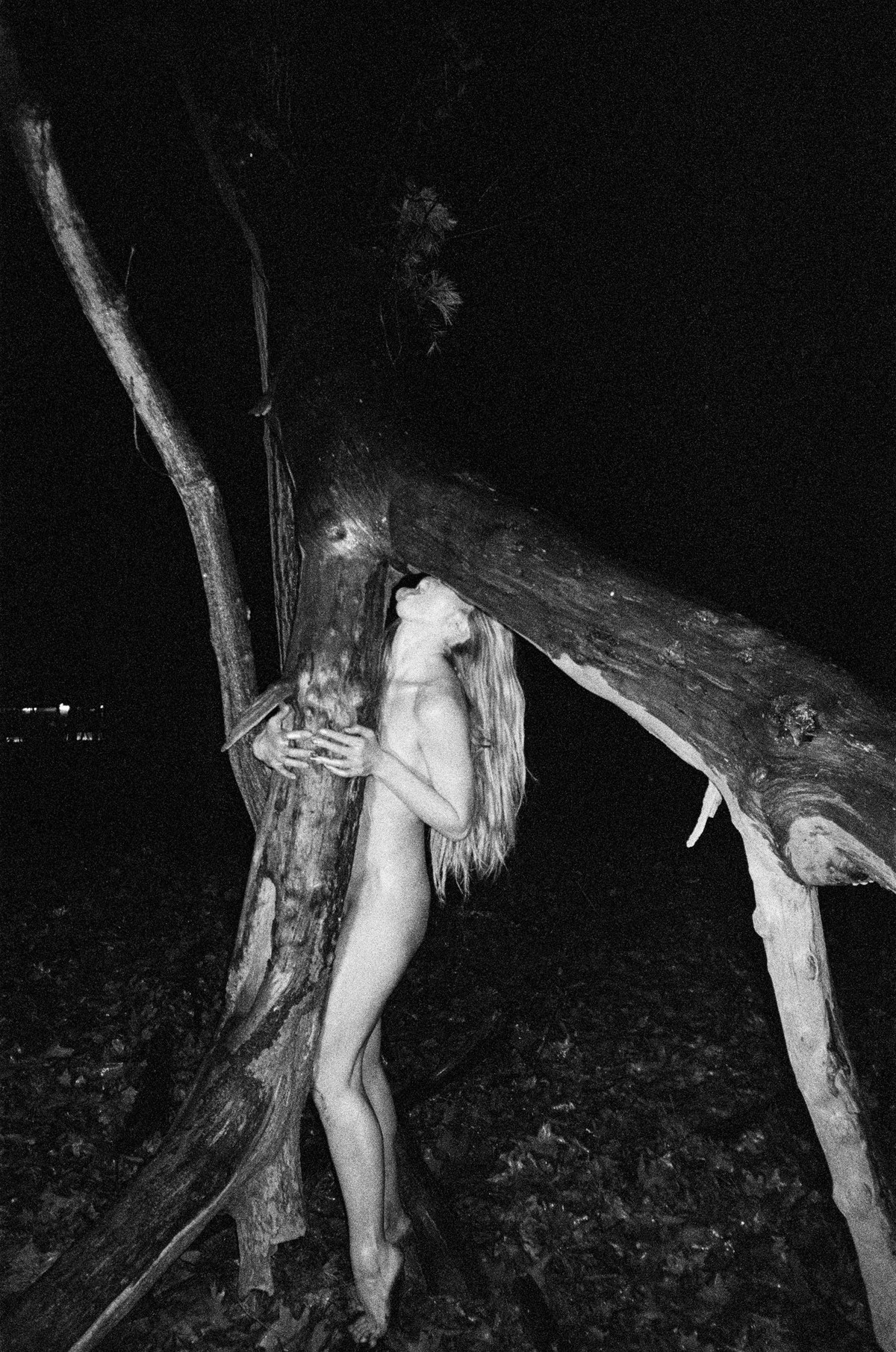
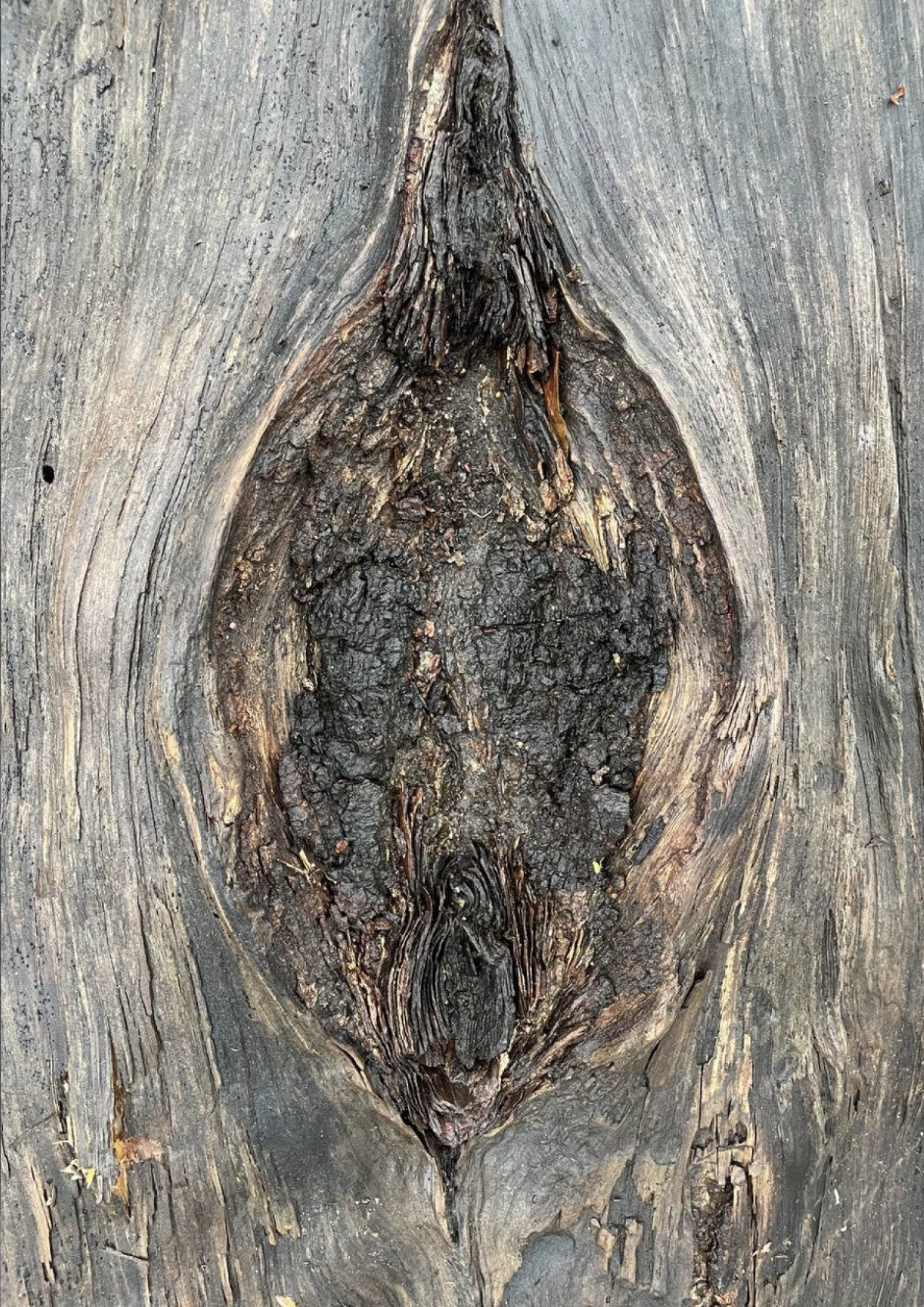
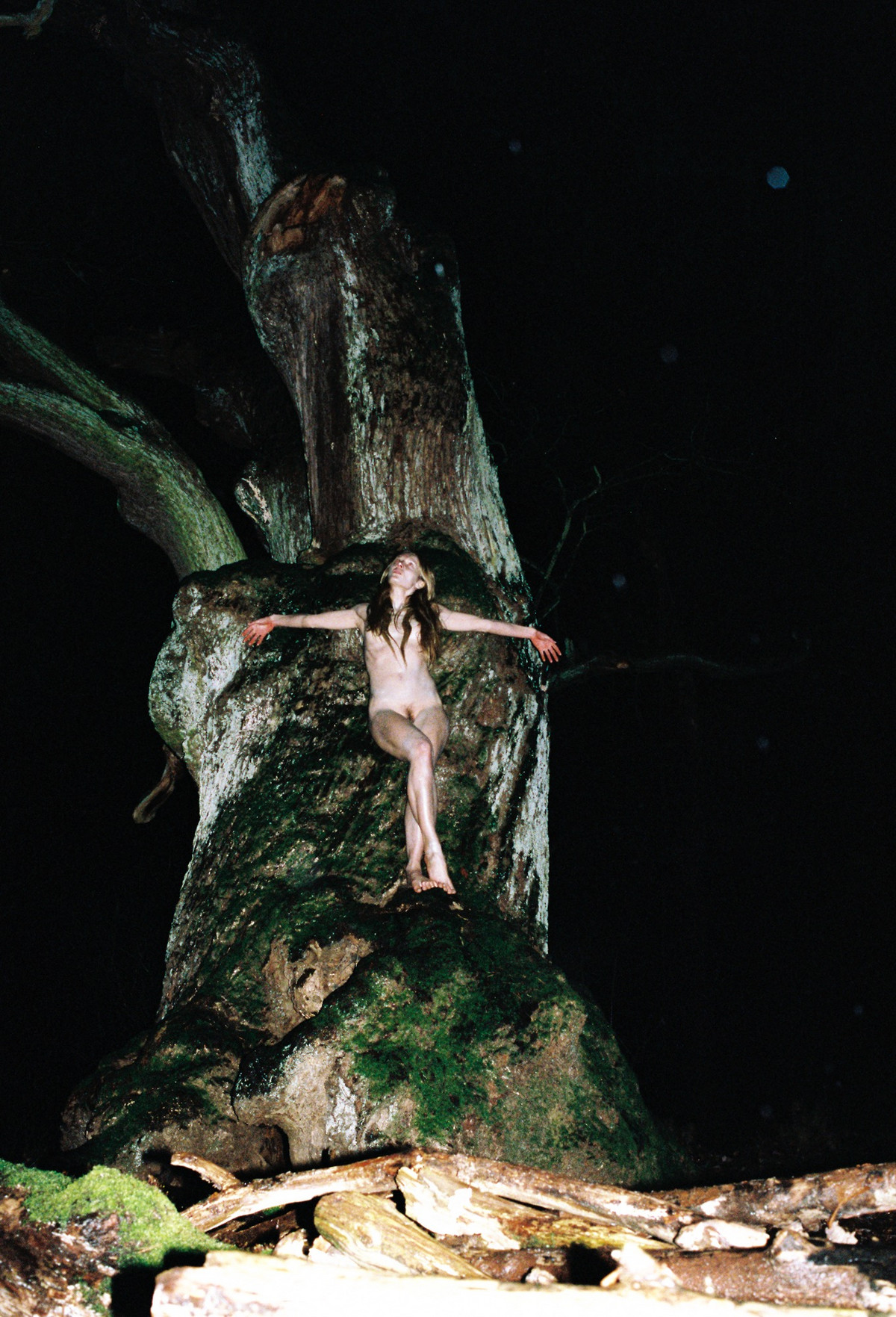
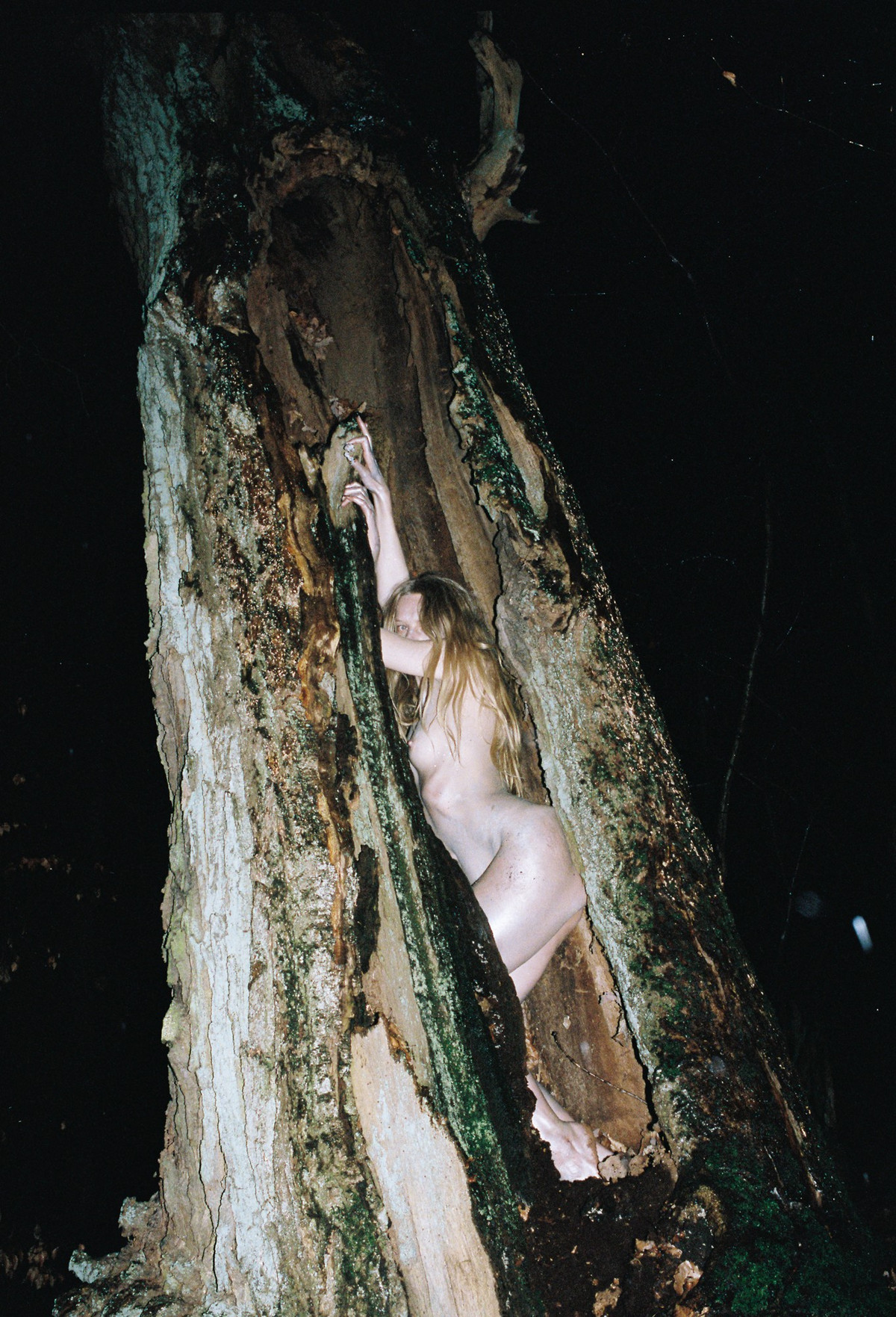
And there lies the addiction? When I was inside that tree for the photoshoot the other night, it was very dark and super cold and raining, and we had already shot the whole day — then it came to the last picture, me naked inside that big oak tree. I was a little scared because it was so cold, but all of sudden, I felt so protected and so sublime. It was interesting. Maybe everything that we do, and what a lot of art deals with, is the attempt to return inside the mother’s body. Maybe death is the only moment where we kind of realize that? When we become raw material.
When I saw the image of you in the tree, I thought Lilith is making an image, the attempt, the effort at the image, using what is there.
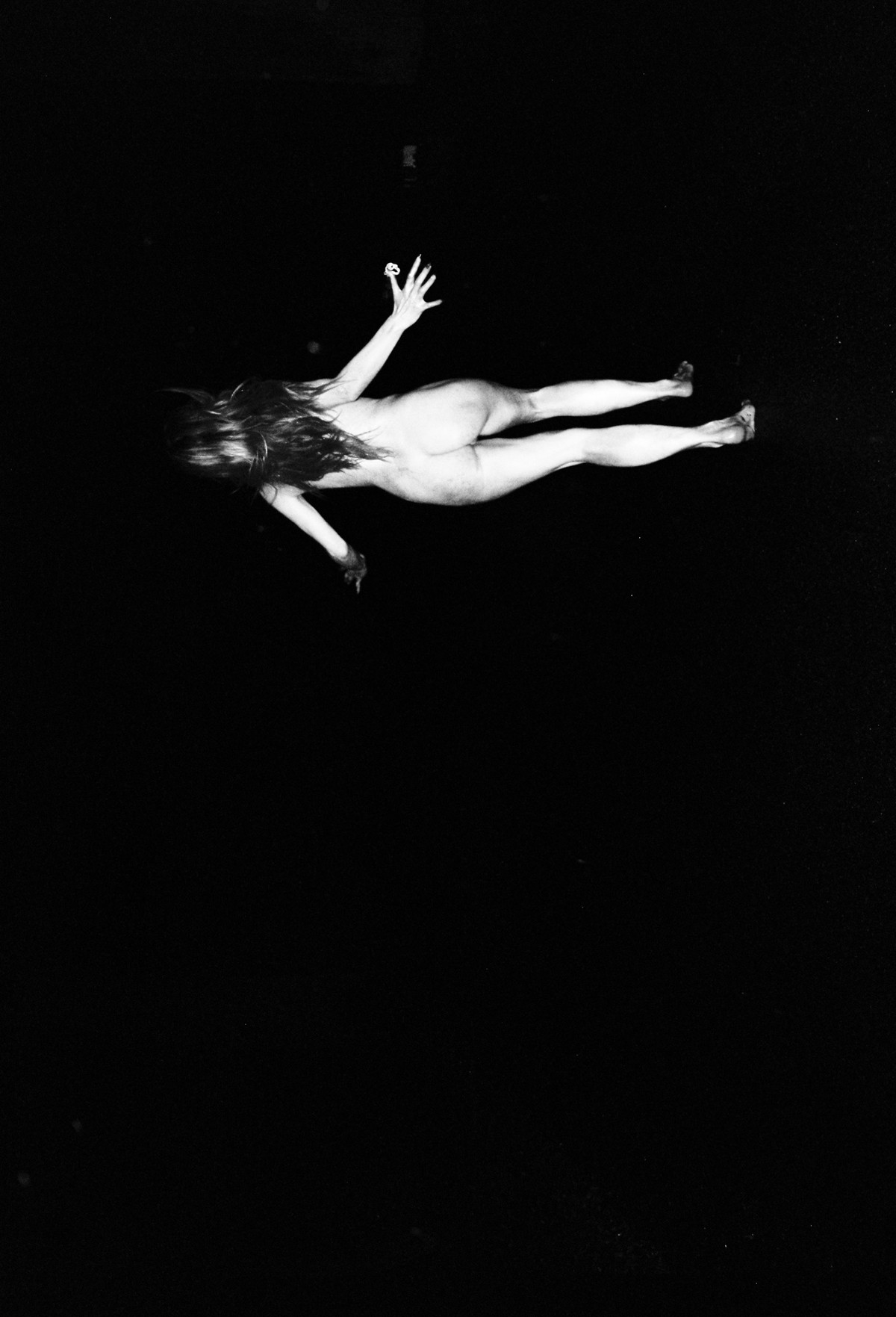
You mentioned this form of addiction, looking for delirium. We are looking for it in the scenes, and I think I always have the form of longing inside myself – to transcend the personal.
I think, in some ways, that’s the dissolving. Inn a very clichéd way, it's the dissolving of some sort of logic or ego. There are a couple of times in the drawing session where we've been on top of the drawings for several hours, and you're lying on your back, and you have your hand, your fingers in your mouth and you're rocking back and forth. The body is a kind of a vibrating sack; even if you're saying a word, over and over again the word becomes abstracted.
The word loses its meaning, or the meaning becomes less important than the emotion of the word. The sound.
It may be when the word turns to the poetic. That's how I was thinking the other day. You can define a word like “poetics” in different ways. In some ways, that's when the word, when the action, becomes? There's a poetics to the action.
I think the poetic power lies in the emotion. I think the very big emotion has no words, no language.
Our language, there's a transmitting, transgression, a form of poetics, the art transmits to the other without the verbal. In A&E, you're not sure what it is? There are these two characters, one is referred to as Adolf Hitler, but he definitely is an American. He's not German. And the female. Who is she? Is she his daughter, or is she supposed to be Eva Braun, but a blond Eva Braun. Who's the female? Why are these two together? They don’t make sense. What is being said or what is being felt, transmitted. It is love, erotic play that is buffoonery. As a viewer, you're caught in this thing that takes you through this very primal path. There's something so sad and humorous about both characters. It is delirium. It's an image of delirium. It's an artifice. I think it’s poetry.
I never thought about what an audience, spectators, would think when they watch this. I never thought about that. But when you just described it, I started thinking about them. How would they feel?
I think they’d be confused. They’d get caught. It's like a fish on a hook. They're caught in a dream, right? A kind of dream.

The SS23 collection reads like a diary entry, stringing together fragments from Zadeh’s life, from her early days at Rhode Island School of Design upcycling textiles, to becoming a mother of two. Though Zadeh’s presentations have always felt personal and sentimental to the designer, the themes and references displayed in this show yielded a period of reflection that persisted long after the curtains closed. Unbeknownst to her, she later discovered that the show had fallen on the 10-year anniversary of her store opening — a symbol, however subconscious, of completion and rebirth. Meditating upon this wave of introspection, Zadeh sat down with two dear friends, filmmaker Clara Cullen and photographer Max Farago, to discuss the simultaneous pleasure and distress that can come along with creating art made for an audience.
Like many who meet Zadeh, Cullen and Farago immediately felt drawn to her upon their introduction — which occurred in a fashion almost as serendipitous as Zadeh’s work. What all three creatives share is a fervor for the raw bits of life: as unfiltered and unbridled as they come. Running with the instant connection they felt after one interaction with the designer, Cullen and Farago invited Zadeh to their wedding, an impulsive act that has proven fruitful for their deep, long-lasting friendship.
But Farago and Cullen are only a fraction of the network Zadeh has woven around herself. She is the glue that holds many downtown creatives together, urging artists to be the most unapologetic versions of themselves, and inspiring a contemporary form of minimalism informed by feeling. In bringing this collection to life, Zadeh gathered a group of different people from her lively community within the light-filled L.E.S. studio she works out of. Alongside the likes of Coco Gordon Moore, Susan Cianciolo, Andre Walker and Paloma Elsesser, we witness the designer’s gifts — both in clothing, and in forming connections. Breathing a sense of sentimentality into everything she does, Zadeh reminds us that life is not always about what you do, but who you choose to do it with. Catching up from Los Angeles, Cullen, Farago and Zadeh easily embarked on musings of authenticity, family ties and the glue that holds their trio together: love, and an ardent love for life itself.
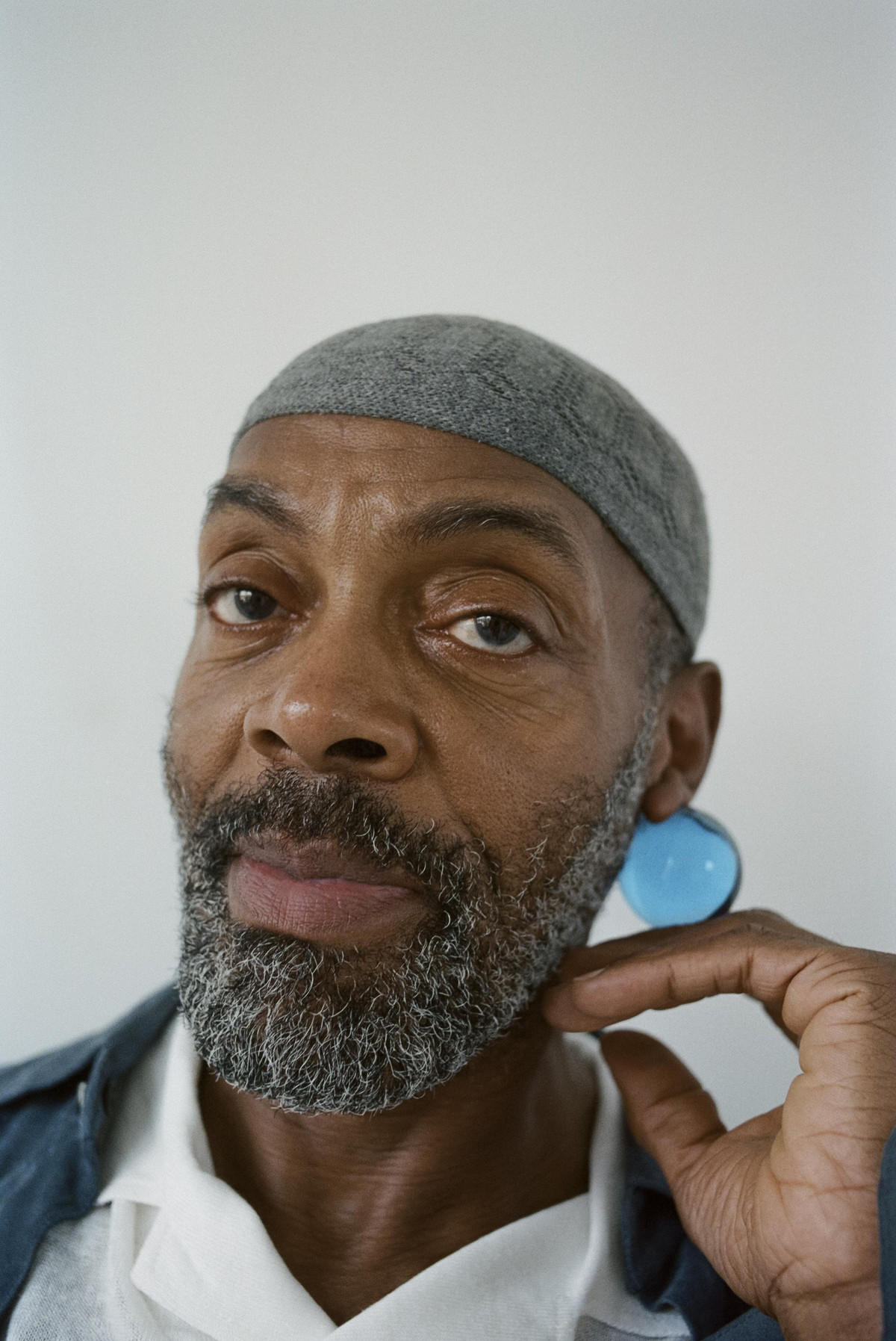
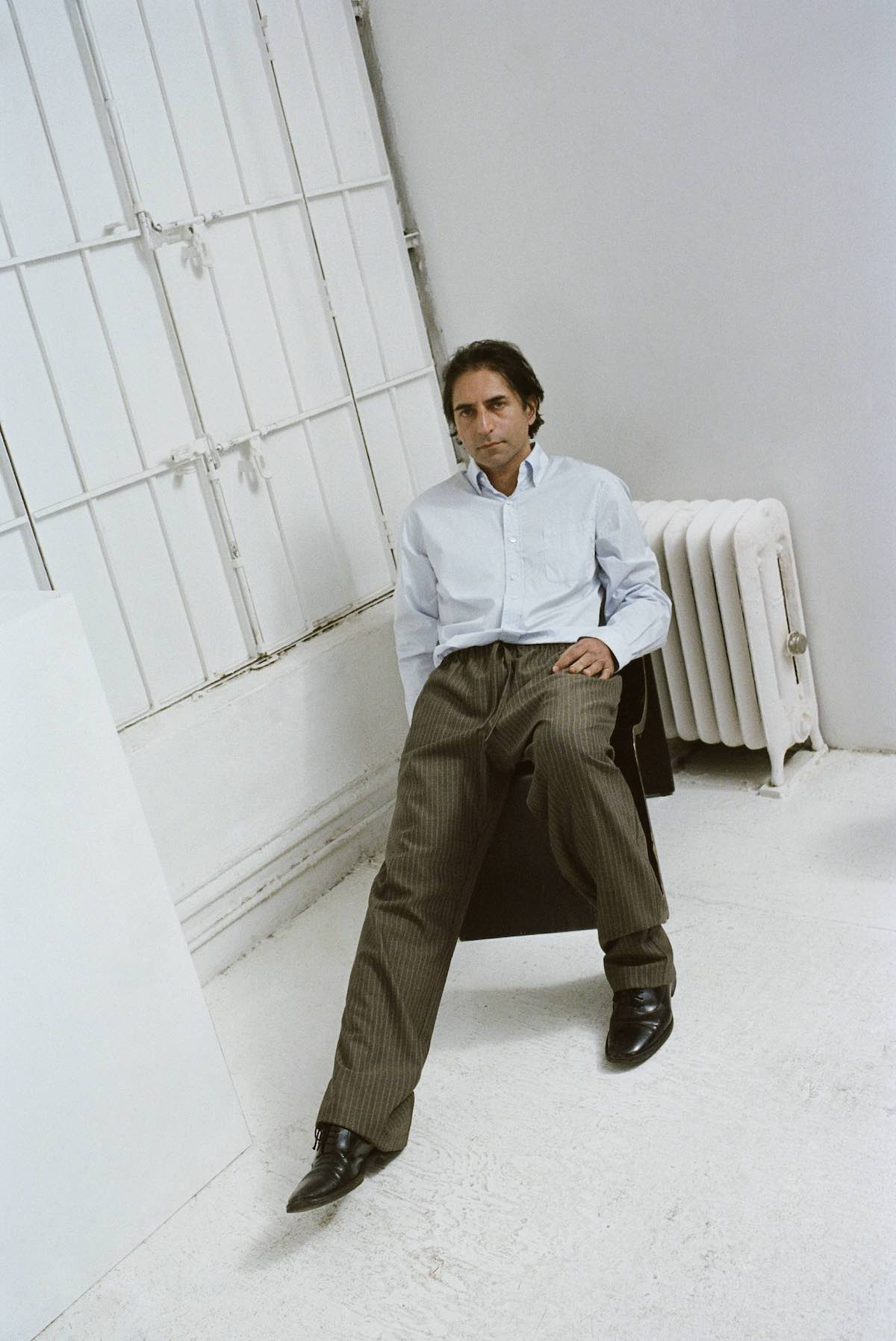
Max Farago— What the three of us have in common is that we're all people who are looking for adventure and life. We love our children, we love to travel, and we're trying to live as interesting a life as possible. We try to make interesting work and earn a living at the same time.
That is exactly what it's about. It's one life for us and we're trying to not take it for granted. It actually feels powerful, because I feel like the abundance that I've experienced all these years is so in my bones. But now I feel like I want to do other things with that abundance. I want to see how it feels when you just stay put, with meditation, or even trying to do the things that I never get to do, like reading or drawing. Because I had so much living, now I'm asking myself, “What's the next phase of living deep?” Now I'm realizing, more than ever, that life is about the sacredness, and just really treasuring the things that are a part of me. Now, I totally enjoy being home with my daughters. I have a different relationship with these everyday things, and I have realized that having these things is enough. I have enough right here, and I just need to take it in.
Clara Cullen— Can we talk about the Spring/Summer ‘23 collection? One of my favorite pieces was made from a towel from a hotel — a fragment of a piece of our lives. And taking it out of context and bringing it to the streets of Chinatown, I thought it was the most genius thing.
I'm so happy you related to that piece. In 2016, we went to Capri, and then I was in Pulia in this other beautiful monastery. I was just struck by how beautiful the basic textiles were. The towels were the perfect blue. So I persuaded the hotels to let me buy some, and that kind of started me falling in love with towels and collecting them wherever I went. There was something very visceral about having a cloth or a textile from that region reminding you of how special that time period was. It was exciting to have the towels be in that mix because, for the collection, I was able to use textiles that I had collected 20 years ago from my first brand. It felt like this sort of weird magical thing when you're young and you don't know what you're doing, and all of a sudden, one day something clicks. Twenty years ago was the beginning of my path of making clothes and creating, but I started overthinking things and designing more methodically. I lost the essence of what I really wanted to achieve. So, 10 years later, when I started the store, that time around it was so minimal that it felt pure, and I related to it. It was feeling new again.
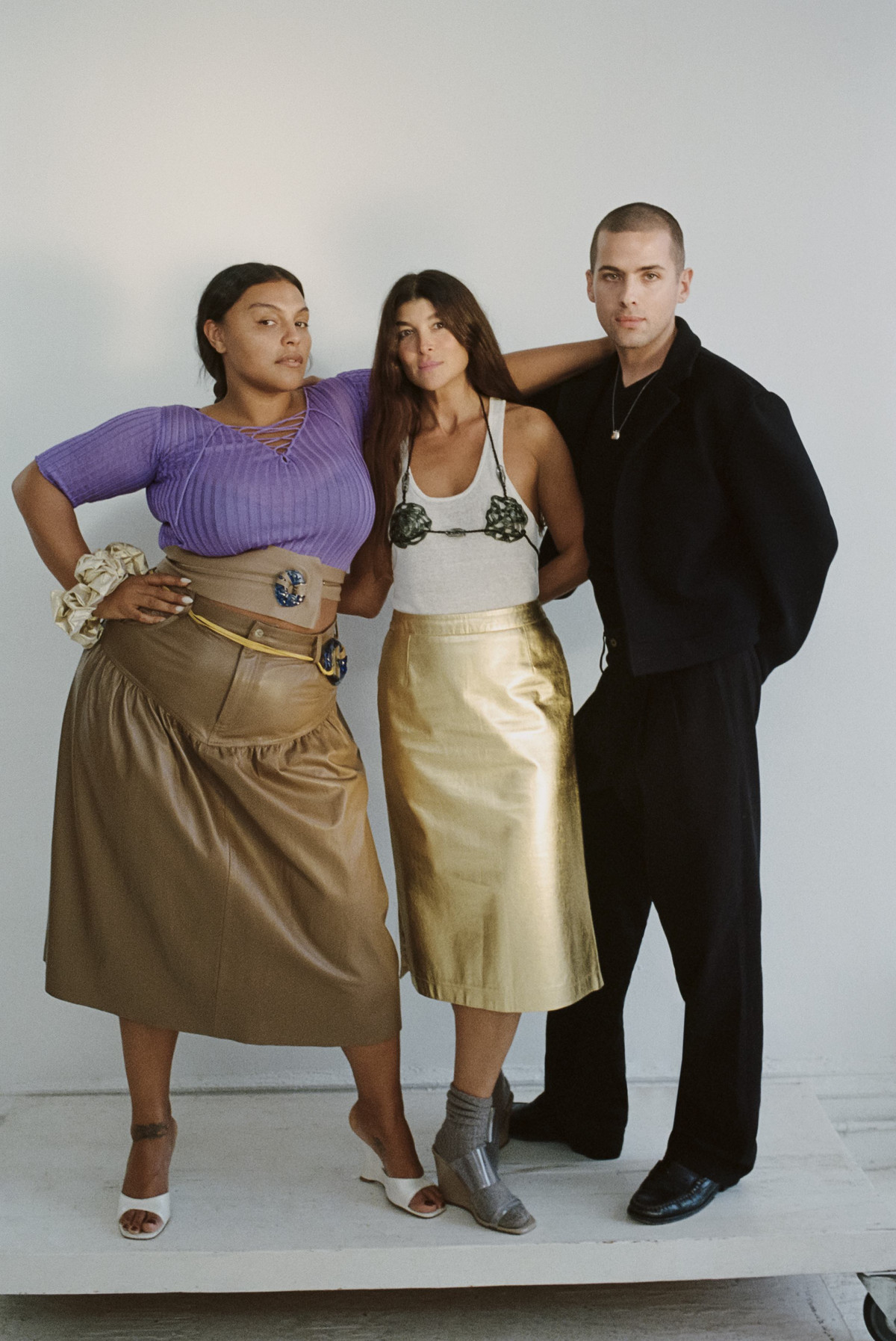
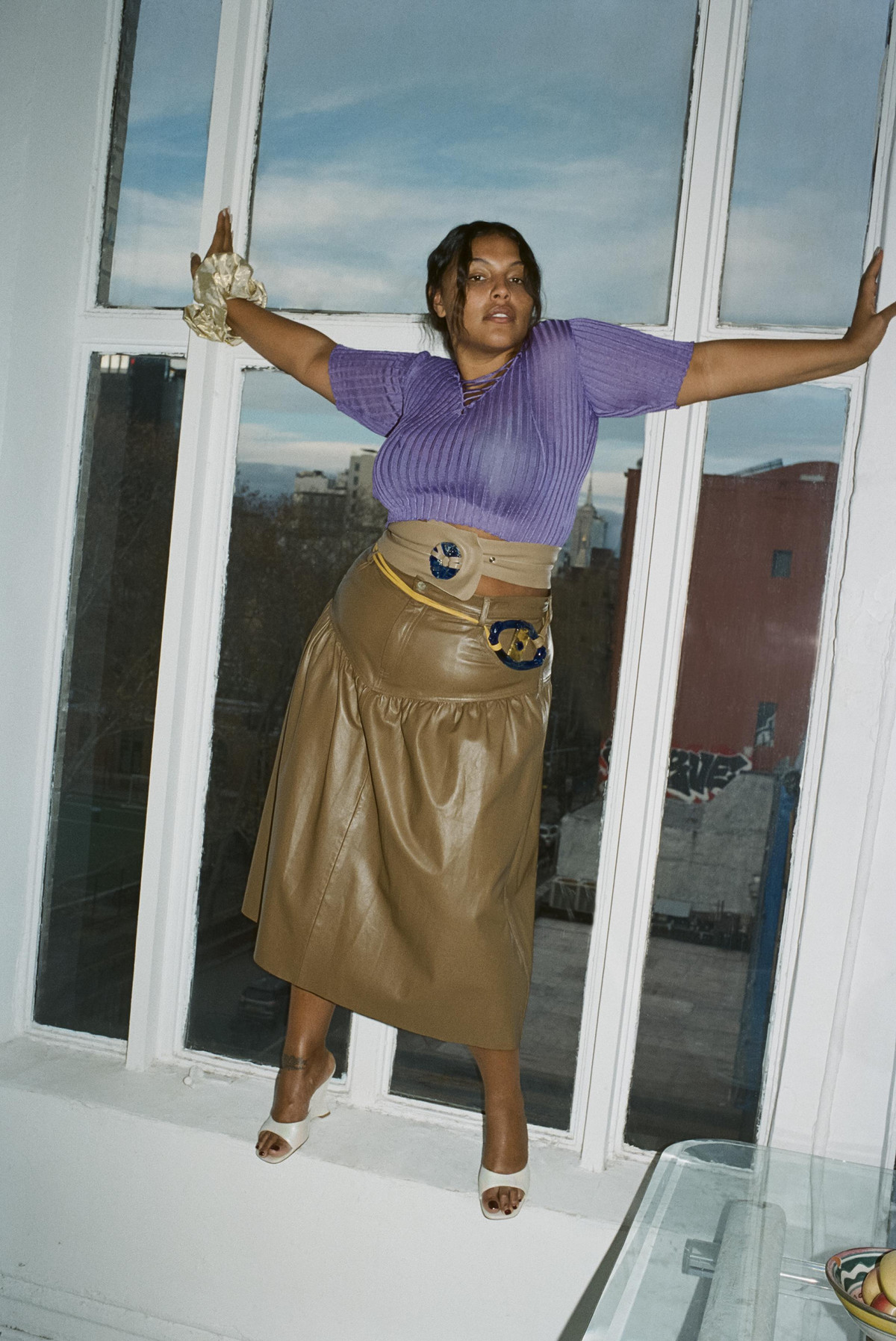
PALOMA, MARYAM, AND THISTLE wear FULL LOOK by MARYAM NASSIR ZADEH
MF— Can I ask you something, Maryam?
Of course.
MF— Based on what you were saying, for somebody who overthinks things so much, how do you produce so much? You're always in your head about things, and at the same time, you're very free.
I think it's actually making things really sincerely and fast. I think on an emotional level, I overthink things; but on a creative level, it's really fast for me and I don't overthink it. It's where I feel the most in charge and free. There are no boundaries to my creativity.
CC— What is your process and timing for making a collection?
With the structure of the industry, it's so planned that I have to be formulaic. I'm building a story with shapes, and then I finally see them at the end. I kind of forget what's going to happen and what I decided, and then in the end it goes to the factories, and then it comes back to me. It's the most exciting when I get to see it made, and have people put it on, and have it styled — then it comes to life. But then I want to see a history built around each piece once it's made. It needs to be worn and experienced.
CC— I was just thinking about when I make a documentary about you and we go through the process of the collection one day.
Well, maybe by then, my process will be different. Because I think that unearthing those towel textiles was a part of my awakening. There's a part of me that wants to return to feeling like more of an artist like I felt in my 20s. I feel in some ways that I'm just starting, even though I have some history behind my craft. The last collection was fitting since it was inspired by coming full circle, and mixing old and new. So that was exciting, when I was able to experience that moment of, “I haven't seen this textile in so long, but this still feels like a part of my aesthetic.” I think sometimes things speak to you super quietly, and then you know you have to do it. Then when the time is right, it's just very clear.
I didn't realize that when I did the show, it had been 10 years since I started making clothes again, and it was 20 years since I had started my brand when I was in my 20s. The show notes discussed waves, rebirth and death. It feels like a new time for me. But I'm at my parents' home cleaning through old artwork and clothes, and it's been making me think that maybe the rebirth that my last collection brought on is still not complete yet — it's an ongoing thing. I feel like my dream is for my next chapter to have a studio practice.

CC— I think it's important to be able to revisit your voice from when you were 20, and be able to hear it and project it now that you have the experience to do so. I now also find myself doing things in simpler ways, and it brings about the same feelings that I felt when I was 20.
MF— It's also interesting because you go through a period in your young 20s when you don't have the pressure of an audience, so you're just doing what you do, and then all of a sudden the world starts looking at you. And you then inevitably start questioning yourself. Then, eventually, you get to a point where you just are able to say, “Fuck it,” and you end up going back to where you started when the world wasn't judging you.
That's what I'm going through. I'm thinking, “Should I just have a tiny business, almost like a startup again?” There's an aspect where I need to provide for my daughters. But then there's another part where I'm like, “I miss the art and the craft of the discovery.” I think it becomes less about how good the work is, it's more about, like, your relationship with it, right?
MF— When I was looking at your collection, I had this thought about how the composition of your clothes, and how you style them, is proportionately very similar to how you take photographs. There's something about the play between the totality and the fragment and the ephemeral. It's very consistent, even between mediums.
CC— There is a sentimentality in everything Maryam does.
MF— And a looseness. Compositionally, you deal with positive and negative space across mediums in a similar way. I think that you're interested in something that I'm really interested in as well, which is just this idea of gesture being what's important. This sort of ephemeral gesture that somehow mirrors the totality of experience.
It's natural, and it's real and it's capturing a moment in time.
MF— Yeah, and I think your clothes also share those qualities.
CC— And there's something to be said about the non-perfection of it all, as well.
Oh, definitely. When I think about what's precious to me, the sentimentality of the clothing isn't precious, but it's the respect and the reverence of something that you cherish, like a friendship, or an old piece of textile.
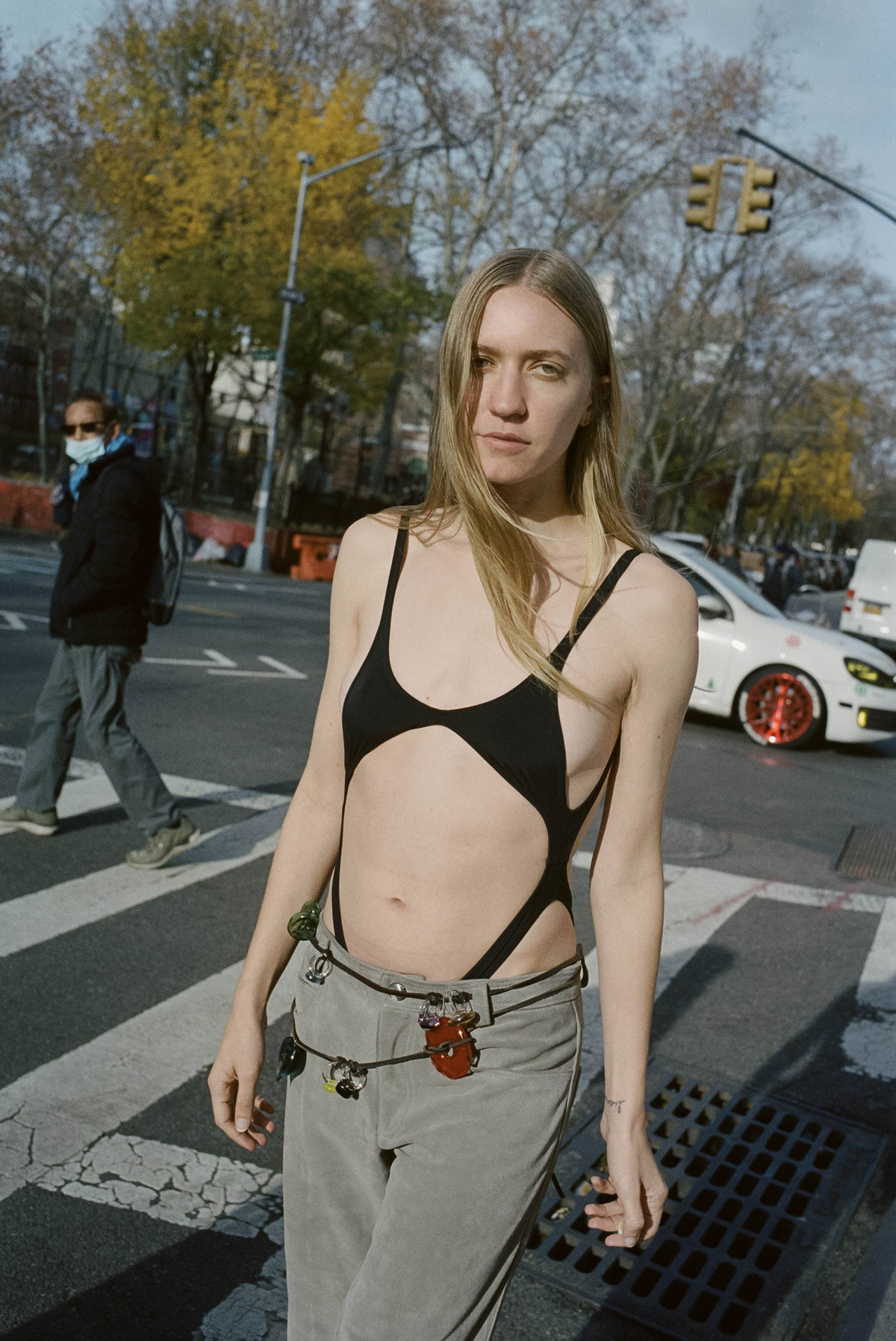
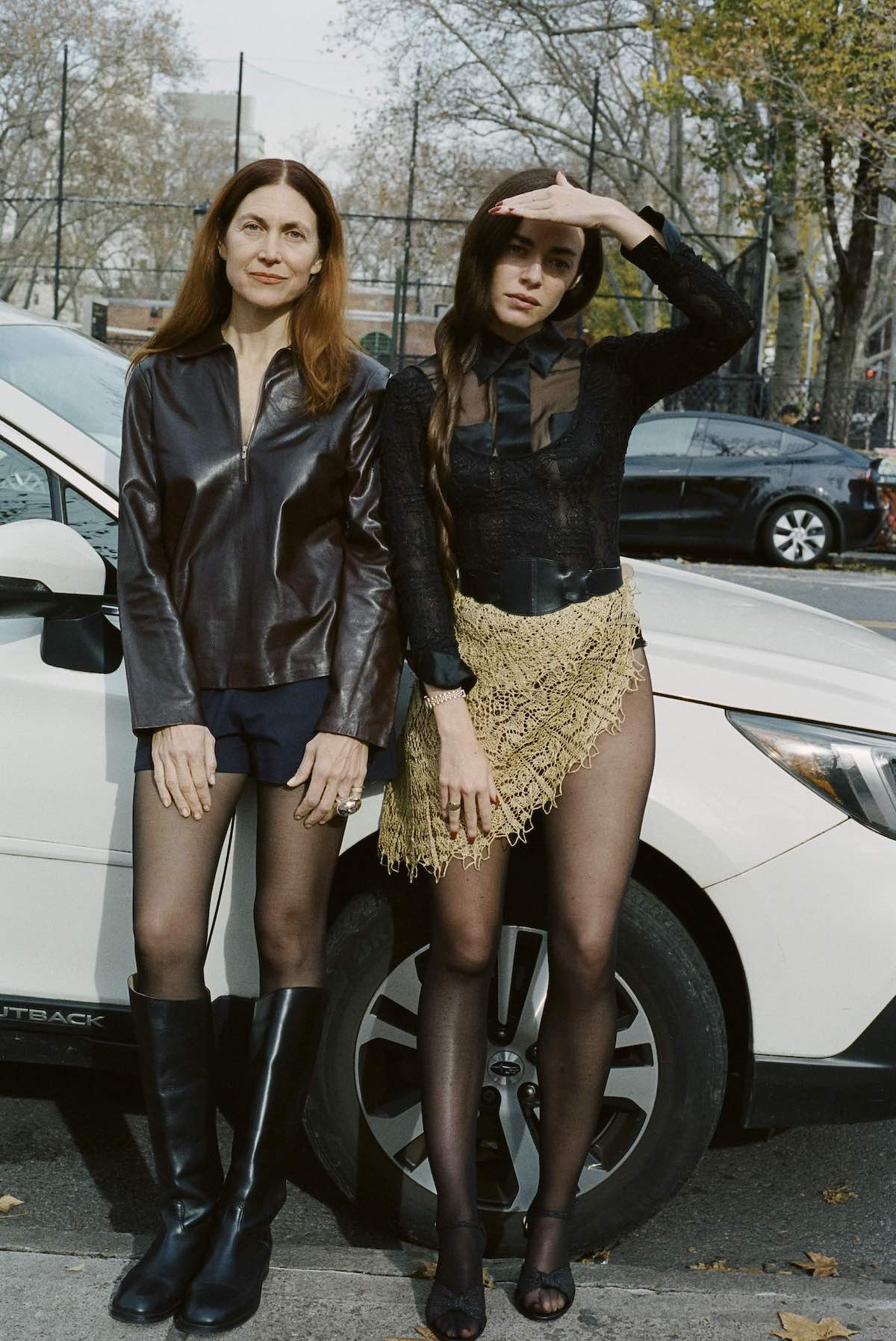
MF— Your clothing, photographs and relationships all have that sort of fleeting romance to them. It's not about overworked perfection.
CC— I agree. I want to say one more thing relating back to simplicity and returning to your roots. You know, Maryam, that takes a lot of balls. Anyone with a normal head on their shoulders would look at your work and say, “You're doing great,” but you have the strength to still want to improve. At the same time, nobody who does a creative job thinks they're doing enough, but the thing is, you grow up, have kids and you have things to do. It's difficult to get to that point, so I think it's important not to judge yourself so much.
MF— It's easy to hear the truth. Listening to the truth is difficult. Because in a way, the world is increasingly pushing us in another direction. If we're talking about poetry and romance, our culture is telling us, v“don't bother with that.” Now, what is pushed on us is to be as impactful and quick as possible.
I feel like the creative world is now such a platform to overthink and compare. But it's funny, because even with this rapid way of communicating we have now, as I'm maturing, I'm realizing how much my family has become my community in influencing my work. It's only happening as I'm aging because I'm thinking back to who I've become if everything is about this full-circle ride. I think about my dad's mom's grandfather; he was a manufacturer of high-quality Persian rugs. My grandma had a boutique in Iran in the '70s. She was a big inspiration of mine. And then my aunt was always doing crafts when I was younger and taking me to craft shows.
But back then, I always felt with my parents, I didn't really relate to them as much. My dad was an engineer, and my mom was more into math. But now I realize how much my mom and my dad influence me, even just as people and their style. All of that reflection has had me, lately, thinking of my daughters. How their drawings are so special, and I wanna curate a show. Anais wants to be an author, and I'm starting to write a lot now, too. It's a new love of mine. So what I'm realizing now as I'm aging, is that family is ingrained in my system. But I also wanted to say that it's so special to be interviewed by people that are dear to you.
MF— We can talk about all of these incredible things that Maryam has done and accomplished, but on the other side, Maryam is just an incredible person that I love being friends with — and all of the rest doesn't really matter compared to that.

Noticing that Pittsburgh’s overall big city presence was on the rise, owner Diana Kucenic decided it was time to draw on her love of fashion and expand her entrepreneurial endeavours into retail, complimenting her success in the hospitality industry. Kucenic’s experience of buying started with her work for her mother’s fashion stores in the late 2000’s and so she was well versed when the time came to open her own store. Those regular trips to Milan and Paris meant not only had she developed vital experience and impeccable taste, but she had established important relationships with renowned contemporary designers.
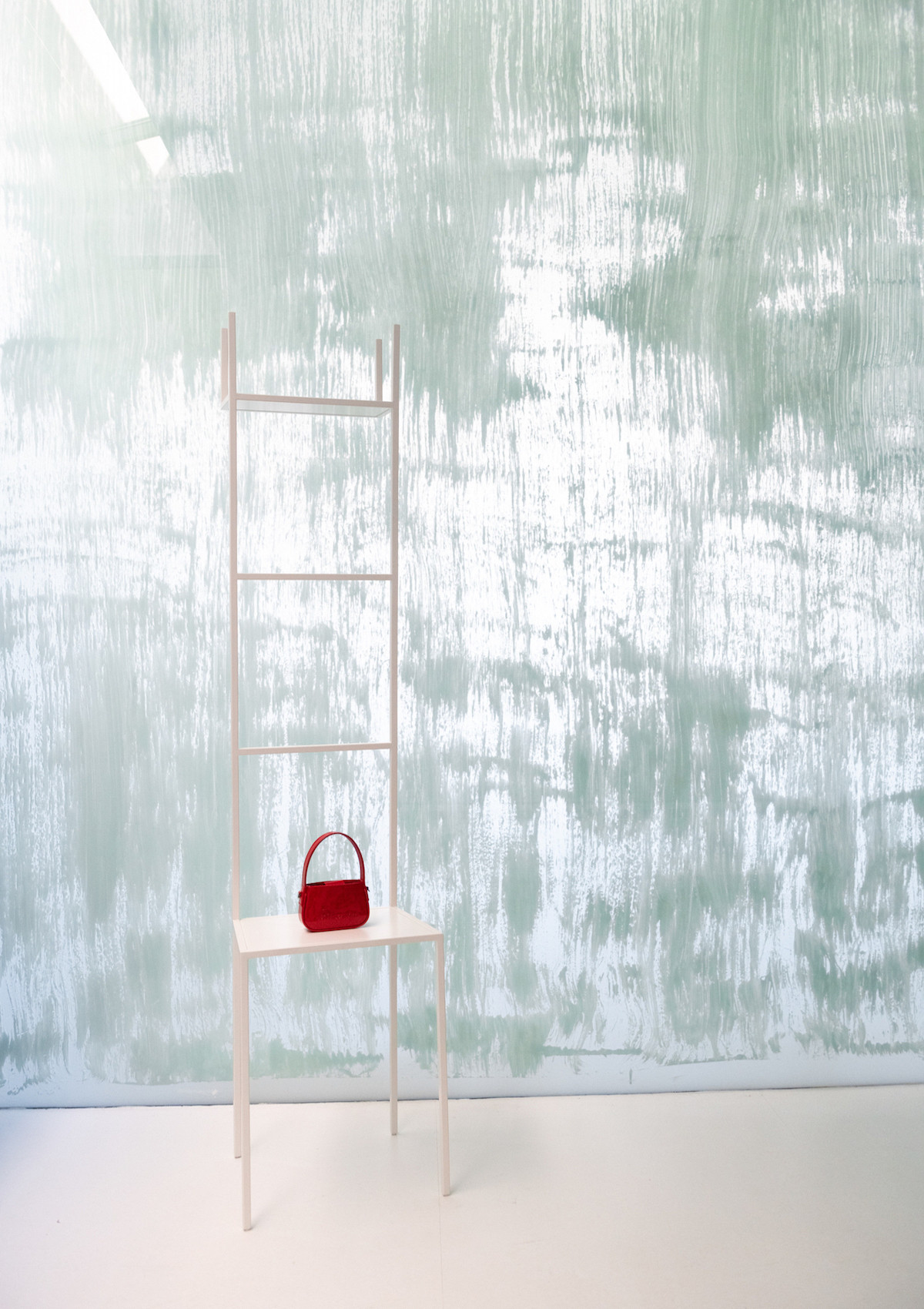

The store’s beauty extends far beyond the fashion and lifestyle products that TONS stock. Having tapped NWDS, an international collective of architects to conceptualize the store’s minimalist interior, the two-story mansion and former atelier is certainly worth a visit regardless of whether or not your wardrobe is in need of some new additions. The spacious venue is bathed in natural light and whatever embellishments are used to decorate the space are thoughtfully considered. The opulent ground floor is home to Italian fixtures and furniture while the alterable upstairs can quickly become an event space, and even features a photo studio adjacent to the further rails of high fashion pieces. If you didn’t notice them upon entry, this is certainly the floor to admire the large-scale artworks by Alexander Brodsky that drape from the ceiling.
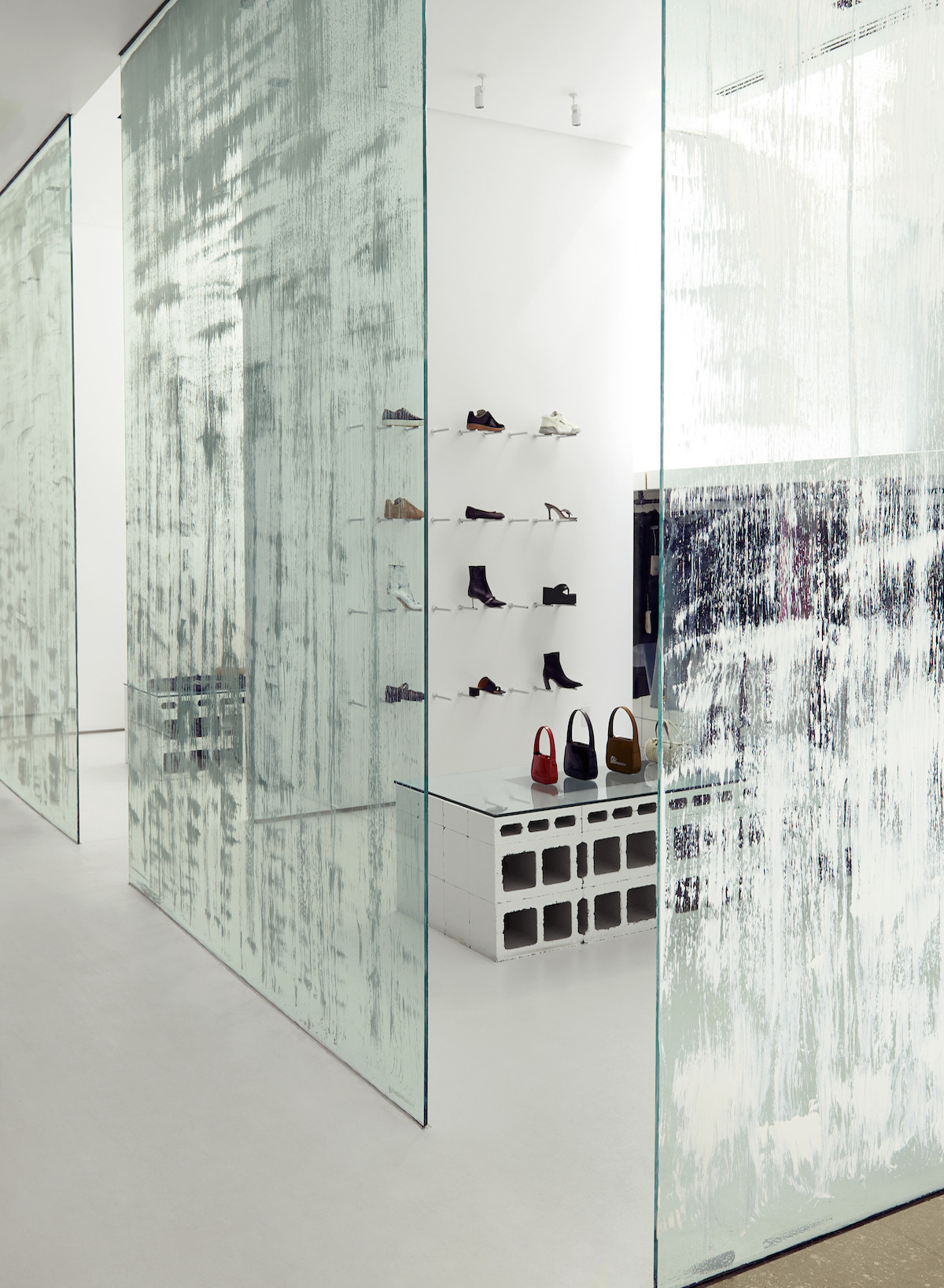
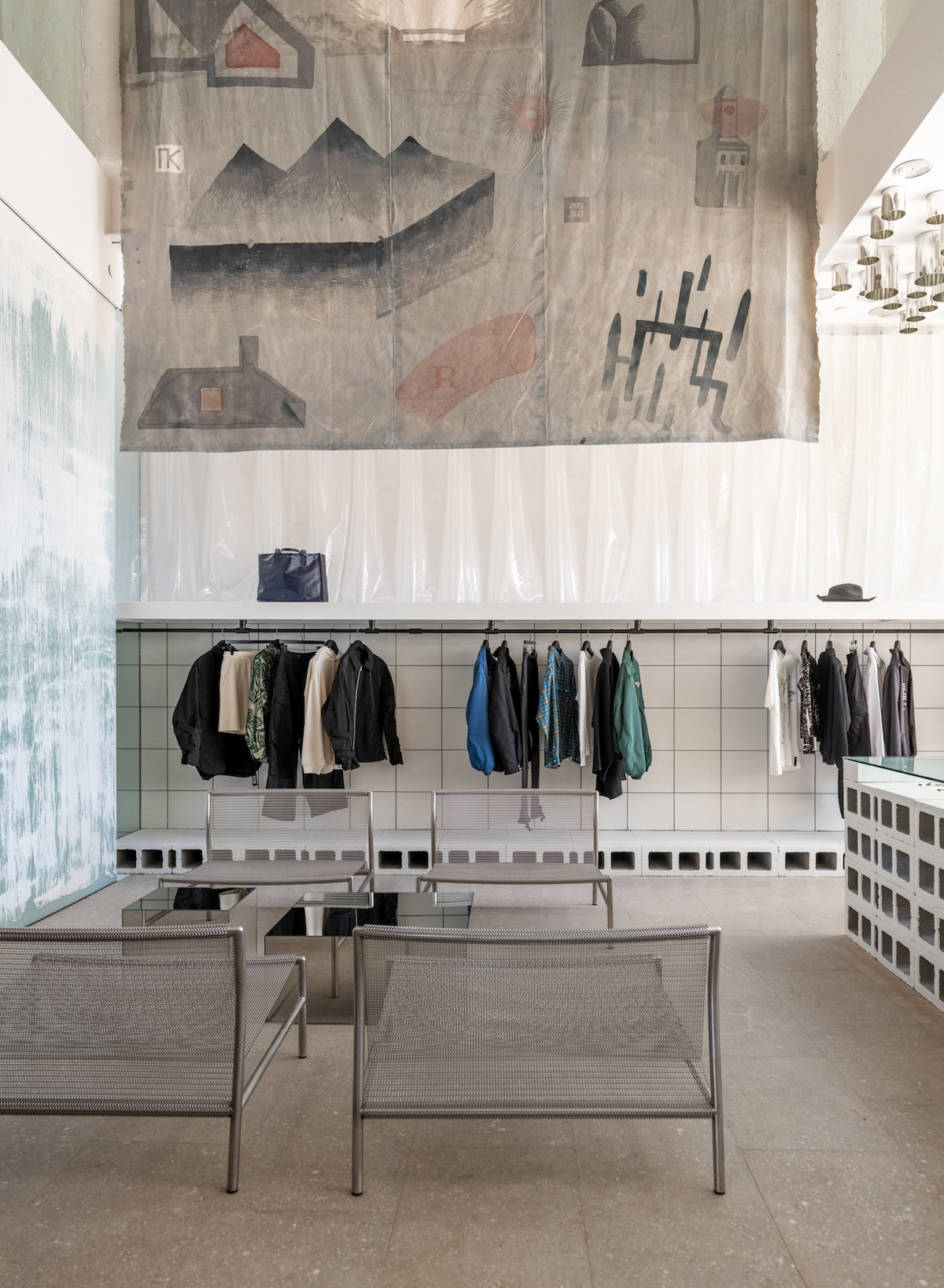
Setting their sights beyond fashion, the reatil space is becoming somewhat of an oasis for creatives and likeminded individuals to come together. The store hopes to reciprocate this by supporting and amplifying these young creatives and will soon open their doors to Carnegie Mellon students for a 3 day pop-up as a part of CMU’s Lunar Gala show.
Inspired by retailers of old like Colette, TONS strives to bring an elevated commercial experience and cater to the diversity of Pittsburgh, “You can walk into TONS and purchase a great quality t-shirt for $50 as well as a Marni bag.” As the only home to Aesop beauty products in Pittsburgh and one of only ten stores in North America to stock OAMC, TONS is certainly blessing locals with labels that would’ve previously required a flight to New York or Los Angeles to see.
This hasn’t gone unnoticed and the support from their local community has been a justified acknowledgment of the store’s efforts be at the forefront of the movement to push fashion in the area.

To accompany the likes of Raf Simons, Maison Margiela, and Vetements, TONS has developed their own in-line products featuring branded fleeces and will soon collaborate with artist Samuel Fish on a City of Bridges capsule that will no doubt be a hit amongst locals.
You can check out what they have to offer online, while those in Pittsburgh can visit the store seven days a week.