At The Circus

Oh and the peacock feathered suit was killer. See it, and our other favorite looks from backstage at the presentation, below.
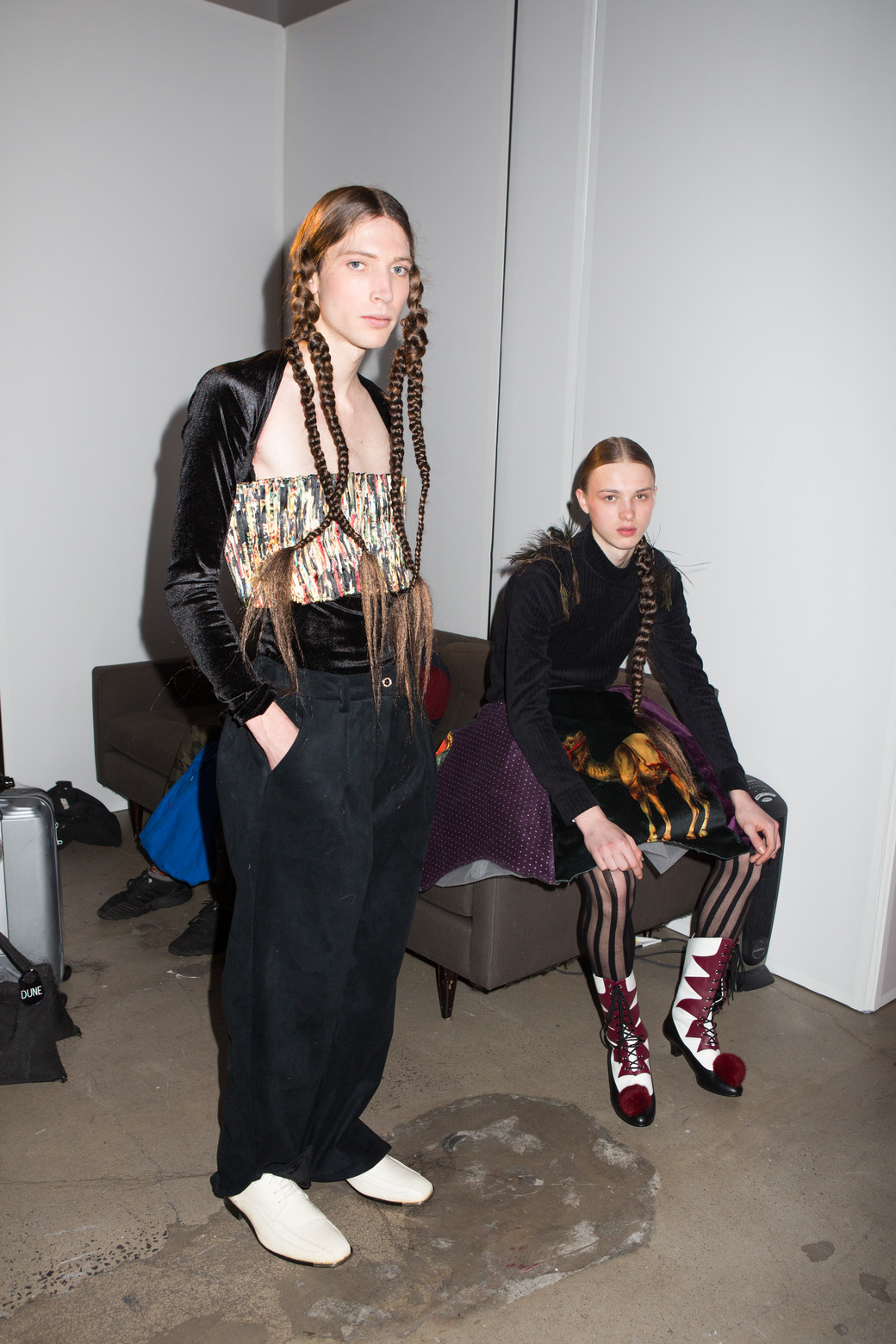
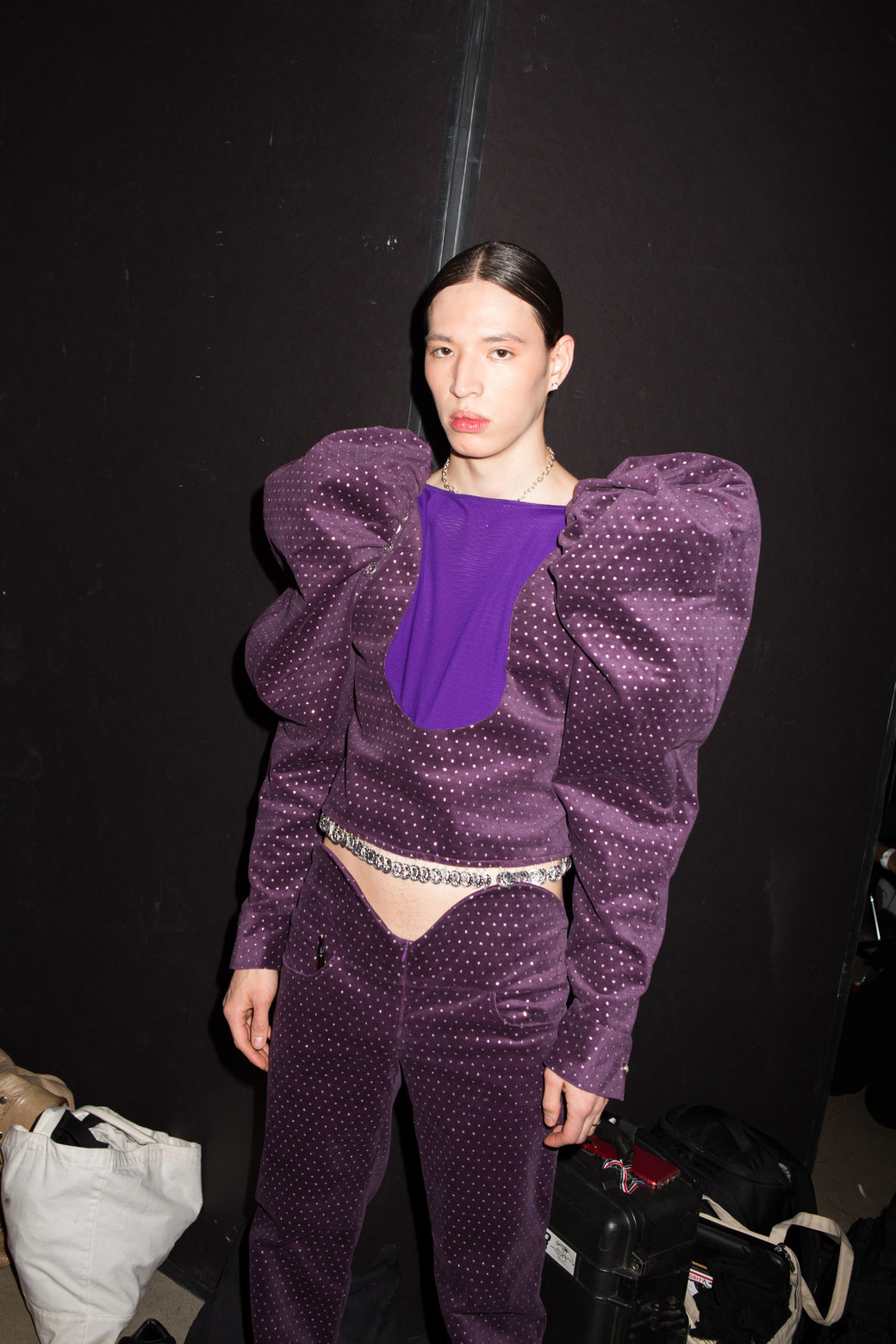


Oh and the peacock feathered suit was killer. See it, and our other favorite looks from backstage at the presentation, below.

An exclusive monogram designed by Dap is featured on the products to add a bespoke Puma touch to the capsule. "The spiritual magic embodied by the puma as an animal is coming to life in the collaboration between Dapper Dan and the PUMA brand," said Dapper Dan.
Puma x Dapper Dan, in celebration of Puma Clyde's 40th, have redesigned the iconic sneaker with premium leather and jacquard, a metal plaque on the heel tab with co-branded logo, and crystal detailing. In honor of culture and celebration of classics, the partnership represents expansion and evolution of timelessness, legacy, and creativity.
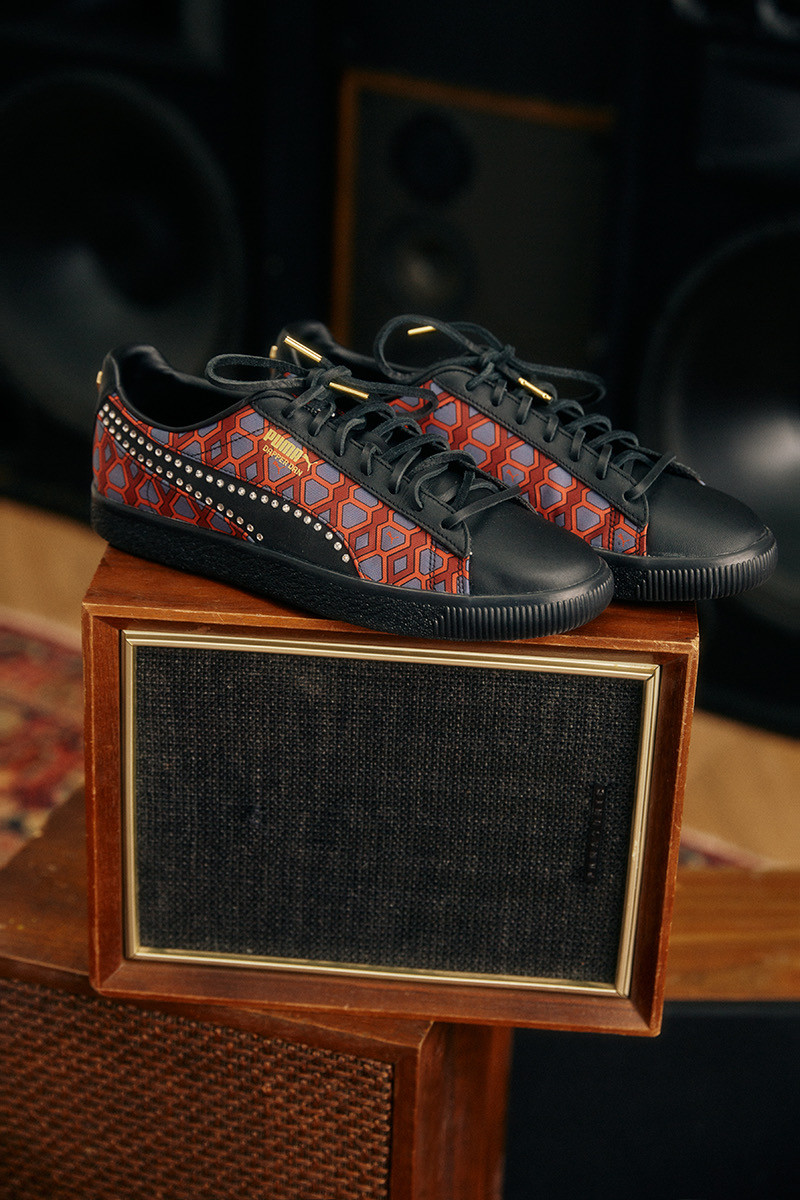
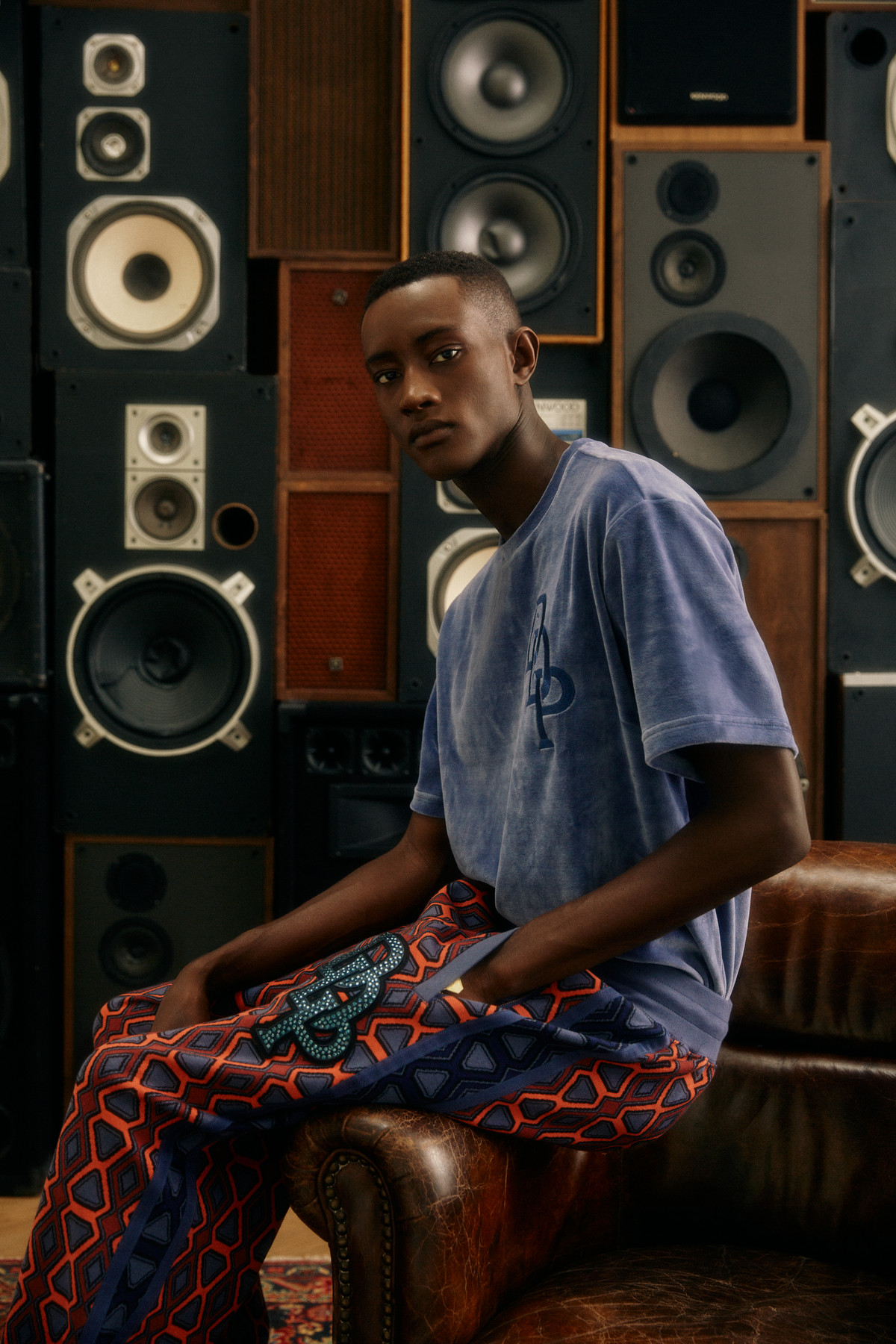
Fashion icon, Dapper Dan, expanded his influence in the collaboration through not only apparel and footwear, but redesigning the interior of the Puma jet. “We are so honored to welcome Dapper Dan in the PUMA Family. Being able to count on such a talented visionary as a brand ambassador is an amazing opportunity to collaborate and shape today’s and tomorrow’s street culture together,” said Chief Brand Officer of Puma, Adam Petrick.
Puma x Dapper Dan released the first drop of the four-piece capsule available exclusively at Kith.com and Kith stores in the US, Paris, and Tokyo. More information regarding the next drop will be available soon.
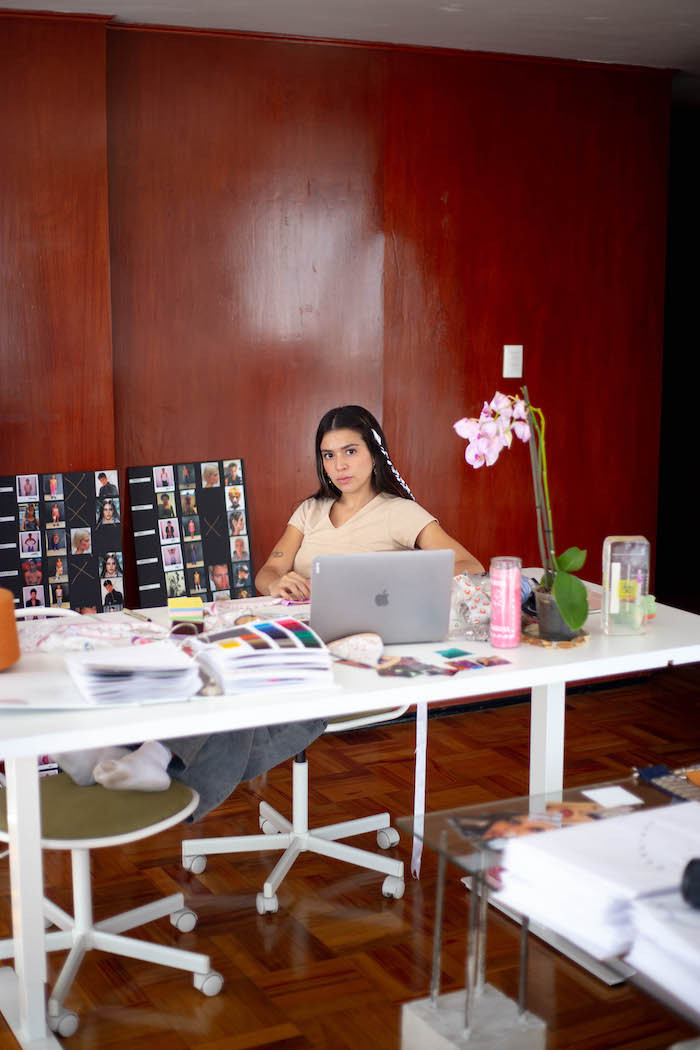
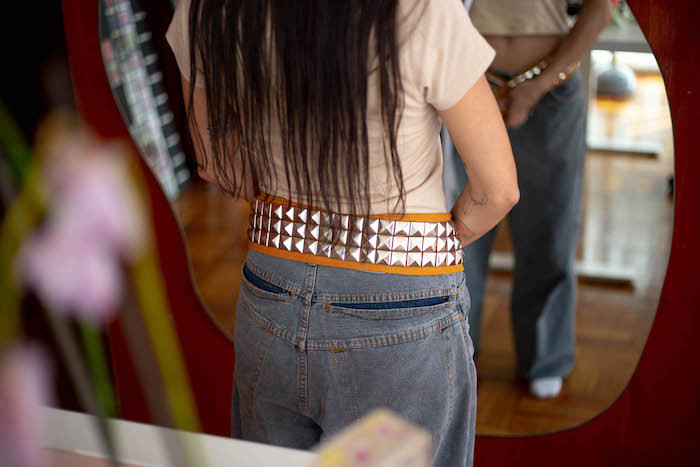
Inspired by the ficheras of the 50s — women who sought sexual liberation through exotic dance and sex work — the collection includes dainty lace accents, barely-there tops, and lingerie-inspired tailoring. These feminine accents pay homage to the unapologetically bold women who came before her, who were later forgotten by history and written off due to the inescapable process of aging. These pieces stand in as physical representations of yearning and celebrate a fulfillment that does not come from external sources, but rather from the self.
office sat down with Sabrina to discuss flipping beauty expectations upside down and empowering not only women, but the wider community of those who share her heritage through her namesake brand.
Your passion for the fashion industry is fed by storytelling. What is the specific story you wanted to tell with the Feromonas collection?
I became very interested in these small pink bottles hanging from some of the stands in Mercado de Sonora, which I found out were pheromones. They’re supposed to work as a substance that makes men desire you.
I feel as though the popularity of all of these love solutions (such as the “feromonas drops”) in Mercado de Sonora, and in Mexico more widely, is connected to society’s unrealistic expectation of youth and the very real objectification of the female body. These conditions drive many adult women to look for alternative methods to regain the attention and love of their partners, often through magical or pseudo-scientific means. When in reality, pheromones are released from our bodies naturally as a chemical reaction; at once as natural as aging, and as magical as falling in love.
My new collection is named Feromonas because it is inspired by the idea of wearing something over your skin that makes you feel desired but without wanting or requiring someone else's approval or love. The sensuality of the pieces in the collection is subtle, as is releasing pheromones, so it was a way of creating a substitute for these solutions and making it more about the wearer's experience and not necessarily an external attraction.


What does "sexy" mean to you?
I think sexy can mean many things. It is definitely feeling comfortable and confident in your body. It is also sexy to say what you need and put limits, and get out of your comfort zone. I think that is why I perceived the presentations and collections as sexy because the whole show was really showing everyone’s self and feeling a lot of vulnerability, but I think that’s hot!
Why is it important to defy the heteronormative standards placed upon displaying our sexuality through the visual arts, design, and a collection like this one?
Now more than ever it’s important to redefine our ideas of how people should look, think, and what we should wear. There are so many shades and possibilities in the visual arts that it's almost impossible not to challenge them. The whole show was really an opportunity to create a utopia where people moved freely and sensually; you entered this structure that felt like a part of another ecosystem. It had different perception levels, using different cameras around the space that forced spectators to look at the show from different angles, simulating the idea of how we should see and experience the world around us. It touched upon sex, love, betrayal, social media, jealousy, and so many more things. Thinking about this utopian reality helps redefine and transform the world.


What does it mean to you to be one of the voices shaping the industry in Mexico City and what is the example you'd like to put forth for others who come from your native home?
I am a very young brand and it’s been a challenge in so many ways to build something. I am afraid every five minutes that things aren’t going to work out. I would say to try to take it day by day and not to let your mind take you to the wrong scenario. We are constantly creating our own reality, so to stay strong, to get away from negative people or energies, and not feel let down when things go wrong. Also, I would push people to collaborate more — you would be surprised how much you can learn from others’ practices when working on collaborative projects. You can mix everything — performance, architecture, sound, sculpture, and light. I think it is very important as a designer and artist to learn how to work with people and feed your work with others’ ideas. Also, the more you grow, the more hands you need and it is essential to understand that it's not only you who creates the work, but the people you work with are also an extension of yourself and we should take care of them.
Camila Arroyo, who choreographed the performance, helped to create a narrative that went beyond the clothes. She wrote about the process, “I wanted you to feel like a witness to many stories and relations, and many of the models were real-life friends, so you could really feel like there were different relationships at play. I wanted an other-worldly quality, but at the same time, included gestures with glimpses of pop culture snippets, from the Tiktok choreography of Rosalia's song Despechá, which we performed in hyper-slow motion, to groups of friends taking selfies, and a facial expression that was inspired by the 'la mala de la novela' archetype — the mean girl in a telenovela." The whole thing felt like the show Skins, meets demonic fairies, meets Mexico City. Before our rehearsals and before the show I guided a movement improvisation to really allow us all to connect to each other because we needed that availability and connection to each other to transform the space and bring the clothes to life, and ultimately to create a new world together.
As a Hispanic creator, what does true representation look like to you?
This is a tricky question because for some people it has become more about what the international eye wants from Hispanic creators than what they really are. I think being Hispanic doesn't necessarily have to define your work in a specific folkloric way — for some people, it's more about how they feel, see, fear, or what they desire. I think it can be derogatory when Mexican artists use popular art as inspiration because sometimes it’s not theirs and they are not speaking their truth. They are just thinking of what will sell to tourists. So I think true representation is to look at yourself more and create from there.
Check out exclusive backstage photos from Sabrina’s most recent show, as well as a sneak peek into her Mexico City studio, below.



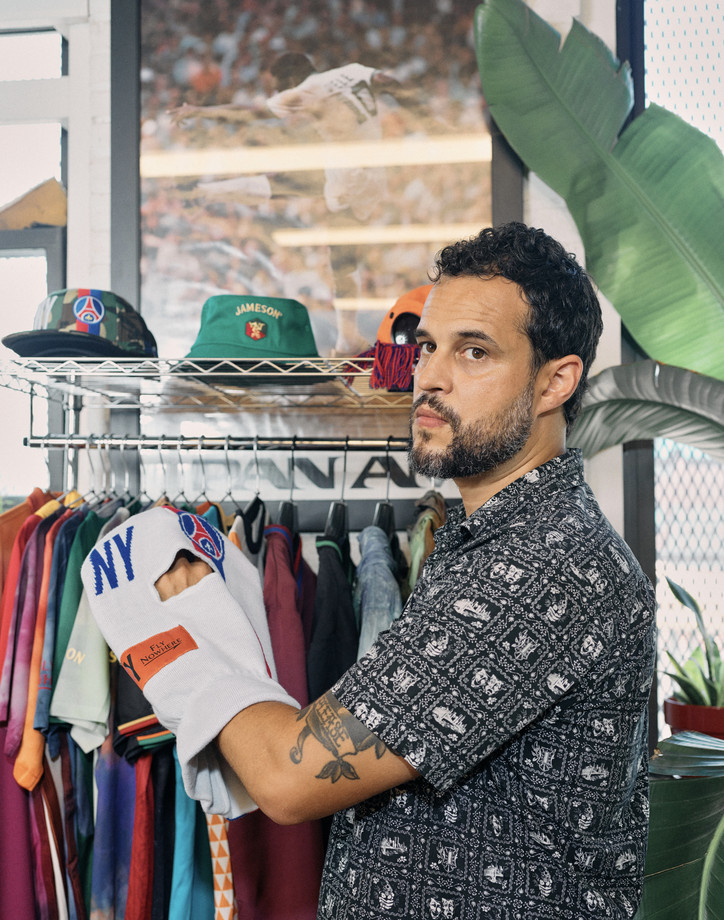
What’s behind the name Fly Nowhere?
Nowhere FC was just a concept which came from a graffiti crew called FC Crew in New York – West, Supreme, Dash, 167, Kaws, a lot of legendary writers came from FC – that’s where my team-building and style came from – the FC Crew which has been around since 1982. And then in 2010, Nowhere FC arrived with a new generation, not so much focused on graffiti as on art… We started as a football club called Nowhere FC, like a hypothetical football club. We can go anywhere, so we’re kind of from nowhere. We didn’t want to bind ourselves to regionality. We really evolved on the Internet, through social media. Our community, our customers, our conversations were all going cross-borders. So, we wanted to think big and expansive for a long-term plan. We don’t want to be tied to being just a “New York FC.” New York was the Petri dish, but the ideas, the cultures, the flavors, were from everywhere. So Nowhere was the most appropriate way for us to roll as a team. Then Fly Nowhere became the commercial end of it, like an airline sponsor. We started getting calls from companies asking how we could work on football projects with them. So we created a studio to service consulting, design, creative, whatever these companies wanted to do in the football space. The Football Café that we created (in the Lower East Side), kind of became the base. We had a café, a gallery next door, and people would come to watch games, hang out, and have drinks. It quickly went beyond that space and became a global creative agency. Nowhere FC was just a concept which came from a graffiti crew called FC crew in New York – West and Virus AA [creative colleagues also at Supreme], Dash 167 who hired me for some of my first freelance work at Rocawear and Sean John, Wane COD, Kaws, a lot of legendary writers came from FC – that’s where my team-building, and style came from, the FC crew which has been around since 1982. And then around 2010, Nowhere FC arrived with a new generation, not so much focused on graffiti as on art, but with the foundations of graffiti crews and their team identity systems as one inspiration for our DNA.
How did you get involved with football?
I’ve played since I was four. My dad is Peruvian, which is Inca, African, and Italian, and he always had an interest in football as a connection to our identity. He was adamant about me trying it out as a kid, and it stuck. I didn’t come from a really strong football neighborhood or football culture, but I played it at such a young age, so it’s always been a part of me. I became a fan of the foreign game, the global game, in my early 20s. I played in Seattle, and it was pretty serious — all year-round, indoor and outdoor, traveling to tournaments the Olympic Development Program was having in the ‘80s and early ‘90s. Olympic Development was the level before you go pro. I was never good enough to go pro, so by my teenage years I just started diving more into graffiti and art, but the football stayed in me. I became a fan of the foreign game, the global game, in my early 20s. When I got my first interview at Supreme, it was a total coincidence that they were doing their first collaboration with Umbro —my hiring test was to go home and design a soccer jersey. It was completely random, I never expected that.
So what was your position at Supreme, and how long were you with the company?
I started out as an illustrator and graphic designer, and then I got involved with sportswear design and collaborations. James Jebbia is really like a Warhol to me; he won’t call himself an artist, but to me he was. I watched him direct and weave bits of work from an all-star list of talent, and craft something very layered that I still am digesting, years later. I came there for a job but I started to appreciate that Supreme was even more intricate and disruptive than I imagined, and could not be confined to just being a “business.” This was my first hint into the idea that you could make money and make “art.” I was in-house for about 4 years and kept freelancing for them for a couple of years after, before I met another creative mentor named Reed Putlitz who was the director of Marc Jacobs Special Projects. He brought me in for the next few years to do weird collaborations and stunts under the president Robert Duffy; the Bookmarc store and the MJ label with the really long name “Jacobs by Marc Jacobs for Marc etc.” I was lucky that some of my first in-house jobs had teams and bosses that taught me expansive ways to problem-solve and be curious.
As a multidisciplinary artist, do you see creativity as a language? And if so, what do you want to convey?
Well, I think part of that is [about] the times we’re living in. Craft, and genre, and industries are breaking open, so everyone has to be kind of multidisciplinary now. I guess Nowhere FC has definitely been a journey for me and my ideas in finding identity and connecting with other people socially. Disruption pertains to it in the sense that, I never felt comfortable saying, “I want to be a fashion designer and make a commercial clothing brand.” So then it’s like, okay, so go be a painter and sell your paintings in the gallery system. That system never really felt comfortable either, that culture. Not that I don’t enjoy and respect galleries, but I don’t feel comfortable calling myself a painter. Football goes into everything – art, culture, sports, style, food, travel, tourism, politics, crime, poetry. It tells the story of humans in every way. So I just know that the starting point is always football for me. It feels almost like a religion. It’s outside of business, outside of art, but it’s also inside of business, and inside of art. I don’t know where it’s going. I don’t know where this art is going. But I know that I love the language of football, the language of the fans, the heraldry, and symbolism. It’s a lot of codes that tell the stories you can unravel. Storytelling is at the root of my work.
Describe two career highlights that stand out for you?
Building the Football Café was one of the highlights, because that was the first time I was able to bring something in my mind, and in my group’s mind, to a reality, to create a physical space, a brick-and-mortar. I really like brick-and-mortar spaces because there are always surprises — you never know who’s going to show up each day. It was my chance to do regular, blue-collar labor, like make coffee and smoothies for people and talk to them. It was really like a community just organically exploded out of there. I never could have planned that. That was a powerful lesson I learned – if you build it, they will come. You wake up every morning at 7:00 A.M., and turn on the lights for this little community. Another highlight would be the restoration work on the Venezia FC brand. My heart was really in it, because I went to school in Venice (Italy) as a kid, and in 2016, I’m now working for Venice. It meant I could put the best of what I could do into a 114-year-old football club. The ownership gave us a lot of freedom, and supported Ted Philipakos, my creative partner at the time, and myself as Creative Director and CMO of the brand. We got full reign to redesign the social media, the tone, the photography, the graphics, the stadium. We cut a legendary deal with Kappa, and I got to design four kits. All four kits did well. Then our jersey sold out in four hours, the social media tripled and we became a little story in world football for a couple of months.
What are you working on currently?
Right now, we’ve just finished opening the Paris Saint-Germain store in New York. We’ve been working with Jonathan David for a couple of years; he’s a Canadian National Team star of Haitian heritage who was born in NY and broke the record for most expensive transfer at LOSC in Lille, where he beat PSG, won the French League and Super Cup in his first year. We joined a charity project, The Sanneh Foundation and developed a line called the For Haiti collection, to support youth footballers for training, food, and education. All the money goes to a foundation in Cité du Soleil. Currently, we are working on reorganizing our agency as we’re expanding. Our passion project is to build out our Fly Nowhere FC community, and hopefully start to create a borderless team around the culture of football and art. It’s about reimagining football and making it more accessible to more groups of people.
What do you ultimately hope to achieve through your work as a creative?
I’d like to build ideas. I like things to be bigger than me, to grow beyond what I can imagine. I’m obsessed with the future, but I also embrace the past, and heavily nerd-out on my perceptions of history and mythology. I think if you’re obsessed with football, you kind of have this Sisyphus complex, because it’s repetitive, but you keep coming back. You’re living in constant disappointment, but that’s just part of being a football fan.