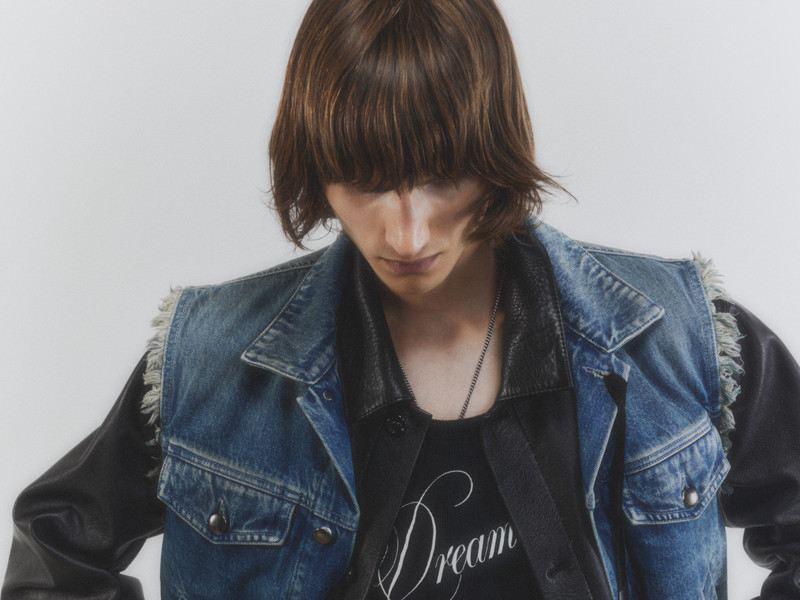
At The Circus

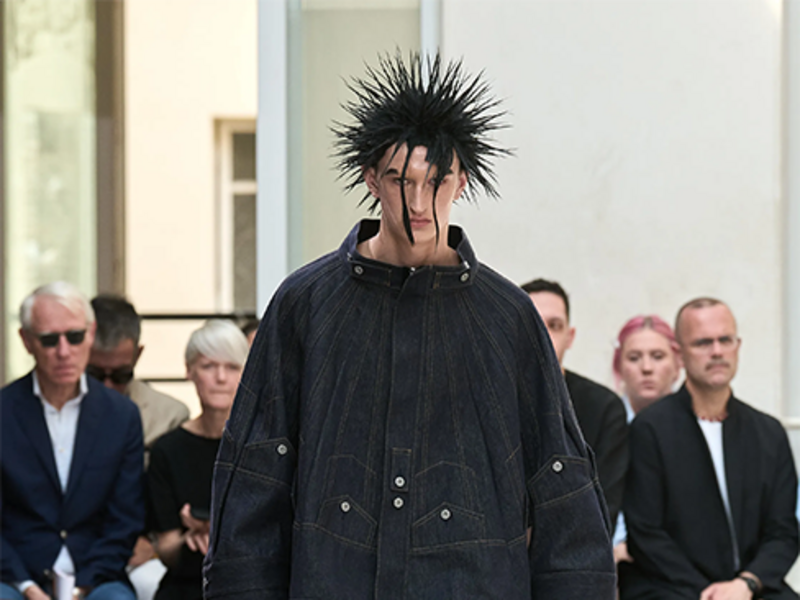
Oh and the peacock feathered suit was killer. See it, and our other favorite looks from backstage at the presentation, below.
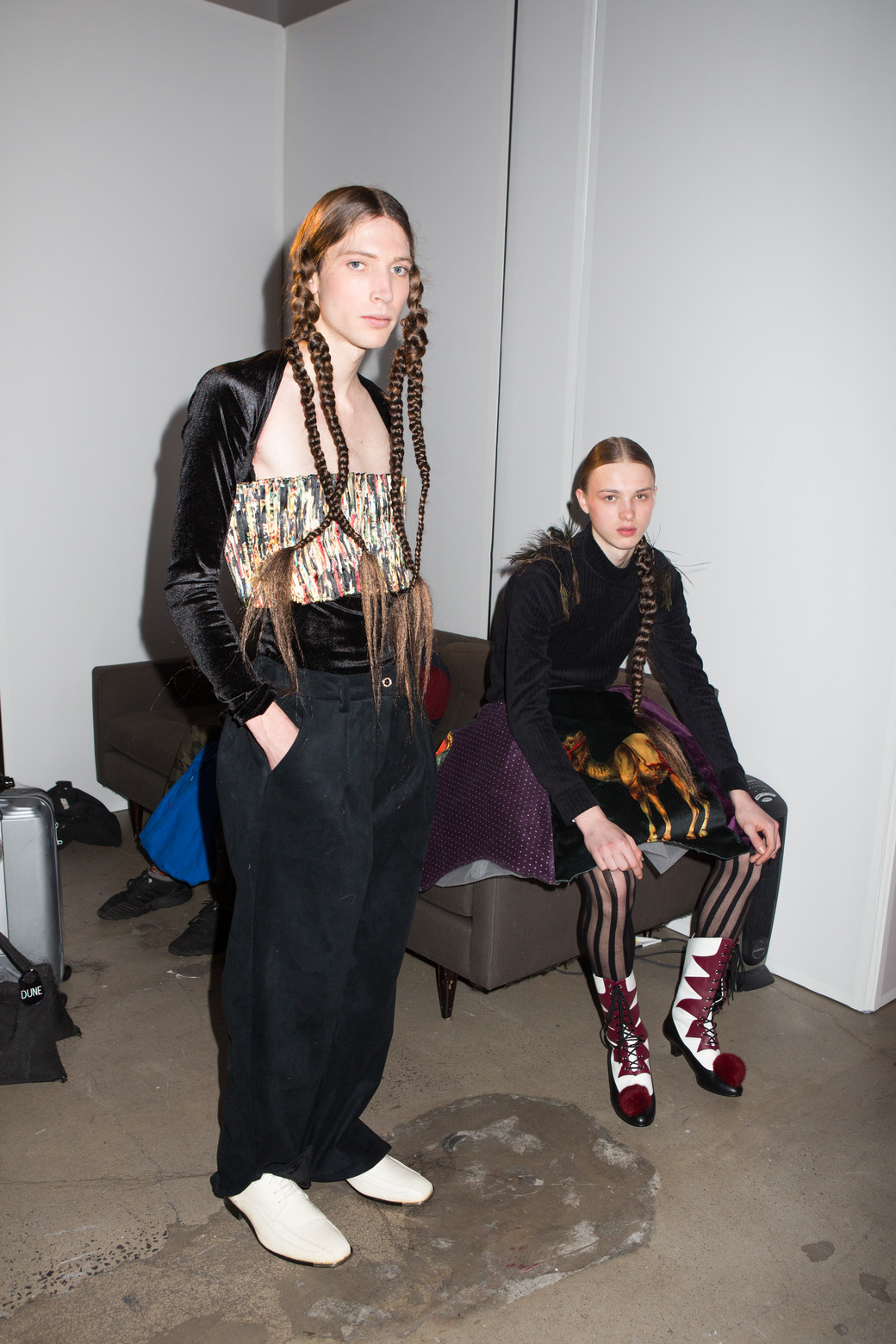
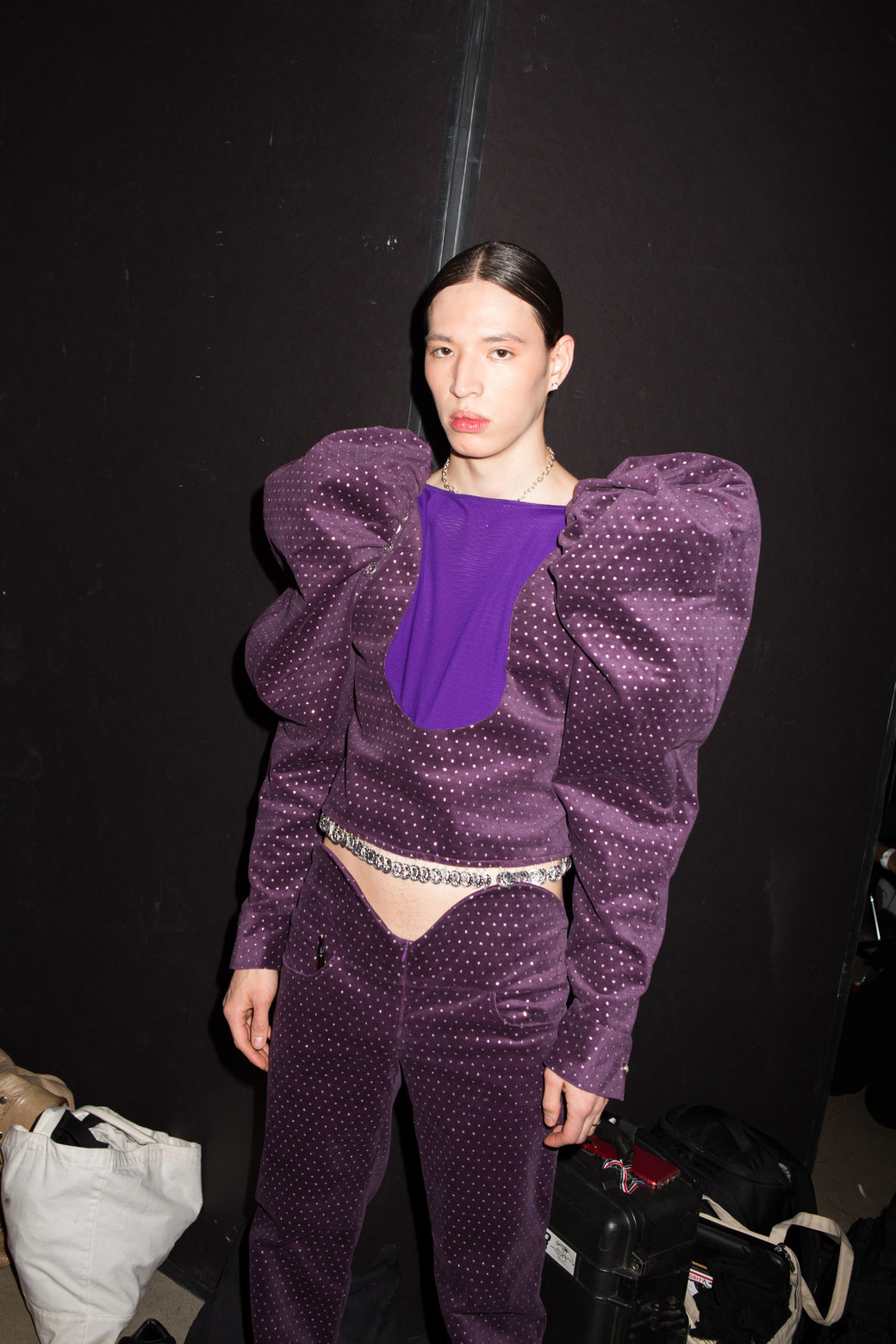


Oh and the peacock feathered suit was killer. See it, and our other favorite looks from backstage at the presentation, below.

These ahead-of-its-time designs have graced the likes of our favorites such as Evan Mock, Lizzo, Solange, and Flo Milli to name a few. The term “elevated basic” gets thrown around quite a bit but the Cali native’s work rings true to the term. “Business in the front, party in the back,” as they say. The future for designer James Flemons is already here.
Check out why fashion lovers and style tastemakers are obsessed with Phlemuns in our exclusive interview below!
I remember you talking about the importance of archiving on the Brainwash podcast. What are some things that aren’t necessarily clothing that you’ve kept in your collection?
I mean, a lot of the things that I've held onto since I was a kid I collected baseball cards and stamps, and even, in weird ways, I guess, even art supplies and things. I just hold on to things and don't really let it go. One of the main things that I used to collect when I was younger was Boondocks clippings from the actual newspaper and I don't know if you remember the Love Is, those little angel baby things in the newspaper that says, "Love Is'' in cursive. But, mainly the boondocks, I used to decorate notebooks in my little Boondocks clippings. I wonder if I have one here somewhere. But, what else and then I guess, aside from clothes, I had a magazine collection that after moving around has kind of gotten smaller, but I still love print, and that translated into me collecting all of the features that my clothes have been in physical print. That's one of my favorite things to collect and archive.
What else? I don't know, it's like anything I can just get my hands on and hold on to.
I would say a few steps before hoarding. Before it gets bad I like to collect things. But these days, I think that that side of me has diminished a little bit just because of the demand of my lifestyle, as for now, that my life is only dedicated to being a business owner. So yeah, even my archiving, from before that it was just onto digital imagery was what I would archive and that was my, I guess history in that for the last five to ten years. That was the main thing. And I haven't even been able to do that as much because like, every day, I'm just like, I wear so many hats in this business. My to-do list is ongoing. And then I wake up and I have five to ten more things to it.
So how does the archiving tie into your designing process since most of it isn’t clothing related but I can tell it still influences your work a lot?
I think it's just having the physical presence of something that you can, there are certain things that I'll hold onto. Even with so much stuff from high school, more stuff is coming to me as we talk. Just so much of my high school memorabilia, not even just specifically at high school, but just my life in high school, my interests and things that I held on to rare bands that I had or a juicy bracelet that I have or just random little things that I every like, two to five to 10 years I come back again, it has this kind of natural presence in my subconscious. I don't need to physically go look and refer to things. As an archivist, I feel like it's just ingrained in who I am as a person and in my subconscious and my mental state that I can just kind of regurgitate into my work. I have an ongoing Rolodex in my brain of everything. It's like, someone will say something or I'll see something and it'll connect to something else and it'll go back in those file cabinets in my brain. So, I think that's kind of how I've learned over the years, how it kind of ends up translating into my work and also I'll make something just off the top of my head or just an idea that comes to me, and then maybe two months to six months to a year later, I'll look at that thing again and be like, "Oh, yeah, this completely came from that one thing or that I have or that I designed before or this picture that I'll dig through the internet," and I'm like, "Oh, yeah, this one detail on this garment came from this whole image."
So, I think that the archiving aspect just makes these kinds of references a bit more true to you, as opposed to just like, finding some images or finding things and throwing them on a mood board for you for six months. And that's what you're constantly referencing, which I don't like to talk down about other peers of the industry but there's a lot of copy/paste in today's fashion. You'll see three brands, and they all kind of could be the same. And we're just all directly looking at the same references, which is something I even was scared for a while that I fell into that and I realized that, it's just the kind of things that are ingrained in me because I don't use that process of mood boarding or directly referencing things. I really tried to keep them as true to me as possible. And I think through archiving, it helps me do that.
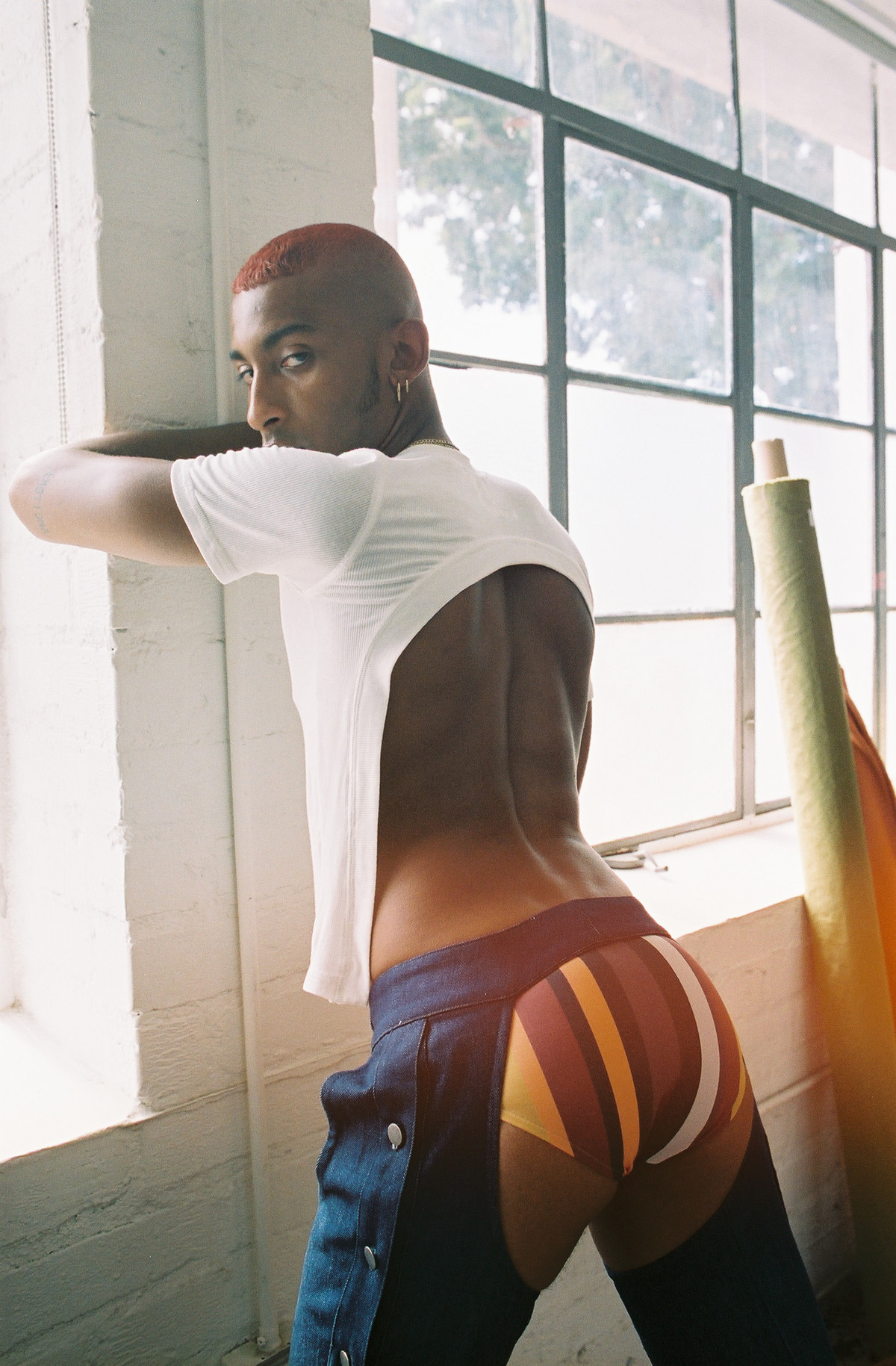
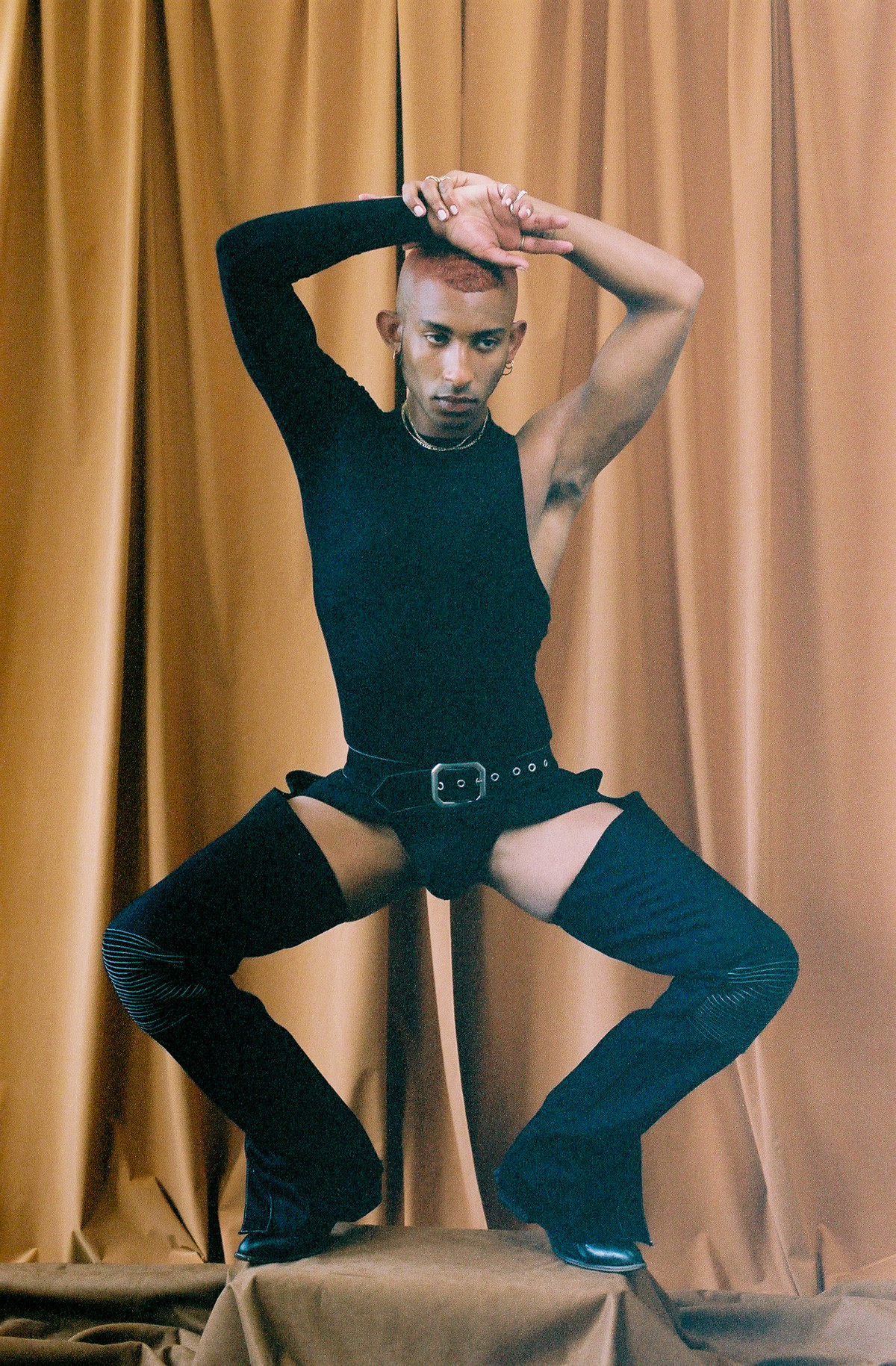
I noticed in your most recent drop with the backless tank tops that the silhouette is just so modern and really true to the “elevated basic” aesthetic. Then I saw on your instagram your first prototype was actually made in 2012. Have you ever thought your designs were before their time?
Definitely, it's interesting. I've had this conversation with a few of my friends within the industry that have been along my journey for this whole time. I've been doing this since whether it was public or not, I've been doing this for even long before 2012. But 2012 was when I got physically into this sphere of whether it was in the world of fashion in some kind of way, physically, as a presence. My whole trajectory has kind of been, fashion is about timing, and I'm one of those people whose timing has constantly been off. I tend to do things a little prematurely. I can confidently say that now in 2021, my clothes have been ahead of their time. Many people have gotten to reap the benefits over these concepts that I have. I don't like to say people steal from me but, especially back to mood boarding, a lot of people don't even know they find a picture and throw it up and don't even know where it's derived from. So, I've been told by multiple people, I'm on people's mood boards, but some people might not even know that they're referencing me.
For a majority of my career, I think a lot of my clothes were definitely ahead of their time, and just not truly appreciated for what they were when they came out or recognized in that kind of sense. I self-reference myself constantly. And I think what's also cool about that is that I get to go back and pick all of these things that I've done that I feel like weren't highlighted enough or no one paid attention to and then I can continually bring them back in a new light, in a new state of mind, in a new environment and society. And it's a proven testament to the fact that I've always wanted to have timeless clothes. And I mean, I'm proving myself right.
So, speaking of time. What era inspires or influences your work the most?
It definitely always comes back to the 70s. There's always some kind of 70s flair. There was black liberation in the 70s, there was queer liberation in the 70s, there was this kind of like, I think it's right before gender roles. Visibly, gender roles got so black and white, like, where men who were NBA players wore Daisy Dukes. Men were wearing really tight clothes and were effeminate. There was this play on gender that I don't think we've been as free as we were really since the 70s, to construct, that is. There's something that I always just come back to and also because I was raised by older parents. So, these are areas that are mainly my father because he's 80. So there's almost a 50 year age gap between us. And that's multiple lives between us there. So, I connect sometimes more to his upbringing than my peers in some way. Just because, that's the type of mentality and person and lifestyle that raised me and my mom is just a worldly person, and old soul as well. But yeah, definitely, it's this 70s and the, it's a mixture of my upbringing from having parents, who grew up in the 70s and my upbringing, very much is when I got interested in style, I guess I was into style before fashion.
Then there was the early 2000s for me and watching music videos. That's when I first really started. I was sketching and designing before then, but really with intention for what I was doing and learning what my taste level and what I was interested in. So, yeah, the 70s in the early 2000s, which I also think was another era of kind of liberation in some way. It was the early internet age. Everyone was just like, let's explore and fuck it and look crazy. Which is interesting talking to you now and realizing that we're kind of in that season now within 2020 to 2021. This kind of like lifting the veil and exposing all of this stuff and people being very liberated. So, it's very interesting that those are my two favorite areas. And now I'm kind of getting this new wave of what I would consider deserves success after all of these years that I put in that's coming now and this kind of a liberated season.
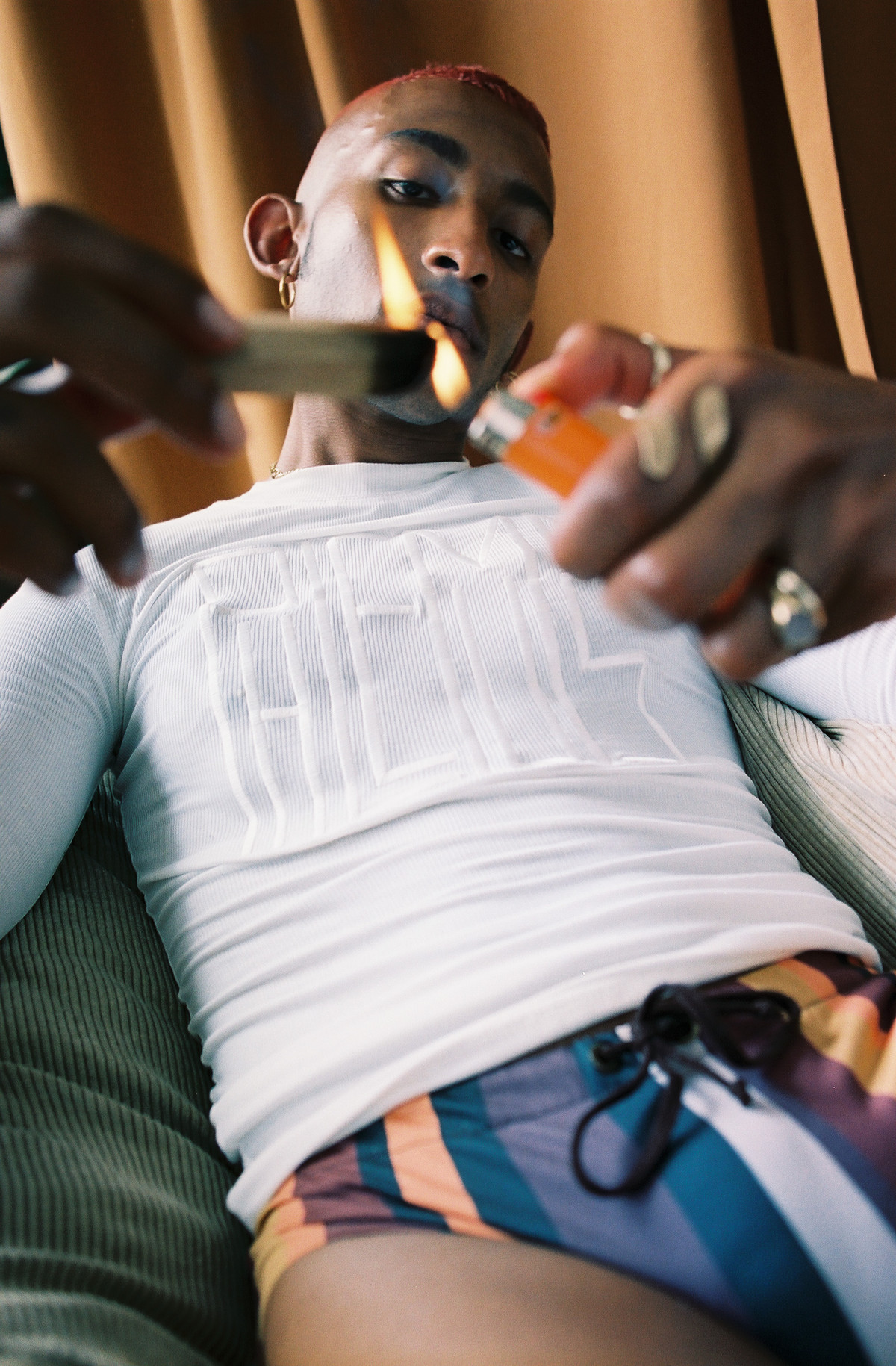
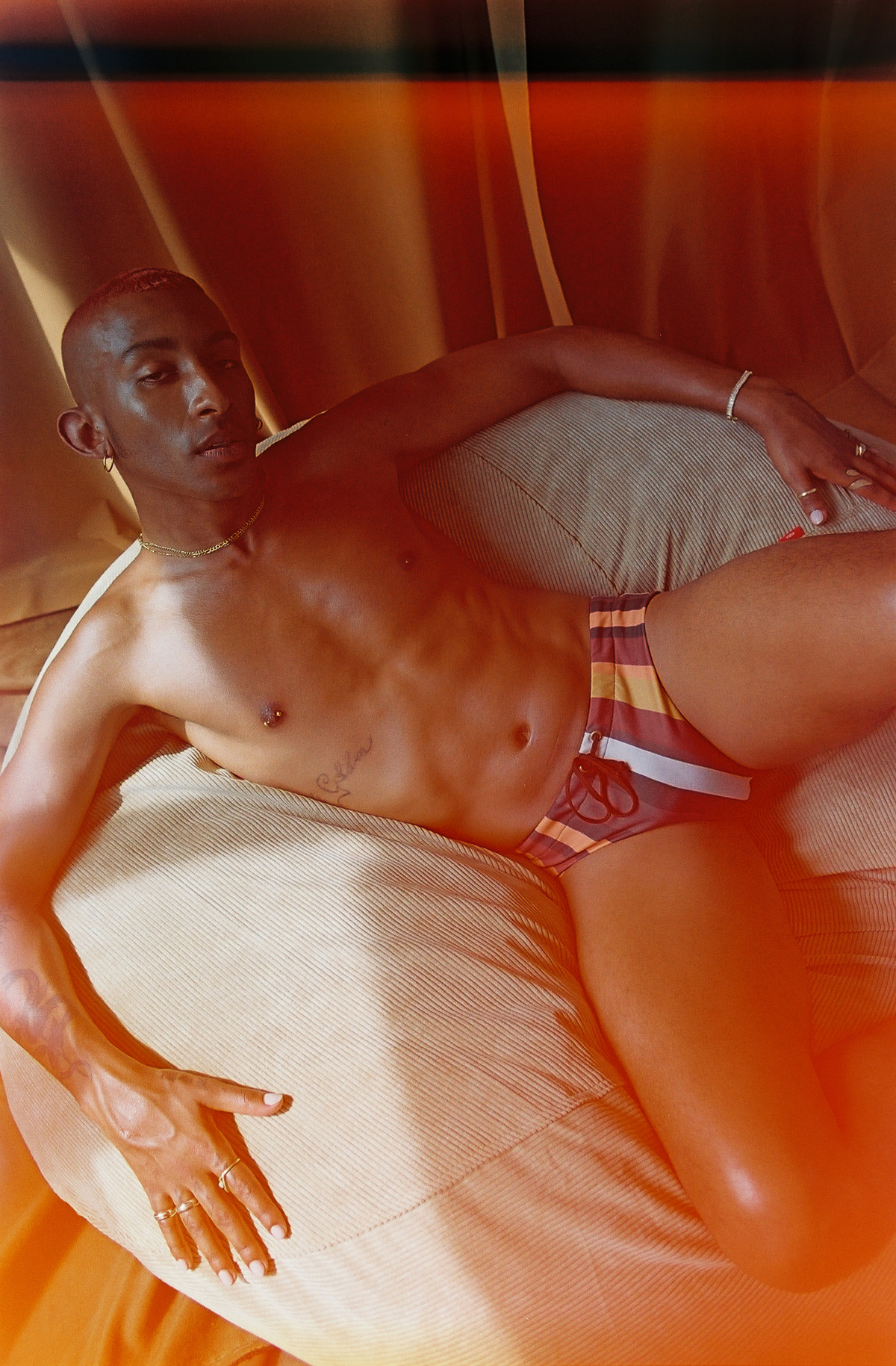
What’s the piece that you’re most proud of so far?
Oh, my favorite piece. There's one that I've held as my favorite for a really long time. It changes, I don't have a favorite kid because these are all my children, but there are some that kind of stand out a little bit more. I did a little denim with a red leather fringe, a little crop jacket, and a skirt that I made. And when was that? It was between 2016 and 2017. So, I think it was maybe 2016. Originally my friend, Imogene Barron, she's a stylist, photographer, and creative director. She was styling The Weekends video for "I Can't Feel My Face" and Chanel Iman was the lead girl and it's funny because Chanel and I grew up together as teens and we were friends through the beginning of the height of her modeling career. So is it one interesting full-circle moment for me to do a custom thing that was supposed to be for her.
So, I had this idea that I've been wanting to do and she told me the concept. I've been wanting to make this outfit but I haven't really had a reason or time to so I made it. I think the director ended up wanting something a lot more basic. She ended up wearing a wife beater and blue jeans or something but I made this kind of Western, video vixen two-piece set that I really fell in love with and it ended up being I don't know, I don't want to say cursed is the right word but, there was a lot of issues that ended up surrounding this one set. There were two things I don't remember the order but one I sent it out to for a Future music video in Atlanta and the video shoot she got canceled the stylist never made it to Atlanta she just left my clothes there. I was like, "Oh cool." That was a year of me trying to find this box of clothes that I sent to Atlanta and I ended up tracking down all these email addresses and finding this one number and it led me to an Airbnb run by two old people and they're like well we've had this box in our garage for a year we held on to it I was like, "Oh my gosh, please send it to me." So that outfit came back and then a friend of mine was having an art opening and she wanted to wear it. I sent it to her in New York, someone stole it from her doorstep. So, then I had to make another one and the fringe all over it and leather that I cut all myself and it wrecked my hands but I was so in love with this piece that I did it all over again truly a labor of love.
I think that's one of my favorites. Maybe more just because of a whole story that goes along with it because there are things visually that I love a lot more but that one at the moment I loved it for what it was and then all of the trauma that surrounds it that I held with me. I think more recent times, over 2020 I made this pink miniskirt with this long floor-length coat out of the sink raised geometric velvet pink print. Flo Millie got photographs in it for the cover of Neu Neu Magazine, Rico Nasty has gotten photographed in it. It's kind of been the editorial "it-girl" outfit and it's one of my favorite things before it even got those placements. There are so many things that I've made that we've never been able to sell. Just because when you're small and independent and don't have capital, you can only focus on certain things. So we finally were able to make some to sell for our pop-up, which I was really excited about. So, I think that's currently my favorite. Clothes and I have seasons. So, it could change every five or so years or something.
Do you remember the moment you realized designing was definitely what you wanted to do since you fell in love with style rather than fashion itself first?
It's a weird thing, which I can kind of see a similar pattern in different things in my life that have kind of gone this way. It was a natural evolution. I knew that it was who I was, without knowing that it was who I was, like, I was designing clothes, not knowing I was a designer. And it's so funny because I have a book here of like, maybe 200 plus designs from elementary school to middle school to high school and all my sketches and stuff. So, I was designing but not knowing I didn't know this term designer. I hadn't been exposed to the fashion industry. Marc Jacobs is probably the first fashion designer that I knew of and I didn't find out about him until maybe midway through high school. The timeline is kind of like, there are different waves of awareness, but I think it was definitely middle school. I think it was Middle School.
I was in private schools, sixth and seventh grade. And from seventh to eighth grade, I went to a public school. There was something about going there and being the new kid. You have to make up for those two years that you didn't have to get to know everyone in all this kind of stuff. So being around all these new kids and sharing that I drew clothes and all this kind of stuff. Kids with a little bit more of a different mentality and life experience than the kids that I went to private school with. I could identify with them a bit more, were interested in more things that I was interested in, whether it was music, or style, or street culture, all these kinds of things and that awareness that they gave me. The word designer got thrown out a bit more. I definitely went into high school, with the assurance that I was like, I was like, "I'm a designer. I'm gonna have a clothing line out by the time I graduate high school." I was like, "Alright, James dream big," for sure. So yeah, middle school to high school was the big, like, awareness of I'm a designer. For the rest of my life, I'm going to work to succeed in being that.
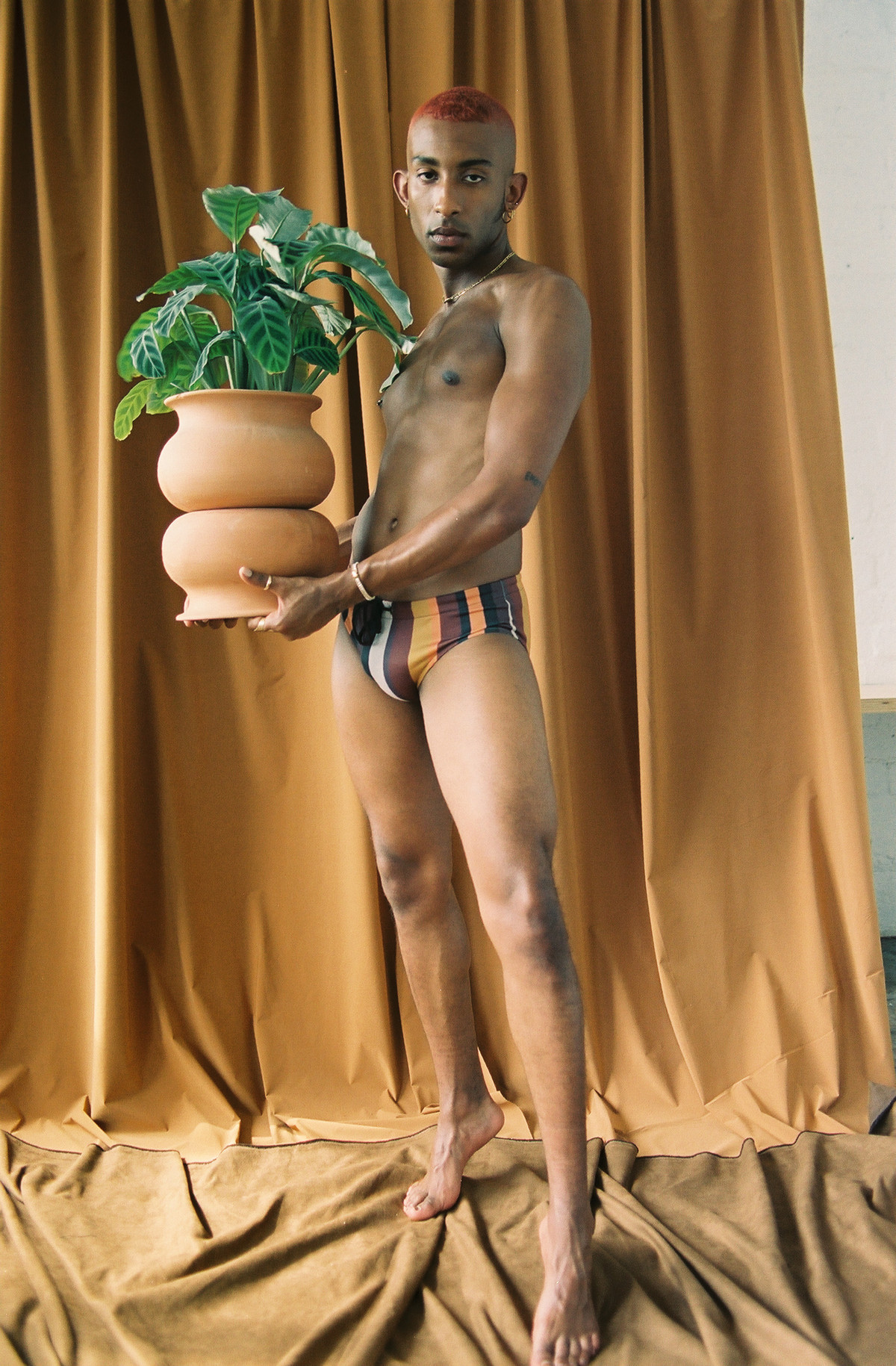
Who is the Phlemuns customer? What’s that person in your mind?
I would say responsible sense of humor. You don't live recklessly, but you have a vivid sense of humor. And you can laugh at yourself, very much that. I mean, it's always been that question specifically has always been something that I've toyed with because going to fashion school and them telling you things like, you have to have your target market and your demographic and all this kind of stuff, but I'm just like, I'm my target market, I designed clothes for me. And if everyone else loves it, then cool. I did it as a fulfilling practice. It's something that was not taught to me, it's so ingrained in me as a person, as an artist, it's always been a part of my identity. So, I can't really put it on anyone other than me. And if you can relate to me as a person in my sensibilities, then it's meant for you.
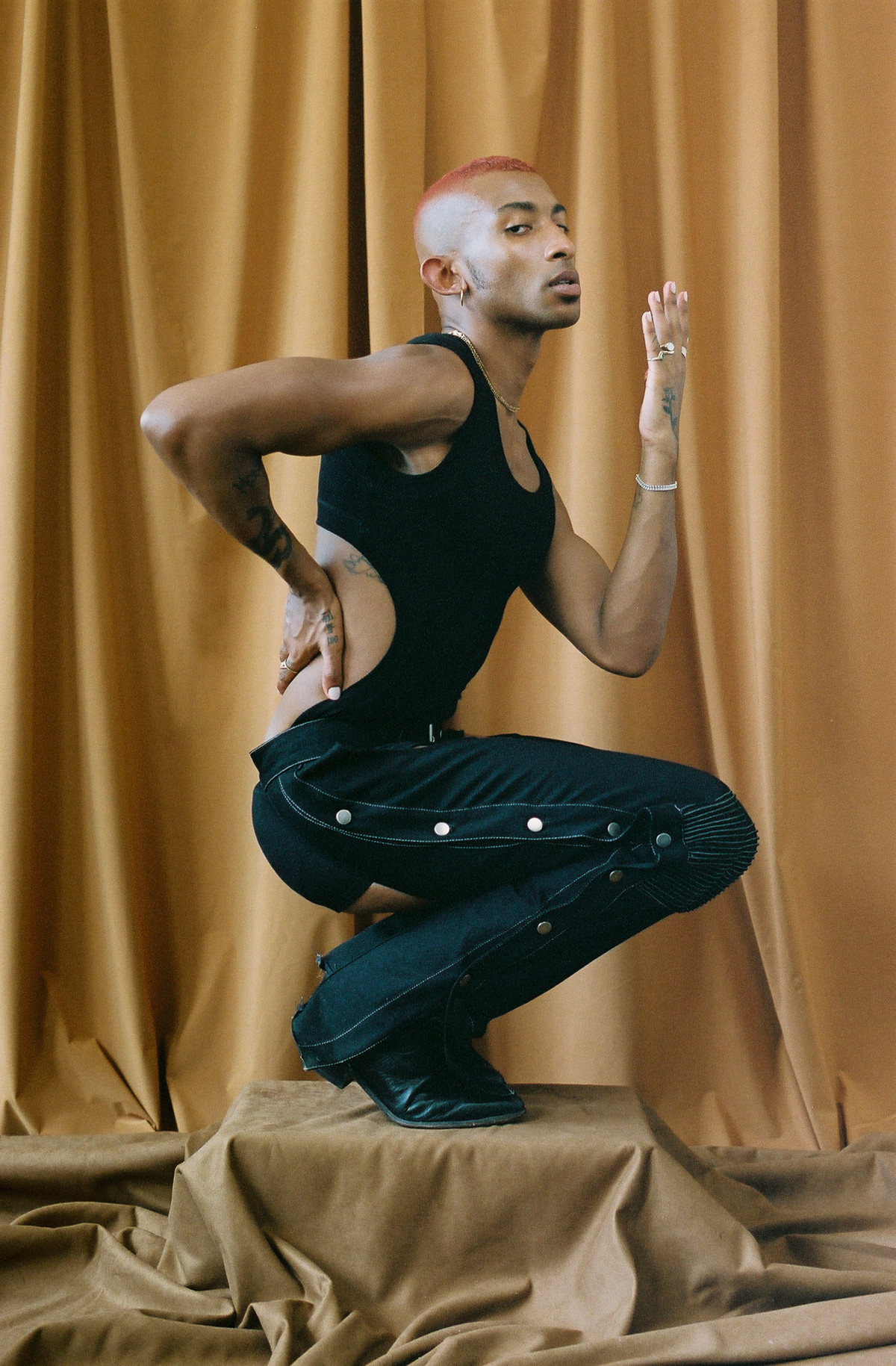
Someone who just likes to have a good time, can laugh at themselves, has a great sense of humor, but is still about their shit and responsibilities and just kind of owning life. And is definitely interested in the more eclectic things in the world and not afraid to take risks. But one other big thing, too, is just kind of people who like to make, I guess, understated statements, like, my clothes are not really for the type of people who want to walk in the room and have everyone look at them, but they're the person that walks into the room and at some point, everyone in the room will have their eyes on them or have something to say once they leave the room. So it's kind of this understated, old presence. The Backless Tee, kind of the hottest piece that we have, it's very understated from the front, it's just a T-shirt, and then when you turn to the back, business in the front party in the back is very much the like identity, the mentality of the prose and the people.
Who’s your favorite person that you’ve created a custom design for?
That's a tough one. I think for different reasons, it's hard to say. I can but I can't. I have to say Kelela because it was such an intimate experience. She's one of the only people I've done custom for where we sat in a room together and talked and designed. Others it's just been through a stylist or email, or like, "This is the idea, send sketches and we'll choose." With her, her stylists did prep me on the inspiration behind everything. And then I sketched and then she and I got together and had multiple fittings and all that kind of stuff. So, I think that is kind of my favorite just because of the whole process and experience and also being able to see so it's these clothes that I made with her live on stage so many times. So that would have been my favorite, but it's kind of at the same time between Solange, Kelela, and Lizzo, those are kind of like, it's kind of hard for any of them to top each other. Those were just really, really great moments and experiences for me.
Your clothing is really accessible to everyone, not only the fashion lovers who would catch your references but, people who just think your work is cool. How would you describe the community you’ve built with Phlemuns since it’s pretty accessible and there's a dichotomy of who’s buying your clothes?
I mean, I've always been an outcast. I've always had a very weird social life. I've always been just the weirdo or quiet one, or, like, I never really fit anywhere. And I felt the same thing in fashion. My first experiences in fashion were terrible, like, not good memories. I mean, they're good memories now because of what they've held but in those moments, they were really bad. I was just like, it's this place that's very like, depending on who you are definitely changes and shapes your experience within the world, and the industry and these rooms, or these businesses, or whatever. My whole life journey has kind of been like, I never want anyone to feel the way I felt in all these different situations in my life where I've been made to feel othered or made to feel uncomfortable or not worthy, or that I just didn't fit in. I was just like, I don't feel like I really fit in fashion. So let me create my own world so of course, I'm going to fit in it and open it up to anyone else who feels like they've been othered or overlooked, or misunderstood or anything.
That's the energy that comes around the clothes. That's what I opened up. I want everyone to feel they can participate. I don't want anyone to feel intimidated by the presence of anything it is, it was really special. Again, back to our pop. My mom was there for both days, and we were talking, she's you, "You're providing a space for people to just be free and truly be themselves and be happy and get to share your energy and your presence". And it's not found that much in fashion. Yeah, just the space to just be free and be yourself. It also plays into the clothes of just like, they're made to be worn in all different kinds of ways and there's no right or wrong way to wear my clothes. They're not meant for one specific person at all. It's just anyone can find something to see themselves. It's a safe way to kind of experiment with your style and the way that you want to present yourself and see yourself. It's giving people an opportunity to see themselves in fashion that maybe thought they never could.
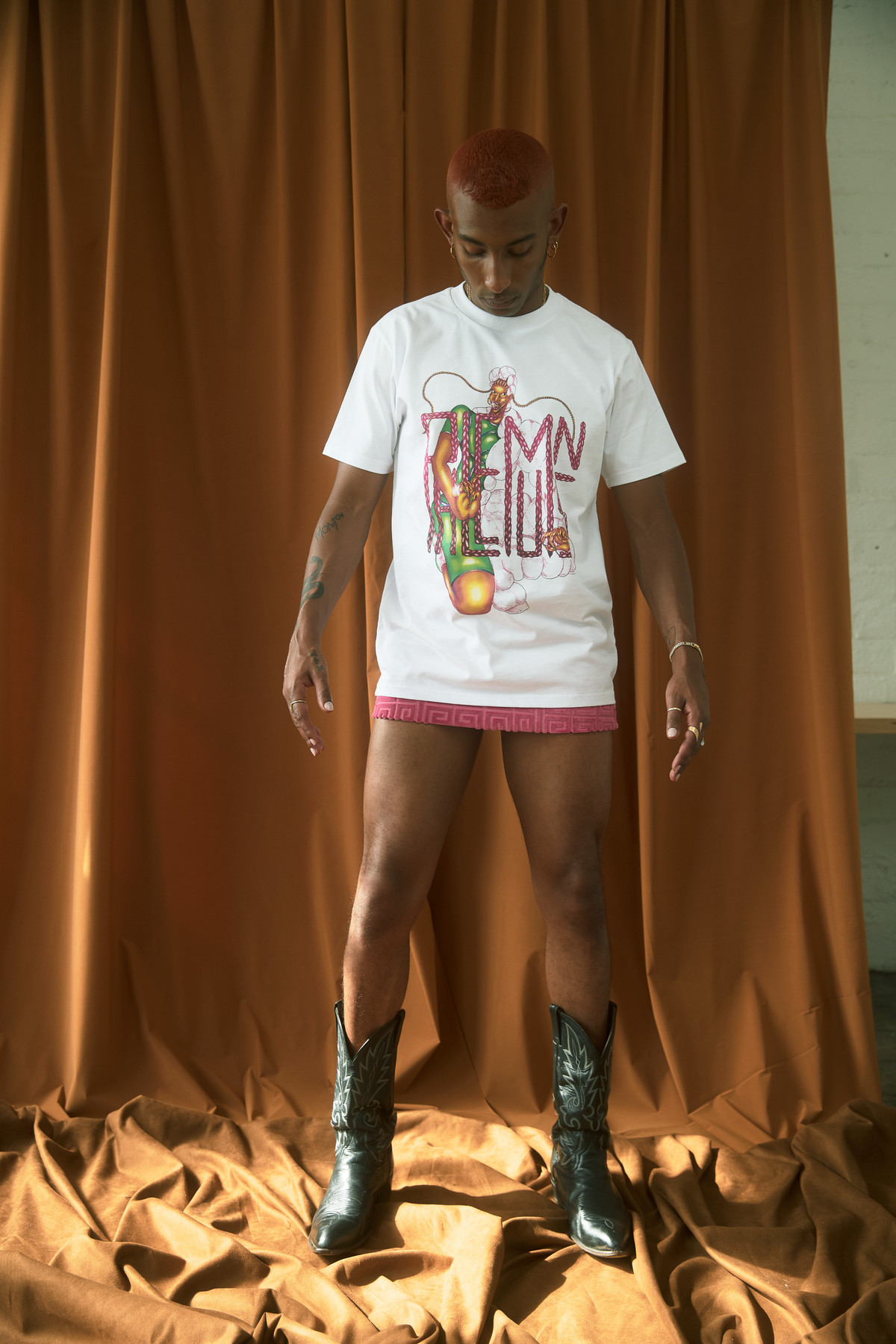
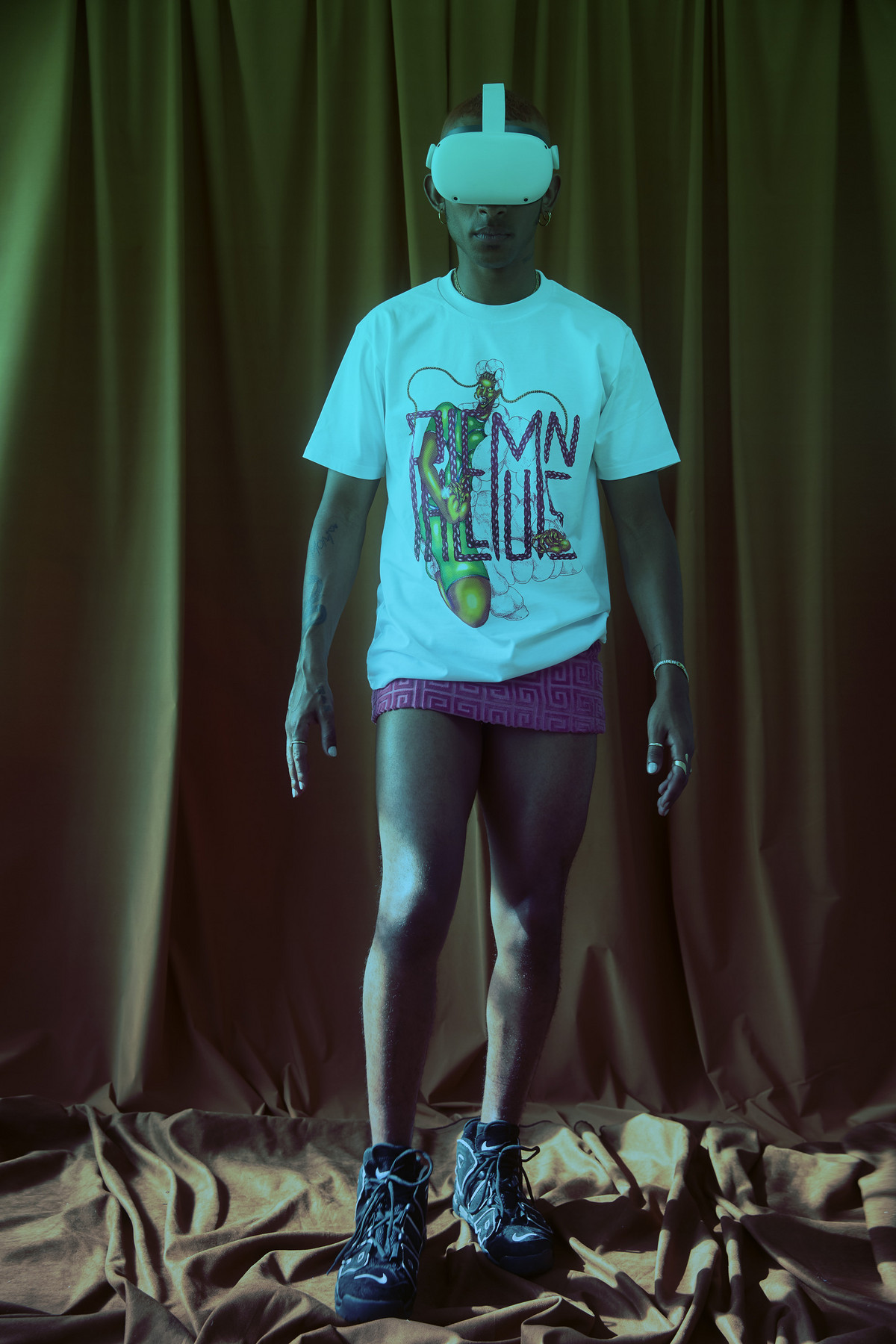
What do you hope to see in the future for Phlemuns?
Growth and stability are what I hope for. I would say being a black designer or being a black person in any of these fields. It doesn't make it easy for us to dream. I have a very practical mentality. And this industry has beaten me up so much that, I'm just like, I just want to be financially stable. I just want to take some money home from this dream that I've created, and not have to worry about recycling money and being able to produce and provide to the level that I would like and also for the demand that is there.
In 2021 I've given myself a little room to dream and make time for myself as a person and tap back into those things. I've been working with this now for over 10 years. I definitely see some kind of, it's hard to even say a storefront because I would imagine it to be so much more than that because my mom is really involved in my business. And she is just very much a spiritual healer and a motivational coach and life coach. She also does interior design and upholstery. I'm trying to bring in home goods and interior design and upholstery things, but also, not life coaching, but just kind of like a support system in all these kinds of ways. So just kind of growing our advances and our space and our endeavors as this family business that I've created and to be able to have this space and have the opportunity to expand on that, and share with the world and give to those that are in need. So that's my dream to be able to actually facilitate those things.

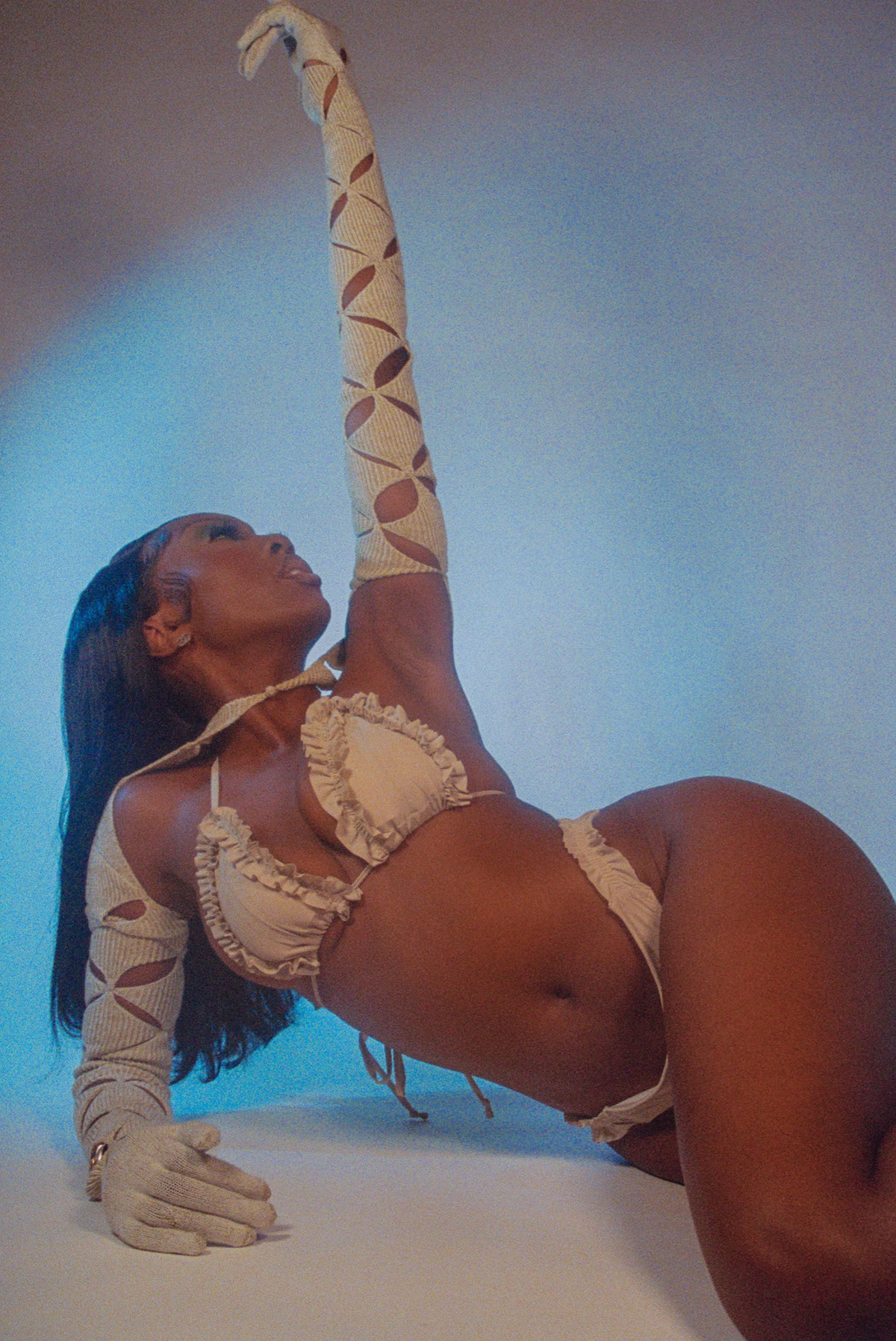
Since releasing her SS21 fashion film “Black is Beautiful,” Tia has been nominated in five different categories at the International Fashion Film Festival, but the designer continues to push herself and break boundaries. Her capsule collection includes her signature ruffle can be seen adorning the bikinis, along with intrequirely tailored custom gowns with methodically chosen garments sourced globally.
“The capsule was made with the Tia Adeola girl in mind, and how she re-enters the world after being locked up for so long and feeling like her better self. For me, it’s always been the feeling of walking into the room and being your best self, and that room could be the pool or a dinner,” explains Adeola.
The possibilities are limitless for this New York-based designer as her garments can be spotted on people such as Dua Lipa, SZA, Kali Uchis, Gigi Hadid and more. In an exclusive interview with office, Tia Adeola opens up about her collection, her upbringing, and how being in quarantine has shifted her design process.
Read the exclusive interview below.

So you just recently launched your summer capsule collection featuring Paloma Ford. How was it like working with her and what was your inspo behind this collection?
I met Paloma at my New York Fashion debut for my Autumn/Winter 21 collection. She walked in that show and she was just all for the brand. Sometimes people who have followings or people who are doing things can be quite tough to work with. But right from the second I met her, she was like, "I love your brand, so much I believe in your art, and I’ll do anything you need me to. I’ll wear anything you need me to." And that's always really reassuring. So since then I always tell her whenever I'm dropping something new and she's always really excited. She's also an artist herself, so it's really cool being two female artists who are doing it.
The collection for me was a very small collection. I kind of wanted to make a few looks that go even beyond myself and what my target market would want to wear post-pandemic. I got stuck in Nigeria during the majority of the pandemic and I spent a lot of time just imagining, and dreaming what I’m gonna do when I can finally get back to New York. What am I going to wear when I go out and I just started visualizing all that. I knew I wanted to spend a lot of time on the beach for sure, so swimwear just felt right to me and the time to expand my brand beyond apparel. I want to do everything. I want to do footwear, I want to do fragrance, I want to do jewelry. So I just felt like Tia Adeola Swim felt like it was the right time.
I feel like you can see that with the new stuff that you've come out with. But you're releasing for the first time made-to-order pieces as well, what's this process going to be like?
That whole collection, made-to-order was from the last collection I did which I released as a fashion film. And again, it was a post-pandemic collection. The second I got back to New York I started working with different artists and seamstresses that I've built really strong relationships with and we hand-tailored everything. Getting to work with people who've been doing this for years has been an amazing learning experience. And I mentioned, we sort of built relationships. So now, when someone orders something, I work with the small community that I've recently built and create these amazing pieces for people.
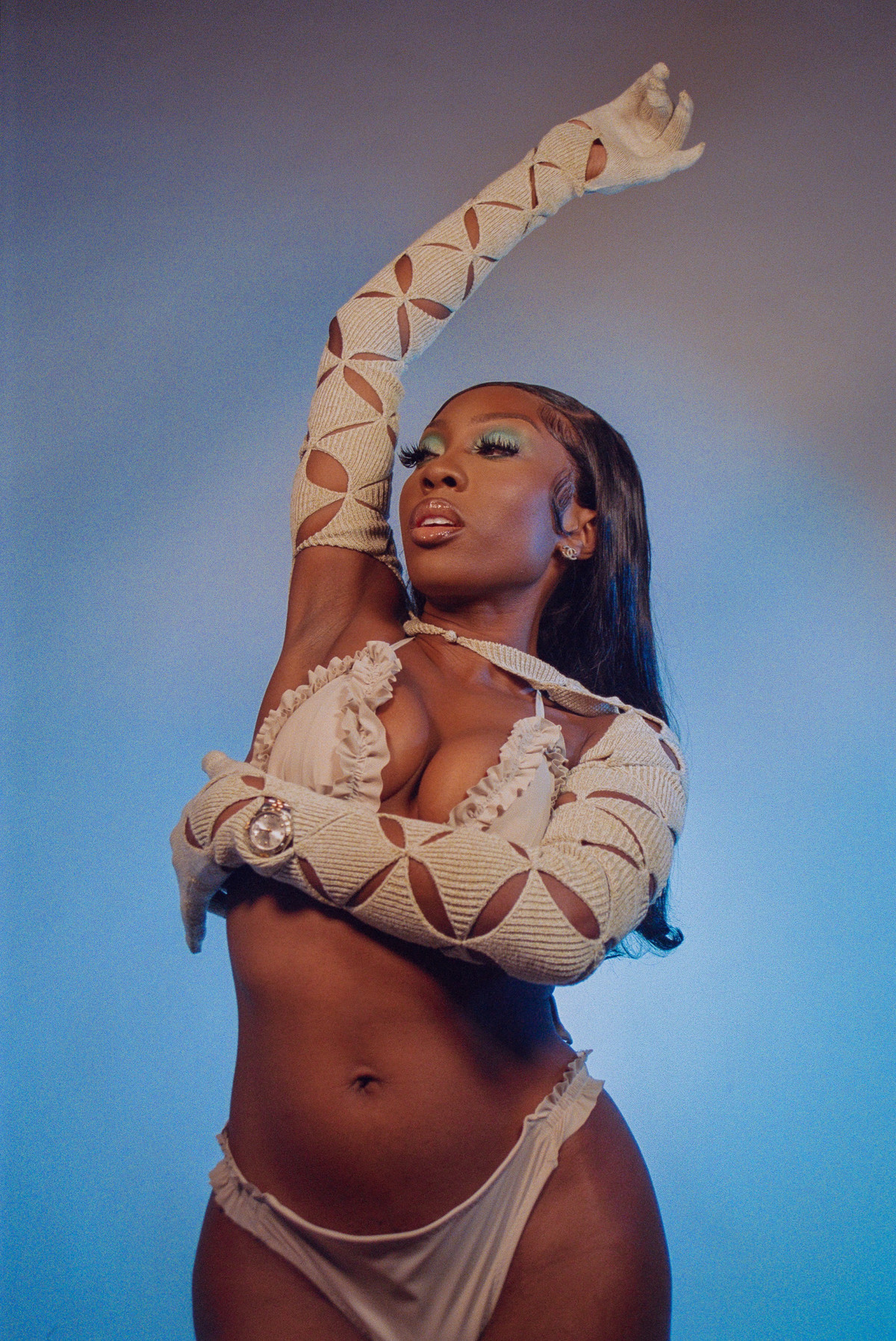
So, I saw that you were a Culture and Media major. When did you decide designing was what you wanted to do and did your major tie into your designs?
I always wanted to go to The New School to study fashion design, but I come from a family where fashion design is not a quote-unquote worthy degree. And to my parents, me going to an art school was already bad enough because I was supposed to be in the UK studying law. I secretly applied to The New School and ended up getting the scholarship. And I told my dad who's more chill. And he was like, “Okay, just keep going. See if you end up getting scholarships, don't tell your mom yet.” And I ended up getting a partial scholarship. So, that was the only reason why I didn't end up in the UK studying law. And so culture and media was the closest thing to anything that I was interested in that my parents thought was a decent degree.
Yeah, I definitely understand. My parents are Haitian so just being a journalist is like, what are you doing, just become a doctor. I noticed a lot of the time that you talked about the Renaissance being an inspiration to your designs, what is it about the Renaissance era that inspired you to put that aesthetic at the core of your design process?
So, I was a bit of an art history nerd in high school. I wrote my graduation dissertation on 16th-century Spanish dress in painting. In order to write a 30-page book on such a precise topic, I have to sit through archives and archives of paintings. I felt like sometimes I could almost feel the fur, feel the velvet, and ruffles were so intricate. But there were never any black people wearing those extravagant garments. They often took on the roles of a jester and were wearing cotton. So for me, I wanted to take trends then and rewrite history through fashion.
One of the biggest trends then was the ruff, which we now call ruffles. They sort of were a representation of your status as societies and the Queen would have a huge ruff that almost covered her face, whereas the court lady would have a small one on the wrists of her shirt. In my film I released, I sort of played on a few things. So I had an all-black female cast, and I had white men serving them food wearing my black Jesus T-shirts, which I sell as basic. So yeah, just writing history through fashion.
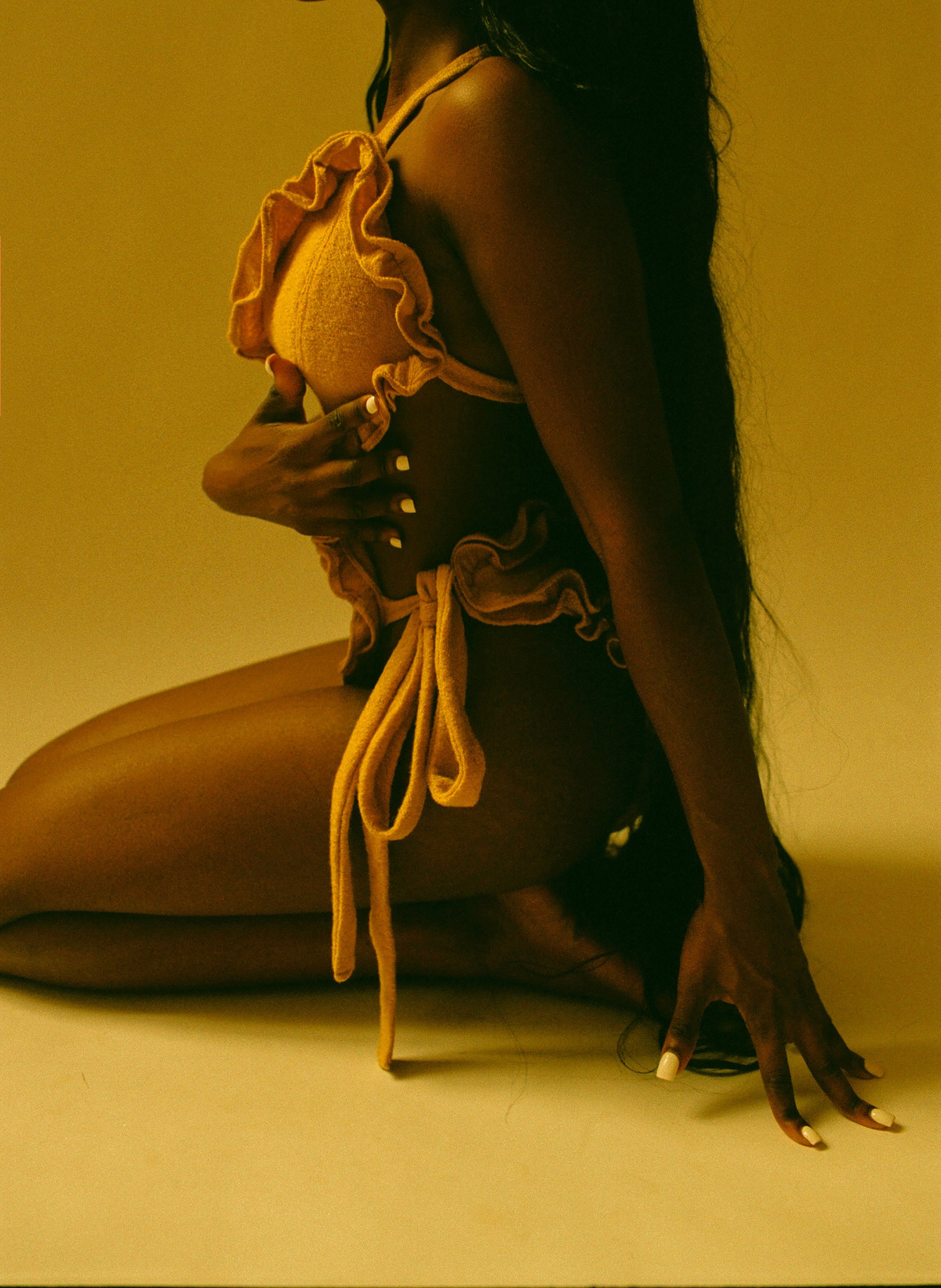
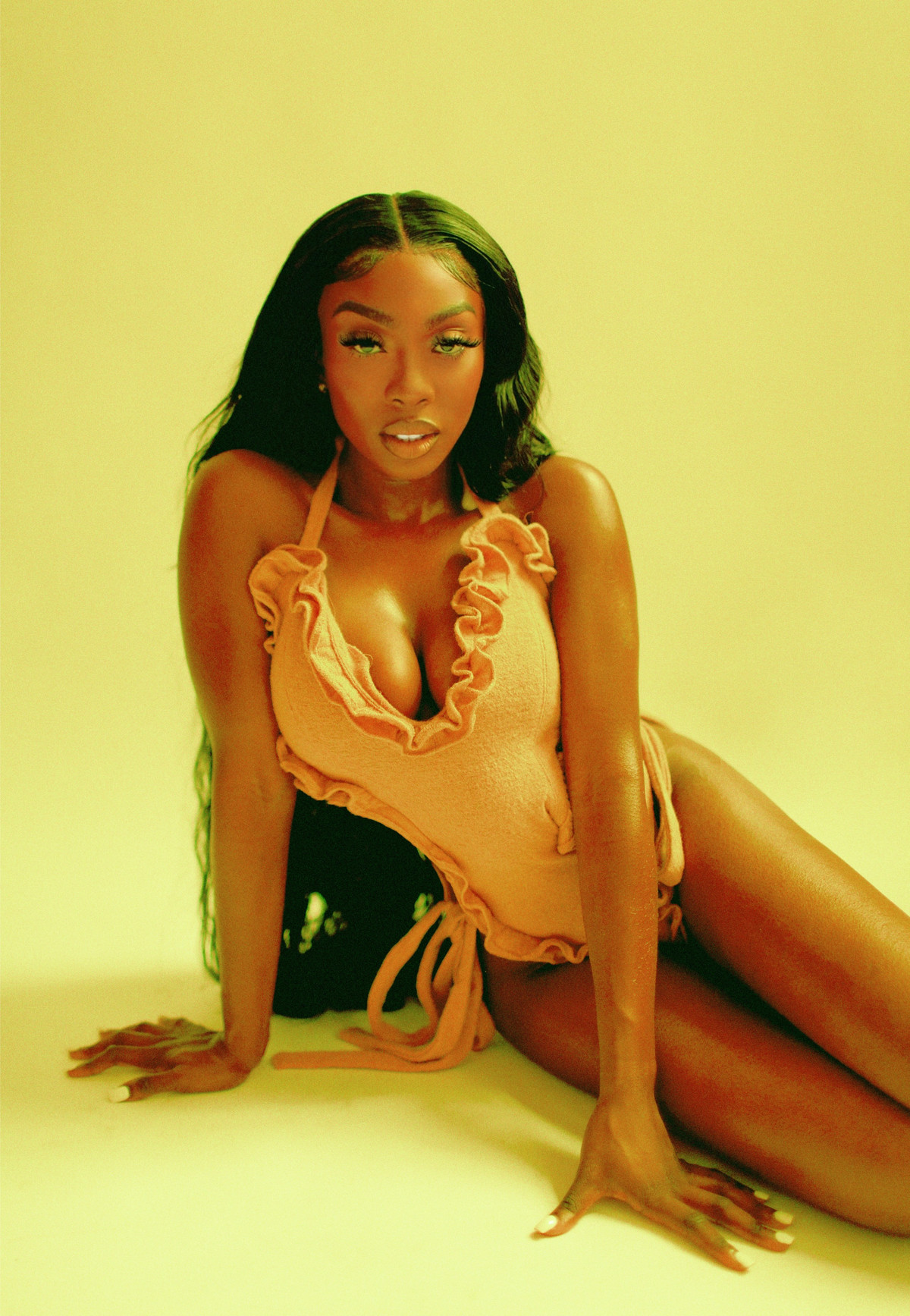
I love that. Kind of tying into that, rewriting history and of changing the narrative of how royalty is viewed. How do you want Blackness to be portrayed when it comes to your clothing?
I want people to feel a sense of loyalty and a sense of luxury. And I'm really a believer in Black luxury being normalized. And even just beyond that, at the sample sale, I let people try clothes on, even if they weren't necessarily buying anything. I sat in the corner and just watched people's reactions and put stuff on, predominantly black women, and be like, "Oh my god, I feel so good. I literally feel so ethereal." And that's how I want women to feel and look when they put these garments on.
That's beautiful. So, from Slashed by Tia to Tia Adeola, what are some of the changes that were evident with the name change?
The name Slashed by Tia came about because when I was in college, I was making these cross back tops because I’m way smaller now, but at the time, I had really big boobs, and I didn't feel confident wearing a backless top because I couldn't wear a bra. So, I started making these types of a slinky frontal area that distracted from your chest with a flash, open back, and I just started selling them on Instagram, and I kind of needed a name. So, I just called it Slashed by Tia, but then after I graduated from college, and I realized that when you have a brand, it goes beyond just design and beyond creative. You actually have to run it as a business. And this is what I plan to do for the rest of my life. I don't really have a Plan B so I just felt putting my name on it would add that level of seriousness and importance to it to me. Even to me personally beyond people now I'm like okay, this is all you now. So which again, I guess made me move production to LA, made me want to make made-to-order pieces that everyone has access to and made me want to make a new website, just doing things as best as possible.
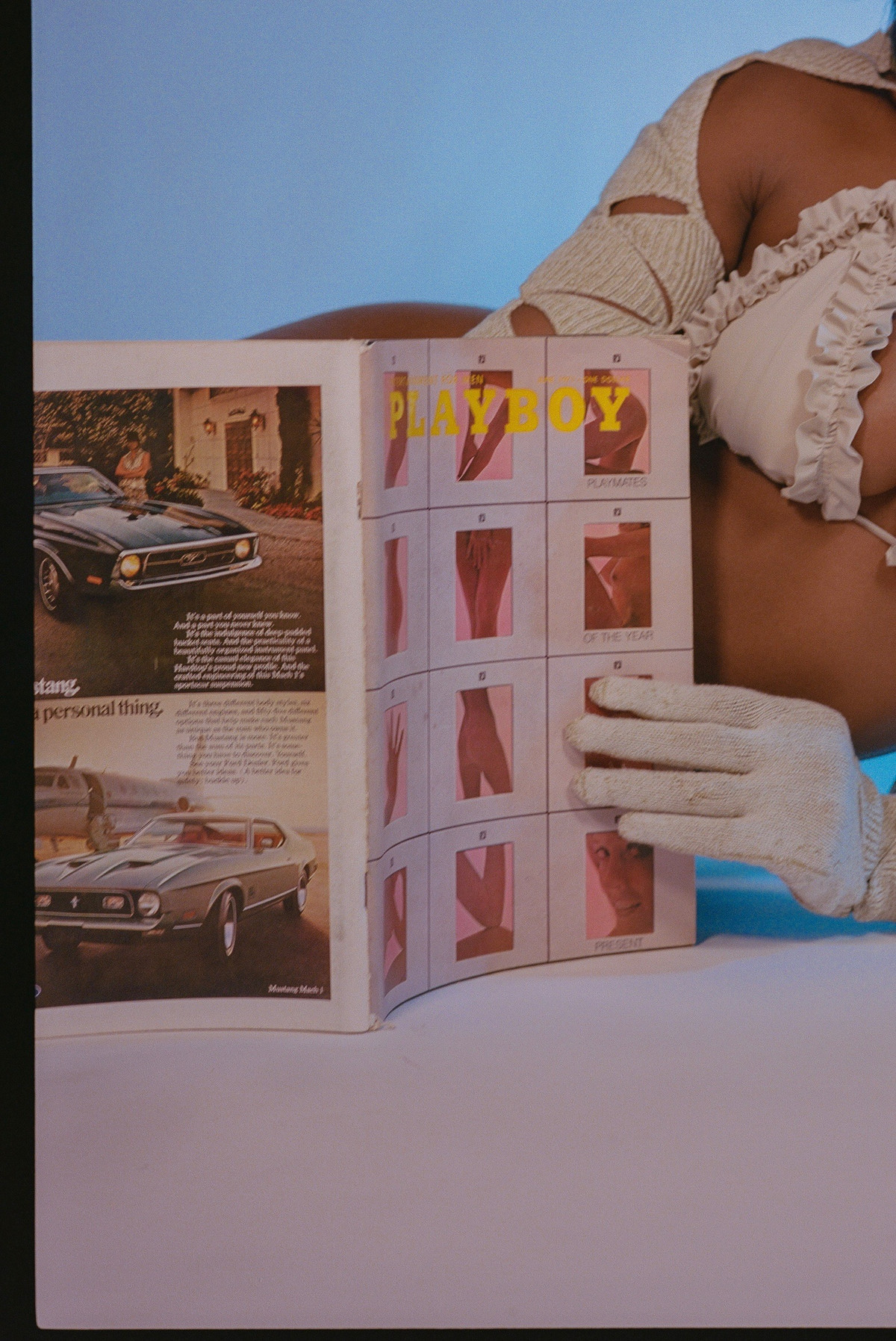
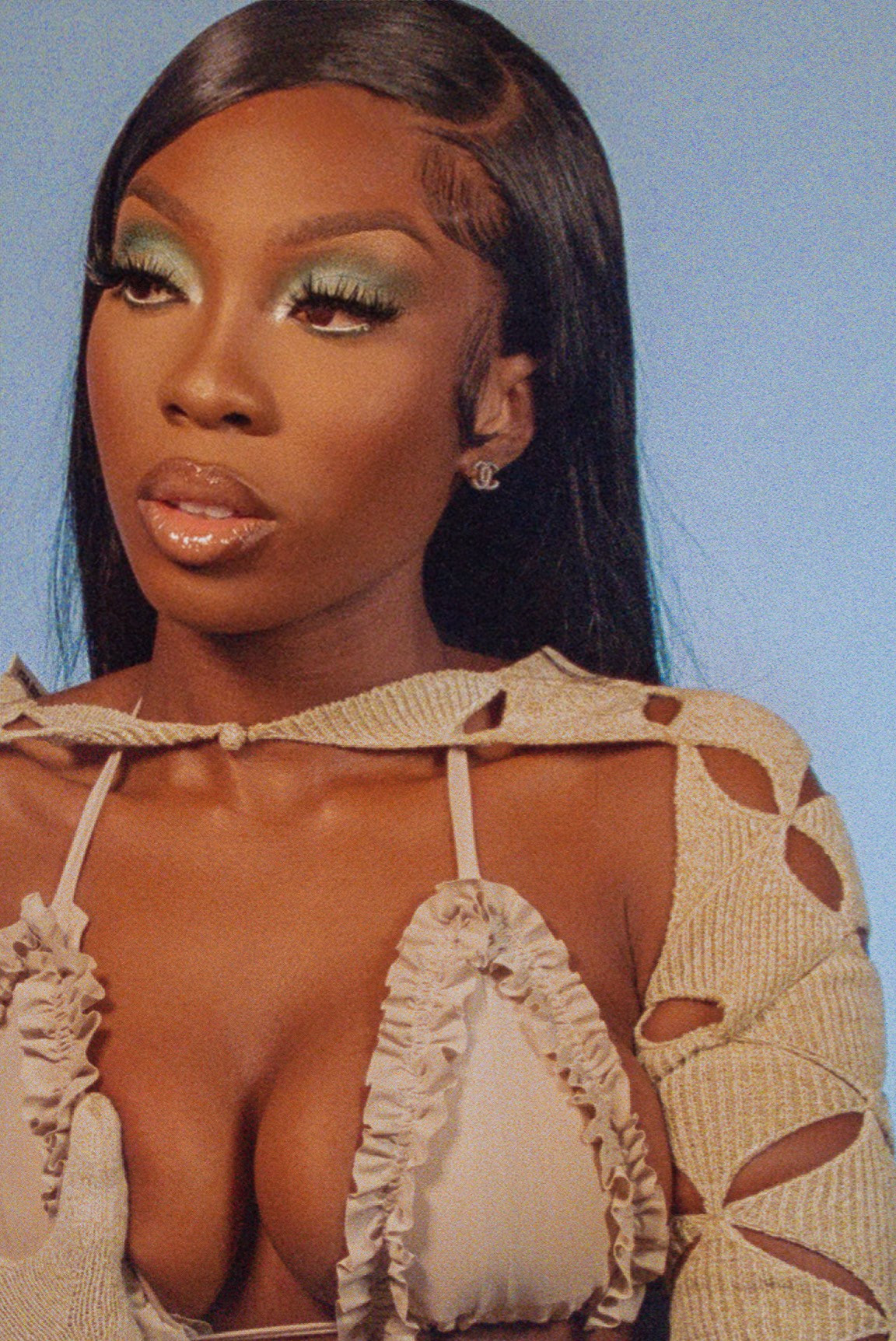
Yeah, I definitely remember when I followed Slash by Tia and then it turned to Tia Adeola. I feel like I could see a big change in how more serious it was taken. Because I think when I started following you, you were still in college. Seeing the metamorphosis is really, really cool. Who is the designer that you look up to the most?
I always get this question. And I get kind of stuck because I mean, there are people that I'm definitely inspired by. Some of the greats like John Galliano, John Paul Gaultier. But, when it comes to having a favorite designer, or my biggest inspiration, I don't really have one. What inspires me is, people and experiences and going to the fabric store and finding things that resonate with me, I don't really look to anyone. Which also, it sucks because the other day I was talking to a friend, I was like, 'I don't know any Black female luxury designers.' I always wanted a mentor but, I want my mentor to be a woman and to be black. I've done research like, who is a black female luxury designer? Nothing really comes to mind. So, I guess I'm just inspired by people, and life and experiences, the future.
I think it's really admirable that you're taking all of these lessons, not only for yourself but for future people to follow in your footsteps as well. And kind of creating that path for future generations to have somebody to look up to and with you speaking on all of these panels and allowing for customers to try on your clothes in the sample sales and all of that, too. It's paving the way and separating yourself from everybody else as well. You've lived in many different parts of the world. How do you think that the different cultures have sort of tied into your designs? And how has that shaped you as a designer?
I feel like it's helped me. I lived in Nigeria. Nigeria is very conservative, my mom is barely cool with the clothes that I make. And then London was such a cultural melting point with amazing fashion. I think I'm not being biased, but I think Europe has the best fashion in the world. So, being able to travel to all these places helped me understand what people would want to wear. I always talk about how in the UK, you walk down Oxford Street, or Bond Street, Carnaby Street, and we see people in fitted clothes, everything perfectly fits together. And I guess it's just, giving me an eye for what sort of looks good on everyone.
Coming to New York made me so much more confident. Because, like I said, I come from a place that is very traditional where an elder who is literally a stranger on the streets kind of calls you out. So wearing something that's too short, or wearing something that's see-through, and I moved to New York, this crazy city where you could literally be wearing a trash bag and no one would look at you twice. And as I get older, I'm a woman now. I feel like I'm learning to embrace my body and learning to embrace, wanting to look sexy and wanting to look chic and I feel like Nigeria just needs to get with the party. Even the images, this interview I would have never thought to even take pictures like that. But just being in New York and being in the Western world has just showed me that it's okay to be a woman that's sexy and embrace it and still be smart and still be respected.
So what's next? What's next for you and your designs? Where do you see your brand sort of heading? I know you said that you were getting ready for fashion week as you're going to be showing there but what else can we kind of expect to see out of you.
So you can expect to see footwear, you can expect to see jewelry, you can expect to see more stock in, for sure. Just everything, I just want this to be a huge house. My ultimate dream is to have a huge glasshouse somewhere in America with my all-female staff and just making crazy things, everyone trained to the best with good resources and infrastructure and just going crazy creating fire garments and beyond.

Along with the release of the sneakers, Pleasures hosted two parties in anticipation of the release — one in New York, and the other in Miami. Friends of the brand and all east coast sneaker lovers gathered to collectively groove and commemorate the release as the summer comes to an end. Hosted at SNS Bar, and Unknown Miami, Pleasures proved themselves as not only fire designers, but as a brand that sure knows how to throw a good party. It’s no surprise however, Pleasures is known for their humor and untouchable design process that people from all over both cities would make the hike to not miss this event. It’s no question that Pleasures is only set out to continue producing quality products that will be adorned by people from coast to coast, but hopefully, we can continue to see Pleasures host events.
The sneakers are available for purchase now on Pleasures and Reebok.