The Club Is A Temple: Omega Sapien on Buddhism and Brain Rot

OFFICE — Leader references club music from the Philippines, Thailand, Indonesia… Have you partied in each of those places?
OMEGA SAPIEN — I wish, bro. I had to wrap up my traveling in December. I just went to Thailand to hang out. To be honest, I don’t really like clubbing anymore.
You made a whole club album and you don’t like clubbing?
I started Leader about a year and a half ago, and I was still clubbing and going out every week. But ever since I got my crib, I’m much more stabilized. I’m staying home. I’m unc-maxxing. Going outside is lowkey annoying. But if there are good parties, I’ll pull up for sure. Maybe it’ll reignite my party life.
You called the album a “fried rice moment.” Did you plan to have this be a sort of multi-ethnic Asian electronic album?
I always do something Asian because I’m an Asian living in Asia. But initially, I really wanted to make brain rot music, because I think we’re all fried at this point. I’m super addicted to short-form videos. And I mostly get introduced to new music through TikTok. It’s easy for musicians to get stuck on a song for a month — they’ll be like, “I have to get the hi-hats perfect,” or whatever. But I always tell people, “You’re thinking too deep. 85% of the time, your songs are going to be played through an iPhone speaker.” And I wanted to make something specific for that.
As I got into it, I learned that budots and a lot of Southeast Asian dance music are incorporated into the short form scene. So while some people won’t be able to pinpoint exact references, they’ll be able to recognize the sounds from TikTok. And it’s such a great fit because I wanted to make short form-focused brain rot music. And I’d get introduced to other genres in Southeast Asia that are also big on short form, so it’s all aligning. I love visiting, too, so I wanted to explore the sound.
I immediately clocked the “Emergency” budots remix by DJ Love. Did you guys ever collab?
Yeah, I did get the DJ Love collab. I think the world is getting inspired by the genre. DJ Love started this in Davao City, when he was the manager of this internet cafe, so he had a lot of time in front of his computer and shit, so he just downloaded FL Studios and created the genre. I have a lot of respect for him. I heard his Boiler Room set and I definitely fell in love. I’m always looking for something exciting and the sound really resonated with me.
Against my parents’ wishes, it’s been a big year to be a party Asian. DJ Love, Charli…
Everything is possible.

You had a lot of Buddhist imagery in the “Krapow” music video—
Like this? [Omega pans his camera up to a massive portrait of Buddha hung above his bed].
Exactly. Do you think that stepping away from the party scene had anything to do with discovering Buddhism?
I wish it was as cool as that, but I got into Buddhism maybe three, four years ago. I was very intrigued by the depth — I guess that exists in all religions, but I just liked Buddhism, and I looked into it and there’s a lot of knowledge that they discovered way before math and science. And now we’re finding lots of similarities with Buddhist teachings and quantum mechanics. I think they were onto something — some new technology that we have no idea how to do. They were tapped into that spiritual energy. Now, we’re more tapped into physical energy, like math and building cars. But it’s just so fascinating. Looking into those things makes me believe magic is real. But it’s not related to the club. Because even when I was clubbing every week, I was still rocking with Buddha.
That also makes sense. When people talk about raving, it sounds like a spiritual experience.
Raving is a really beautiful thing. I think it’s the most peaceful activity that you can do. The thing people do to God — looking up to it, worshipping it — as a culture, we worship work and being punctual and being effective and useful, but we should leave that to machines. And if you’re raving, you’re doing this thing that’s outside the idea of optimal efficiency. They’re like, “Oh, bro, you’re wasting time.” And I think that’s a really crazy way to look at a living, human being. So in that sense, raving is beautiful, because it’s the most inefficient thing you can do in capitalism. Because people are just there to share the music and vibe. They’re just there to go into the same realm. And that’s one of the most beautiful things you can do.
I think religion and partying have so much in common.
All religion has something that revolves around music. They got Gregorian chanting, Buddhist chanting, Quran recitation, which is almost like singing. There’s something with a musical vibration and spiritual energy that all these religions are talking about. If you play a certain tone, it’s almost universal — a minor chard makes you feel sad, a major chord makes you feel a different way. Music is so widespread — it’s really proof of magic.
And it’s always surrounding a collective experience. In the way that people go to the club to have a collective experience, they’re going to church and temple to experience something with the people that are also there.
Type deal.

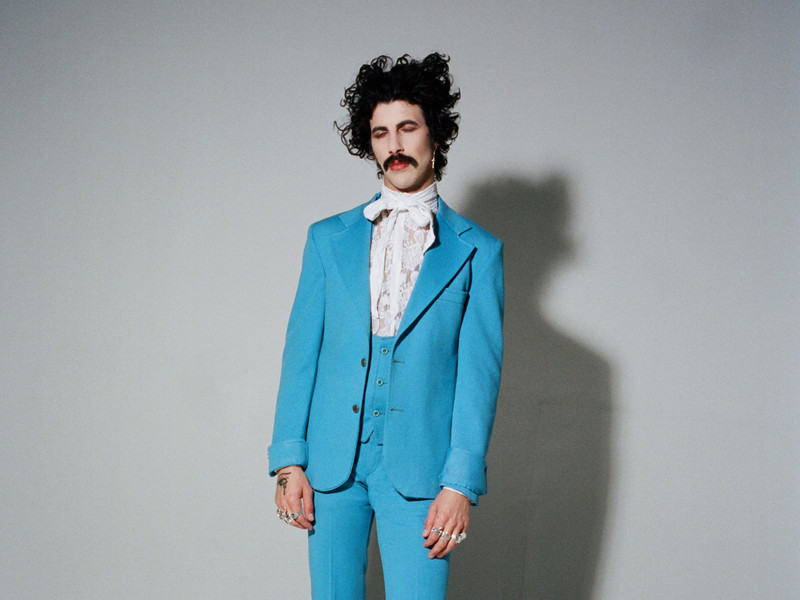
You call yourself an Asian prince — is there a difference between an Asian prince and K-pop idol?
Definitely. I think K-pop idol is a sub-genre of Asian prince. I think there are many archetypes of Asian princes. But K-pop idols really are like princes because they’re so popular and have so much charisma. When they’re walking by, guards cover them with umbrellas so people can’t get photos. They’re almost like mystic figures. It’s so cool that a human can be that.
Was it ever like that for you?
Oh, nothing close to that. I mean, I get some friendly people being like, “I like your music,” and that gives me a level of satisfaction, like “Yeah, I’m an Asian prince.” It just struck with me. There’s this Korean actor named Jang Geun-seok, and he was one of the first actors who infiltrated Japan, because before this global K-pop movement, the first country we exported our culture to was Japan, and Jang Geun-seok was one of them in there. And he made it really big and bought buildings in Japan. He always claimed himself as an Asian prince. And I think it was 50% a joke, but it felt like he really believed it, because it’s quite a bold thing to do — to be a 30 year old dude calling yourself an Asian prince. So when I was young, it stuck with me. And now I’m around his age, so I guess I’m following in his footsteps.
And it’s more international and covering more of the continent — which I think your album is doing.
The release of the album was very interesting, too. Because I didn’t know about this, but there was some Twitter beef with Southeast Asian and Korean people. I don’t really know the specifics of that, but when my album dropped and the internet saw a Korean dude exploring sounds of Southeast Asian dance music, I think it was quite healing, at least for me. Because once you visit a country and really get to know the culture and people, your vision gets so big. At the end of the day, we’re just living here. I Not just in Asia, but globally. We have so many more similarities than differences. And I think your really feel that when you actually go to a place.

This is your first solo album in three years. Have you noticed a difference between your solo work and your stuff with Balming Tiger?
Definitely. I love to work in teams. And I need support from the team. But sometimes, I’m not very punctual. So in that sense, it was really hard to start my own thing, because now I just gotta take care of everything. That was the biggest hurdle — to jump over my laziness. When I started out, the inspiration would come, and I’d just spiral sending texts to people. I’d fill up my schedule so I had no choice but to execute it. But working with a team is good because there are a lot of opinions. Over the course of these years, I’ve learned that sometimes your ideas are not the best. It’s easy to think that they are, so it’s hard to drop that and go with other people’s ideas, but it’s a cool thing to learn. When producers give me their opinions, I’m just grateful they’re willing to work with me. So I’m like, “Ok, bro. Let’s go with your idea.” The album was a mixture of trying to initiate something by myself while still letting other opinions into the project.
The name of the album is Leader — did that come leading Balming Tiger?
I really don’t think I’m the leader. I’m more the person who needs help the most. So I’m far from a leader. I just love making bold statements about myself. I think it’s funny. It carries a lot of big energy — just like, “leader” or “Asian prince.” The statement is so bold that it has a humorous tone to it. And there’s an interesting balance between a really huge statement that’s also not that serious at the same time.
I came to the name Leader when the inspiration for the project first came to me. At first, Leader was a fake name, a placeholder name, but a lot of times I feel like those are the best ones, because it’s the first instinct. And I really believe that Southeast Asian dance music is going to be very big, very soon. And it would be cool if people thought I was in on it. It would be cool if people think I’m cool.
Trying to be ahead of the curve and lead this musical moment is actually really strategic, because you’re gonna be gone by the end of the year. So to put the album out now in anticipation of the hype sets you up so that it doesn’t really feel like you took a hiatus.
That was actually a very accurate read.
How do you even plan an album release around being gone for a year?
You definitely go into a different mind space. There’s no room to say “Oh, I’ll just do another one next year.” It’s not like I release a lot of albums, but I should. I was imagining the 2028 landscape and I think Southeast Asian club music is gonna be the next big thing. It aligned with the brain rot music I wanted to make, it aligned with that love I have for Asia. I believe it’s going to be the future. Sometimes it just works out.
You’re making music to be ahead of the curve a year in the future.
I really loved this project because there were a lot of games I had to play.
Did you have fun making it?
It’s always fun to make a couple of tracks. But I think there’s a big difference between doing that and coming up with an entire project. There’s a lot of things you have to take into consideration because it has to have one cohesive theme. So my mind is fluctuating a lot — not in an emotional sense, but in the way that that I get intrigued by new ideas very easily. I have a very short but intense attention span. So to work on this for a year and keep it a cohesive theme was difficult for me. Besides that, it was a very joyous journey.
The music is fun. I hope you’re having fun.
I love doing interviews and talking about myself.
I love doing interviews and asking people about themselves.
Have fun in Ridgewood!
Have fun in the army!
See you in a year!