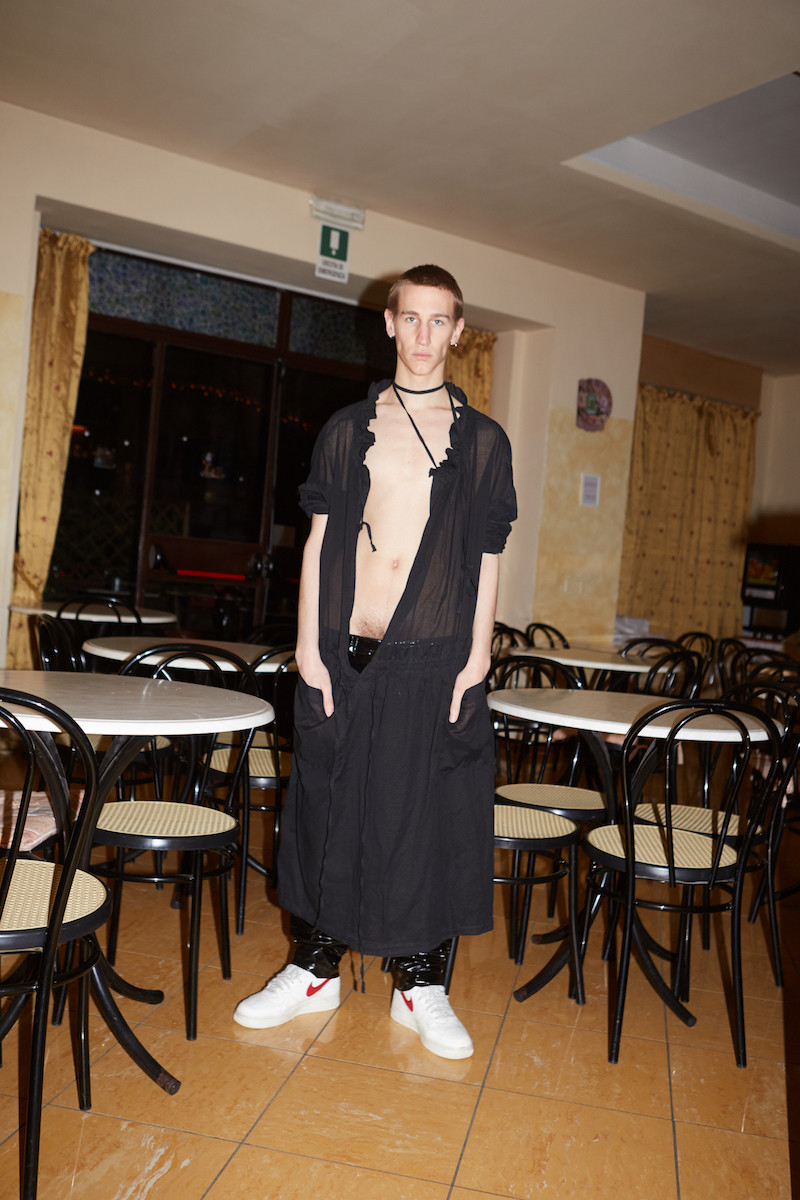
office had a tête-a-tête with Jose Teunissen, curator of the event, about the history and evolution of luxury, homemade clothes, and how to bring down the system.
What is luxury? What dictates whether a design or concept is categorized as “luxury”?
Since antiquity, luxury has been the dream that embellishes life’s decor. Luxury stands the test of time, amazes us, makes us happy, and can be compared to a divine or aesthetic experience. Luxury has to do with the human need for jouissance or 'sensual pleasure,' which is a quote form Roland Barthes. It enables us to experience emotional and physical pleasure as a necessary counterbalance to the logic and rational thought that permeates our culture and which we take pleasure in also, but in a different way. Luxury always relates to values of a specific time period. In the 19th century, department stores, sidwalks, and promenades in lush new parks were the ideal luxury environments to show off in public, to enjoy one's leisure and admire each other's fashionable outfits. In 2018, New Luxury appeals to a new sense of conscious consumerism, and evokes a world we can feel connected to. Notably, these new visions of luxury are no longer taken from a uniquely Western tradition, but are defined in an open, global network of designers, putting forward their ideas, solutions and proposals from all over the world.
How do you think that this has changed over time?
The definition of luxury simply changes with fundamental changes in culture and values. For example, in the 1960s and 1970s, second-hand clothes, jeans, working clothes, and homemade garments became not only an expression of youth culture, but also expressed a further democratization and informalisation of culture as well as pointing to the rise of feminism and fashion as a more personal expression than in previous eras.