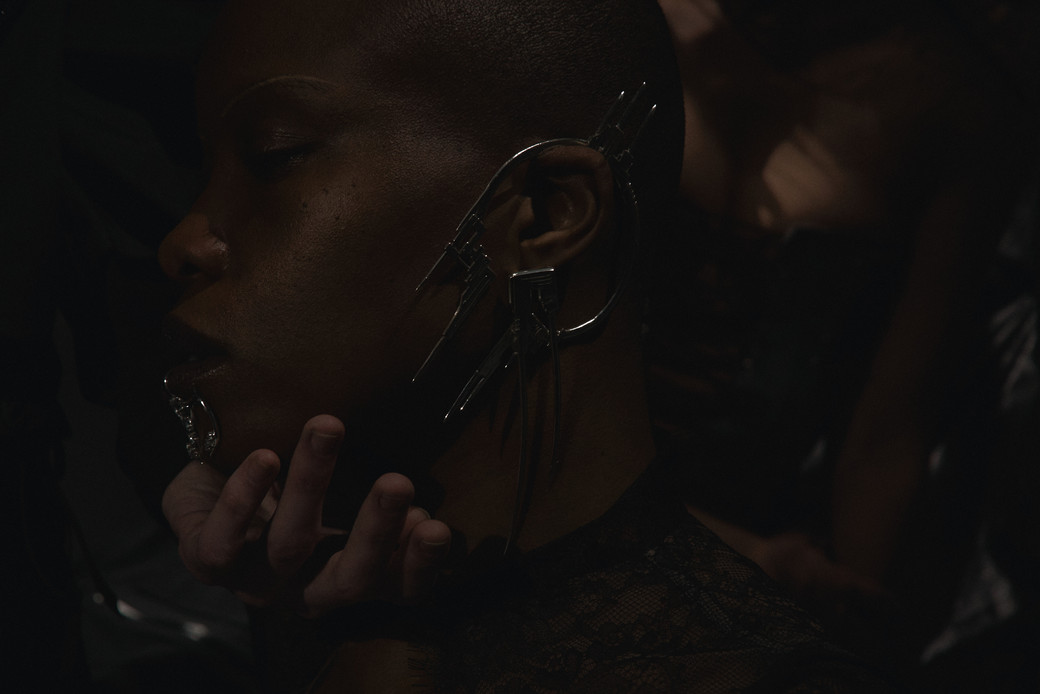
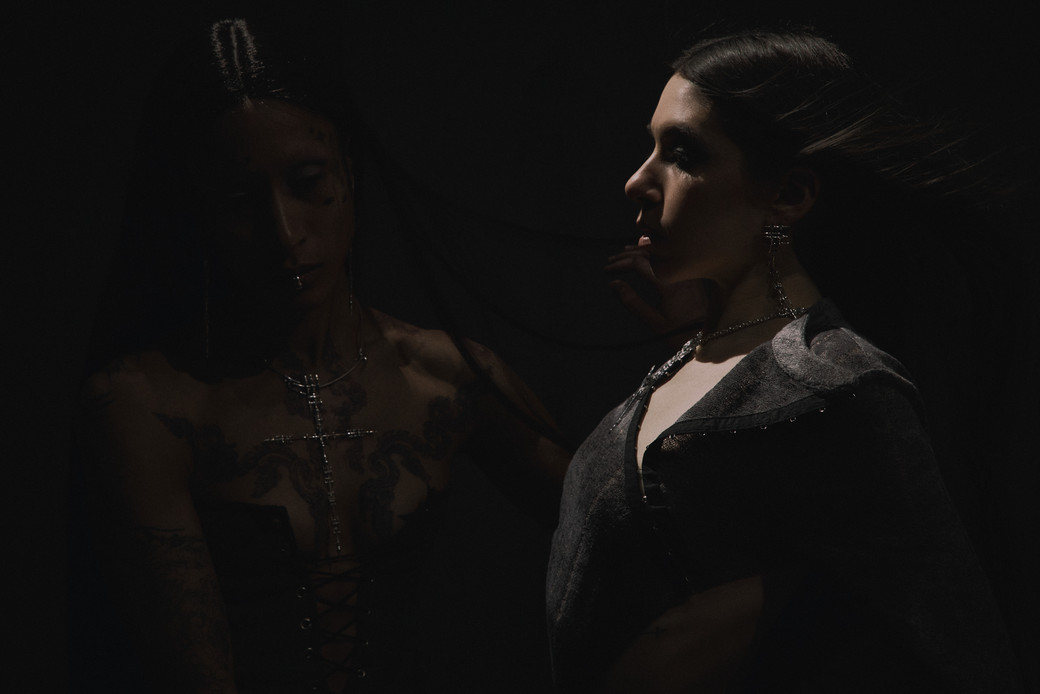
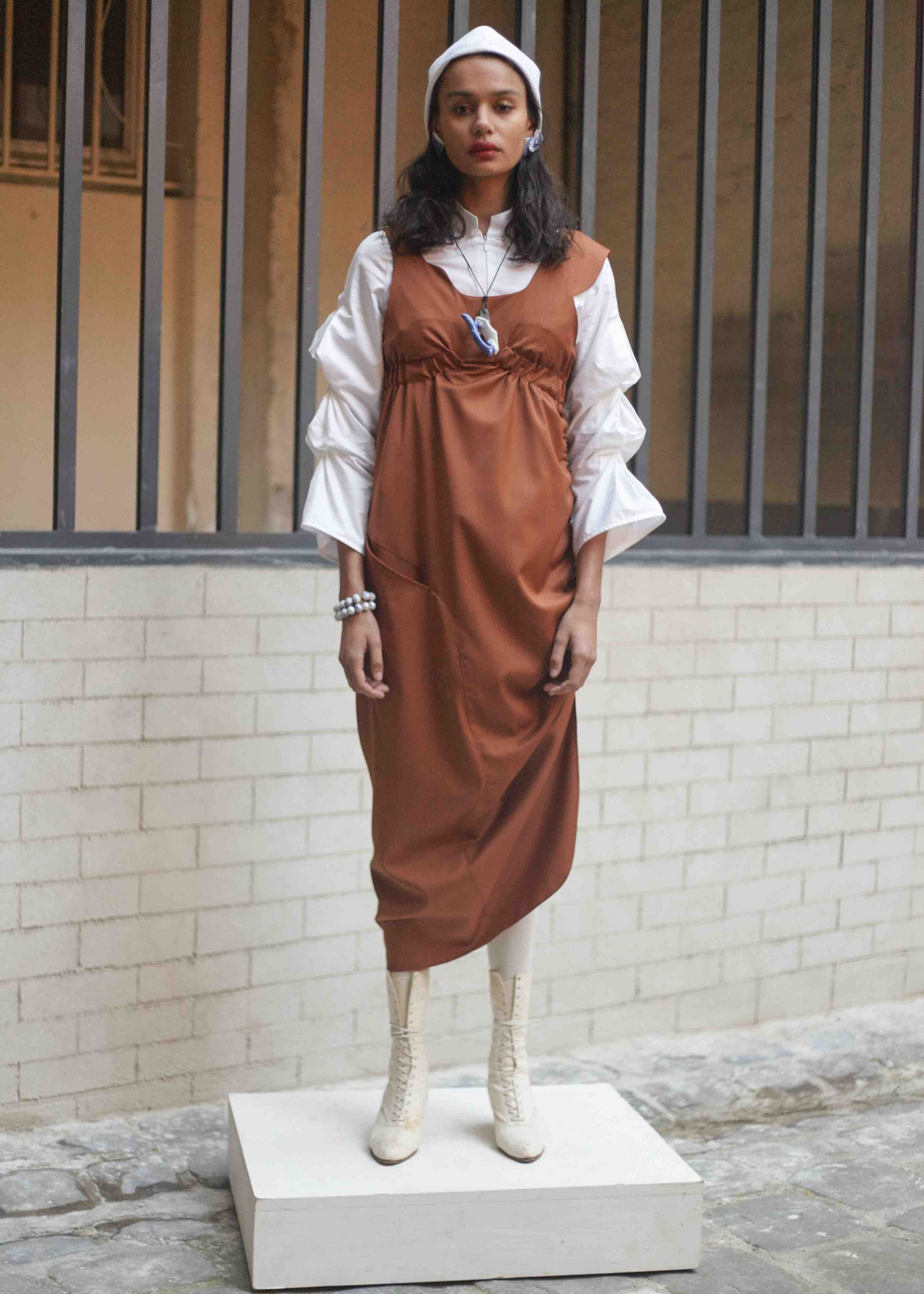
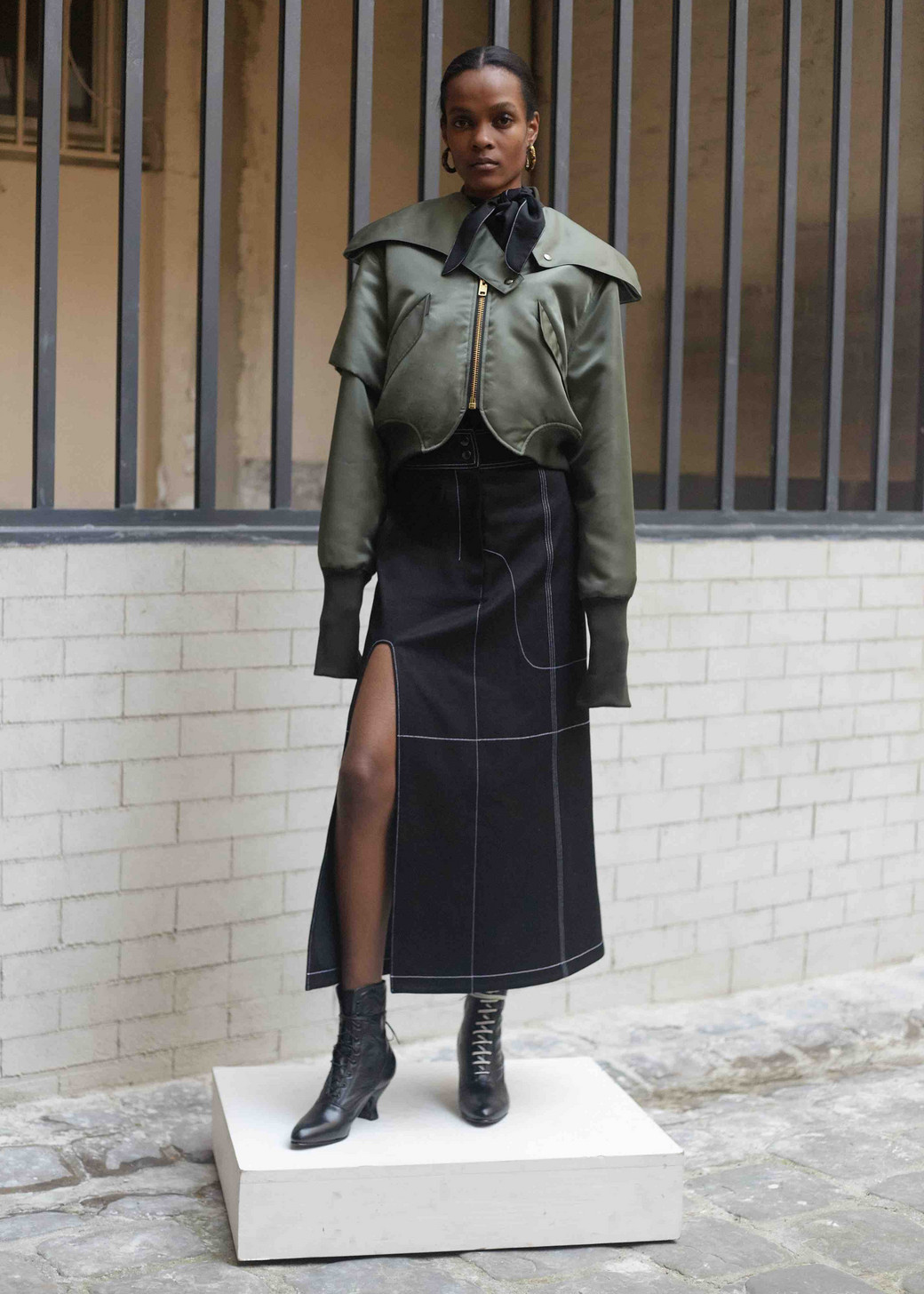
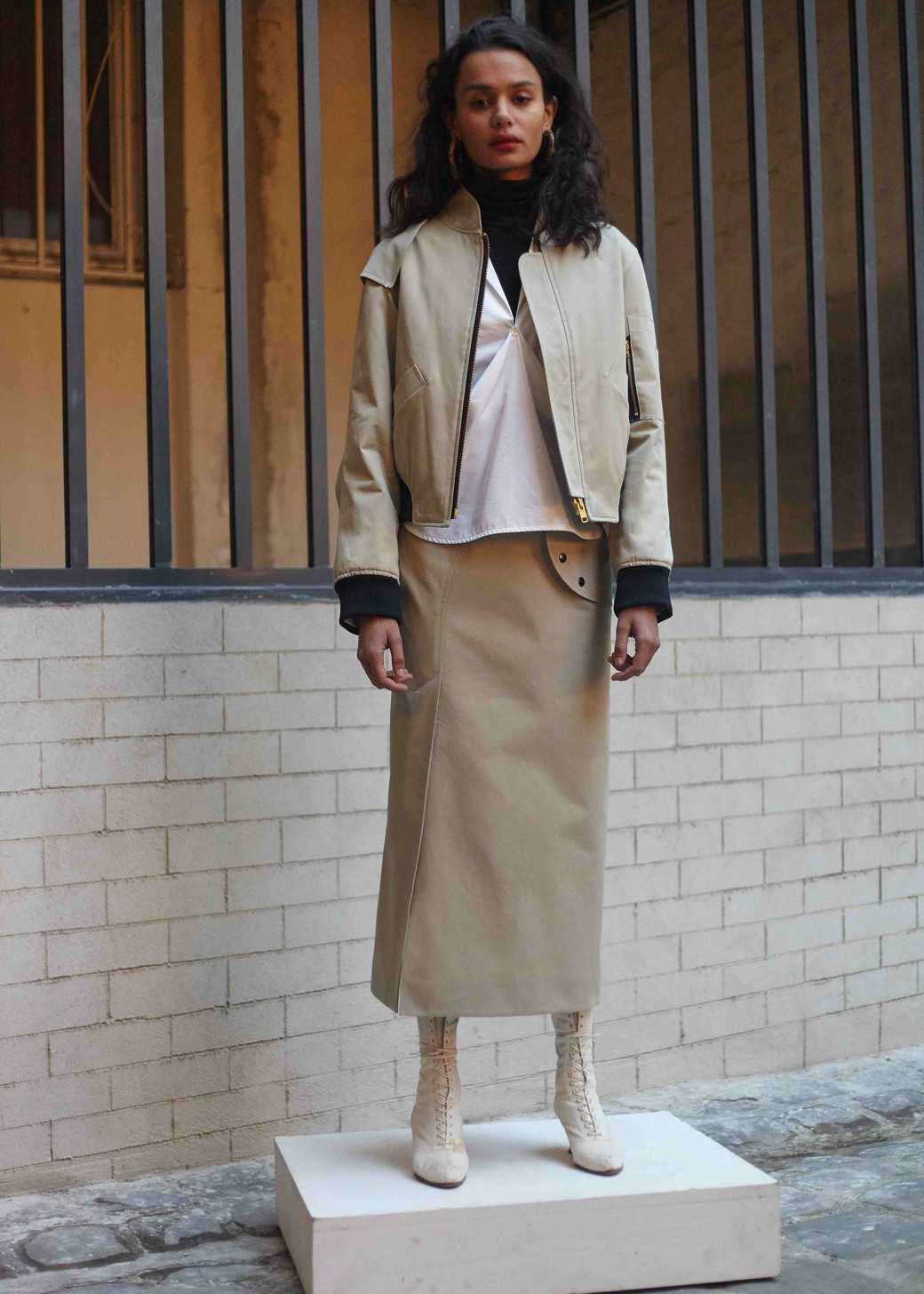
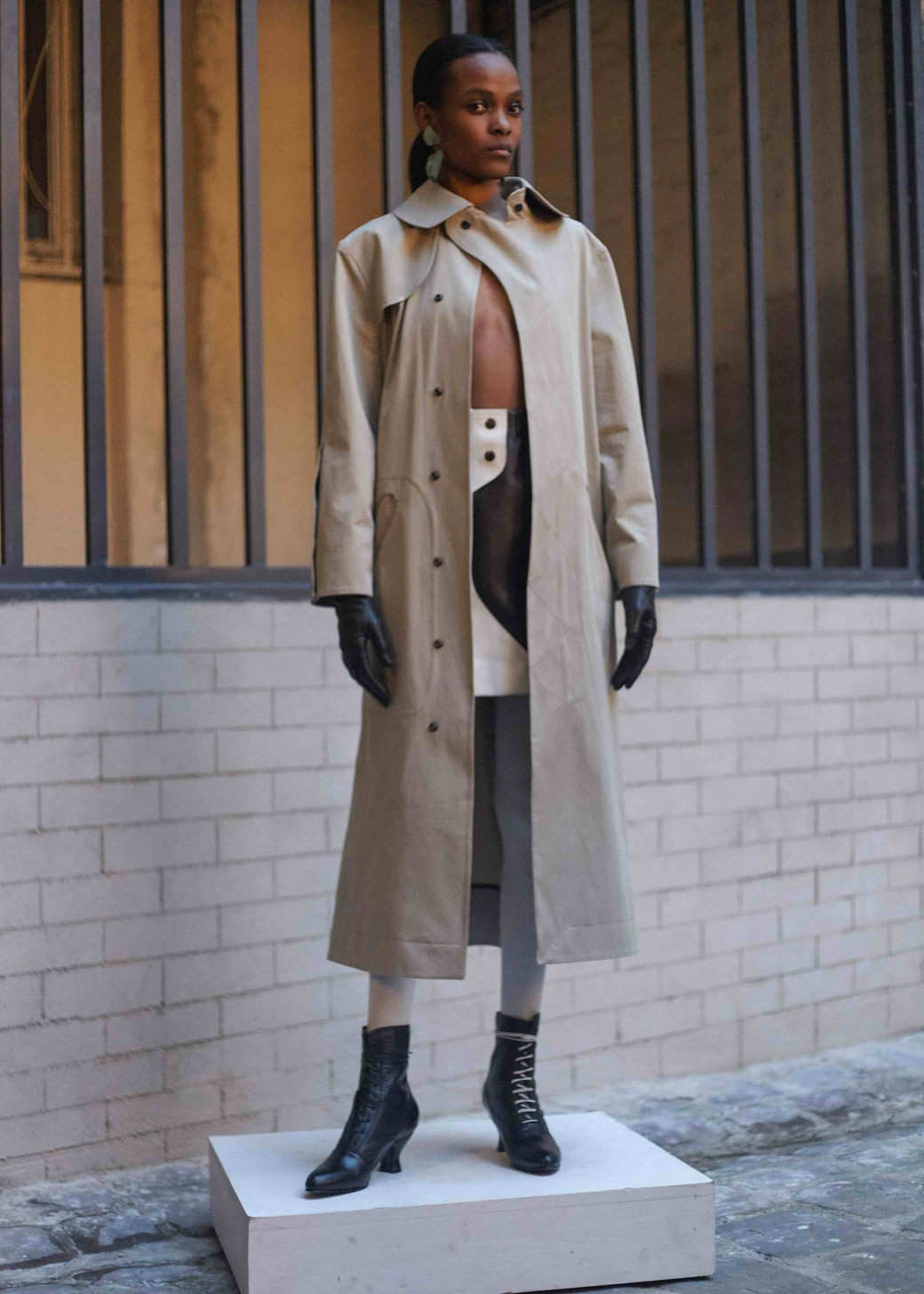
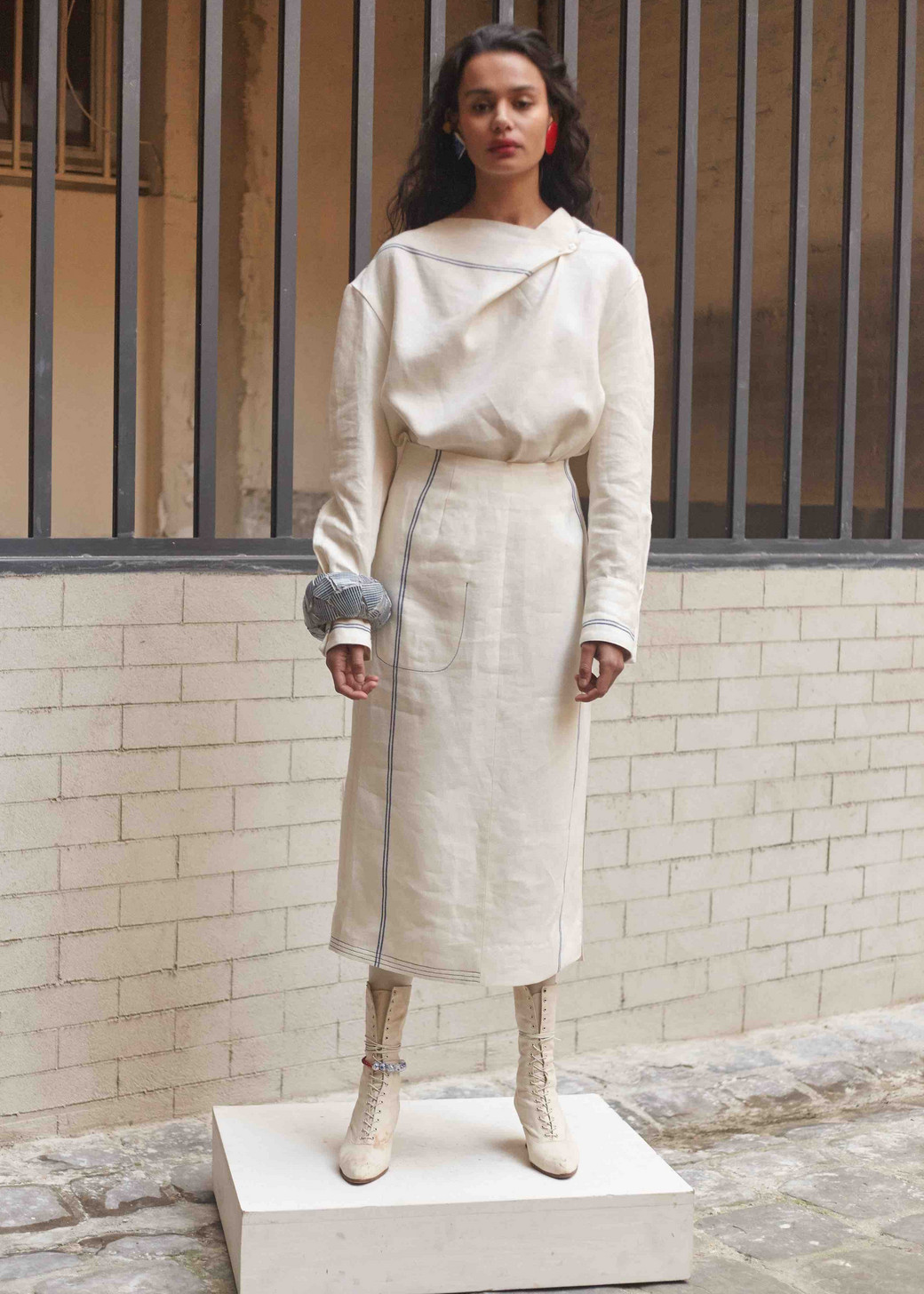
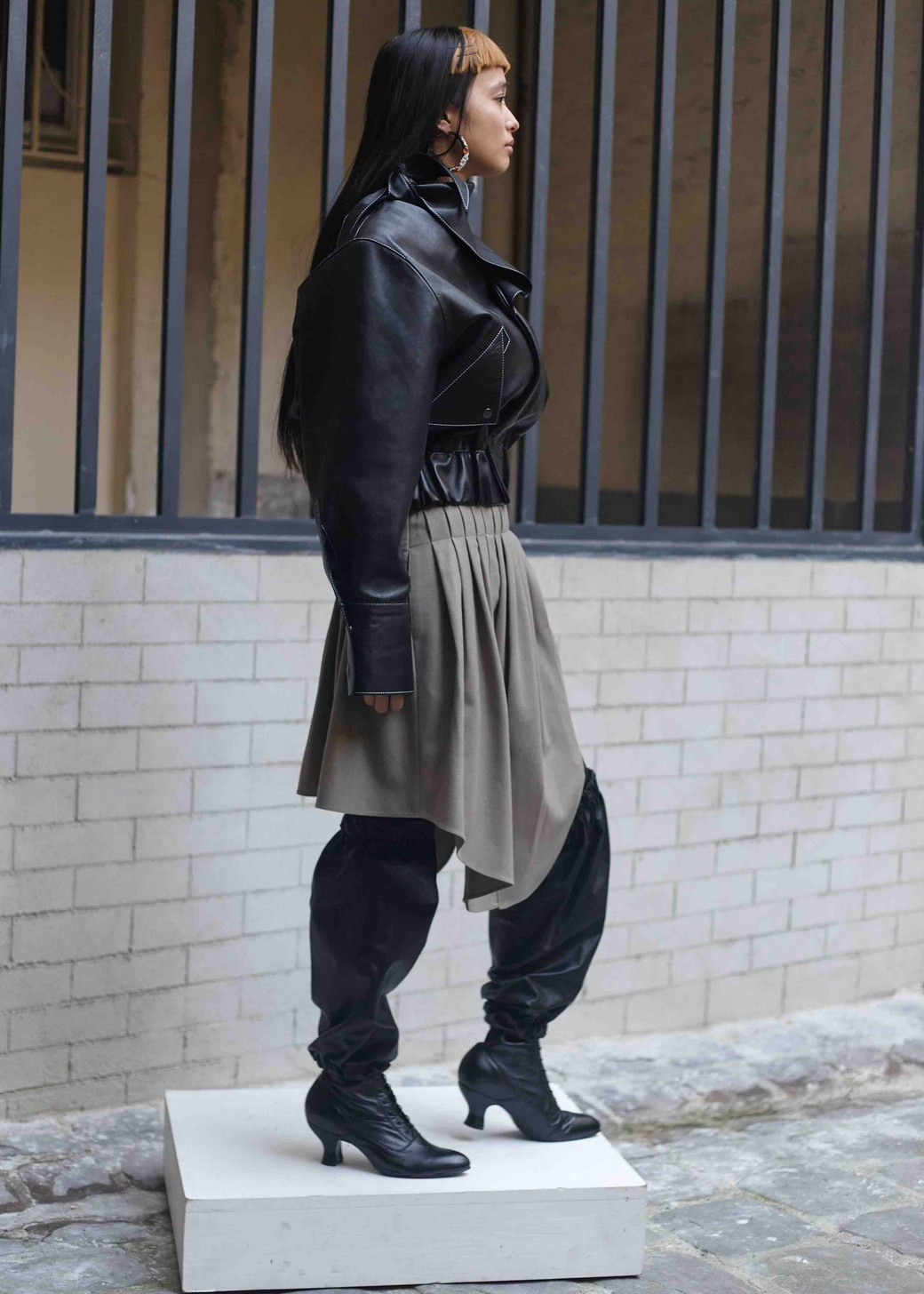
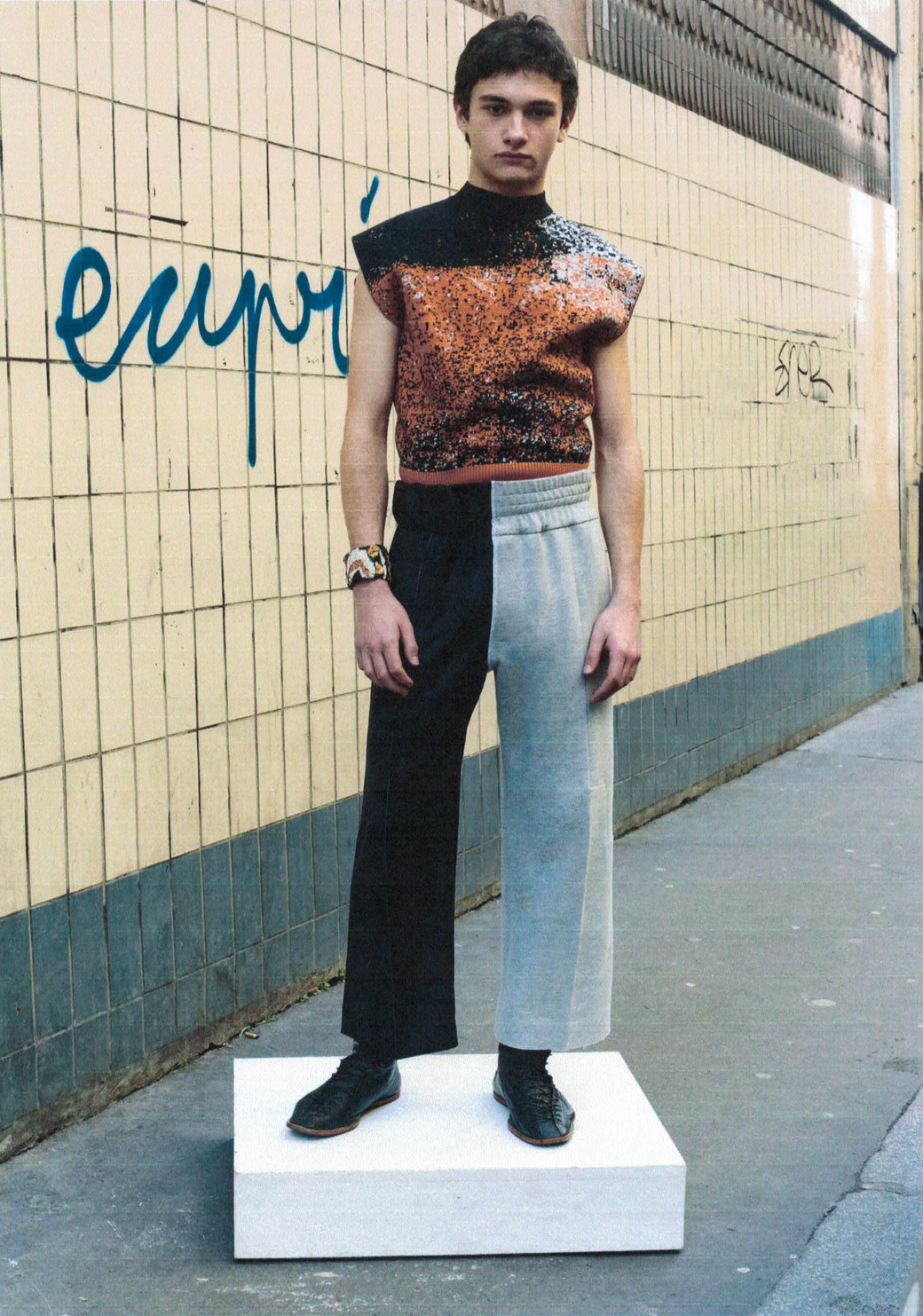
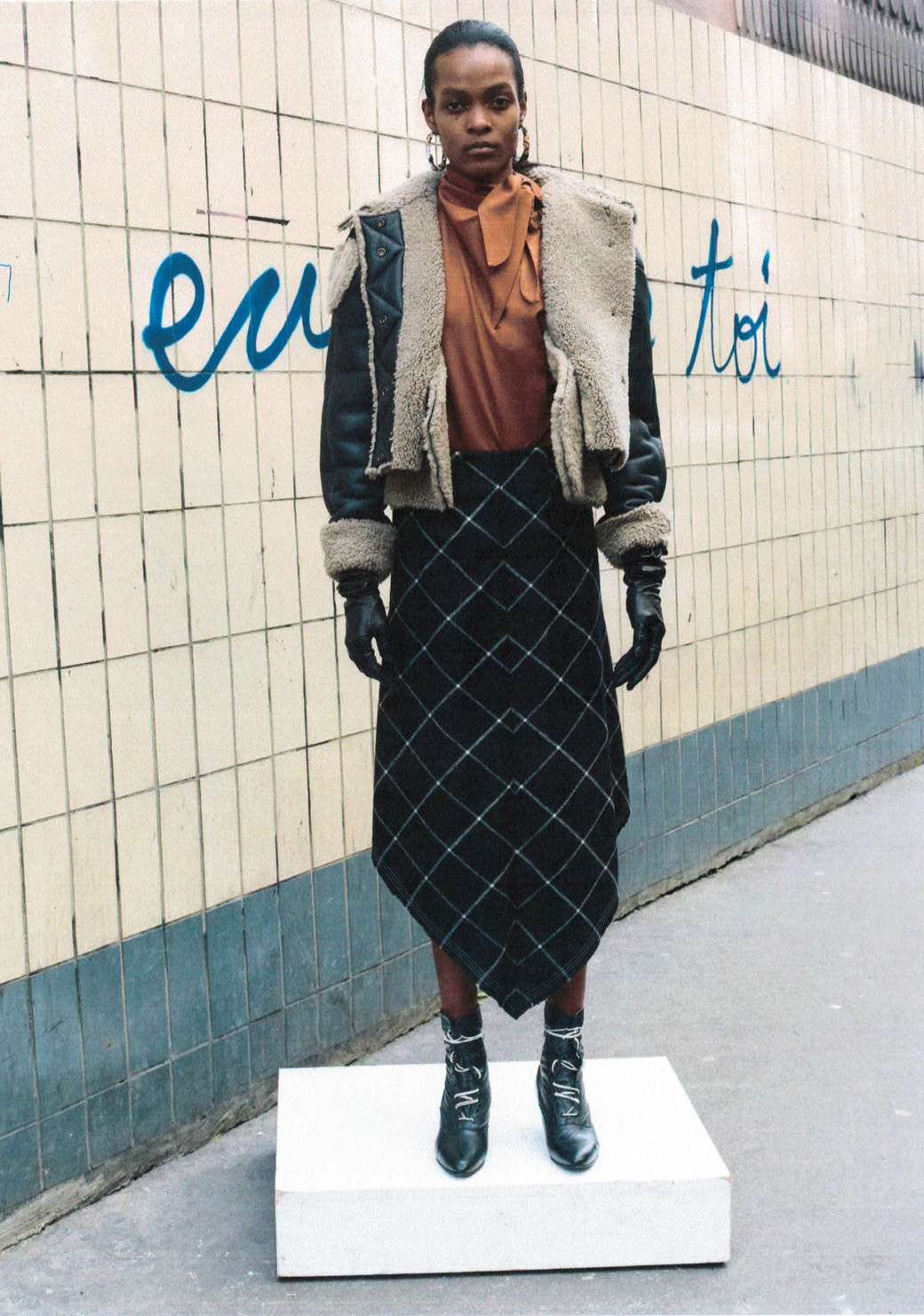
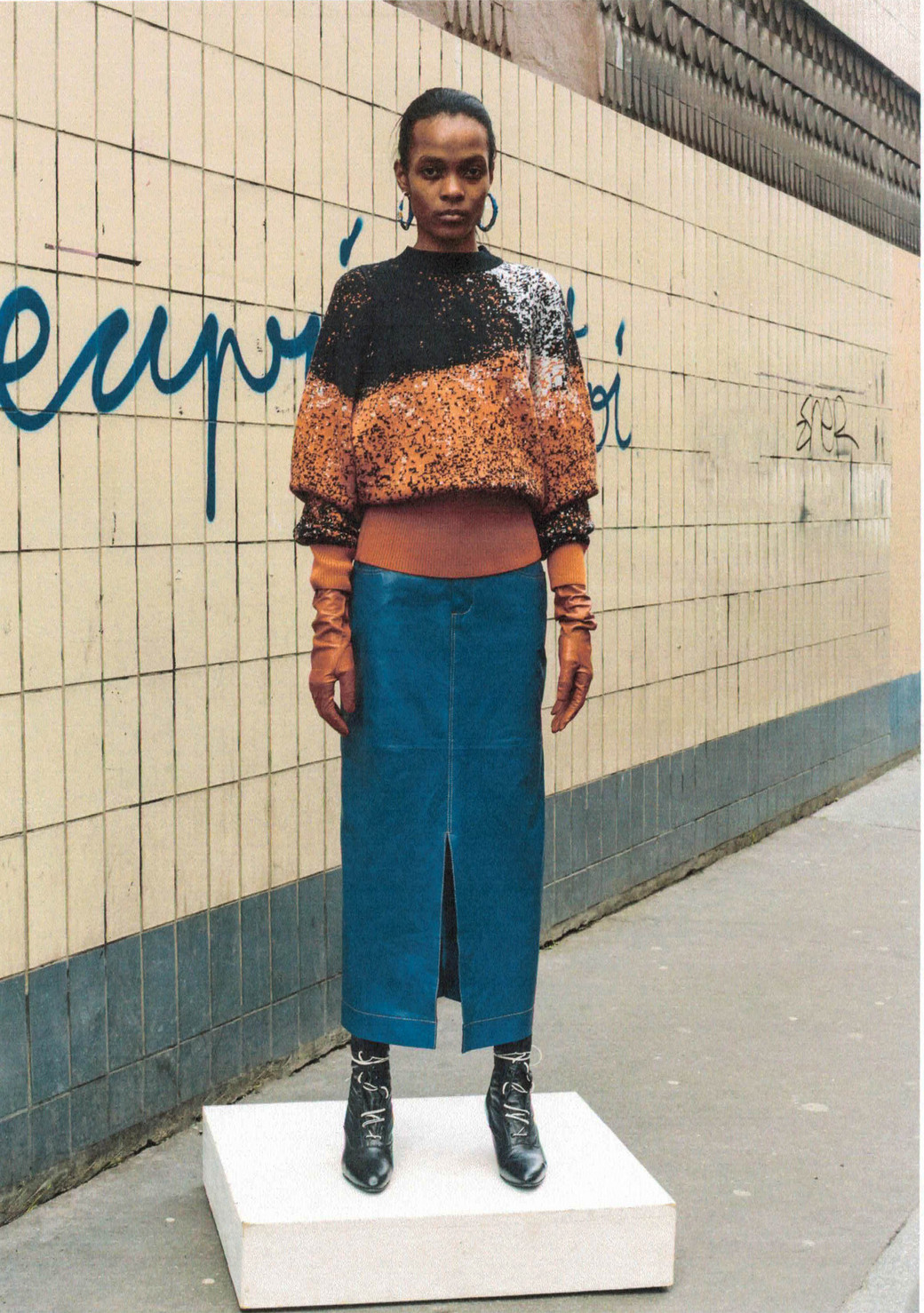
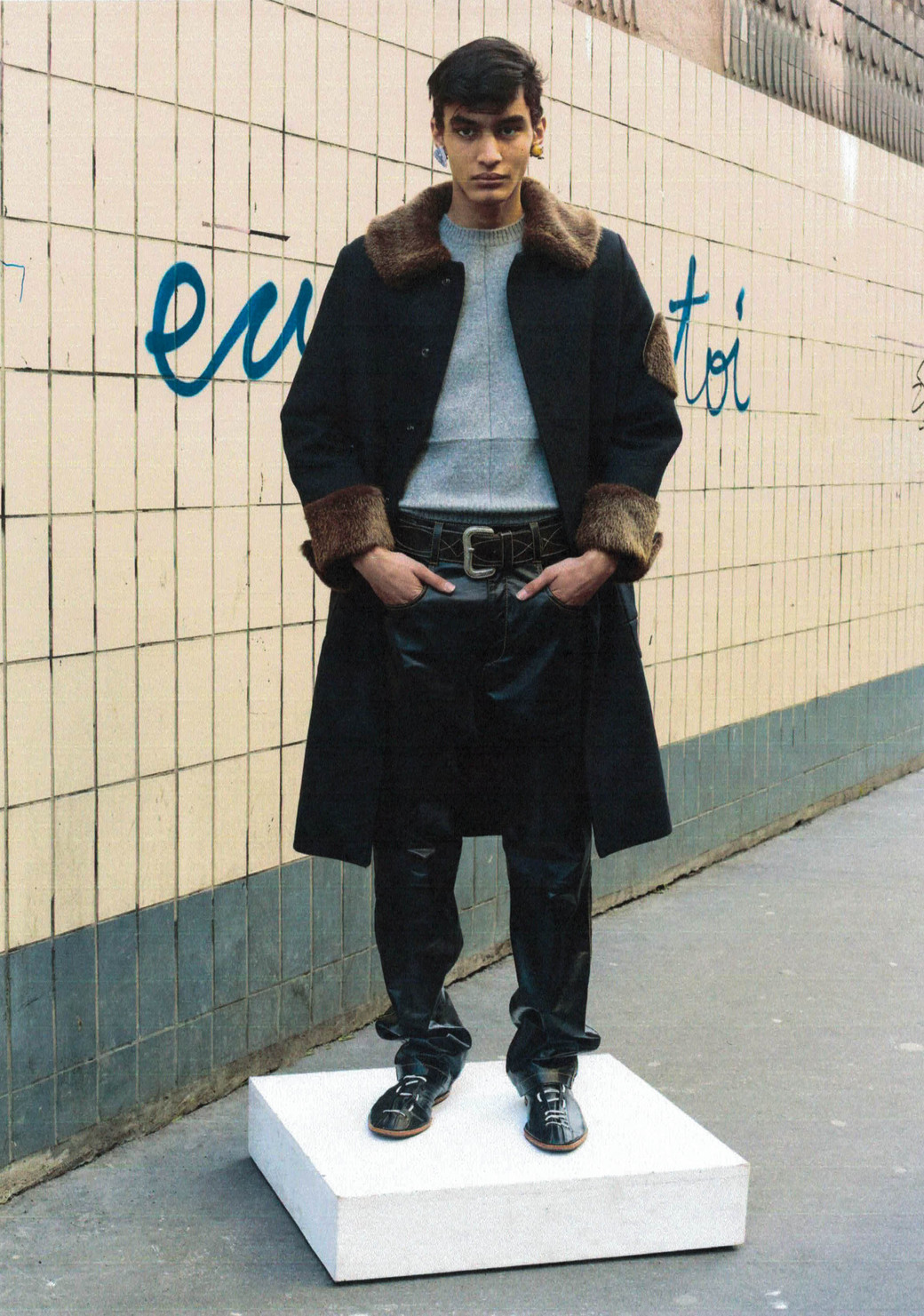
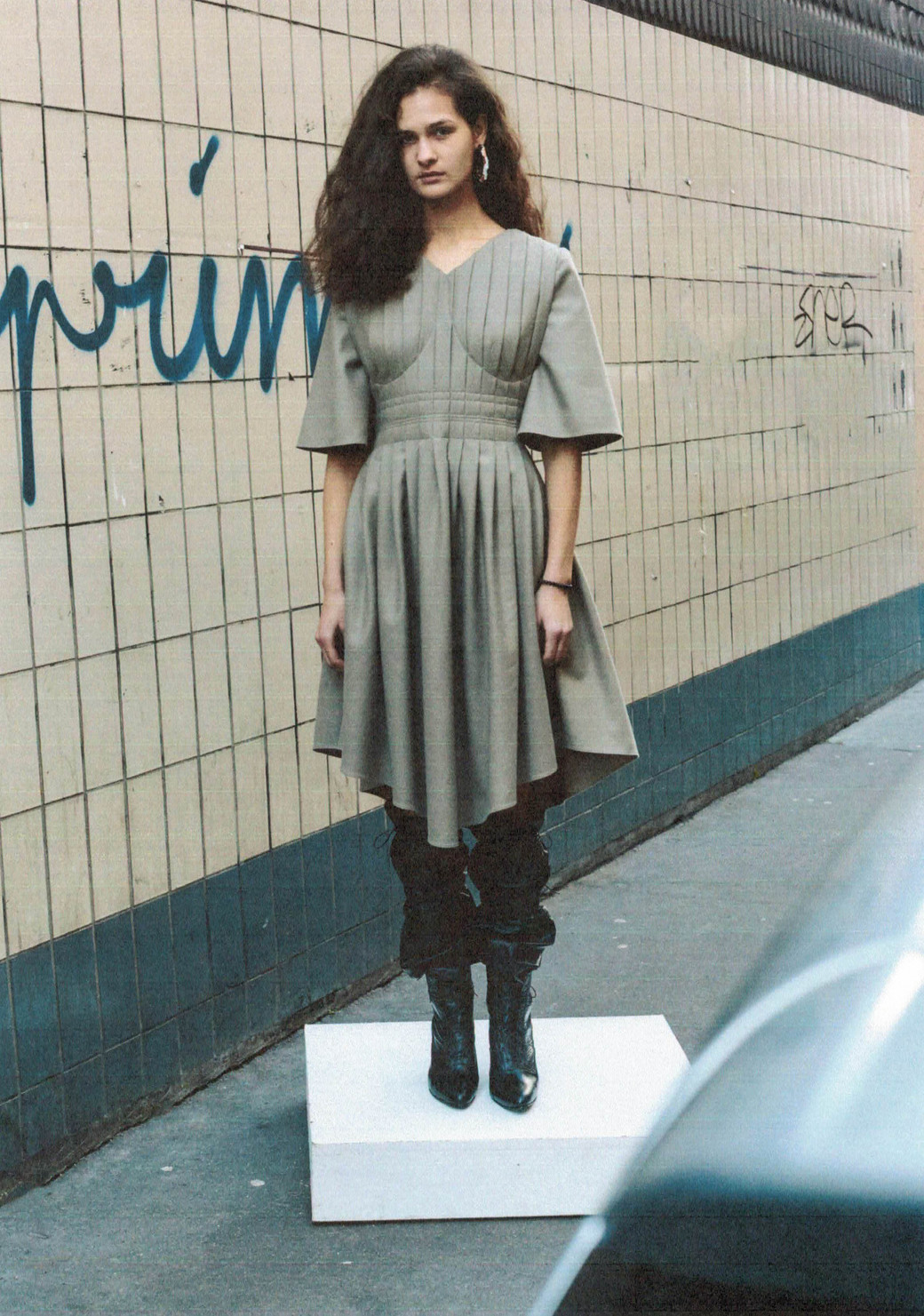
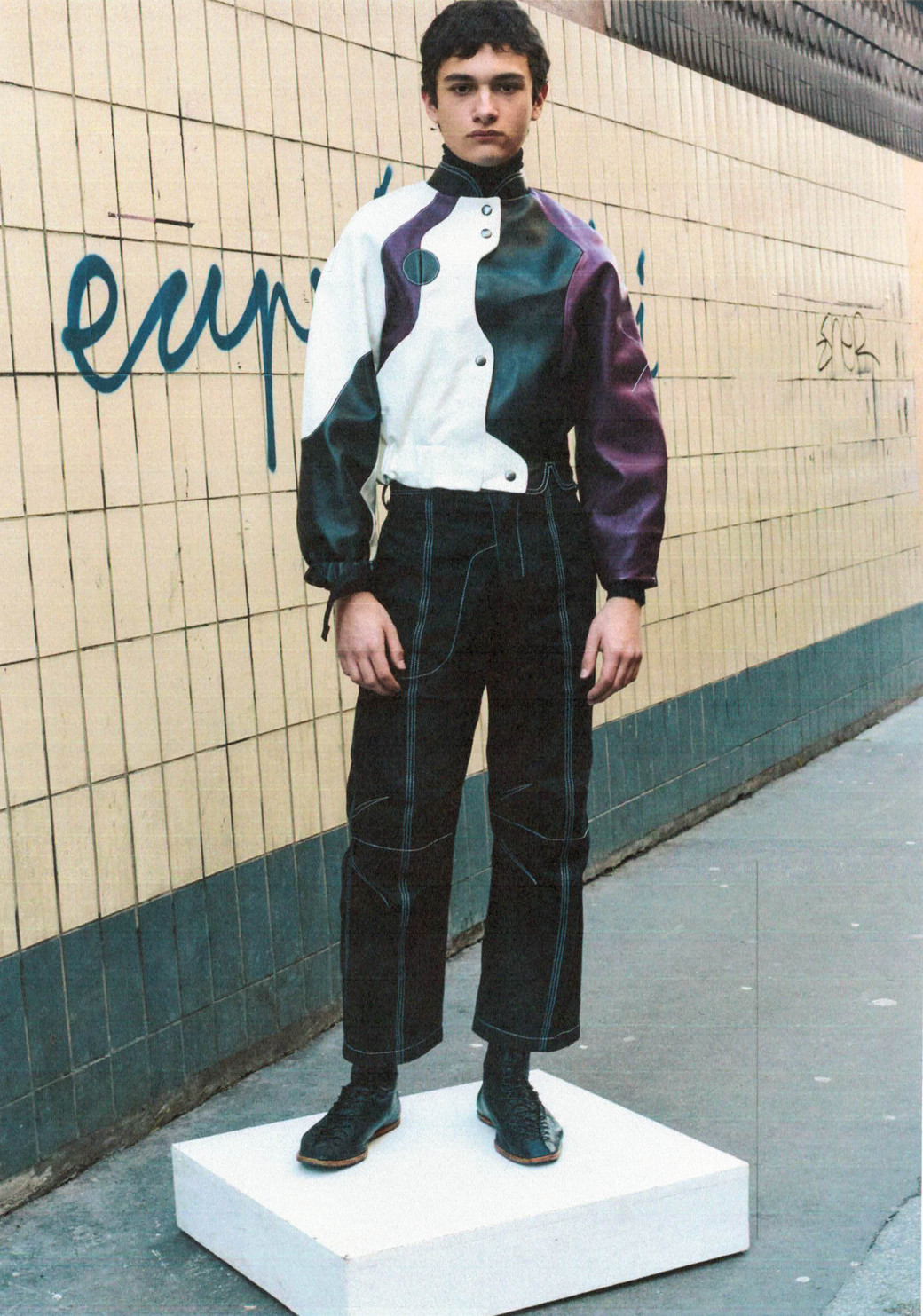
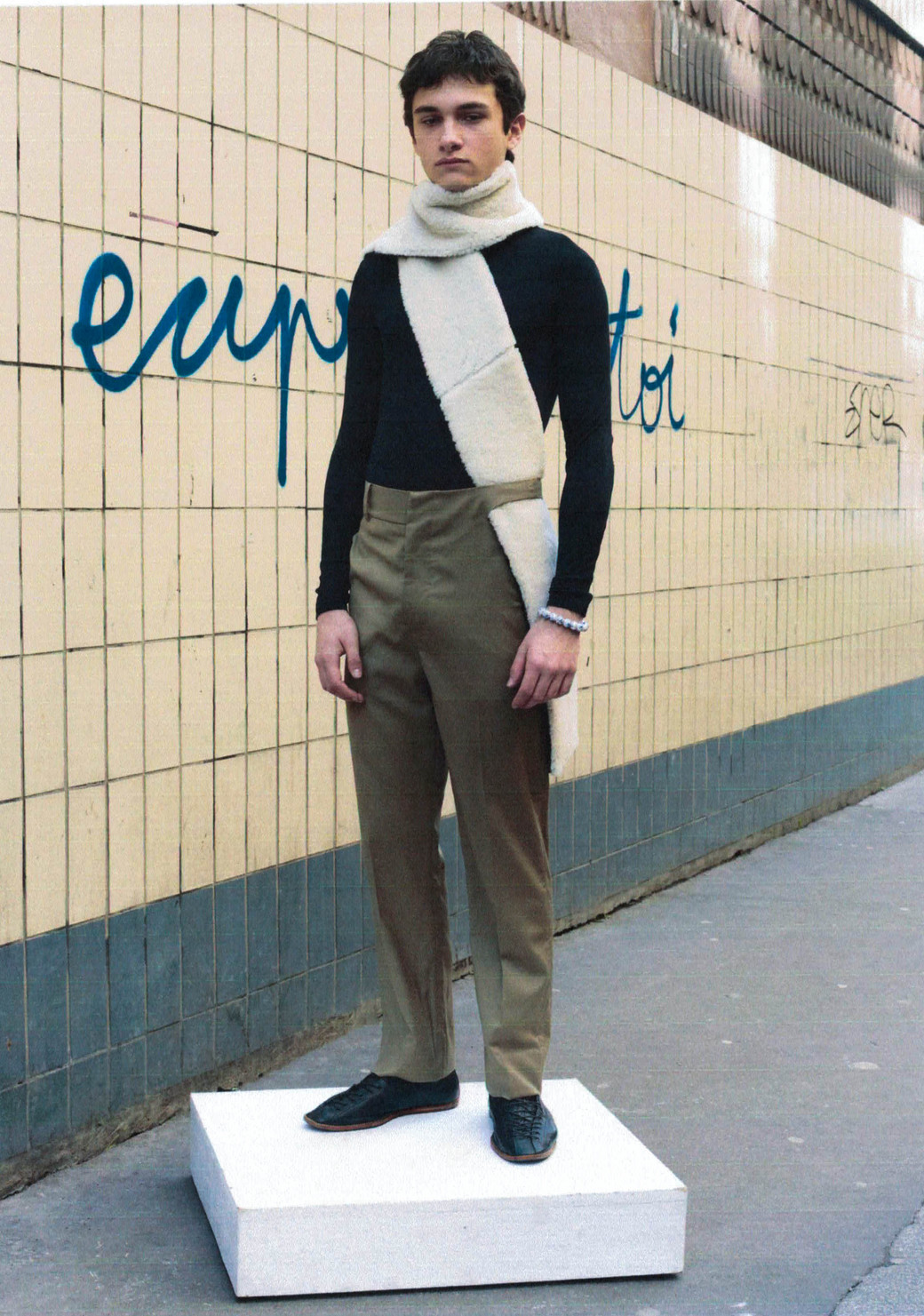
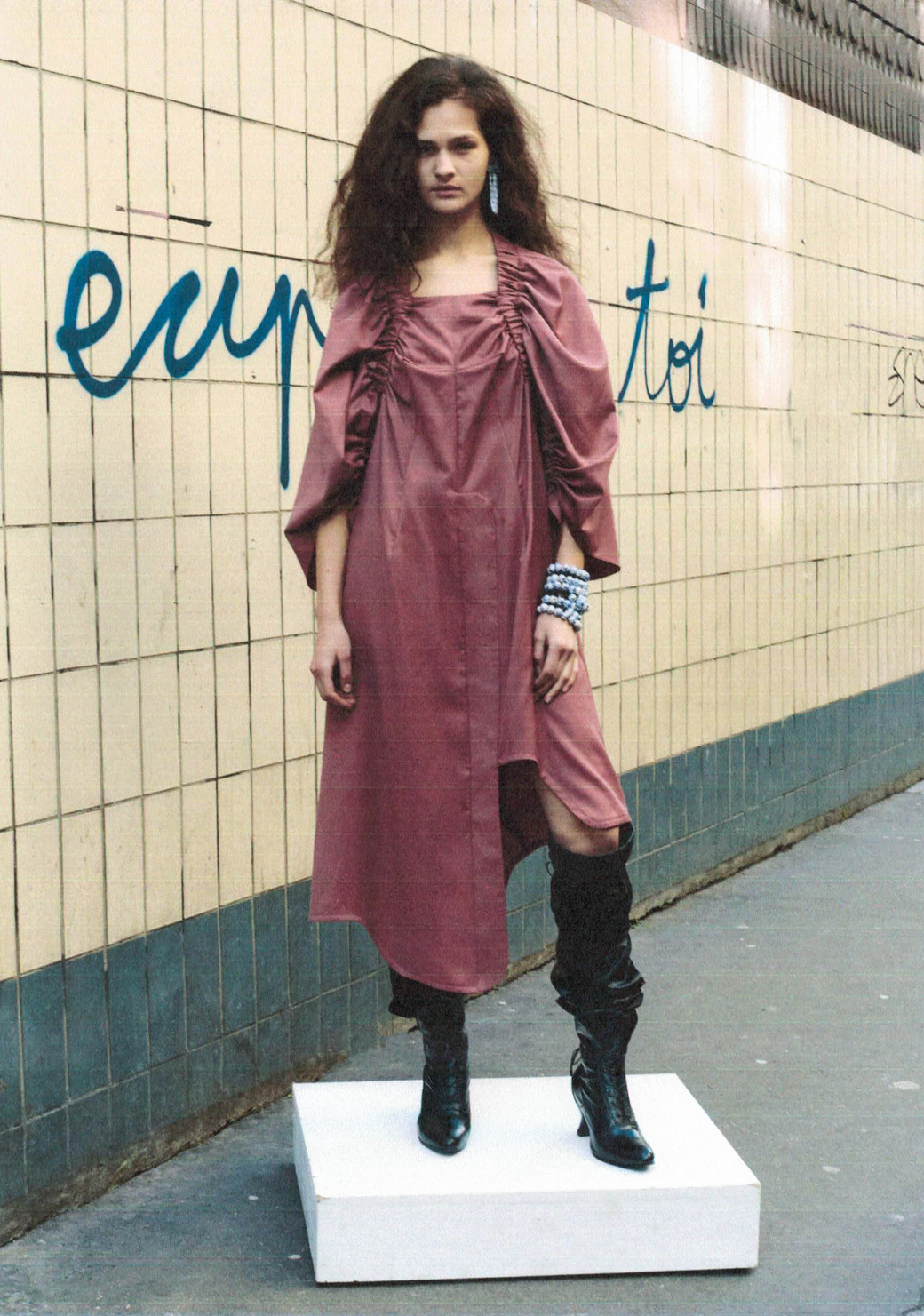
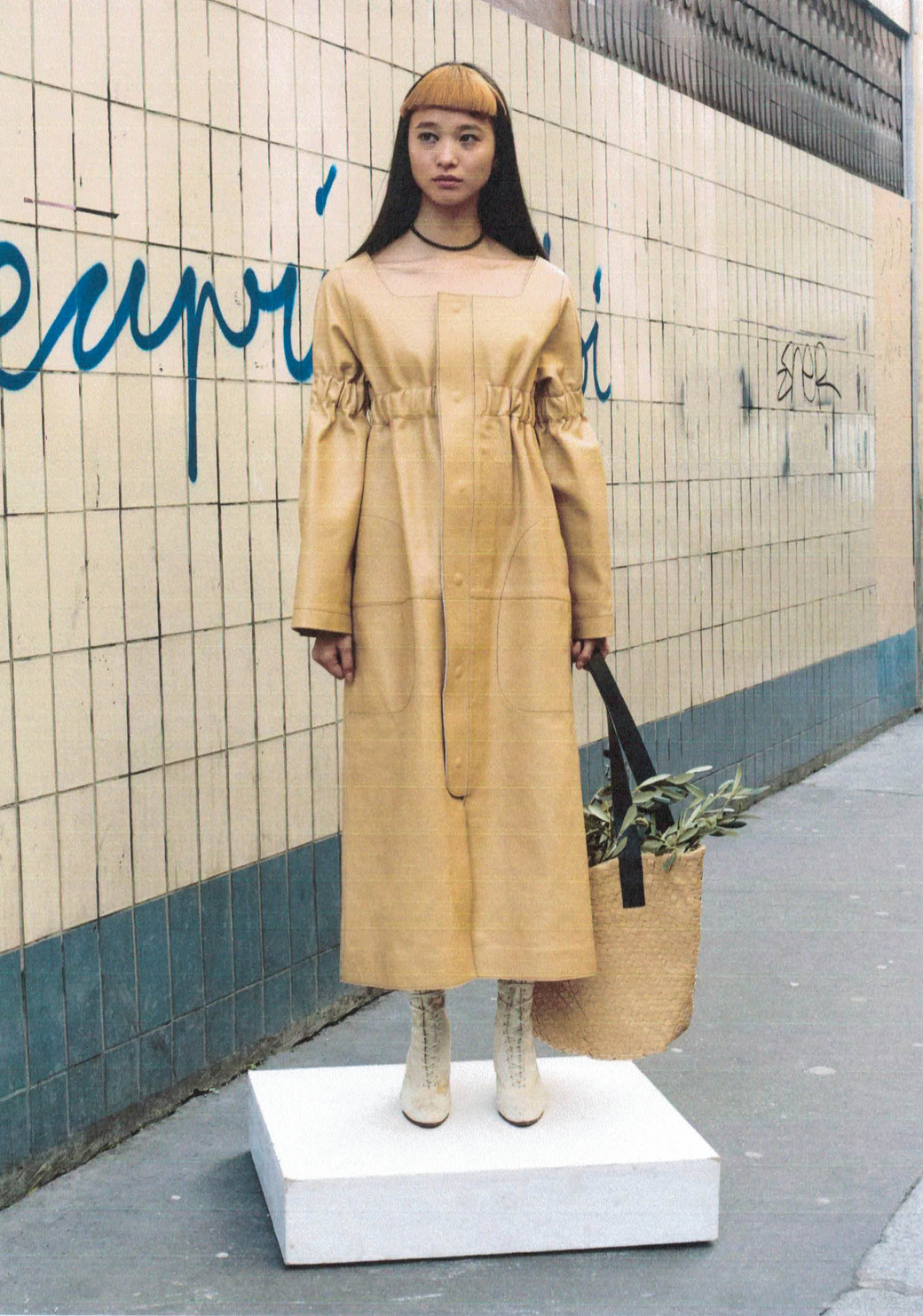
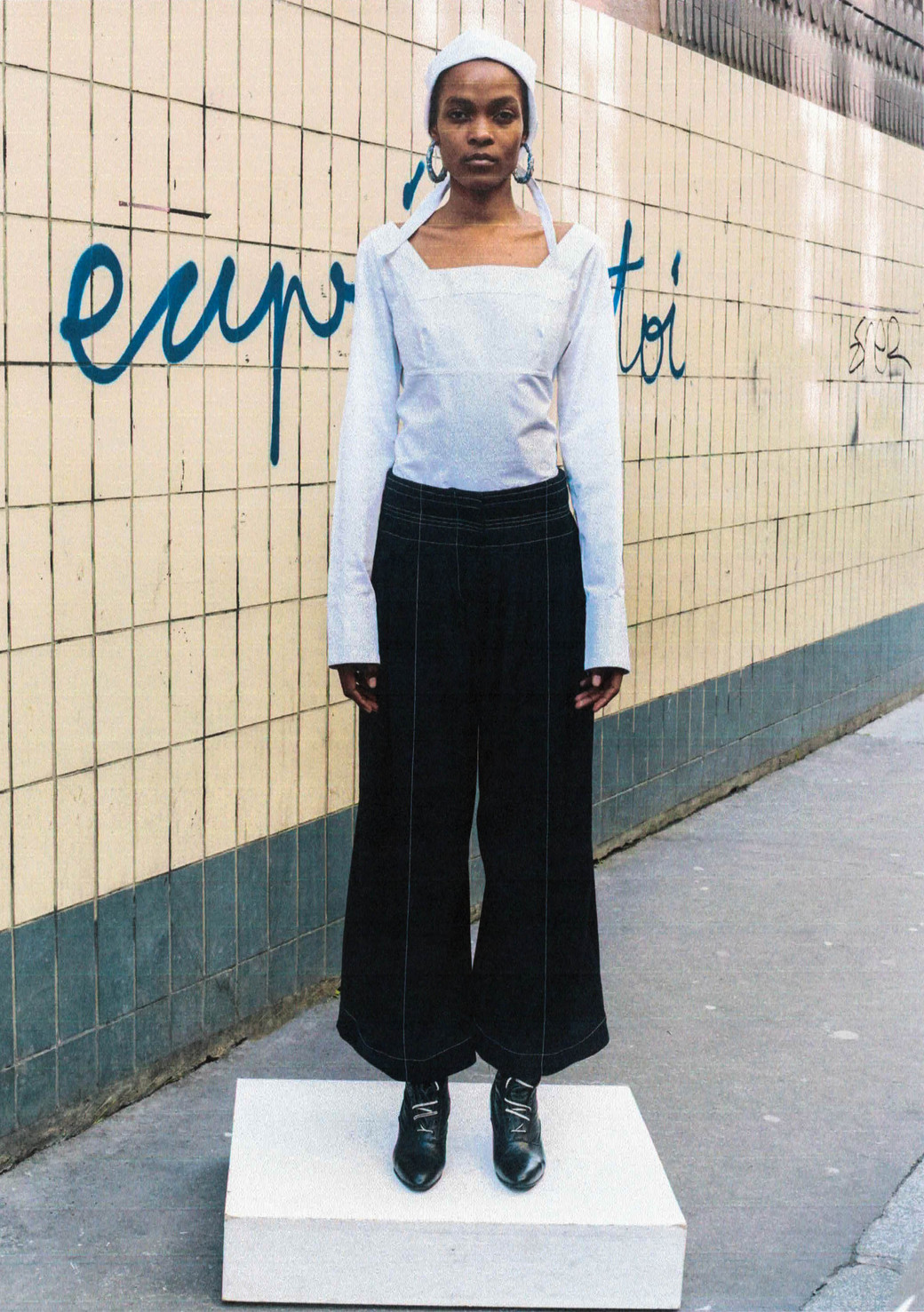
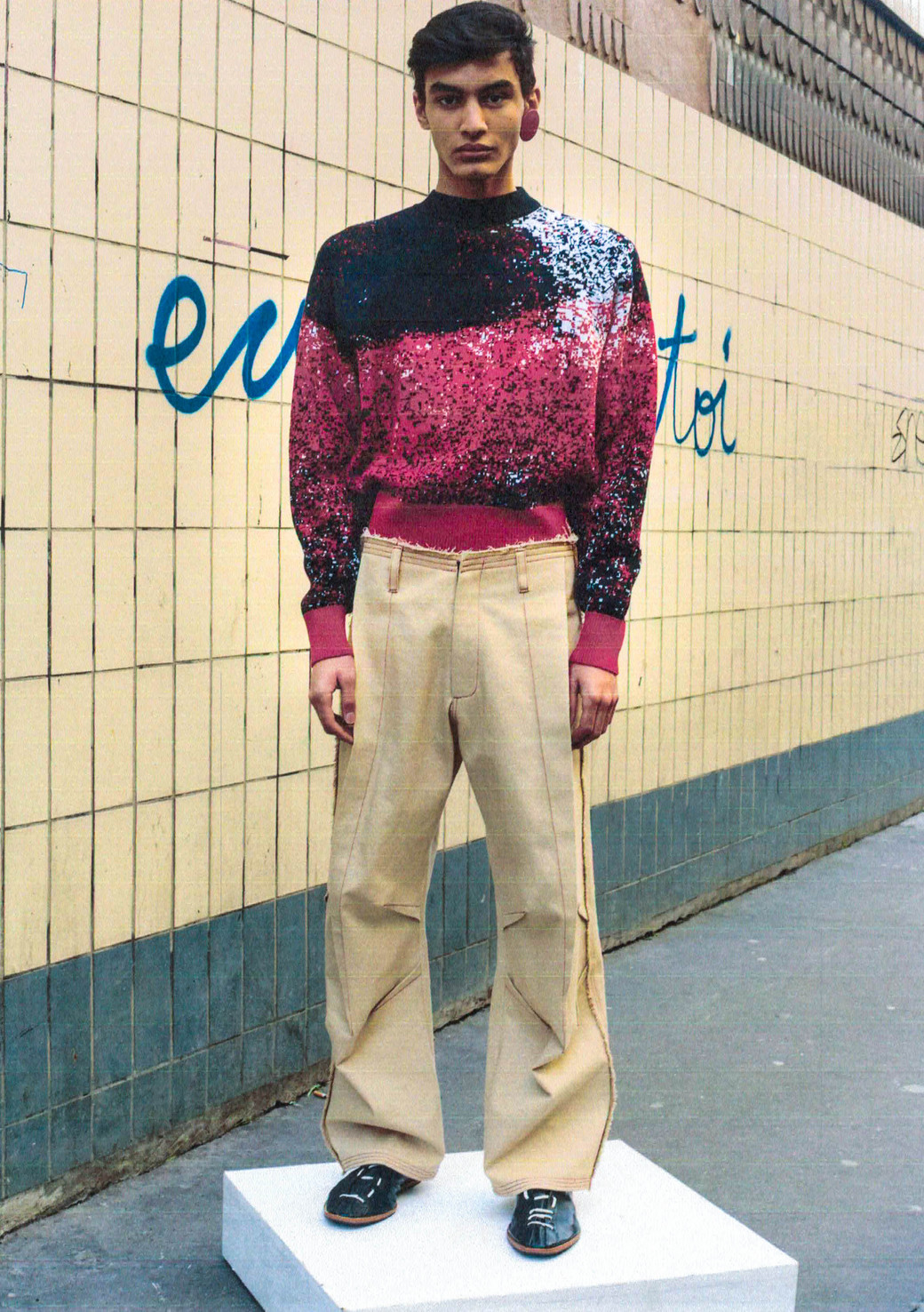
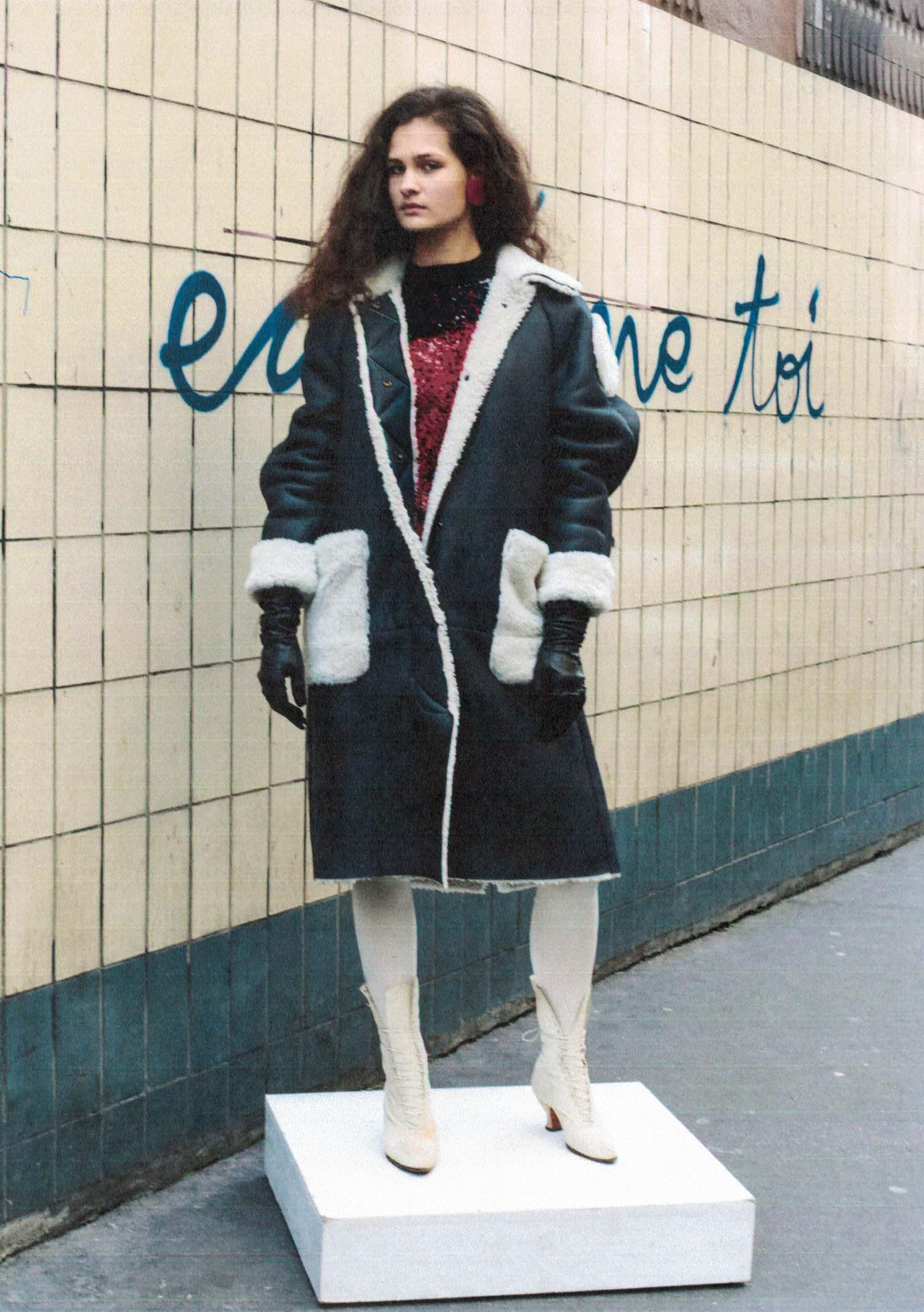
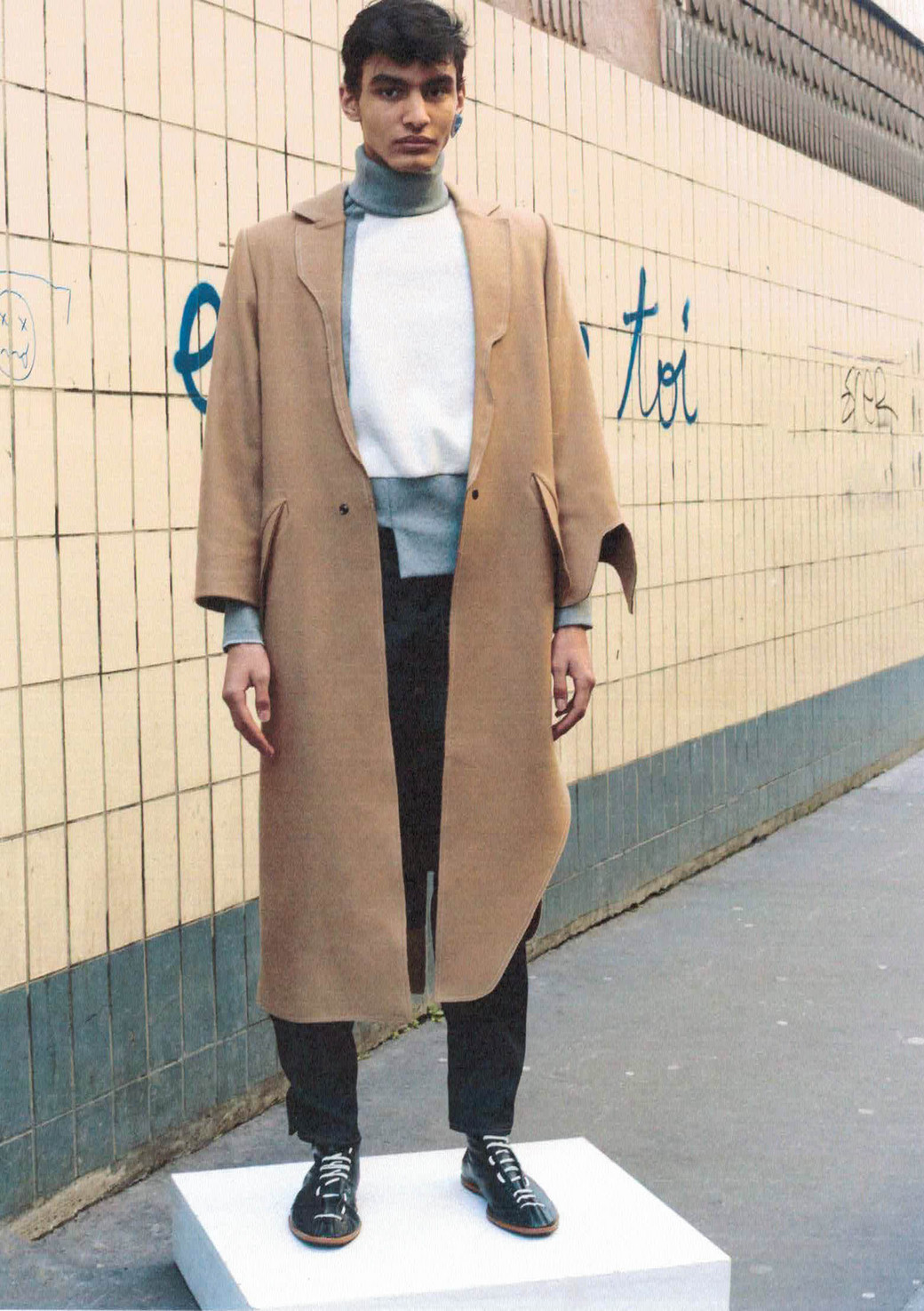
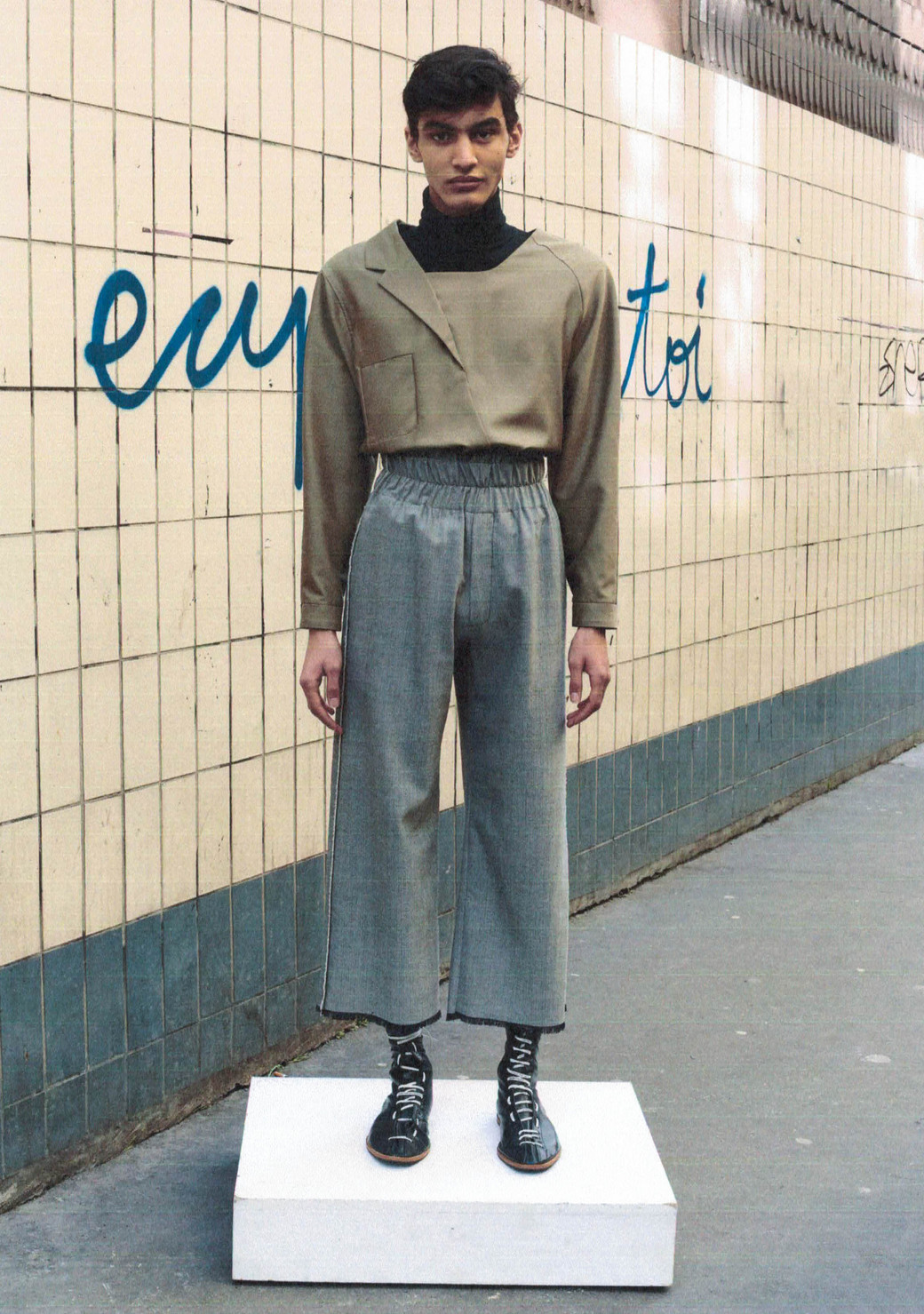
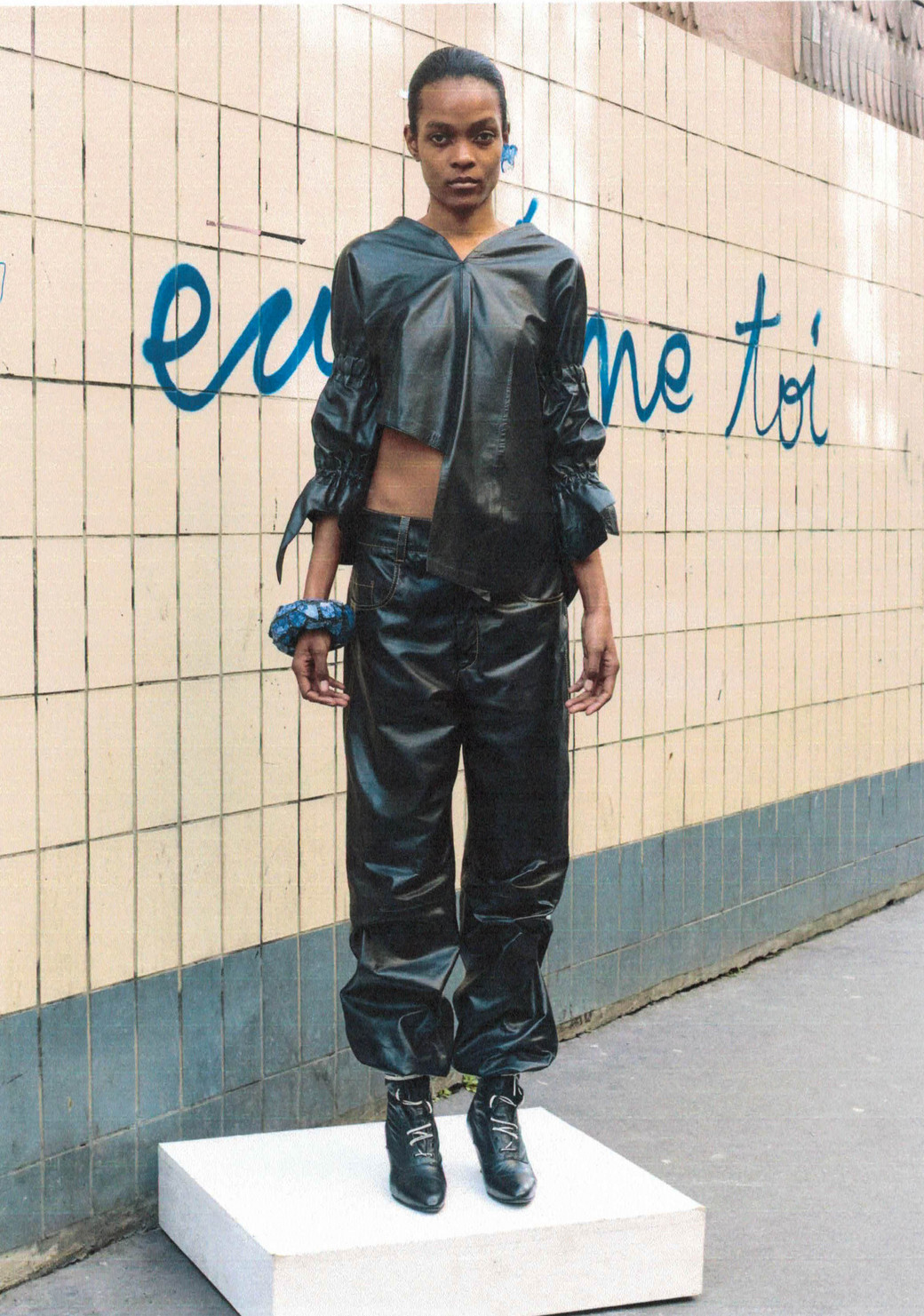
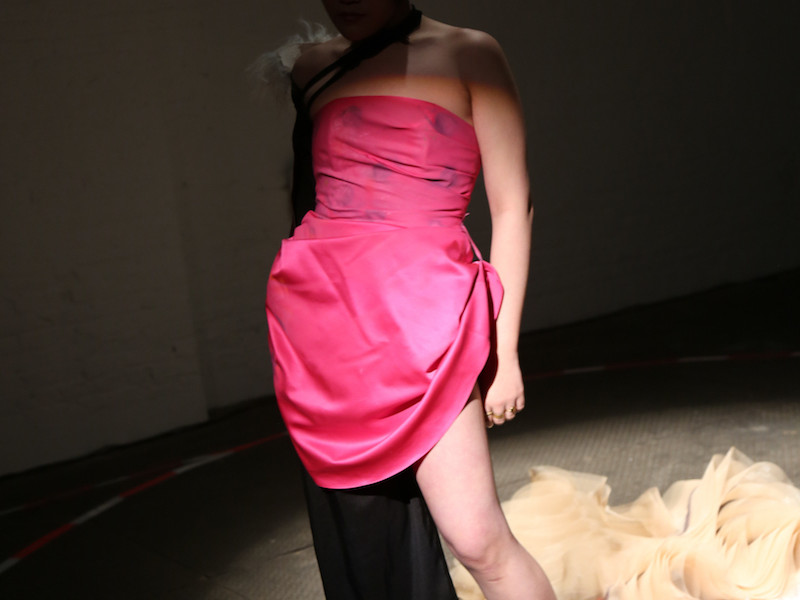
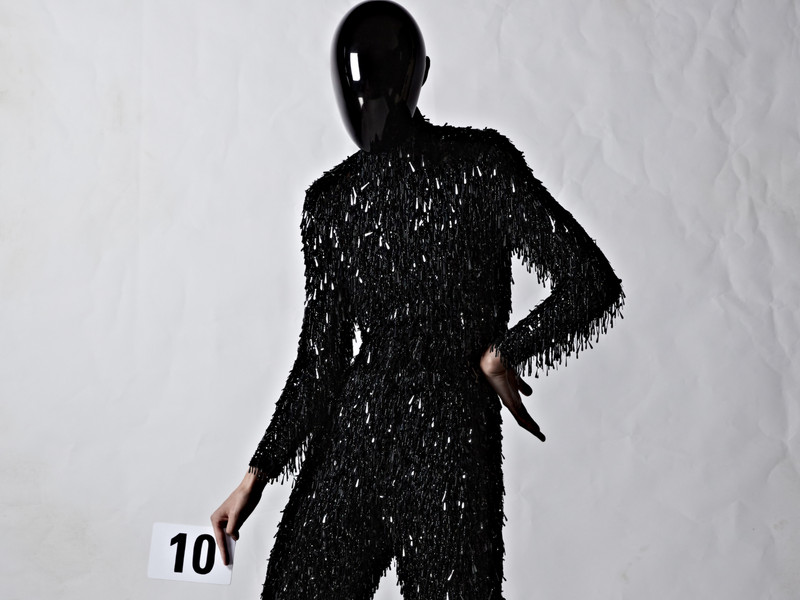
Beyond the ethics involved, this emphasis on handwork seems to have allowed you a certain freedom in your designs; the pieces often feel liberated by an unconcern with functionality, let alone wearability. To me, that’s part of what’s made your collections so exciting—but then, I could be mistaken as to your intentions. Could you envision your pieces being worn on an everyday basis, readily integrated into people’s wardrobes?
We hope to makes things that are wearable but also unattainable.
What’s been your approach to casting? What are you typically looking for in a model?
Our approach to casting is intuitive. Usually, we reach out to friends and artists we admire. Traditional ideas of beauty are one of the most boring parts of fashion, and we do not want to perpetuate them within our imagery. It’s more about creating a context where people have the possibility to express their identity while wearing the clothing.
To that last point: with much of your output, you seem intent on engaging your models as collaborators. I was struck, for instance, by your presentation at St. Mark’s, where the models traded garments on the runway and re-styled one another as desired; equally striking was the zine you published for your third collection, where you invited the models to invent fantastical alter egos around your pieces and then interviewed them in character, highlighting their contributions to the process. Throughout, there’s been a real sense that the project functions on a level not merely of cooperation, but of community, be it one you’re confirming or actively creating.
Community is incredibly important—it was one of the main impetuses for starting the project. Our collaborators and participants breathe life into the things that we make. We’re inspired by them directly. We want to create their avatars.
But in terms of design, then, I wonder how much of it is preconceived—sketched out, assembled from pattern—as opposed to discovered, invented on-site or realized in the process of fitting. Generally speaking, how intuitive is that process? What’s the role of the accidental, the unexpected?
We are uncomfortable with the pairing of intuition and femininity as it often lays in art narratives. Intuition is borne from lived experience, so even if an aesthetic decision is described as “intuitive,” it bears more significance than that adjective really allows for. A complex history can thrive and live within a single patch.
For more information on Women’s History Museum, check out their site and Instagram account.
All images courtesy of Women's History Museum.