There’s a responsibility aspect to all of this. People are scared of AI, they don’t trust it, and there’s a lot of bias against it. Once AI systems start shaping how millions of people see themselves in clothing, that’s real power. How do you think about that responsibility at scale?
It’s a huge responsibility. If we talk about change in general, human beings are not very receptive to it. A friend of a friend of mine is close to the founder of Uber, and he told me that when they were first starting out, people would say, “Why would I get in a car with a stranger?”
But then you ask, “What’s a taxi?” It’s still a stranger — you’ve just already crossed that psychological threshold. Once that fear is surpassed, it becomes an afterthought.
When people think about technology and AI, a lot of the imagery they have comes from Hollywood and the content they’ve consumed. When people think about robots, they think about violent robots — The Terminator. When they think about AI, they think about destruction.
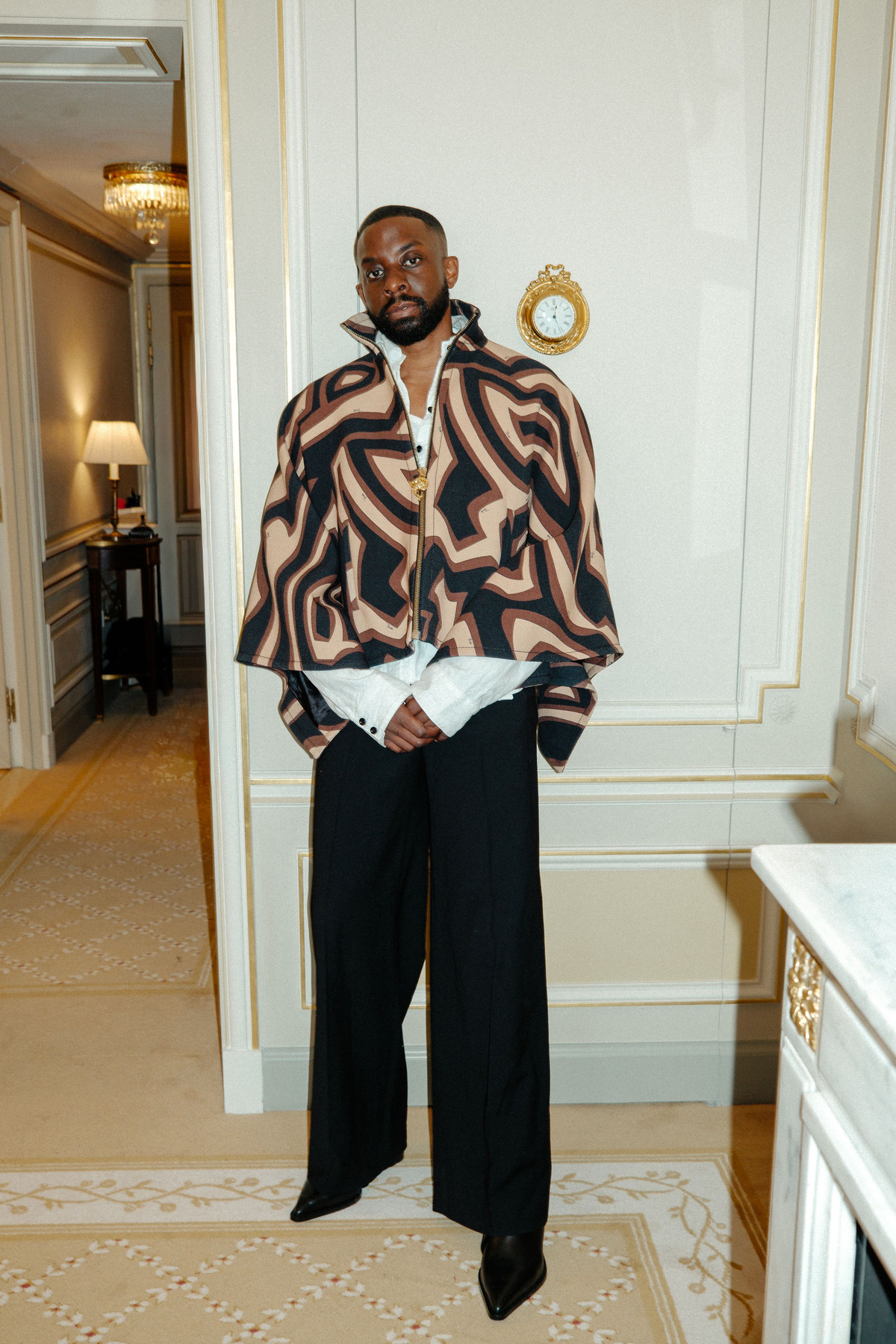
Because of that, how we show up really matters. When we go out into the field to talk to partners, our pitch and our presentation are incredibly intentional. Most tech companies walk into a room wearing a hoodie with their logo on it. If I’m meeting with a partner, I’m wearing their clothing from head to toe. It’s not a flex — it’s about showing respect and making it clear that their garments are art to me.
Another thing that changed everything was going to a fashion show. It was a Chanel show a few years ago, where I had this realization that we were doing it wrong. I went back to the drawing board with my team, and now when we pitch partners, we sometimes fly out models and treat the pitch like a fashion show. We walk through the technology, and we already know the questions they’re going to ask: How does it work? Why is it better? How does it impact my business? What about data privacy?
Then the models come out and actually use the technology. It’s received better because that’s what the fashion world understands. Fashion is such a visual space, so the information has to be presented visually.
There’s also an education component. Anytime you introduce new technology, people are going to form their own assumptions if you don’t explain it clearly. Most startups don’t hire someone focused on data and privacy early on — that’s usually an afterthought, once something goes wrong. We hired a head of data and privacy right away, and in some cases we even bring them into meetings. We also put out content and educational materials so people actually understand what we’re doing.
We want to control the narrative instead of letting people create one in their heads that isn’t true. A lot of people look at tech at a macro level — based on every experience they’ve ever had — rather than looking at SPREE specifically. Our job is to make sure they’re informed.
Going back to growing up in Texas — you mentioned you were a pretty nerdy kid. What was your relationship with fashion back then? What were you wearing?
My relationship with fashion actually starts with my mother. Before she passed away, she was a huge fashionista. It didn’t matter where we were going — the grocery store, Goodwill to donate clothes, church. She was always dressed up. She was fly as hell.
Because of that, I hated it at first. You know how it is with parents. I wouldn’t say she forced fashion on me, but it felt very obtrusive. I was like, “This is too much.”
It wasn’t until I got to high school that I started thinking, Okay, I kind of like this fashion thing. Part of it was because I looked like a nerd. I was skinny, probably under 100 pounds, had a big alien head, and I sounded like a nerd too.
Fashion became a way for me to stand out. In a lot of ways, fashion is like art. It’s like an ad. When people see you from far away, they’re visually taking in what you’re wearing. Then once they get closer and talk to you, they’re like, “Okay, wow, this guy actually sounds interesting.”
I loved that fashion allowed me to express myself before I even opened my mouth. It confused people. They’d see me wearing Dior or whatever and assume I was an actor or something. Then I’d start talking, and they’d realize, Wait, I’ve never really met someone who’s fashionable but also in tech.
That became part of my identity all the way through my corporate career at Meta, Snapchat, and beyond. People associated me as someone who was very smart, but also very fashionable.
As someone who used fashion that way, what’s something about fashion that AI still can’t — and maybe shouldn’t — solve?
The art of fashion. AI can create certain things, but there’s a human element that always needs to be present. Fashion shouldn’t be built by AI or robots alone. What makes fashion meaningful is that brands are typically founded by an individual, and you’re wearing that person’s name across your chest.
That person has spent years perfecting their craft, and that should never be taken away. AI can absolutely be an additive experience. Designers and creatives can use it to enhance what they’re already doing, but it shouldn’t be the sole focus or do everything for you. That’s when things start to get lost.
It’s the same with tools like ChatGPT or Gemini. Right now, they’re designed based on your input. Eventually they’ll become more advanced and start learning about you, even communicating back. But there has to be balance. You still want people to use their brains.
If you rely entirely on AI, you start losing that muscle. Suddenly you’re like, “Wait, what is two plus two?” because you never had to think about it. I look at fashion the same way. It still needs to be human-driven, just supported by AI.
What kind of feedback have you heard from shoppers so far? Has anything surprised you about how people want to use the technology?
When I first took a trip to Europe, I assumed our technology would live mostly online. That’s where the data points — especially with Gen Z and the generations behind them — seemed to suggest everything was heading.
But the moment I landed, almost every luxury house told me the same thing: online is important, but they don’t want to get rid of physical stores. If you’ve ever been to Europe, you really feel that. You’ll see the same store on multiple blocks.
As I dug deeper, a lot of them explained that when people walk into a store, they usually don’t know exactly what they want. It’s the sales associate’s job to guide them. Someone might come in thinking they’re buying a T-shirt and leave with shoes and jeans. That’s very hard to replicate online.
So the feedback became clear: this technology needs to work online, in-store, and for VICs — very important clients. Those are the customers who spend heavily at fashion houses, where associates might come to your home, send garments, or even stage private showings.