In regards to the book, what was your process for choosing the people you collaborated with?
I just let it happen pretty naturally. When people ask me how I buy clothes, or how I find pieces, I usually say, ‘At this point, I just let them find me,’ because it really does happen that way. I don’t actively try to find a piece because that can close your vision off to other pieces you might miss, so I really try to keep all senses open and let things come to me. So, with the process of getting people to do the book, a lot were people or artists I had already worked with or knew really well—that was sort of the starting point. Then others I found after seeing their work I really liked. So, it just happened really naturally—I didn’t make a big plan in the beginning and say, ‘Okay, let’s email everyone’—it just sort of happened.
So, you don’t really look for the pieces, but has there ever been one specific thing that you obsessively hunted for and still haven’t been able to find?
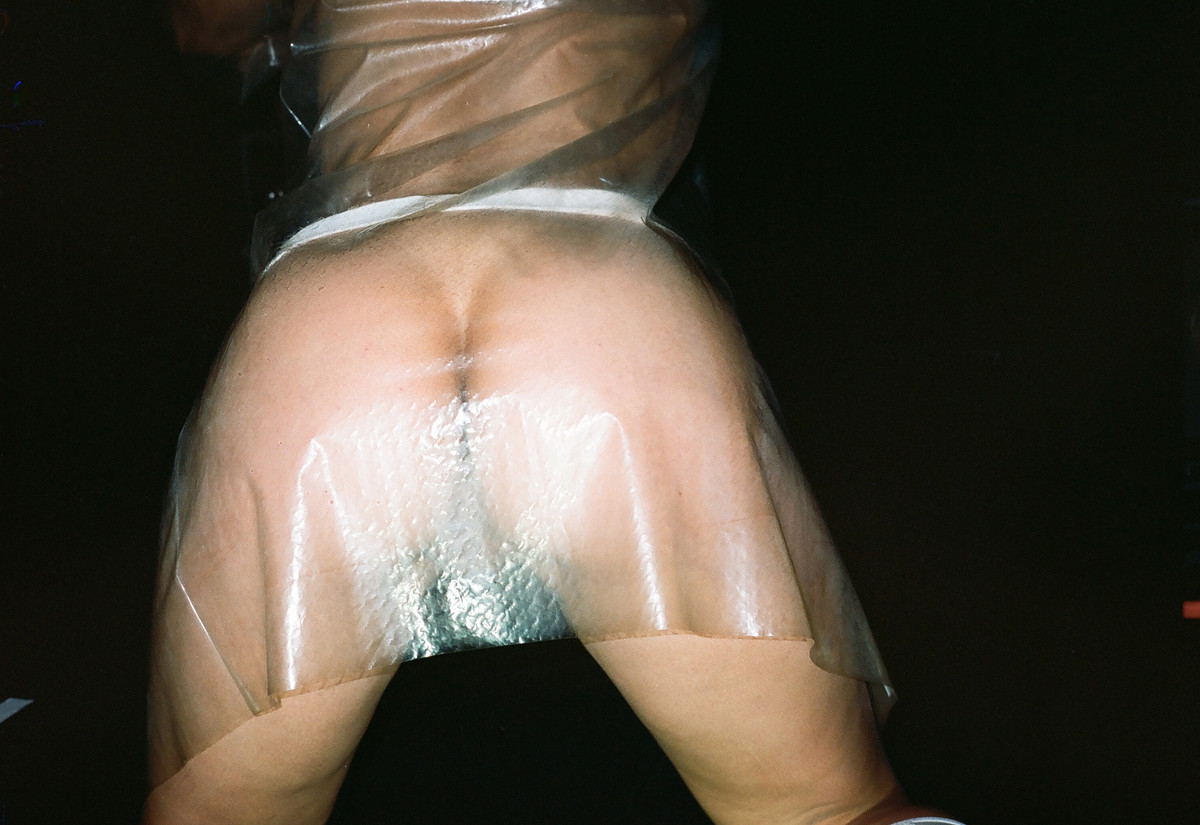
I’ve always said that I wanted the Helmut Lang bubblewrap coat—that’s definitely one thing I have always had my eye on. But I don’t think they even really produce them—there’s just a sample in a museum or something.
Aside from a personal attachment you have to the individual pieces, what’s really your goal with the archive? Like, what’s the point?
That’s a good question—like, what is the intent? I think it’s that I want to change the world to a certain extent. By that, I don’t mean like, ‘I am king of the world,’ but I grew up loving these clothes and thinking they were amazing—they were my art to me—and I love wearing them. I’ve always been really into menswear and growing up, I didn’t have anyone else that also felt that way. Menswear just wasn’t really a thing and fashion was very different than it is now. At the end of the day, I just wanted to connect with people, but there was nothing like this around. So, I thought if I could create something like this, I could create that sense of community and connection for people who are like I was.
I want it to be a platform and a way for people to use it, to create, to make art—to make people think about things differently. The way people dress and present themselves—I don’t think people give enough credit for what that actually does. You can make such a huge statement with what you wearing, without even saying a word. That’s something really beautiful about clothes—you can use them to show who you are, you can use them as a form of protest; they can be their own political statement. So, for me, I use the archive as a tool to get ideas out there.
Do you think that’s especially important right now, considering the political climate?
I think it’s always important. Always, and now. Right now, especially, because so many people are talking, you can use your clothes to make people notice something that they might not have seen if you were just saying it outloud.
In a lot of ways, an archive almost feels antithetical to the environment we’re living in right now. With the internet and social media, people can creative an ‘archive’ using something like Pinterest. It’s like records—why buy a record when you can download it on iTunes? Nobody really buys tangible things anymore.
Oh exactly. That’s another big reason I do what I do. I remember, I started really collecting things at a time, in the mid-2000s when clothing really starting becoming disposable, with places like Forever 21 and H&M. People just didn’t value their clothes. It was one thing one month, then onto the next season, and I just always thought that was absolutely insane. It’s so wasteful. So, I wanted to make people value clothes in the way that when you buy a jacket, you should want to keep your whole life. Like, when you buy a Warhol, you don’t trash it next season. I’ve just always thought it was crazy how undervalued clothes are compared to things like art or cars. So, I think the archive has really helped me start to change that, and also slow down the process.
It’s so cool that now it’s so popular for young people to buy vintage, because I remember when I was younger, people were like ‘Ew used clothes, I wouldn't wear that!’ But now, it’s like, you buy vintage clothes to wear with something new, you mix it together and it just makes so much more sense—it makes no sense to buy something new if something great already exists. And it shouldn't be wasted! I mean, I’m not even a giant environmentalist and I don’t use that as a marketing thing for what I do, but I think it’s important to consider things like that, and think about who’s making your clothing, and with what kind of fabric, and in what environment.
Right. And right now, fast fashion is bigger than ever. So, in a lot of ways, fashion is more disposable than ever.
I think that’s true, but I think that’s also created the space for so many greats things that have popped up, like sustainability and reselling, people thinking about sharing their items with each other instead of just getting rid of them. People buy things now with the thought that they can trade or sell them later. That mindset, at least, has shifted a lot.