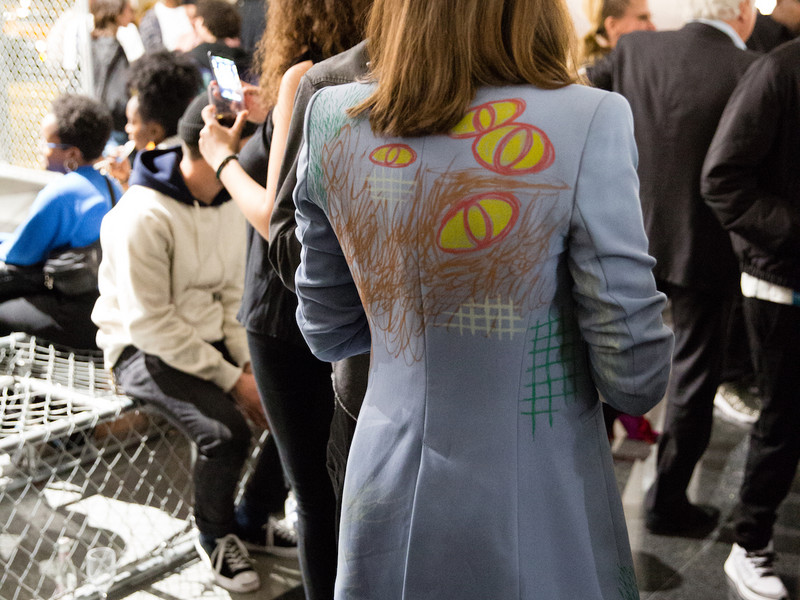
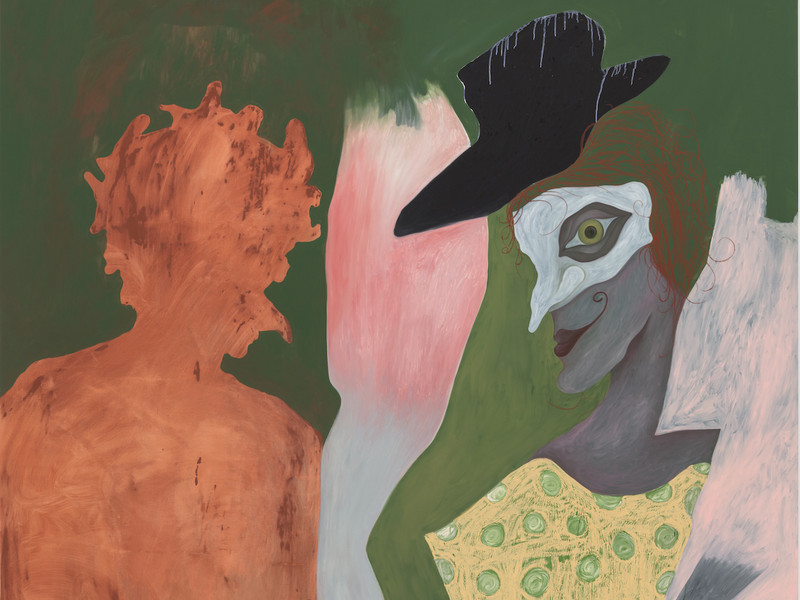
every cell met with instant ease

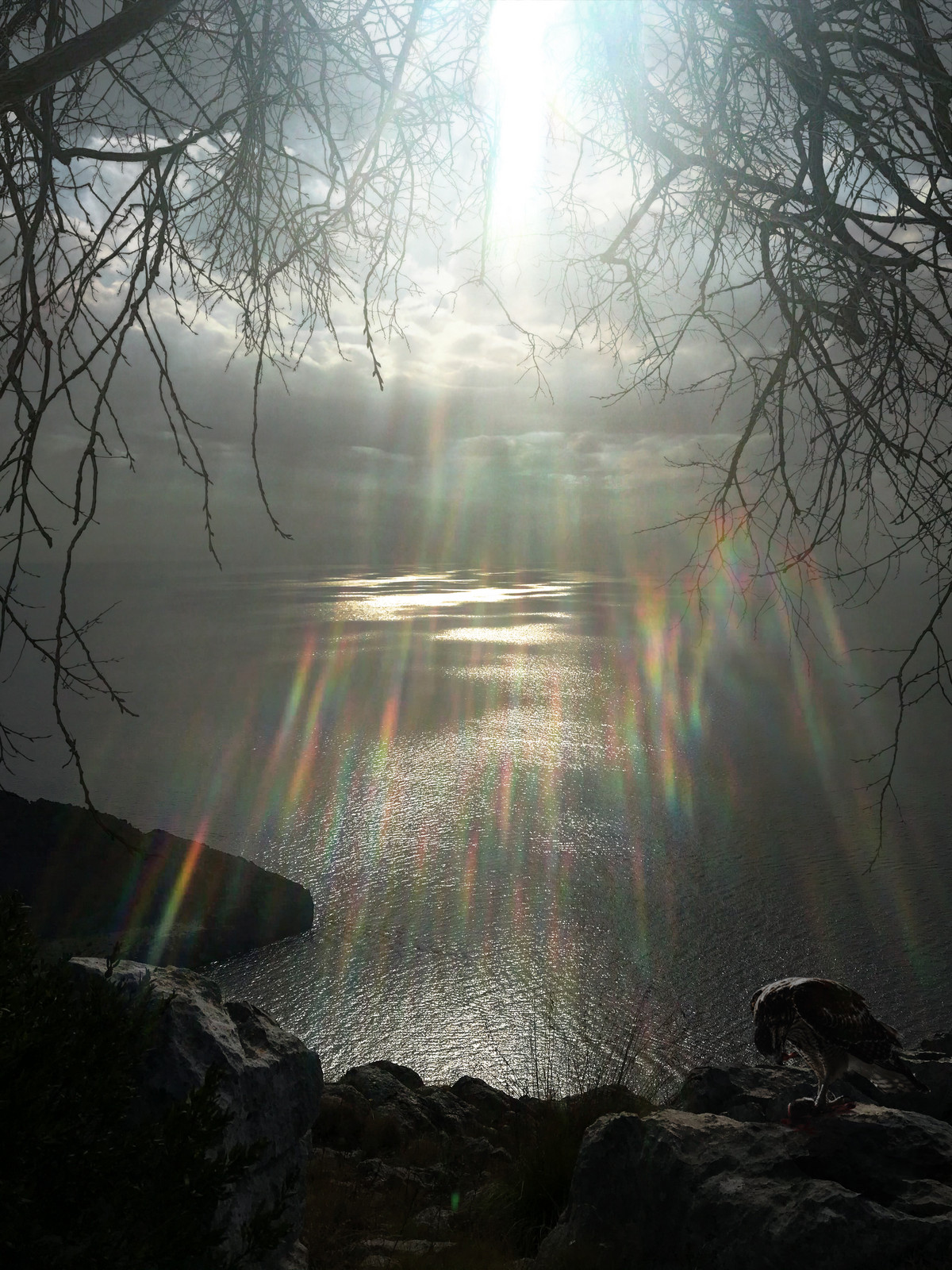
when i speak to myself i use the kindest language i can summon, i am allowed the same grace i give others
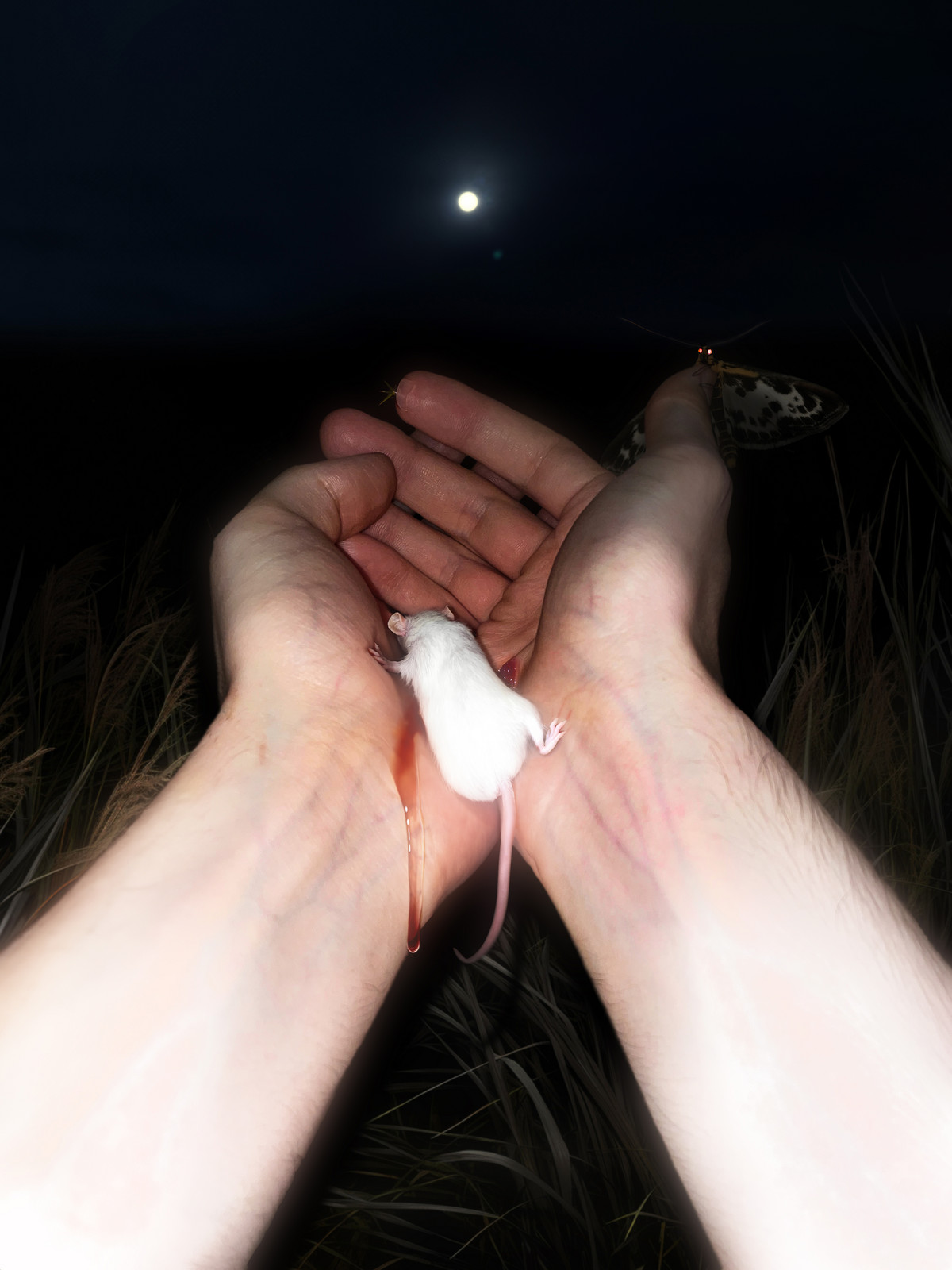
and once i gave myself permission i was radiant
when i speak to myself i use the kindest language i can summon, i am allowed the same grace i give others
and once i gave myself permission i was radiant

Through his latest project, the Mini Green Slime Chair (2022), Barroso provides a piece that is attainable for those who may be novice collectors while also reiterating the notion that the realm of art doesn’t have to be elusive or stuffy. For Barroso, it is all about connecting to his inner child and keeping that sense of wonder alive, one unconventional piece at a time.
office spoke with Barroso about the new project, his nostalgic inspirations, and more, below.
How did your artistic journey begin and do you feel it has been enlightened by your ability to move between different mediums, such as furniture, fashion, and sculpture?
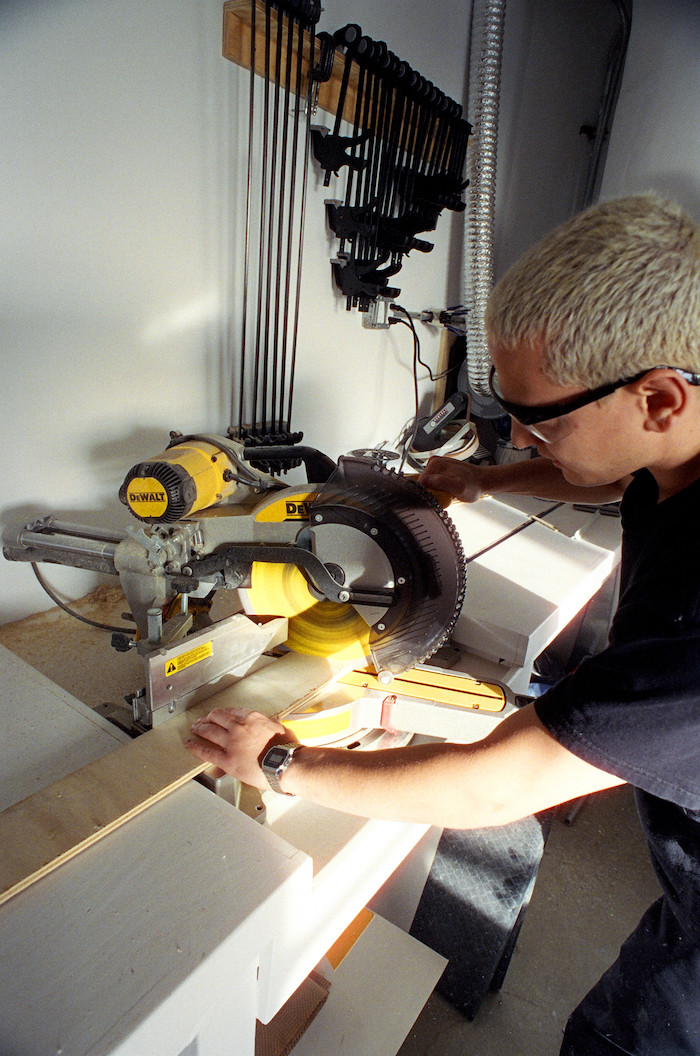
I’ve enjoyed drawing since I was a little kid. I would spend summers in my room filling up sketchbooks. In high school, I discovered graphic tees and the world of street culture. The combination of T-shirts, hip-hop, and sneakers inspired me to learn about industrial design. I was intrigued by industrial design because it felt like it was a framework for thinking rather than a medium-focused discipline. Learning about industrial design and sculpture simultaneously has given me the freedom to experiment with materials and fabrication methods. It’s empowering to know that by leveraging digital fabrication tools in tandem with production methods, such as casting, I can independently fabricate most of my ideas in studio. This sense of limitlessness and exploration, allows me to cross into any space, whether it be shoes, chairs, sculpture, or whatever I choose to try next. Sticking to one medium, material or process feels unnecessarily limiting to me.
Your choice of material also varies from piece to piece, ranging from 3D printing to papier-mâché. How do you decide what materials to employ for each project?
All my projects are rooted in conceptual thinking. Once I feel like I have a concept I’m excited about, then I explore different materials and fabrication methods to best tell the story.
How did spending time in cities like Boston, and now your home base of New York, influence your perception of pop culture and the arts?
The first time I ever went to an art museum I was 19 years old and visited the MFA in Boston. Then, I visited New York for a project and fell in love with the chaos and the boldness of the people. Visiting museums with friends became something I’ve enjoyed doing and it’s always so interesting to hear the connections to different references, ideas, and memories that my friends have between art and their personal life. Even with all the technological advancements and cultural shifts, we still share so much with people 5,000 years ago and all of that can be expressed and studied through objects and artifacts.
Your work aims to embody the human experience — which is multifaceted and quite subjective. How do you attempt to encapsulate all of the multiplicities of what the human experience looks and feels like in your work?
I want people to be able to explore my body of work and have a broad range of reactions and responses to it. Some pieces will be playful and fun while others may be somber. I just try to make work that captures emotions from my day-to-day life and I hope that it resonates with other people too.
Why are you drawn to absurdism?
Absurdism is a tool for self-reflection.
Many of your pieces of art subvert the mundane, ushering in whimsical and outlandish touches. Do you feel that you are like a child at heart? What draws you to this playful aesthetic?
Picasso said, “Every child is an artist. The problem is how to remain an artist once we grow up.” Our imaginations were so vivid before we got beaten down by the everyday pressures of life. Life can be so serious and depressing. I hope to inspire people through my work to live their life with a playful energy. I want to feel like a child at heart forever.
You take inspiration from contemporary pop culture and playful forms — can you give some direct examples of cartoons, media, or even old childhood toys that may have inspired some of your works?
Some of my favorites are Transformers, Legos, Barbies, Runescape, World Of Warcraft, Disney, Pixar, Lil Wayne, Pharrell, Eminem, Spongebob, Neopets, Nickelodeon, Haro Bikes, Tom & Jerry, Codename: Kid’s Next Door, and Halo 3.
Can you tell the story of how the Mini Green Slime Chair came to be?
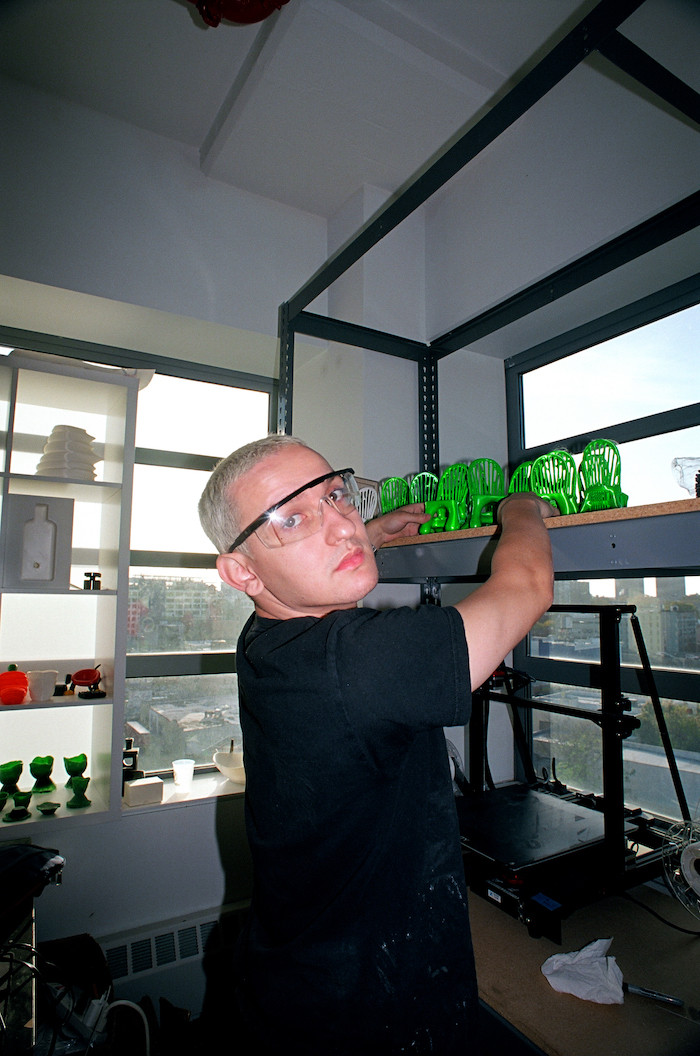
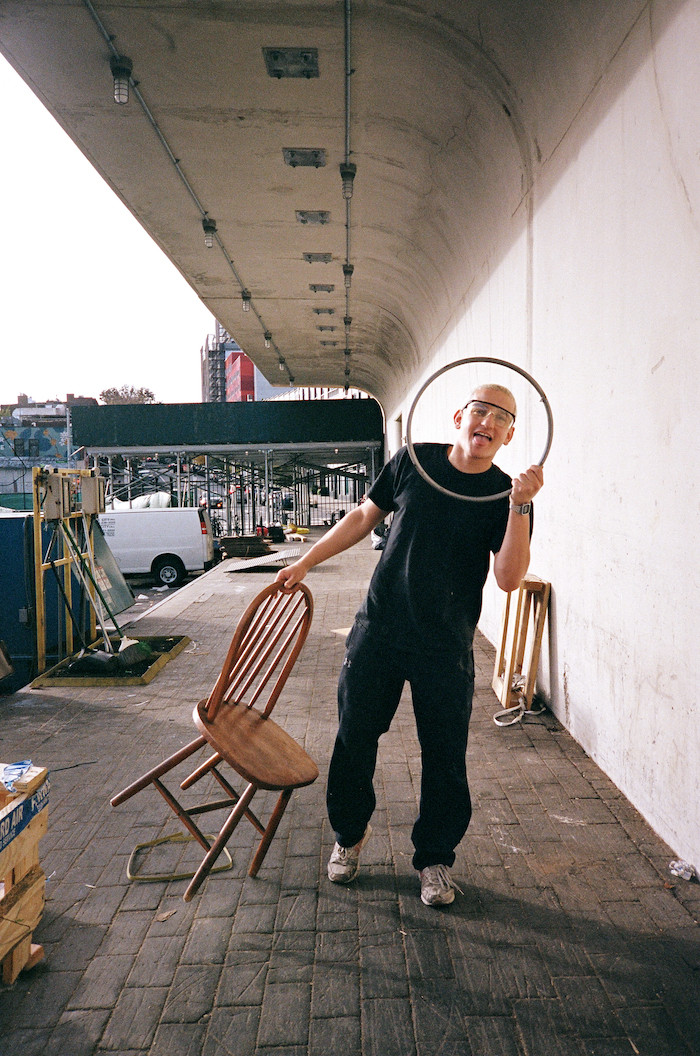
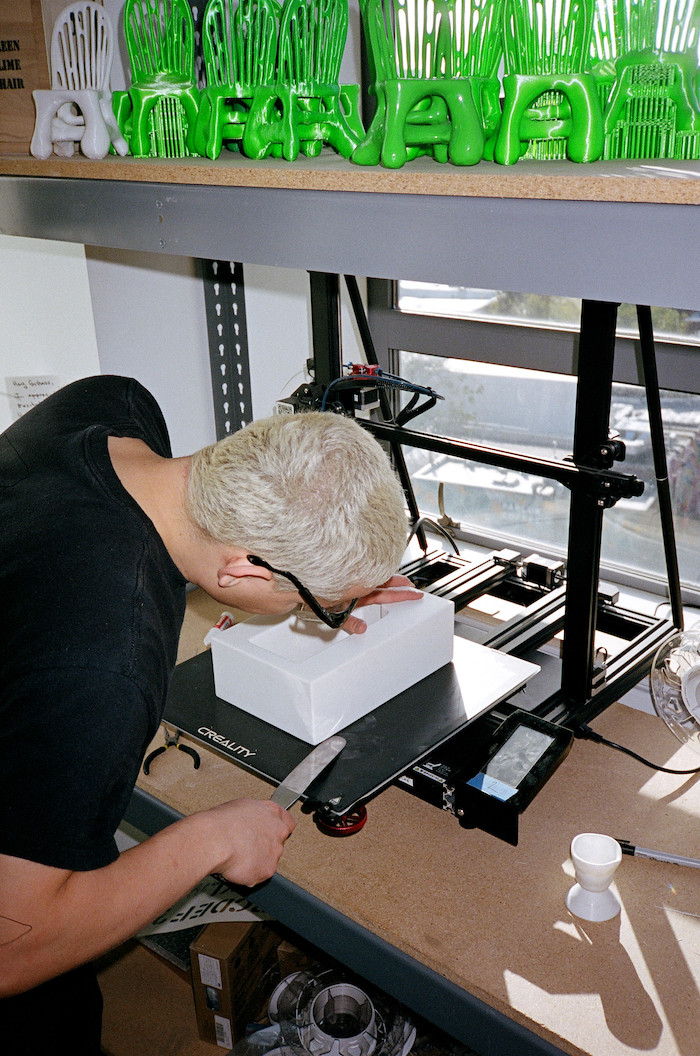
The Green Slime Chair was the first piece I made after graduating college. My new studio was in an industrial area so I would always walk past a bunch of trash and recycling on my way in. I couldn't afford to pay a fabricator to make any of my ideas and I had no power tools in my studio so I made the chair from a found Windsor chair, discarded cardboard boxes, and paper trash. After a few months of working nights and weekends, I finally finished the piece and it got a lot of love from my friends and peers on the internet but it was so time-consuming to make that the retail cost priced out most of my peers. I created the mini version because I wanted to make something that my friends could collect without breaking the bank.
How does the notion of accessibility inform your work?
I want my work to be enjoyed and collected by the widest range of people as possible. Pop culture is something that is intellectually accessible because we share a spectrum of collective childhood memories through various shows, movies, and characters that inform our day-to-day life. In terms of being financially accessible, I am currently trying to figure out how I can produce a body of work with various scales, edition sizes, and price points that cater both to established high-end collectors and those who are at the beginning of their art-collecting journey.
You’ve stated that the creation of miniature furniture iterations is often only reserved for design icons. By creating your own, you are challenging that norm. What do you think makes your work iconic in its own right?
Good question. I don’t know. I guess only time will tell.

In Farsi, we have many ways to express love, none of which directly translate to “I love you” — the most direct translation being دوستت دارم , “I have your friendship.” It’s a statement of partnership and an assurance of care built on a foundation of joy. When I think of the artist Sable Elyse-Smith and her fiancé, photographer Naima Green, I see such a statement, with the ecstasy of all its implications. Two minds, archiving moments and reflecting for the benefit of our world, coming together to support and celebrate the adventure of artistry with one another.
I asked Green to reflect on what it means to love as creatives, each of whom deals with significantly heavy and vulnerable subject matters. “Our love keeps me alive,” she says. “The way we observe each other, and make space for difference, and hold each other no matter what; it looks like choosing to do the work individually and collectively every day, and fortunately, working together feels effortless – even when it’s difficult. We’re committed to resolution. We’re committed to making space for what the other needs. We’re committed to pleasure and touch and play and sensuality.”
Elyse-Smith’s latest installation, Quiet as It’s Kept was included in this year’s Whitney Biennial. The installation involves a rotating, black, ferris wheel-like structure, paired with a film that involves edits from the reality television show, Live PD, which documents live moments in policing, a confrontation with the viewer on the entertainment of violence. I sat back and listened as Green and her partner unpacked the topics touched on in this particular work, and those that make up Elyse-Smith’s practice.
Naima Green – Tell me more about your piece in the Whitney, and why a Ferris wheel, and what your fascination with carnivals is.
Sable-Elyse Smith – So the piece for the Whitney is a work in a series of sculptures that are basically objects built from one-to-one replicas of prison visiting room tables and chairs. The chair-table configuration is [also] a building block to make potentially exponential things,because they exponentially exist, and are fabricated, and being produced, probably as we speak. Because there's a billion-dollar industry based off of them. People say the word prison, and you think of one specific kind of image and one thing. But I'm more interested in, if you hear the word prison, then you'll maybe think, “Okay, how am I conditioned to walk down the street?” Or, “How do I think about certain neighborhoods?” Or, ‘How do I think about the way that I'm allowed to, move through certain spaces?" Because it has a direct linkage or impact into what our society [is], or what the network of things that create a carceral existence in, which is what the U.S. is.
I wanted to focus a different type of attention on violence and entertainment, and where the edges of that is, or where the boundaries of those things are, and also how entertainment creates a condition. It creates, and it sort of implants the image, and the idea, that the prison has to exist. Or a criminal does exist, and this is what a criminal looks like. And therefore, if there's [the] criminal, then we need prison.
Those things mutually reinforce each other. And also, our society’s lust and thirst for violence and where that could be performed, and where it can't be performed, and where it's permissible, and the edge of where it can't exist, based on morality. All these constructions that our world and society is built on, and then governed by, and how all these things trickle into those systems. But what are interesting examples that are legible to people about that? I start to think about the carnival space.
And because it has a context, it has a frame drawn around it. And that frame is, this is a space of fun, amusement, pleasure, entertainment. You pay to go here. And what happens is you are entertained and you experience pleasure. And that is fine. Back in the day, pay your quarter, and then stand behind a little fence and watch people deemed ‘freaks.’ People who are othered in various ways just be on display, dance, entertain, or engage in real physical violence.
And so, a carnival is a space to be able to tease out that example with a bit more legibility, and recognizability, and then I can go in and do all kinds of fucked-up shit with that.
Because it's also not like, "Oh, I'm making a grotesque, or a disturbing, image." I'm putting on display something that is real; something that it is, obviously, a symbol, or metaphor, or kind of a footnote of a larger system. I think when people sort of encounter these objects, or these things that are put in the world, there’s this seduction, there's this interest in like, "Oh, it's beautiful." But then, there is a confrontation with that subject matter. And I think that is the thing that is disturbing. And then, that is the thing – for what it's saying and what it's talking about is disturbing, but it also is real life. It is a caricature or an exaggeration of the U.S. and the world that we live in, and the world that I move around in as a Black person. But there is, I think, there is a confrontation, an individual confrontation, with the viewer. If they have a different subject position than a person who is entangled or oppressed by all of these kinds of systems and operations. And their desire to just want to have visual pleasure and have a kind of entertainment also. Right?
And so depending on the viewer's positionality to any one of these things, there are moments where certain viewers do have to wrestle with that kind of confrontation. That could be silent and not visible at all. Some people look at a work, and once they realize what it's about, they have to decide to continue to engage. Or they walk away, because they don't want to engage with that subject matter. Or they refuse to talk about that subject matter. And I think when those things come out, whether that ever is visible in the exhibition or not, that's what's interesting. And that's what's important to me. And sometimes I'm able to witness that, or that information comes back to me. But regardless, it's there. It's an energy, it lingers in the room. And some people have to leave with it, and it leaves the room with them, too.
NG – There's something very specific and special about the black pieces, too. And how there is something so sexy about them. But it's also like, you can't stop there. I mean, some people can try and stop there. But there's also, there's this seduction, and there's also this heaviness of feeling a sense of the weight of not only the material, but also the system, and also the oppression that exists within these spaces, and within what these kinds of seats are typically used for. And the ability to imagine and transform them into other systems that do the same thing, you know? But that are understood so differently. And I think that that is really energizing. Because you’re not giving people an easy out. You are creating an entry point that feels different than the oppressive system. So I can look at your work, and people can look at your work, and have to reckon with what it means to have prisons and have people living in prisons. And there's also an entry point that is different from just showing a jail cell, or what bodies are forced to do in that space – the lack of access to light, or freedom, or movement, or any of that. And so I think it creates an opening for people who might not want to reckon with that directly. But then there's this almost a tweaking that happens, where it's like, “Oh, you see this, and you can't unsee it.” And then, you have to actually start thinking about what does it mean? And I think what's also really special is that, I mean, so much of your work is about violence. Right?
And it's about violence enacted in deeply systemic ways. It's about violence enacted by people who think that they're doing something on behalf of a system that they want to uphold. But none of that, that violence never enters our space. You know? And I feel like it never enters our home, and I feel like you never – not never – but you don't carry that with you. Right?

SES – I think new bodies of works, or new sculptures juxtaposed with each other, just in the world together, create also a more complicated sort of meaning. Violence is such a heavy and charged word. And it's important. Because there are so many things that are violent in the world. And there are things that we recognize, and we can name it. And there are things that we find difficult to name as violent, but that doesn't mean that [they aren’t]. Right? Or it's unrecognizable, in a way. And that could be because we're socialized to just accept that condition. Or we're taught that this is supposed to happen, or that we’re comparing things, or we're not looking at the larger network of how all these accumulation of experiences lead to this larger thing that feels more obvious. And I feel like there's also an ethic to how I want to address and think through violence across all the ways that I make. I'm not trying to reproduce it.
NG – How does that come through in your video work? And we can think specifically about the video piece that's at the Whitney.
SES – In this idea of invisibility, or the things that are imperceptible, or the things that are sort of hard to name and label. And that's the language that I use, because it helps point the audience in a specific direction and on a specific sort of path on things that I'm trying to do with my work. But also, I actually don't think that the things that I'm pointing to are hard to name, or unrecognizable, or invisible. Right?
The bulk of the video is using footage from reality police pursuit shows as a concrete example of the intersection of entertainment, violence, and carcerality.
So there is also an appetite in [the] general TV watching population, for whatever reason, that wants to consume this thing. And so what does the consumption of this type of image mean? And also, what does it mean that it's okay that these are real people?
What does the existence of this mean in relationship to everything else that I'm talking about or putting in juxtaposition with it? Why do we have a desire? Where does the desire to watch this come from? Where does the desire to be able to suspend certain moral or ethical thoughts or positions to say, "This thing is entertainment, this is fine. These aren't people, these aren't lives. Let's see what happens at the end. Let's laugh about it.”
NG – This feels like a good place to stop. I love you.
SES – I love you, too. Naima wanted that to be on the end of the interview.
NG – No, I didn't.
SES – She's like, "Please, print that’"
NG – Fuck you.

Nonetheless his impact can be seen everywhere even in the present day. You see, the greatest creators, and celebrities of our time referencing Basquiat and the most prominent fashion brands are utilizing his images to fuel their fashion campaigns. Basquiat was so prolific that at times you can forget that he was also a human just like everyone else, with a family who has spent years processing the life and death of Jean- Michel.
I touched base with Jean-Michel’s siblings, Lisane Basquiat and Jeanine Heriveaux who have just curated the phenomenal King Pleasure exhibition in Chelsea NY, to get the inside scoop on the making of their current exhibition, and their plans for building and celebrating the legacy of their brother, Jean- Michel Basquiat.
EO— I just want to start off by saying that it is an absolute honor to be interviewing you both. I’ll just jump right in. As an estate, how do you want to take control of Jean-Michel's legacy in a world where so many people feel they have a stake and claim in telling his story and, in the process, shaping his legacy?
JH— I don't think we want to try. We already have control of Jean-Michel legacy. That's something that our father Gerard Basquiat did very early on to put a stake in the ground that Jean-Michel had a family. He wasn't necessarily public about it, but more action-oriented toward ensuring that people understood that there was a family that Jean-Michel belonged to. There are many narratives out there, and we wanted to ensure that there was context around how he came to be the man he was. So the show tracks how he became the artist, the many facets he possessed, and the layers of all the things that were introduced to him from a young age.
LB— Our father did have his own mission in terms of what he wanted to do regarding showcasing Jean-Michel's legacy, but if you're a parent losing a child much sooner than you anticipated, it's tough. It was difficult for him to speak out publicly and do interviews, and also for him to attend exhibitions. Jeanine and I were also very private people up until eight years ago. We had our own private lives, raising our families and having our own careers. We realized that stepping into this, we had to do something a little different because the family's voice wasn't there. We knew that it would be important for Jean-Michel but also for the legacy of our children to step into that. It was important for us to speak our perspective on our brother.
EO— I think it's very powerful, and you can feel that when you see the show. I've seen other exhibitions of Jean-Michel, but yours did a great job of displaying that intimate connection. I noticed in visiting the exhibition that you want to use Jean-Michel's legacy to support emerging artists. When I visited the show for the photoshoot, I saw that you are creating programming for the larger New York City arts community. This includes talks, screenings, dinners, etc. I think that's amazing. So can you talk about the importance of fostering community with Jean-Michel's legacy and how this is a focus of the estate?
LB— Fostering community is vital in every aspect of our lives. That's how we're able to heal, and it's how we're able to communicate with each other about the things that are important to us. The creative field is a lot more mainstream today than it was years ago when Jean-Michel was painting. The more mainstream it becomes, the more critical it is that there is a community around it and that people can bounce ideas off each other and collaborate and share their experiences. An example of that is the forum discussion we had last week or two weeks ago, where the discussion was about a creative's life, and it wasn't specifically about the technical aspects of it. It wound up being a conversation about the living of it and how you take care of yourself through it. So I am incredibly committed to building community, being part of communities, and supporting this ongoing conversation we're all having about different things. Creativity is one of them.
JH— It's also an extension of Jean-Michel himself. Jean-Michel was extremely generous, not only materially but also with his time and support. He supported other artists of the same time, and he tried to assist people. For example, he encouraged people to move to the states to have better experiences in the art world. We believe that this is something that Jean-Michel would have done if he was still here. He would have this type of support for emerging artists. So if we are creating an exhibition around him, this is a natural component that would be included that makes sense.
EO— So, is this a model you intend to bring to other communities worldwide? As I walked through the exhibition, I couldn't help but think about how it could translate well in so many different settings. I imagined King Pleasure in Paris, Sao Paulo, Berlin, or London. It would be brilliant if you could use NYC as a case study for using art to find ways to engage with the communities in these various geographic locations. Truthfully I think it could be the start of a foundation, and I'm just curious about your thoughts on that .
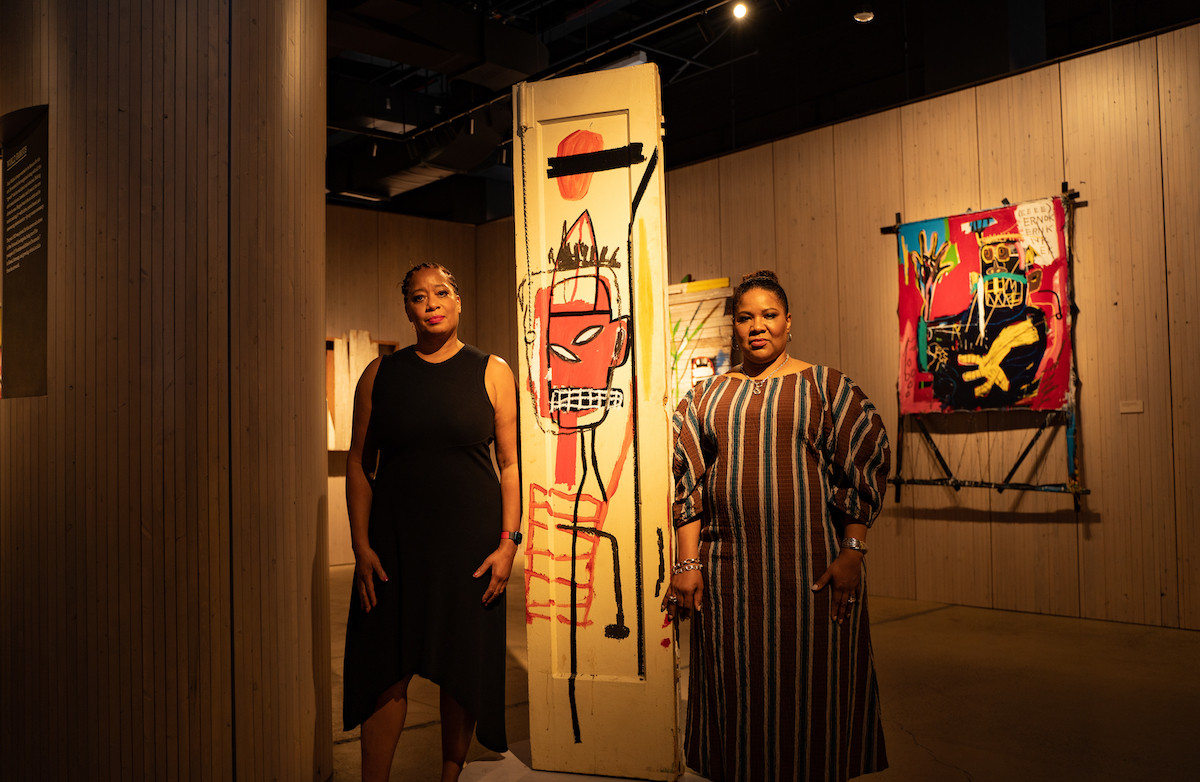
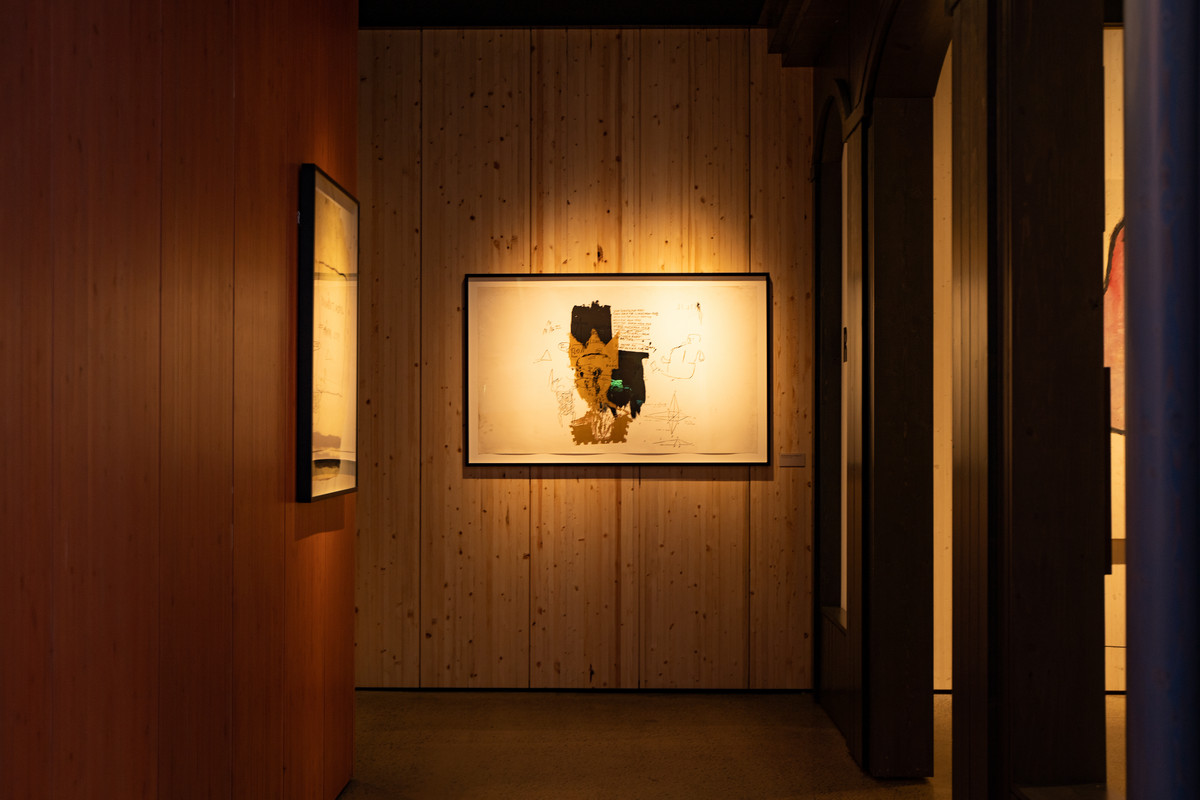
LB— So there are two things you're asking; one is specifically about King Pleasure, and you know we're figuring that part out. Right now, we're blown away by the reception to King Pleasure and the hundreds of thousands of people who have come. Nine out of 10 pieces of feedback are very positive. So that feels good. So we're processing that and figuring out what to do next. Then the second part of your question; I think that many communities exist today, and it's a matter of tapping into those and then maybe helping communities embrace each other. One thing I love about what we're doing is there is a group of more traditional artists, but then there's also a group of filmmakers and even a chef that is a part of the community. We're finding ways to bring existing communities together so that they can be very focused on what they're focused on and expand and meet other creatives expressing themselves in other art forms. There's also something to be said for paying attention to the importance of community and valuing generational legacy, which we can help facilitate through our work. However, we're not experts at that. We can do it and hope that people will take that and apply it to wherever it is that it resonates with their own lives and experiences, so we're doing all we can, and we're also hoping that others will take a look.
JH— When someone passes away, sometimes we get caught up with the money aspect of it, but it's about legacy and how we hold on to it. How do we honor each other and celebrate our ancestors and our families. So that's really the question that part of this project was looking to answer.
EO— There are so many possibilities of where you guys can take this community model, and I wanted to know if you were thinking about starting a larger foundation. Jean-Michel's legacy is so large in terms of the number of people worldwide who know his work. It's not only people who view themselves as part of the art world that know his work. I'm sure you can go into the favelas of Brazil or communities like it around the world and ask people about Basquiat, and they are aware of his work. In fact there are probably local artists in those places appropriating and using elements of his work or inspiration from his work in their own work. So I feel that the cultural experience of Basquiat is almost like this common thread that all these people can connect to each other with, even though they come from different backgrounds. So that was the impetus of that question.
LB— Honestly, I don't know if we're ready just now for a foundation. We have discussed it, but we like to be very intentional with our plans. In this project, we're dealing with the day-to-day. So as you know, this took two years to come together, but the plan for King Pleasure has been in place for about five years. So if we do a foundation, we want to ensure it's done right. We want to make sure that we have the right team in place. So it's not answering your question, but it is an acknowledgment that it's something that we're considering.
EO— Thank you so much for that. I appreciate that answer. I want to change gears towards the King Pleasure exhibition. I'm curious why you guys decided to go the independent route for this exhibition rather than partnering with the many institutions that would have jumped at the chance to let you curate this exhibition for them. I want to preface by saying that I think the independent approach is brilliant and when I first understood that was what was happening, I started thinking, why don't more artists do this? Not every artist can showcase without the cosign of a museum or a gallery, but for the ones that can, it presents opportunities for them to have more ownership of how they display and sell their work. I wanted to know why it was essential for you as an estate to take complete ownership of this exhibition in New York City.
JH— First and foremost as Basquiats, we have never done things from the traditional route. My dad came to this country at 20 years old because Haiti was just not what he saw himself long term. So as a pioneer, he left home and moved here. He met our mother and wanted to create a family. Jean-Michel, when he was 17, decided that the traditional way of going to college and wearing a suit and tie was not the way that he wanted to arrive. So he was a pioneer and went off to find his dream. In the present, we wanted to ensure that the narrative was ours and that it wasn't in any way compromised by what a curator or museum wanted to add. We wanted to make sure it was completely our vision and our story. So the pioneers that we are, we said we've never done this before, but this is how we want to do it. That's why it took five years. We had to ensure we could do it from all aspects, and we're so happy. It was a lot, but we're glad this is our route.
EO— I heard that the show was designed by Sir David Adjaye, which is fantastic because I'm a huge fan of his. I also heard that the design is mobile and can be transported to other locations. What was it like bringing this exhibition into reality, working with your team, and also, what was it like working with Sir David Adjaye to do this?

LB— So the team that we have supporting us in pulling this thing together is the best of the best. They are a phenomenal group of people. While Jeanine and I have the skinny on our brother, pulling together and curating an exhibition in a production like this is something we had not done before. So, with Sir David Adjaye, it was similar to what happened with the others in that we got on zoom because a lot of the planning for this took place during the pandemic. So we got on a zoom with him to talk about the possibility of him doing this with us, and within a couple of minutes, we realized how tuned and aligned he was with what we wanted to do. He understood our vision was for our brother's exhibition, and that was the thing that helped us to make the decision to work with him. He and his team have been phenomenal, and it was a really collaborative process. What we enjoyed about working with him and everyone we've worked with is that they understood and respected our vision and helped us realize it. So, whether that was Sir David Adjaye and his team coming up with the physical design with us or Abbott through Pentagram coming up with the brand identity, it was really a fun process. Eye-opening for me personally because curators would come to us and ask us for things, and I'd be like, "ok, we're getting it ."This process humbled me to the work curators do and how challenging and overwhelming the process can be. The team we had was incredibly supportive, accommodating, and a lot of fun.
JB— Yeah, I agree that we have had a phenomenal team. There was really no detail that was left out. We dug really deep. We also had people on the team researching things for the show. For example, the wall in the Palladium with all those videos. We have someone on the team that found that video in Australia. We wanted to ensure that we were being as faithful as possible to the time and bring out some details that were not shared in the past or were unknown. Our goal was to give an intimate perspective Jean-Michel. So from design to curation to graphic design, everything came just came together in a way that exceeded.
EO— The exhibition is truly amazing. It hit me when we were in the exhibition, and my sister was shooting you guys for this. It felt really special seeing you interact with pictures of Jean-Michel and being there with my sibling, who is also a creative. It was one of those moments where I was like, I really am an art journalist, no need for any imposter syndrome anymore. That being said, one thing I love about the show is that it's so rooted in the family, so I'm interested in how the next generation involved in Jean-Michel's legacy?
LB— One of the things for us was that we had a chance to live our own lives and to create our own identity as human beings, as adults, as professionals, and that was a wonderful thing, but it also created some angst for us when our father passed away more suddenly than we all expected. Jeanine and I were in this position of having to figure things out. The great news is that as time passed, I realized how much information he had shared, because our father was a storyteller and would tell us a lot about what was happening. At the same time, it wasn't the way that I would want my children to receive something as enormous as the baton of the Basquiat estate. So as you know, our kids have been involved in this exhibition. The King Pleasure exhibition has been the first project where we started to bring our children into the estate and help them to understand what we do looks like. They're helping out in different ways, and I think it's also important that they find their way as well but do it in parallel. This is a little different from how our father laid it out. For me personally, we have two different families. It's important that they find their way and, in parallel, also learn about the estate. Jean-Michel is huge. There is a lot of information out there and a lot of asks involved with running this estate. There's a lot to it. We have to think about and navigate things that are very different from what our parents had to navigate. It's really important for our children to understand what their uncle's estate means and what it means to help to manage that estate. Eventually, we hope they want to come together as a team to move it forward when Jeanine and I aren't here anymore. It's also important that they and they make their way and not get lost in the estate, either. However, that's just my personal opinion.
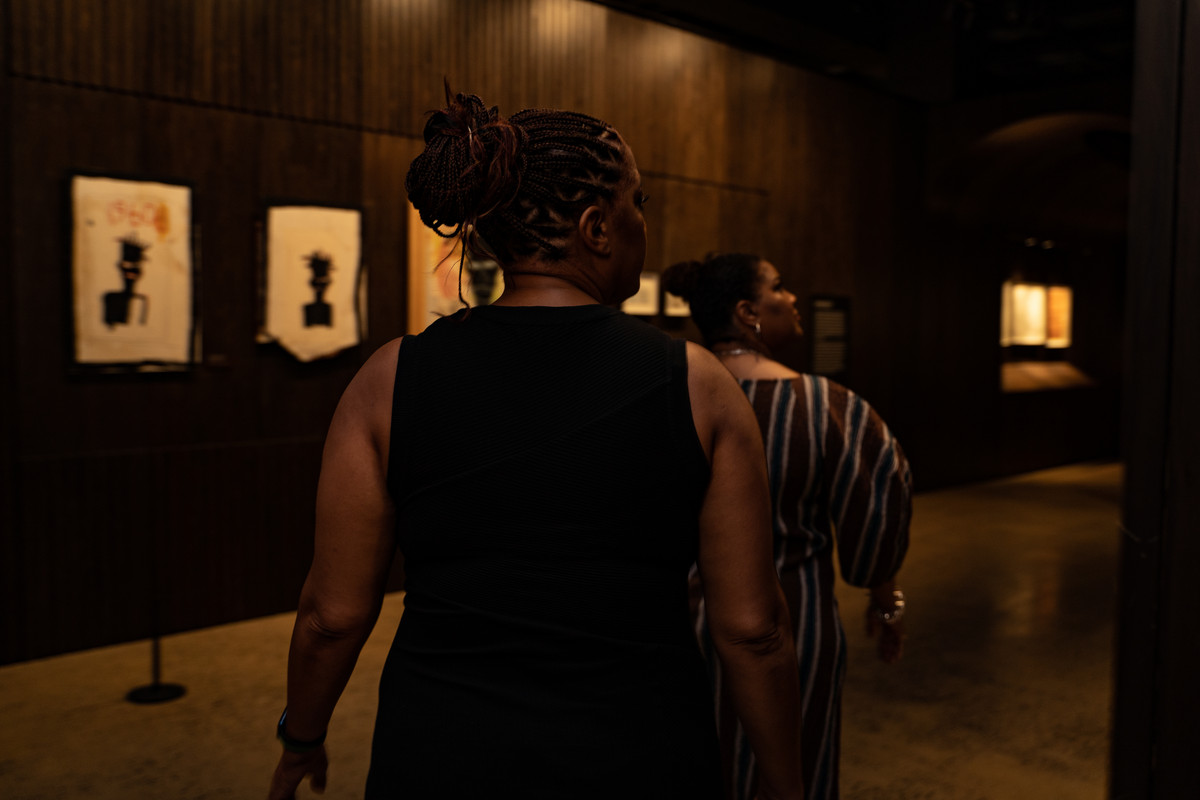
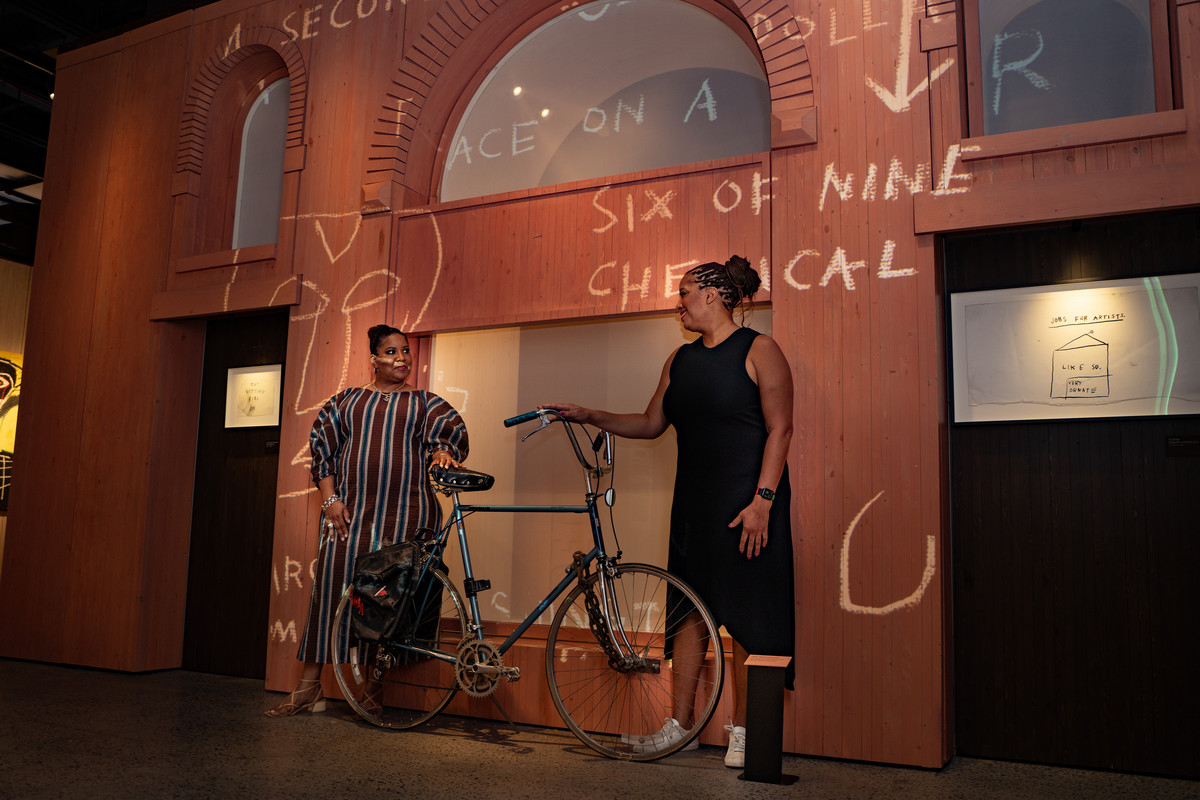
JH— I also believe they should do it in parallel unless one of them decides that they want to take this on wholeheartedly. I don't begrudge that, but at the same time, all three of my kids have their own creative paths and ideas that they want to add to the world. So they should do that and then also understand this world. They should weave back and forth, and if they decide that they would instead follow their passion, that is fine too. What's most important is that they understand the legacy that their uncle has left. All of our kids entered this world with this incredible talent of their own and creativity, and I'm really excited to watch them figure out what to do with that.
EO— Well, I'm sure that talent runs in the family, so I'm sure that they'll figure it out at some point.
JH— Being a Basquiat helps, but it's also about self-identity and knowing who you are while navigating and managing someone else's legacy. It's an interesting place to be and an interesting space to navigate.
EO— So I guess my last question is basically, what is it like being two black women who did not grow up in the art establishment who are running one of the most important art estates in the world.
LB— I think the fact that we didn't grow up in that world helps us because the focus for us is not the art in the sense of its financial value. The value for us is Jean-Michel's legacy on the planet through his work and his art. So we are focused on how to use that platform to give his message to other creatives, artists, and other artist families, who are doing the same thing. That is more important to us than the traditional model. I'm very grateful, and it's an incredible blessing, and at the same time, that blessing comes with our parents losing their child. That's a really hard thing when a parent loses a child.
LB— Jeanine and I have spent 30 years grieving the loss of our brother in parallel with our parents, and then we dealt with losing our parents. So the ability to support Jean-Michel and to contribute to his legacy is something that we're very appreciative of and very grateful for. It allows us to work together and create something with family, which is a blessing. It's an exciting position to be in because we are doing something from our heart for our family, which has an incredible impact on other people and the world. It feels good to have people come up to us and talk to us about our brother, how he has impacted them, and all the ways that Jean-Michel continues to impact the world through his voice. In some ways, to Jeanine's point, we are focused, and because we're so focused, it really helps to keep us grounded. Because at the end of the day, we are the sisters of Jean-Michel Basquiat and run the estate, but we're also the children of a Haitian immigrant and a Puerto Rican mother. We grew up in Brooklyn and grew up listening to stories of Papa Doc in Haiti and stories from Puerto Rico. Those are the type of things that we're grounded in more than anything else. The estate is something we do, but it's not all of who we are, and I was talking on a panel last month, and I was on a panel with Hill Harper, and it was about art. Hill made this comment where he said to the audience something like, "let's level set what's going on here with this woman and her sister; they are managing an estate that ultimately impacts," and he threw out some crazy number, and for me, it was very grounding. Like wow, it's not just the licensing that we do; it's how the license deals affect those companies. What they do as a result of that and it really grounded me in just how expansive the work that Jeanine and I do is. The week starts like, "oh, it's Monday; what are we going to do today?" But what we do is impacting a large company that is looking to grow its business. But then it also affects a person who is an artist or a chef or creative, or a child who wants to be an artist but doesn't have anyone in their family that understands that. Then you have King Pleasure and what we are trying to build with that. It's a little long-winded, but there's a lot of feels to what Jeanine and I are doing. I feel incredibly honored and grateful to be doing this with my sister and doing something within our family. At the same time, it's a challenge. It's different from anything I've done before, and I've done some things in my life. Jeanine has done some things in her life. We learned how to be curators by doing it. We learned how to manage the Basquiat estate by doing it daily and working really hard. So the whole experience of this King Pleasure exhibition has been deeply gratifying.