And ye shall know the truth, and the truth shall make you free
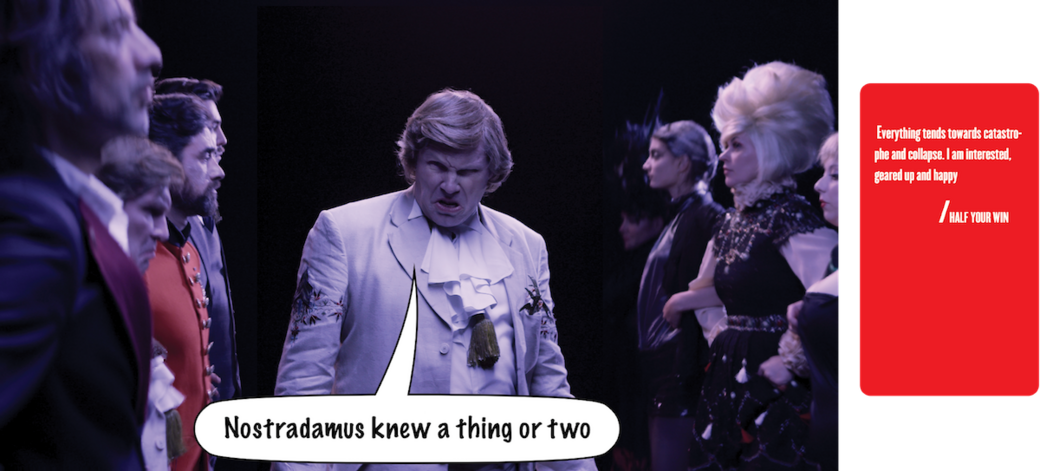
/ Double your Win (Clash of Giants playing card)
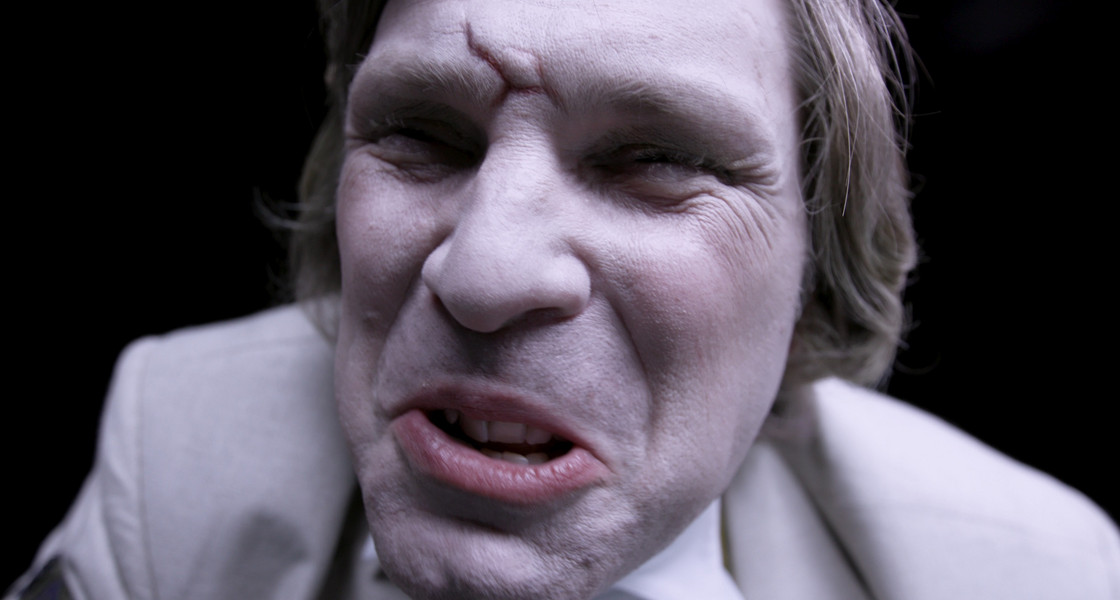
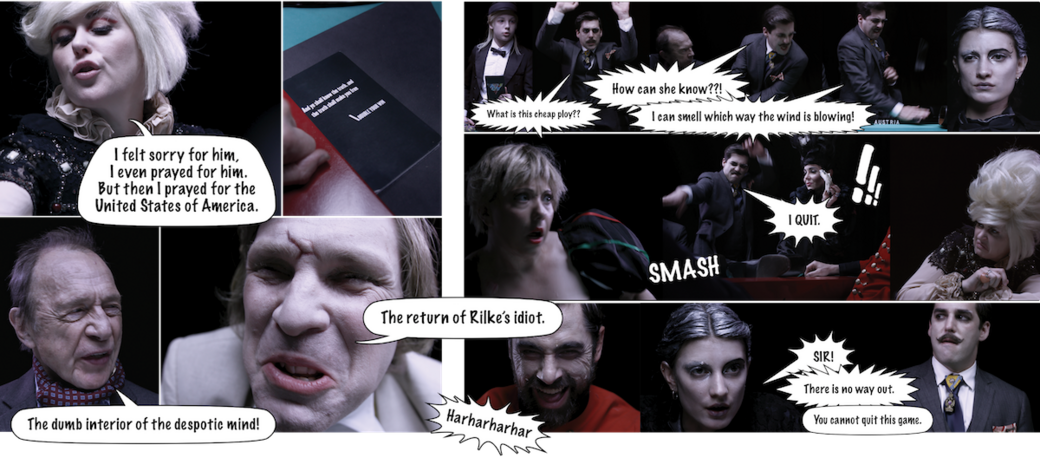
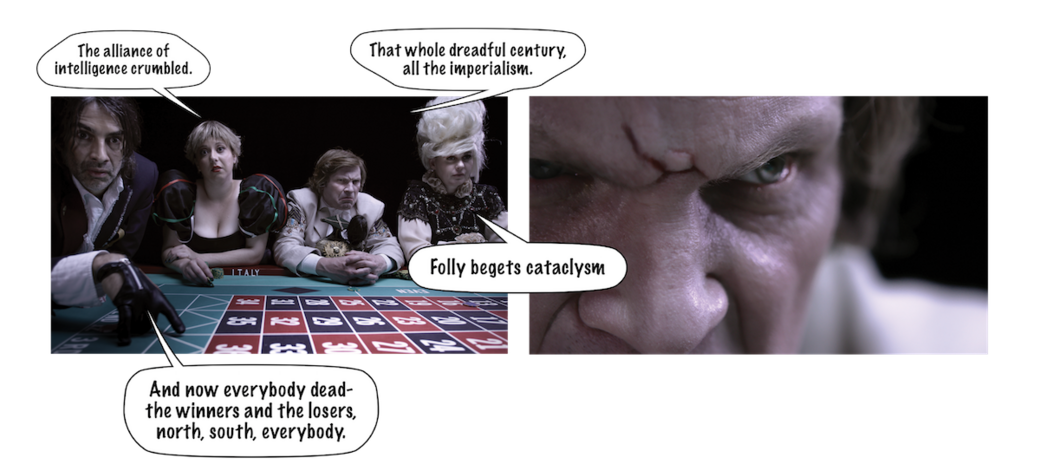
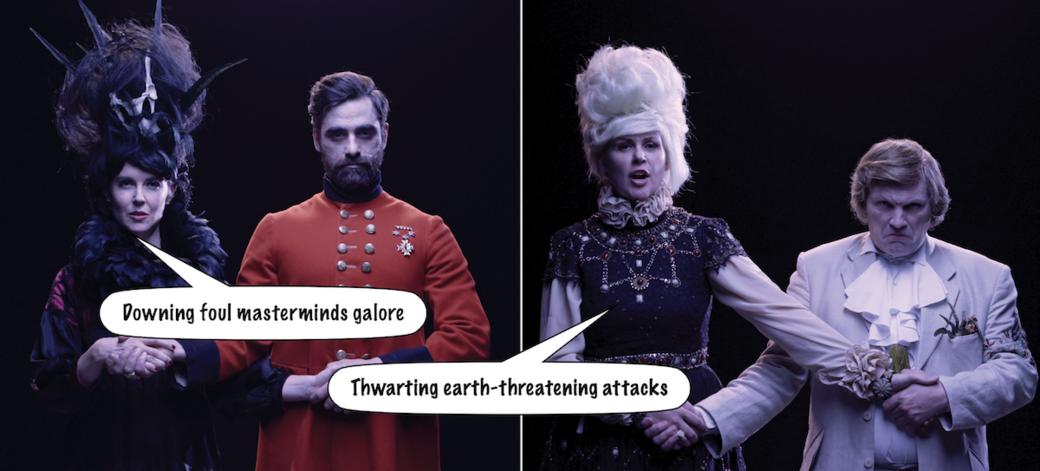
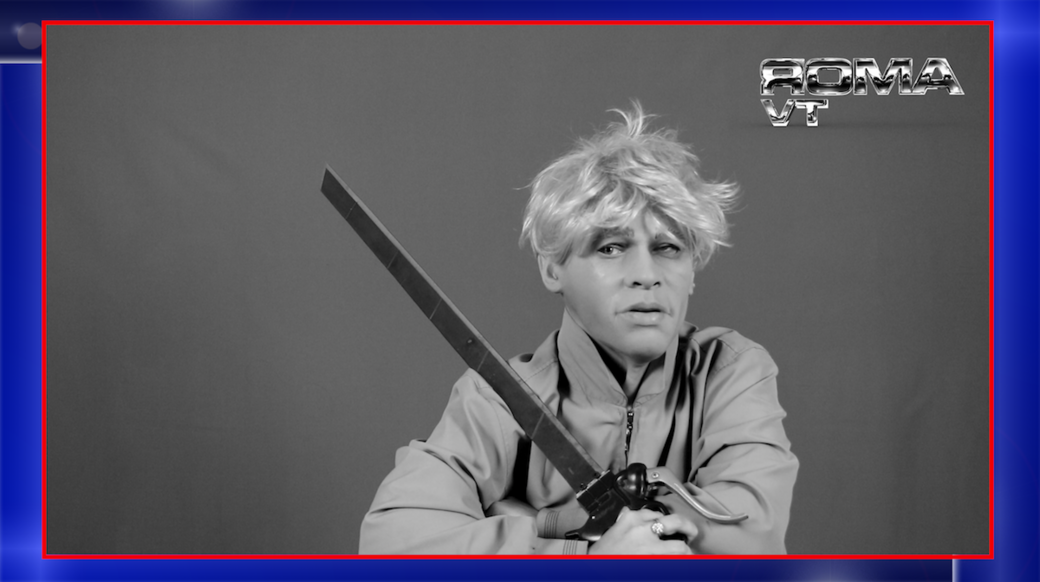
Clash of Giants reveals the correspondence of Nin Brudermann’s great granduncle, General Rudolf Ritter von Brudermann, whose army participated in the crushing defeat of the Austrian-Hungarians forces at the hands of the Russians during the Battle of Galicia (1914). These letters, hidden in a family chest in Vienna, and uncovered by the artist in 2014, stipulate how Franz Conrad von Hötzendorf, Chief of the General Staff of the military of the Austro-Hungarian Army and Navy, was a Russian intelligence asset. To verify the documents, Brudermann turned to the work of Bruce W. Menning, who uncovered the minutes from a 1913 intelligence briefing by the Austrian Army in a Russian archive demanding the suppression of compromising materials tying Conrad’s son to the espionage network of Austrian arc-traitor, Alfred Redl, through an affair with a Russian/Italian spy. The exact reach and extent of this, and other blackmail schemes, is teased at through the film. In the Clash of Giants, Nin Brudermann presents a time not unlike our own in which competing factionalism and greed destroyed the entire balance of nations as various elites marshaled war, violence, enslavement, and colonialism to build vast sums of capital.
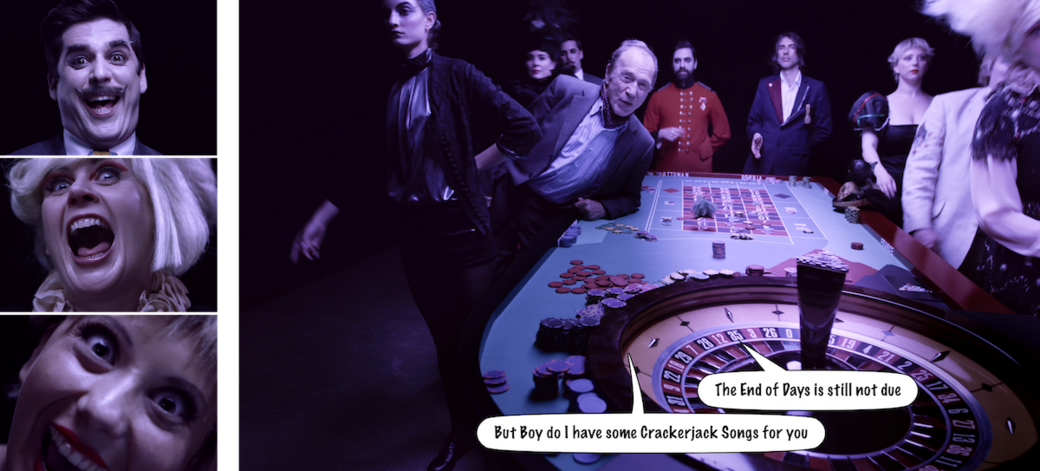
This New Imperialism of the late 19th, and early 20th Century was typified, amongst other things, by two events; the "Scramble for Africa", in which various European forces raced to cut up and claim an entire continent, and "The Great Game", a confrontation between the British and Russian Empires to divvy up Asia. The stress of these proxy wars ultimately folded in upon itself as these Empires went after each other directly in the First World War--the march to which is portrayed in Brudermann's film as tensions mount at a modified roulette table populated by parodied European diplomats who lose their shirts. While the failed League of Nations was developed in the Great War's wake, three other paradigms were also developed to greater effect thereafter.
The first would find root in the Soviet Union through the idea that modern technology could manage a utopian planned economy. Countering this, the United States undertook a lassie-faire free market approach in which the agency of the market itself would self-regulate and find equilibrium. Europe, after the horrors of that war's second act, WWII, took up the course of integration in which a mutual codependence of cooperating economies would prevent strife.