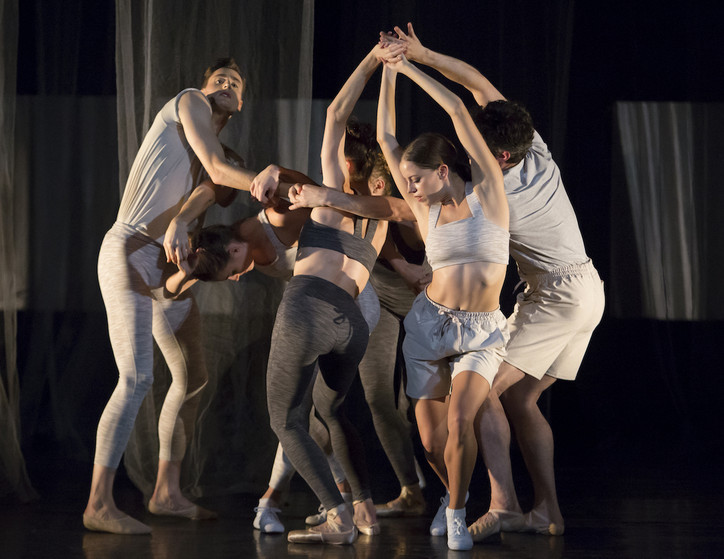
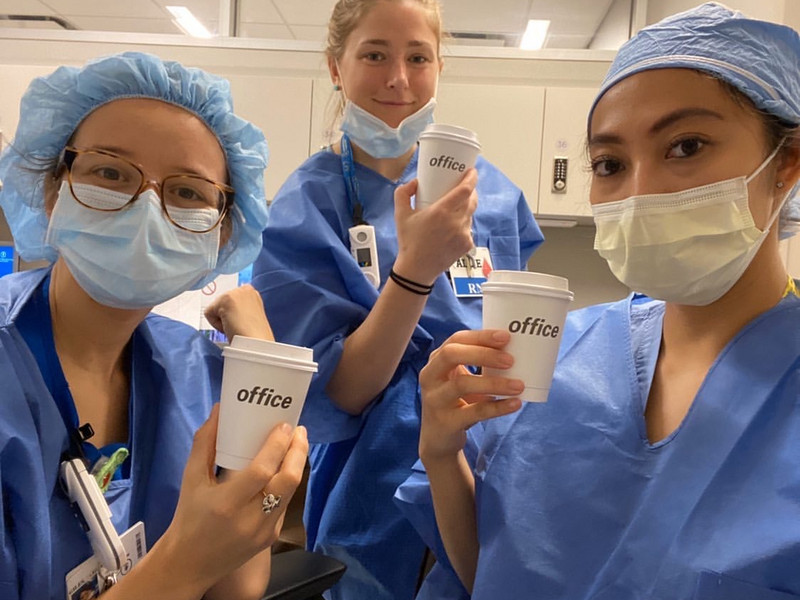
With his latest 3-night performance, Translation, Schumacher contemplates digital technology, and how that has affected communication between people. Merging science fiction, visual arts, and music composition by Julianna Barwick, Translation takes a multidisciplinary approach that adds a depth to ballet that has rarely been seen before. Ahead of the Translation opening, office sat down with Schumacher to understand his feelings towards digital communication, and learn why BalletCollective upends every notion of ballet as you know it.
What made you start BalletCollective?
Really the idea behind it is that when you bring together forward thinking artists, working in different forms, you start a conversation. It's a really fascinating thing to figure out where that leads. As art forms become more and more institutionalized, there's less and less of a conversation. When different artists can come together, it sparks new ideas. Because what one person might see as a convention in their form, an artist can come in and really turn it up on its head. And it's really about invention because ballet especially is an art form that really needs to be relevant again.
What’s it like transitioning from your work at NYCB to BalletCollective?
At NYCB I still dance, I still perform [in addition to choreography]. People always ask how do you do both of those things at the same time, but I think choreographing and dancing use completely different parts of your mind and body. So it's actually really refreshing to switch back and forth. When you're creating work for a place like NYCB, it's perhaps the greatest dance stage in the world. And at the same time it's a very large scale, you have to thing large, stakes are higher. At BalletCollective we start something, and none of us have any idea where it's going to lead. And that's both a really scary thing and a really exciting thing.
What about physical movements? Do they change between the projects you work on?
At BalletCollective I tend to do some different styles, and I try to create a varied repertory. For me I fell in love with dance originally because of the training element. I loved the athleticism, how challenging it was, it was something that was really great to see yourself progressing in. Self-gratification is fantastic in ballet, because it's so hard and it takes so long to reach these little baby steps.
At the same time for years I really had trouble relating to it as an art form. I think a large part of that has to do with the way people relate to one another on stage in a lot of the works. A large percentage of the ballets that are performed are from 40, 60, 80 years ago. The way people relate to each other in those ballets is not the same as people relate to each other now. And they’re masterworks and should continue to be performed, but for me when I watch dance I try to watch it in somewhat of a social context, and I try to understand what is happening and why they are dancing, and if I can't answer those questions as an audience member I can't relate. So it's one thing that I really try to do in BalletCollective, we come together and it's actually a quite cerebral process, and we're having these really intellectual conversations, but what we're trying to do in the end is produce something that is really relatable but has these different levels of understanding.
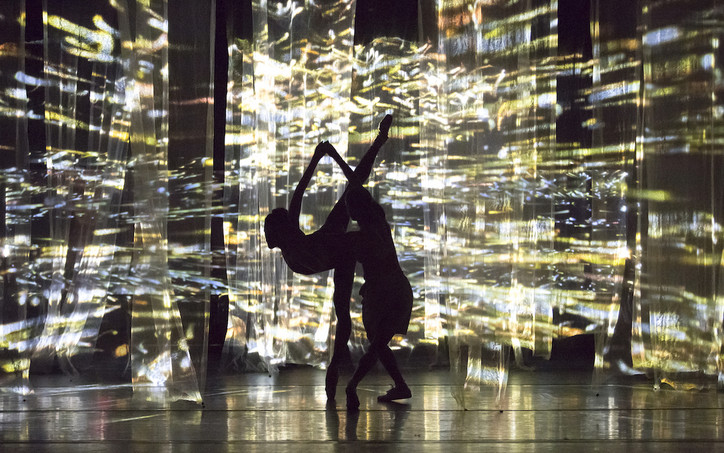
In Translation, the faces are hidden and the viewers are limited to the figures, which allows them to engage with the movement more.
I really thought it would be a fantastic thing to choreograph the ballet that was in silhouette. Because one thing that I've been feeling is that everything is so fast paced, and we're all so busy, and we're all so connected. And I think that the more-special moments for me in the past year have been these situations where I'm just sitting down on the ground with my dog and just watching leaves falling. I wanted create a work that was about the physical form of the body, but more about the shapes that multiple bodies and silhouettes can make, and to really slow it down. Because when things are in silhouette you're forced to slow it down, or else the mind strangely cannot comprehend what is happening. So you stop looking at them at a certain point in the work, because you're looking at them as forms and you stop worrying about what their facial expressions are, and it becomes really about an abstract physical expression between these two bodies.