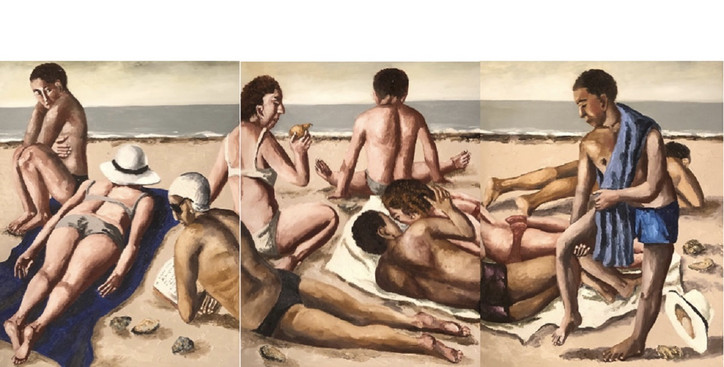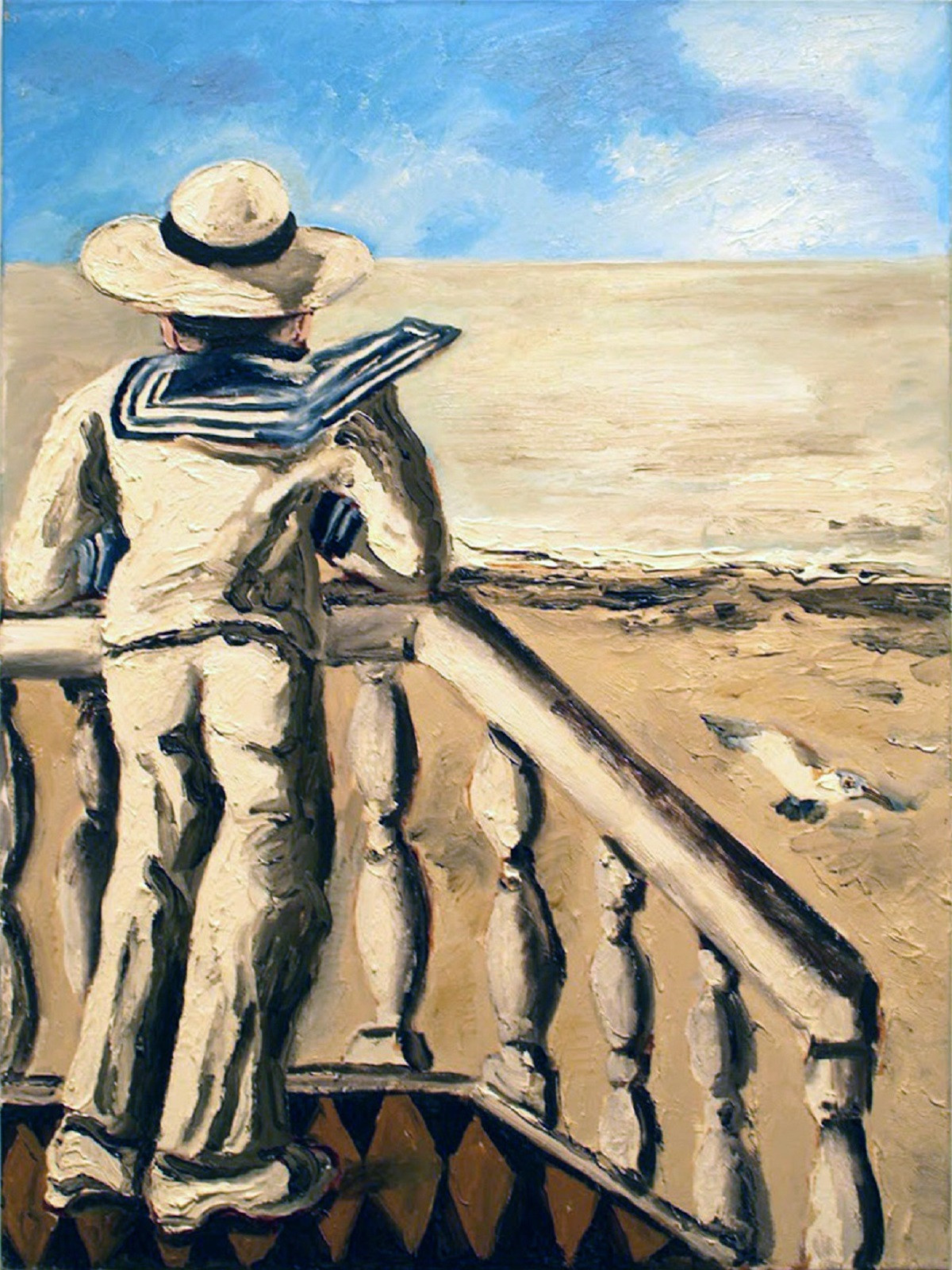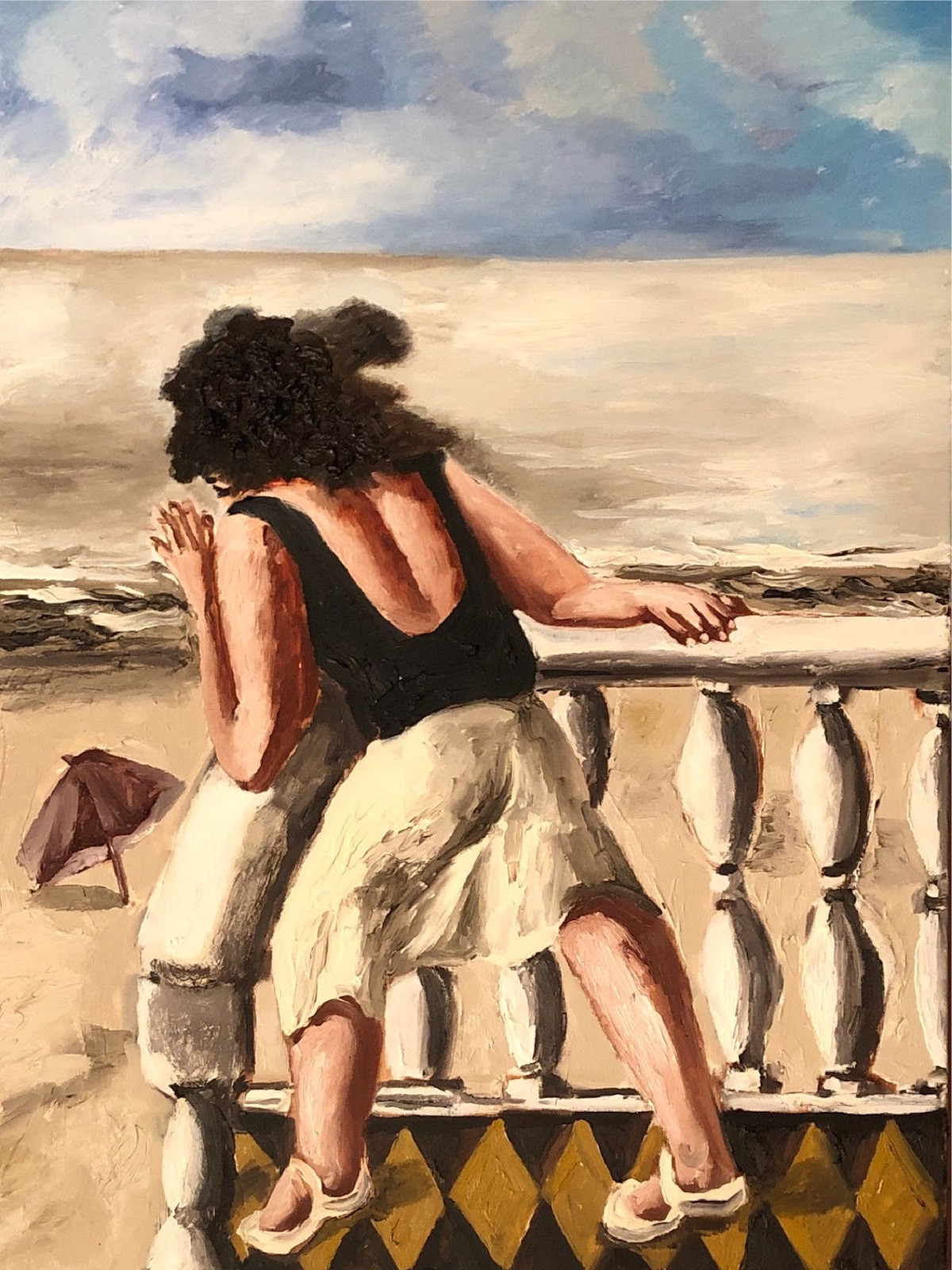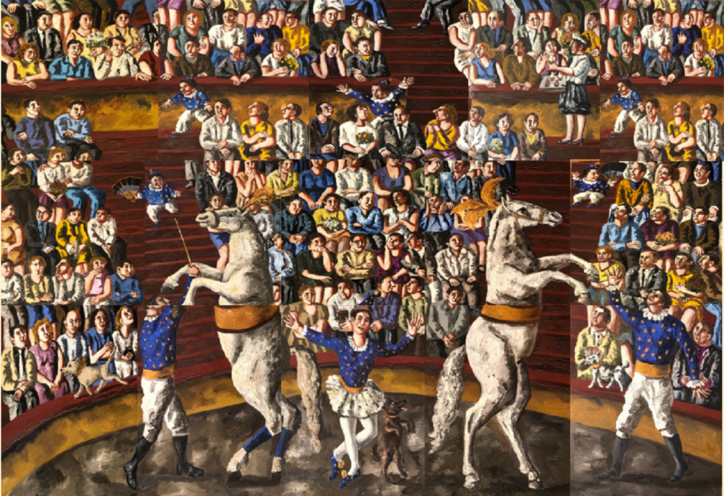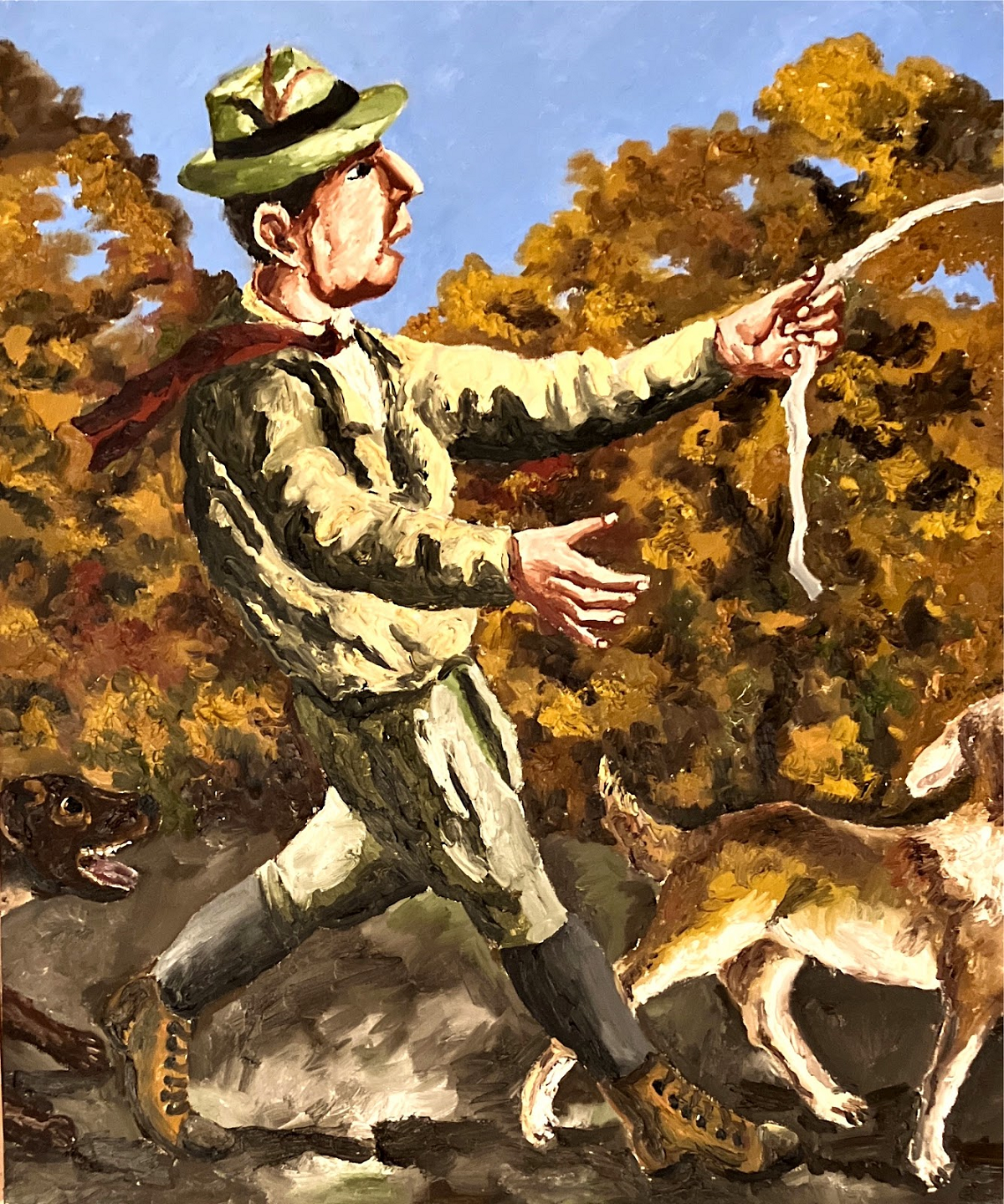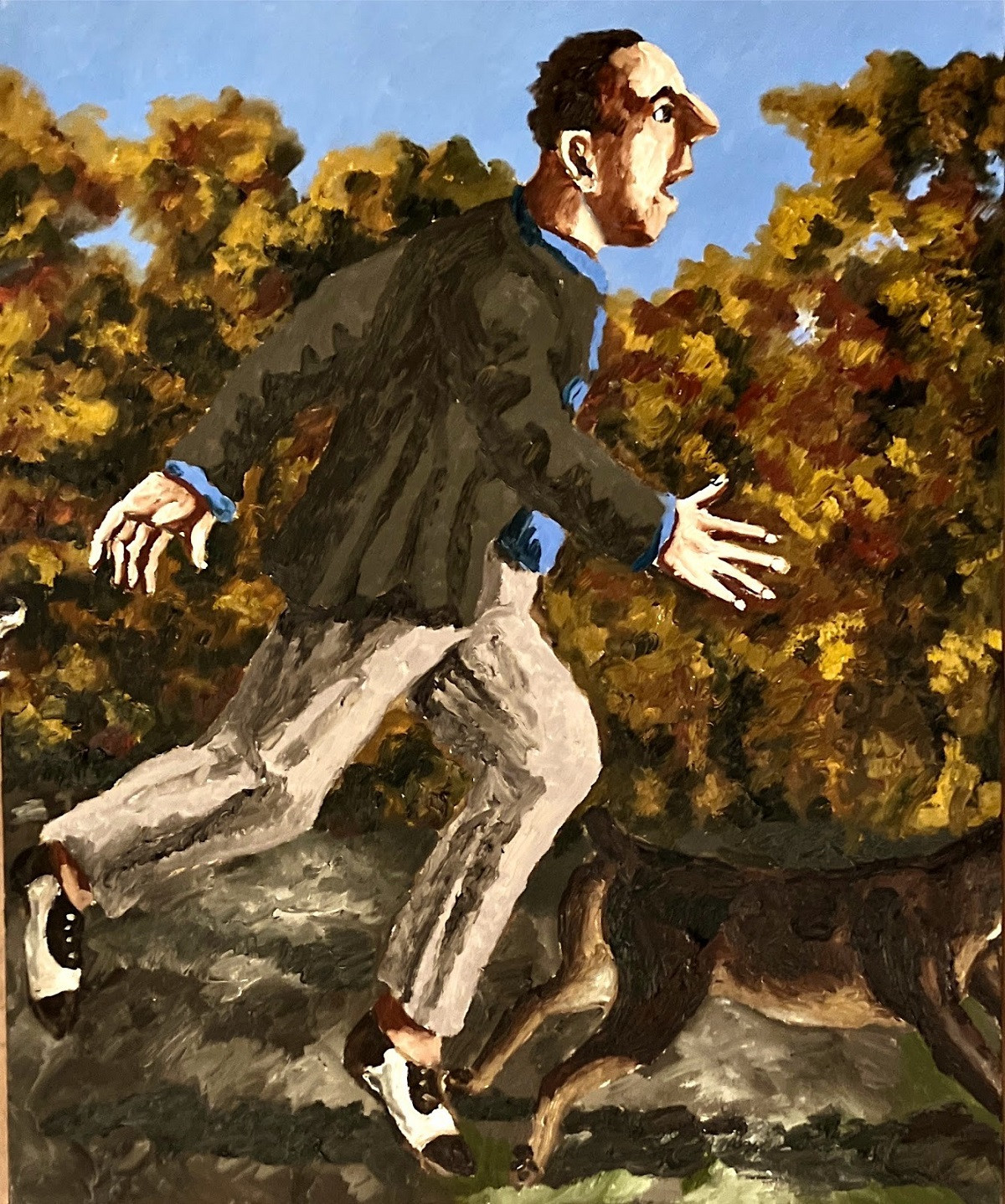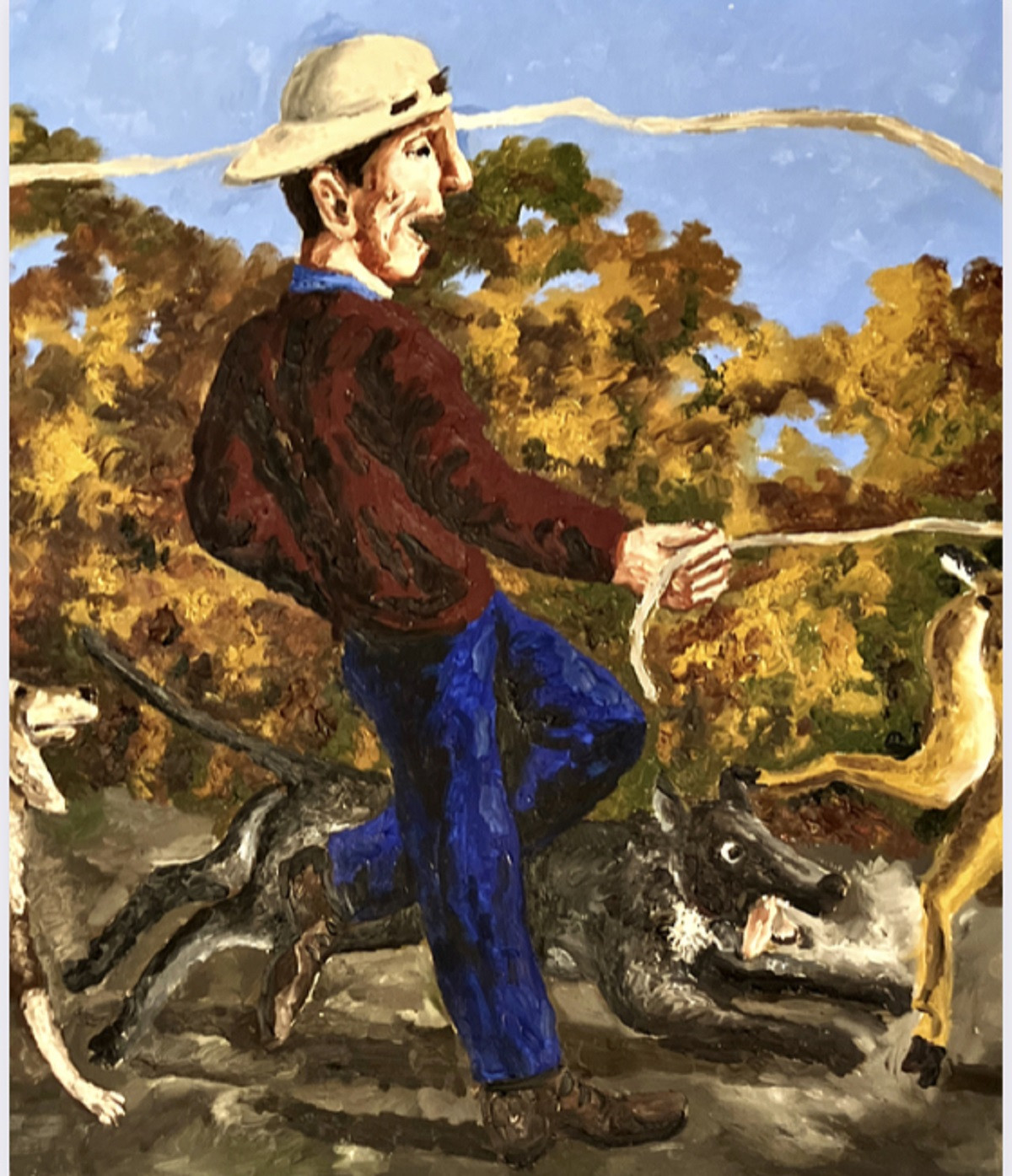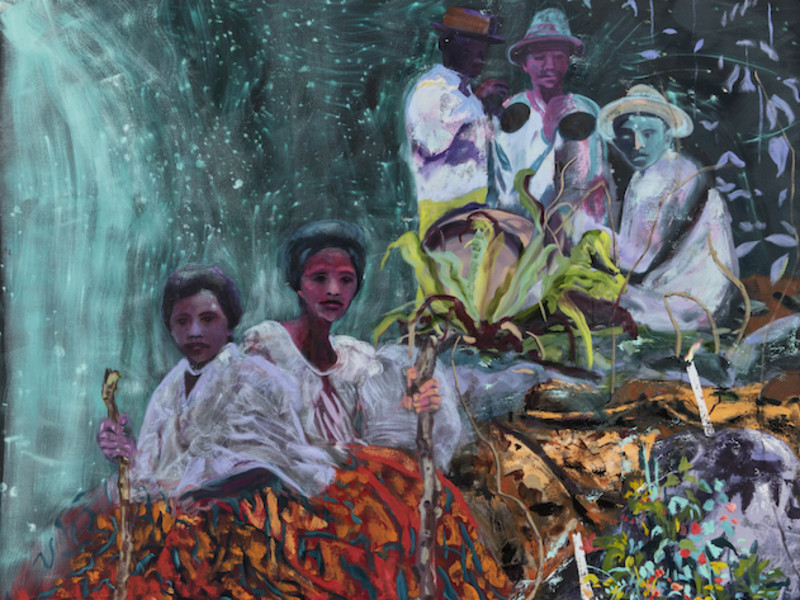





At a glance, many of Nesterova’s paintings depict a sort of peaceful mundanity, her subjects shown attending the circus, reading novels, and frolicking through forests and on beaches in a folk-adjacent, somewhat primitivist style. Perhaps it’s the cursory impression of idyll this subject matter leaves the viewer with that allowed Nesterova to not only elude political persecution for much of her life but to achieve acclaim both within and outside of the USSR in a manner similar to that of composer Dmitri Shostakovich. Having received many awards and titles in Russia, Nesterova was considered a valuable cultural export, her work then being featured in over sixty exhibitions throughout the United States and Europe. Fearing retaliation for her outspoken stance opposing war in Ukraine, she did eventually leave Russia in March 2022 and passed away shortly after in August.
Though Nesterova was understandably reticent when it came to making definitive claims about the meaning of her art, once saying that her work is simply “about what you see,” her paintings belie themes of interpersonal and environmental alienation in both their content and form quite clearly. Or at least—that’s what I “see” in them, and is what I expect will resonate acutely with present-day New Yorkers when her first posthumous exhibition opens on April 20 at Hal Bromm Gallery (the site of her first-ever American exhibition in 1988). View some of her pieces below and consider Nesterova might have been aiming to convey beyond the surface.