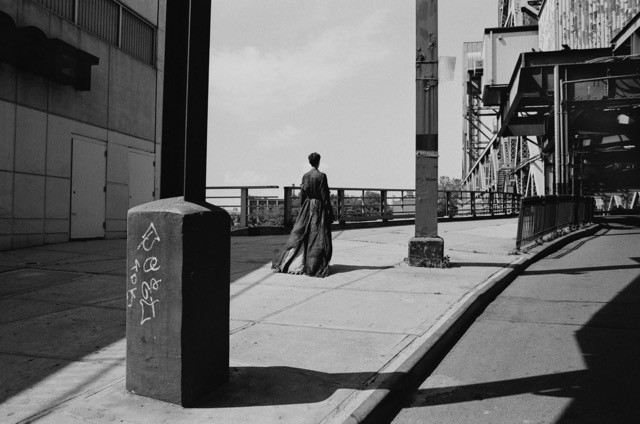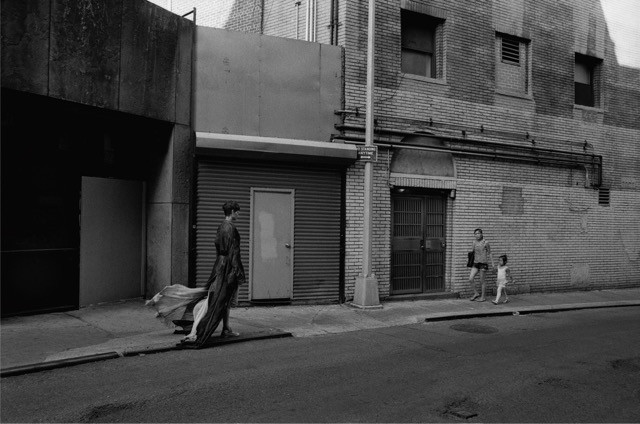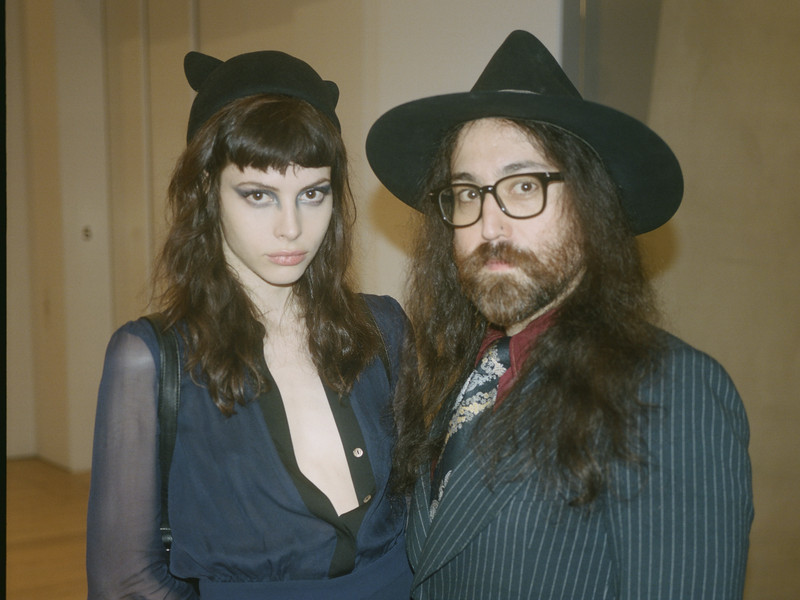
On view at Red Hook Labs this weekend, office sat down with de Brauw and van de Wijngaard; the duo sounds off on the project, below.
In three words, how does New York make you feel?
Saskia de Brauw: I would say New York has a sense of freedom, night and insanity.
Vincent van de Wijngaard: If I were to describe it in three words, it would be: I feel home.
As a foreigner myself, I can totally relate to the need to slow things down sometimes, especially when you live in a city that moves at such a high speed, like your exhibition references. So, how do you think the city’s pace affected the ways in which you interacted with your environment?
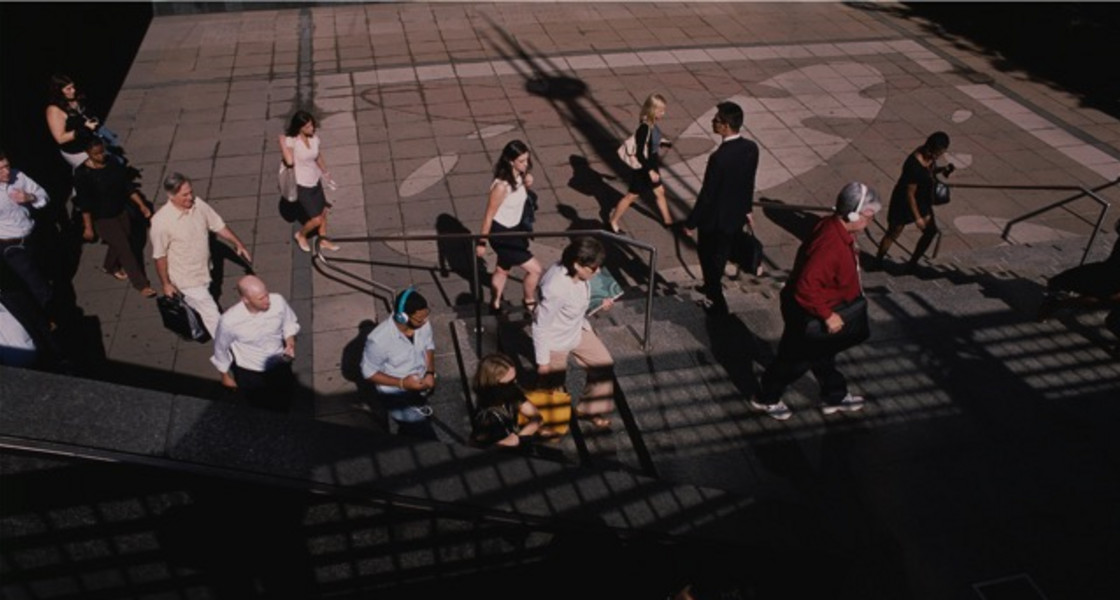
de Brauw: In New York, when you are doing something a little bit different, it’s not that strange, because many people here are doing different things. So, walking more slowly is not even that weird—it makes certain people really angry, but many don’t even realize they feel that way. I mean, there were parts of the route I walked that were really busy. So, I adapted my pace to the amount of people—the more people around, the slower I would walk. I didn’t consider myself as an obstruction and I never wanted to be in the way of people, and I felt that I was only once—in a very, very busy area around Times Square where someone pushed me and got really annoyed with my walking. But most of the time, I was able to be present and just move around. So, that’s something that’s definitely the case in New York—there’s space enough for everyone to have their own space, somehow.
Why did you start this project?
de Brauw: It was the moment before we moved to New York. When I was traveling a lot in the city with my work as a model, I found it quite hard to be here—the high pace was something I couldn’t really deal with. Then, these slow walks started to be an exercise for me to relax and be able to find my place in the city. After that, it kind of developed into this idea of, ‘What if I would do that for an entire day? How would that feel? And should I make a project out of this?’
What was the most surprising experience during your walk?
de Brauw: For me, it was when the experience of the walk at one point finally started to feel relaxing. Suddenly, I felt relaxed with what I was doing and my mind started to feel the same way. It’s the moment where you get a flow in your head—where everything kind of makes sense; it’s not busy with thoughts about what people might think or say, and the remarks just roll of you like water.
van de Wijngaard: Essentially, I am a photographer who works on the streets. So, the whole fashion aspect of it came a lot later. But I am someone who walks a lot on the streets, and there is hardly anything I enjoy as much as walking around with a camera and just looking at things that peak my interest for a moment. When I do get interested in something, I usually wander around a little bit more and investigate—that’s how we determined the certain routes that we followed in the film. But the walk is definitely the main subject—the film and photography are just evidence of it.
The project consists of the film, the exhibition and the book. Why did you choose those mediums?
van de Wijngaard: At one point, we sort of thought, ‘What would be the ideal way to document this walk?’ And of course, film is a good way to do it. So, the final film also includes a lot of Super 8 materials that function like flashbacks. Then we finally recorded and shot the final walk over a day, and those two were mixed in a chronological order. So, it’s almost like when Saskia passes a certain point on the road, there are these little inserts or breaks. Then we also had a lot of material that we had collected, like smaller interviews with people, and different quotes, and I had a lot of pictures. So, that’s when we thought we should maybe consider doing a book—that’s how it all came together.