How did you land on "The Secret Room" as a text?
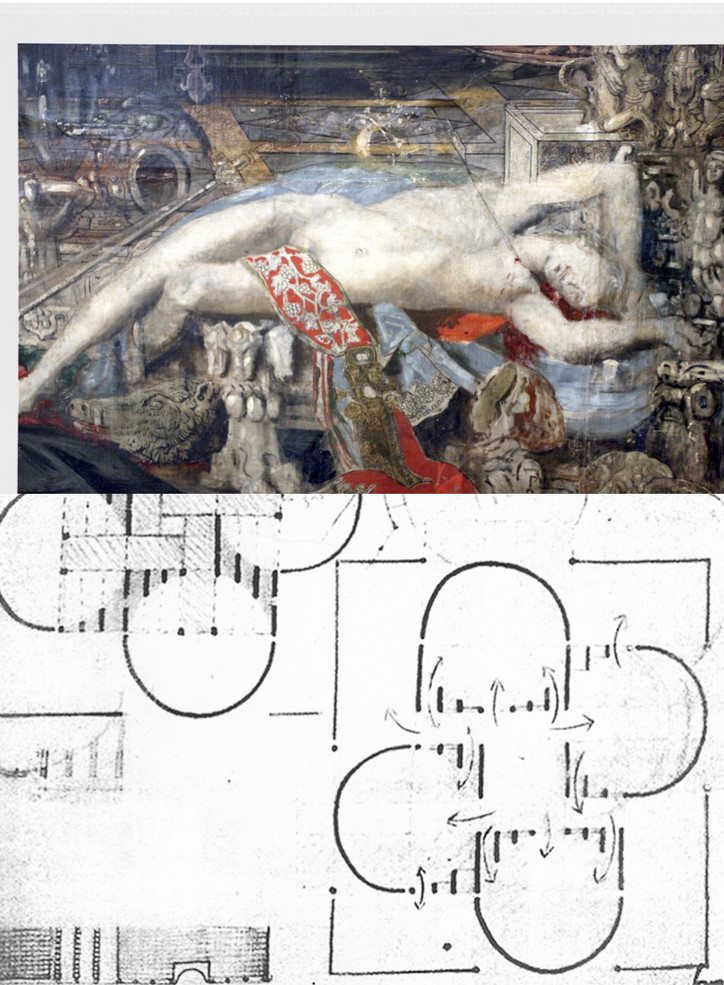
We discovered the text from a conference from the seventies and one of the composers from this period was a producer and companion of Robbe-Grillet and he wrote a lot of music for his movies. What was interesting in this conference was how he described the way the piece was written, he was not so interested in finding an interpretation related to the content of the story itself related to the sexual obsession of Robbe-Grillet, an obsession that was common with Gustave Moreau paintings. He was interested in the structure of text as a piece of music. He was commissioned with other writers to write about an art piece, and Robbe-Grillet chose to write about a painting that never existed, by Gustave Moreau, who is a famous painter related to mysticism and symbolism and all that. And of course the painting has themes of crimes, sexual crimes, which are aspects in a lot of Robbe-Grillet’s works. It’s interesting because the text itself is a description of a painting, but not exactly. It’s a crime scene. It’s very clinically described, it’s not disgusting but it’s very clinical. It’s interesting not only in what it describes but how it is described, there is a kind of structure like that of music, it’s like an opera in three parts, there’s a symmetry - always this question of symmetry. So it was important for us the way the performer read it, to capture its relation to music.
That was actually one of my questions: is there a connection to music? Because your work feels very rhythmic just from looking at it.
Yeah, totally. For a musician everything is music, and for a psychoanalyst everything is about psych. So for us we see structure, even when it is about music.
You have an obvious interest in light. How would you define your work’s relationship to light, and do you prefer natural or artificial light?
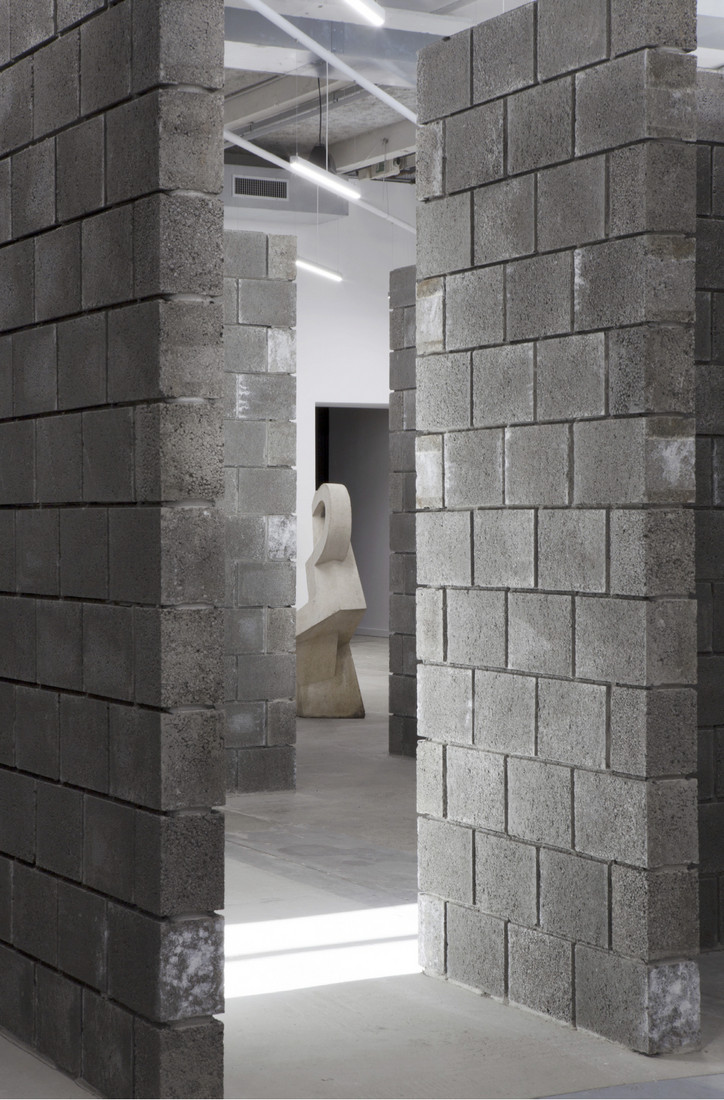
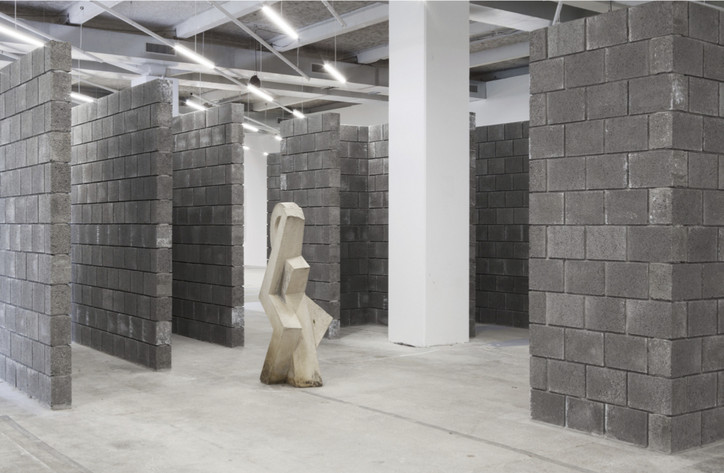
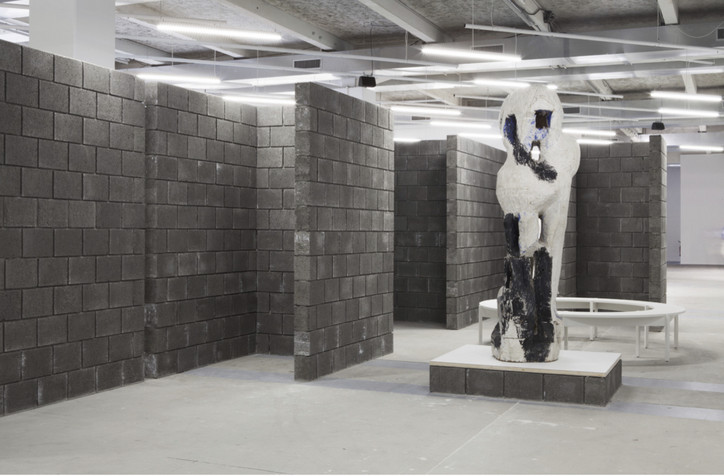
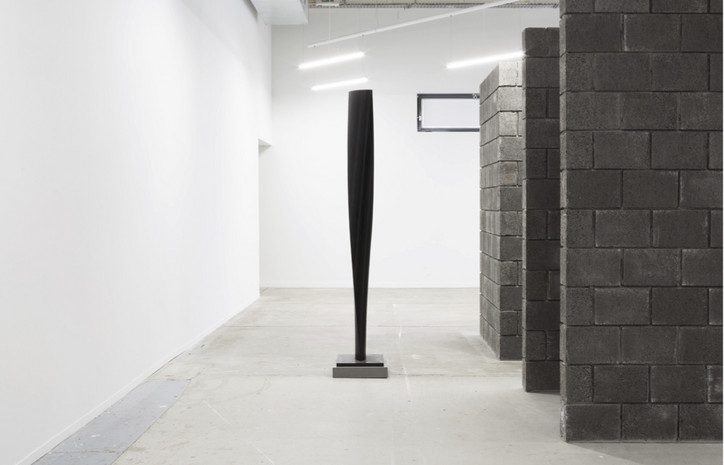
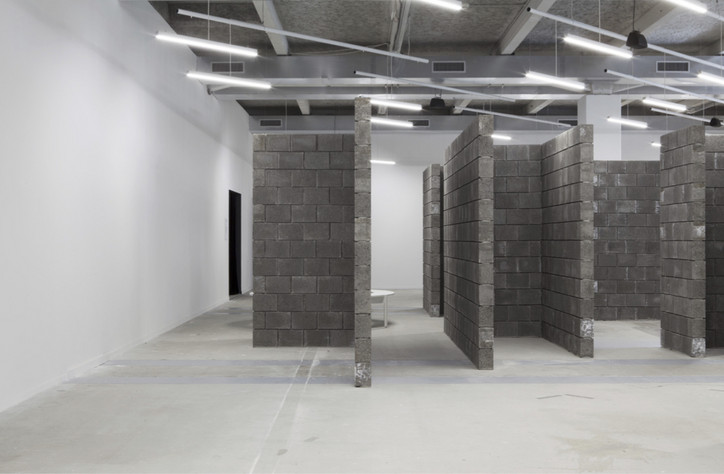
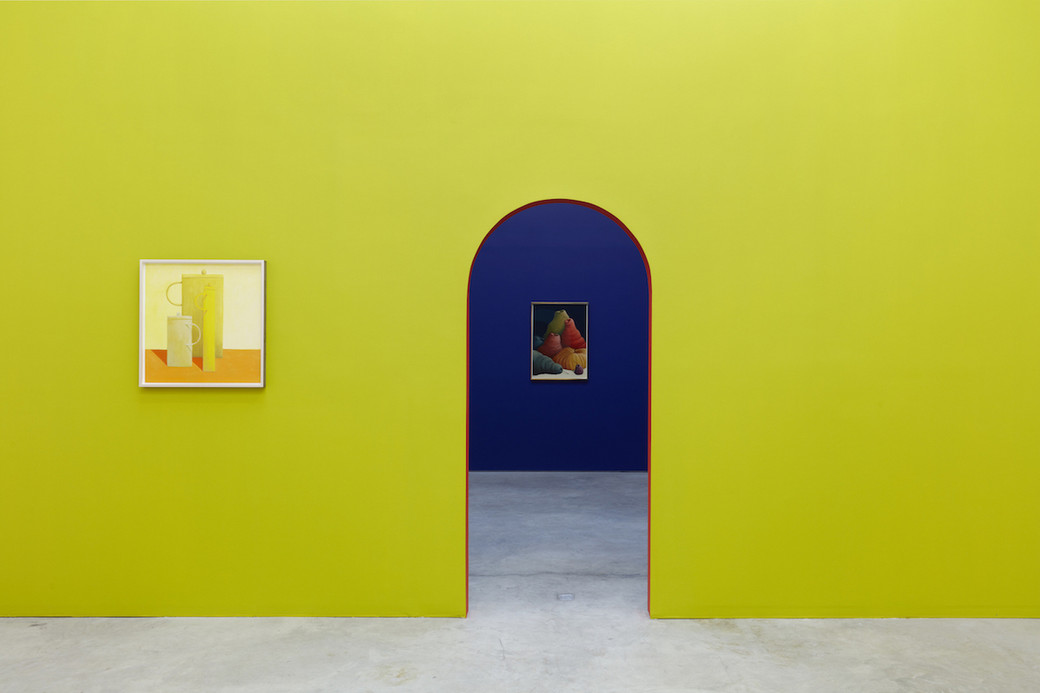
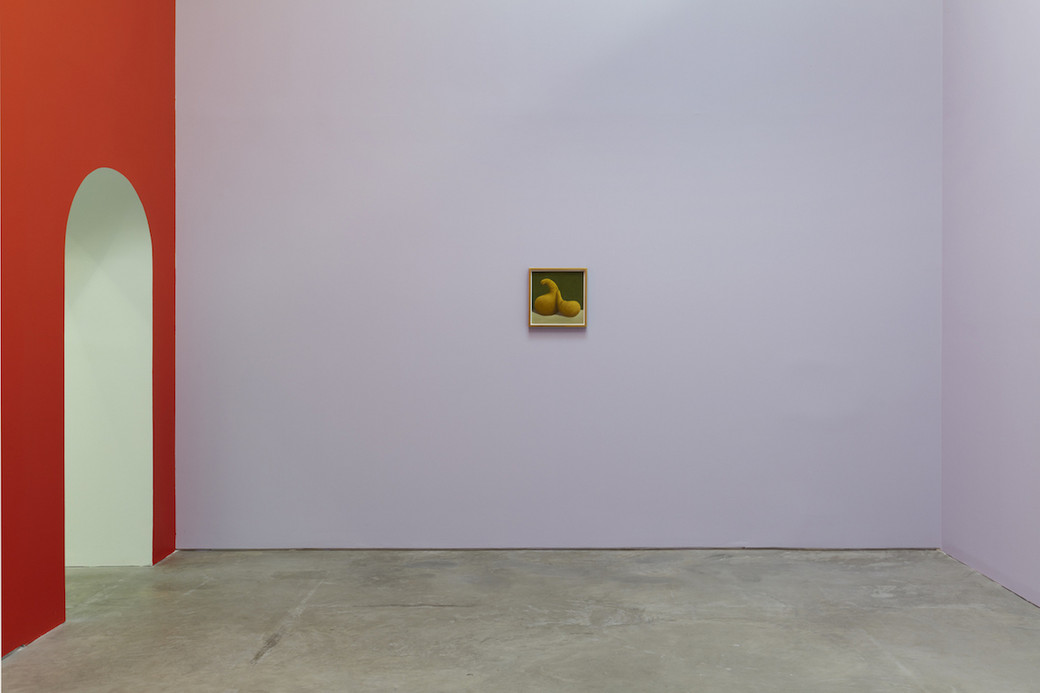
You’re right, it’s an obsession with light. It’s funny because every project we don’t decide to avoid it, and we don’t say we’re going to play with light one more time, one more time - no, it always just comes back. So the idea here was to have artificial light like in a museum, and this layer of light is almost like a structure itself. You can see in the plan the density of light changing, so theoretically we have a different amount of light from one side of the room to another, related to different conservation techniques in museums, in theory providing a variety of light. But we were happy to discover that there was a window wall that let in a lot of natural light, and we were happy to have a mixture.