How did your involvement with Storm King come about?
Years ago, I visited Storm King. I have mentors who had shown their work here, but I was an artist in residence at LMCC when I met Nora, who curated my piece at Storm King, as she came through to do studio visits in 2013. She kept an eye on my work, I presume, and then reached out.
You have previously said that you are inspired by storytelling traditions that often oppose official written history. Could you give us some examples?
It's not that I favor oral history per se, but I think it holds equal weight and is often overlooked or dismissed. In 2011 I took a research trip that led me from my home in Brooklyn to a small town in North Carolina, following my father’s family line. There I found a microfiche for an 1877 marriage license of my great grandfather’s mother. It was a marriage between Winnie Wells and Julius Hart. But her name was Minnie. Was it the way she spoke or the clerk’s listening skills that left her name lost in translation? With a one-letter error in transcription, Minnie had disappeared for over a century. Our “factual” records are full of errors like these: a census taker’s handwriting or the subject’s accent changes a name or a race or a date. And that changes our history.
On a subsequent trip to Massachusetts, I found an essay that was based on an interview with my great-grandfather. The son of a slave, he had moved North from Virginia at 17 years old, alone, ten years before the Great Migration. In this essay, he mentions the tribe in Africa from which he was descended. I was emotionally overwhelmed and I called my father. But my father sounded apathetic. After prodding him to tell me why he wasn’t as moved as I was, he told me this detail was likely fabricated. My great-grandfather had constructed a persona not just to forge his fantasy life, nor for attention, or for honor, but for survival. There are tons of stories my family has not written down. I am not a registered Native American, but, my grandmother, who had my exact coloring, told stories of her grandmother who she said was Stockbridge Mahican. All of the details to her stories and traditions she handed down are consistent with her belonging to the tribe that was relocated to Wisconsin, but we have no papers, so in most people's eyes, we are not Native.
This interactive sculptural exhibit focuses around 'a domestic rooftop'. What was the thought process behind this? Why a rooftop?
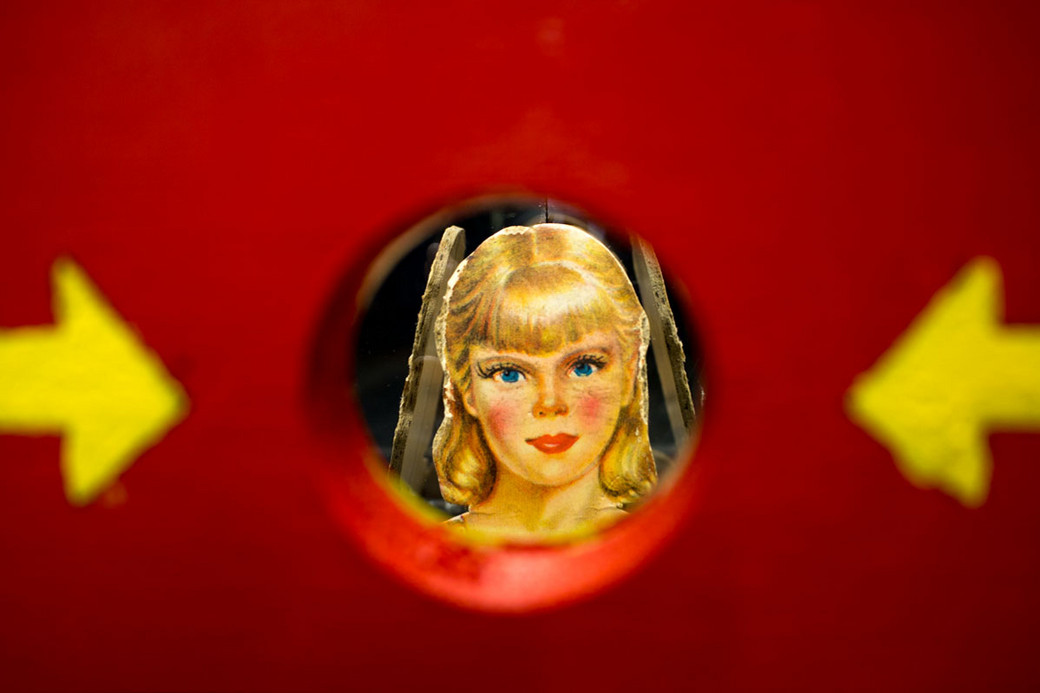
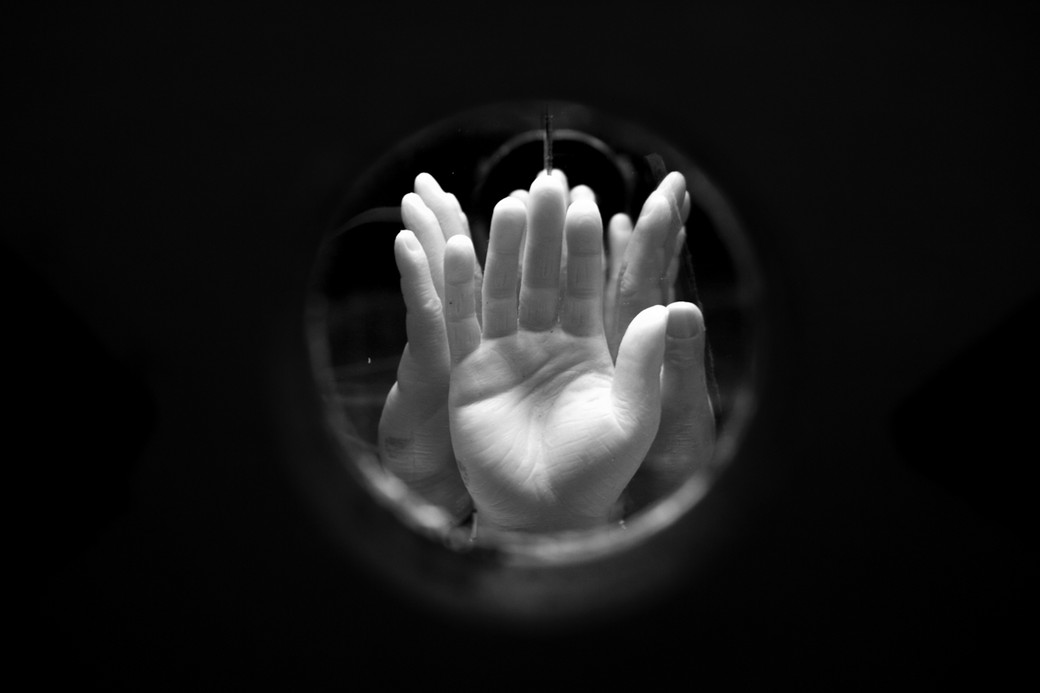
As with the legends of an oracle, the method of building Roof is passed from person to person. It is made with traditional framing as structure, taught to me as a child by my father who was a carpenter. The Oracle of Lacuna has the appearance of an independent rooftop (referencing my childhood gabled roof), removed from its house, and dropped from the sky (or emerging from the earth?) to live its own life in a new context. It can depict the enigmatic nature of a space, existing simultaneously inside and outside, an oasis and a hazard, the underground and the visible, private and public, minimal and handmade, the spiritual and the natural. The content of the forms further transforms depending on who experiences it and their perception, which is what happens to legends that are handed down in their oral tradition: transformation. A rooftop can refer to home, stability, shelter, but in this context, it is also an action of reclaiming power—of influence, direction, and earth.
How do you envision most people will respond to this piece?
I imagine they would begin with a sense of play and wonder. But I hope they bring their own frames of reference to the form of the roof and the process of exploring the attic or climbing the shingles. In that way, they can bring new life and a new narrative to the site I've set up as a catalyst. They can literally change the identity of my sculpture this way. But I also hope that somewhere in the process, maybe on a follow-up visit or after talking with other visitors about their experiences, they begin to reflect on their position in the world, their power and agency, and the idea that there might be many truths to the narrative of this roof and maybe to many other things in the world.