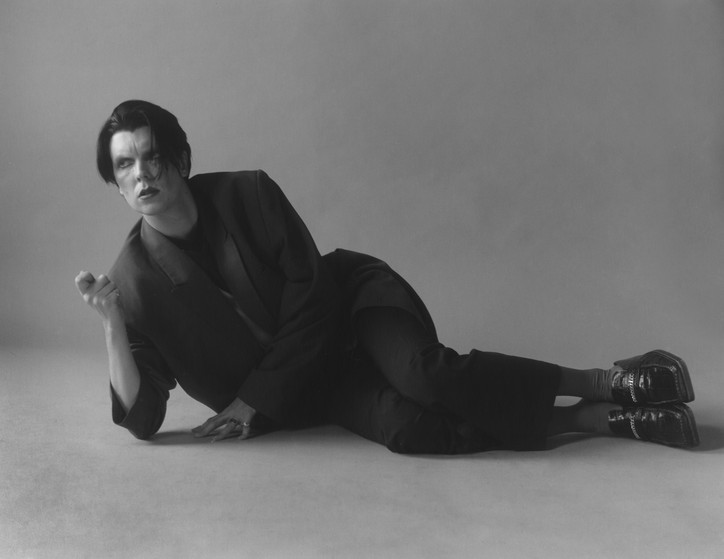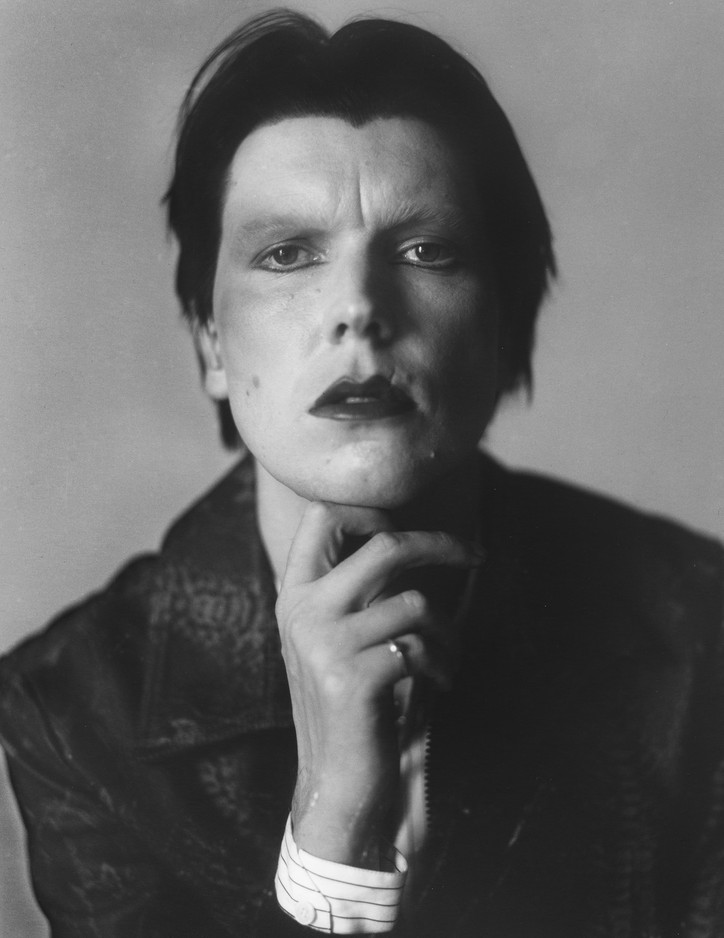



Alex’s work habitually explores masculinity; and all of its trappings, and failings. Though Miami Memory is different from his two previous records. In fact, this record is, in part, dedicated to Jemima Kirke—the artist’s partner, and a key source of inspiration. At this stage in his career, Alex is ready to talk about other things, beyond tropes, and characters. Rather than just satirising fragile men, he uplifts women; and contextualises the relationships between these men, and the women they hurt.
When I galloped over to introduce myself, Alex is receiving the full treatment: blue eyeshadow, rosy cheeks, red lips. Even though makeup, which in itself in non gendered—despite advertisers aggressively targeting women at the turn of the early 20th century—cosmetics only been re-normalised for men in very recent history. But it is typically only seen on the faces of ‘feminine’, typically queer men.
Perhaps, to some, Alex Cameron, a man who doesn’t regularly sport peacocking cosmetics isn’t that revolutionary; as history entails the likes of David Bowie, Louis XIV, Tutenkhamen. However, social progress is not without backlash. As outdated gender expectations continue to dissolve, zealots are emboldened to reinforce rigid ideals through violent means—bleeding into racial, and sexual politics. So when a man is courageous enough to step outside of his assigned role, it is a revolutionary act.
I watch as Alex move gracefully, then awkwardly, teetering on both. There is something deeply poetic about his gestures. Shot after shot, Alex Cameron subverts what it means to be a man’s man in a man’s world. More than music, the man behind Miami Memory is a master of multiplicity.