Stay informed on our latest news!
Sign up for our newsletter

Falling Back to Maggie Rogers
Premiering at the upcoming music festivals Gov Ball, Pilgrimage Music Fest, and All Things Go Fall Classic, this new video brings out arguably the strongest, most powerful performances we have seen from the young artist. Since office's first encounter with Rogers in an interview for issue six, her career has really taken off.
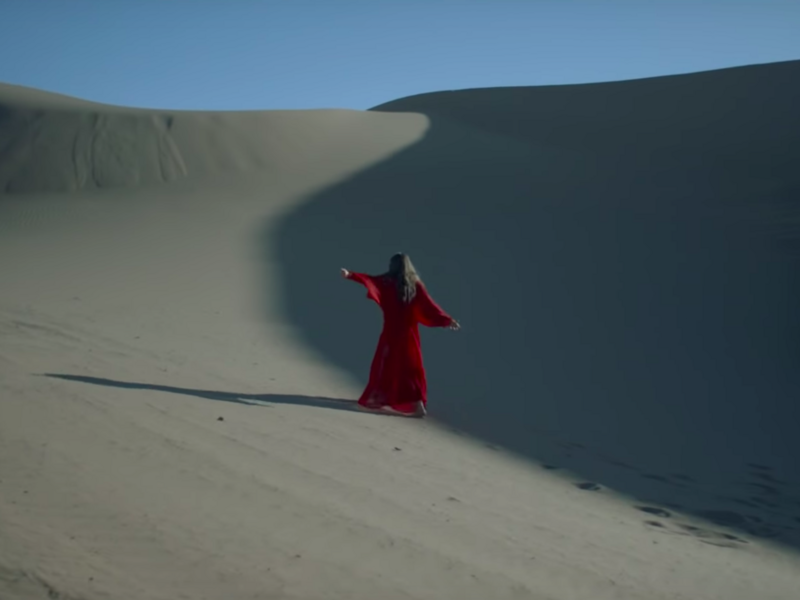
No stranger to employing the beauty of nature as her video backdrop, Rogers really leaves it all out on the dessert floor, using a potent mixture of fluid and demonstrative body movement to compliment the strong nature of her lyrics. Between her bright dancing and her bold singing, this is really Rogers at her best.
Head here to find more imagery of Maggie, and intimate information from the artist herself.
Recommended articles
Twin Shadow in Real Time

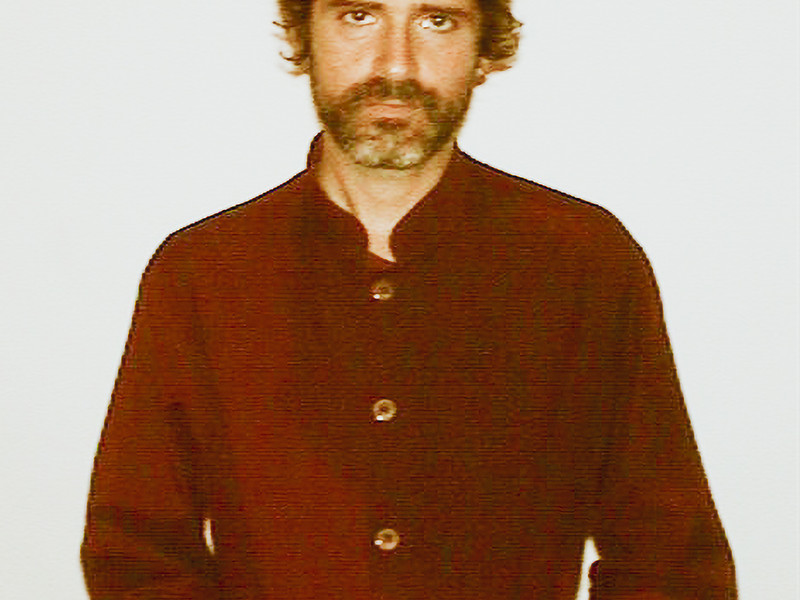
The 35-year-old musician rose to fame in the early 2010s with his 80's-influenced, guitar and synth driven sound. Then, in 2015, the artist went through a life-changing experience: his tour bus crashed into the back of a semi-trailer leaving twelve people hospitalized, and Lewis' right hand needing several rounds of reconstructive surgery. Lewis had some rethinking, and rebuidling, to do.
It's quite fitting, then, that his new record is not only titled "Caer" (which means "fall" in Spanish), but that it explores the intricacies—mentally, physically, sonically—of getting back up from something seemingly world-shattering. Read on to see what Lewis, Jr. had to say about finding peace, exploring new sounds, and touring with Beck.
OFFICE- You just went on tour fairly recently. How was it this time? Are you someone who enjoys “tour life?”
TS- It was a really good tour. It wasn’t our tour so much, this time we went out to open for Beck.
How was that? Had you toured with him before?
No, we haven’t, it was just that kinda out-of-the-blue type of thing. But he was cool, super nice.
What’s the vibe when you’re on tour, typically? My dad was a musician, and I used to tour with him, but back then we would be on a bus with other bands, and I’m not sure people still do that these days.
No (laughs) people do still do that, we’ve had tours where its us on a bus, and we’ll bring another band with us.
It’s pretty fun, did you get to do that with Beck?
No, no. And, it can be fun—but when its long periods of time, and I’ve done tours like that, it can also be tough. Dealing with your own interpersonal band relationships is hard enough…(laughs)
Well creatives are…a lot. There’s a lot of energy.
Totally. It actually reminded me, last night I went to this art opening. Basically, I walked downstairs and saw someone I knew, who was introducing me to this other person that he knew, but right as I was meeting them, that person saw this other person who owed him money, and then just confronted him, right there in the space. I was just like, “this is amazing.” In LA, that would never happen. There, everybody's fronting that everything's good so much of the time.


I know, I lived in LA for a bit. I couldn’t deal with LA— but then again, I grew up in New York, and when Europeans come to the US and they’re horrified, thinking we are so rude. I don’t think we’re mean, it’s just honesty.
It’s very reactive. People think that Hollywood is so self-serving. But so is art, and so is fashion! It's all really disgusting, mostly. I don’t want to say that music isn’t, but what I like about music is that you are making an intangible thing. The music industry is certainly wasteful, but its not nearly as wasteful as other creative industries.
That's actually a really good point, because even if its fucked, pop stars are still giving people something enjoyable.
And it’s less connected with the politics of dealing with gatekeepers and this and that, even though that exists, but ultimately the people as a mass also decide whether they love something or not.
That's true, how has your new album been? Do people love it?
Across the board, the reaction from my fans has been, “oh wow, this is a really personal record, I needed to hear that. It has helped me a lot.” And the critical response has been exactly what it always has— a mixed bag.
Do you read the criticism?
I read some, but not as much as I used to. You find your audience, and then it’s about finding more people who can understand what you’re doing.
When you're creating the album, do you think about your fans in the process— about their response? Or is it just an inherent thing?
Not anymore, I can't. It’s funny that all artists go through a similar chain of phases— I think I’m at that phase where I am the most reclusive I’ve ever been. I’ve been taking an online drawing class, it will end up being 80 hours in total. I am focusing on growing impulses and talents rather than focusing on being social. At the same time, I’ve never interacted so much with my fans. For the first time I started answering all my DMs and trying to have conversations with people. It is about seeing the current state of things as an opportunity.


I think that's like...the healthiest thing I’ve ever heard from someone working in music. With that trajectory you’re en route to writing a self help book. That’s what you’re supposed to do once you get to this point— but nobody really does. People tend to just burn out.
It has to do with where the world is at right now. It’s become very apparent that the things that were very important are meaningless right now. In the ‘80s or ‘90s, I think it was easy to burn out because it was easy to think that going to some brand event or being seen was what was important. I’ve realized what I create is most important. I make art in a bubble, and a lot of the world makes art in a bubble. There’s definitely something wrong with it. I’m just trying to come up with my own answers.
What have you come up with?
Last night I took this really long walk and I just let myself wander. It was crazy, the things I encountered. Just to walk through a neighborhood you don't know, to expose yourself to something, to have a conversation with people you know and people you can't deal with, and to deal with the people in your life you hate and avoid. Everyone has to have their own challenge with themselves.
It seems like you shift genres a lot.
Yeah I jump around a lot cause I think I get bored easily. It’s maybe not the best thing to do all the time. I'm interested now more than ever in going back to my roots, and my love for Dominican music. I feel like guitar-based music, from an Alternative standpoint, has kind of run its course a bit.
It's rare for a musician who shifts a lot to go back, because I feel like you're gonna interpret it with all the growth that's been in your music. That could really be the key, though.
I hope so, that's the risk.
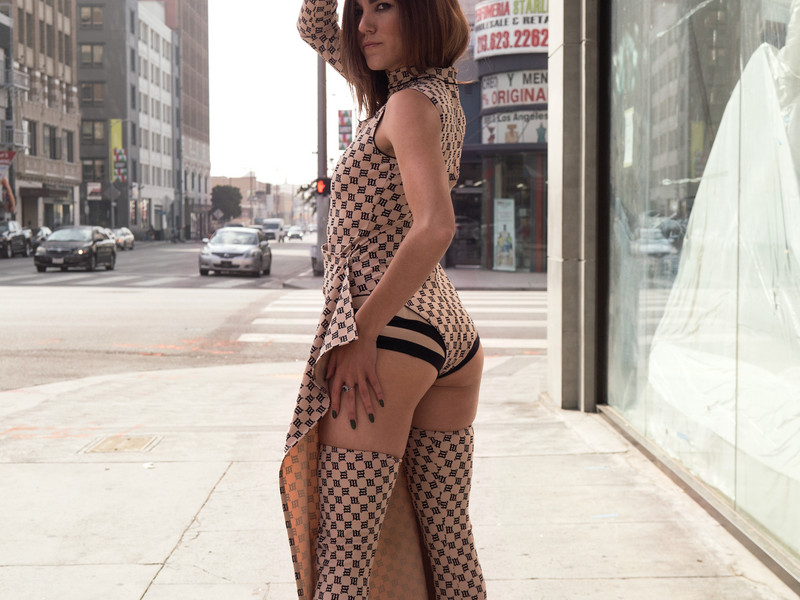
- Location courtesy of Vivid Kid
Recommended articles

Beyond 'Beyondless'
I’m walking as quickly as I can from Spring street over to Canal in a tourist's rain poncho from Duane Reade; anything to protect my notebook and recorder from the torrential downpour. I’m meeting up with four-piece Danish rock band Iceage to discuss their latest studio album Beyondless.
It’s been a couple of years since I last saw the band play in Brooklyn and I’m eager to hear what members Johan Wieth, Dan Nielsen, Elias Rønnenfelt, and Jakob Pless have to share about their expanded sound and forthcoming tour. Talking over coffees and tea, the band dishes on touring the United States, working with Sky Ferreria, and the creative process behind the album’s production.
- Interview Charles Caesar
- Photography Jesper D. Lund

So, I love Beyondless which dropped earlier this month. I’ve played it all through at least three or four times at this point. My favorite track right now is Catch It; that’s total makeout music. Perfect for the summer.
That’s the first time we’ve heard that probably. That’s nice!
It’s the first thing that popped into my head as I was listening to it; like I would definitely put this song on and makeout with my boyfriend to it.
That’s what we want. That’s cool.
I also love Painkiller; [speaking to lead singer Elias Rønnenfelt] you and Sky Ferreira performing vocals together sounds incredible. Tell us a bit about the process of creating that song. I recall you guys don’t usually have vocal features on your albums.
It’s our first non-instrumental feature! It was great. Sky was the first person we had in mind for that song and she agreed to work together on it. She just went in with her full presence and really added a lot of soul that elevated the track.
Are there any other musicians you guys would ideally collaborate with; either on vocals or production?
We make most of our music ourselves but we’ll see in the future. We’re not closed off to the idea. Maybe Shirley Bassey!
Are there any songs that crowds have reacted to differently on different nights?
It feels like there’s more dancing going on than we’ve seen before.
You guys are touring the U.S. right now. Even outside of the current events, America is a pretty unique and oftentimes bizzare country. Have you had any “essentially American” experiences while on tour here?
A lot of them! Like every day. In terms of the current climate of the country; we played with another band in a few border towns in Texas and there you really see the immediate effects of politics because people are fearing for their families. In terms of the American experience in general; we went to a baseball game for the first time the other day. We had beers and peanuts and really enjoyed it actually. There’s a lot of different American experiences from town to town; different parts of the country or even neighborhood to neighborhood. We always find it funny here because we’ve grown up with American movies and we have this very ‘clear’ idea of what the culture is like. When America meets those certain stereotypes - we love it.
Like cheeseburgers.
It’s not that simple! [Dan:] Also, New York City is never disappointing.
Is there anything that Americans could learn from Danish culture that would improve us?
No, not at the moment [all laugh] Healthcare is a start though you know? In terms of immigration policy we’re just as bad as you guys, perhaps even worse.
The fact that our healthcare system is a business is very bonkers and weird.
Yeah it’s like big business— the way it’s risen has sort of damaged the initial idea of what this country’s supposed to be about. But that doesn't just go for America, it goes for everywhere else too.
Is there anything the Danes could learn from Americans?
Perhaps a bit of hospitality and... [pauses] It’s kind of looked down upon in Denmark to think bigger or be bold. In America it’s like; bold to a fault.
Do you think that music could ease some of the conflicts that the world’s currently facing?
On an individual level but not on a grander scale. Some music can help people realize things that can help them work towards something they need. Maybe a band like Cress could enlighten on ideologies or themes on a political scale but we’re not really that kind of band. It’s more about feeling. If you hear something that resonates with you it can have many effects but bettering the world’s situation is a bit of a stretch.
Is there anything you guys bring on tour with you to make it more fun?
Books! [Elias:] For the first time ever I brought a pillow.
Nice, so everybody’s reading on tour?
Pretty much yeah. And we finally brought sunscreen.
Are there any specific references or emotions that you focused on while creating Beyondless?
...It’s a lot of conflicting emotions; ones that are fighting each other. It also varies from song to song. This album is a cathartic one.

Are there any tracks on Beyondless that were especially challenging to complete?
There’s one that isn’t on the record that we had a tough time with a certain beat; getting it consistent all the way through. But it’s not on the record... Sometimes you run into a wall with a song and you have to search for the right element that will make the whole thing open up and transform into what it’s supposed to be... In the studio we don’t give ourselves time to second guess or doubt. It’s just a matter of execution really.
You just put it out there and once it’s time to arrange things you go from there?
Exactly. We want to keep a sort of immediate, creative flow in the the studio. We usually put songs down within three to five takes and that’ll be it. We don’t book enough time in the studio to stress ourselves out and dwell on the decision making. You have to sort of just go with it.
Were there any tracks on the record that were your favorite to create?
No. We love it as an entity; it’s it’s own body of work. The songs belong together. It’s also kind of interesting; even though you play the songs before recording them they really come to life in the studio. You really get to know the songs. Sometimes they present themselves in a way you hadn’t expected. All of them were equally interesting to create.
Tell me about the album art.
We found a woman whose grandfather did this marbling work. He mixed pigments with oil and created prints that were used to wrap books. He was a professional marbling artist and she does it as well. He’s dead now but she has an archive of all his stuff - we got to go to her house and search through all this work. We spent the next month at each other’s throats arguing about images until we found that one and everybody was into it. We knew it was the one. It’s fascinating that it was an image originally intended to cover a single book but is now widely-produced for our album cover.