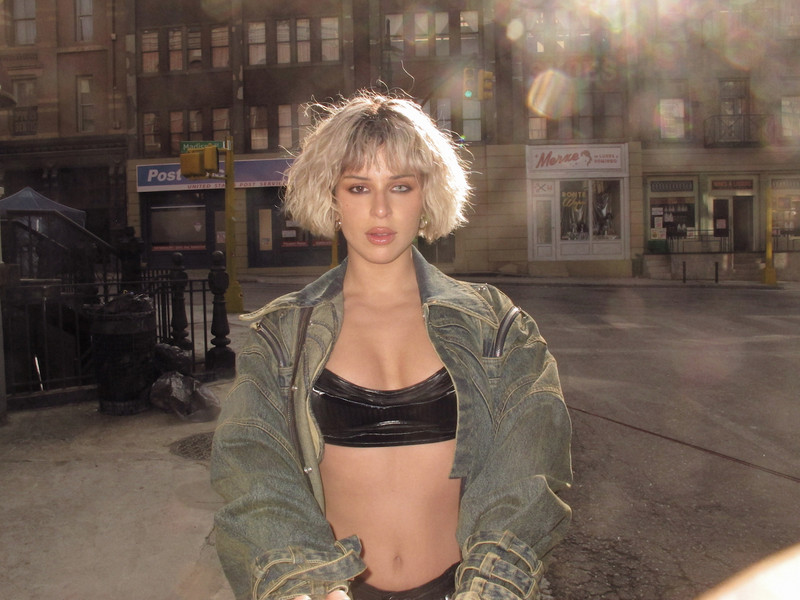
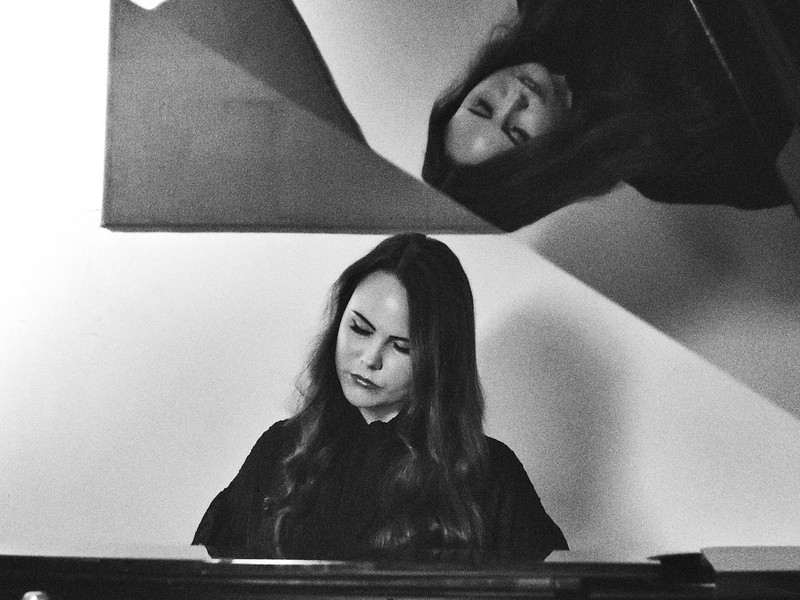
Your music has been described as a mix of R&B, punk, and electronic music. Who are some of your early influences that inspired your genre-bending sound?
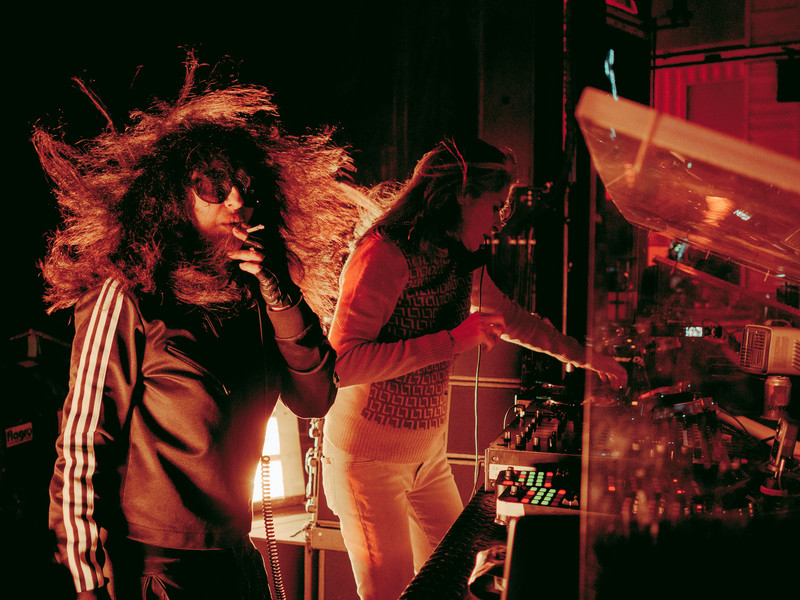
GS— I think we just love all different types of music to begin with, and we come together on certain genres, like the heavier side of music and r&b. I grew up listening to N.E.R.D, I loved Timberland's production, Missy Elliott, the Justified albums. But then, in really early days, I listened to Stevie Wonder, Donny Hathaway, Mariah Carey. Growing up, I think it was just a wide array. And then I loved Late Registration, Kanye West's album; and Dr. Dre's production, so definitely that hip-hop side. But I've been in bands since I was like 12 or 13, so just being on the punk scene, just being immersed in it— that was my way into heavy music. I was literally hiding under bars because I was too young to get in. But it’s cool, the different evolutions of our sound.
AL— I guess when you first get into music, it's usually what your parents are listening to. And mine were listening to people like Toni Braxton, and Whitney Houston, and Mariah, and people like that. But then, as I started to discover my own stuff and what I liked. Now, don't get me wrong, I love Toni Braxton. I would say she's an influence in some of my vocal style. Definitely deep. Yeah. But then, at the same time, you know, Destiny's Child was such a big inspiration, freeing a path for Black women. I was watching them on my screen thinking, 'Wow, I could be that.' Well, obviously, no one could be like that. As a kid, you think you can. And that was really helpful for growth, to be seen in that light. And that then spurred me on to listen to people like Missy Elliott and R&B.
Then, when I was 16, I was going to a music college in London, and that's when I discovered a lot of glam rock and bands that also influenced me, like Noodles, MC5's Kick Out the Jams. I also really got into KISS and just really heavy bands. And at the time, I couldn't play guitar. So I was getting in bands. And also, I was in a band with Georgia's brother at some point, in college and things like that. And then, I was just driven by heavy distorted guitars and things like that. And then eventually, Georgia's just dad taught me how to play a few barre chords, and get on with it. And then it kind of took control from there. Me and Georgia joined forces, and that was it.
You’ve talked about the importance of WOC visibility in the metal scene. With this in mind, what changes have you seen come about in the punk music scene, and what do you still think needs to be changed?
AL— When we first started out, [diversity] was very scarce. We'd turn up to a festival, and be the only women and people of color there. So it was always a bit of a culture shock for us because we got into a band thinking, 'We just want to play music,' and then we came up against all these challenges. We were like, 'Whoa, this is not what we expected.' But for us, that kind of kicking back against that— we really found ourselves and found our power. We really had to dig deep to just accept ourselves and believe in ourselves, so when people tell you, 'No,' you can either listen to that, or kick back against that. So I think we decided just to push through. We've been watching the industry change from then up until now, which has been really since the BLM Movement. We've seen a bit more an increase in people thinking about looking at their peers, looking at their roster, looking at their artists, and being like, 'Oh, we haven't hired anybody. We haven't even looked. We haven't even bothered because we just didn't think about it.' When we were in meetings with people who were actually wanting to change, and just openly saying, 'We just never thought about it. You kind of choose people in your circle who reflect you and, and that was just on our team.' And we were like, 'Okay, well.' I think people then start to diversify, and it's really nice to start seeing the changes, and more artists of color coming through on a very white male dominated scene— let's face it, you know. I think we've still got a way to go, and I think on festival bills, we need to see that more. We don't want it to feel like tokenism; it needs to feel like this is a proper increase because there are so many bands out there.