I Love Guadalupe Rosales' LA


It begins with a memory of the library, as a place where Rosales grew up going to escape into tales of art and adventure. As a shy kid, the stacks welcomed them, but adolescence opened up a whole new world for Rosales, where they joined a party crew and ditched school to go tagging. A new library welcomed them, one of rave flyers and smoke spots, a thriving Latino youth culture uninterested in what was on T.V. or the radio, as it didn’t reflect their world. One moment that stands out is a particular day of skipping school. Rosales remembers her and her sister stumbling out of a friend's stolen car, the brakes having been cut, and getting up to run back into school before the day’s last bell rang. It’s an exhilarating story, and it feels as singular as it should be familiar for any city kid.


One of the memories that I recall most vividly from my adolescence was hearing about a secret weed store in Echo Park. Maybe store isn’t the right word. It was a dealer’s outpost. I was fourteen, in my first year of high school, and already a stoner hanging out in parks and watching my friends’ eyes roll back between hits of salvia. My school had a reputation as a party school, and kids from all over Los Angeles would come to hang out in front of our school gates to skate, or buy drugs at the Burger King across the street. It was an odd mix of kids from downtown, East LA, central LA, and Hollywood who all wanted to go to a public art school. Skaters, hipsters, gangsters, anime kids, and run-of-the-mill art nerds all ended up in homeroom together.
My older sister, who went to the same school, initiated me into the cool kids club by chaperoning me to the aforementioned Burger King on one of my first mornings of 9th grade. Trying to stand out, I had put two star stamps on either side of my eyes. A girl with cherry-red hair and an anime-girl tattoo on her shoulder saw me and asked, “Are those face tats?” Taken aback, I responded, “I’m fourteen.” She smirked and said, “So?” I tried not to act so clueless after that.


Although we grew up in different parts of Los Angeles and in radically different circumstances, so much of the Los Angeles-based adolescence described in Guadalupe Rosales’ memoir, East of the River, resonates with me. Going to house parties and shows, student protests, ditching to just wander throughout the city, finding a world of music and culture from friends. These may be universal coming-of-age experiences, but growing up in a city and then leaving it, the rapidly changing landscape of "home" calcifies those memories as things that can’t be returned to.
Every time I go back home to visit LA, something feels different. The city is “off,” or maybe it’s just the neighborhoods I know. I grew up in Silver Lake, going between Echo Park, Chinatown, Highland Park, East Hollywood, and Downtown, where I went to high school. These neighborhoods used to be filled with people that I knew, and places that I recognized. Now, the army supply store where I would buy clothes is gone, and various family businesses are getting gutted to make way for luxury stores, draining the city of any mystery, curiosity, or comfort. It takes an archivist to remind us of how important what’s being lost is, so we can fight to preserve it.
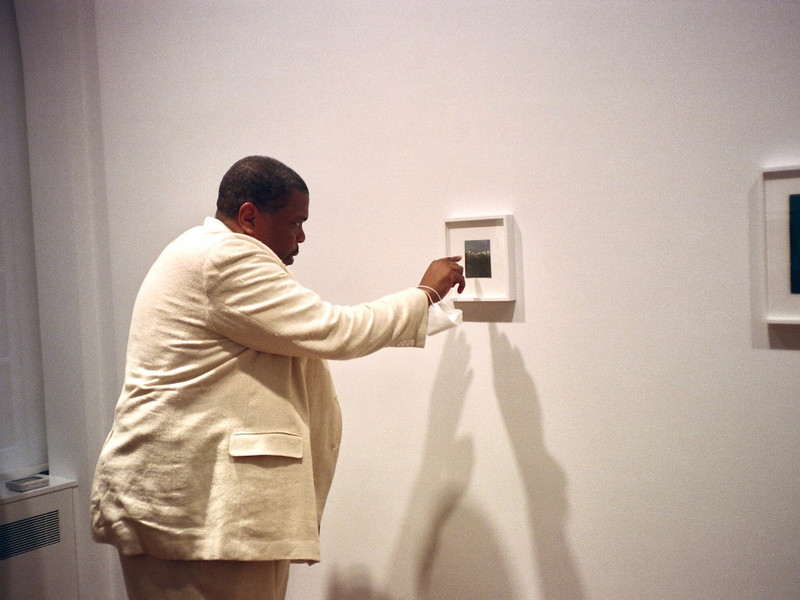
Rosales, who is first and foremost a contemporary artist and photographer, is showing a collection of photos from their archive in accordance with the book, which was published in September by One World Press.