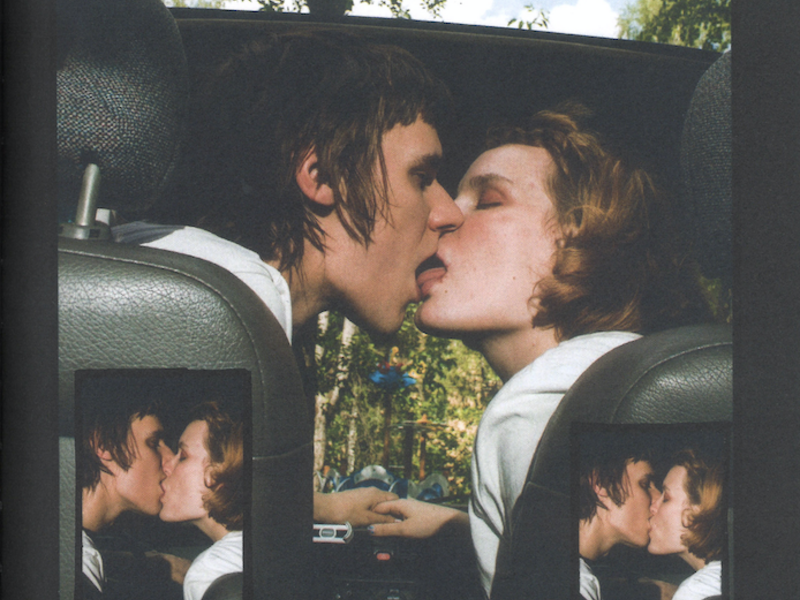

Homoerotic tension is the binding theme—be it between beloved fictional characters, iconic historical figures, or intellectual heavyweights, most scenes build toward the two characters acting on the sexual urge bubbling between them, but transition to the next scene just before the would-be moment of realized romantic connection. The binding homoerotic thread returned to again and again is Captain Kirk and Spock, of which there is an extensive romantic literature authored almost entirely by women—if the factual-seeming moments of the play are to be trusted.
It is a cool and accessible take on the weird and intense current cultural focus on all things gay, all things trans, an essayistic revelation of the underlying sexual tensions that have always existed between friendly characters of the same sex. At one point you feel a thesis developing, one that feverishly contemplates the fraught question of what our culture collectively desires, and the many fractured versions that this entails.
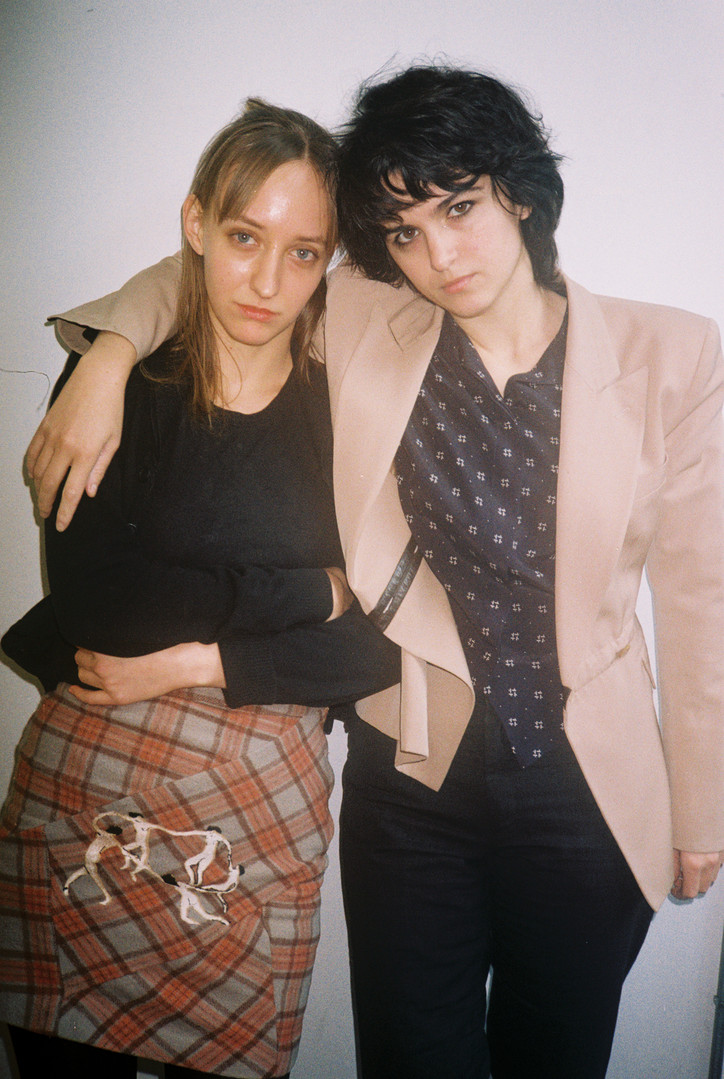
After a recent performance, Hennessey and Allan stopped by office to talk all things Slash and fan fiction.
What draws you to theater and playwriting?
Leah Victoria Hennessy: We’re both recovering theater addicts and this play would constitute a major slip in our recovery. I swore that I wouldn’t do any more theater after I wrote a play and directed it a few years ago. Emily was the star—it was so stressful, it made me realize that doing theater without institutional help is just too hard. It felt like it took years off my life and I promised that I would never do that again. But somehow, we got sucked back in.
How?
Leah Victoria Hennessey: We have a web series called Zhe Zhe—it’s the name of a band in the show, but it’s also a cutesy gender neutral pronoun. So, we had the show, but we would be asked to do live performances connected with the show, not theater, but performance art. So, we started doing those performances just the two of us, ahe first one we did was the first version of Slash.
What was the idea behind Slash?
Leah Victoria Hennessey: We thought of it as cosplay. We wanted to take something that wasn’t usually considered theater, like a cosplay performance, and do it in a theatrical setting. That was the idea. Originally it was performance art, and it was much more ironic. Then we had a monthly show in the West Village, and that’s where we developed most of Slash, but I still wasn’t thinking of it as theater.
How did you get into theater, Emily?
Emily Allan: My first piece of theater that I directed and conceptualized was when I transferred elementary schools and I would take a bus across town and pass by Jefferson Market Library, which I learned had been a women’s prison. I had a group of five friends that I would take the bus with and we developed this piece of site-specific theater. There was one bus driver who was into it and he would announce it for us.
When did you two start working together?
Leah Victoria Hennessey: For a long time, I was disillusioned with acting, then a teacher introduced me to new method—one based on impulses. It was anti-Stanislavski, anti-the method. It healed me and reawakened my passion for performance and got me writing plays. After school, the friends I had who were in his class and I started our own writers and actors workshop to develop new work. Emily came into that, which is ultimately how we developed Zhe Zhe. We’ve just been working together for so long, it kind of feels like you don’t just find your soulmate, you make them. We Frankenstein each other into our collaborative ideal. It wasn’t that chance encounter—it grew slowly. A lot of the stuff we’re passionate about we got into together.
What’s your collaborative ideal?
Leah Victoria Hennessey: We want to be funny in a subversive way that questions normalcy. I think a lot of comedy right now is upholding the status quo—it’s losing its bite. I don’t think of us as comedians at all, but it’s important for us to be funny in a way that challenges people’s preconceived notions. Also, we want to explore the way experiences are conditioned by the media that we consume. There’s no pure experience of reality. So, we don’t have any interest in purifying ourselves of cultural influence—we’re much more interested in affirming the collaged reality.
Emily Allan: In a way that’s sincere.