Art has become hyper-political, do you feel that formalism like this has politics?
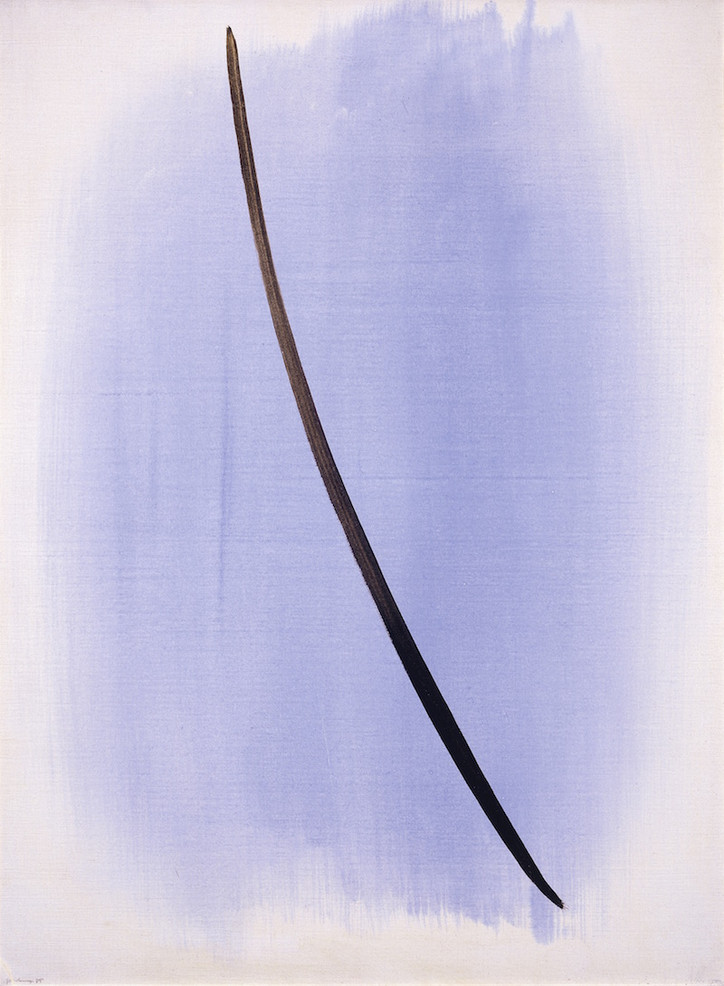
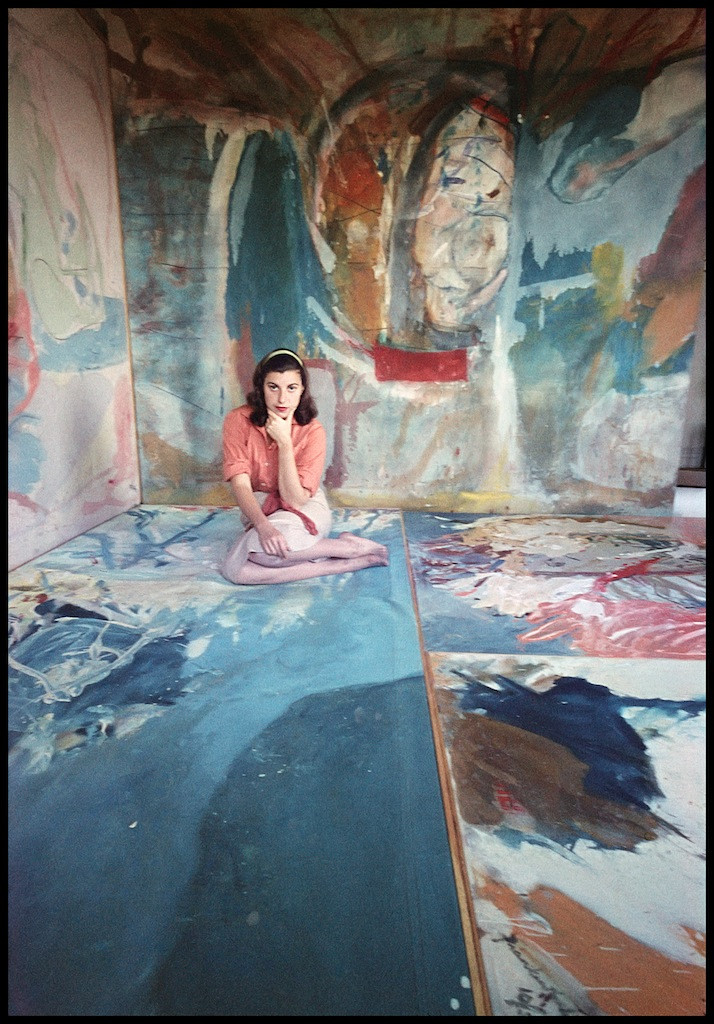
No, not at all! To be honest, that’s what I love about his work. You wouldn’t say that Pollock is political, you wouldn’t say that Rothko is political— it’s pure painting. How Kandinski could be political… or let’s say Radchenko clearly was working for a Socialist program, okay, that’s political. Picasso was political twice in his life. Art is a parallel world, it’s a parallel universe to me, it’s basically something that evolves in parallel to the real, to your everyday life, to the politics, to the problems, it’s something basically that’s supposed to elevate you— without dogma, without belief, not like religion, and the fact that Hartung wanted to keep away from all this is very fine to me. I think art can have a strong connection to actual facts, but, you know, what’s the connection of the person elected chief of state and the color of the background of his paintings, there is no connection.
Just think of it as a parallel universe. I’ve been a scholar of abstract art for more than fifteen years, and I have a deep belief in this universe that is without words, without obvious image, but has a lot to say, and a lot of emotions to give to people that are sometimes beyond words. I only use words because it is my job as an art historian— I’ve been teaching at the Sorbonne for years, and I’ve been trying to find the words to explain, and to do a translation with words of a purely visual language.
Pierre Schneider, a French critic in the 1960s, said that the only purpose of an art critic was to find the good words so that the spectator stays long enough in front of the work, so the poison of the work can enter the veins. So that’s the whole point, you have to find the words so people won’t leave, and it will give them a few seconds longer so that they can be infused, penetrated somehow by the visual elements. That’s a deep belief of mine, it’s almost metaphysical.