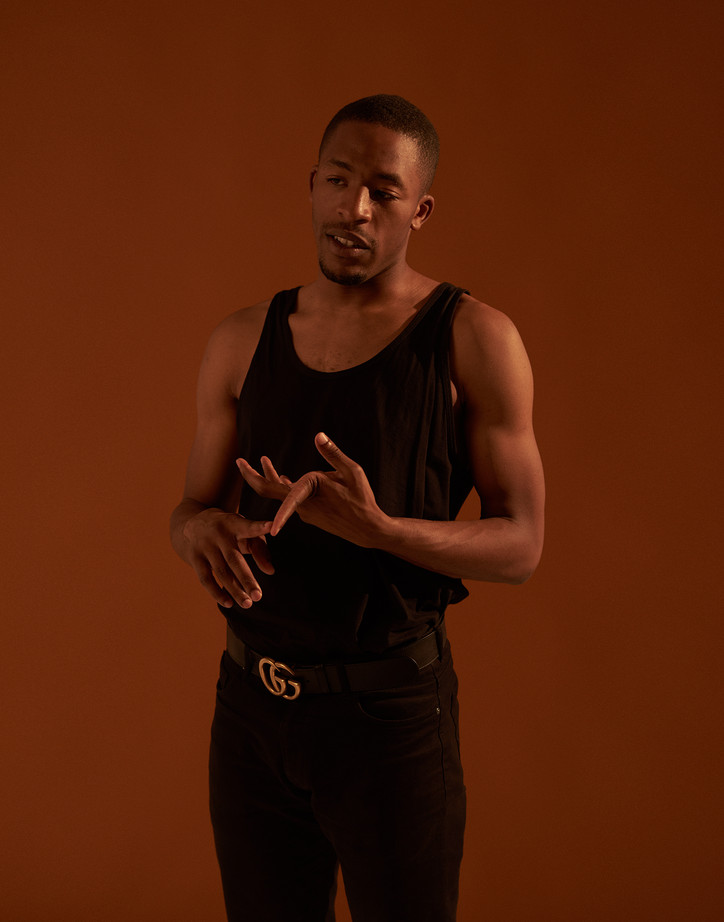
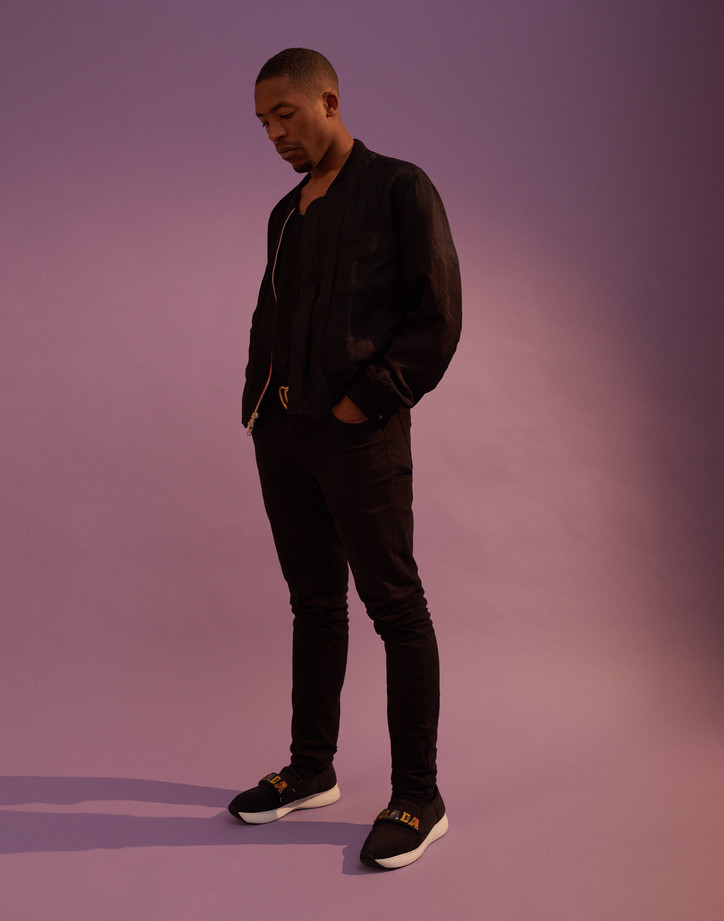
Your recent body of work Euthanasia Party / Twenty Seven centralizes the themes of death and loss, with the title presumably as a nod to the 27 Club and the popular artists who lost their lives at this age. Has there been a particular event has lead you to reflect upon death in this way?
In London, in 2007, there were 26 young people who were shot or killed in the capital. The years either side of it were equally violent, but so many friends were robbed or rushed or stabbed or mobbed or shot at, such that it became part of daily life. This period of time really had an impact on the way I approached life, friends and acquaintances were falling like flies and so it was almost as if, perhaps as a defense mechanism, I learnt to appreciate life as a fleeting thing. Live for the moment, appreciate the people around you and do what the fuck you want. Feel no guilt; it's your one and only life that could be snatched away from you in a heartbeat. 2017 marks a decade from that period in time, and London has changed and so too has my relationship to life and sex and death. I wanted to document that change and do so in a way that honors previous iterations of myself, whilst also cementing the passions and desires of my present self. EP27 was the project that enabled me to do that, and it's probably my proudest work to date.
The Poetry Session event you hosted at Boiler Room HQ in London earlier this month saw some great performances from young, London-based poets including yourself, Soph LS and Abondance Matanda. Is there a strong sense of community within the poetry and spoken word scene in London or do you have to dig deep to find these emerging talents?
It's funny because I don't necessarily think of myself as being part of a "scene", and if so then certainly not part of a spoken word scene. I think the main thing that links me to the poets that I choose to work with on the sessions and other projects is a shared philosophy or appreciation for a certain creative ideal. The poetry sessions are a space for writers and musicians to try things out and collaborate and exist in a space that is intended to give way to nihilism. Those who enter are either already there, ideologically speaking, by way of declaration or rather more subtly are showing alignment with this idea through the content, form and delivery of their work. I tend to find that I am drawn to these sorts of people. They are rare, so when I see them I snap them up! Anyone who shows any inclination towards rebellion against social or ethical or creative norms is someone whose perspective I want to hear and all the poets at these sessions are those kinds of people.
Poetry by minorities have traditionally fallen into the category of “politics” and/or “sociology,” Do you view the internet as being an important tool in opening up this narrow view of poetry and the voices within it?
I don't know if the Internet is changing the fact that some people still view work by minority (disclaimer: I hate the term "minority") writers as living purely within those categories, if they even do. For me there is no one social or ethnic group which has a monopoly on poetry and so from my perspective it exists as a meritocracy, where those who have the most engaging work are granted the accolade and the plaudits, despite their background identity (personally, not in terms of national awards or honors, only in my estimation here). Again, that is only my perspective and I'm very aware that everyone does not share this perspective, in particular maybe those in decision-making positions. So when publishers or literature festival promoters do their outreach, they may still impose distinctions knowing that particular Tumblr blogs or YouTube channels or whatever the medium may be, features younger writers, black writers or gay writers and they still go about conducting their business with these individuals in the same way. I almost think it can't be helped to a great extent, so I just do my own thing and people can categorize it however they want to.