So would you say there’s a separate lesbian scene?
Zanele Of course we are different.
Odi Well when you talk about gay, like a gay clubbing scene, when I thought about it in my head, I didn’t think anything lesbian right now. When people think of a gay capital of Africa, they’re thinking of going into a place where you’re going to see a whole lot of gay men. I guess I think of it as linked, but now that you talk about it it is usually separate.
Zanele It will never be linked even in what is to be seen as progressive New York. We’ve just come from Stonewall, the event happened yesterday, how often do you see lesbians there? There are no black lesbians. So we have learnt to maneuver different spaces and pocketed ourselves just for survival. But when you say New York Pride, who’s at the forefront there? It’s not lesbians, it’s not even black lesbians. It’s mainly white gay men, which isn’t a crime - it’s okay, it’s okay because they are forward. Then you have people like Odi Diva and all those cultural activists who are perceived by the curators of all these scenes as just a drag queen. So in our instance, she becomes not a drag queen but a drag queen with a degree, a well-informed somebody - that scholarship won’t write about because they want to link it to dirty laundry from Africa as if Africa has no creative thinkers. That’s the saddest part of it.
So do you feel like you entered the art world because you didn’t have a sort of space to occupy in the quote unquote “gay scene”?
Zanele Well, no it’s not even about that. For me, I come on board as a visual historian. I’m not collecting the content I’m producing the content, and my attitude being, if you don’t see yourself on tv, create the content. I’m not bothered by what Odi Diva is not doing for me, I’m bothered by what I want to see.
So you’re creating your own platform.
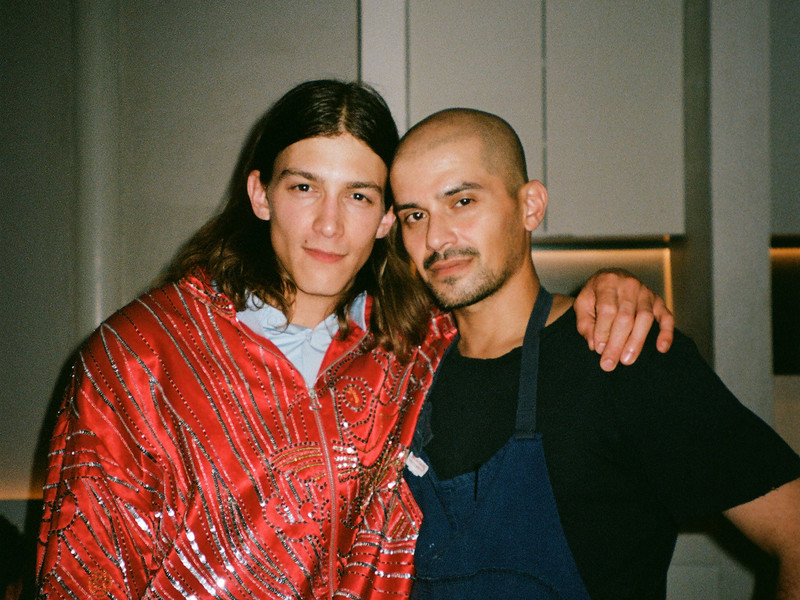
Zanele No, ours. It doesn’t end here (gesturing to herself). It’s then consumed by the scholars who are homophobic pretending to be okay but because they want to get their degrees they use this content anyway, which is on visual activism. So I didn’t see many books on black LGBTIA people and then I had to set the precedent, I produced the content, I’m not a collector of visuals, I produce them. And working alongside experts who are members of my community like Odi Diva, like Tara (another member of the entourage nearby) - beautiful human beings who are asserting different scenes that are never given enough spaces to shine, we don’t have many films that are produced by us [black lesbian women].
There is a lot of content produced on Odi Diva, not by me, not by Odi Diva, but by other people, which is okay because those people are challenging my brain to say “wake up” these are your people anyway, just save some money instead of buying shoes and create this content, produce your documentary, produce your photographs, make sure they are in mainstream spaces like here, so it’s not even like I’m fighting with anyone, I’m just being challenged and therefore it means I have to come on board not as a lesbian, I come on board as a business person, as a person with information, as a person who’s an expert. You know, sharing information with another expert like you, who might know of the gay scene in New York, but not be aware of the information that is not being written about for your own consumption because you deal with gatekeepers who decide what should be seen and what not. So I’m not bothered by it, I’m just on board as a visual historian as a visual activist, not as an artist, who uses photography for articulation to make sure that South African visual history is known and respected, and that the people in my village are respected.
Odi This is one of the funniest things, the story of how I ended up on this trip is sort of informed by what Zanele just said, they just opened up in Capetown the Museum of Contemporary African Art, which is our Guggenheim, which was curated from the collection of Jochen Zeitz who was the chairman of PUMA, who is the driving force behind Jamaica being sponsored by PUMA, the driving force behind, for example, the World Cup, when all the other African Nations wore African colors, so when he came to be open -