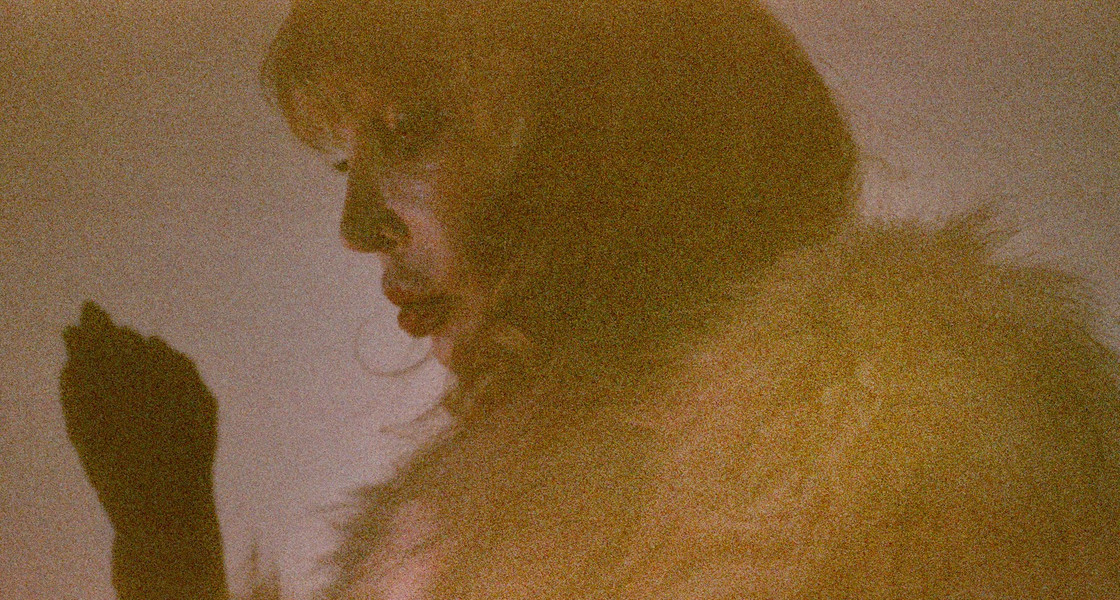
For Lovers
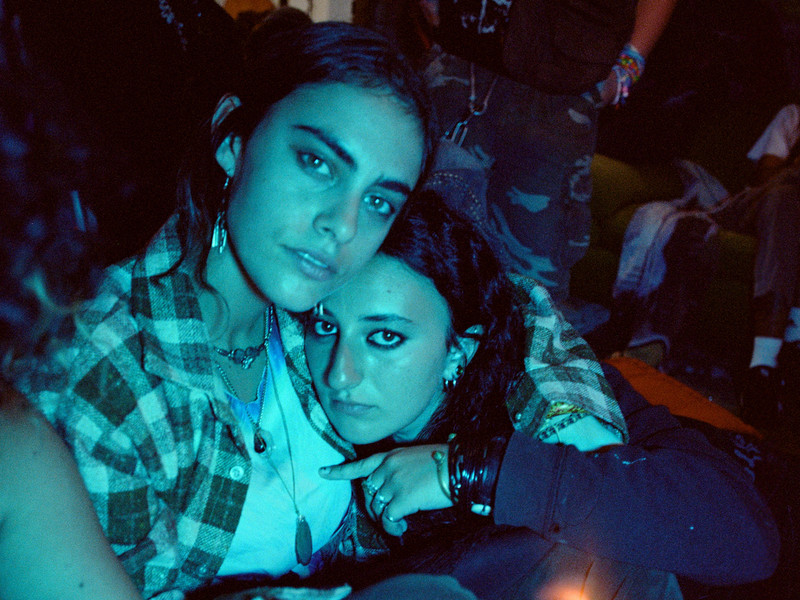
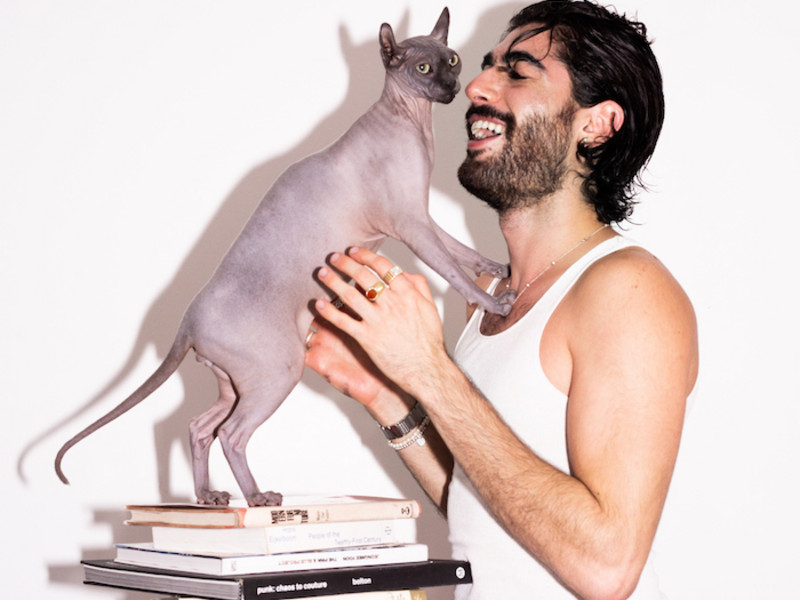
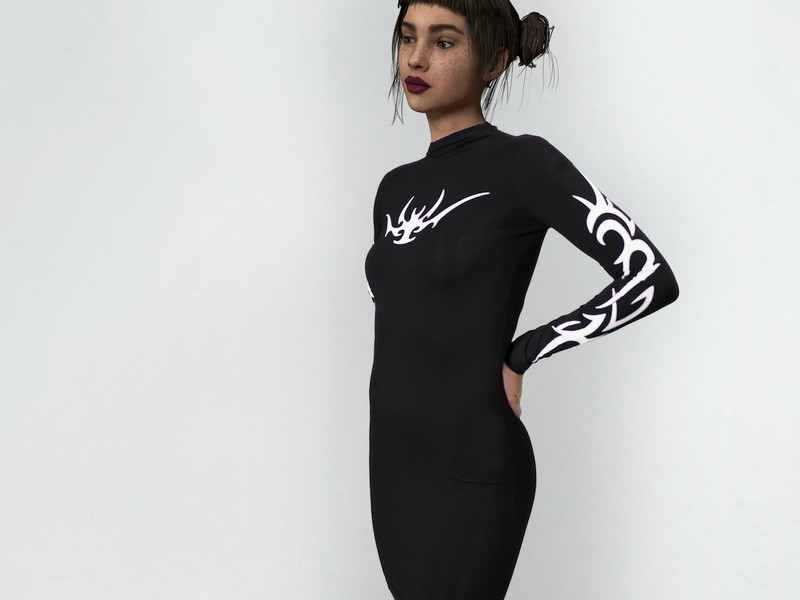
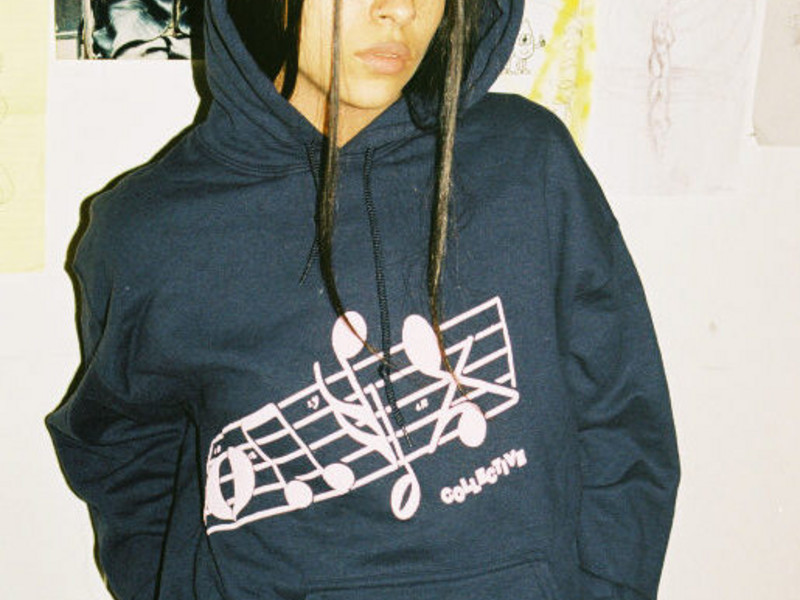
Lamar is a muse for the ages, a lens through which we can explore the love within both our hearts and others'.
Check out the video and photos below.
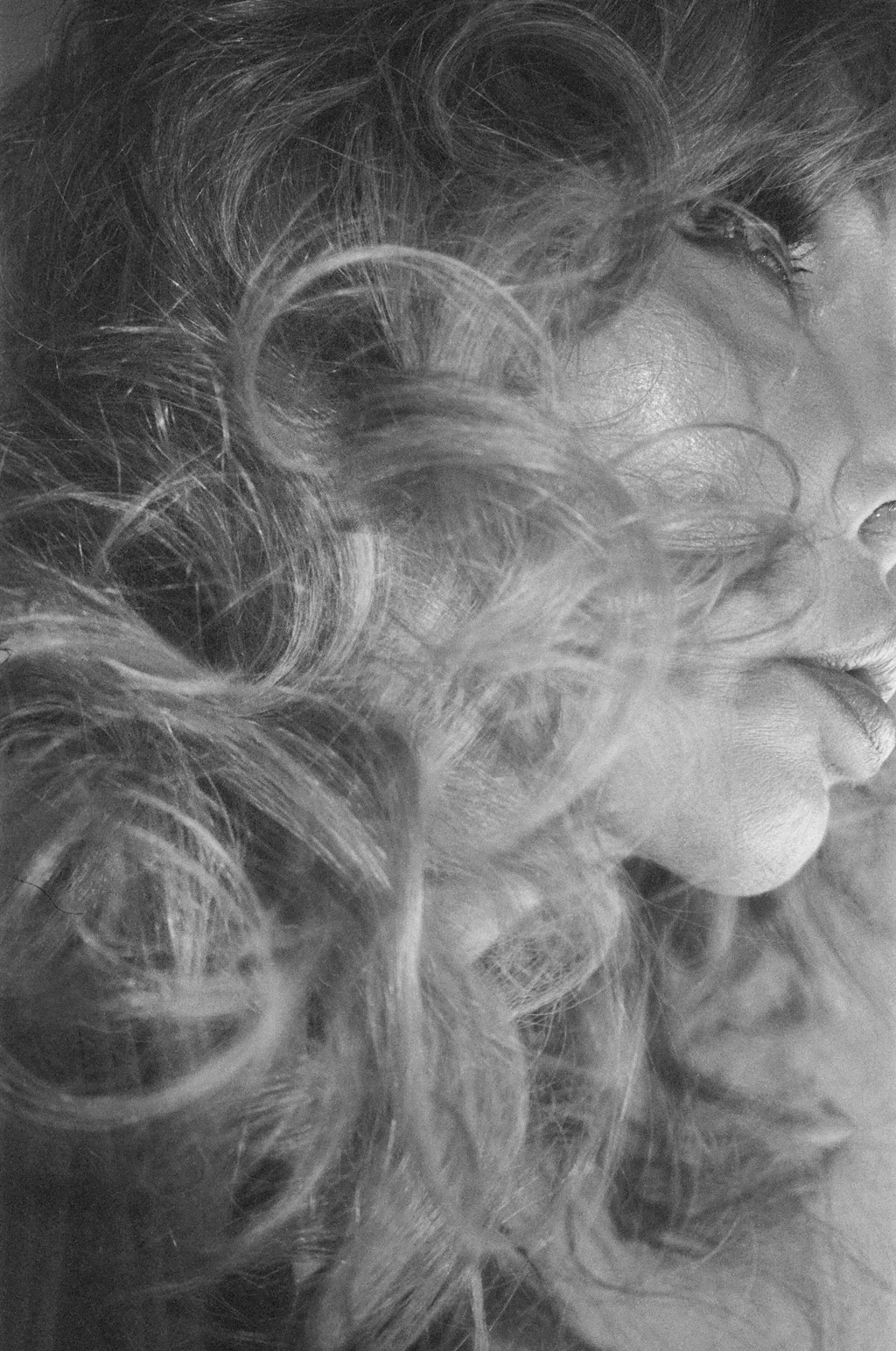
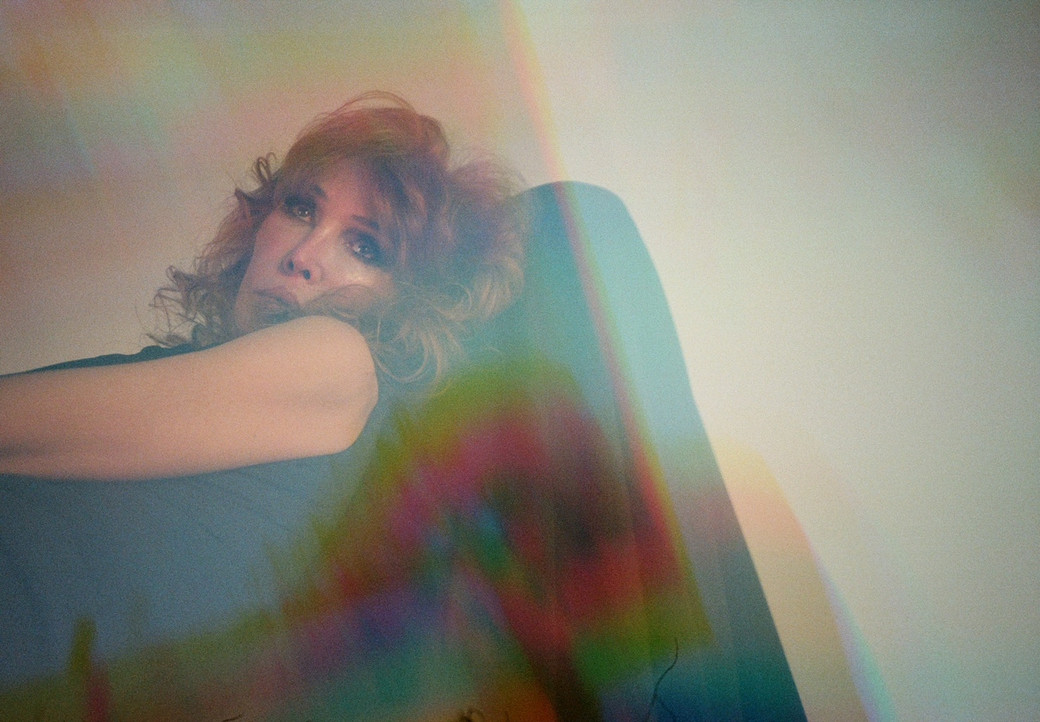
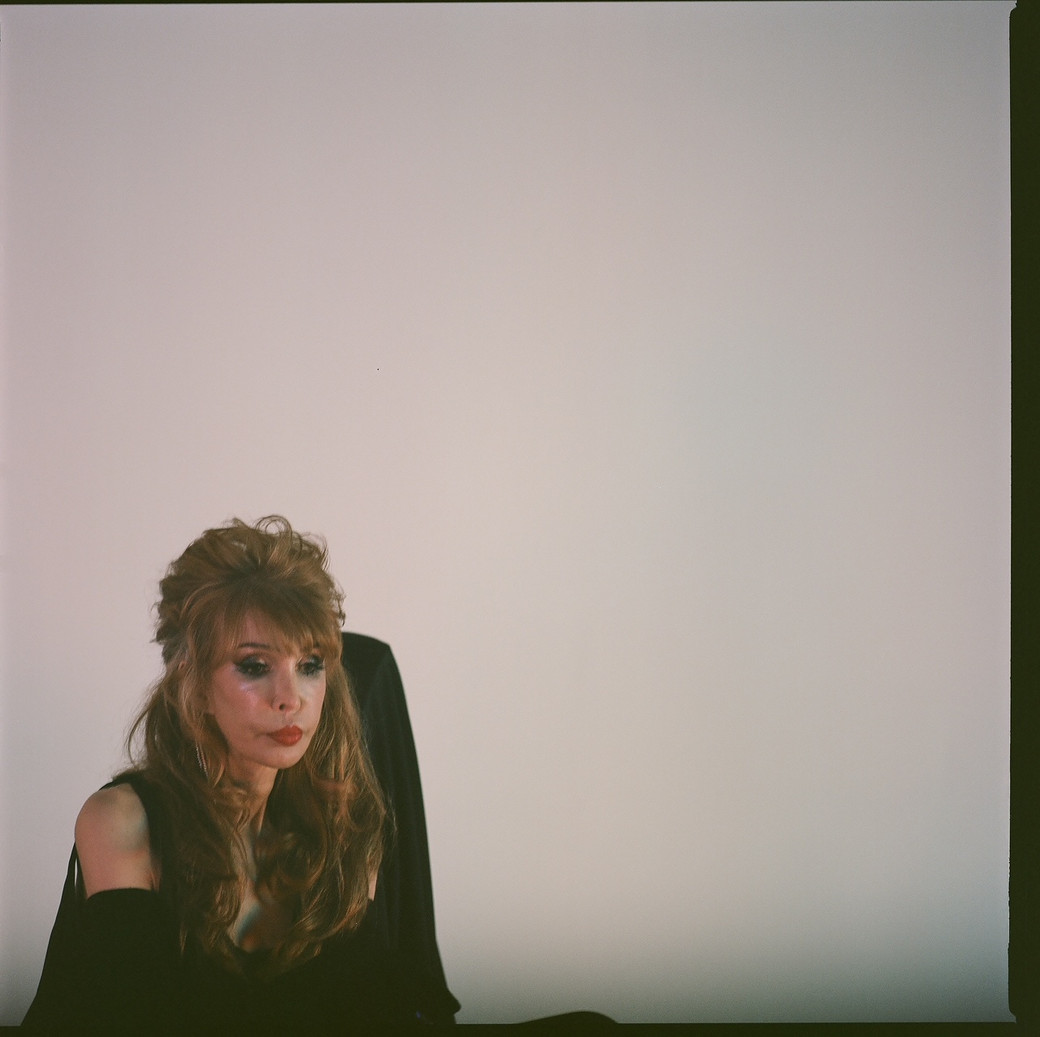
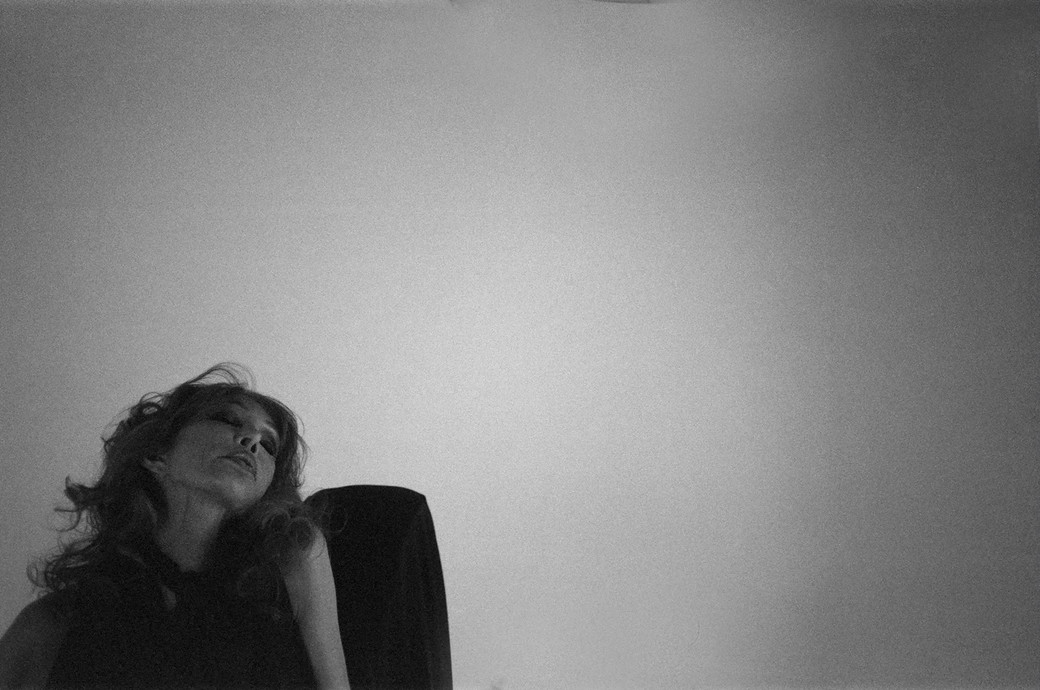
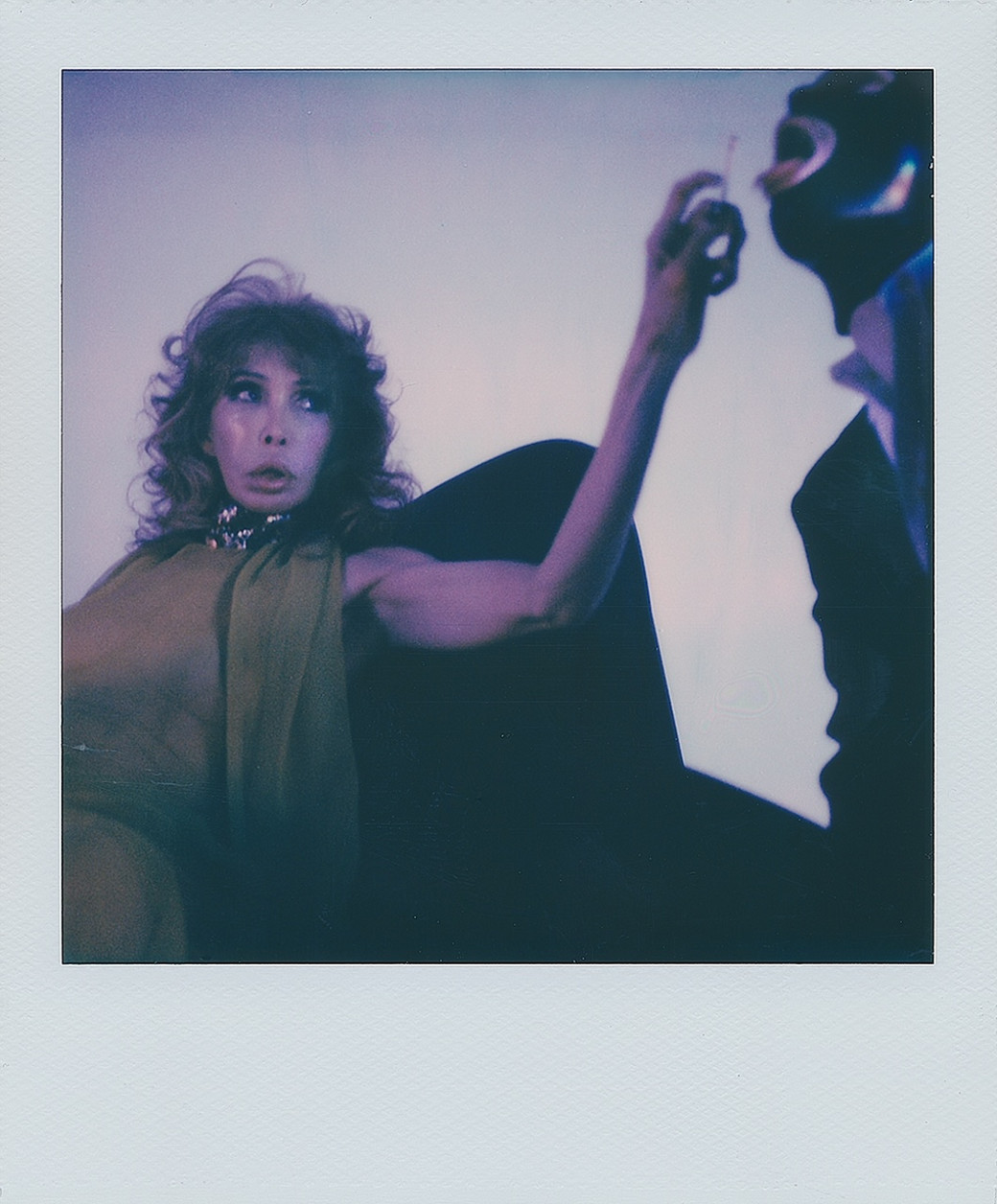
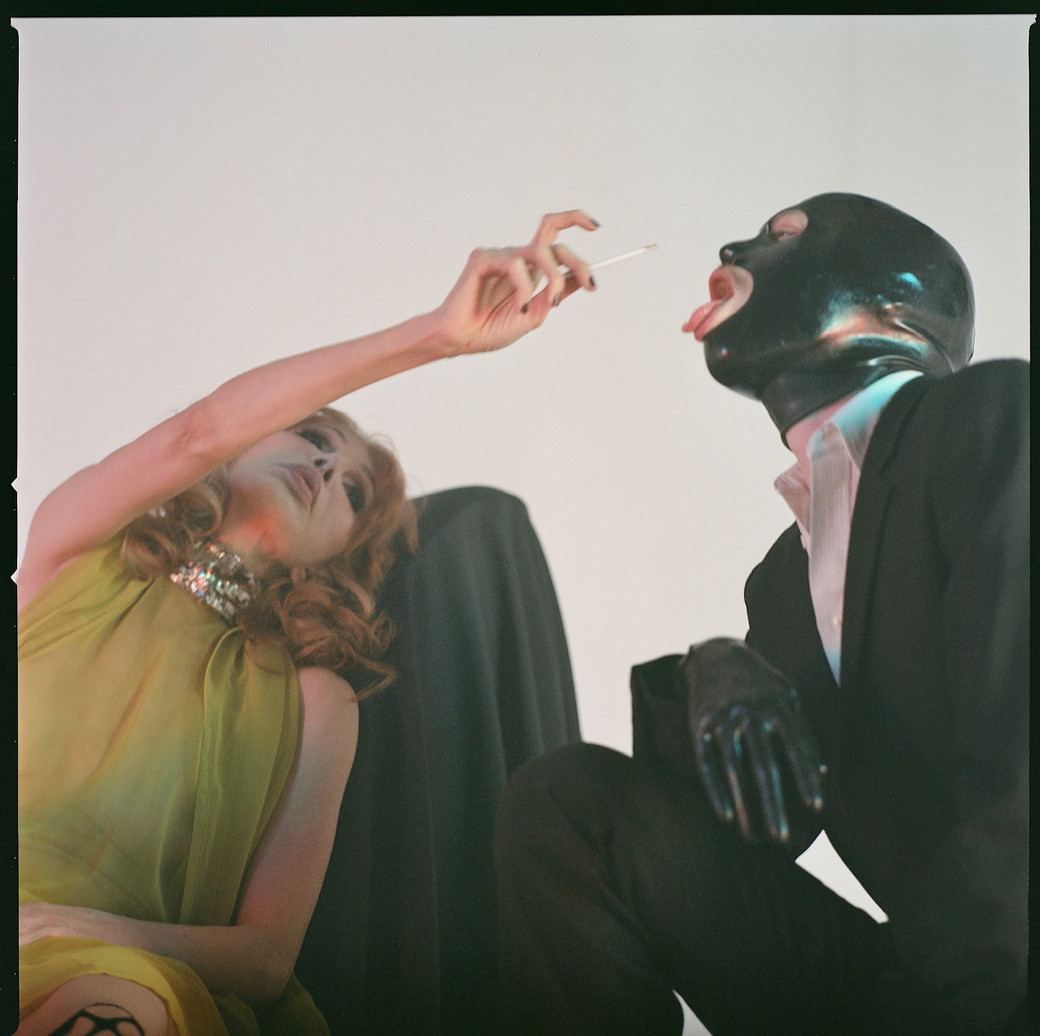
Lamar is a muse for the ages, a lens through which we can explore the love within both our hearts and others'.
Check out the video and photos below.
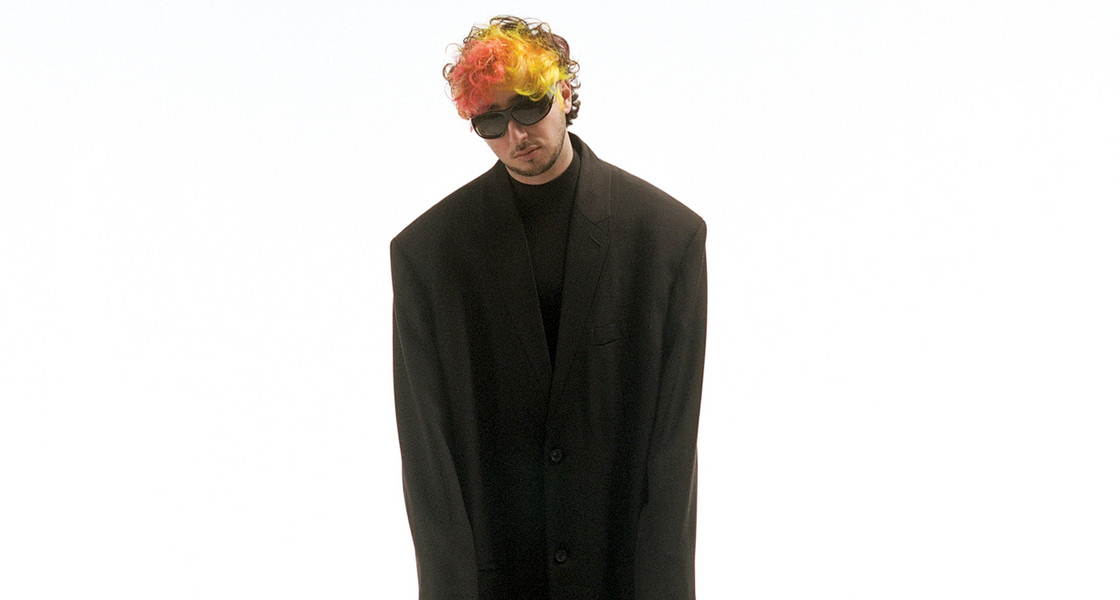
The group met at Miami’s SoHo House—the same venue where Zack Bia first snuck in to see Virgil DJ over five years ago. Before heading to Chicago to attend Abloh’s memorial service, Zack talked to Cole and Raheem about bringing people together, finding your priorities, and, of course, time.


RAHEEM HERCULE — Let’s talk about why it’s such a full circle moment for you to be here right now.
ZACK BIA — I actually think that before we even start talking about anything—and it applies to the full circle thing—is, like, I definitely want to start by just saying how much we love Virgil. I love Virgil and want to say rest in peace to him. A lot of this is only possible just because of him and the ideas he laid out, the help he gave me, doors he opened for me—for everyone—and just allowing people to be multi-hyphenate creative, and kind of defining what that was in an era when people thought you can only do one thing. He broke down all those barriers and as someone who looked up to him very much and was lucky to know him very well, I definitely want to start it all by just dedicating this to him, and showing him the most love or just appreciation... There’s nothing that I can do to do any justice to him, but I at least just want to start by mentioning him first and foremost. We love Virgil. Virgil forever. It’s full circle because my first Basel ever—funny enough, my mom was one of the first creative people that was invited to be a member of SoHo House when it first started in New York in the early days. So, she came to New York. We went to SoHo House all the time when I was a kid—actually, the first was that I got paid for anything was actually curated a playlist for the iPod at SoHo House. They gave my mom like $150 bucks credit or whatever and she gave it to me in cash. Long story short, 2017, my first Art Basel, I came here to throw parties and whatever, and I wasn’t a member at Soho. My mom always said like, ‘When you’re 21.’ I remember being like, a 12-year-old kid being like, ‘I can’t wait to be 21 to get a SoHo membership.’ I thought it was the coolest place ever. You know, time flies, your priorities change. But 2017 Art Basel, Virgil’s DJing the tent party at Soho and I’m DJing tonight. I met Virgil a couple of times and we were cool. We were internet friends or whatever, but I was just such a massive admirer of his and I just wanted to see him DJ so bad. So, he’s DJing this part of the tent I don’t have membership for, where the same five people are sharing the same wristband, like someone will walk it out under the thing, hand you the wristband, boom, boom, boom... Now, five years later, we’re here doing an interview in the same hotel for my first cover ever. And I’m DJing at the same party.


RH — What do you want to do for your community? Like what are you trying to put in front of them in terms of the shit that you’re working on and building? And what do you want them to get out of it?
ZB — The most important thing in the early stages, like in the current stage, is the music. So, Cole and I had this conversation last night about leaving certain things in moments, and art that lasts beyond yourself—it’s bigger than yourself and will last beyond your years. Also, a big thing Cole and I always talk about is, there’s this new movement that’s happening in music, this whole kind of like, underground SoundCloud 2.0. Cole was at the epicenter of the first movement, which changed music forever, because it was like, one of the first modern movements that involved the internet and all the sort of things that were nontraditional in music, just as music was entering the streaming era, and the SoundCloud era. It was like, pop music wasn’t SoundCloud rap. Back then, the music business had kind of been ignoring all these kinds of things—until it got so big that they were like, ‘Shit, this is a massive business, or a massive movement that we’re missing out on.’ Then, you saw like a chickens with their head cut off free-for-all—‘Let’s sign all these SoundCloud artists, any of them, all of them.’ It became this crazy thing in the business. But Cole was at the epicenter of the pure side of it, which is like kids that were just making shit and it was going viral, and it was powerful, transcendent pop music. Juice WRLD is still the number three most streamed artist on Spotify this year. There’s almost like, a little gap where I’m like... This isn’t even necessarily for me as a fan, just for this next generation that’s five years, six years younger than me. Cole, someone who was a part of the first movement and now, and me, who’s kind of championing the second one. So, I was in the first one living in it, being around those artists, but not in a professional setting where I was signing them. After living in it and seeing it now, seeing the second coming that’s formed as we were signing artists, creating a real family where we signed a bunch of them and together they’re all stronger because the whole movement’s getting stronger. It’s not about bringing them to the forefront. Their fan bases are growing every day. It’s clear as day. Now, my whole thing is just letting the rest of the world know that there’s this whole thing happening over here.
COLE BENNET — What Zack is doing, I’d say the most special part about it is: you bring people together and you create community with everything you do. The first time Zack and I ever met—we had been in contact over the internet for a couple years—I was on a video shoot and he saw that I was out in LA working. He was like, ‘Hey, come out tonight.’ He brought me out and we had a good night where he was just introducing me to different people and building genuine relationships. It was just a really amazing thing to see, because a lot of people, and this is much like the first wave of SoundCloud, that first chapter, a lot of people want to gatekeep things, you know what I mean? Even artists. And I think that’s one of those things that starts to kind of tarnish what’s going on and separate people. One of the things about Zack is, he just loves bringing people together. He’s been doing that for so long with the events that he produces, just being a man behind the scenes within culture. So now, with him having such an important piece in the music scene now, you’re able to do that with the artists that you’re working with. That’s what we need in music— community, and bringing people together, bringing different artists together that wouldn’t make music otherwise. That’s one of Zack’s goals, but it’s not something that’s written down necessarily. It’s just something that happens. It’s very natural for him. I think that’s part of his story and his legacy and what he’s creating— moments that wouldn’t be able to happen otherwise, bringing people together that would never meet otherwise. So, I’m curious... What’s the goal of bringing all these different people together?
ZB — People together in music, or in general?
CB — I’d say in general, and then lead that into the music.
ZB — In general, the beauty of it is, I don’t do it for any reason that benefits me. There’s a genuine bond there and genuine respect. The fact that we can bring these people together—I think it’s such a special thing. If I can be that missing link... It’s not about me getting credit, it’s not about this or that. It’s about the moments that happen after—the butterfly effect of introducing these people and what they end up doing together. It’s kinda like what A&R does—helping bring songs to life. I was kind of always doing that socially. That’s why we started the record label.
RH — What are some of the artists that you’re trying to bring to the table right now?
ZB — I think Yeat’s the biggest breakout star next year—or, one of them. I think Kobe’s going to be a breakout star next year. All these kids. Slump6s has this viral song, “Anti-social”—we built that song up and now it has like 80 million streams. It’s a hit. It’s a gold record. I mean, I haven’t checked the actual certification, but it’s about to be a gold record. And he’s a 16-year-old kid who’s in school in upstate New York—in Rochester—who’s an underground superstar. He has 200,000 followers on Instagram, die-hard fans, big viral songs... And he’s 16 years old. I had to schedule our Republic Records calls around his soccer practice. And that’s the reality, that’s the mission. I’m like, ‘These kids are just fucking amazing young kids that we’re trying to help realize their dreams.’ And it’s both of our dreams.
RH — How were you able to attain so much broad access to so many different kinds of artists to even be able to put these people in the same space?
CB — I think for him, it’s what he was saying about how he can appreciate different pieces of, or mediums of, art and culture, and maybe not be too attached to something. It starts with an appreciation and an understanding.
ZB — I think an [understanding] of human beings in general.
CB — Yeah, he gets how people work. He gets how people operate and he knows how to be in a room.
ZB — How to contextualize it.
CB — But there are also low points and we always talk about that too—like, the anxiety and the difficulties of just navigating life. What’s that like for you? The ups and the downs? And how do they affect one another? How do you guide yourself through them, living this crazy life?
ZB — The thing is, I’m sort of on this train that isn’t stopping. And in a sense that, I mean that my work life, my personal life, there’s no distinction—it’s all just one life. Taking calls all day, I’m DJing this, I’m running around, we’re traveling, I’m seeing you hanging out with my friends... It’s all just sort of one melting pot and constantly moving forward. And because I never take a second to stop—I can’t. I’m on this crash course to try and build all these crazy things. I have people I need to take care of. I have things I want to accomplish. I have people I need to help. When you’re dealing with artists, you’re dealing with human beings, their livelihoods, and they’re entrusting you with them. So, I never really have a second to stop, and I get anxious all the time. I deal with people discrediting what I’m doing because they don’t know my story. I deal with family stress, financial stress. The funny thing is, like, I’ve always been the kid that everyone thought was rich, but I’m the one that’s struggling to make it. I mean, I’m not struggling financially anymore, but for a long time, I was struggling to help everyone else take care of people. And I deal with that outside pressure. But it wasn’t intentional... I never really was trying to explain what I’m doing, I was just kind of doing it and people were paying attention along the way. And then there are the people that weren’t paying attention. But I think when I’m 50, this whole chapter of who I am will be a one-page chapter as opposed to all the things we end up doing. And not that it’s for people’s validation or whatever, but I think the greatest thing is when you’re living these amazing moments, we have the self-awareness to talk about it and be like, How amazing is this?
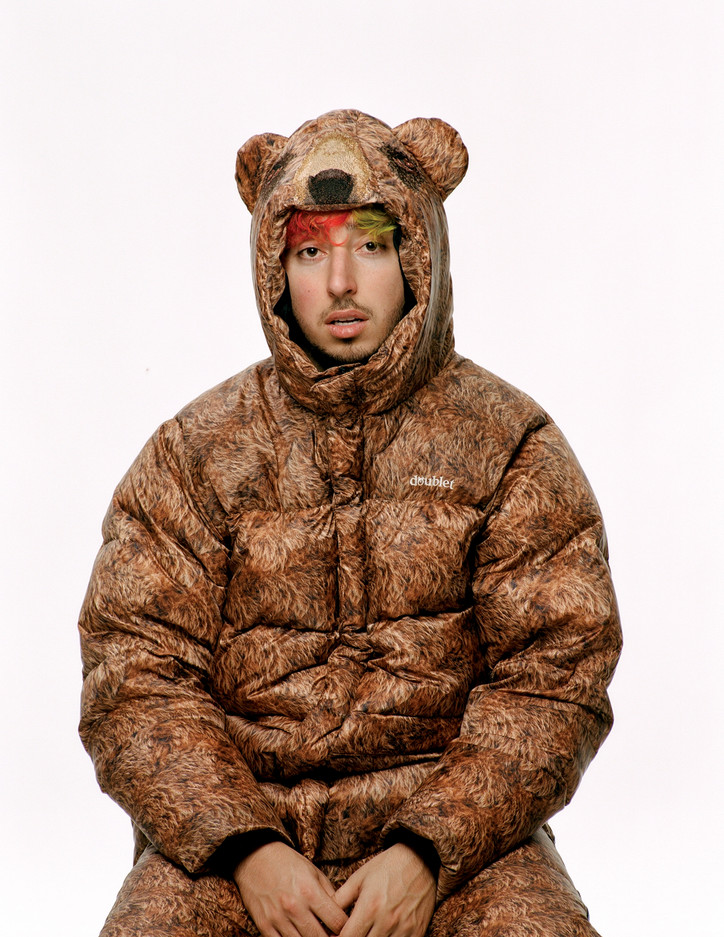
CB — It’s the moments where you pause that are the most special and beautiful. Take it all in. That’s why we have to always remind each other, because it’s one or the other and often at the same time... We gotta just stop. You can’t stop for too long because you can’t fall behind, but you gotta stop for a second, take it all in, keep moving. And I think that’s how the story gets told, and that’s a big part of what Zach’s doing, and what’s being created right now. He’s so truly passionate about what’s going on. It’s real love. It’s real context. And he’s just doing it... There’s gonna be documentaries. There are going to be movies about this shit. I do believe that.
ZB — Yeah, and I think COVID also was this break that we didn’t realize we needed in a sense, trying to take the good out of it. But also in the sense that, funny enough, I thought we’re all back to how it was prior in terms of how people interact. But for a second it was like, ‘Yo, a month has gone by, I’m not getting the same texts from the same people,’ and you realize a lot of the relationships are transactional. Who do I really care about? Who really cares about me? Who am I really talking to? And that’s fine. Some relationships are business, some relationships are more, and that’s totally fine. But I think it also puts a lot of things in perspective for everyone.
CB — Yo, another question—I want to just hop in before I forget it. Time and attention are a currency and I feel like everyone has their own budget for their time and their attention to things. So, how do you recommend someone spend their budget and how do you spend yours? Because you do so many things. I think one of my first questions for Zach after I got to know him for a little bit, I was like, ‘How do you do it?’ But it’s really how you spend your time and attention.
ZB — I think it’s something I’m actually learning more and more about, because I spend so much of my time on others in a beautiful way. I’m happy I do that, but it’s about learning to prioritize what’s genuinely important. And to me, obviously, that’s family, it’s friends. I put friends and family in the same boat. I only have my mom and my brother and I’m super close with them, but because I didn’t grow up around a bunch of cousins and things like that, my close friends are definitely family to me, and my priorities are those key people in my life, and then work and the mission we’re on. We’re not stopping. And I think it’s increasing. As you grow older, you grow increasingly self-aware of not just being on the ride but controlling it. Not being a passenger, but being the one steering the wheel and asking yourself, ‘Where do you want to take it?’ It’s just as scary, but it’s exciting. And I think as I’m on these missions, I have a kind of natural internal clock of, ‘Okay, I need to go get this work done. I need to go do this. I need to go spend this,’ while mixing in moments of leisure when appropriate.
RH — Why don’t you want to stop? What are you worried about? Or is it just another genuine natural occurrence inside of you?
ZB — It’s not. It’s like, anxiety. If I stop, what will happen?
CB — One person we should talk about before we forget is your actual blood brother, Elon.
RH — What advice would you give him?
ZB — Because he’s my little brother, I felt like I was always the one that spoke up for him. My biggest thing for him is, ‘Elon, your voice is powerful. Speak up. You have so many great ideas, and you’re good at writing them down.’ But when it comes to asking for things, he never does. That’s probably part of being a little brother—kind of always feeling like you get hand-me-downs, or you get this thing last. I’m like, ‘Yo, Elon, if you want something, ask for it. You want a budget for something? Tell people.’ And also, if you don’t feel comfortable having those conversations, that’s when you should get other people involved, the kind you feel can facilitate those things. I mean, obviously, you should understand all the business aspects of it, but your main job should just be to be an artist, creating music, coming up with ideas. Let me handle getting the money for that. Let me handle how we distribute this, how we put these things out—all those things. And that goes for any artist. You’re an amazing photographer, videographer, multi-hyphenate creative. And for you, you shouldn’t have to have these conversations at a certain point. Of course, you have to build it up and get there. And it takes a lot of hard work and, really, a lot of tough conversations. But at a certain point, if you feel it’s better for you to have someone else that handles that for you, that makes total sense. I know, for me, once I made that jump to kind of putting my own negotiations and stuff in someone else’s hands that I trusted, it changed everything for me.
CB — So how do you manage trust? You even said that when quarantine started, you kind of—or we all kind of—started to see who’s really there for us, who our friends are, what people’s intentions are... So how do you manage?
ZB — Part of the reason, my quote-unquote story—which I don’t feel is some crazy story— but part of the reason that so little information is shared about my life has always been trust. Because it’s not about sharing our experiences with anyone other than ourselves, you know what I mean? It’s only now that we’re talking about these things. But even for years, we were like, ‘Why is he this person?’—there’s no reason for me to explain it because what we’re doing is a human thing. It’s an in-person thing. It’s like you have to experience it. And trust is the number one thing. We’re so lucky to know so many people. But how do you learn to trust someone you’ve never met in person? Kids are doing that. Also, a lot of mistakes come out of very strong emotions, desperation, excitement. And it’s learning to navigate what’s beyond just that initial feeling. Some people call me and be like, ‘I have this crazy deal for you!’ But it’s contingent upon something else, or their intentions are different, or they want you to help them do this, or it’s a favor for a favor... My favors aren’t like that. My favors are just favors. They’re just because I genuinely care and want to help or whatever. Time really is the biggest thing. You get to learn. You have to make mistakes, or you have to learn from people that made mistakes, and you can’t jump into things. I say no to 99.9 percent of things. And probably, some of them, I should say yes to. But I’m so extra careful with my trust and so extra careful in doubling down on what I’m personally doing and what I’m trying to build that... I don’t know. You just gotta figure it out.
CB — Is it the same for you, as time goes on? Because, 10 years from now, think about all the people you’ve met. You probably have the biggest networking catalogue of friends and associates that probably already ask you for favors all the time. Is that stressful for you? And how do you think you’ll be able to manage that?
ZB — It is stressful, and I’m learning the power of no, because if anyone asks me how to do anything, I’ll always try to make it happen. But I’m learning at what expense.
CB — Yeah. Give, give, give.
ZB — Give, give, give. Is it, in terms of the power of no, saving my own personal sanity? Or saving... What if someone wants an introduction to you, and it’s quite possibly a waste of your time? No disrespect, but maybe it’s something you’re not interested in. How do I protect that from even happening? And that just goes back to The Future’s point about integrity and learning to navigate that.
AZ— Absolutely. That concept holds a lot of weight, but just as much hope, speaking as a woman who has been there.
DT— That’s what I’m hoping for, because I know everyone’s situation is different and some are going to obviously be a lot harder. But that’s one of the things—if I could just tell anyone who’s having a really hard time, if you could just hang on. It might take some months, or maybe it’s going to take a few years, but I do think it’ll get better. You’ve just got to find something to hang onto. And it hurts. I’m sure it hurts more for the people who lose loved ones too, who don’t find that hope or something to hold onto and it really is heartbreaking.
CB — And the thing he said was, ‘If you tell someone ‘No,’ they might be mad at you, but they’re going to respect you.’ And a friendship, relationship, whatever it may be, can always be built back up, if there’s a foundation of respect. People have to respect ‘No.’ And we have to normalize ‘No.’ It’s always, ‘How much for a music video? How do we get in touch for a music video?’ And I say, ‘It’s not about the money.’ I always say I just let the world turn. I just let the world turn, and we’ll see what happens. And I think that’s how we have to approach life and everything. We got to enjoy ourselves and our journey, as well. It can’t be give, give, give, because it’s been that for so long. It’s like, okay, now we’re here. Let’s build it into something beyond us.
ZB — I ask for very few favors. Sometimes, I wonder if I should do more, connect more business with people I know. But the answer is, for me, that’s not really the way.
CB — But you do it in such a natural way. You put people in the same room. And if it’s supposed to happen, it’ll happen. Going back to delegation, by the way, one of Virgil’s biggest fortes was finding the right people to get involved. Pedro [Cavaliere] on the music front, his design team, what kids to help. And this is someone who was able to prioritize everything from Louis Vuitton, the biggest luxury company in the world, to designing a t-shirt for the local skate shop. And he actually saw equal importance in all these different things. That’s sort of what made him so great—he could touch all these different touch points across culture, across people’s lives.
ZB — And when he passed a couple of days ago, you start to see this influx of Virgil memories and Virgil posts. And you’re like, ‘Damn. How many fucking people have amazing memories with this guy?’ This is a guy who turned 24 hours into a week. And he would be in 10 places at once. And everyone has a story because he somehow found time for all these people, maybe more so than he even should have. Always giving.


Pre-Order the Julia Fox Issue 16 cover here.
During the pandemic, Fox became a mother, giving birth to her son Valentino while continuing to work. (She shot Stephen Soderberg’s No Sudden Move while six months pregnant.) She also began writing and launched a podcast, Forbidden Fruits, with her friend Niki Takesh. Juggling multiple projects comes naturally to Fox, who grew up in a working-class area of New York City.
“My parents never spoke unless it was to fight about money,” she explains. “I just knew very young and very early on that I needed to hustle.”
Fox is scheduled to shoot three movies this year. Her next role will be as the hard-partying celeb- rity hairstylist Carrie White in an adaptation of White’s best selling memoir, Upper Cut, a tale of addiction and recovery full of glamorous anecdotes. White partied with Jim Morrison, got high with Jimi Hendrix, and worked on set with Hollywood immortals like Elizabeth Taylor, Elvis Presley, Goldie Hawn and Marlon Brando. It all sounds like a natural fit for Julia.
There is a lot on the horizon for Fox, yet she remains down to Earth. Over a Zoom call, Fox unpacks from Art Basel Miami, putting things away in the bathroom of her East Village apartment. Fox can transfix an audience even while cleaning the bathroom. I happily watch as she talks, opening and closing the medicine cabinet, moving items around, hair whipping in and out of the screen as we get off topic, talking about her bodega favorites—“a toasted bagel with cream cheese, jelly and bacon,” plus a handful of candy. “And I go to Burger King often!” she adds. “I love the Iimpossible Bburger and the Hershey pies!”
I’m reminded of the multiple ways icons get interpreted, like how in Ancient Greece, there was Aphrodite Urania, the Aprhodite of the Heavens and then there was Aphrodite Pandemos, the Aphrodite of the people. Julia Fox is a celebrity that belongs to the people.
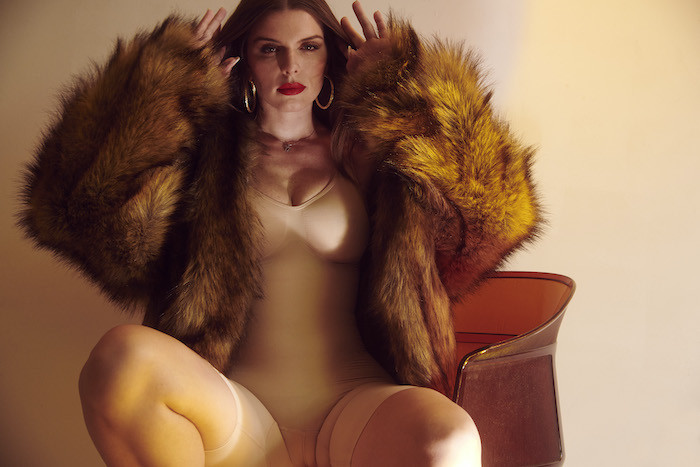
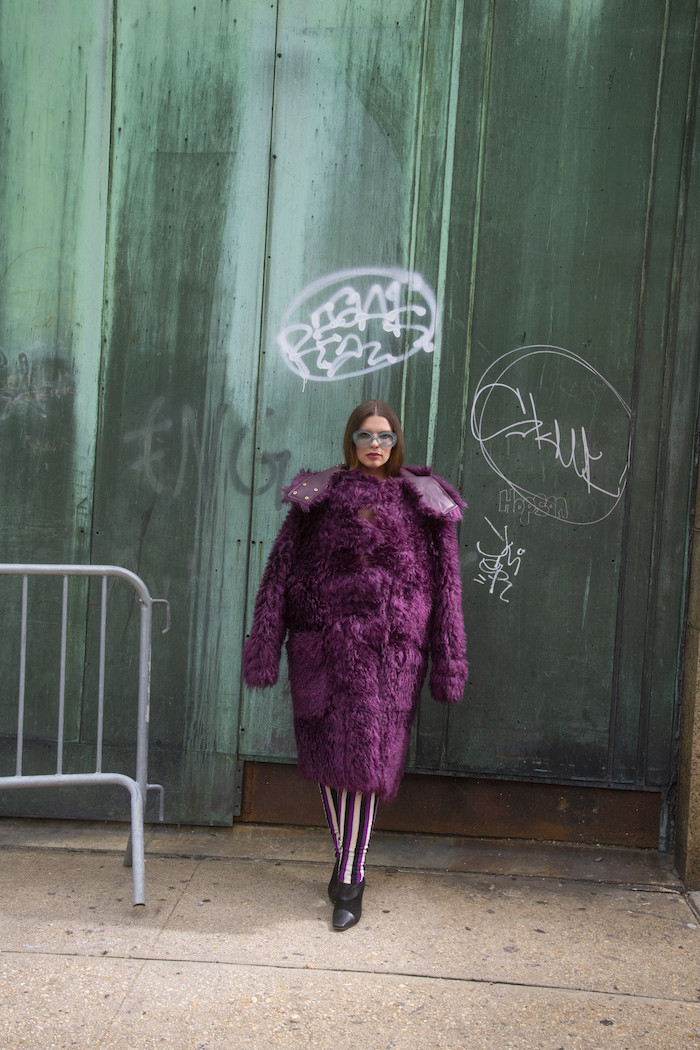
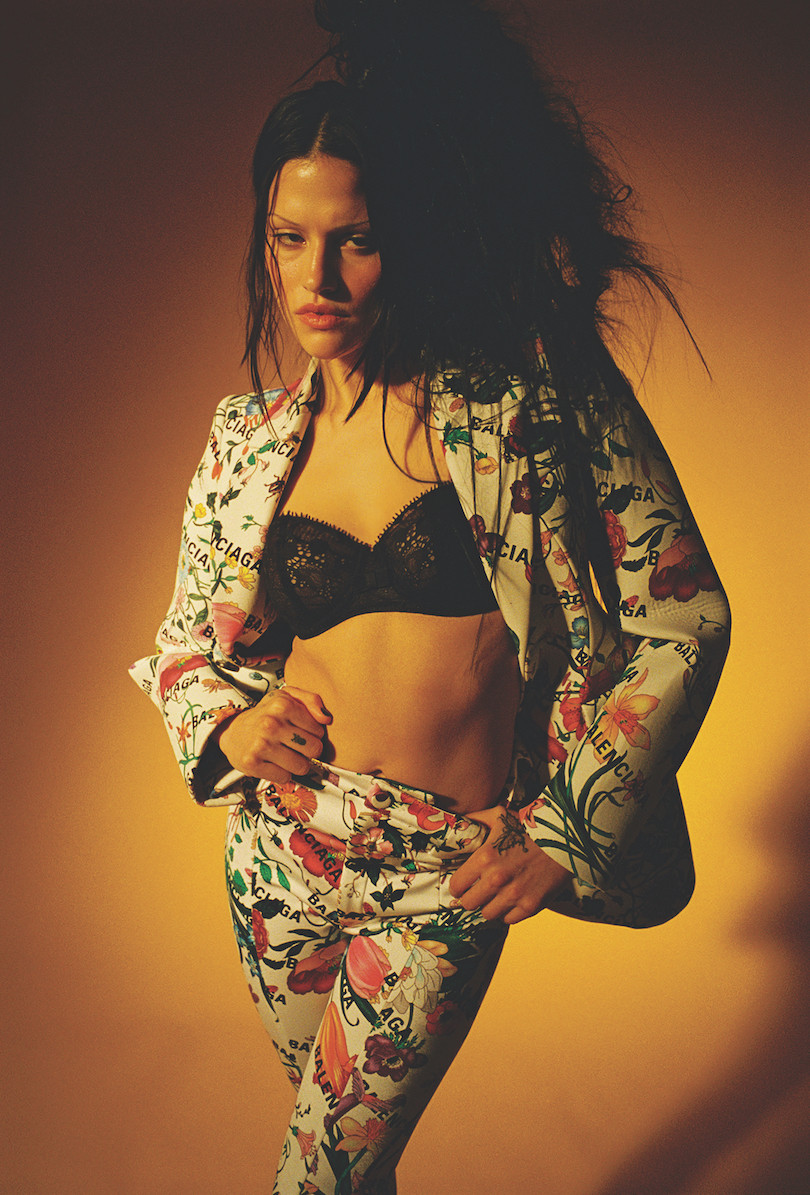
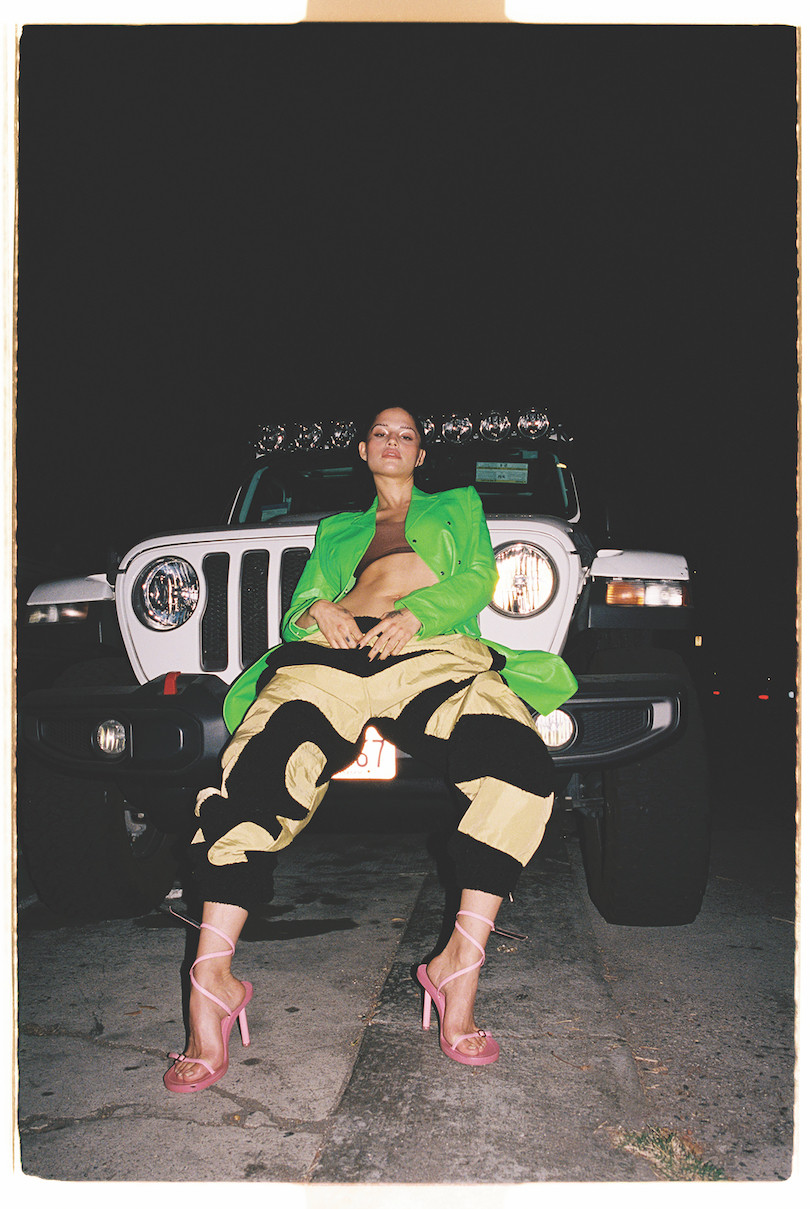
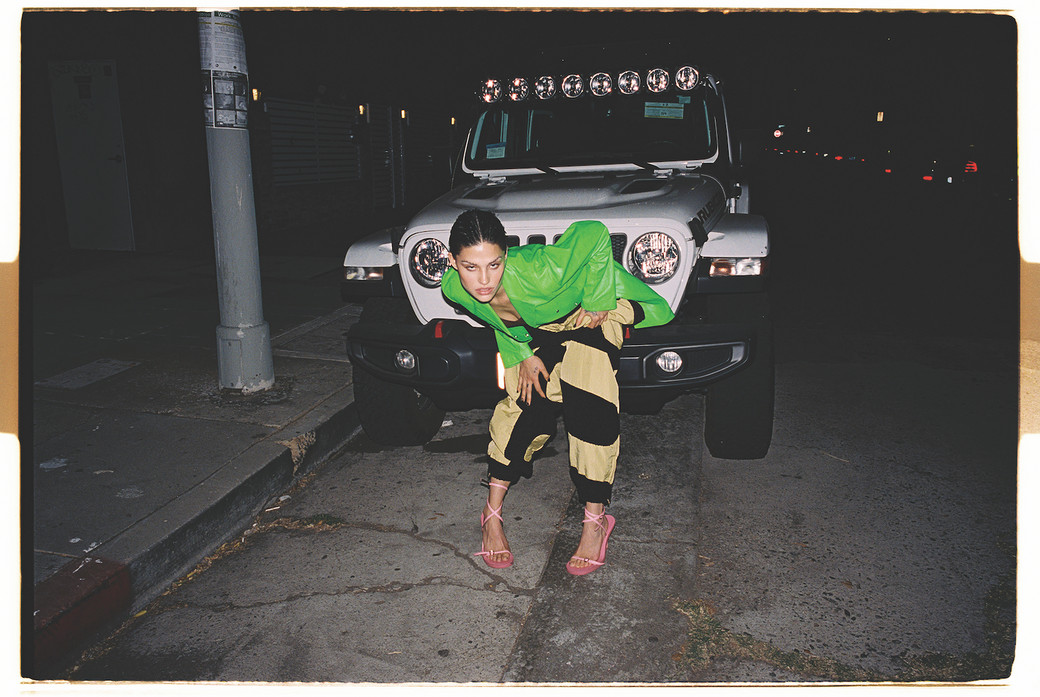
Top and pants BALENCIAGA, underwear SKIMS, shoes MANOLO BLAHNIK, sunglasses GENTLE MONSTER, purse GIVENCHY
Bra CUUP, sunglasses BONNIECLYDE, earrings BP JEWELRYDress VALENTINO, bra CUUP, underwear SKIMS, shoes MANOLO BLAHNIK, earrings BP JEWELRY
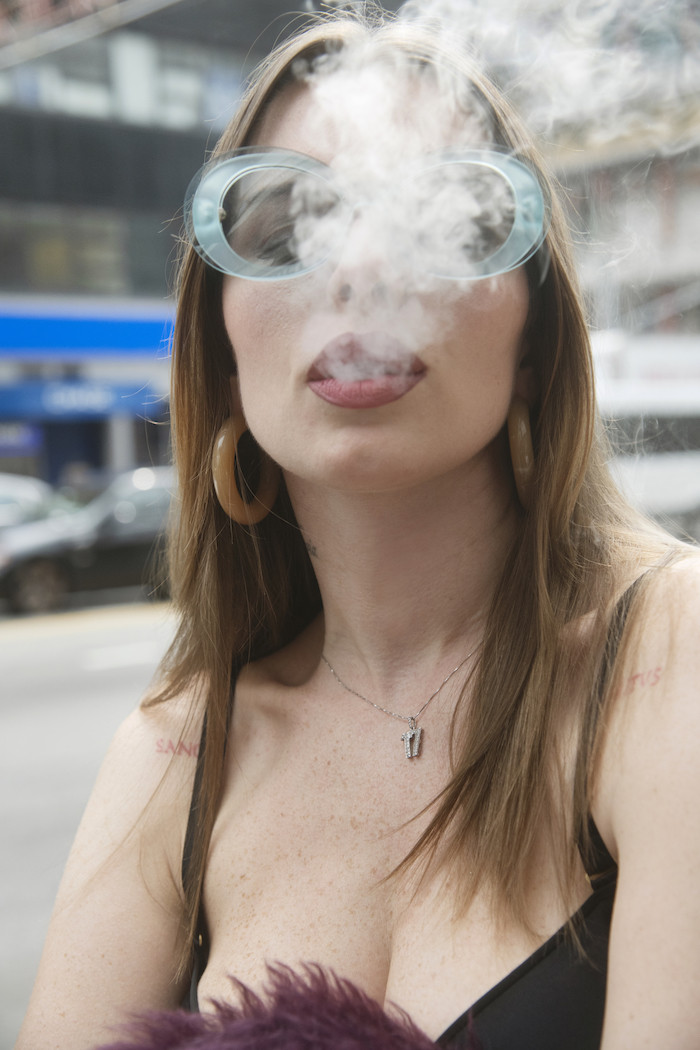
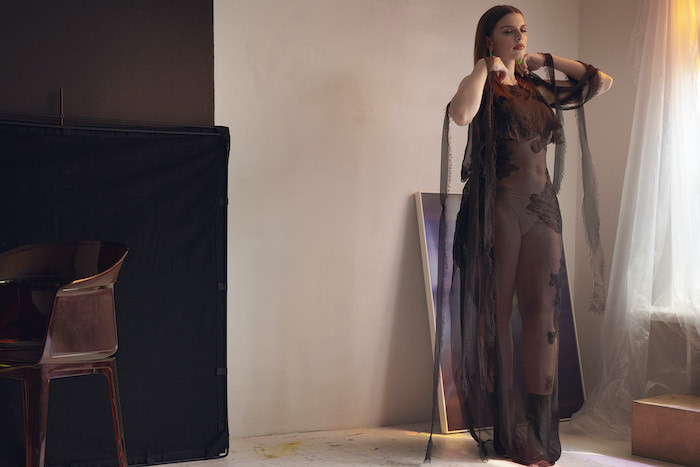
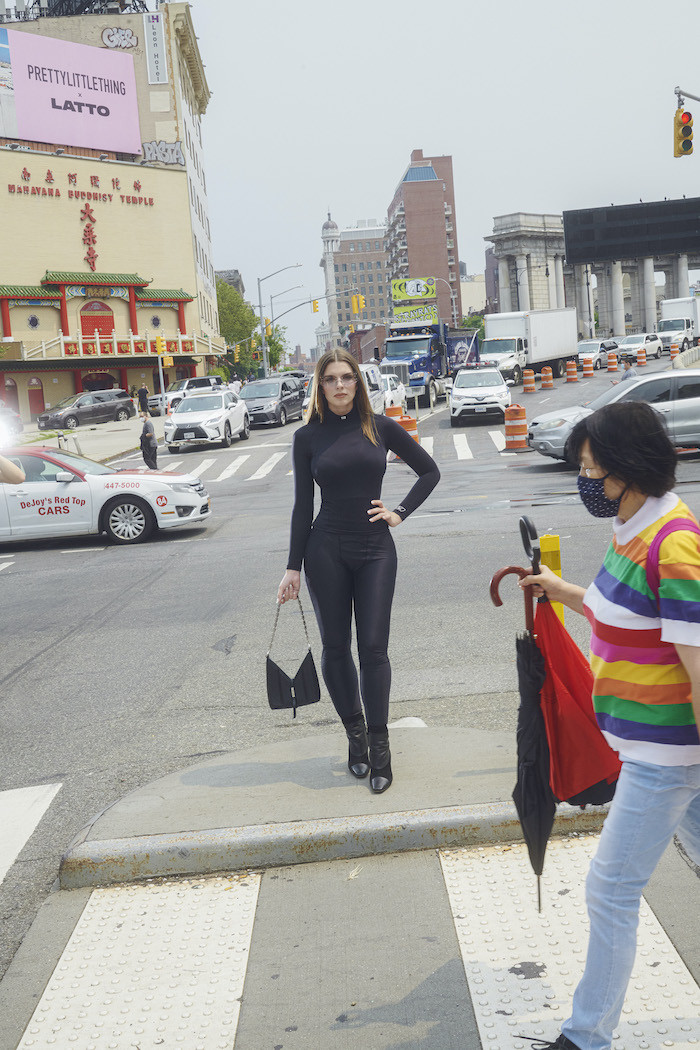
RACHEL RABBIT WHITE — Your fame means something to a lot of overlapping New York underground communities. You grew up here. You’ve been known as an artist for years, a downtown icon, and you’ve been so open about your past career as a dominatrix. So when Uncut Gems came out, that was all over the press, and in the New York City sex work community that created a buzz, like she’s one of us, and she’s really doing it.
JULIA FOX — It’s always been in the back of my mind… Just that I’ve been given these opportunities when that just doesn’t happen for a lot of sex workers. It’s that people don’t take you seriously if you’re a creative and also a sex worker… I wish I could go back in time and tell myself ten years ago things are going to turn around for you and you’ll be seen finally. At the time, I didn’t have high hopes but I was optimistic. I knew I didn’t want to be in the sex industry forever but I really didn’t know how I would get out, I didn’t have a plan. I’m really grateful for how everything happened organically.
RRW — It was so exciting to have an actual Hollywood It-girl who was open about having been a sex worker. I do think attitudes are slowly getting there but more slowly than they should be.
JF — Well, for instance, after a movie like Uncut Gems, I probably should have gotten some sort of brand deal, whether Chanel or something like that. But you know, that didn’t happen. And I’m sure that it’s because I don’t have the cleanest image. And it’s like, well, I’m a real fucking bitch and that’s what people want nowadays. It’s like—and you get it—I honestly feel like they’d be lucky to have someone like me to endorse them, you know what I mean? Like, they’re just not there yet I feel. But you know, for sex workers, Cardi B is like, a great example. Like, she’s really doing her thing. That’s huge for, you know, a stripper to come out and now be like fucking Cardi B. So, I feel like, you know, music now has accepted it. Hopefully film and television will become a little more accepting.
RRW — Completely. I’m looking it up now and Cardi only got her first luxury brand deal last
year—it was with Balenciaga… This is a couple years after she brought their brand into the zeitgeist, you know… “I like those Balenciagas/ the ones that look like socks.” Did you ever feel pushback directly because of how open you’ve been about your life?
JF — I’m not going to name names or anything, but people I’ve never even met, executive people, studio people, had comments. There were some things said about my figure, about my butt potentially being too big to be in a movie, which is ridiculous because we see big boobs in movies. A big butt is super mainstream now and it’s like, ‘Get with it!’ And also I was born with a big butt. My mom has a big butt. It’s an Italian gene that I have. You know, what am I supposed to do, apologize for it and hide it so that your reaction to me is acceptable? I’m not responsible for your reaction to me. Get your fucking head out of the gutter.
RRW — That’s crazy. I feel like audiences completely celebrated your ass on the big screen!
JF — Yeah, exactly. It turns out that Josh Safdie was 100% right in casting me because there were many things that people loved and enjoyed about the performance and about me and the character. My manager always tells me your people will find you. And it’s so true. When I was younger I was a little more frantic, a little bit more like, ‘Oh, what am I going to do?’ My parents don’t have money, I don’t have an inheritance. I was always hustling, I had to support myself. I used to freak out and come up with ways to make money. It’ll be crypto, it’ll be marijuana, it’ll be this or whatever, but now I’m just so much more relaxed because I know that even if I don’t work for like a month, something will come. And it always does. So, I definitely don’t stress about that anymore.
RRW — That was one thing I wanted to talk about, how when you do sex work in New York City you become keenly aware of how much money other people have and of the disparity of wealth.
JF — I remember when I was working, I had never had a thousand dollars before, I had
never held a thousand dollars before. And I remember that feeling. I remember getting tipped a thousand dollars and seeing that money in my checking account. I just remember being, like, ‘No, that check was fake, it bounced. He canceled it. There’s no way.’ And I remember when I saw it. And now a thousand dollars isn’t as much money to me, but at the time I felt like, wow, you know? I was living on my own and I just got so thrown, I got exposed to things that I never had growing up, for sure, like I was literally 18 years old checking the stock market because that would in turn affect my clients, my money.
RRW — I’m curious, with your success, what is your relationship like to money now?
JF — Oh, I’m still super cheap. Everyone knows that about me. But if it’s like your money, oh, then, we are going, yeah, then I can spend like a mother, like actually scary, like, $60,000 in an hour scary. But now that it’s my money, that’s a whole different story. I’m also really into saving and smart financial decisions and I think that does come from growing up without money and always being afraid that it’s going to be taken away at any moment. I live in the East Village and that’s my lifestyle. It’s not glamorous at all. I was actually thinking the other day, like no matter who the woman is, it could be Mariah Carey, it could be Beyonce, there is so much upkeep as women. There’s nothing glamorous about it! Especially if you’re a mother. But from the jump we have to wax, there is just so much we have to do, or are conditioned to do, and it’s like we just do it on autopilot.
RRW — Yeah and then when you don’t come from money, the upkeep can become something you do because you realize that your looks are an asset, not necessarily because you want to!
JF — I realized it in middle school. Prior to that I was a tomboy. I was kind of a lesbian. I grew up with my dad and my brother and my next door neighbor who was a boy. I wasn’t into being girly. But then when I realized, ‘Oh guys like me when I’m more feminine presenting, they’re nicer to me, and I can get things when I am this other way…’ The switch was overnight. I started
wearing heels the same week. I was fully going to milk it to the max, you know?
RRW — IAnd there’s layers to it, too. I remember going back on the train the first night I worked at a strip club and I was like…. I’ve been doing this job my whole life, pleasing men. I’ve cultivated this skill, I’m good at it, and now I’m finally getting paid for it. I was so shook that I didn’t notice I’d missed my stop like three stations ago.
JF — For me with dominatrixing, it was more of like, I have been in these kinds of abusive relationships all my life, now I can be paid for it. Because the dominatrixing was, it’s much less about sex and more about mind-fucking and being a sadist or being a masochist or whatever. And so it was a little more emotional I would say. I just felt like I released so much aggression on these guys. And obviously there were submissive moments in there as well. At the end of the day it is a service. You’re a dominatrix. You are providing a service.
RRW — Cat Marnell said that I should ask you about the South. You ran away to The South when your New York life got too crazy, in 2015. You went to Louisiana, where you were living with the guys from the band Salem for some of the time, going around, documenting crazy stuff for an art book.
JF — That’s so funny. I went to visit friends and basically just never left. I went down there just because I wanted to not be reminded of anything. Like, I just really wanted everything brand new and, you know, prior to that I’d been living such a, it was a lavish life, for sure, but it was fucked up and I was in some unhealthy relationships. I just wanted to get away where I didn’t know anyone and nobody know me. And I ended up there. Through discovering the South, I also kind of discovered the rest of the United States. And that was really cool, because prior to that I was just such a city kid. I was literally like the meme of the guy in the ocean wearing Tims, like scrolling on his phone. I did make friends. They were telling me about Katrina. A lot of them still didn’t have running water or electricity. Their shit is still really fucked up. And it’s really, really sad just how it’s overlooked. It’s fucking crazy, the amount of poverty. And my friends from Louisiana, they still hit me up and they’ll be like, ‘Yo, this is crazy. I can’t believe you’re in the fucking movies.’ And I’m like, ‘I know, this is wild.’ We were literally chilling in a trap house with no electricity or running water all day, all night. And fucking now I’m in a fucking movie. Like, that’s crazy. But I don’t know... I kind of always knew something like that would happen one day. I just always had an inkling. You know how you just know? That’s why I feel like I’m exactly where I need to be, where I was meant to be. Like, God doesn’t give you anything you can’t handle or that isn’t made for you, tailored specifically for you. And this just happens to be my experience.
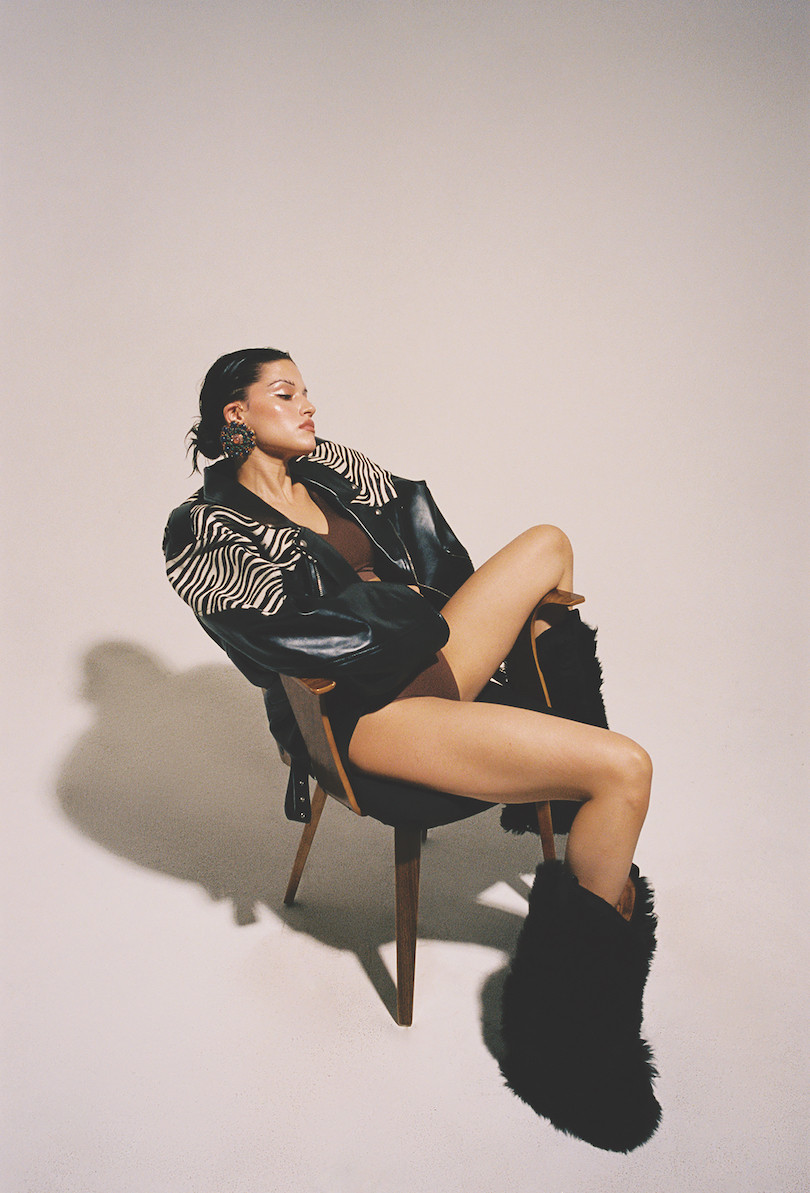
Jacket, corset, shoes and sunglasses DOLCE & GABBANA, earrings BP JEWELRY


RRW — I call that feeling ‘walking in god’s path.’ Like, you know when you’re on it.
JF — Exactly. Even if you do make a wrong decision, it’s going to lead you exactly where you need to be. You’re always going to be brought right back onto the path.
RRW — What was that blowup fame moment like?
JF — Surreal but really tiring. I was doing a press tour. You know, obviously it was just non-stop attention and people talking to me, reaching out. Then my best friend died and then everything kind of took a turn. She shot Uncut Gems with me, she was with me on set every single day for filming. She was there for everything. This was supposed to be our moment. I was in LA and on tour and busy and I wasn’t there for her the way that I wanted to be. I did speak to her, like, a couple hours before she died and we had a nice conversation.
RRW — Do you still feel a connection? Like, how when someone you are really close to dies, it’s like they never go away.
JF — Well, actually, when I got pregnant, I was already in the middle of the divorce with my husband and then I ended up pregnant. It was like, Fuck! And I calculated the due date, just out of curiosity. I hadn’t really decided what I was going to do yet, it was just really early stages. And the due date was my best friend’s
birthday. I just knew that this was a gift and I was going to rise to the occasion. When I look at my son, I see her. She’s in the frame. She’s there, for sure.
RRW — Do you want to raise him in New York?
JF — I feel like, growing up here, I don’t know, I have such a love-hate relationship with New York. I’ve been trying to move to California for a really long time. I feel like that’s kind of like the path that all my friends have taken. It’s like you either die or fall off the fucking face of the earth, nobody sees you again, or you’re on drugs or something, or you move to California. I feel like that’s the progression of a New Yorker’s life.
RRW — What will you be working on this year? What will you be manifesting?
JF — I have three movies that I’m supposed to be filming next year. One of them, just announced today, is Carrie White’s story. She’s an iconic celebrity hairstylist. She had an amazing career, lost everything, got into drugs, got it all back. I read her memoir, Upper Cut, it’s such an inspirational and triumphant story. I’m always rooting for the underdog. And there are a few other things that haven’t been announced yet, so I don’t know if I’m supposed to share anything about it yet… But there’s a lot. She’s busy. She’s booked and busy, for sure. Yeah. I wish I could say this one thing, but I definitely can’t. But it’s OK. Everything is OK.
Top, skirt, jacket and earrings GIVENCHY, shoes VALENTINO, sunglasses GENTLE MONSTER, underpinnings SKIMS
Jacket MIU MIU, bodysuit SKIMS, shoes VALENTINO, rings BP JEWELRY
Jacket BURBERRY, pants KENZO, bra CUUP, shoes MANOLO BLAHNIK,sunglassesBONNIECLYDE,earringsBPJEWELRY