For Lovers
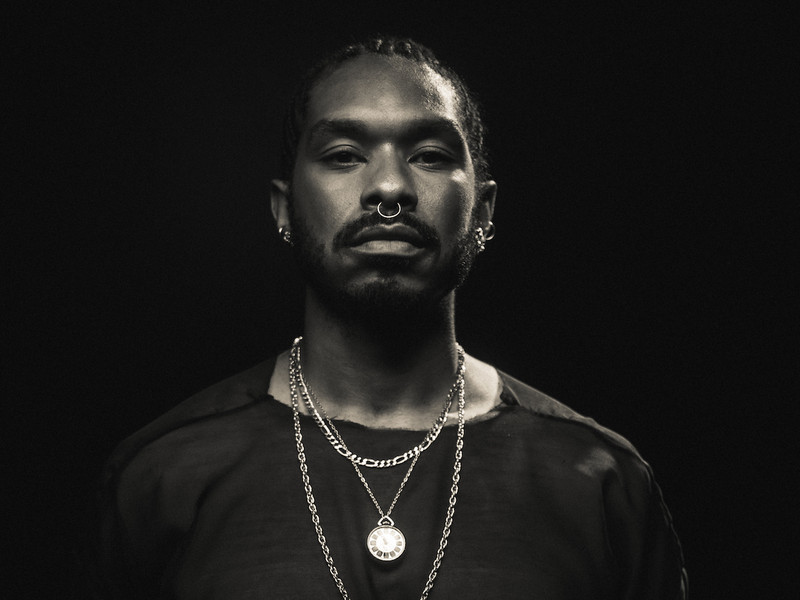
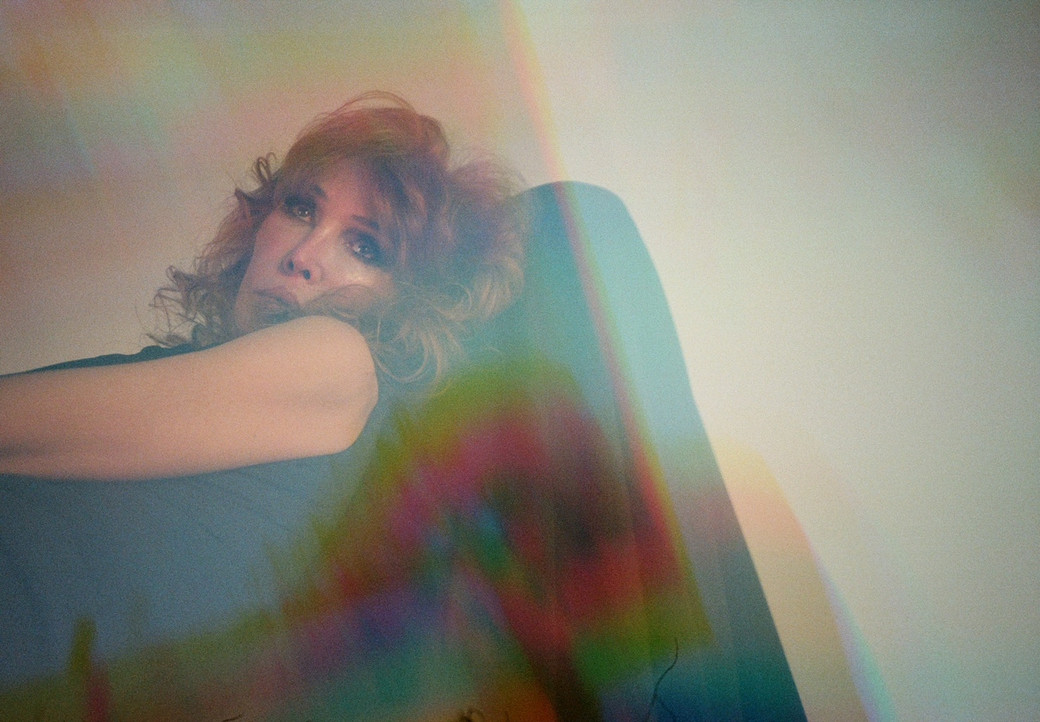
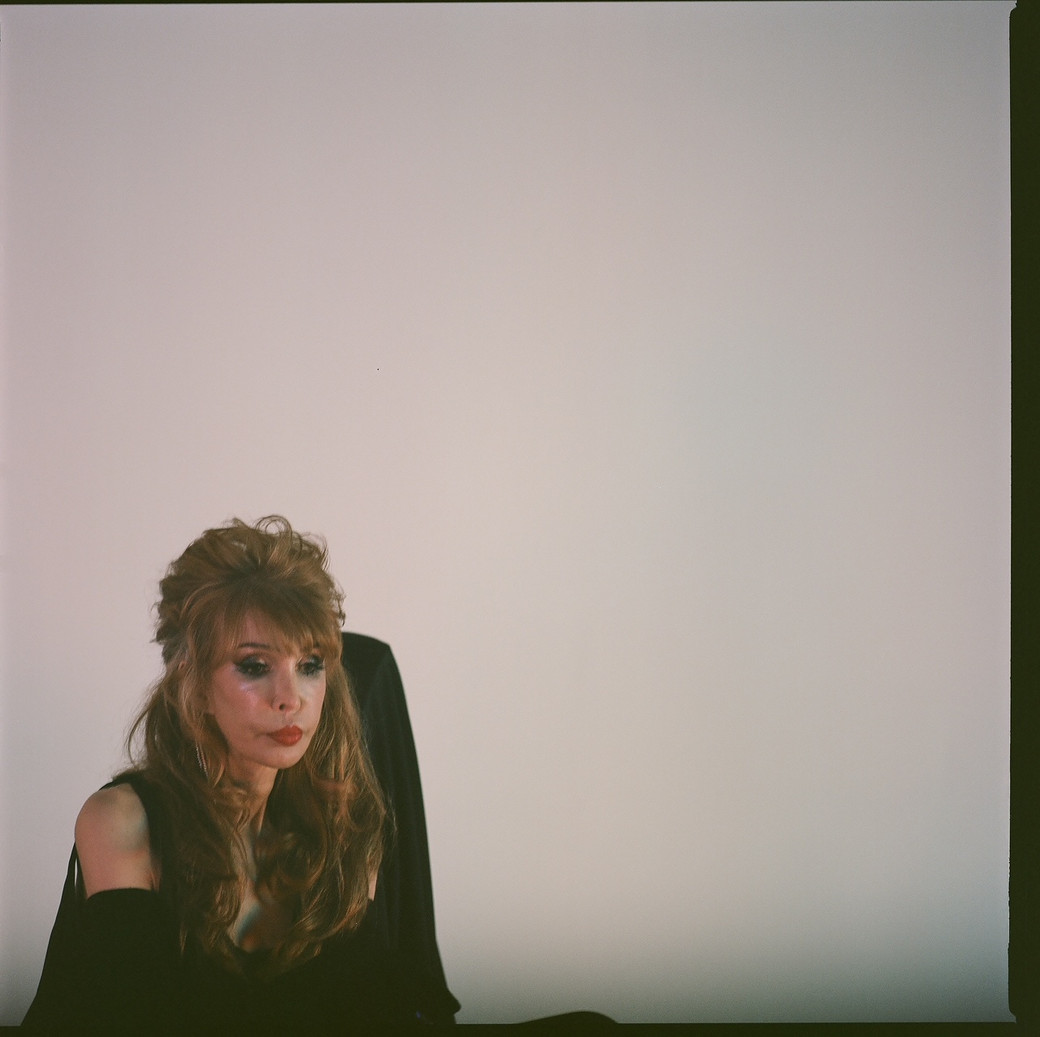
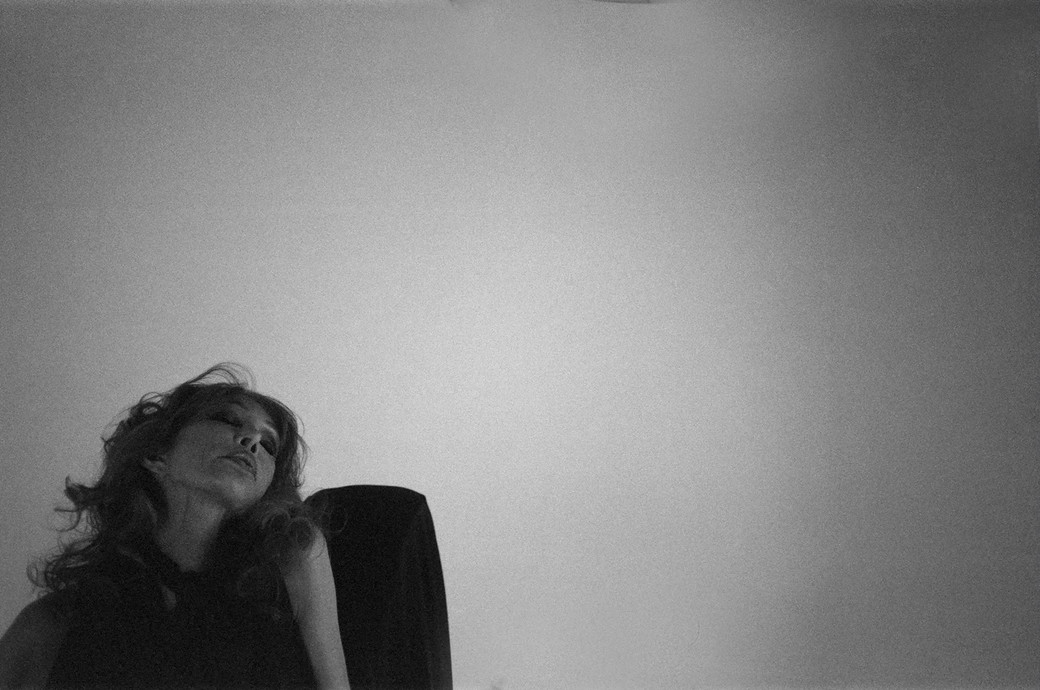
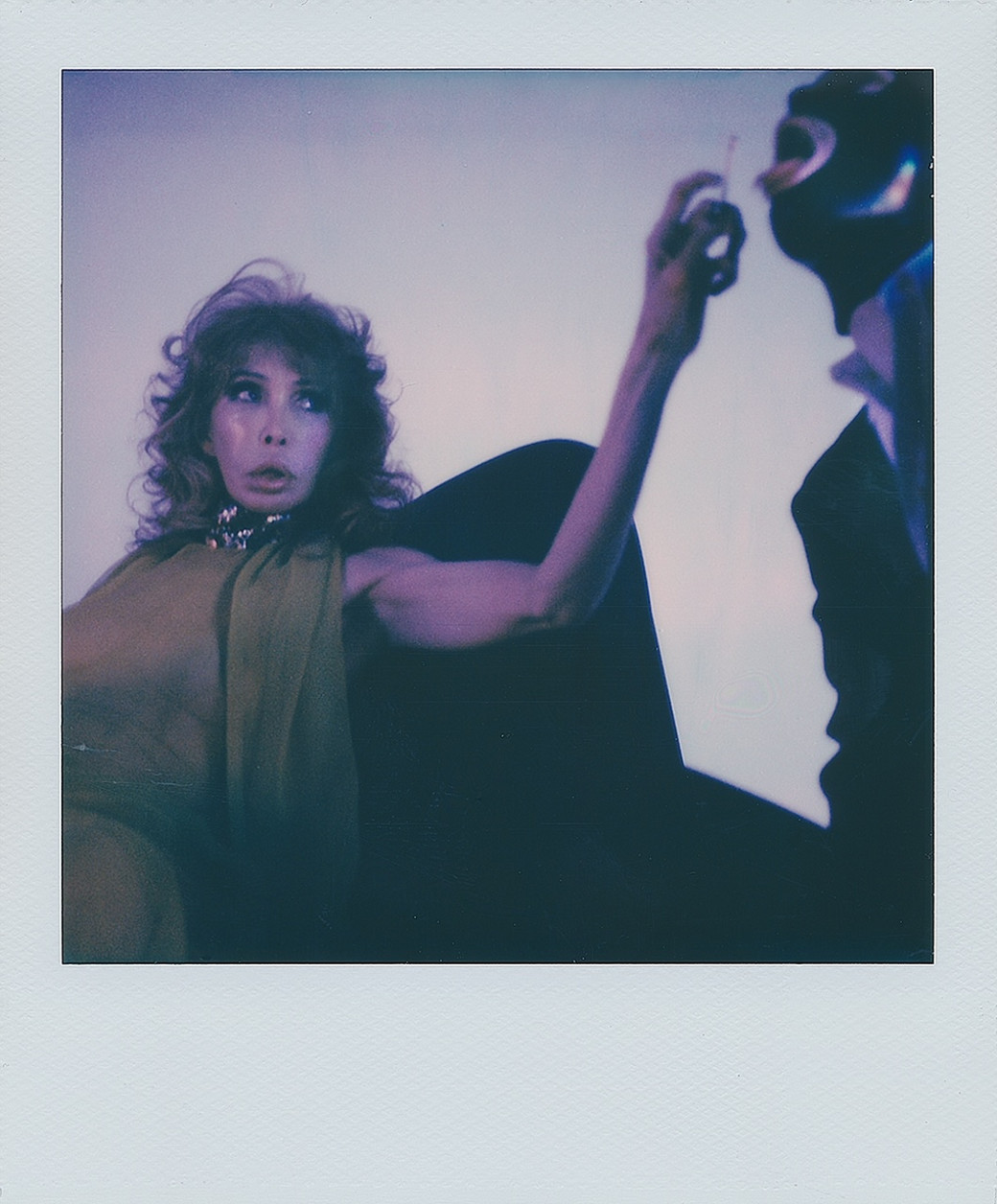
Lamar is a muse for the ages, a lens through which we can explore the love within both our hearts and others'.
Check out the video and photos below.
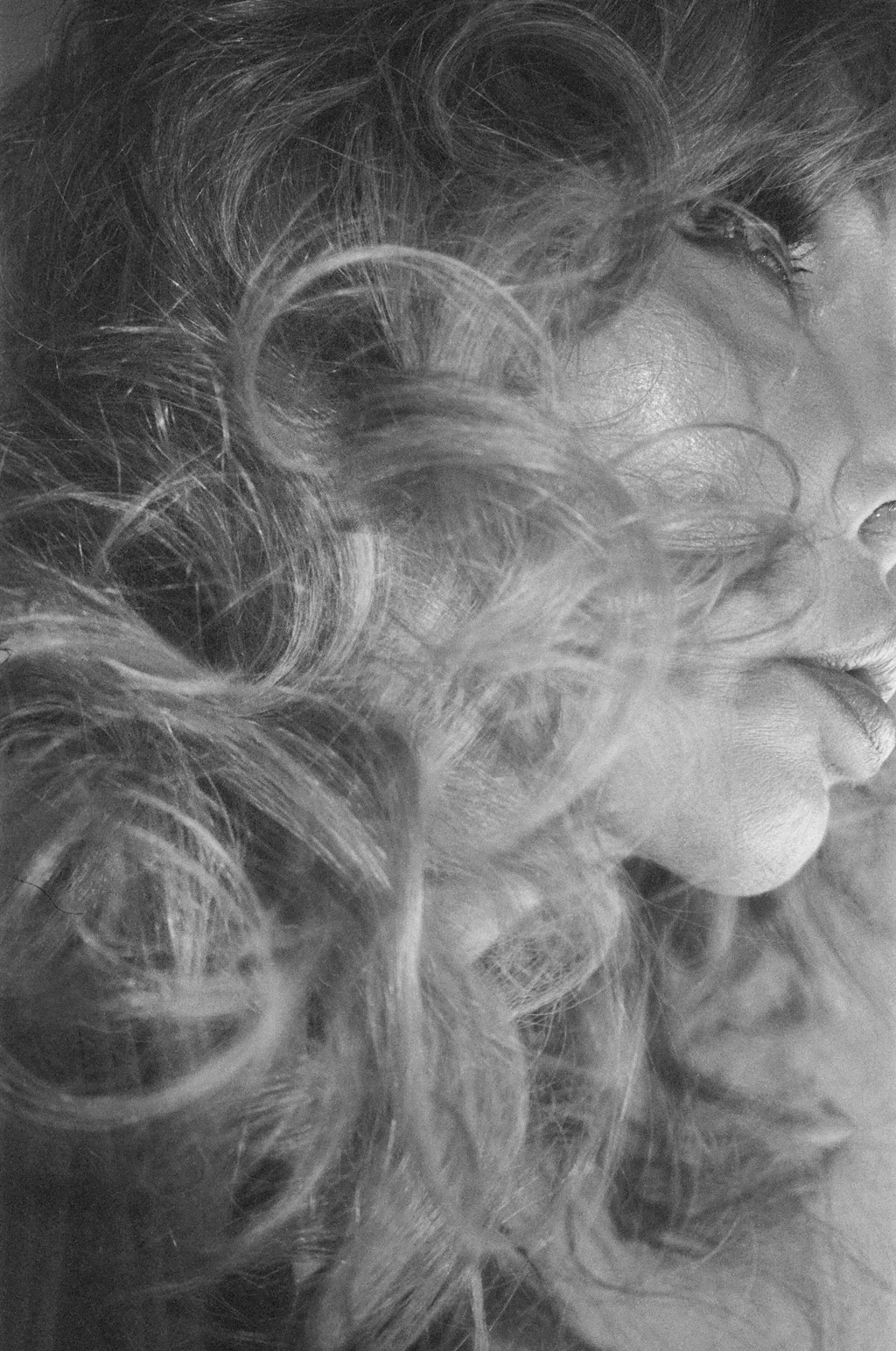
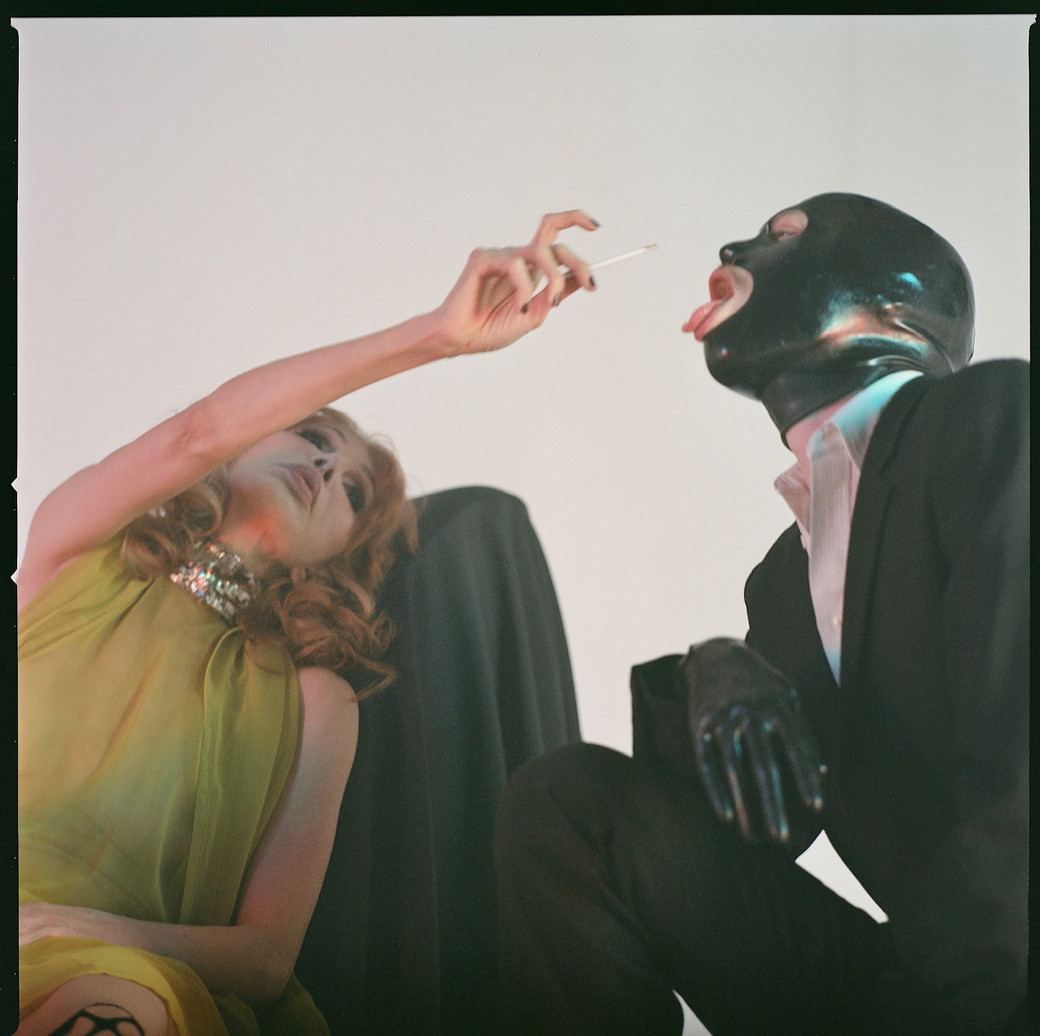
Lamar is a muse for the ages, a lens through which we can explore the love within both our hearts and others'.
Check out the video and photos below.

When did you start Mister Green?
I opened the store about 8 and a half months ago, and I launched the brand almost exactly 2 years ago. When I was in New York, I had the idea because I was kind of doing a similar job, and then was starting to think about my next move. I was really tired of working for other people and knew that I wanted to make some weird thing happen.
What drew you into the weed business?
I’ve always been drawn to it since I was a little kid actually. I grew up in Portland, Oregon, which is a pretty “weed-y” place. It was one of those things where I would walk down the main street by my house and there was this incredible amount of head shops for a quarter mile. I loved them all. Each one would have like unique weird garbage that I was really into. For example, the one that I probably went to the most had Jolt Cola in this little vending machine.
So you opened this shop around spring?
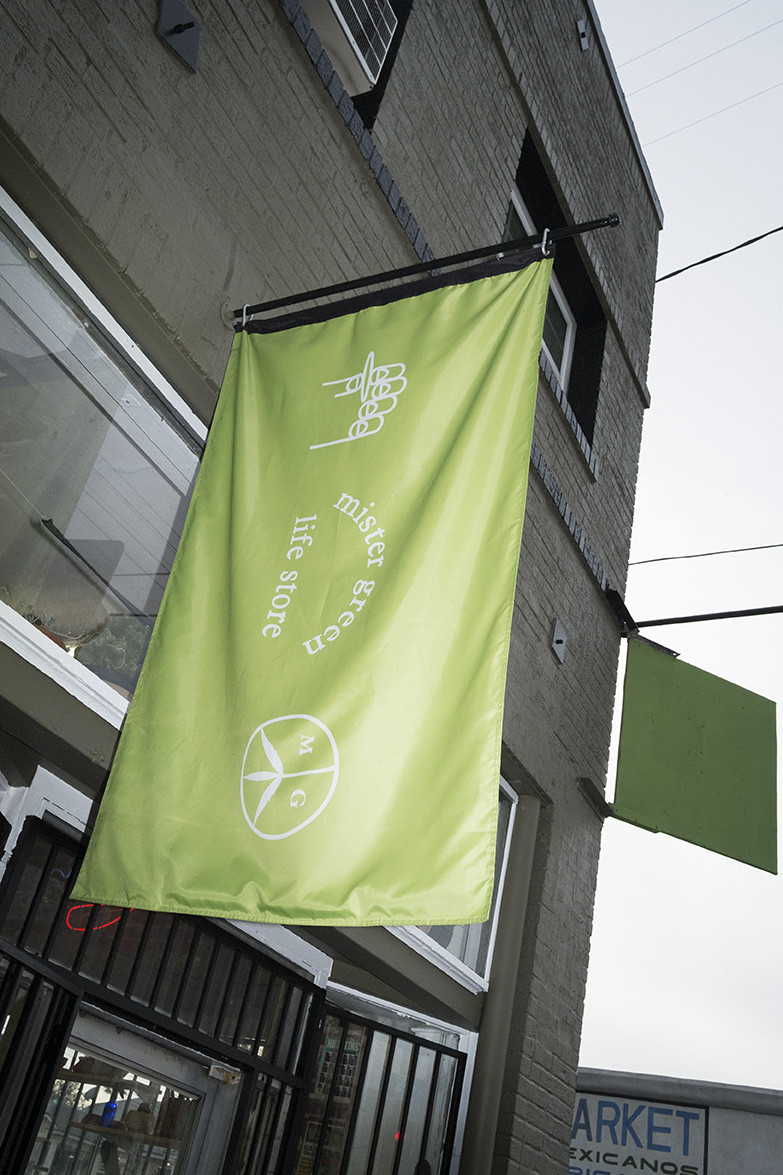
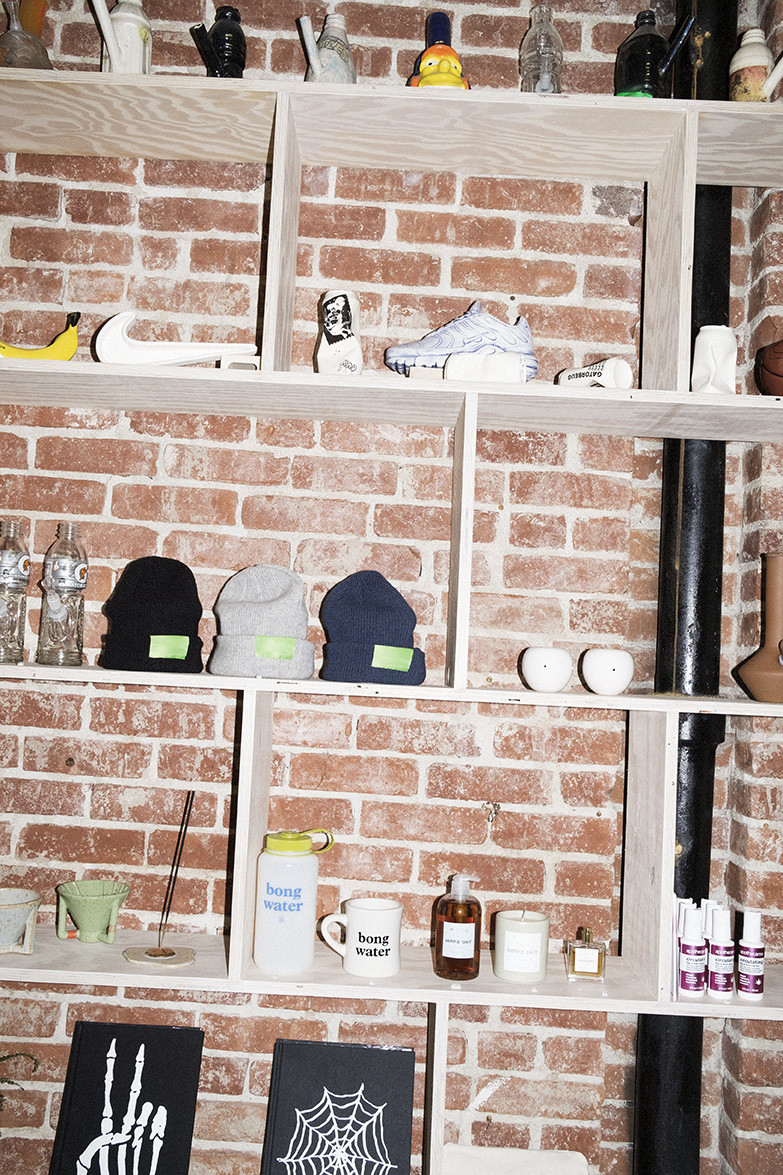
We opened 4/19, very purposefully. The goal of the brand is to encapsulate the spirit of every type of head shop that I’ve ever experienced, but at the same time, break any generalizations that comes from that. On top of that, obviously we make clothing and a bunch of different branded stuff… perfume, things like that. So, it’s just a new perspective I guess. Some people like to say it’s like an upscale head shop, or sophisticated. I disagree. I think it’s just like a totally different perspective.
Do you design all the clothes and merchandise?
I guess the best way to put it is that I do all the concept and design. I try to not get my hands too far into stuff. In this past collection, I hand tie-dyed some shirts but if I can avoid screen printing and doing those types of labor I would definitely do that. The perfume, I have no idea how that’s even made. I met this couple from Portland a few years ago, right when I started. I had no idea how they had even heard of the brand, but they approached me and said, “hey, have you ever considered doing apothecary stuff?” And I had already had a perfume idea that I was sitting on for like two years, and I said, “I know exactly what I want, how it’s supposed to look, everything. And was just like, let’s do this.” And that’s Hippie Shit. It’s kind of been our most popular thing to date.
Are most of your products made in the U.S?
When I can get stuff made in the U.S, I will. It’s not entirely so, it’s a little bit of a hodge-podge. It really just always comes down to is the product good.
Do you get a lot of characters in here?
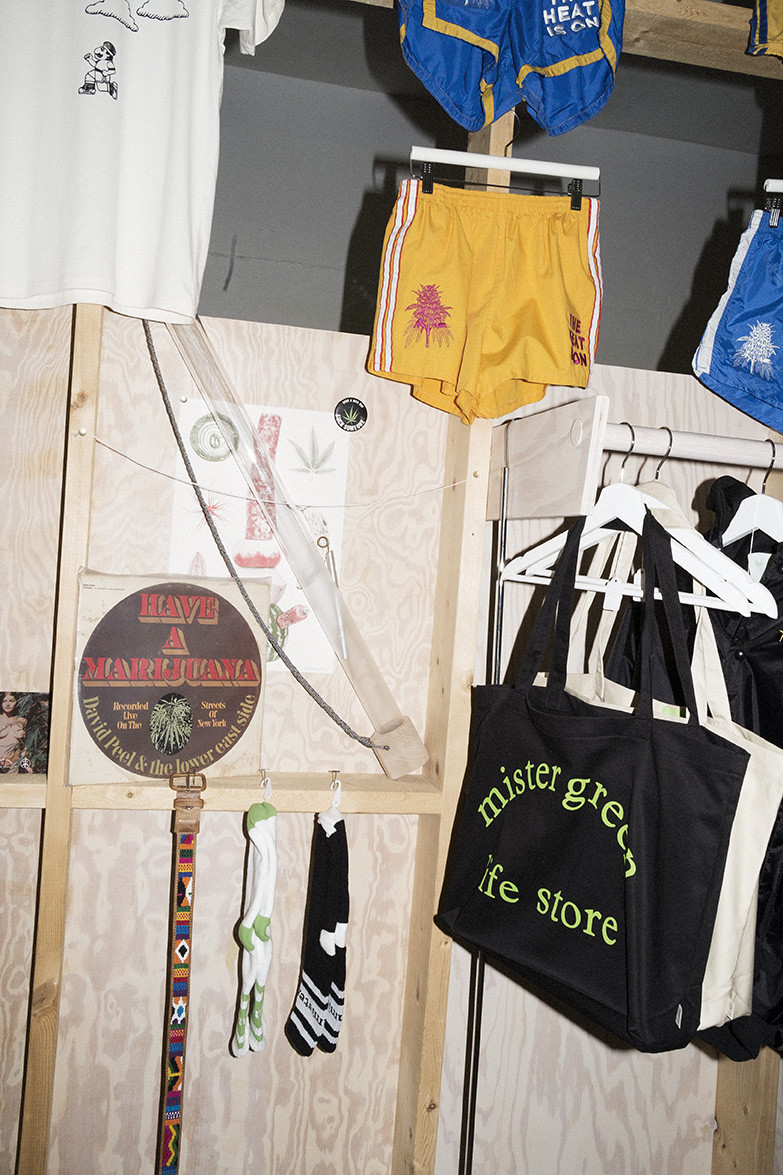
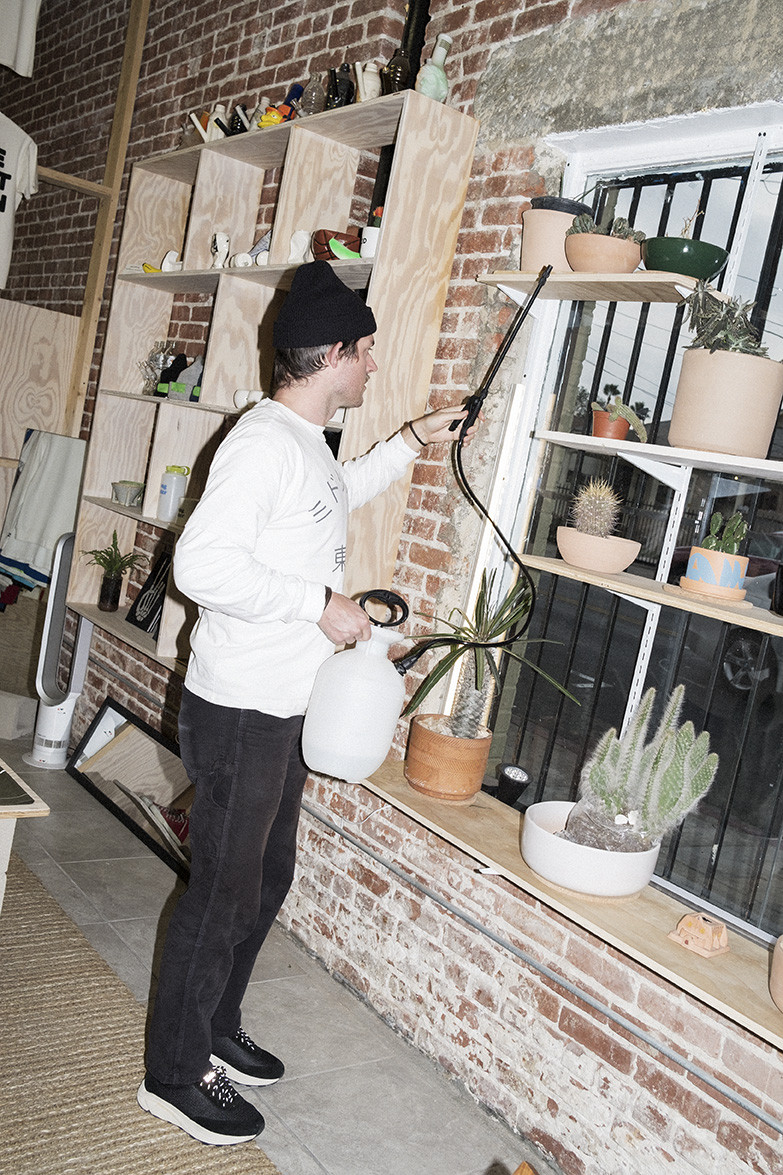
You saw the big blue Scientology building? Yeah, we have a lot of characters. They keep a pretty close watch on the neighborhood, and occasionally they’ll come through. That whole thing is bizarre. But in general, this is a pretty up-and-coming neighborhood, which I love. I have a phone booth on the other side of the wall. I can just sit on the porch and watch the weird world do its thing. There was a shooting in the alley over there… we get it all. It’s pretty wild, but I also wouldn’t qualify it as dangerous. It’s a fun neighborhood.
Do scientologists smoke weed?
They don’t, they’re really anti-weed. That’s why when I have to deal with them, it’s a little uncomfortable usually. They smoke cigarettes and drink a lot of coffee.

How do you feel about this new wave of weed shops?
When I describe what I do, I always try to say that I’m not doing anything that’s better than anyone else. I don’t want to be pretentious, that’s not my intent here. I certainly don’t want to step on anyone else’s toes. In this sort of new generation of weed stuff, a lot of people have entered in and been like the old way is fucked, this new way is the shit. And that’s a fucking terrible attitude to take if you want to get the support from the people that have basically devoted their entire lives to it. I consider that to be a really irresponsible approach. Any sort of way that I was describing my shop, I’ve sort of had to change the wording around because it kind of sounds like my description is at the expense of others, in a way. Which is not my style at all, because that sucks.
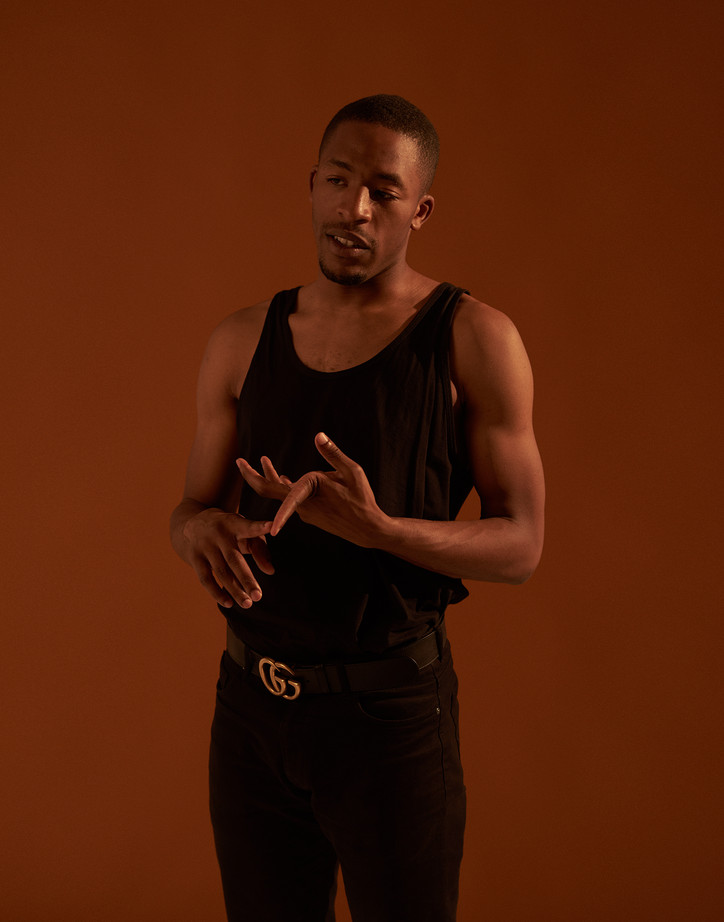
Your recent body of work Euthanasia Party / Twenty Seven centralizes the themes of death and loss, with the title presumably as a nod to the 27 Club and the popular artists who lost their lives at this age. Has there been a particular event has lead you to reflect upon death in this way?
In London, in 2007, there were 26 young people who were shot or killed in the capital. The years either side of it were equally violent, but so many friends were robbed or rushed or stabbed or mobbed or shot at, such that it became part of daily life. This period of time really had an impact on the way I approached life, friends and acquaintances were falling like flies and so it was almost as if, perhaps as a defense mechanism, I learnt to appreciate life as a fleeting thing. Live for the moment, appreciate the people around you and do what the fuck you want. Feel no guilt; it's your one and only life that could be snatched away from you in a heartbeat. 2017 marks a decade from that period in time, and London has changed and so too has my relationship to life and sex and death. I wanted to document that change and do so in a way that honors previous iterations of myself, whilst also cementing the passions and desires of my present self. EP27 was the project that enabled me to do that, and it's probably my proudest work to date.
The Poetry Session event you hosted at Boiler Room HQ in London earlier this month saw some great performances from young, London-based poets including yourself, Soph LS and Abondance Matanda. Is there a strong sense of community within the poetry and spoken word scene in London or do you have to dig deep to find these emerging talents?
It's funny because I don't necessarily think of myself as being part of a "scene", and if so then certainly not part of a spoken word scene. I think the main thing that links me to the poets that I choose to work with on the sessions and other projects is a shared philosophy or appreciation for a certain creative ideal. The poetry sessions are a space for writers and musicians to try things out and collaborate and exist in a space that is intended to give way to nihilism. Those who enter are either already there, ideologically speaking, by way of declaration or rather more subtly are showing alignment with this idea through the content, form and delivery of their work. I tend to find that I am drawn to these sorts of people. They are rare, so when I see them I snap them up! Anyone who shows any inclination towards rebellion against social or ethical or creative norms is someone whose perspective I want to hear and all the poets at these sessions are those kinds of people.
Poetry by minorities have traditionally fallen into the category of “politics” and/or “sociology,” Do you view the internet as being an important tool in opening up this narrow view of poetry and the voices within it?
I don't know if the Internet is changing the fact that some people still view work by minority (disclaimer: I hate the term "minority") writers as living purely within those categories, if they even do. For me there is no one social or ethnic group which has a monopoly on poetry and so from my perspective it exists as a meritocracy, where those who have the most engaging work are granted the accolade and the plaudits, despite their background identity (personally, not in terms of national awards or honors, only in my estimation here). Again, that is only my perspective and I'm very aware that everyone does not share this perspective, in particular maybe those in decision-making positions. So when publishers or literature festival promoters do their outreach, they may still impose distinctions knowing that particular Tumblr blogs or YouTube channels or whatever the medium may be, features younger writers, black writers or gay writers and they still go about conducting their business with these individuals in the same way. I almost think it can't be helped to a great extent, so I just do my own thing and people can categorize it however they want to.
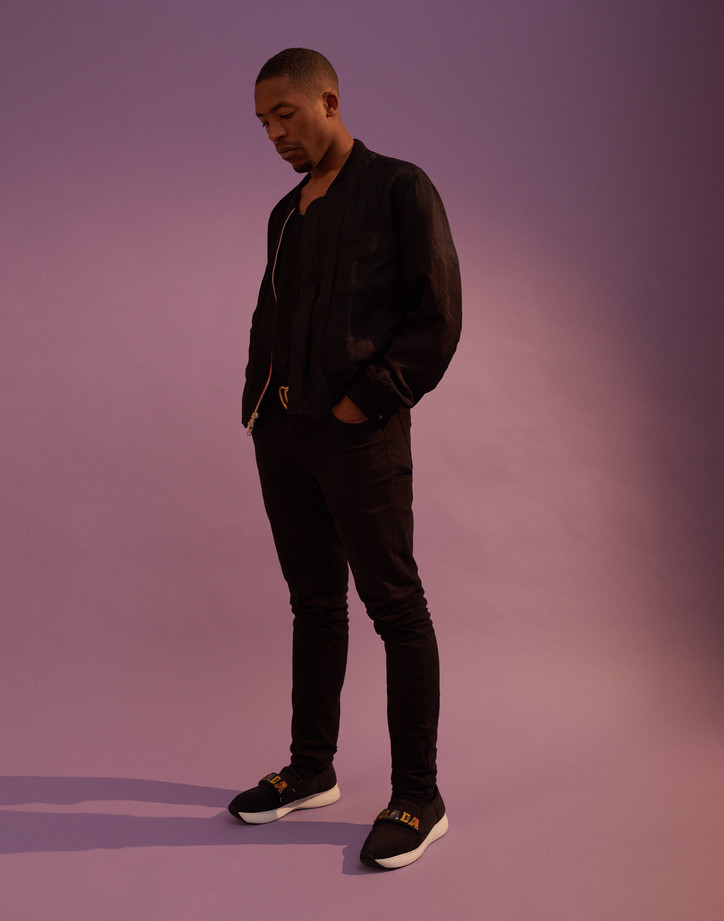
There’s a rather beautiful but perhaps romanticized idea of poetry being the least popular and packageable medium and the freedom of expression that this affords. How do you view this in line with your own work?
I'd say that as a poet who has worked on commissions for other people, it could be quite lucrative at times. I suppose in comparison with other forms of literature and performance there may be less demand for it, but within certain pockets it's demand is concentrated and if you're able to find that niche then you'll be just fine. I guess it could be argued that poetry exists in many places and is popular with many people in forms they may not recognize. Many adverts and their associated copy rely on poetic forms for their structures and pop songs and plays use rhyme and rhythm in ways not too dissimilar from the ways in which poets use these devices in their work.
With this in mind, it’s interesting that you acknowledge the constraints of poetry as a medium, given the hierarchy of elite poets in your piece A Real Poem. It’s great to see a poet turning poetry on its head and examining the inordinate importance placed upon stuffy traditions. Was there an element of wanting to encourage more young people and more diverse voices into poetry in this?
I think that it was less about encouraging others as it was about encouraging myself, to continue pushing the boundaries for the sake of allowing me more freedom to explore and experiment. There are expectations on writers from certain backgrounds to think and work in a particular way, and as a writer from such a background, there are opportunities that may not be thought suitable for me because of the assumptions that people have made about me by looking at me rather than at my work and in the same breath, people will offer me things that really don't suit for the same basic reason. It's more of a critique of identity politics and the ways in which some people look to absolve their guilt through tokenism as much as it is a dig at anything else which it may address.
You wrote a really great essay on empathy and the disproportionate value society places upon it. Were you suggesting that an attempt at empathizing with others actually leads to complacency with regards to social issues, rather than an attempt to change things?
Not as such. I subscribe to a school of thought known as psychological egoism, which states that all human behavior is fundamentally motivated by self-interest and as such; an individual's intentions are made evident by their actions. Empathy is not an action, in the way that many people think it is, empathizing is not something you physically do. It is merely a thought exercise. Calls for empathy will not bring about the sort of change that people who call for it will want to see, as I illustrated in the essay it is possible to empathize with someone and still do something that individual finds to be distasteful. Empathy, like love, is immeasurable and therefore a weak mechanism for judging the will or intentions of a given individual.
In your 5X15 talk, you tackle the idea of intolerance on the left, something that is particularly pertinent and very much needed in the current political landscape and one that resonates strongly within the US as well. Do you feel hopeful that opening up these important discussions will lead to change?
I don't know if the change people talk about, often in broad brushstrokes, is what I'm passionate about. I'm almost apolitical, having dedicated a lot of emotion and time and energy to conversations and actions in the name of change in times past, only to realize that there are some things in life that never will. There will always be winners and losers in any situation involving the desires of large groups of people who are bound by a shared geography rather than a shared ideal, as within nations. I think that I have forfeited hope for something else, stoic acceptance maybe, with a deterministic worldview it's almost as if I accept some things will always be against the favor of someone or other. I just know that what I do is all I have responsibility for, not the actions of others, be they politicians or policymakers in other realms. I do what I can to look after those that I care about in more direct and acute ways, micro rather than macro and therefore detached from the wider "political landscape" in some ways.
Much of what you do offers a snapshot into London life, is it important for you to share stories and experiences which are specific to your geographic location over touching upon more global or universal themes?
I think it happens almost by default in my case. I also don't think the two are mutually exclusive. London and the lifestyle here serves as the lens through which I view the world and its inhabitants, but the themes of death and self-determination and sexuality are all universal themes, so it's the ability to ground my writing in my own experience, but to build monuments that can be seen from afar by virtue of the skill employed in constructing them as works of art that offer an insight into the broader human experience.

The set up begins with a boxing club in the Selfridges store, which is based on the ‘very boxe versus very chic’ project she had presented at the Venice Biennale 2017. The idea was for a collaborative jewellery collection, but in true form, Lamy's final result is fully amplified— unfolding in a radical revolution of the retail space that brings together two of her interests, boxing and art. It is bold, and multifaceted, much like Lamy herself.


Incorporating the artistic aspect, Hugo McCloud has installed a series of punching bags, previously presented by the artist in his exhibition, “Veiled”. Further re-interpreting the installation for The Selfridges Corner Shop window display, Lamy has congregated an abitious crew of artists and collaborators who have come together to customise the punching bags— offering an opportunity for expression to exist in an otherwise commercial space. Inspired by the brand slogan of Overthrow NYC, “What are you fighting for?”, Lamy's interpretation speaks to the spirit of inclusivity, inquiring, “What are we fighting for?”.


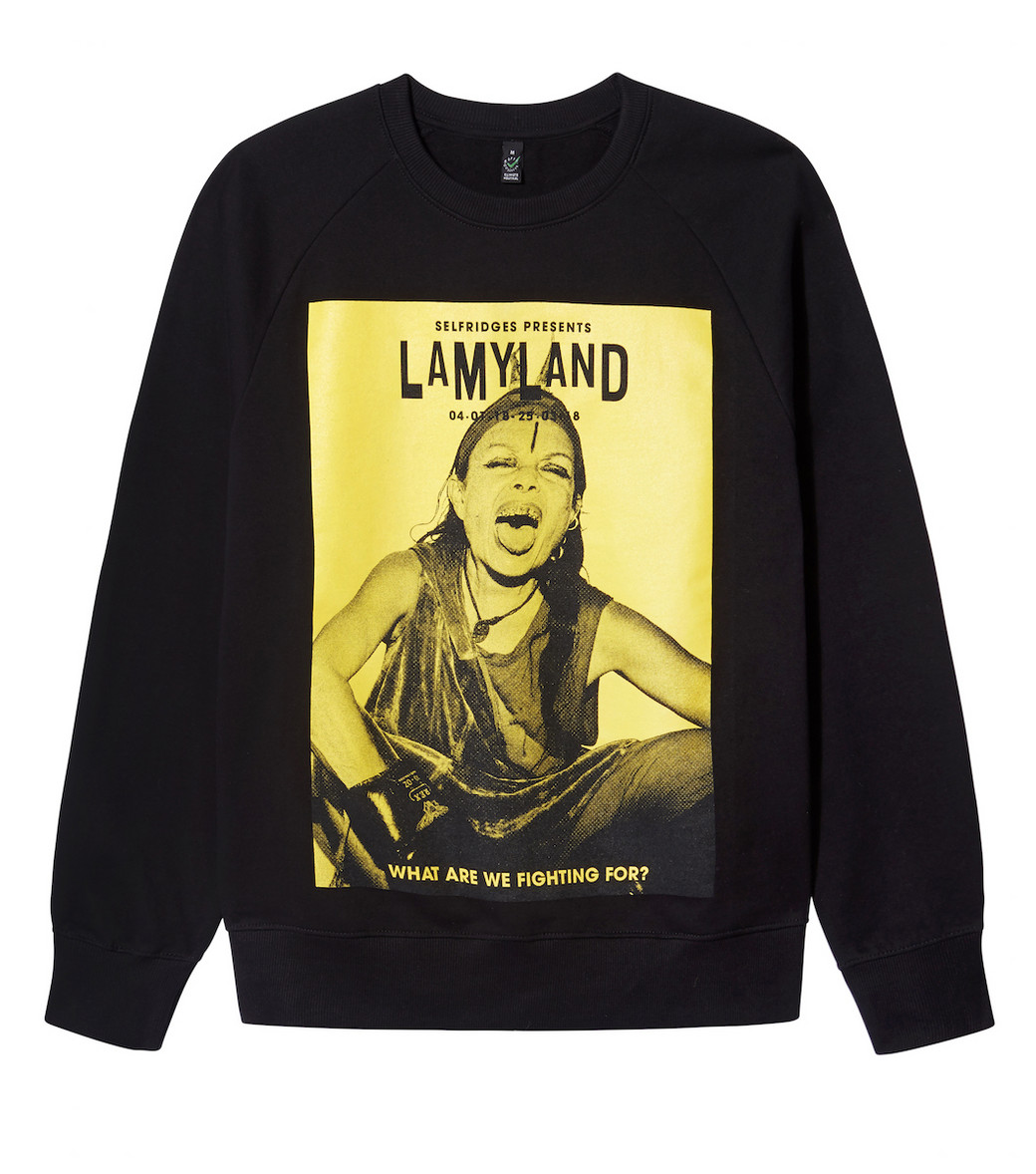


For the first part, yesterday Lamyland launched multiple capsule collections of boxing equipment, by brands such as Stephen Jones, Koché, Nike, Edward Bess and Rick Owens, who have created an exclusive collection of boxing activewear, equipment, memorabilia, jewellery, fragrance and art.
Special edition collaborations with brands including Versace, Craig Green, Everlast, Off-White, Gareth Pugh and Sacai will be presented, with exclusive drops arriving in-store throughout the three month residency. There will also be a small sparring ring within the space. The second part launches in February Selfridges space fully functioning boxing gym.
Those lucky enough to get in will be able to take part in workshops, an open training schedule and multiple events hosted by Lamy and boxers like Anthony Joshua and Nicola Adams. a partnership with BXR London in the Selfridges Ultralounge.