
Check out the interview below.
Stay informed on our latest news!

Check out the interview below.
Can you tell us a little bit about yourself and who you are?
My name is Livia Rose Johnson. I'm 21 years old and I was born and raised in Brooklyn, New York. I guess as of now I am a casting director, model, producer and just in general, a creative and I really think a connector. I'm a Capricorn, Cancer moon. My dad is from Nigeria and my mom's from New York. So it's very mixed and I've always kind of been the epitome of intersectionality, probably just because I always tried to kind of be in the Nigerian culture, and then I had Irish family, and it was always four or five worlds I was juggling and navigating. So I was always really aware of intersectionality and duality. It was very present to me really early on.
What is Multii Media and what was your thought process as to why you wanted to start it?
My first big shoot was for this shoe company and I felt really tokenized. I was that token black girl. They didn't know how to do my hair, they didn't have my shade of makeup, they just did some weird shit. I realized early on that if I'm experiencing this, how do other black models with tighter curls, darker skin, or POC in general, feel? And so that bothered me. I initially started Multii Media off as a collective for people to check their rates with each other and create content together. I wanted to make it like the Craigslist of black creatives where we can all reach out to each other and be like, I need this for this and I need that for that. And then it kind of became its own production company.
2020, you know, protesting, I got really fucked up by the cops. I was triggered for the next four or five months and I just dedicated my entire life to the movement. I've been signed before and I started noticing the same thing that was happening before to me was happening again but at such an exponential level. Women were being used and tokenized and it was all just for a capitalistic thumbs up. It had no authenticity.
I was just thinking about the passion they had for the movement and the passion I have for the entertainment industry. Black creatives fuel the entertainment industry, whether inspirationally or being a part of the participation. And I was just like, how can I take this energy that I have, and apply it to something I care about so much? How can I make this activism that I'm participating in more intersectional? How can I take this from the streets and transform it in a way that I felt like I was helping my community? There should be things in place that can protect these black women from being exploited, underpaid, ostracized, or belittled. My goal is to make it so that they're not exploited. They're represented authentically and in the way they want to represent themselves. Like humans, not models. You are you and you are being managed for being you.
Through the movement, I realized how powerful the media was. I was able to organize protests of up to 40,000 people just from an Instagram post. I felt like what I could do was kind of do both and create a place where I find black people who do not fit into those stereotypes. Once people start casting, looking, and understanding that, we're able to make real change. We're also able to give black women a piece of the cake that they deserve. Like not just a seat at the table with an appetizer, but a full course meal, you know what I mean?
What do you look for in a potential model when signing someone to Multii Media?
I look for what they break in terms of rules, stereotypes, and regulations. I want to see an existence that is against the grain, has that grit. Someone who's also unapologetically themselves. Someone who believes in themselves and their authenticity. Modeling is a stepping stone to the bigger picture. I'm not looking for a pretty face, I'm looking for a pretty soul. I like to say I cast souls and human beings. One of my biggest inspirations, Jennifer Vendetti, is so crazy. She's so great. We had a call and she talked about how people are just being receptive to it now.
So that is the biggest push. I've been taking her words and just looking for people who are going to push those boundaries regardless of if they're represented or not and taking them and giving them that power behind them to really fucking break that shit. All my talent inspires me. I'm obsessed with all my talent and I want them to succeed because if they can inspire me, maybe they can inspire someone else.
As someone who is Gen Z, how important do you think it is for younger generations to have their voices heard and represented in today's society?
I think it is crucial. I think it is critical. And I think it is a matter of innovation or not. Perseverance or not. Don't underestimate the youth, please. In this digital age, especially New Yorkers, add five years to the age. Those are the people that are enacting change. They're the ones who have the power. They're the ones that are producing the content right now. Digital power has become one of the largest powers. Why not listen? We have access to everything. We have the power to amplify. The activist group that I was with last year, we were mostly Gen Z with an Instagram account. We were able to raise over $50,000. We were able to get protests of up to 40,000 people and take over highways. We're only able to do this because Gen Z understands how to communicate to the community and activate in a new way. The brain is different. The Gen Z brain is so different now and technology has changed it so much.
How do you think social media plays a role in the current diversification?
It allows people to take it upon themselves. It allows people to grab it themselves. It's very enabling. I think of course it's a double-edged sword, the same things that are used to break these stereotypes, break these boundaries, these borders are the same that can uphold them depending on who was there. Trolls are real, all those things are real, but social media has enabled Gen Z to create these complex and powerful digital networks and communities that can really change shit that wasn't able to work before. The digital community is real. It's so real, especially with COVID. Of course, we would have probably digitized everything in the next 10 years, but COVID expedited that, and we're in a digital society now. We all FaceTime and DM each other. Because of the ability for it to give us access to five things at once, like video, texts, music, it's able for us to communicate and create in multimedia ways, which is why I call my agency Multii Media. It's the power of a multi-sensory experience. Social media allows us to have that access guide that allows us to create this, that and innovate in a way that we couldn't before.
With the continuation of an uprise in activism, inclusivity, and overall acceptance, where do you see the modeling industry and fashion industry as a whole going?
I feel like sometimes it's a trick question just because it's diversifying and opening doors, but does that mean it’s authentic? I don't know. It's our job in the community to really preserve true authenticity and to not want to choose a black girl or an Asian girl or a middle Eastern girl because of a quota. But choose it because you think they'd be beautiful in this role. That it's not performative, but it’s real. The industry right now is at a fork in the road. A lot of people woke up especially last year, but it's getting to the point where it's either three paths. It could either go back to those typical supermodels that were kind of done before. It could continue on this more authentic path where we believe in the youth and allow the youth to take charge. It can allow individuals to be individuals and prioritize that. Or it could take the same thing and move in a very unauthentic way.
There’s a difference between ambiguity and diversity. It could be pushed towards ambiguity where it will fall back into tokenizing and ostracizing. But at the end of the day, it is still pretty exploitative. It's going to be the agents saying, no, and asserting themselves. The talent asserting itself, the production asserting itself in the entertainment community. It's going to have to be on us. As it's always been, whether it's activism or anything. It's always on the people to really take that and really forcefully cure it towards what we want, and not take a step back. It’s our job to not allow your boss to say certain shit and to keep it authentic for you and your crew.
With all of that being said of where you kind of see this whole industry going as a whole, how is Multii Media paving the way for a more inclusive and accepting industry?
I feel like it's paving the way by signing a non-traditional model. I spoke before of what I look for in a model versus what people traditionally look for. I’m not looking for what would sell. I’m doing it for real souls and real people and casting to break stereotypes. We get our first introduction to gender norms, race norms, all that by the age of five. So taking those ideals and intentionally playing against them and intentionally trying to break those borders. Also by being inclusive and being an advocate. A lot of the girls that I've managed, sometimes clients get their pronouns wrong. They don't treat them great on set or something like that. I need to be the agent that's like, "Hey, no, that's not going to happen this time or for any other girl like that forever." Any other trans woman, or nonbinary person, that's not okay. If you are going to be inclusive, y'all need to follow that inclusivity rule. Calling that shit out is hard. Cause you know, blacklisting is real and the shade is real. Hard work, it's not easy work, but someone has to do it if we want to see actual change in this industry.
Where do you see yourself and Multii Media five years from now?
I definitely want Multii to get bigger. I’m aiming for maybe by 2025 or 2026 to have an agency of 100 to 200 people. I want to represent different people from different walks of life internationally, not just in New York. I want Multii to be a big thing in the community too. I want to really hear city creatives. I want to help POC creatives nationally, and then hopefully internationally. I want it to be a movement in the entertainment industry, just as BLM is a movement. This movement funnels into so many different things. It funnels into not only the black community but in the Asian American community, the Muslim community, the African community because all minorities are stereotyped.
What advice do you have to give to younger people who want to get started in fashion or modeling?
One, call. LinkedIn has everyone's email and everyone's number. Literally, find people and go through their Twitter, and follow other people. Network yourself because it's really important. Besides Rihanna, because she's my icon, I didn't have any icons growing up. So I felt what motivated me was to be that. I'm not alone, no one is ever alone. There's someone, even if it's on the opposite side of the earth, that's feeling how you're feeling. If I can't find someone that I like and that can be who I want to be or do what I want to do, I'm going to be that for other people. New York is really enabling. If you're not in New York, take advantage of social media, social media is its own city. It's bigger than New York, LA, Paris or London. It's its own city and try to take advantage of that. When you start looking at it like its own city, own connections, own vibes, it's like its own world.
Is there anything else that you kind of want to add or say or anything else that you kind of want to put in it?
Check out Multii Media and apply if you want to. We're starting a contributors portion that is going to be new. Also, we’re developing a submission base where we're going to be putting up art, doing gallery stuff and a lot of community stuff. So if you want to be a part of it, submit even if you don't want to be a model. We're really trying to connect the youth with everything.

Moonbear is the type of cool that doesn’t need acknowledgment. The 28-year old has a lot of ideas up her sleeve and isn’t going to take anyone’s opinions seriously.
Check out our exclusive interview with Moonbear down below.
How did you get into skating?
I got into skateboarding because I was watching Tony Hawk on television when I was around 11 actually. Like every time I tell people, I'm like, "Oh, I was 12," but I was turning 12 and I asked for a skateboard for my 12th birthday.
What’s your experience in the skate community as a Black queer person?
I feel like it's a little bit different now compared to before, like when I first started skating because, I'd say I started skating a bit less in like public places, sort of. It was kind of weird because there'd be a lot of questions about other people but, besides that, when it was people that I knew like skating is pretty cool, it's chill. Like I've never really had too many problems skating as like a black person or queer person. Occasionally there's like a few people that feel entitled to take up the space but, for the most part, it's been pretty good.
You started “Free My Boobs” to start the conversation about reducing the stigma of women’s bodies. What was the moment that you knew you had to start this?
Yeah. It actually took a little while. So I first went topless at a Pride parade in 2015 and I didn't really think much about it. I was just like, "Oh, I'm just going to do this," because I said, last year, I'm going to do it next year. So then I did it and the response was actually crazy. Like I did it at Pride, so that made it even more extra, but I was just like, "I just thought everyone had breasts that look like mine. So I was like, it's not going to be a big deal.
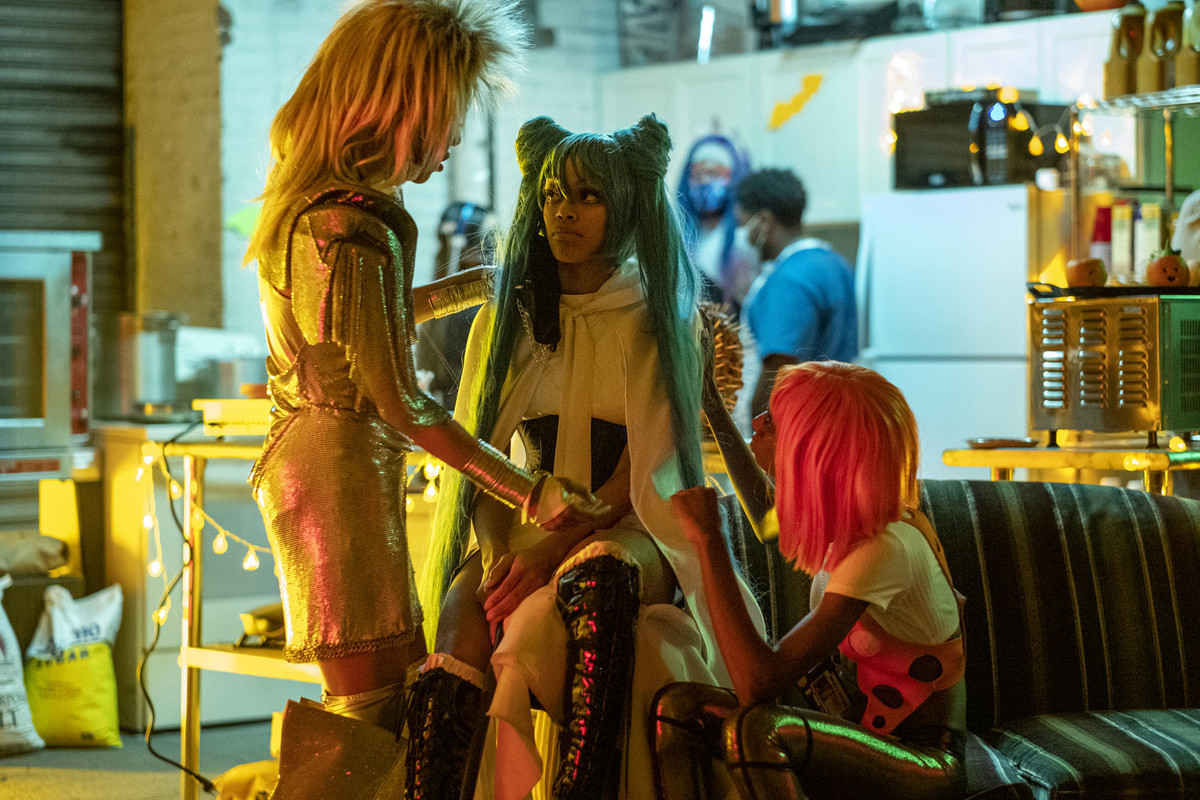
Your character Honeybear is pretty introverted, do you relate to that? Are there other similarities you see between you and your character?
Yeah, I can relate to Honeybear in that way because I'm playing a younger version of myself when I'm Honeybear. And there are times where I'm more introverted than extroverted. It depends on the occasion, the situation, and the environment.
The way we dress. Like, she looks like me, I mean, technically she looks like the current version of me in the sense that I'm playing her at my current age. Like the headscarf, the stickers, the style is very similar to me.
So Honeybear is going through a lot in her relationship with Ash, what new sides are we going to see throughout Honeybear’s character?
The way she's dealing with it is new because we haven't seen her in this kind of situation with a partner. So that in itself is a whole new thing you're seeing. I think what happens with it is pretty good but, them showing this kind of relationship dynamic was really good to have in the show because that is becoming more of a relationship dynamic that more people aren't in and they probably be able to relate. Some people will be.
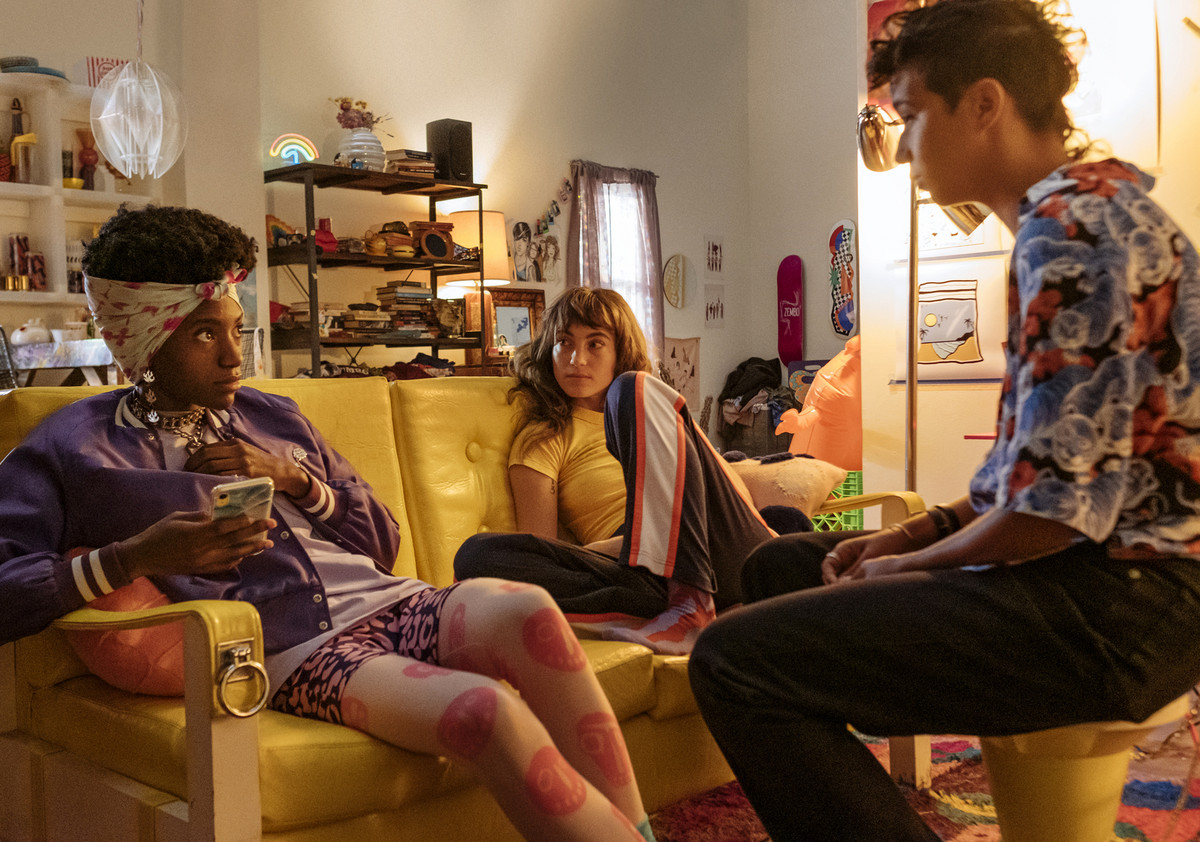
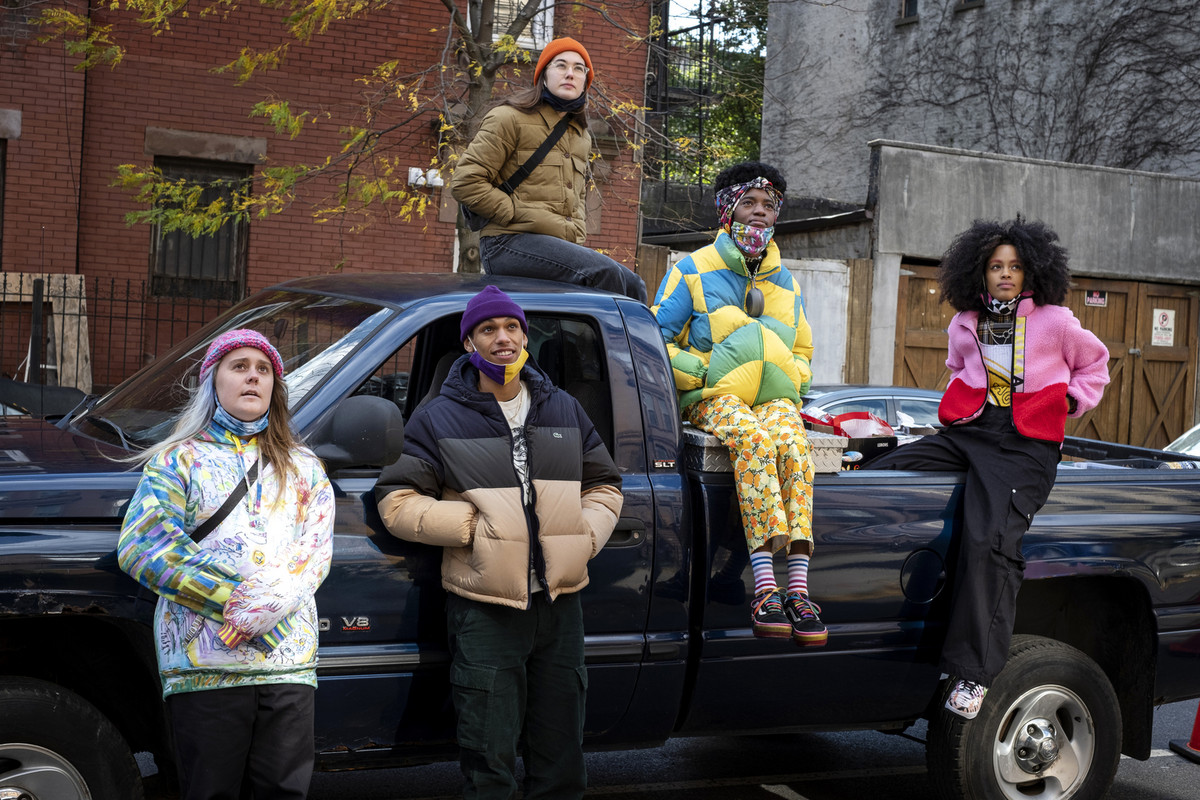
What are some things you’d do differently than your character in this season?
This is her first relationship and her first time being in a poly dynamic. So Moonbear wouldn't have been like that. Like, especially at this age, like I'm past all the jealousy and this and that. I would've been chillin', it would've been a good time.
I think Willow Smith talks about ethical non-monogamy. I think people in that type of relationship dynamic tend to have the best communication skills and most secure mindset ever since it takes so much maturity and self-awareness.
Yeah, it really does. I think that's what I was saying. Like they like a younger me, like definitely would not just based on experience. It's different. It really depends on where you are with your growth and your security in yourself. Like, it can be good if you're secure already and all that and you're working on it or if you're already at a point where you're secure enough, but if you're not, it's going to cause problems with yourself and with the people involved.
If you could talk to your character Honeybear and give her advice about her relationship with Ash what would you tell her?
Ooo, I’d tell Honeybear this might be a setback, but you're good. Things will work out no matter if you're staying with Ash or if you’re dating someone else or if you want to be poly or if you don't want to be poly. You just have to trust what you believe in and it'll work out.
Sidetrack to Skate Kitchen, when you started that with your friends did you think it would have the impact that it does now?
No, it was totally just like the "Free My Boobs" thing. It wasn't like this intense thing. We weren't trying to like, "Oh, we gotta do this. We have to get girls to skate." No, it wasn't even like that. It was just like the Instagram page was made, we posted on it, and then the short film that we all did with Miu Miu came out and then there were articles about it in the New York Times, and then it just snowballed into where we are now.
You have a bunch of other interests like DJing and gaming, what are some other side hobbies you like to do that we don’t know about?
Oh, I like to talk about money and finances. Like I have a separate YouTube channel then I started to work on like right before the pandemic, and then during, it just felt weird. Like I tried and then I couldn't do it.
I do a lot. It would be nice if I could focus on one thing and be super good at it but, at the same time, I say that's kind of a disadvantage because if I was to break my leg or something like that, I couldn't skate or dance. So then, since I'm into like a bunch of things I could still DJ, I could still game, I could still talk about money. So in that sense, it's good but, the other part is like, just keeping it all together and consistent. I'm just like all over the place. I'm like, "I want to do this," and then a few months later, I'm just back to this thing.
Have you been vlogging? I remember I found your YouTube, you vlogged some of Season 1. Have you been doing that lately?
So, on the last day of last year, I moved to California. I started to document some of it and made a few vlogs, but I kept running into the same problem of like, I don't know how to explain it. I know it has to do with what's going on in the world because I was trying to stay away from people because I moved to California when it was in lockdown. I was trying to figure out where to live. So, I was staying in a home where there was an older person, so I didn't want to go do too much. So it was, I say, like these past two years or one and a half years have been confusing for me in terms of how I want to create and move ahead with my career. So, I do want to get back into everything that I enjoy and slowly I've been streaming again and on my main channel, instead of vlogs, I've been giving Betty behind the scenes tea like once a week, that's been pretty fun.
What does the future hold for Moonbear/Honeybear?
Well, we're going to have to see, I'm trying to take it one step at a time. Like before it used to be specific with planning details, like down to the hour, it used to be crazy. Now, it feels so stressful to do that because it's don't know what's going to happen. Like, are people going to get sick again? So I'd say I'm just taking things one step at a time.
Like even when I drove across the country from California, I knew I was going to do it, but I didn't have all the details laid out. The way I did it, I was like, okay I'm going to leave a day later. Then I'm going to get in the car, put in the address, and it's just going to show me where to go.
How’d you get your name Moonbear?
Okay. So there are people from high school that will say it was them that made it like one person says it's them and the other person says it's them. So, I was in high school and we were upstairs eating lunch and there were a few of us and they were like, "Oh, what kind of nickname can we give you that matches your partially Native-American background." So that's how the name Moonbear came about, it's like more of a nature name.
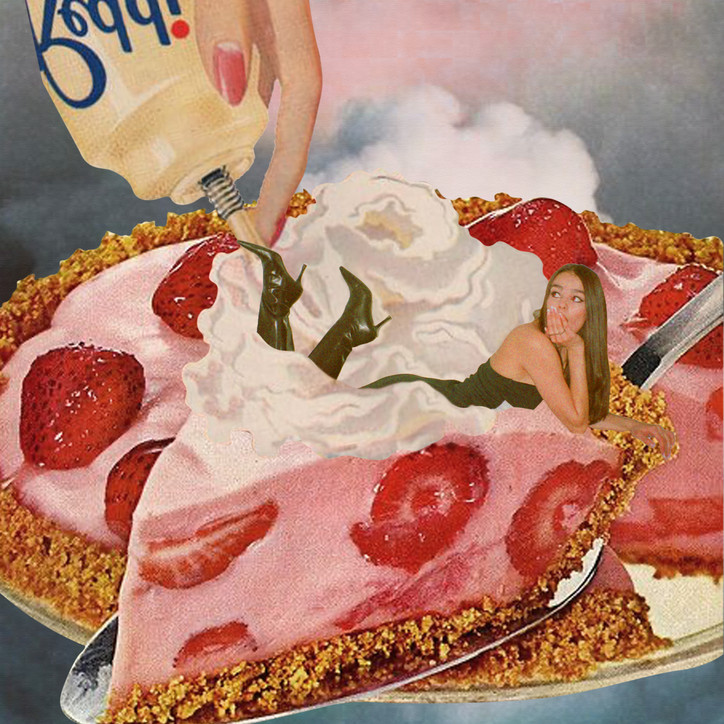
Check out our exclusive interview with model and creator Pojo below.
How have you been? What've you been up to today?
Pretty chill, actually. Funny enough, I just got back from the container store and I'm organizing my closet later. I've been doing remote work on the computer and getting up earlier. So that's the goal right now: can we get up by eight o'clock?
So when in your modeling career, did you realize that “models that eat” was necessary?
I started to really understand how important the conversation around food is when I was doing Fashion Week and my friends and I would squad up and go to castings. Food was really the rest period because that's what you needed to keep going. Sometimes we'd even be skipping meals out of just being so busy, like 20 castings a day or whatever — it was chaotic. I've never experienced that type of energy in this industry until I was doing shows. I started to see that there was a disconnect in that conversation, unless I was really close and intimate with somebody talking about it. I realized that there was a gap, and it kind of created this weird gray space where we were all second-guessing our own diets, our own relationships with food, our bodies. And that translates so directly in the media. I saw that through people interpreting my career; when people would talk to me about modeling they’d be like, ‘Oh, you model? Do you even eat?’ That's how it all really started. It was kind of a middle finger to that. Like yes, we eat, here are the photos of us eating.
How did you first come up with Models That Eat?
I definitely made it intentionally “models that eat”. I always have to put this disclaimer out. It's purposefully models that eat, not models who eat. Sometimes I get DMs and it's really funny — people will say, “Hey Pojo, I just wanted to let you know, um, it's actually supposed to be models who eat, not models that eat, and just wanted to let you know before it gets too big and it's hard to go back.”
And I think it's funny, it being models that eat because it plays on the idea of us being objectified. There's this level of dehumanization there, and it's time to re-humanize models through food because that's the one thing that all people share. Whether or not you have a great relationship with food is case to case, but I think it's important to get the wheels turning for some people. I catch people all the time who would probably typically say “models who eat” in passing, saying “models that eat.” I like to see the ripple effect there, it's kind of funny.
Did you feel like you had an obligation or responsibility to take on for other people that want to model when you started models that eat, or was it sort of a natural just reaction?
I think I've always felt an obligation to be honest about the industry. It's not like I owe it to anyone or anything, but I think as a society, we owe it to ourselves to have these conversations because this media doesn't really exist in a designated space. I feel an obligation to enable the conversation we're having. I’ve put myself in a situation now where I'm not signed and I don't have a PR team breathing down my neck. I actually have a team that's supporting the work. So instead of me creating a space where I'm dependent on this industry, I think that I have made it enough where it's like “Hey, you can come to have a water break and talk to me.” And it's not always a heavy thing, I try to make it as light as possible so others feel comfortable when discussing it. I try to take that extra step, so then they can trust me on the back end to know it'll be well received. I think more than anything, it's just about keeping that space, holding that space for people, and not being tainted by the industry at large, because it's so easy to get sucked into the side of things that isn't accepting. Also, it’s hard to dissociate from the identity as a model. I'm learning as I go, I don't think it's an easy journey for models to dissociate from the label.
I've seen the journey that it takes — when you've done it for so long and you've been exposed to this industry for so long, it’s really hard to shed that conditioning. So I just feel an obligation to help people speak their truth and know that if you're being honest and if you're saying what's true to you, there's nothing you should regret. As long as you feel safe doing that, and you have boundaries for your sake then it should be a liberating conversation. That shouldn't be something that's heavy or it makes you afraid, and if it does make you afraid, then it's a good opportunity to question why you're with management or those people around you making you fearful.
So what are the top three things that you would want to change or like to see change in the modeling industry and how are you making steps to change that?
I would say one is obvious — the sample size. I think everybody hates the way that fashion has been manufactured, pun intended. You got to do a casting, off the bat they know if they like you. The second round is finding out if they're going to scrutinize you for your body and be microaggressive. Then, the third round is just waiting to get on set for the shoot. The thing that people don't realize about models, I think, is that you're at the mercy of your employer at all times. I'm just being dramatic here, but let’s say you’re about to make hundreds of thousands of dollars tomorrow. Congratulations! You don't know if you're really booking that job until you are on set and photos are taken, and then they're out in the world, because the truth is a lot of the time you're waiting until the night before to get confirmation, you're waiting for agent emails with flight confirmations. That's what I see with all of my friends that are signed, and I've seen that when I was modeling full time too, but it's crazy how it's such a temperamental industry and people don't understand how mentally draining that is when it comes to body image, when it comes to scheduling, when it comes to consistency. Those are things that are super detrimental to your health, because if you're waiting around and you're not booking jobs because your agent said you “gained an inch in your hips,” like that's more than just, “Oh, I didn't book this job.”
I think there needs to be health and wellness coaches that are certified dieticians at agencies, period, end of story. I'm so done with hearing people say how their booker gave them advice on what they should be eating. Like, sorry, you went to school for PR, you shouldn't be telling anybody what their lunch should be. Mental health counseling would be great for models, too, because this is such a space where it's unsustainable otherwise. If you don't have your arsenal of tools, and if you don't have that support system, this is the industry you’ll burn out from. And it's why I'm so reluctant when people ask me how they can become a model. It makes me so tense and anxious because it would be so irresponsible for me to just say, “Go for it. You're going to live your best life, and you're going to walk all these shows.” I don't know, because I can't tell you how these people are going to treat you. It's terrible.
Third thing, I think legal resources for people getting contracts. I’m not saying agencies owe it to everyone and should provide everything. The health stuff to me is just a given. It's just like HR, we don't have HR, you know? That’s crazy. So I would say the third thing to change is some sort of legal counseling. That'd be outside of the space, where models or potential models can go and actually get some really good advice about contracts. There's a lot that goes on in that tiny little packet.
What does the process of picking guests look like for you? Cause you've, you've had some really great people on Models that Eat?
So as of right now, I have to say everyone I've had on Models That Eat have been friends of mine. People I've met along the way that I identify with, and I know we can have an honest conversation. So a lot of it stems from my network and community. Right now, I'm doing the most outreach I've ever done for sourcing models and meeting friends. It’s hard for me because I get in my little bubble and just hang out and make content with the same people, which is great because it creates that community side. But in that same breath, it is a little bit repetitive and it could kind of get redundant for people other than myself.
I think it's all about just being well-received and also just having straightforward intentions when I start talking to somebody. So they understand, this is what I intend to do with my media. Is this something that aligns with you? There's no pressure there because it should never feel forced and it should never feel manufactured. I don't ever want to be clickbait.
So the term diversity and inclusion gets thrown around a lot, especially now because I think of all the movements that have been happening. People, you know, don't want to get in trouble, but what would you say is true diversity and inclusion when it comes to campaigns or shoots that you're modeling for?
I have a tokenism radar — I'm really good at looking at a shoot and knowing, y'all really did not think this one through. The problem with a lot of these old companies is that they're not rooted in diversity, period. They don't have diverse teams. Target demographic is fine in some regards, but I think a lot of these brands that are so clearly rooted in that separation aren't fooling anybody. Young people today are so much brighter and more understanding of those things in marketing simply because we are so targeted now as a demographic — everyone wants to know what the kids want.
So I think what it really comes down to is, is your brand for everybody? If not, why? Ask yourself that as a brand, and then beyond that if your brand image isn't organically inclusive, whether that be all genders, all sexual orientations, races, abilities, disabled or not. If that isn't something that's rooted in your consumerism and the way that you're giving back to your community, then it's so clearly a facade.
Was there any hindrance when it came to associating yourself to this platform?
I'm a really unique case where I got scouted so young. I got really lucky with my management. I’ve been told things that I'm not very happy with of course, but overall I was blindly optimistic and it worked out. I felt like my relationship with the industry was like that until I had those realizations around how corrupt the space can be. It wasn't necessarily hard to speak my truth but when my truth came out, I knew I wasn't aligned to certain things. I definitely left the agency world with intention, but I had crazy identity issues after that, I didn’t know who I was. I was just lucky to have a support system. People were like, “No, you're doing really good stuff, you're helping models” or “you're helping people that are watching online and you should just keep doing it.” Then that ripple effect is what kept me doing this work because I couldn't let go of it. If I didn't make a video for like three months, I'd feel so miserable.
I can't let it go, I don't know what it is. I can pretend it didn't exist and not do it, but it's like a calling in a way for me. I can't explain. I think my passion for this conversation overrode all of my insecurities that stem from leaving the industry in that way, but I'm grateful for it. I know now where I'm going and my team is building as I go. People that want to represent me are going to want to represent me for me, not because I'm a white brunette girl on a board who could walk a show if they need someone, you know? It’s not about that. I've kind of scratched the surface. Now it’s like, “you have to see me for who I am. Sorry.”
So going off of that, do you have any future goals with Models That Eat?
I see so much for the platform, the community at large. I think it's so much bigger than just even the conversations. It’s its own world or universe in its own way, but I particularly want to get back to going to events with everybody integrating amazing food brands. We've got some really exciting products coming out, too! I just love the idea of a substantial existing thing that's not just some merch, but instead really cool objects. I want to feed that side of it more. We handmade hats and napkins, and that was really fun to make, so now I’m focused on more cool things for the community.
Definitely more events, definitely more podcasts, and more amazing guests. I really, really want to get some cool and particularly big names in there. Not in a way that screams, “Oh, look who I'm interviewing,” but because those people have the craziest impact. If we saw models with massive platforms online talking about these topics, they could change a lot of lives. I think it's about pushing myself to step out and meet new people and see who’s open to it, and then see how much work we have to do before everyone's open to it. I'm excited and we've got some really cool collaborations coming up, which you'll have to stay tuned for.