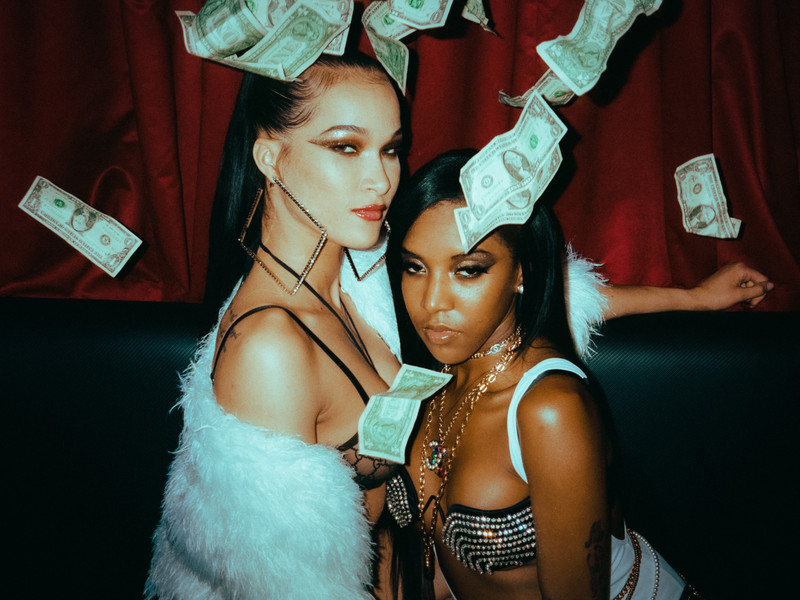
We sat down with the artists to find out just exactly what Dripfeed.tv is all about.
Stay informed on our latest news!

We sat down with the artists to find out just exactly what Dripfeed.tv is all about.
Do you want to explain what Dripfeed.tv is?
Tarren—We wanted to make a body of work that would span several years and come out in slow increments. So, drip feed, like you would drip feed oil into an engine. Dripfeed is messy and falling apart, it's incapable of transcending the environment in which it is taking place, so you see the failure of its fiction. We are interested in the failure of a given narrative to stay cohesive in a performance. Sometimes the characters will achieve a seamless transformation, but we show you the process of this and what its limits are.
We were looking at American entertainment and the kinds of formats that have maintained from vaudevillian, to the variety show, daytime television, reality TV, through to social media.
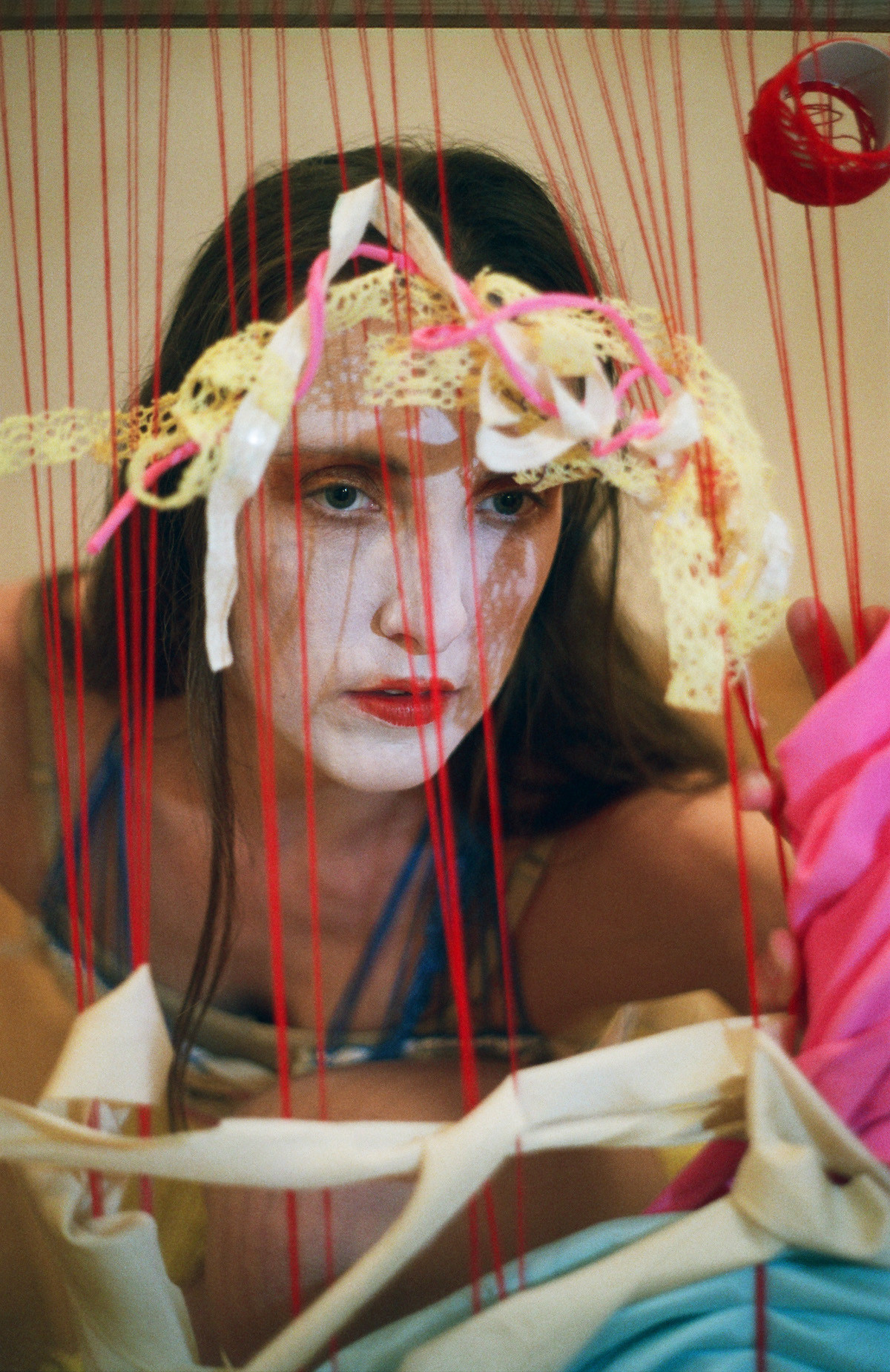
It's about spatializing the way that narratives exist fragmented in your mind. The characters are not three dimensional or fully fleshed out, rather, we give material to the performers and through the process of repetition and rehearsal see what can happen in the moment. You can watch them embody the material then get thrown back into their own subjectivity.
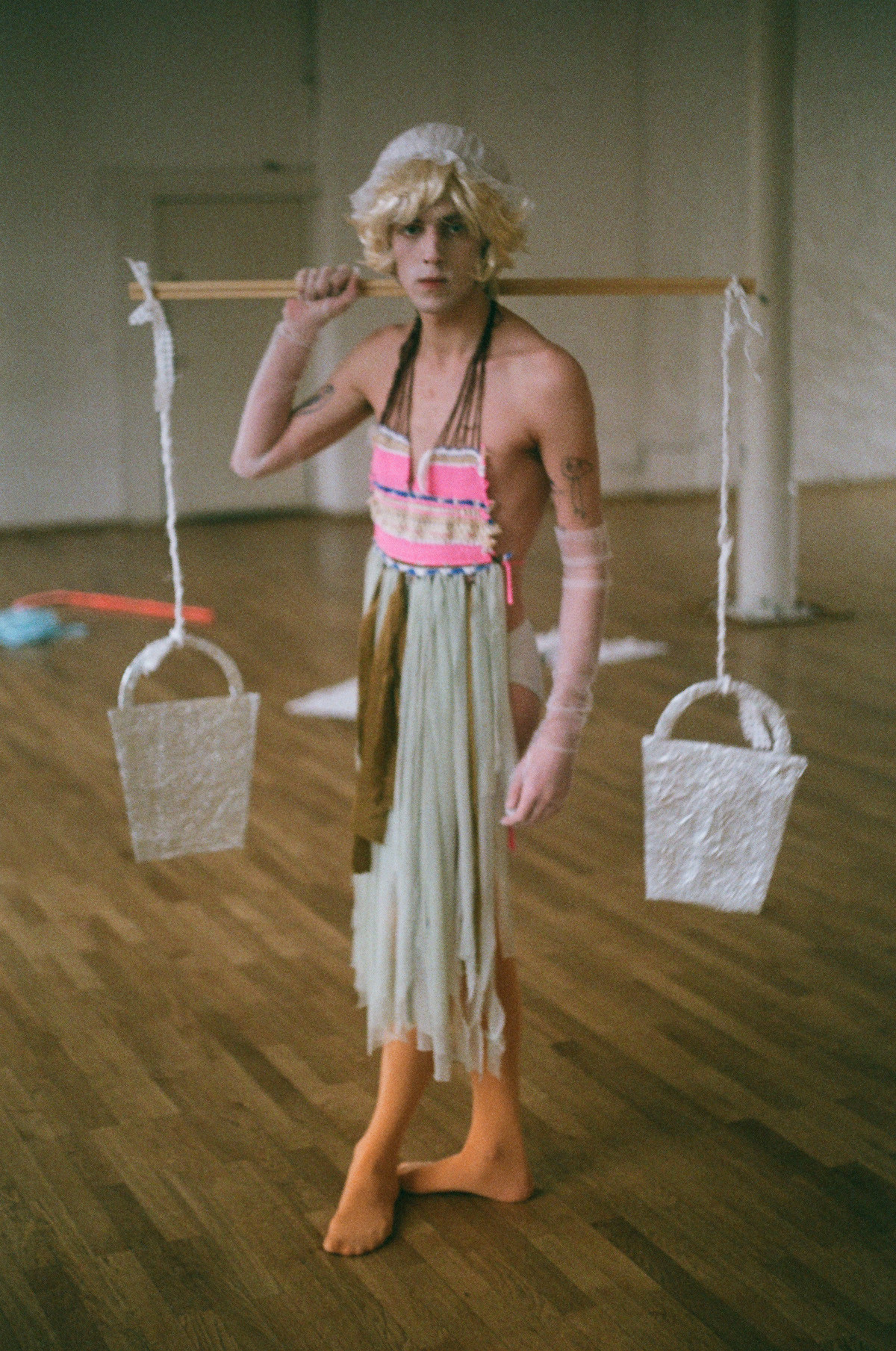
That reminds me a bit of Out 1 by Jacques Rivette where a group is inside a film rehearsing a play. I wanted to ask if you would connect it to existing praxes where people are trying to collapse the 4th wall like Brecht or French New Wave etc?
T—I was reading about pornography and curiosa and what happened with the rise of user generated content, where its not about production value, but rather the singularity of the moment, and intimacy, where this thing is only happening once and it's happening for you.
Pornography is really interesting because ultimately you are staging reality and playing around with that script and seeing when it collapses or has an “authentic” moment.
T—That's something we were thinking about.
...and is also very Californian!
Joel—We're filming it in a slightly creepy way with the handycams. It looks like it's filmed for someone's personal collection.
T—It's invasive. Can you watch explicit content innocently or are you implicated by the fact you are watching? We often now see warnings of “contains graphic violence” on social media for example. I think there has always been a connection between trauma and entertainment.
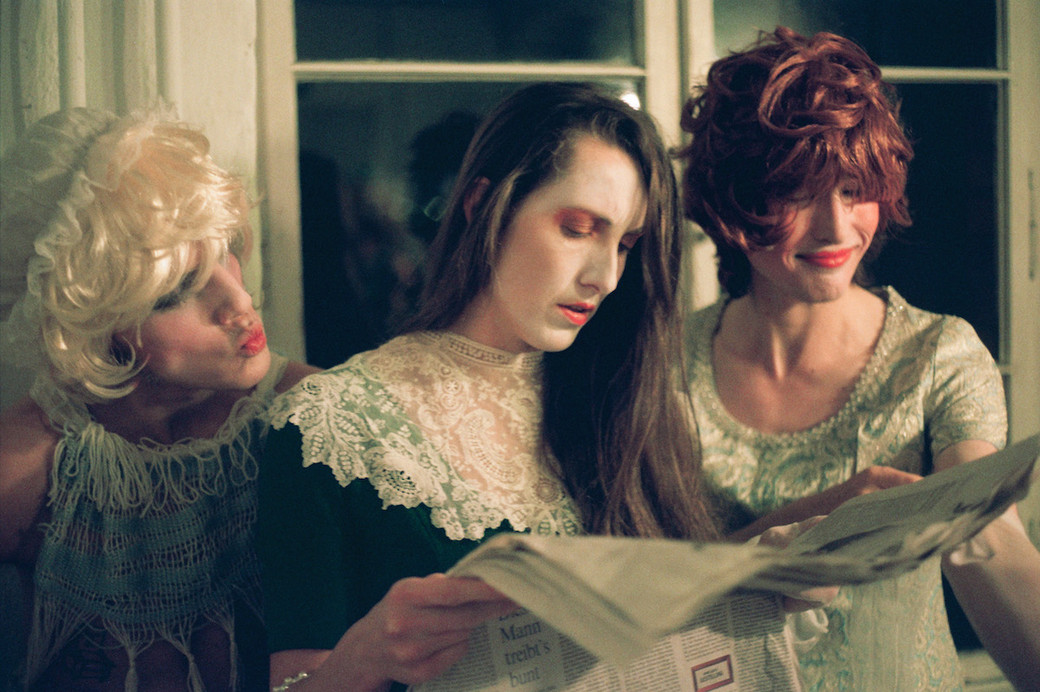
I definitely agree with that in the form of popular music.
T—Could you elaborate on that?
Blues, rap, disco; It's usually centered around violence, sadness or loss.
T—Yes absolutely, and the new episode of Dripfeed centres around a troupe of Final Girls, the female archetype from slasher films who confronts and survives the killer. In Dripfeed, this group of final girls come together to process their trauma through performance. Throughout the story they discuss how competitive the conditions are, and how they are being pitted against one another. What is the ideal final girl? There’s a line, “You have to hold whatever hope you have next to the terrors which cannot be unseen." Who will be the one to deliver these messages of female trauma and suffering? I think of Me Too and partly of Greta Thunberg. Why is she the correct messenger for the horrific messages we have to hear? What makes her the best public face?
It's interesting the connection with the Final girl as this survivor of trauma and then if someone goes viral they have to have the most suffering in order to be heard. You can't be successful having a relatively safe or stable life, which maybe says a lot about how society is structured.
T—The Final Girl as an archetype feels very appropriate for the times. Society is collectively having to confront the monstrous aspects of itself and we are living through significant perspective shifts. It's typical in slasher films for the viewer to adopt the perspective of the killer, and then at some point flip and start siding with the Final Girl.
So it feels like a nation of Final Girls?
T—(Laughs) Yes, the Final Girl is a complex figure and in this story she's not a virgin and she's not innocent, nor is she the ultimate victim. We' re still figuring her out but she's definitely an archetype that's worth looking at again.
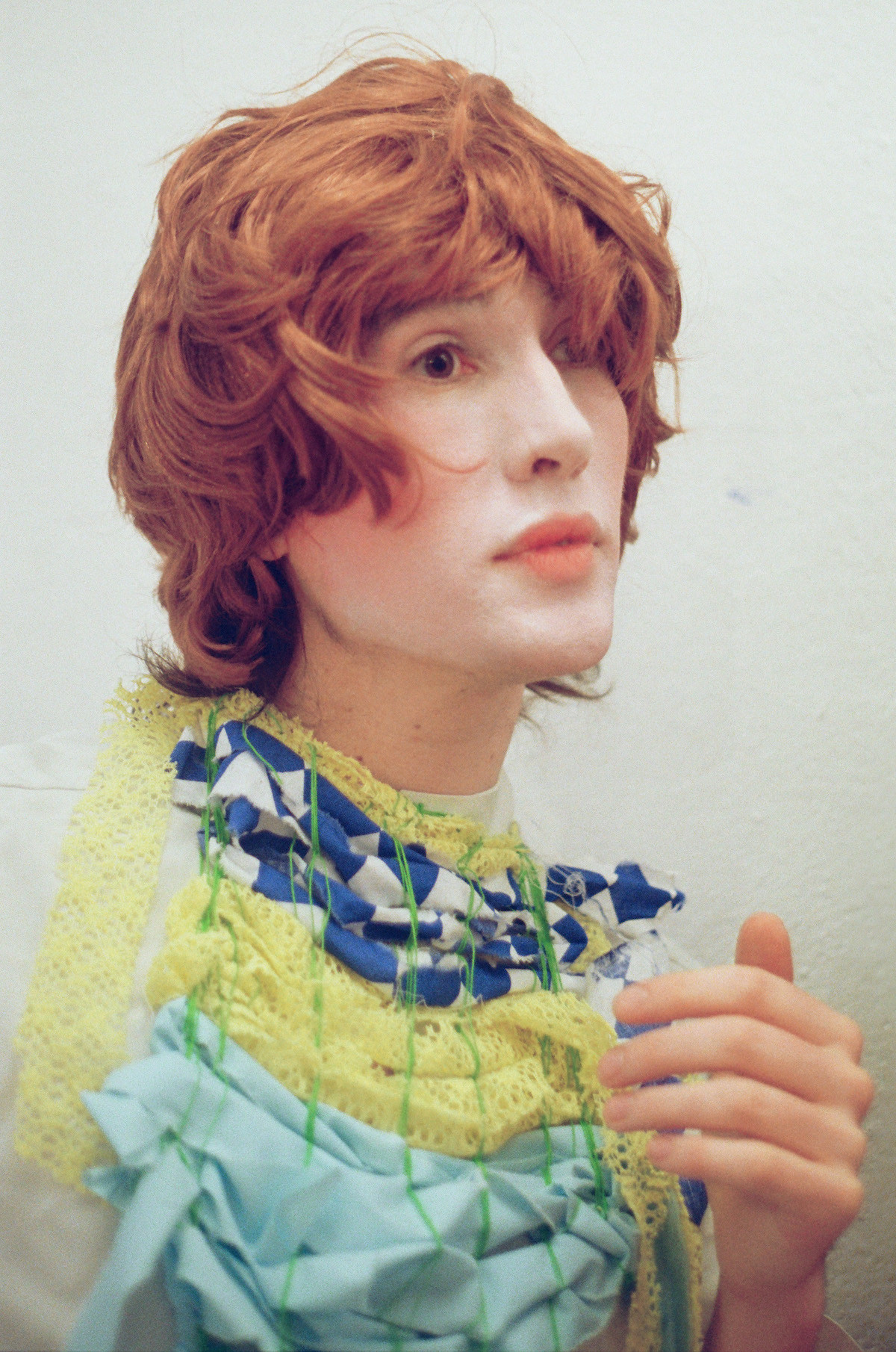
She’s a figure who breaks through this weird binary of good or evil...
T—Absolutely, we're living in a time where we are getting further away from the complexity of human experience. With feminine desire in particular, there's less territory, we're shrinking. We're not allowed to talk about things that would truly complicate these woke narratives about what is appropriate to be writing, speaking or making art about.
That reminds of that film “Secretary” from 2002, and not to be too topical but it is like the discourse around Philip Guston where some people are deciding for other people how they should or would think about a certain work, but if we look at this film or painting, allowing people to decide for themselves what something is or isn’t depicting, then having a permissive ban on how someone is allowed to react on their own terms with context.
T—Yes and Dripfeed.tv is this autonomous space that we have carved out over years for us to turn back to, there are no barriers for us. We get commissioned from different theaters or different platforms but we ultimately own that space and it's us that decides what happens there. It's unapologetically messy, it tries to materialize psychological spaces.
J—It's dreamlike.
T—The singularity of the event comes from the fact that it's not a polished product that has been rehearsed for 6 months, it's not seeking to be a professional film, it's seeking to capture something that you could have only seen one time and we are going to capture it on video.

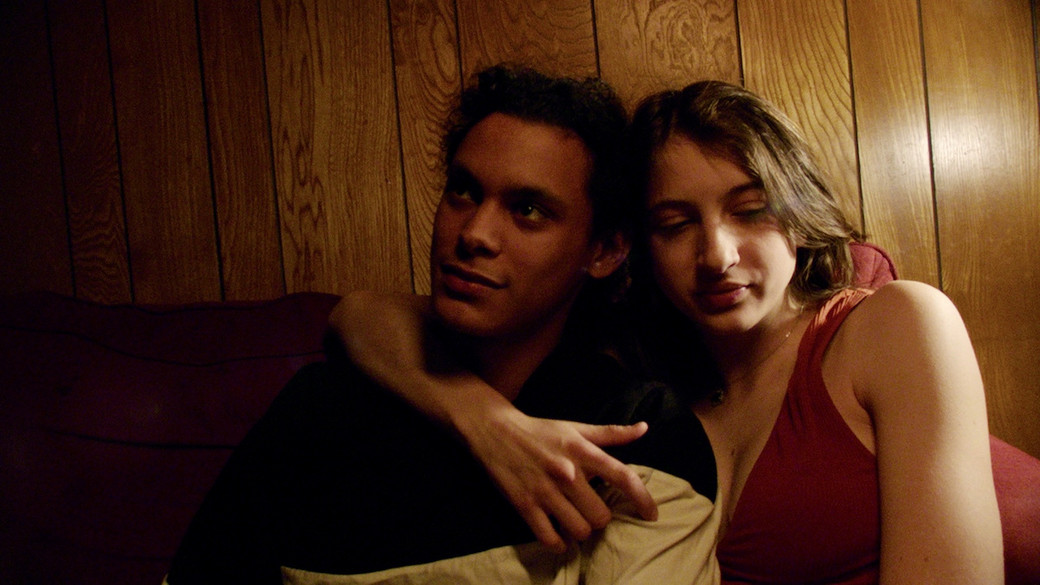
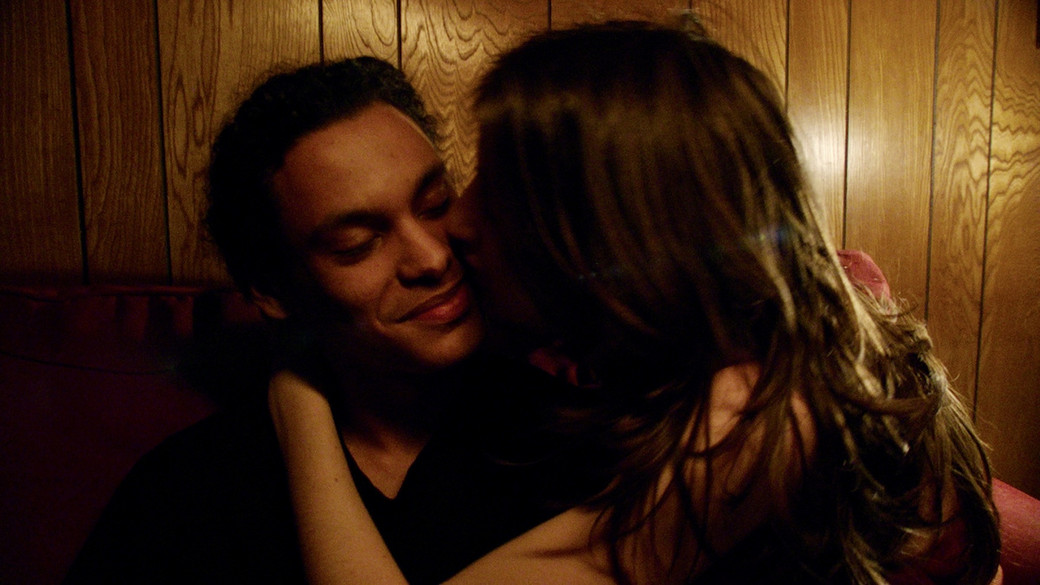
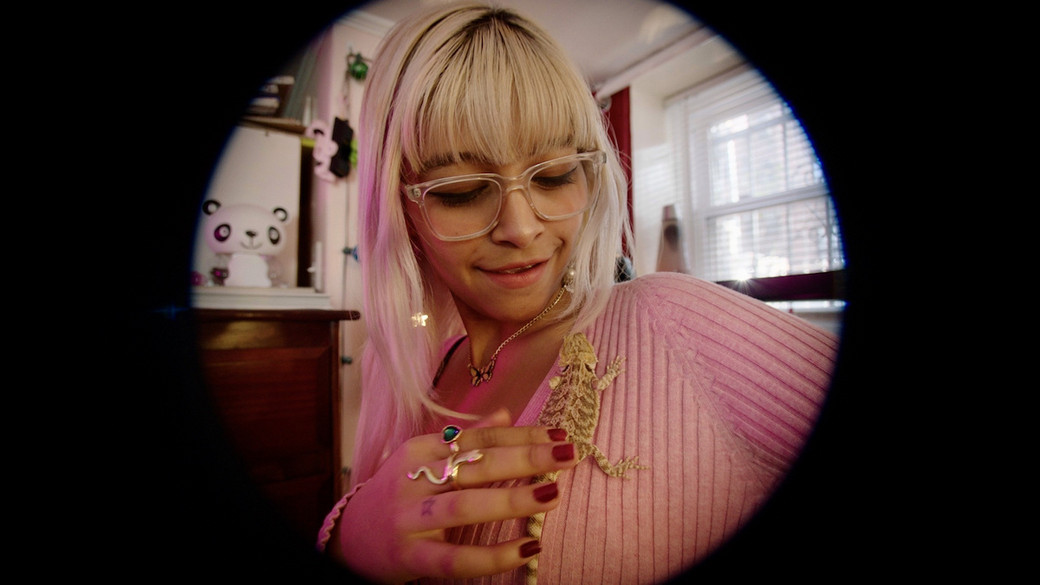
Directors Andrew Garcia and Sarah Meital Benjamin beautifully told each of the subjects' stories by allowing their words and lives to take center stage, filming them in their bedrooms or their local park.
"The Sunset is Not a Permanent Home" is a true representation of lives being lived.
Watch, and read our conversation with Andrew and Sarah, below.
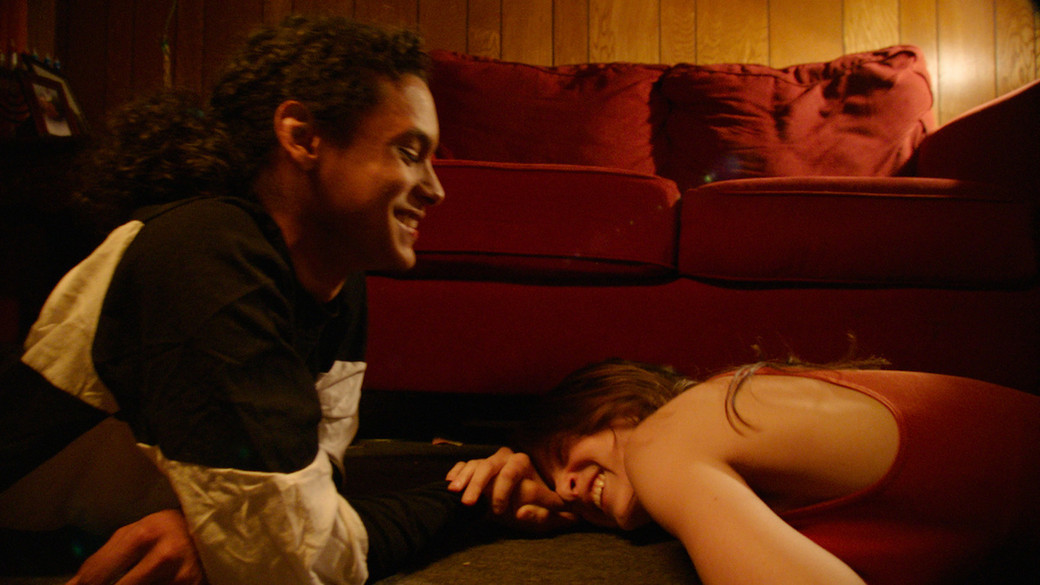
One of the scenes that really stuck with me was the couple in the beginning arm wrestling. It was a scene that I feel like I, and so many who have been young and in love, have lived. It almost shot me back into that time of my life and that feeling of innocent love. The way this piece was shot and the way these kids told their stories evoked a feeling of nostalgia within me for my teenage years and for a city where I didn’t grow up. Was that something you were aiming for when making this piece?
Andrew—Yeah, me too, I really loved that moment which is why I put it at the beginning. They had actually just started dating when we shot this, and they’re still together now. That’s definitely something we were aiming for, to make people feel nostalgic, but also hopeful. We really wanted to bring up a feeling and remembrance of being young and feeling like a kid and growing up.
What feelings were you hoping to bring up in people, from New York and not, when making this piece?
A—A feeling of community was essential to us because this piece is so much about identity. I know a lot of people could say the same thing about growing up in Los Angeles, all these kids are Latino but maybe they’re dark but don’t know spanish and feel out of place or they’re really white and they know spanish but still they feel judged for how they are or how they appear. I feel like the way that it’s put together—weaving in between people and stories—shows that you dont have to feel lonely because there are so many people that feel exactly the same way. We can be there for each other and create this community to really help each other, and I feel like that’s always important but especially right now with COVID and the BLM movement this piece feels really impactful.

What inspired you to make this piece?
A—My work is always about Latinos and their struggle with their own identity. I made a film a couple of years ago that I shot in Puerto Rico right after huricane Maria about a family struggling to get clean water (on HBO). My work is always about what we’re going through as a race and trying to show that and raise awareness of the good and bad things. This piece was just a great snowball effect that didn’t feel like work, things just kept opening up and showing themselves and it was just all we could have asked for.
Sarah—Andrew and I have known each other for a while and I have always wanted to work with him. I think that we’re two human beings that really create from our hearts, and I know it sounds cheesy but it just felt right to do this project. To get a couple of kids who are unique in their own worlds and who wanted to be a part of it and to just spend time with them and see what comes out of it. No point A to point B, no goal, just going and seeing where it took us. I think what was so special about this project, and about a lot of Andrew’s work specifically is that it was just a straight on approach. We came, this is what we saw, and we kept going.
What is your relationship to New York?
A—I moved here for school and I’ve been here for about 6 years. I’m from Miami originally. But I’ve grown to really appreciate the Puerto Rican communities here. I’m PR and Cuban and I’ve loved how at home I feel in some places. That sense of home made me want to stay the most.
S—I’m from Jerusalem originally and I moved to the states to find more opprotunities for myself. I came here on my own and just fell it love with New York instantly. Every year and a half or so I leave and go somewhere for six months, but I always come back crawling on all fours like I’m sorry I ever left.
How did you find the people to document?
A—I've known Sarah for a while and she approached me and said let's do a project. She got these kids to pick some people out and I noticed that they were kids of color and so it became just such an easy route for me. They were all so different but they all had this one huge thing in common.
S—Almost two years ago I started my agency, Memoria Di, and one of our models is a girl named Jaya Ragoo who is also in the film, she's the girl in the blue ocean looking room. We became good friends and she began helping me with casting. She actually casted this project completely by herself! A lot of these kids are actually her friends and people from her community.
All of the boroughs are so different while still being so close together. What are the similarities that you found between them?
A—We primarily stuck to Brooklyn, Queens, the Bronx and Manhattan, and they each definitely have their own flavor. I think the clearest difference was going from Brooklyn all the way up to Harlem. I don’t go up there that often, but even without knowing too much about the history you can still feel it and see it. You can feel the history looking at the buildings, who is on the street, who is selling what, you can see the story and history of each different place unfolding before you. Getting to see that before spending time with the kids who grew up there was definitely a great experience. I think all of New York shares that, the history being intertwined with wherever in the city you happen to be.
S—I think it’s just the New York attitude. It’s kids with big visions and big imaginations who were brought up in a really special city. The spirit of New York is so unlike any other place, their minds are just someplace else. Very visionary people.
With New York being a city so based in public transportation, how does that affect the connection between the boroughs and the kids in each borough and how does that play a part in the magic that is New York?
A—I think that it definitely helps to show how different worlds can feel so apart but together. Again, I feel like that goes back to that sense of community. None of these kids know each other, they're all raised differently, they all come from different backgrounds, but they all shared similar stories in other ways and they’re just a train ride away. You can get on the train for an hour and there are all these different places and people you can see and meet.
S—I think about this all the time because I grew up in a place that didn’t have that and to get to see your friends, or to run away from home, or just do whatever you wanted to do at 13 was really hard. We were hitchhiking and here you can get anywhere so easily which is something that I never take for granted because I’m from a place where that isn’t possible. I don’t know in what way it really affects growing up here but I guess it just allows you to meet people from different areas who you might not if you didn’t have the transportation.
What makes NYC so special for young people growing up there, what sets it apart from the other big cities? What made you choose New York for this project?
A—For me, out of all the years that I have been here I have always been searching for that love of New York that people talk about because I have that for my home, I love Miami, but I never felt that. I think while doing this project, and I think it was the greatest project I’ve ever been on just becasue of the emotions that came out of it. Being with those people, being with those kids, it was so innocent and I just wanted the best for them and for the world and it made me really fall in love with parts of New York. I think it was interesting because both everyone in front of and behind the camera were looking for the same thing and wanted that love all around.
S—I haven’t seen much of America so I am not really sure what other places would be like for young people, but in the context of where I have lived New York is a place where a lot of change happens and has happened throughout history. The kids who grow up here see it from the frontline in a lot of ways which goes back to that idea of them being very visionary and knowing what they want and how to say it and go after it. They know they can set the tone and they aren’t afraid to do it.

Lead photo courtesy of HBO Max
For this collaboration, we came together and asked our three artists to investigate the idea of “identity” and “self-reflection," through words as well as their respective medium. Our third and final artist in the series is painter, illustrator, sculptor, and comic book author Kezia Harrell.
Using a playful palate, Kezia Harrell’s multi-disciplinary pieces present powerful reappropriations of the narratives of Black Americans across history and popular culture. Incorporating surrealism and fantasy in each piece through space and forms, Kezia’s work builds worlds for the Black identity that sit outside of the heavy traumas of the past, safe from the perpetuation of the white perspective.
In many pieces, the artist uses self-portraiture to explore these topics, whether literally or by way of imagery nostalgic to her personal experiences growing up. Technically inspired, thematically and politically thought-provoking, and personally moving, Kezia’s work carries significant weight, and we were honored to have her take on self-reflection and identity as a part of this series.


How do you define “identity”? What would you say are the most important aspects of your identity?
Lately I define identity as the one true thing we own. It’s what situates us in our lives and leads us through it. The most important aspect of my identity is my memory. I remember all of my selves, from my earliest memory to right now. When I remember, I see myself as infinite.
How do you feel that you present and express yourself differently digitally, versus in person, versus in your work?
I’ve been an internet user since I was 5. I’m basically a cyborg, as I’ve never not had access to the world wide web. My mother made it that way. We had a big ass Macintosh. I mean it was thick. And it had this game where you could create digital portraits, there were hundreds of facial features built into the program to choose from. I made all kinds of people; green hair, purple hair, big lips, big nose, itty bitty eyes, giant ears, you name it. My mom always says, “Cyberspace is a real place.” And it really is. Today we see it from an even more surreal light as we carry cyberspace in our hands, we rely on it to actually communicate. It’s shifted how we relate to ourselves and an even bigger world than we thought. I’m a storyteller and every storyteller loves an audience, so I love how I can mold my own story online. I love it’s broadness.
Upon self-reflecting, where are you able to see personal growth since you first began your creative journey? What are you most proud of?
Picasso has a quote that I’ve been quoting since my sophomore AP Art class, it goes “Every child is an artist. The problem is to remain an artist once they grow up.” My creative journey began when I was about 4-years old and it has evolved with me as I’ve aged. All of my phases as an artist are valid. The one I feel the most proud of is my middle-school to high-school self. That was when I started branching out and exploring concepts and art history. When I was in high-school I started to actually get comfortable with my reflection. The first piece I made was a color pencil drawing of women in my family. It was my first time using color pencils for a portrait. I was surprised at my ability to render color and depth, and so were my teachers. I was the talk of the art department. I’ve always been complimented on my work but in high-school that’s when the “serious artist” title came along. I felt responsible to actually speak. I used to make what I called “line language.” And It was basically graphic abstracted lines that, if you looked at them for long enough – you’d start to see a bunch of happenings. Paired with line-language would be drawings of luminously Black skinned humanoids.
I was invited to enter a competition held by a local shoe store. They gave us all boots to design in our own original way. I worked very hard on my book. I painted on my line language and my humanoids. My mother and brother Chaim helped me build the electronics so that it could blast music and also spin around slowly. I sculpted these black polymer spikes that shot out of it and everything. It was so dope. But I lost the competition to a dude who made a Mario Bros. themed shoe. I spent weeks pissed about that. It kind of shattered me at the time but I didn’t stop creating. I remember thinking to myself “This is why I don’t do competitions anyway.” I have all of my old work, except the shoe. I just let it get knocked around in my bedroom until I eventually threw it away.

Photo courtesy of HBO Max
With increased alone time, what keeps you feeling connected during quarantine?
I have a very close knit circle in my life. While I’m always alone with my art, I can leave my studio and be greeted with the beautiful faces of the ones I love. I keep my loved ones close, I’m very social and I have a natural habit of keeping in touch with friends & family, near or far. Sunday mornings I go on early morning leisurely strolls and to find something new to paint on my iPad. I’m very sensorial; I feel just about everything so I often escape to nature. It refills me when I’ve spent my energy. Although I am a loner in a sense, I still feel longing of connection. At least before if I wanted to be barricaded to my home, it was a choice. I’m a world roamer, I like to bounce around the globe. I really wanted that for my 2020 but the year showed me how to really be gratuitous and sit the fuck down sometimes. [In 2020] I learned that the little things are what makes the world go round. We are the little things, and I miss us. I hold on tighter during hugs this year. I’ve made the most amount of art this year than I ever have before and it’s subsequent to my earlier depression. They always say it must rain for the sun to shine. Or something like that?
What might be your mission statement—as applied to your work, and also to you as a human, today?
I want to make as much work as my two hands can produce. I’ve seen a lot in my 27 years and I want to share my visions. Ultimately I just want to be an adorable old grandma one day with silver locks that sways past my ankles when I walk. I try to make decisions that she/they would make.
You’ve spoken to the fact that self-love has been an important element and inspiration in your work as well as your lifestyle. How do you actively practice this day-to-day?
Sometimes I don’t practice self-love every day. Self-love seems [so] ritualistic—though technically I probably practice it every day... I [just] try to acknowledge the ways I love on myself, people, and things in my world. For instance, I love laughing. One of the ways I give myself space for self-love is by emitting laughter.
Human by Orientation’s ethos is to celebrate your fullest self. How have you learned and grown as an artist through your journey of embracing your full self?
I learned that I am the perfect subject. I used to feel guilty about telling my story until I seen its inevitability. I’ve been doing the right things all along.