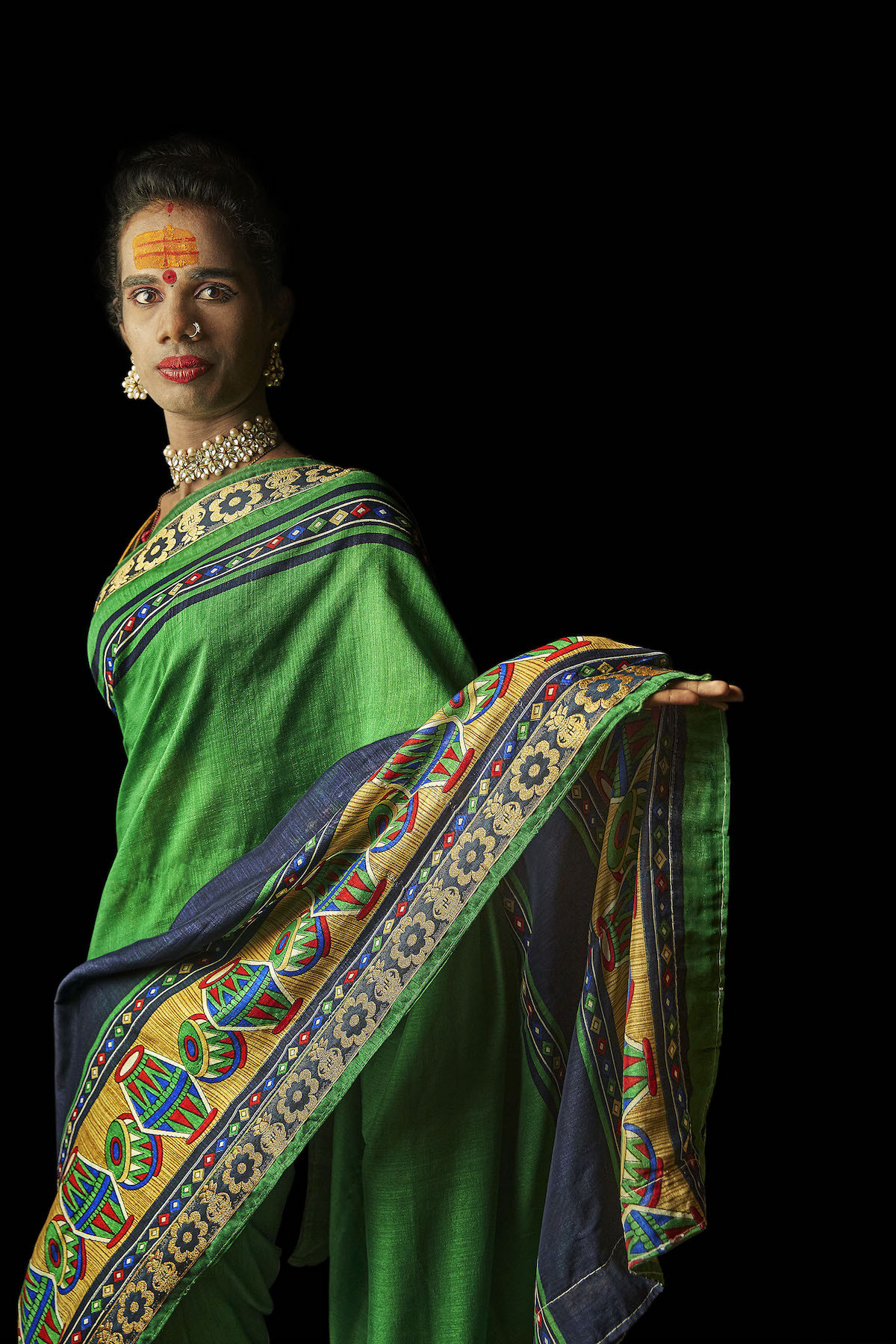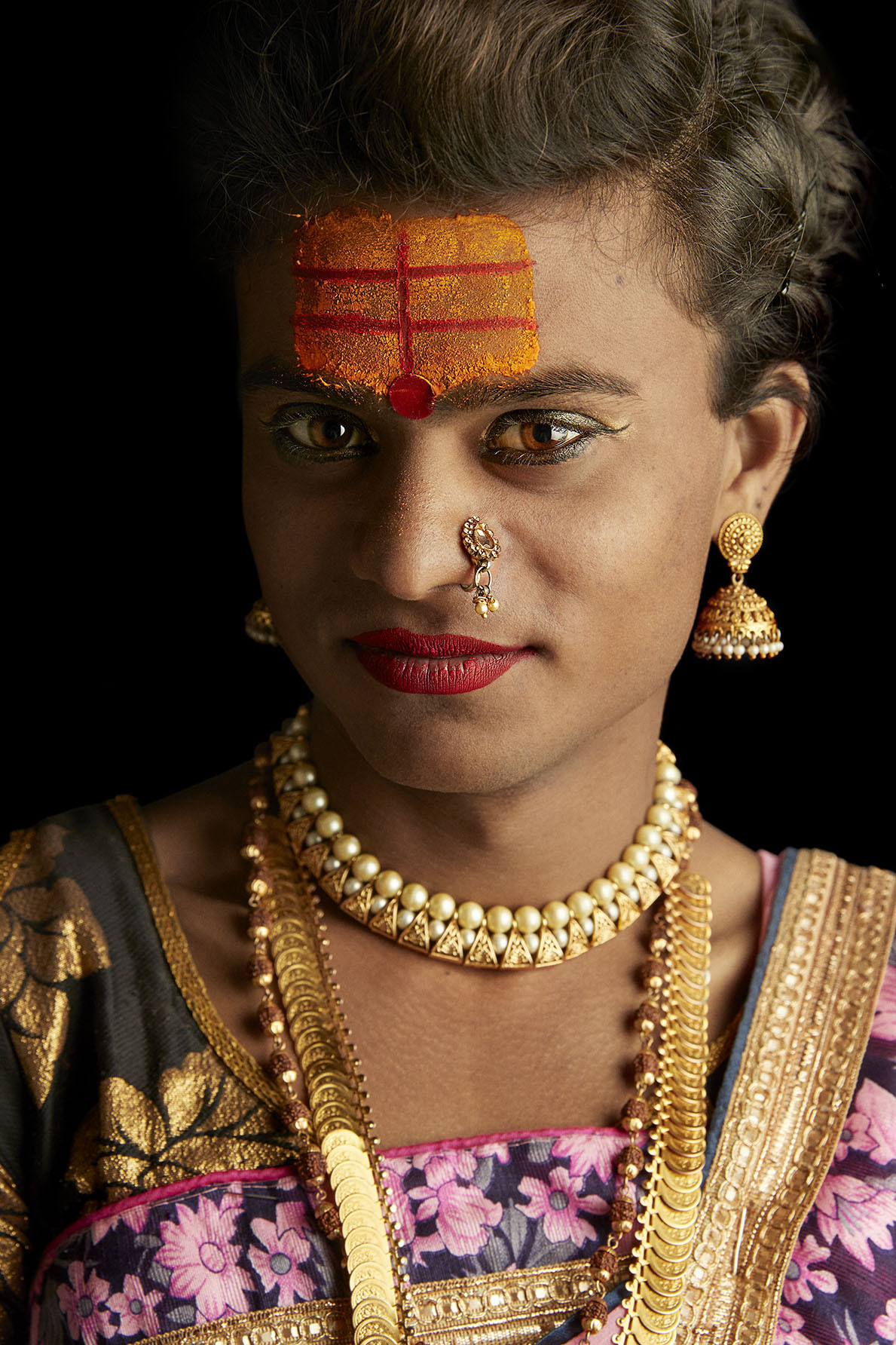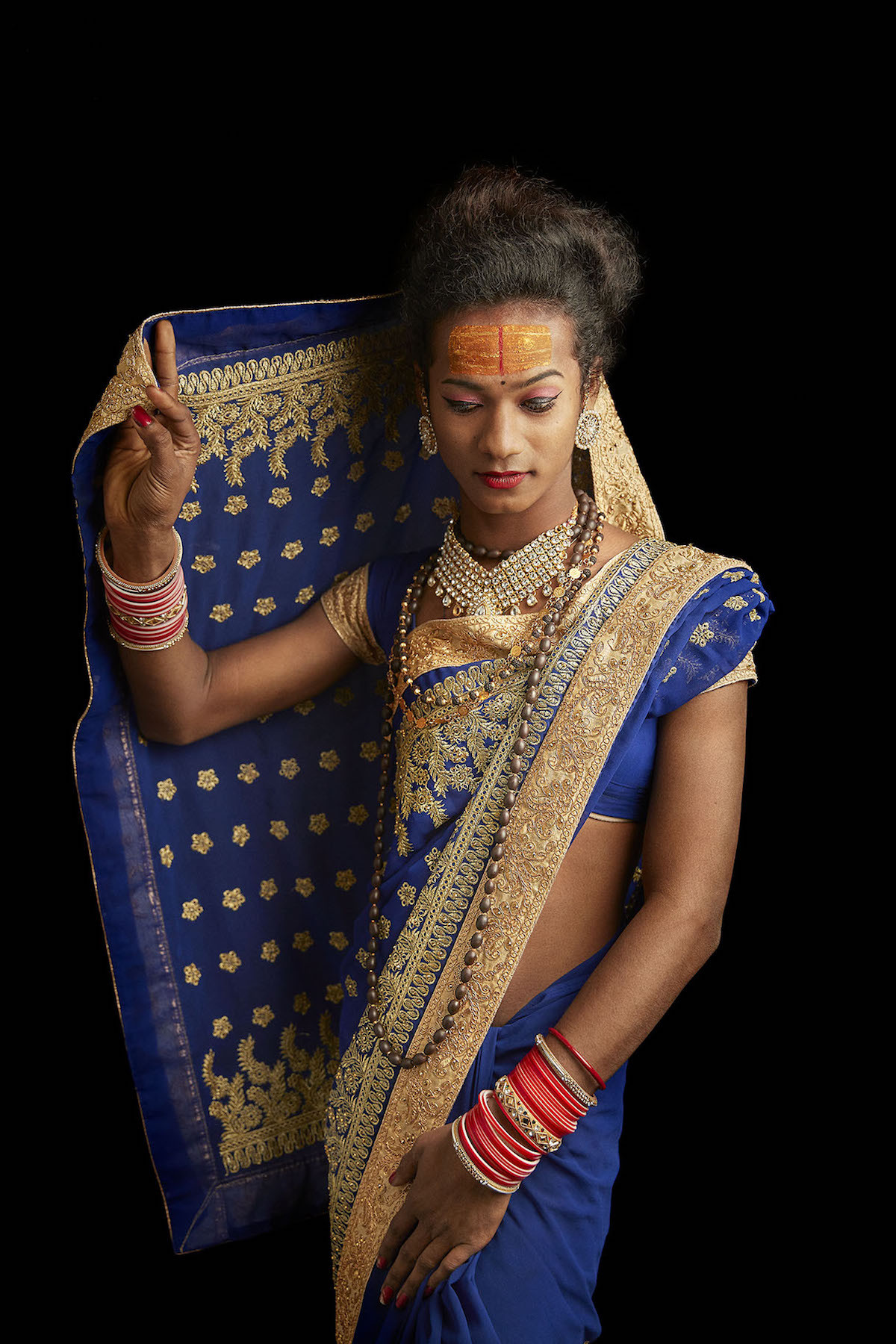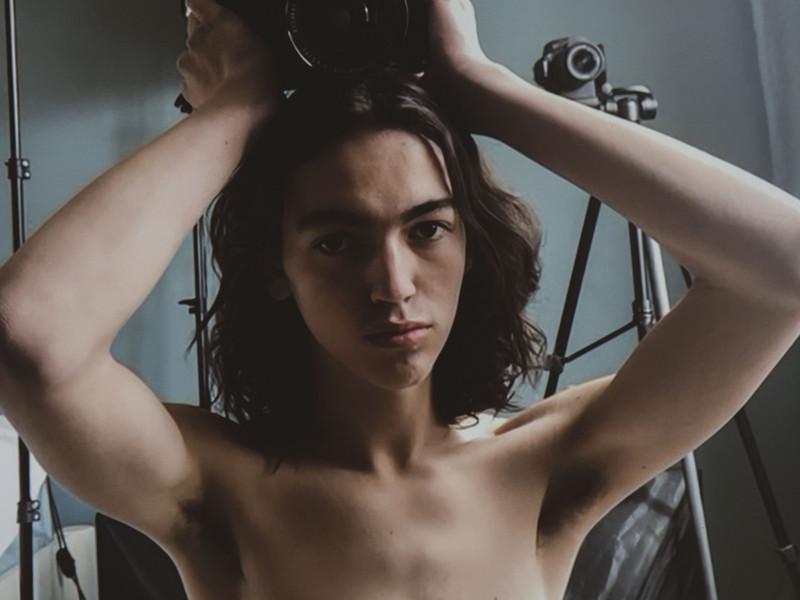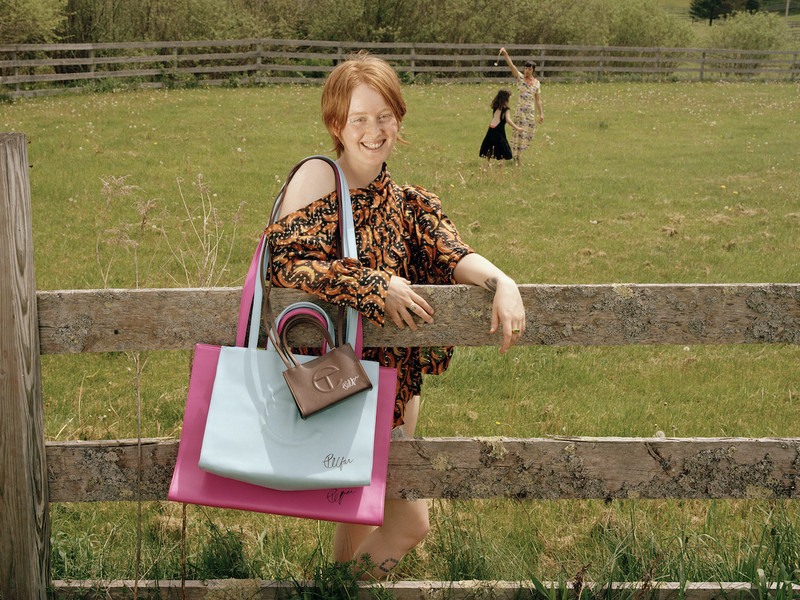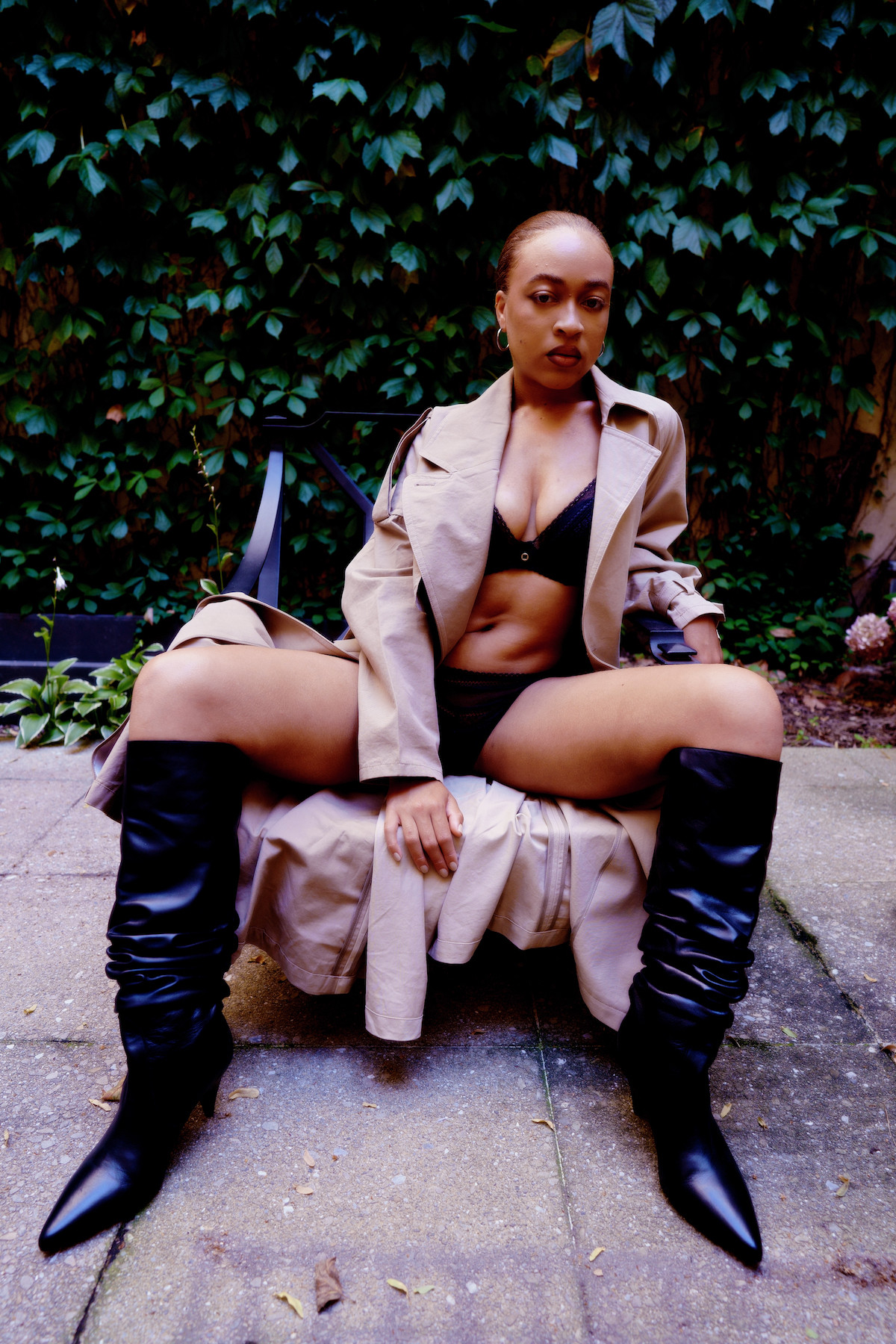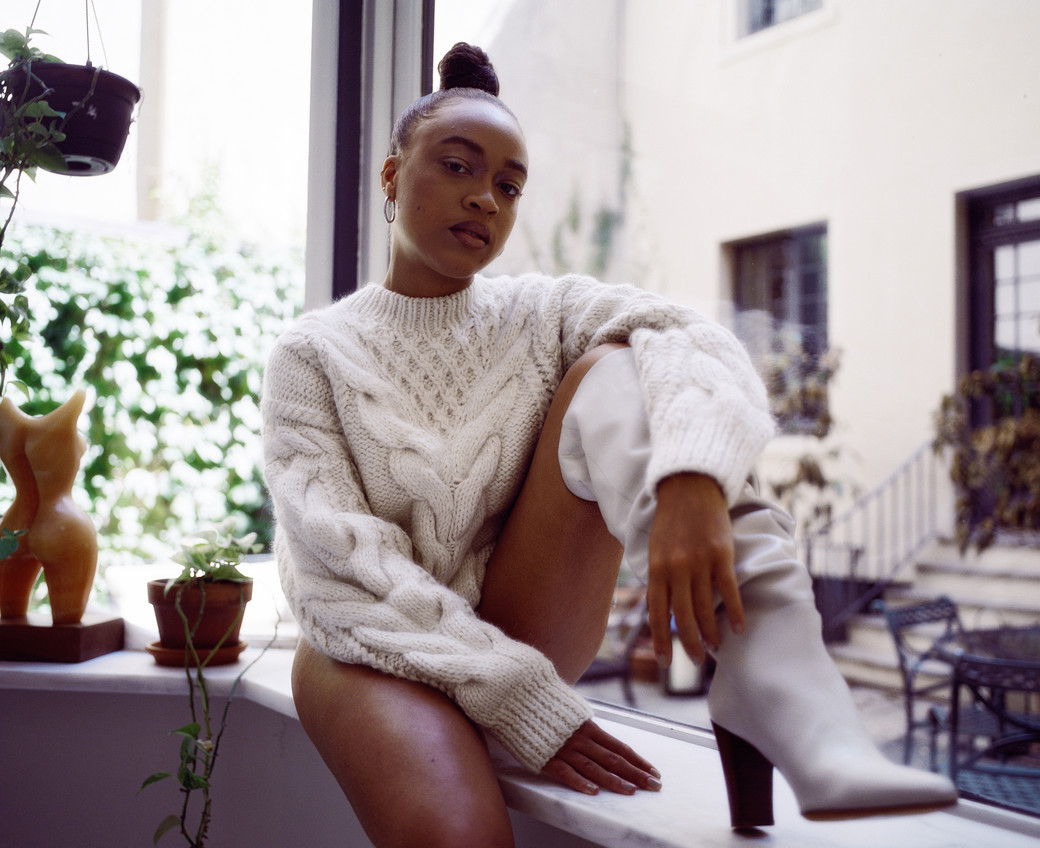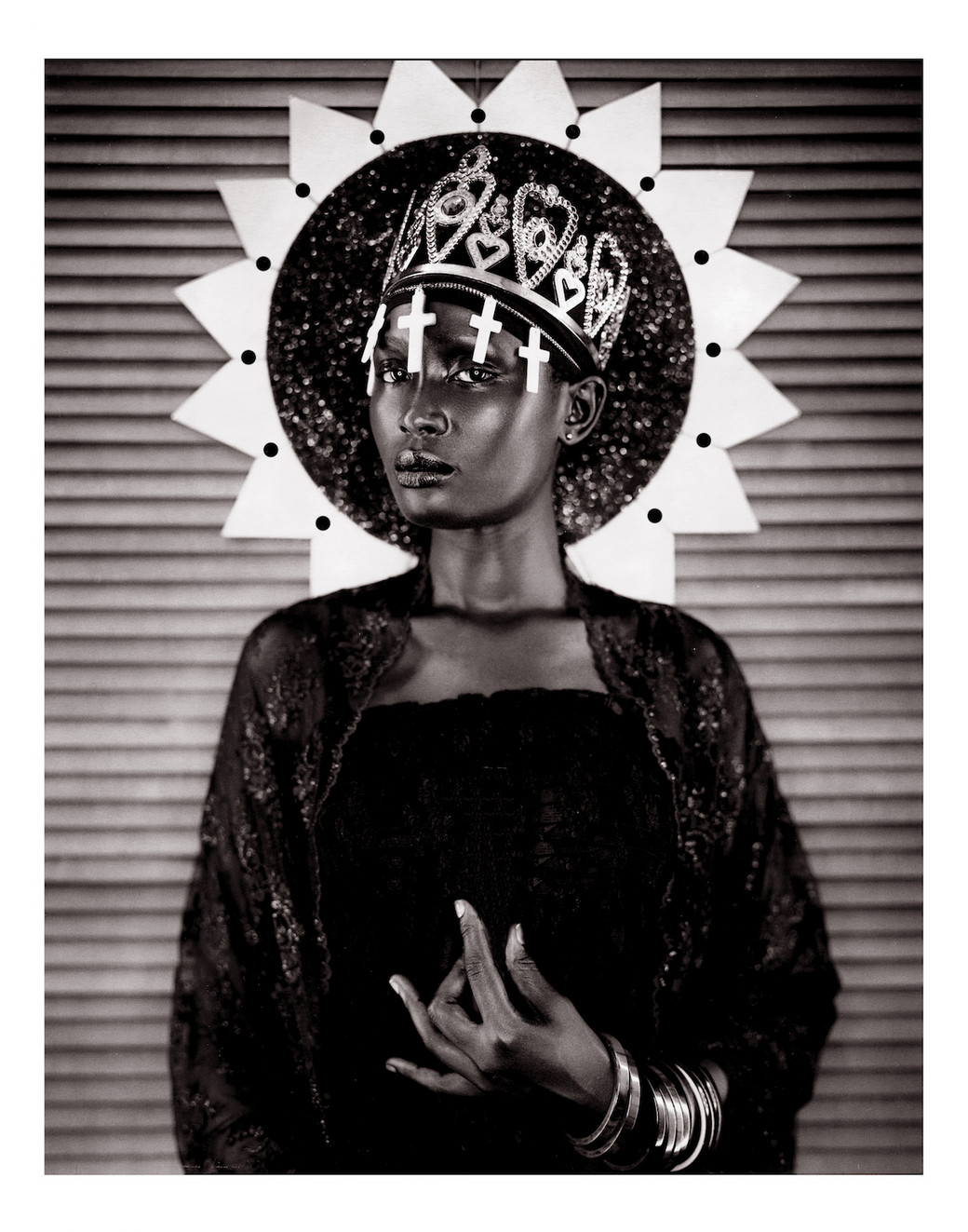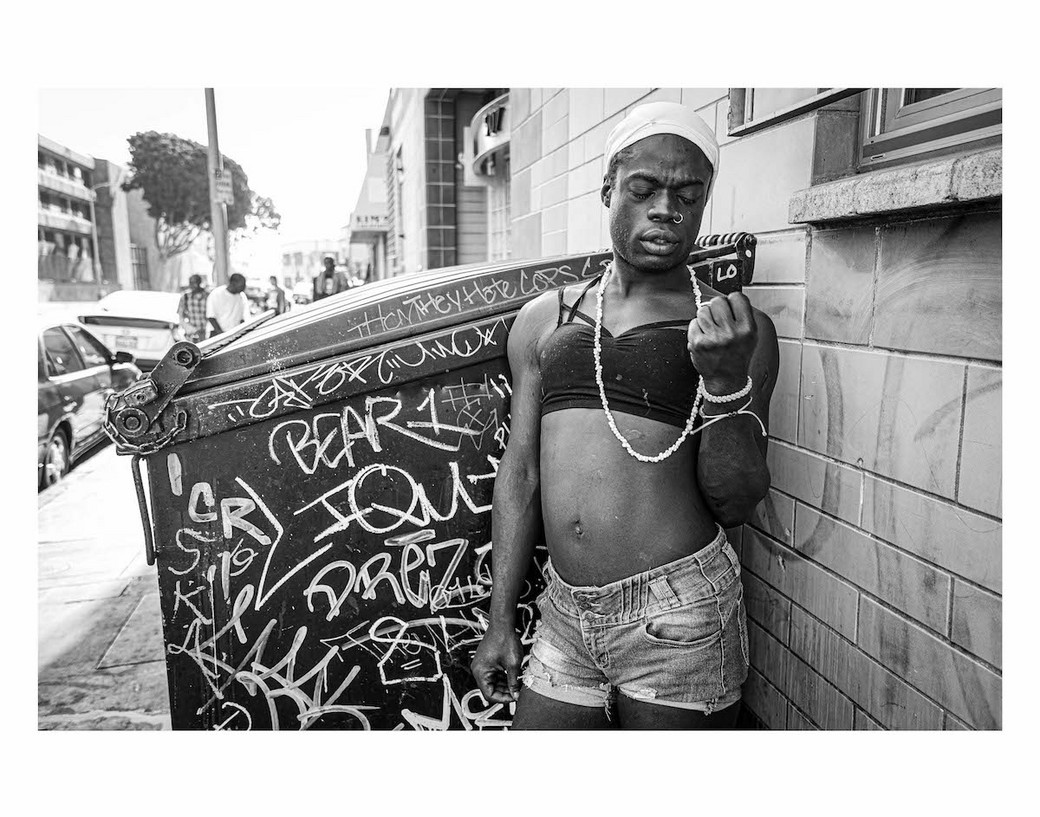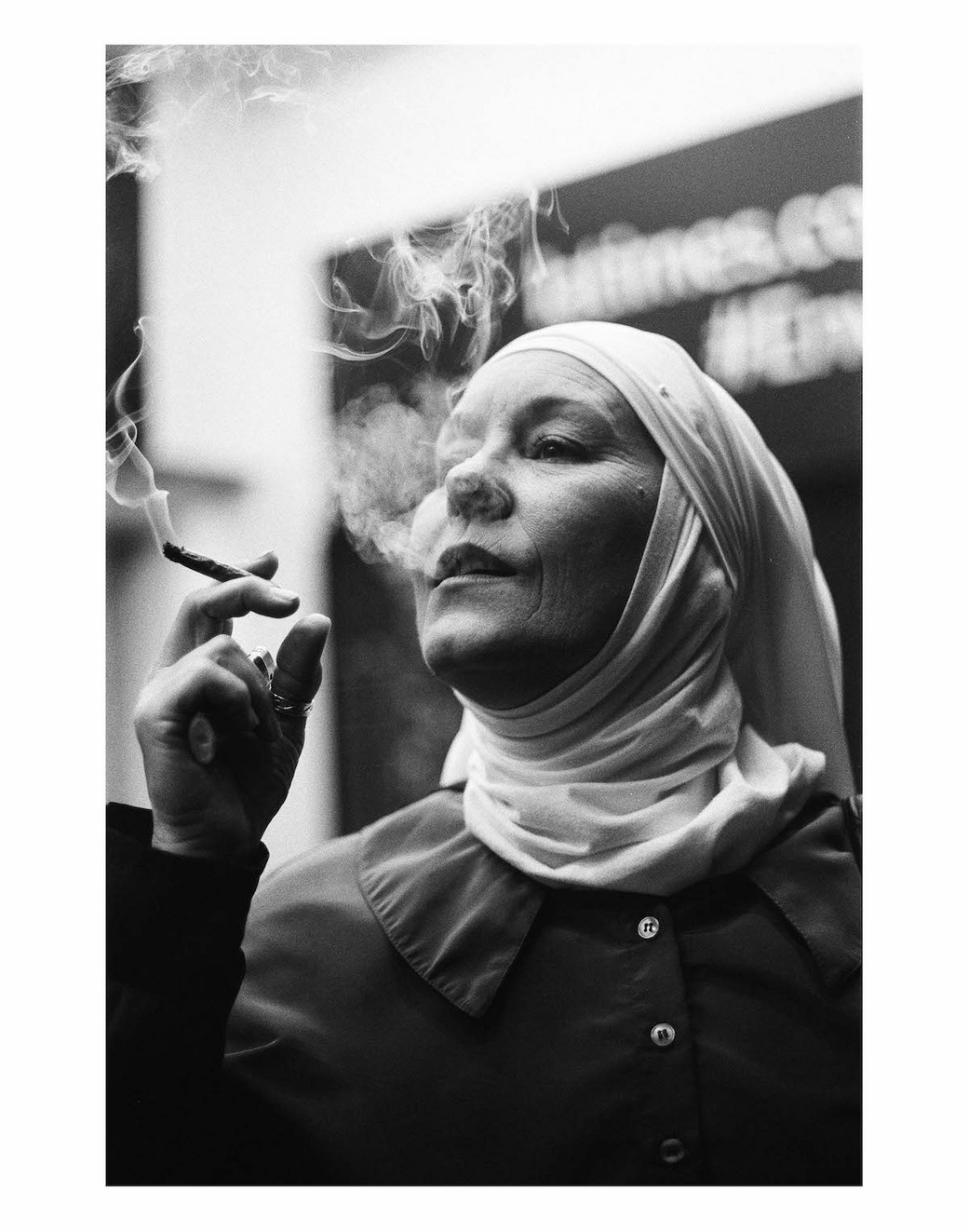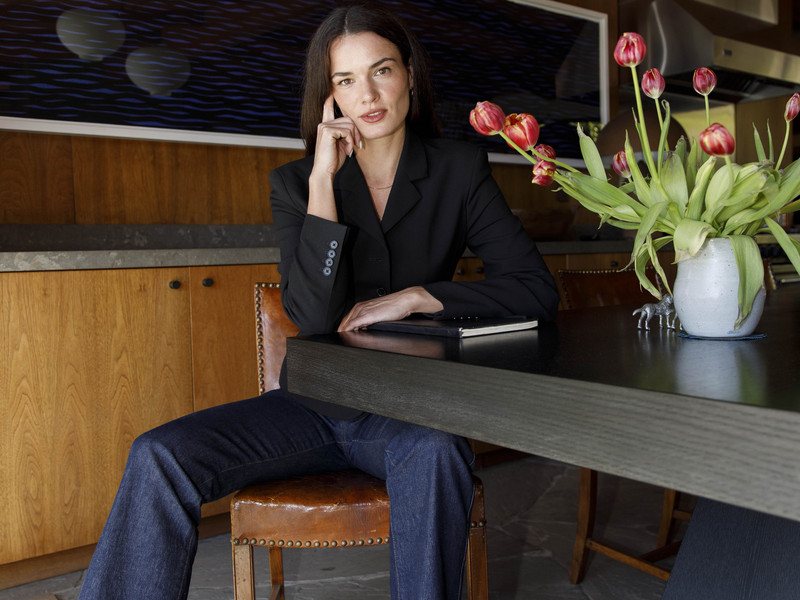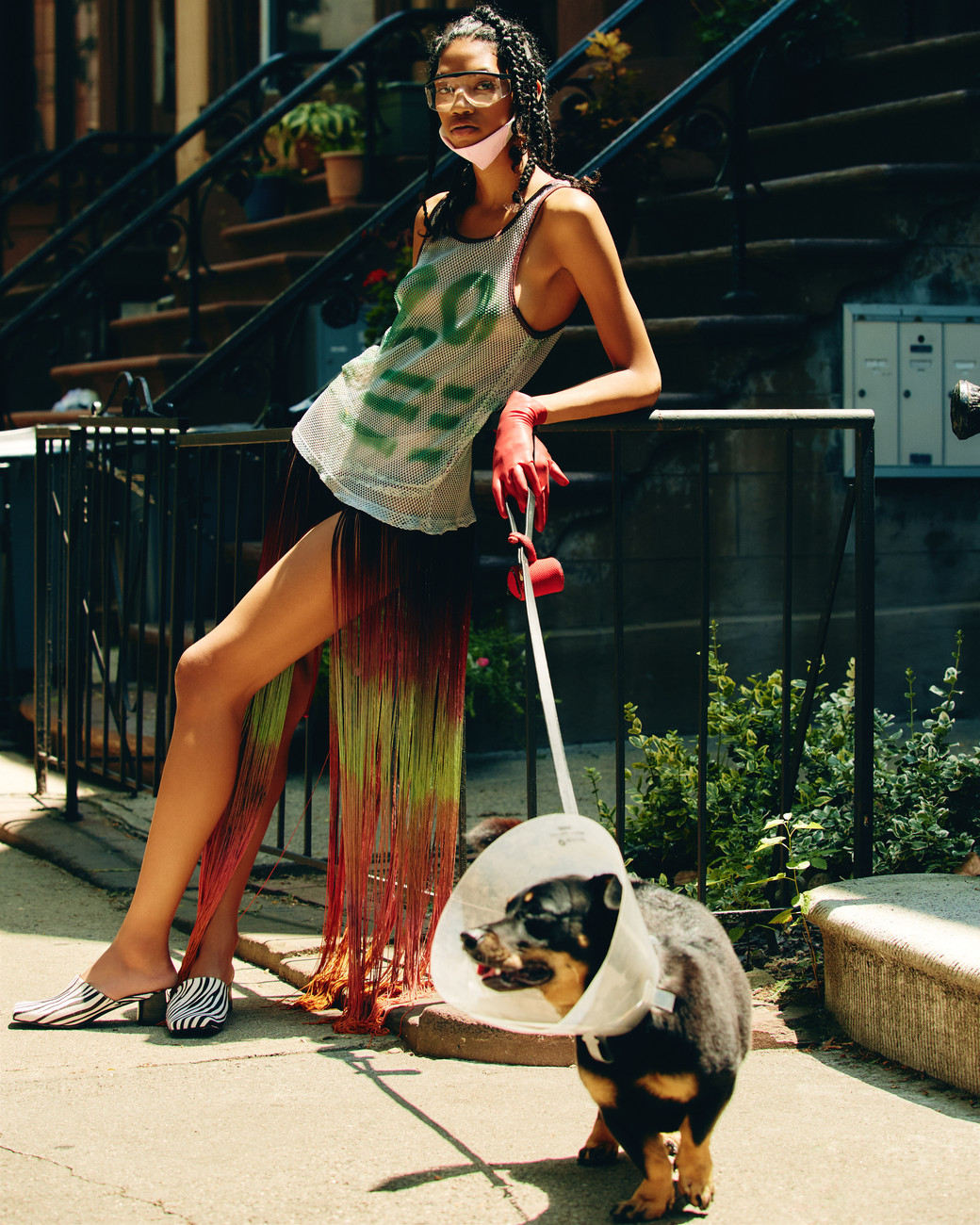
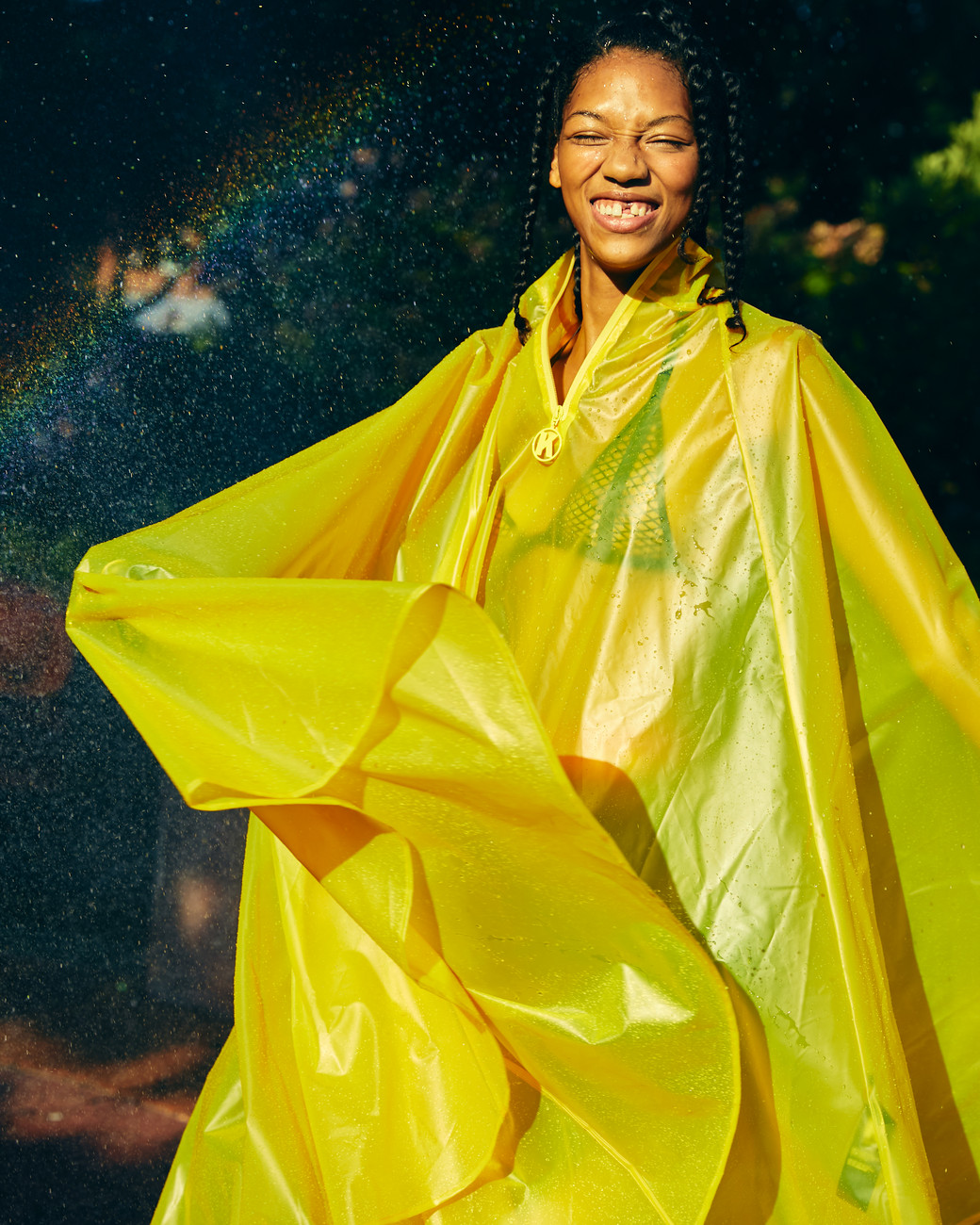
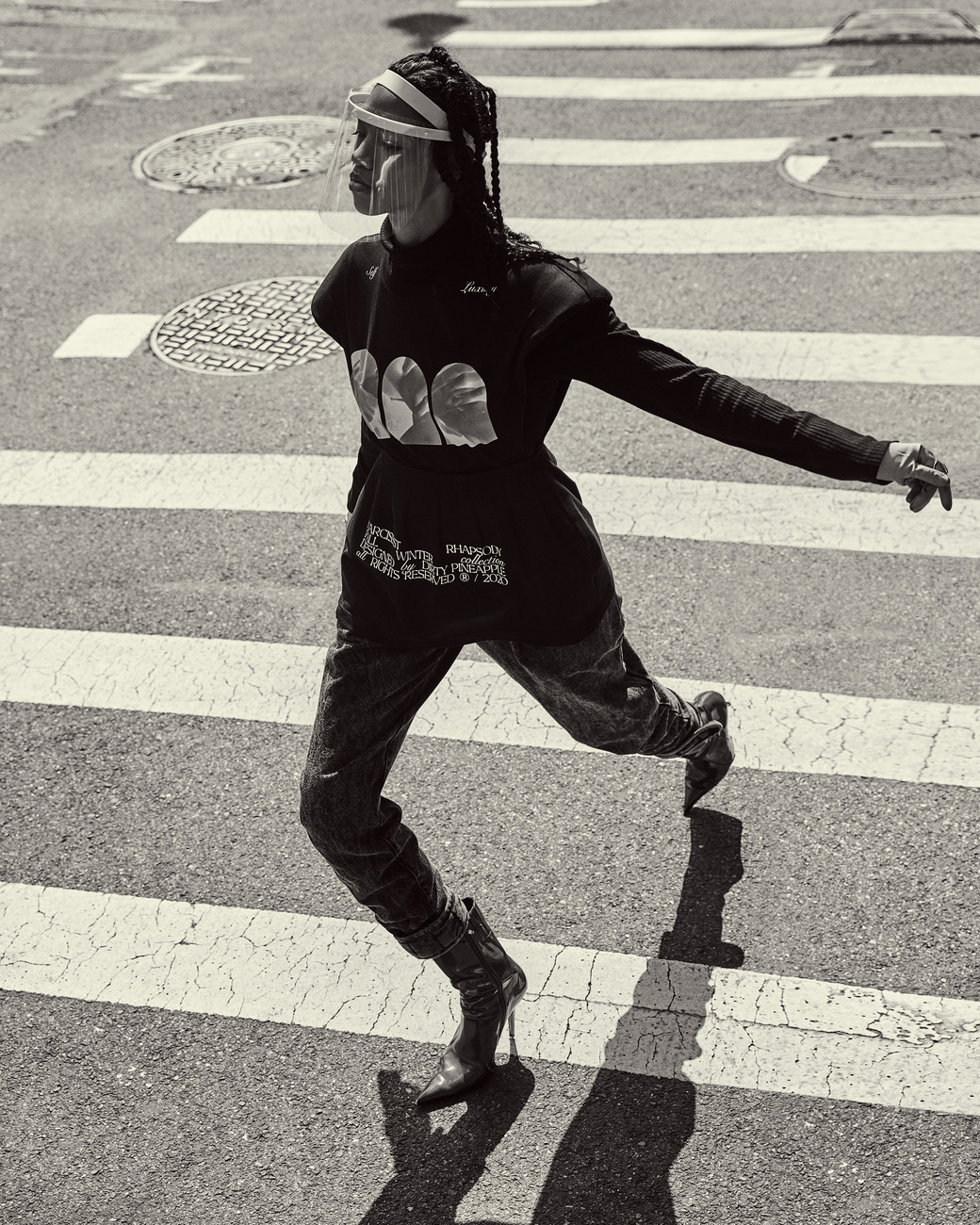

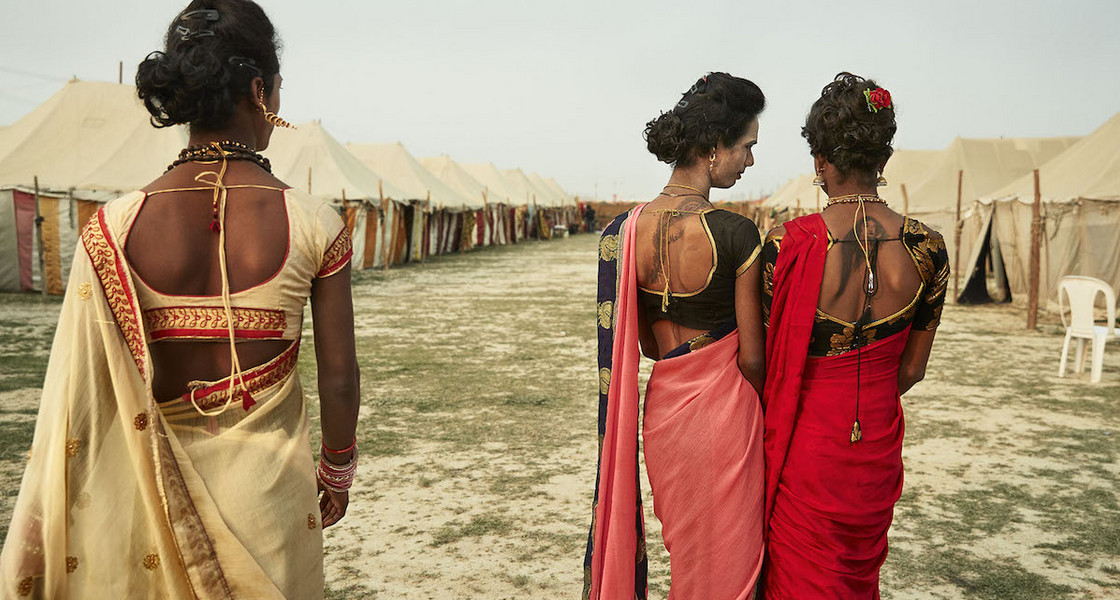
Lead image — Shalu, Manisha, Rishika, 2020. C-Print Fujicrystal mat. Courtesy of the artist and Perrotin.
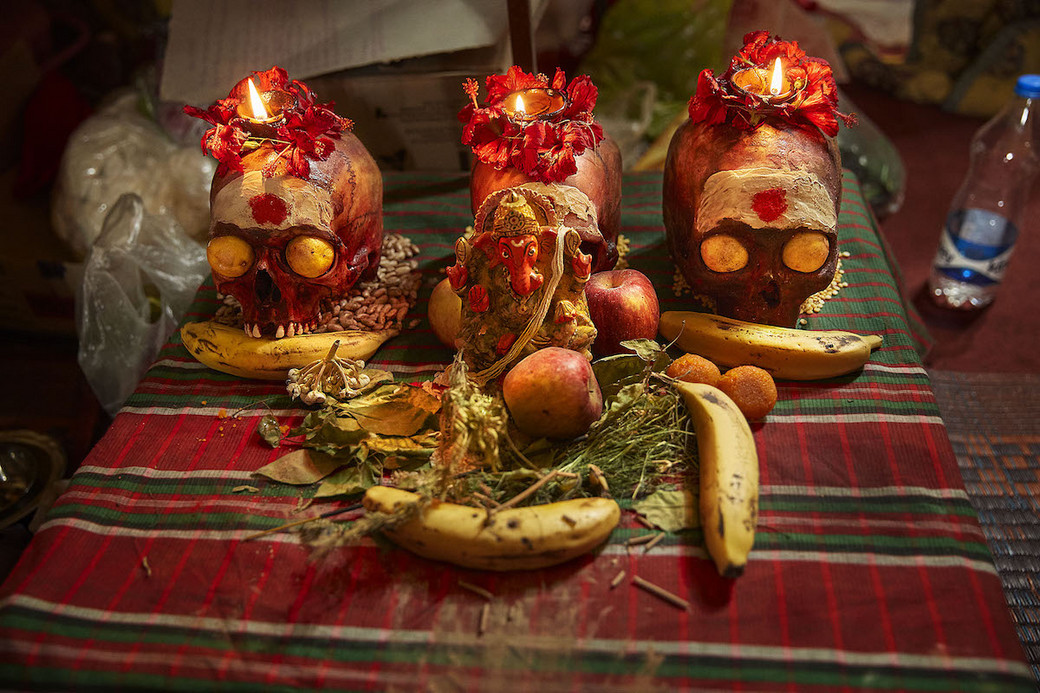
Ziccarelli's new exhibition at New York's Perrotin Galerie, titled 'The Holy Third Gender: Kinnar Sadhu,' is a series of portraits and video confronting the compelling history and current situations of these Kinnar Sadhus. Elusive French artist and activist JR sat down with Guillaume to discuss the exhibit and his personal connection to India and its people, especially the beloved Kinnars.
How did you discover the situation in India for transgender people?
I have some close transgender friends, and have worked on a few different photography projects around portraits of transgender people since the early 2000’s. They have real resilience and beauty, and taught me what it means to stay true to your own identity, even when faced with tough outside pressure. The trans friends I knew before going to India were mostly in France, the U.S., Myanmar, Thailand, Vietnam and Cambodia, and I wanted them to see what I had discovered in India.
Since 2008 I’d been really interested in this massive Indian festival where 100 million people gather. And then I heard that the Kinnar Sadhus, who I call the Holy Third Gender in the exhibition, were making history, because they were allowed to officially take part in these festivals. It was all over the news how they’d been formally accepted as a group into this ancient religious ritual, with a kind of status they hadn’t had before. [They had participated in one previous Kumbh Mela, but they did it more on their own, without the same recognition, and some of the privileges you get with that recognition.] I was impressed that an age-old tradition would open up to this community like that, and I wanted more people to see it, learn about it. I know trans people also struggle in India for equality and respect, but this was one important step toward progress.
Tell me about this festival that takes place every 12 years.
It is a bit more complicated than saying every 12 years…It happens in a few different towns, depending on the year and moon cycle. There are also some half festivals. I’m really not the best expert on it, and prefer letting you know what I felt and learned. When I heard that over 100 million people attend the festival, I told myself I had to experience what that energy was like. Of course, all those people don’t come at one time. It’s spread over a 2-month period, but you still have about 4 to 6 million people there at any single moment, which is why the Kumbh Mela is called the largest human gathering in the world, along with Mecca. Whole temporary cities must be built to accommodate them, with roads, bridges, temples, shops, restaurants, campgrounds – all from scratch, built on top of a no-man’s land of sandy, rocky, and wet earth.
And the other important thing to know, is that pilgrims come to the festival to cleanse their sins in the Ganga River. I really wanted to see all those people experiencing the joy of washing away their sins in the water.
Was this your first time in India?
No I have been to India 5 times. The first time was the most important one. I was 18 years old, and you don’t ever forget your first visit to India. India changes everyone who really sees it. If you’re curious, India gives you a lot to think about, and learn from. The people, religions, traditions, colors, how people live. India is an explosion of energy and culture.