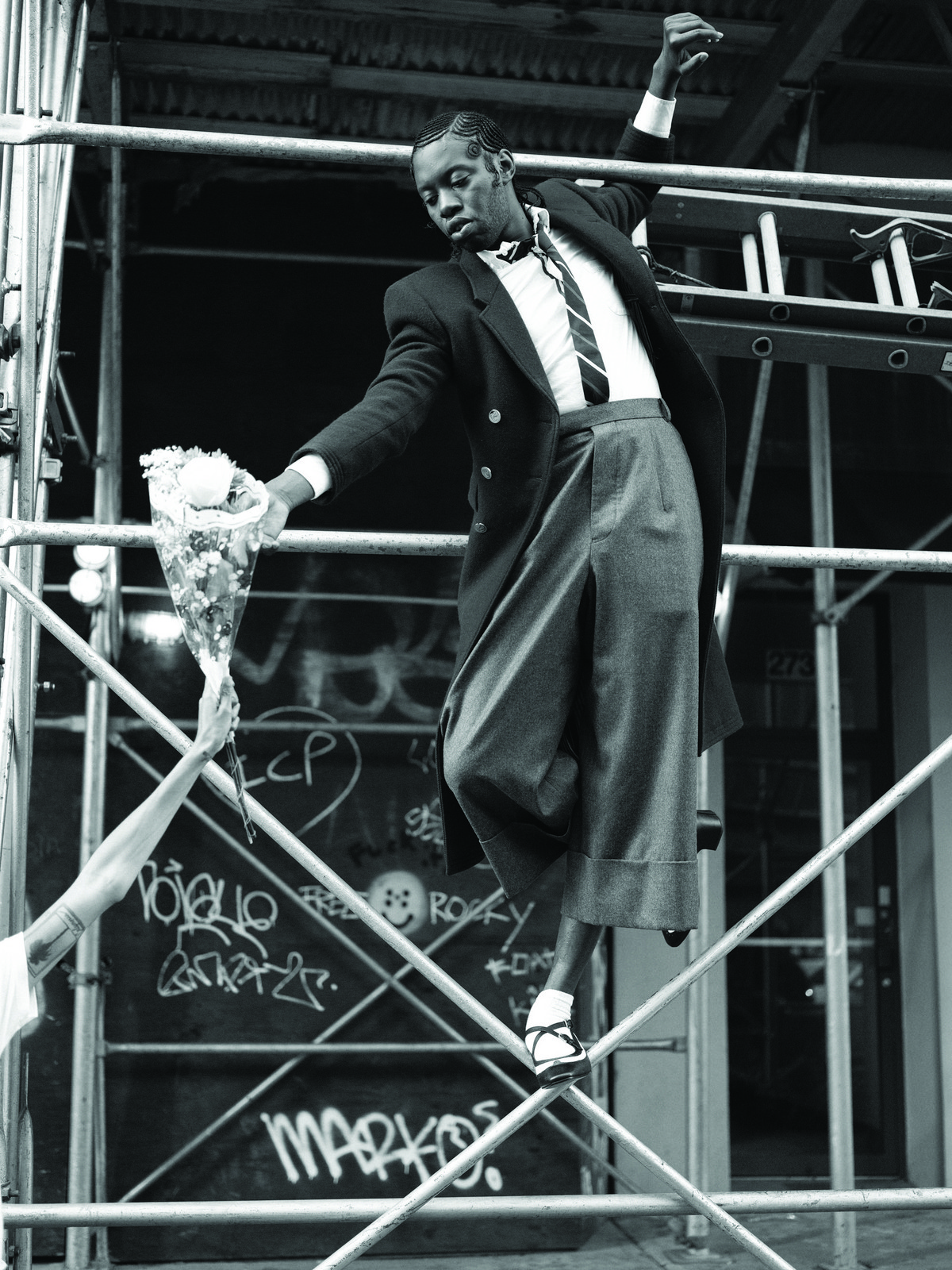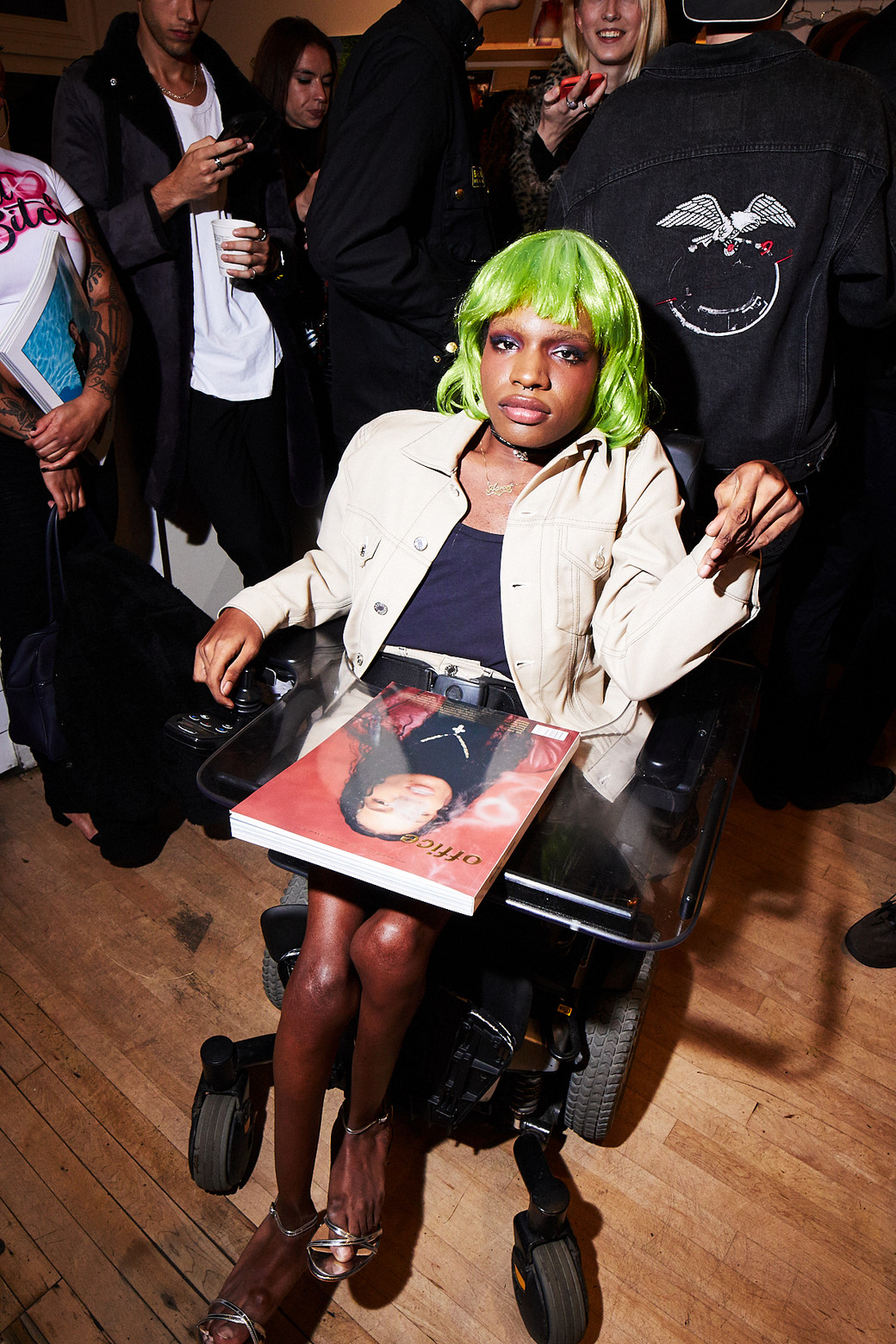





(Above) Coat, sweater, denim and boots by BALENCIAGA.
“Many of you don’t know this, but each of the African-Americans on this board,” my teacher lilted in a soft Southern twang, “invented the everyday object you see beside them.”
“A spook invented the peanut? You lyin’ Mrs. Hairston!” a voice rang out from the back. Everyone laughed, myself included.
Demetrius was always the funniest in our class. Black and poor like me, Demetrius had learned the language of our peers and their parents, then filtered it through a Chris Tucker affect that made his humor undeniable—a much better armor in the fourth grade than that of the contentious know-it-all. I envied him then.
“No Demetrius, George Washington Carver didn’t invent the peanut, but he did invent over 200 uses for it, something you might be capable of if you cared as much about listening as you do about making a fool of yourself. This is Black History Month, you of all people should have some respect for yourself, our people, what we’ve contributed. Look at this room right now!”
Mrs. Hairston crossed over to the wall and turned on the lights, blinding all of us.
“You, me and Jeremy! We the only ones in here. If we don’t hold on to our history who else will?” Mrs. Hairston was my first Black teacher and she was a substitute. I admired her. She was tall and imposing and funny without trying to be. “If this history isn’t held, if this history isn’t shared, then it’s gone. It disappears.”
And if our history has disappeared, did we ever exist?
In the theater, for many, we haven’t existed. So disappeared is our history that, in the wake of identity politics and the works that have been wildly and dynamically birthed from them, many have espoused that this is the moment when the Black writer has finally arrived at the theater. As a part of this generation of writers benefitting from that amnesia and erasure, I’ve made a personal decision to focus on those who came before, to hold this history so that perhaps others too will know that we have not just appeared—some have just attempted to disappear us. This is my Black history, a history of the works that have shaped me, my friends, my mentors and my idols. It is not exhaustive—it is the work that has made it to one space of theatrical expression, a space that is historically and systemically exclusionary to Black bodies, a space that has profited off our bodies while rarely giving them the stage to be fully embodied: Broadway.
Jeremy O. Harris is a playwright living in New York City. His work Slave Play made its official Broadway debut at the Golden Theater on October 6, 2019.