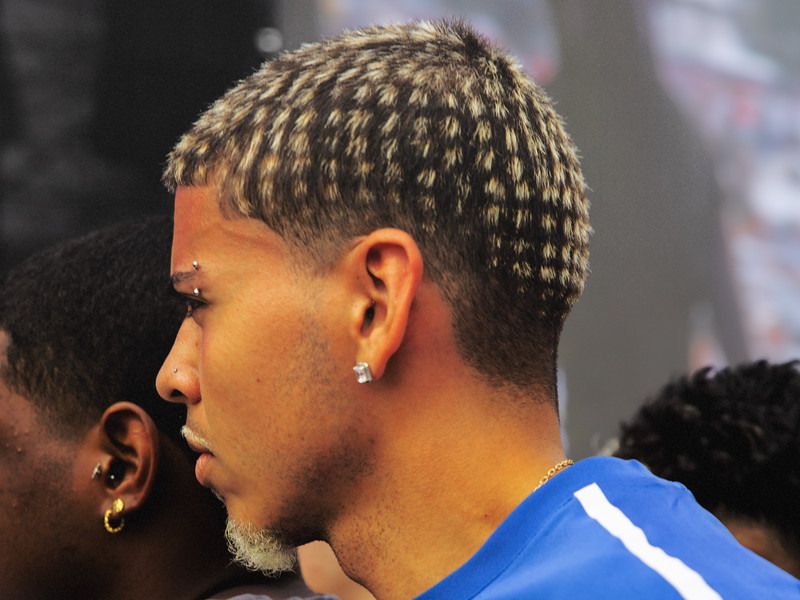
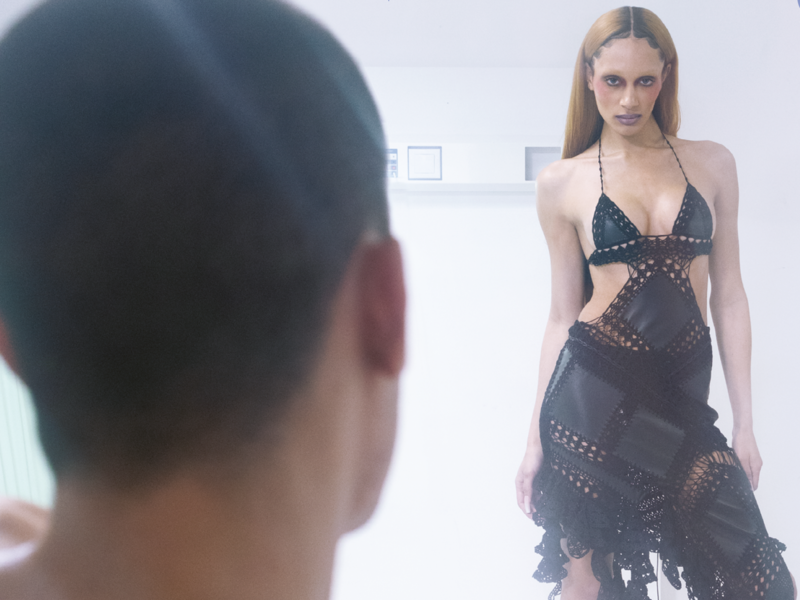
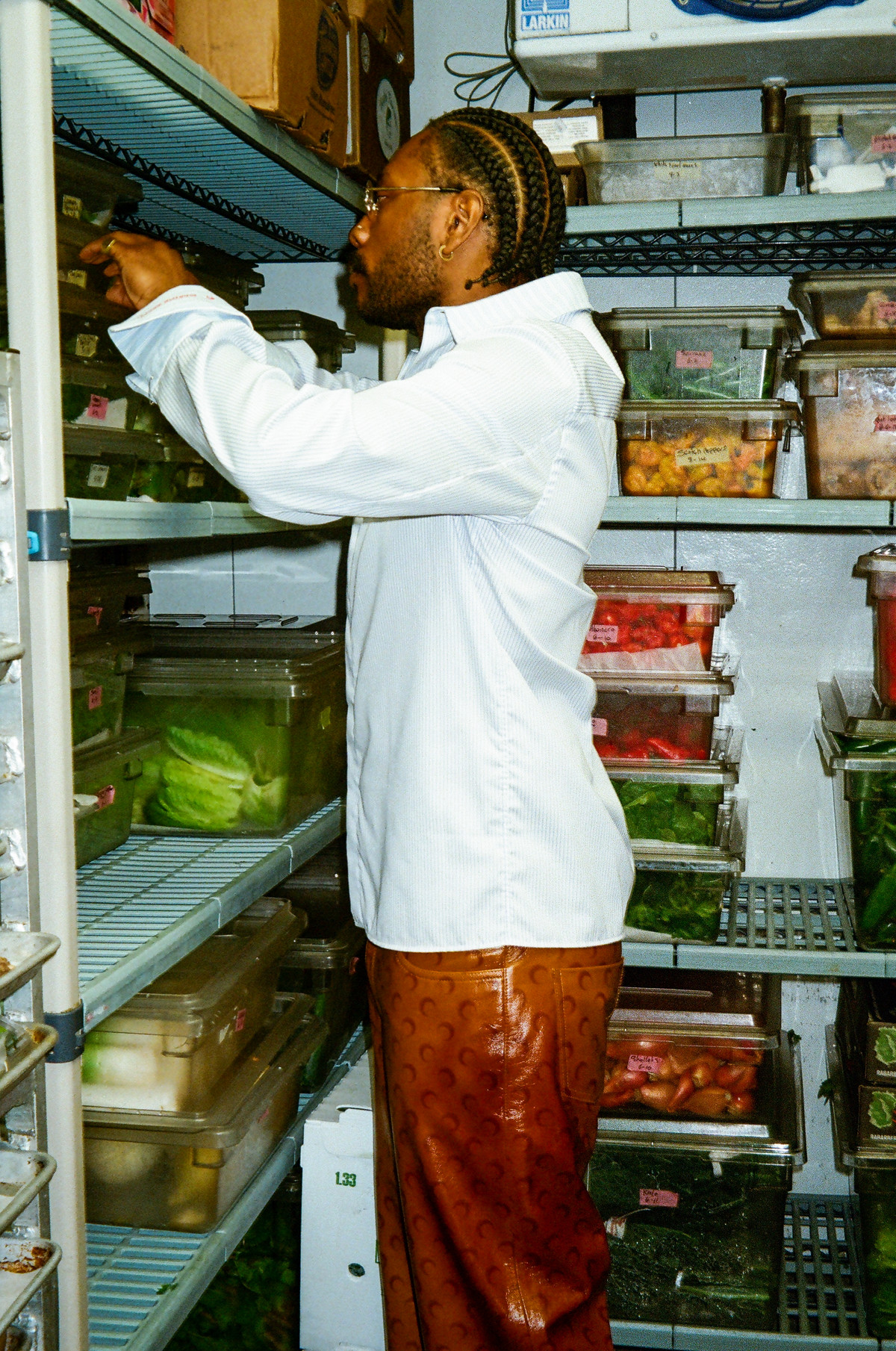
CHARLIE wears SHIRT and PANTS by MARINE SERRE, RING by LL, LLC.
Stay informed on our latest news!
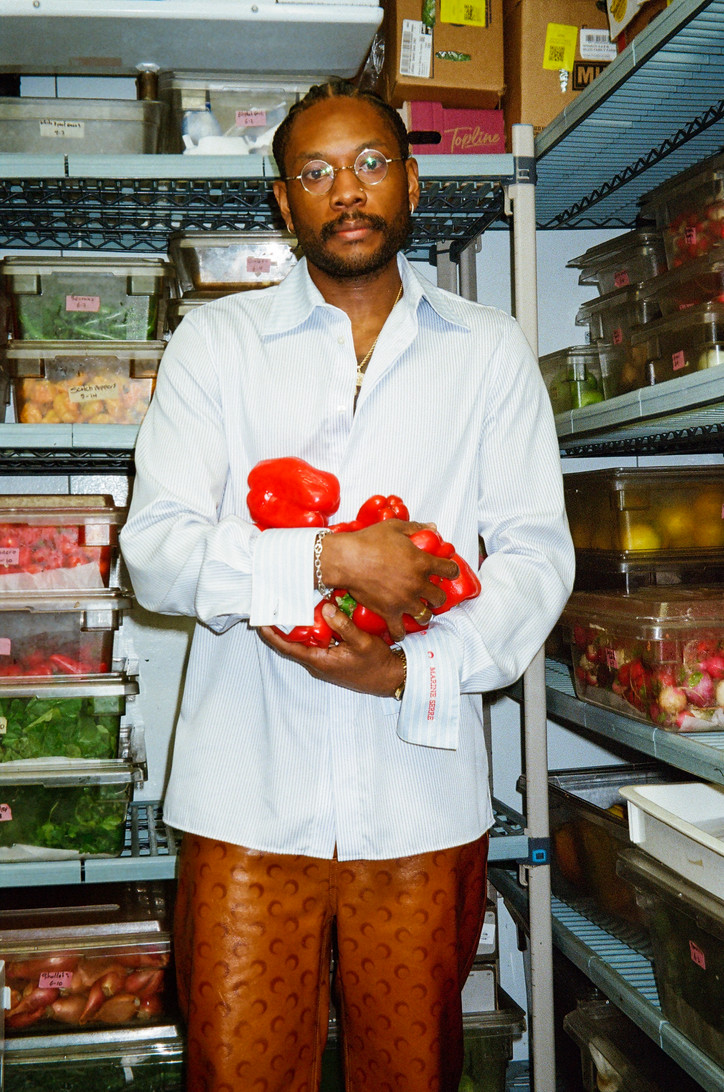
CHARLIE wears SHIRT and PANTS by MARINE SERRE, RING by LL, LLC.
What was it like moving from Clover Hill to SAGA? Was there a cultural difference for you in terms of the change in restaurant, working in the kitchen, the clientele and that sort of thing?
Oh yeah, absolutely. I mean, it's totally different. I think cooking in Brooklyn, number one, is different. It's a different demographic. At the end of the day, you need to understand your demographic, understand the people you're trying to cook for. People move to Brooklyn for a reason. They want to get out the city. They either want a little bit of a quieter lifestyle or they're creatives that got older and now they want to start a family. So you got to understand that that's who you're cooking for. And certain people don’t really like crossing a bridge. So cooking in Brooklyn, culturally in the kitchen you had more of an underdog mentality that kind of fueled us like, Okay, we're trying to make a name in New York City, but we're in Brooklyn and we're kind of hidden. And it was easy to use that as the beat of the drum for the kitchen, opposed to moving to Manhattan and now you're in a skyscraper, 63 floors up, you have this crazy view, it's two Michelin Stars. And now you're cooking with expectations. So I think in the kitchen, it changes our energy a little bit because now you're defending a title. You also have guests who come here just because it's a two Michelin Star restaurant or just because of the view. I also find it fun that everyone who came to Brooklyn knew who we were and knew who I was. Versus here, people, they don't always know who we are.
They might just be coming for the restaurant.
They might just be coming for the restaurant. And I love that too because it gives us the opportunity to pull them in and show them why we are special and what that star means to us. You know what I mean? So I also enjoy that too. But it's a big difference. A big difference just from one star to two star – your clientele, being in the city, it's a totally different energy cooking up here. So I think those are the biggest changes in the restaurants; the energy of being an underdog versus cooking for expectations. And I think just giving people a feeling of being in New York City at this crazy location is a very different feeling in the dining room as well.
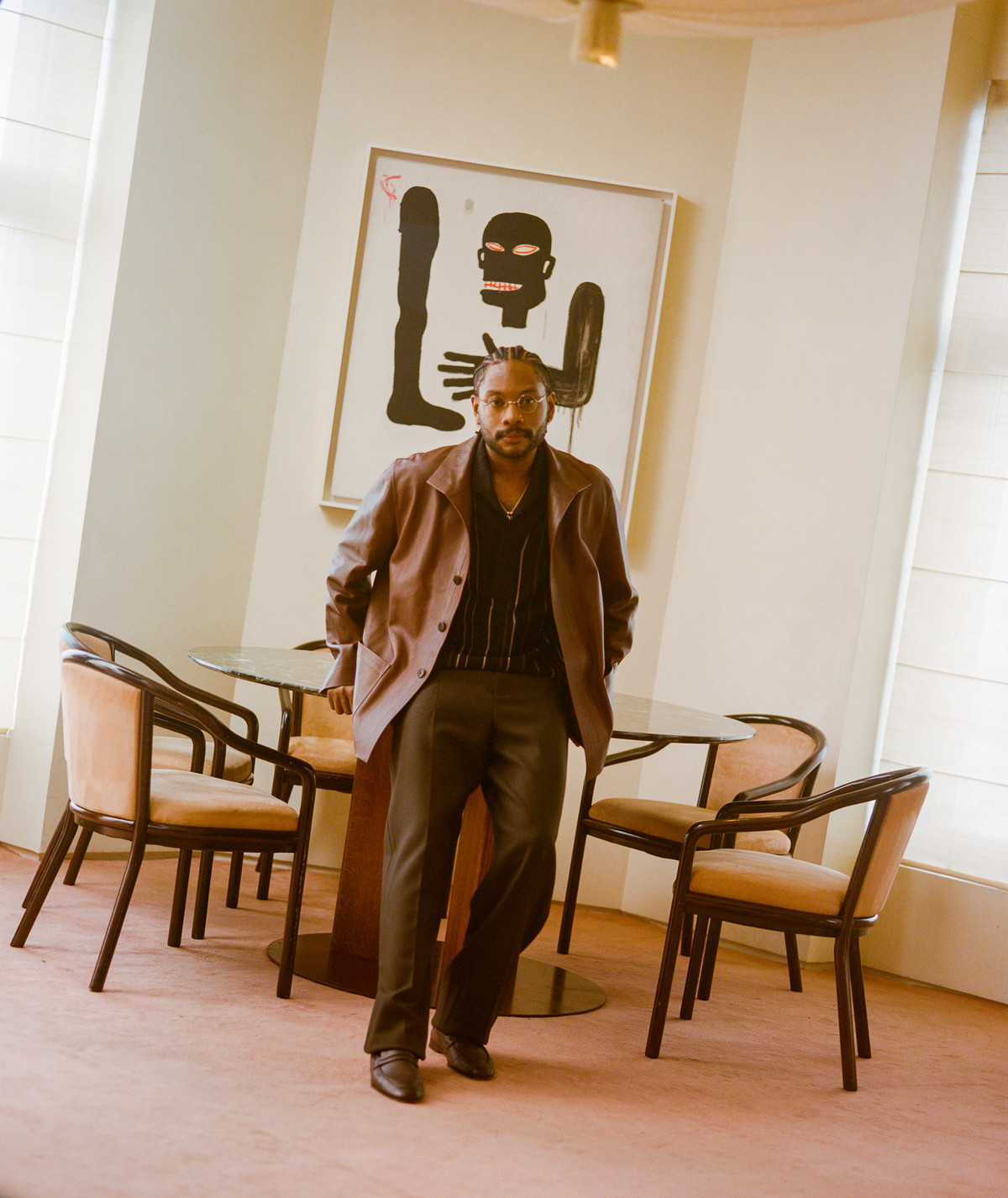
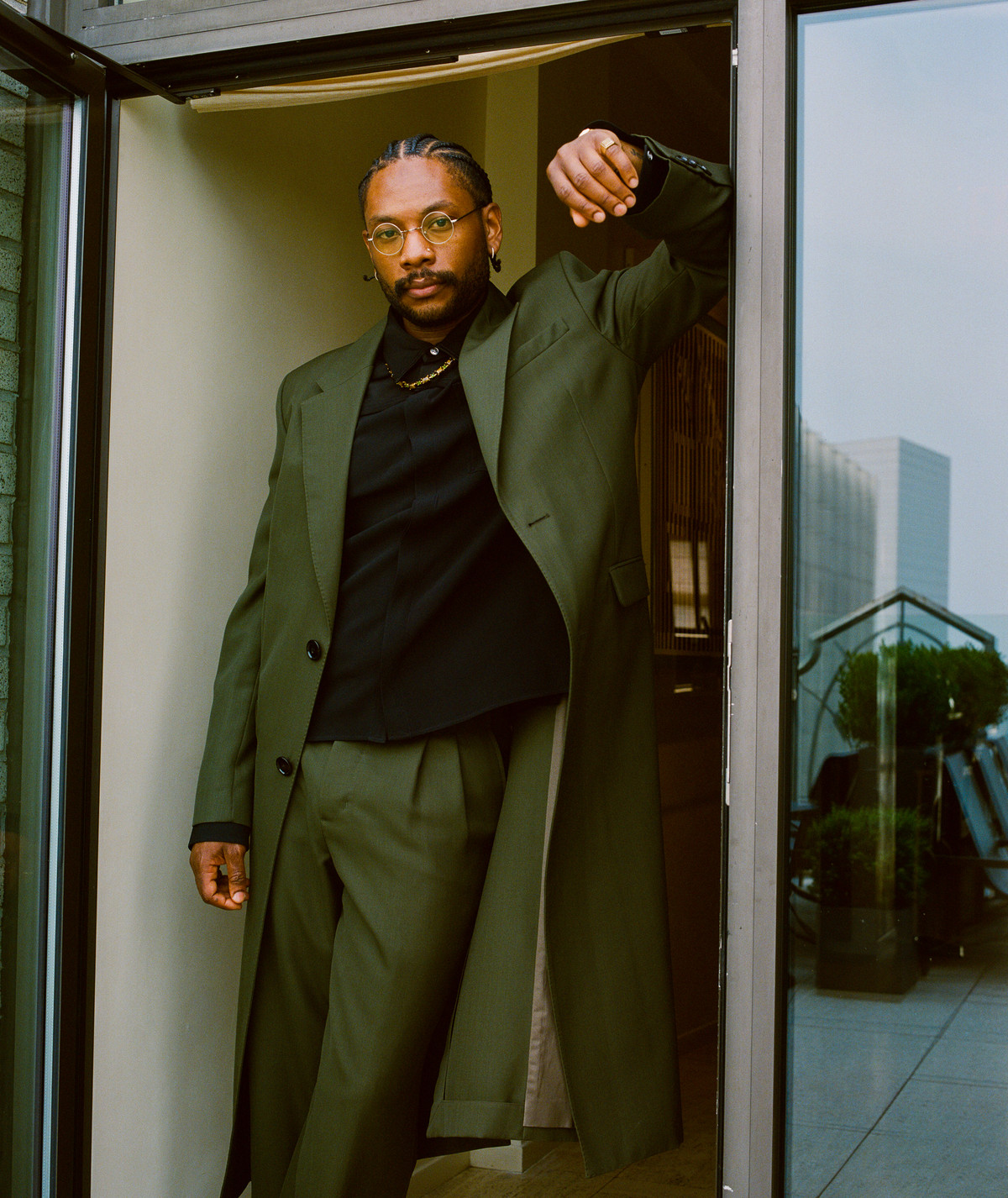
Left: CHARLIE wears JACKET, TOP, PANTS and SHOES by ZEGNA. Right: CHARLIE wears JACKET, SHIRT and PANTS by AMI PARIS, NECKLACE by VESPER OBSCURA, RINGS by LL, LLC.
Who taught you to cook?
Well, my culinary training, technically, you could argue that I’m self taught. My career is a little unorthodox in that way. I didn't really work under a restaurant group or a chef for a really long time and learn their cuisine and be one of their true disciples or something. So to me, my most important cooking lessons came very early on. I always talk about my grandmother. It wasn't that she taught me how to cook necessarily, but she definitely shaped my perspective on food and cooking for people. I saw how much time and labor and love she put into food and cooking for everybody. So that really shaped the way I approach food. I want to cook for people. I want to be there when you get in my restaurant. I want to put in time and love, and I care that it's coming from my hands. I've gotten that from her.
And I think my first chef, Chef Nick, is the person who taught me how to cook. So those are the two most impactful people in my cooking journey. She shaped the way I look at food and cooking for people and why I'm in a restaurant. And he gave me those first three years of my cooking career – working under him were really my formative years. And I came here not going to culinary school. He taught me how to make chicken stock, how to use a knife, how to sharpen a knife, how to cook proteins by feel, by touch, not with a thermometer. And that gave me a really big leg up when I moved to New York City because I think in New York City you learn how to work and it's really fun and it's really intense. But because I came here with a big foundation of touch and feel for food, it changed a lot for me. I had a head start in that way.
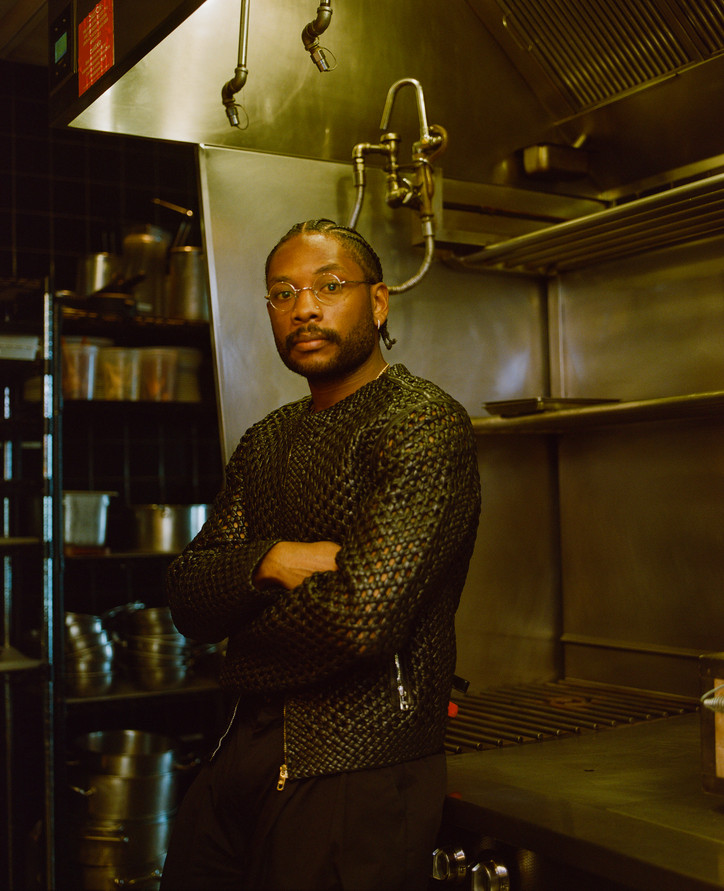
CHARLIE wears JACKET, TANK TOP and PANTS by DOLCE & GABBANA.
Did Detroit shape your career and the way you cook?
Oh, absolutely. Because Detroit, it gave me the resilience I needed to exist in a very, very tough industry. It may sound harsh, but we talk about surviving these intense kitchens, these intense environments, and sometimes it is survival of the fittest. And it's not just about who can cook, but it's who can be the strongest mentally and emotionally and get through it. Because the idea of some of these hard kitchens is they are very militant. It's very like, ‘We will break you and we are going to break you, and then we're going to build you back up, and then you're going to be the person we need you to be.’
And I think if it wasn't for the love I've had of food based off my family and the culture in Detroit and also growing up in a tougher environment that I wouldn't have had tough skin. And Detroit allowed me to separate work from work. I told this story at a panel some months ago; chefs yelling and throwing things and kicking people and all this kind of stuff. It didn't scare me because I'm like, ‘These are not the real problems that I was around in my community.’ You know what I'm saying? This isn't violence or crime or nothing. This is just, you know, some French guy who's mad about the sauce is broken [laughs]. So it helped me in that way. I was able to really not take it personal and be able to make it about the work, and it helped me be successful. Because I can handle it. And your sous chefs recognize who can handle it and they'll put more time and attention into you.
Was there a moment you realized you wanted to cook professionally or was it a gradual thing?
So after high school, my mom wanted me to go to college. So I did a year in college and I got kicked out because I had no business being there. And then I came home and I was like 18, 19 at the time so I kind of took a year to think about what am I going to do. I started working a little bit and then, funny enough, I was doing valet at a hotel in Downtown Detroit, and I was really impressed by the restaurant, and one of my best friends had asked a sous chef to get me a stage there. So he actually set me up for my first stage. I don't know if I ever would've taken the initiative to get that job without that. And then just that first day in the kitchen, I was like, yeah, this is it. This is where I want to be. Now, I wasn't there very long because there I discovered that I wanted to do fine dining. It was like a bar and grill that I thought was fancy, but then behind the curtains, it was not a fancy restaurant at all. So after working there, I realized, okay, I want a different kind of environment. So that's why I chased after fine dining after that.
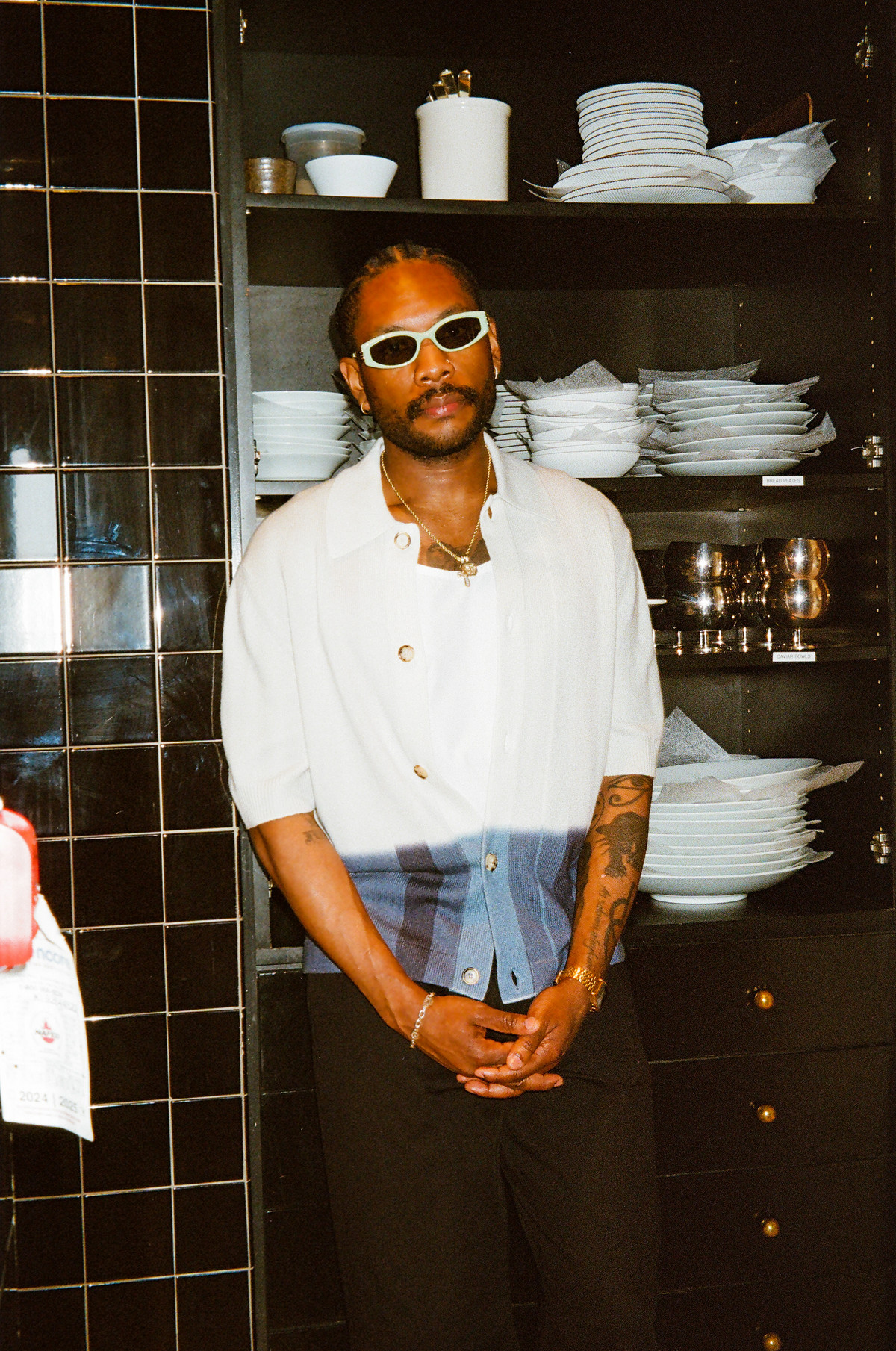
Left: CHARLIE wears SHIRT, TANK TOP and PANTS by HERMÈS, SUNGLASSES by GENTLE MONSTER. Right: CHARLIE wears SHIRT and PANTS by MARINE SERRE, RING by LL, LLC.
How's your work-life balance? I know you live in the building. I'm curious, can you switch off?
I think work-life balance is always an interesting conversation and you get a lot of different opinions on it. I don't know if I think there's such a thing when you're doing something like we do for a living. I think my work is my life. Being a chef is a part of my identity at this point. You know what I mean? So it's like I'm always working. If I'm out to dinner, I'm having a good time, but I could get inspired from something. Even if it's something I don't like, I'm kind of always thinking about food and the restaurant 24/7. If anything, I've learned that as you grow and you move into leadership, into management, that you have to learn where you're needed the most. I think as a young chef, you have a lot of ego and you think you can be at the restaurant for 18 hours a day. And reality is that, dude, you can't cook everything. You can't purchase everything. You can't do everything all the time. So I think I've learned to accept that. So I think that’s provided some balance, for sure. Like, I won't work myself into the ground anymore like I would've when I was younger. When I was younger; “Whatever you need, chef, I'll be here seven days a week, 14 hours a day, whatever you need.” And now I'm a little bit, “I need to go to sleep.”
Are you ever lying in bed at night like, ‘Oh shit, did I leave the stove on? Do I have to go up 20 floors to check?’
[Laughs] No, but it is more like you're just worried if you left work too early or not, because you have to learn to trust your team. We might have a VIP guest coming in at 9:30, but I’m like, ‘Dude, I've been here since 8:00am’. And if I got meetings tomorrow, I have to prioritize where I need to show up and be present at. So I wouldn't say that it's a perfect balance, but I will say I've learned to not work myself into the ground because I need to be fresh for my team and other people in the company, and I need to be on point. I'll make sure I get some sleep.
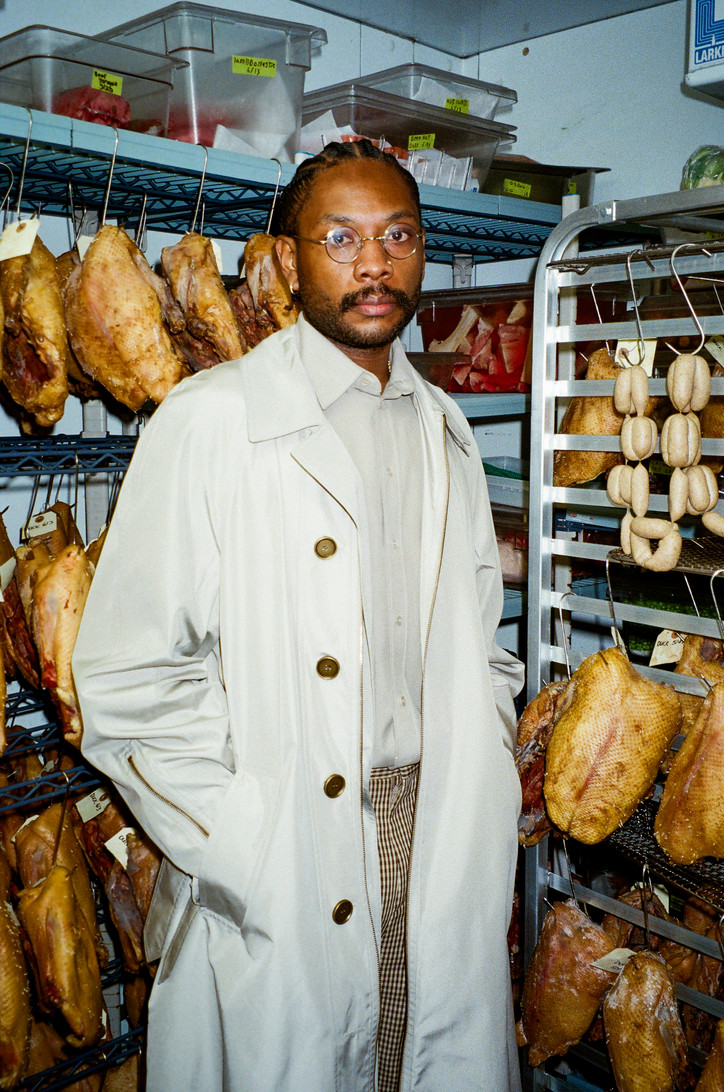
CHARLIE wears COAT, SHIRT and PANTS by BURBERRY.
I'm curious how far your creative input extends outside of cooking. Can you tell me about that? From the interior to the choice of plates…
Oh, everything. I get creative input on pretty much everything here. I mean, we have a great company and great team, so I don't have to have input on beverages or on wine, but the food kind of informs that. The food informs the wine program here and there and same with the beverage program. But yeah, I have creative input on everything, like the design of the logo, every plate I pick, style of service, how they talk about the food at the table, how they tell the story of the food, of the journey. So yeah, it's a lot of creative input.
Do you ever feel creatively restricted by the expectations of fine dining?
I think my biggest beef with it, if I have to choose something, I think there's a space where people think they can tell us what a good technique is. In fine dining, sometimes people want very straightforward things to look at as a technique; plate it very beautifully, or perfect dice or molds and different shapes and all that kind of stuff. Whereas I find that sometimes there are other things that I think are very fine dining techniques and can shine that people may not recognize. But we've seen a shift in fine dining. We've seen now people are a little bit more receptive to spicier food or different ingredients. People are more willing in fine dining now to eat food that's more playful, they can eat with their hands, it's a little bit shareable. So I think people have become a little more open-minded to a dining experience at a fine dining level, and I think continuing to push that is important. You can get to feel a little restricted when you start cooking for accolades and things like that. And then when you have all those rules, it makes it hard to be creative.
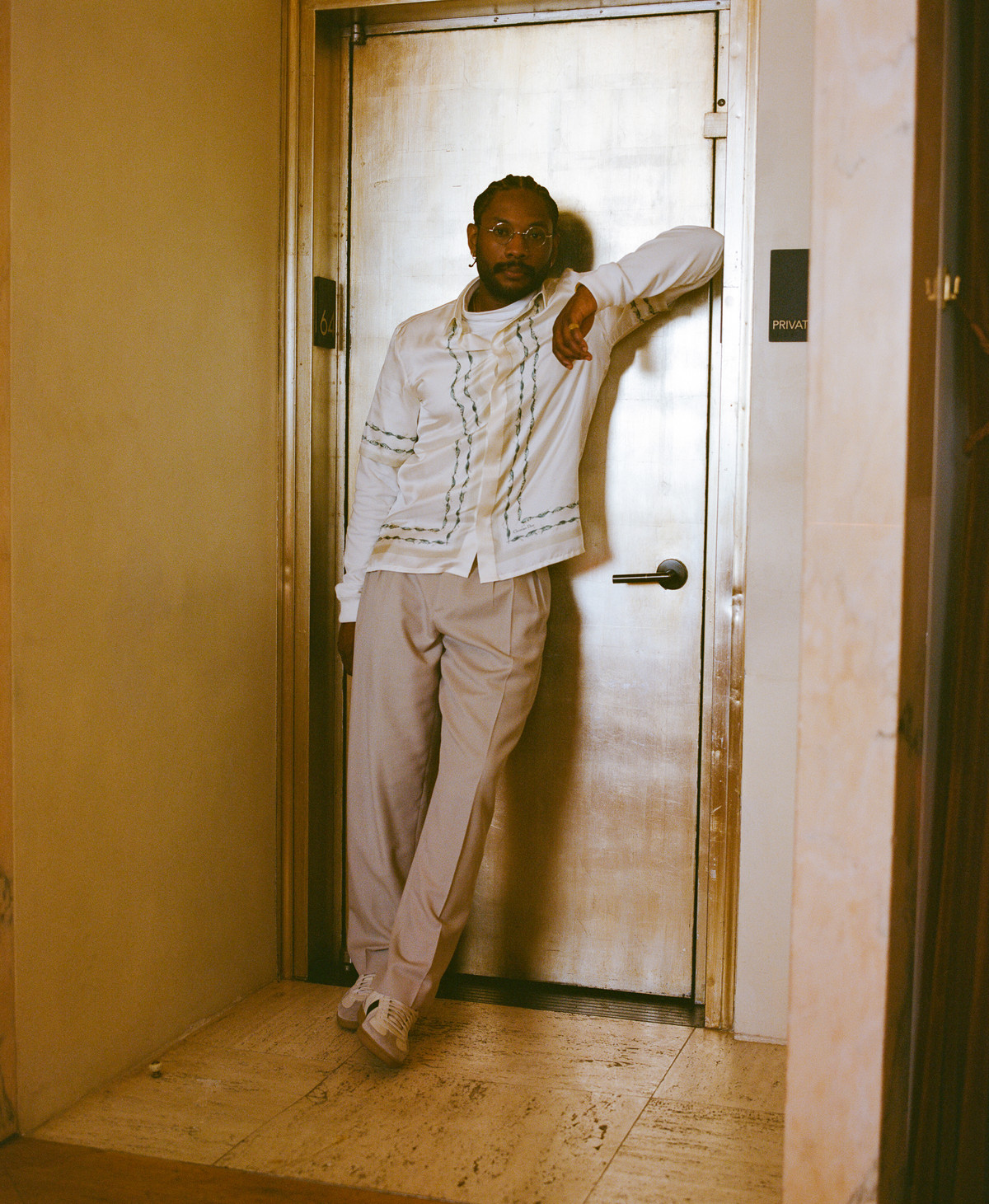
Left: CHARLIE wears JACKET, TANK TOP and PANTS by DOLCE & GABBANA, RINGS by LL, LLLC. Right: CHARLIE wears SHIRT, TOP, PANTS and SHOES by DIOR, RINGS by LL, LLC.
What does success as a chef look like to you?
That's a big question [laughs]. What does success as a chef look like to me? At what point? Like now or when I look back?
I guess I want to know if that's changed over time.
It's definitely changed over time. It's definitely changed over time. I think you could look at it through our generations of chefs. When I came up, chefs didn't really care about money. For example, you didn't cook to make a lot of money, and some chefs didn't care if their restaurants made money. Some of the best restaurants in restaurant history were known for not making profits, and they eventually closed, but they were just such special restaurants. The labor model didn't work, the cost didn't work, but it was so special. So I think in my generation that's kind of went away a little bit.
The fact that now as a chef you really have to make sure you're being creative, but you also have to make sure you're running a sustainable business has changed my perception of what success as a chef looks like. I feel like now you can have three Michelin Stars, but if you're not profitable, it's like, well, you don’t have that great of a business. Or you can have a better business model but you don't have all the accolades or the ego. But I think for me, still, a successful chef creates a following and creates a community and you have a lot of longevity. I think longevity has always been very, very important to me. And I think when you're at that point to where every time you open a restaurant, people care or they're excited about it just because they trust you like that, I think that's a successful chef, whether you have accolades or not.
Did finding out you were the first Black chef in New York with a Michelin Star change anything for you?
Yeah, it changed my entire life [laughs].
But did it change anything in your mindset? Did you do anything differently after finding that out, or did it just change in the fact that people were like, “Oh, you're the first Black chef with a Michelin Star”? Like I guess that’s more an external change rather than if it changed your approach to cooking.
No, it didn't change my approach to cooking at all. I was on this journey regardless. If I wasn't the first one to get it, it wouldn't matter. I still would've been pushing for a second one. I think I had always known that no chef had three Michelin Stars as a Black chef, especially in the States. So that was my goal. I already kind of wanted three. So I think if I ever reached that point, it would be a lot more special. But it didn't change my approach to it. No, not at all.
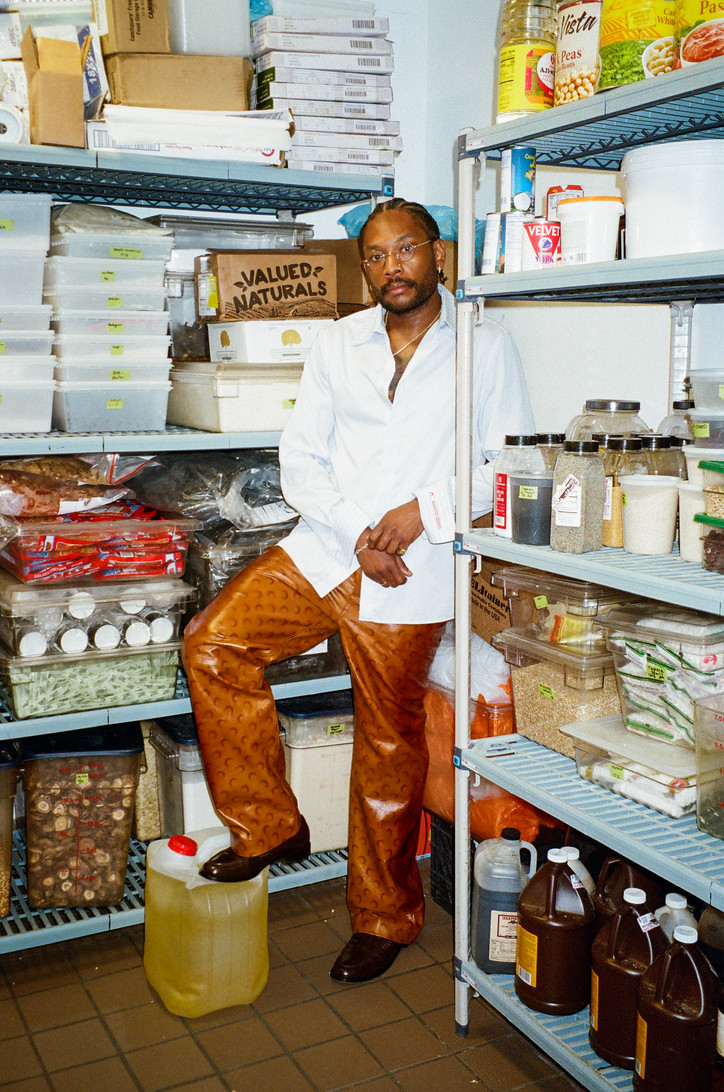
CHARLIE wears SHIRT and PANTS by MARINE SERRE, SHOES by MANOLO BLAHNIK, RINGS by LL, LLC.
Is there anyone you've cooked for that resonated with you for one reason or another?
Yeah, it's a long list. I mean, I don't really take it for granted. I think maybe ten years from now I probably would, but I think it's pretty special when anyone goes out their way to try your food. So I'm always excited. I'm trying to think of one that really, really stuck out because it's New York City, so you can randomly cook for celebrities here and there on the most random day – or important people here and there. Chefs stick out to me.
Cooking for other chefs?
Yeah, like Paul Liebrandt came to Clover Hill. That was a special one. Daniel Humm, that was special. I used to work for him. I guess one I'll never forget now is probably Solange. That was cool. She had eaten here before, I believe it was maybe two or three times before, but she just, ironically happened to book here on the very first day of my first menu. So it was just kind of like, what are the chances that Solange is eating here. It was such a big day for me doing the first menu here. So I think that will definitely stick with me for a very, very, very long time. It was a very memorable moment for me because it was more like I'm a fan of hers. It was actually her and Steve Lacey, so that will always be kind of special to me. I thought that was fucking cool. I haven't cooked for Obama yet, or Beyonce. Those would be cool.
Those will be next.
Yeah, that would be cool.
What do you want people to remember about your food or the dining experience when they leave?
Well, my biggest thing is that I want people to want to come back. And I think that sounds simple, but it's not at this level of restaurant. It's not common really at all. And I'm a fan of fine dining, but there's been a lot of meals where I went and you spend a lot of money and it is great. It's good, but you don't really feel like you want to come back. These are like special occasion restaurants. I don't expect people to eat here once a month. But if we're that place you come every year for an anniversary, that's special. Or every year for your birthday, that's special. Or if it was so good that you're like, “Wow, I got to bring my friends back here for the next menu.” That’s when you know you're really winning.
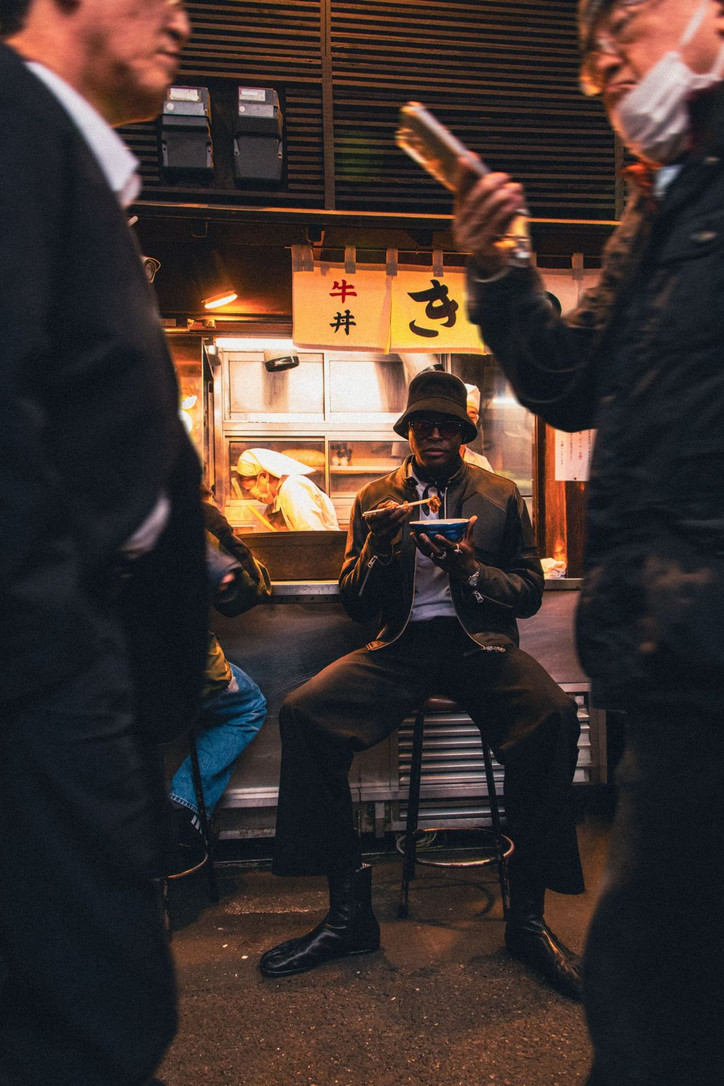
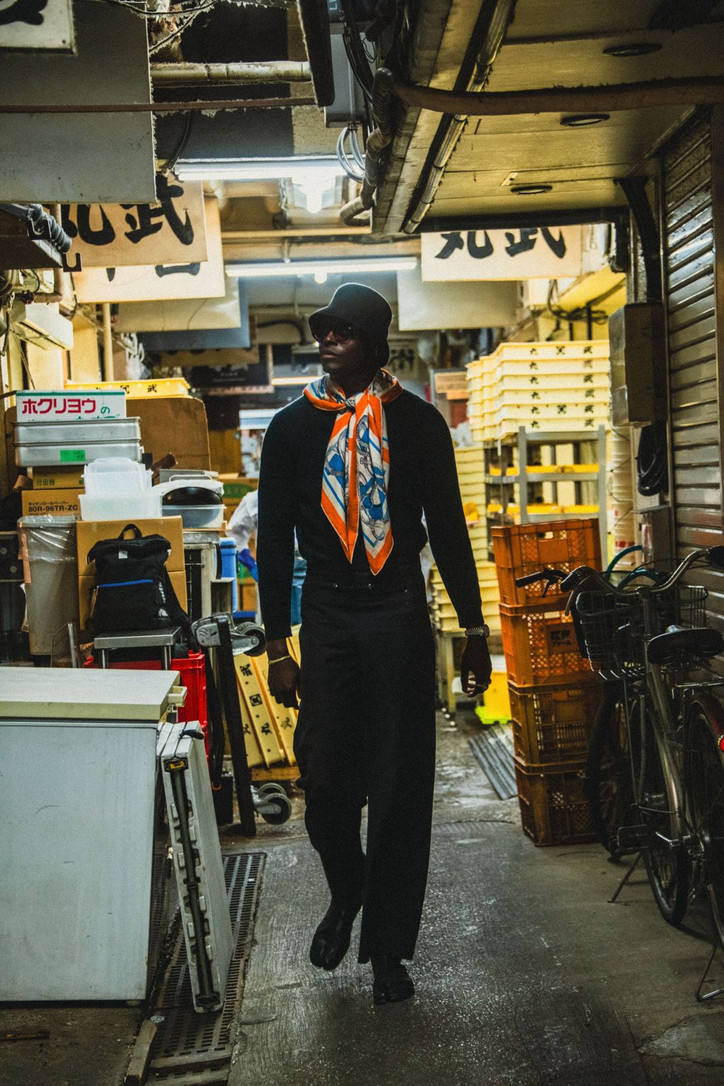
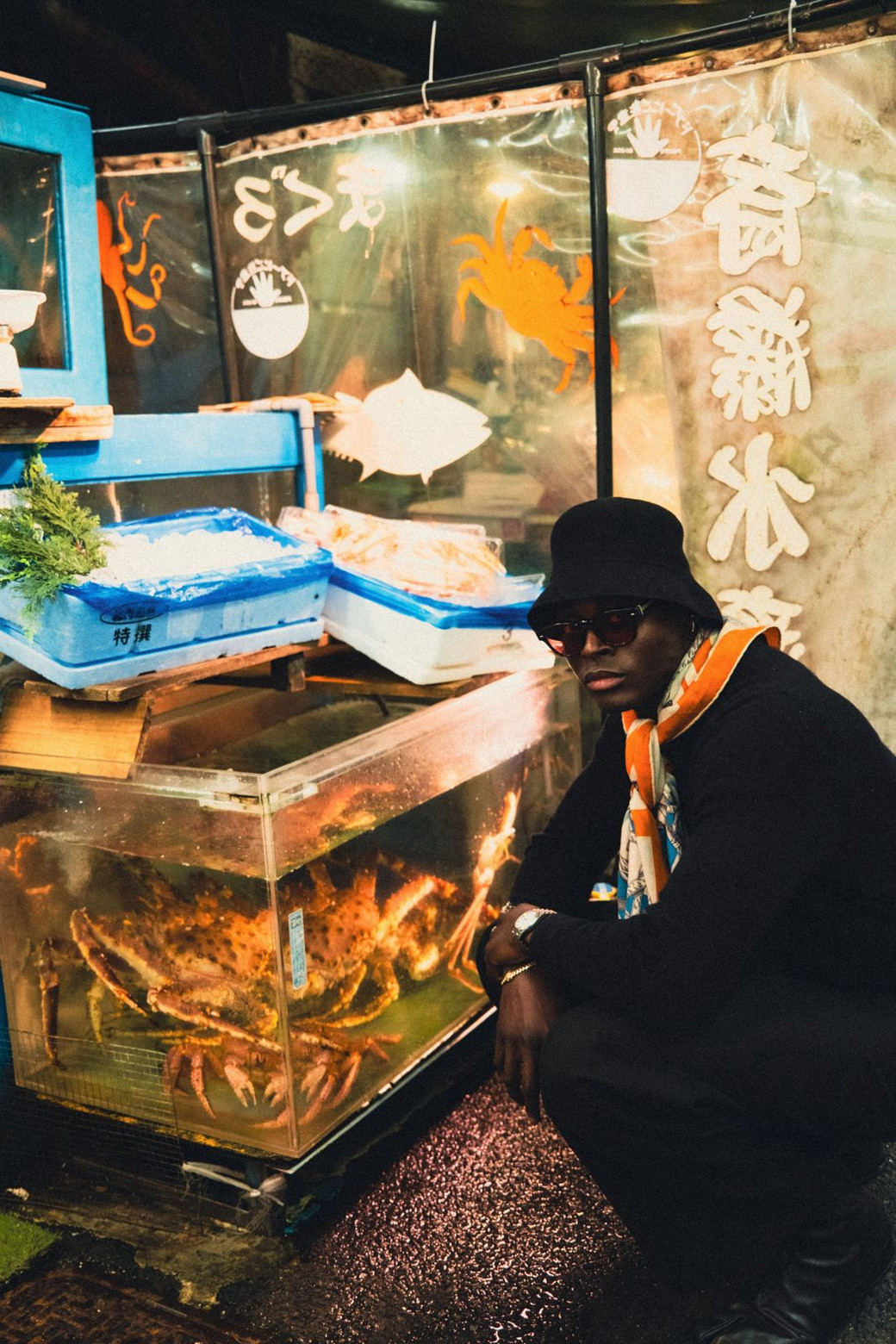
There’s a rhythm to Tsukiji, one that starts long before the city wakes. By the time most people hit snooze on their alarms, this place is already alive—blades flashing, fishmongers barking prices, the scent of soy, smoke, and seawater curling through the air.
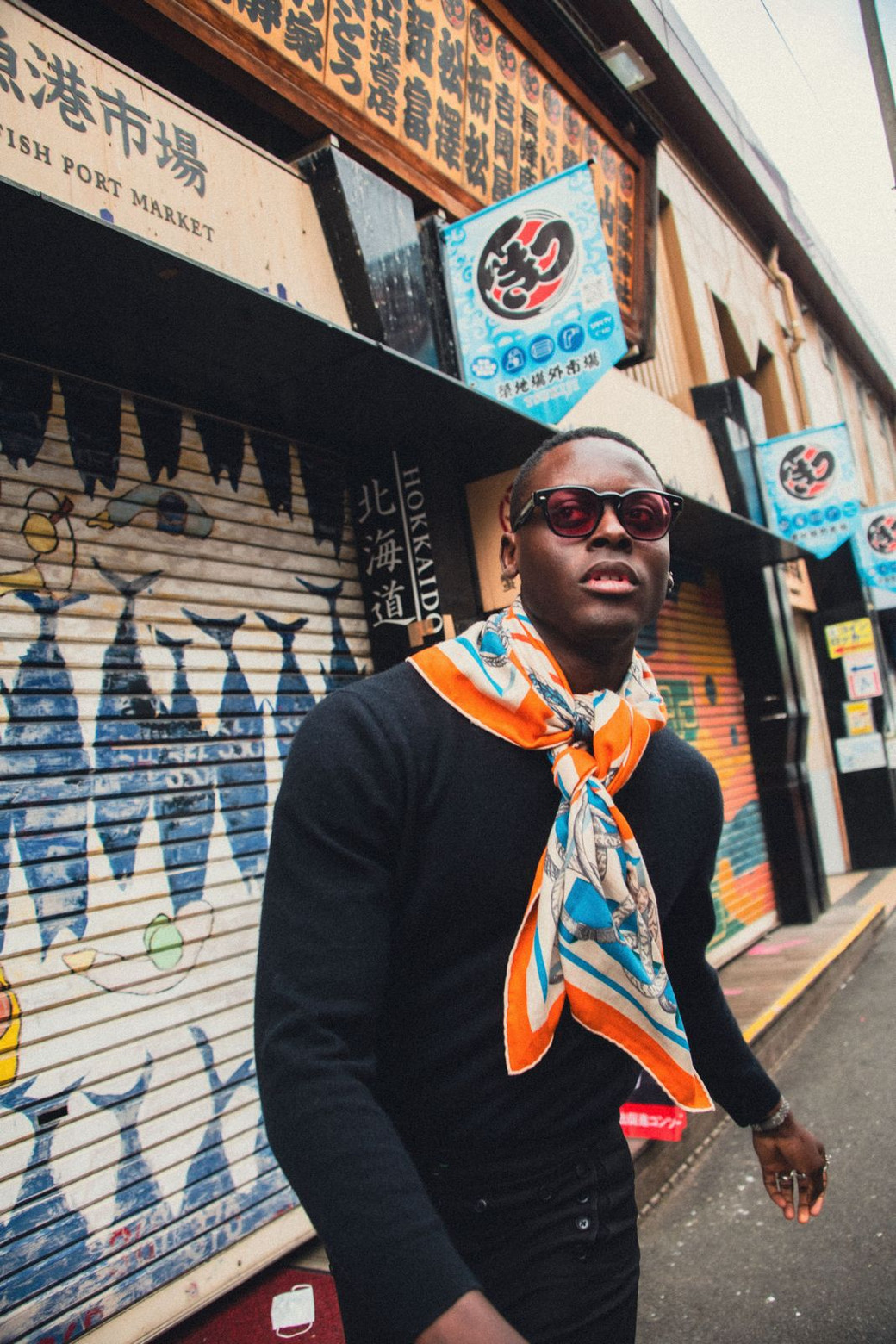
Tsukiji is infamously known as a fish market, but to call it just that is to miss the point. This isn’t just where bluefin tuna are auctioned off to the highest bidder, where chefs from all over the world descend to secure the freshest catch. This is where Tokyo eats, breathes, and works with its hands. The energy here doesn’t just power the market—it fuels the entire food culture of Japan.
By 5:30 a.m., the vendors are already at it—cleaning, prepping, sharpening knives worn down by years of muscle memory. Every stall has its place, every movement has a purpose. It’s controlled chaos, the kind that can only exist in a city where precision isn’t an expectation—it’s the baseline.
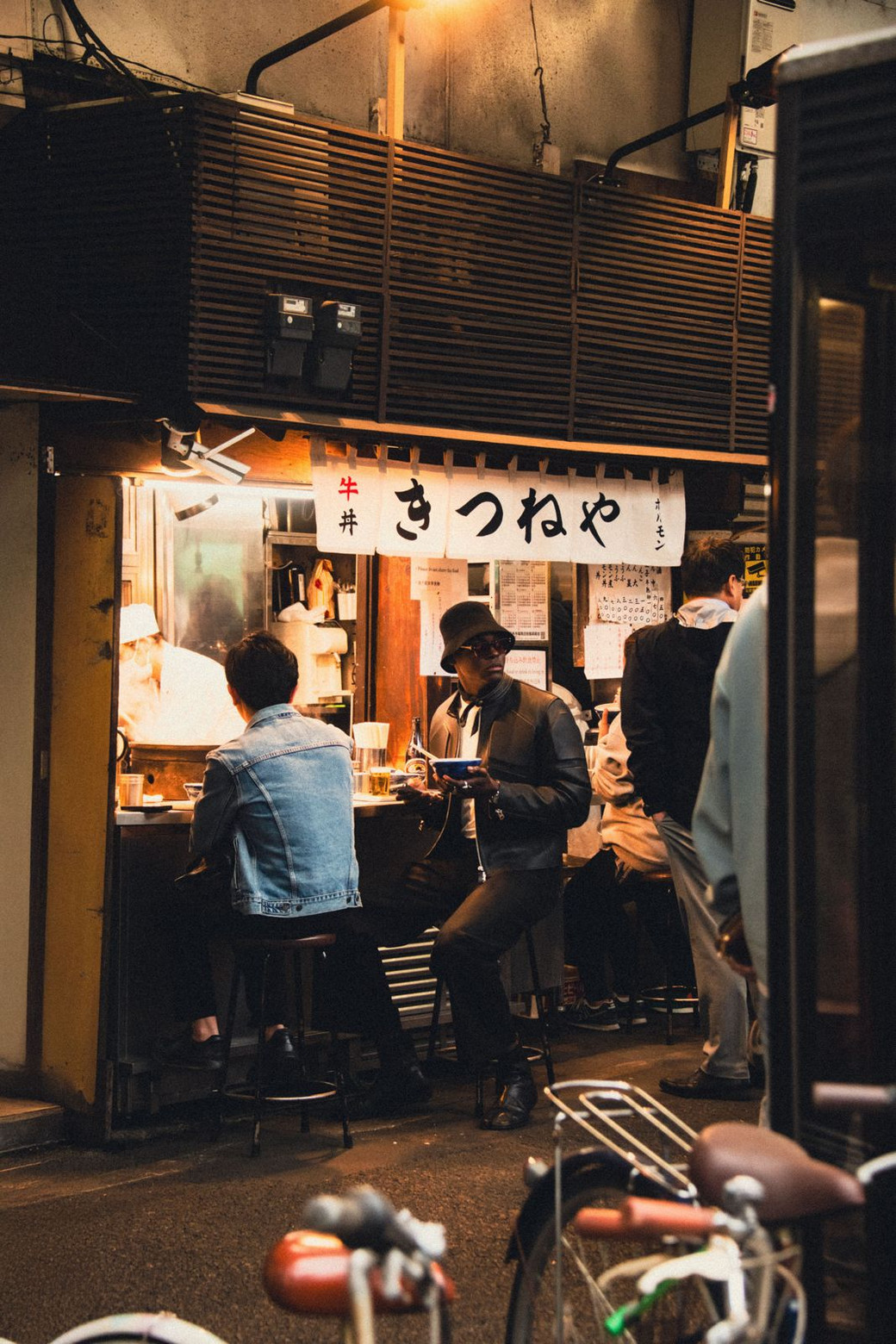
I could have walked past Kitsuneya like any other stall, but something pulled me in. First, it was the aromatics—the deep, slow-cooked scent of beef and soy, rising from a pot that had likely been simmering since the night before. Then, the sign. Simple, nothing flashy—just the name in bold, black characters against a white background. But what really made me stop was the way the couple running it moved, the unspoken rhythm between them.
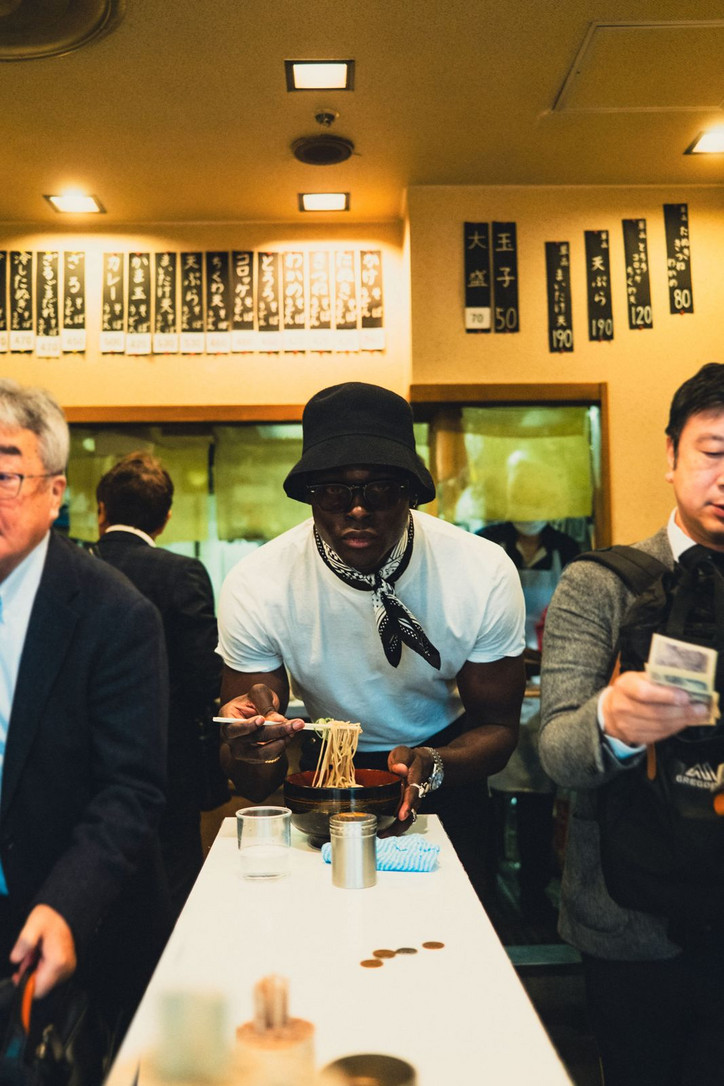
I leaned in, curiosity taking over. “How long has this place been here?” I asked.
The man behind the counter glanced at his wife before answering. “Seventy-five years. This is Uji. Her mother ran this stall before her.”
Seventy-five years. I had to pause for a moment, let that sink in. Seventy-five years. That’s generations of dedication, of perfecting a single dish, of showing up before dawn and working until the pot runs dry. In a world where restaurants come and go overnight, where trends dictate menus, this tiny stall stood firm, serving the same dish with the same level of care. That kind of longevity, that kind of commitment—it’s something you can’t fake.
Kitsuneya is known for one thing: gyudon—a rice bowl crowned with braised beef trim, slow-cooked until it collapses under its own weight. By 6 a.m., the line is already deep—locals, travelers, chefs, all waiting patiently for the first bowl of the day. No loud announcements. No gimmicks. Just a line of people who know exactly what they’re here for.
By 11 a.m., the pot runs dry. No second batch, no shortcuts. When it’s gone, it’s gone.
As I took my first bite, I was reminded of home. In Ivory Coast, we start our mornings with Garba—fried tuna, fresh tomatoes, onions, Scotch bonnet, and attiéké. Something hearty, built to carry you through a long day. Japan understands this, too. Food here isn’t just about indulgence—it’s about function, balance, necessity.
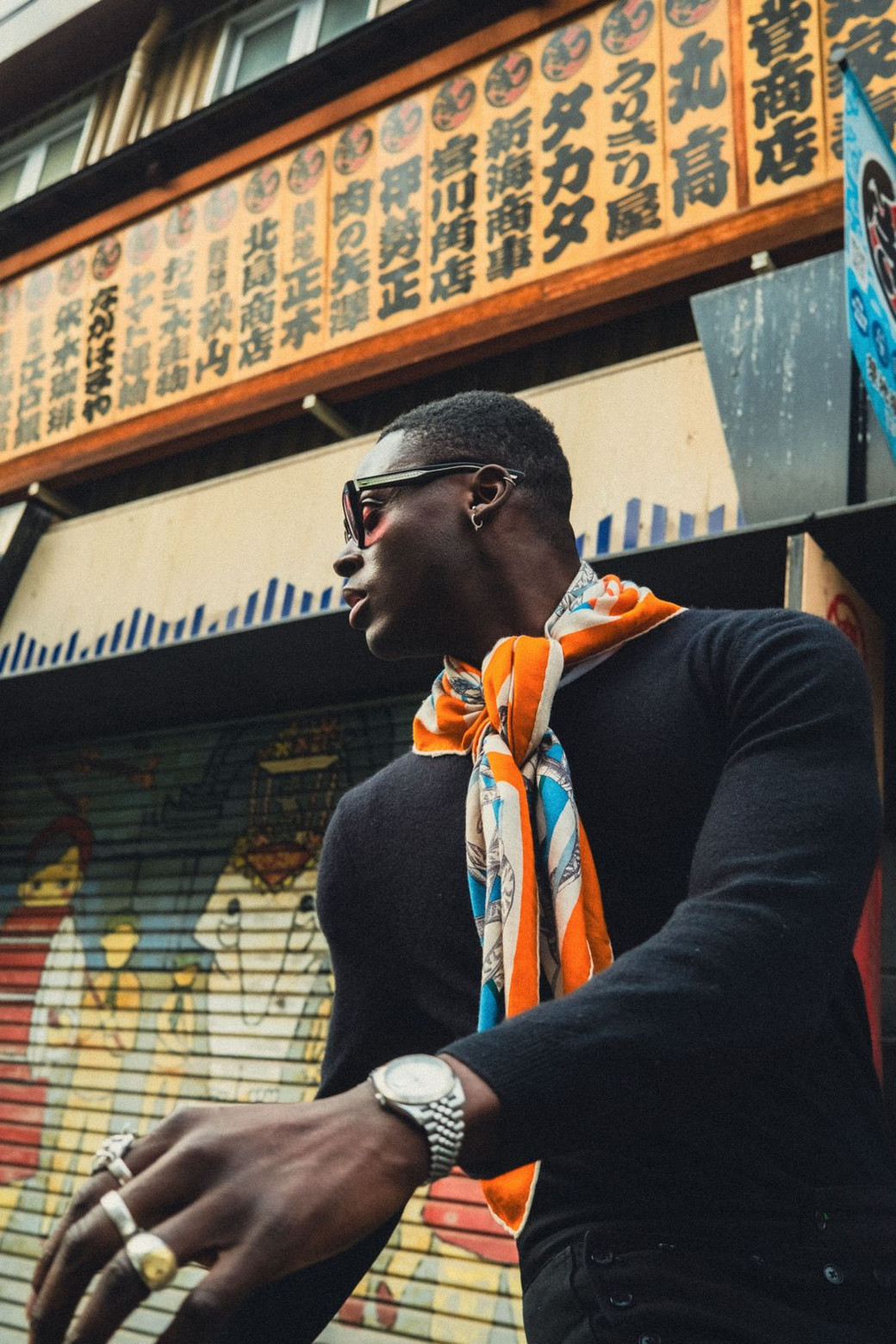
And yet, there’s an elegance to it. A butcher’s counter showcasing Kobe beef with marbling so intricate it looks hand-painted. Knives so sharp they don’t slice but glide. Stalls lined with dried mushrooms, seaweed, fish, and grains, each ingredient respected for its role.
Everything has a purpose. Everything is done with intention.
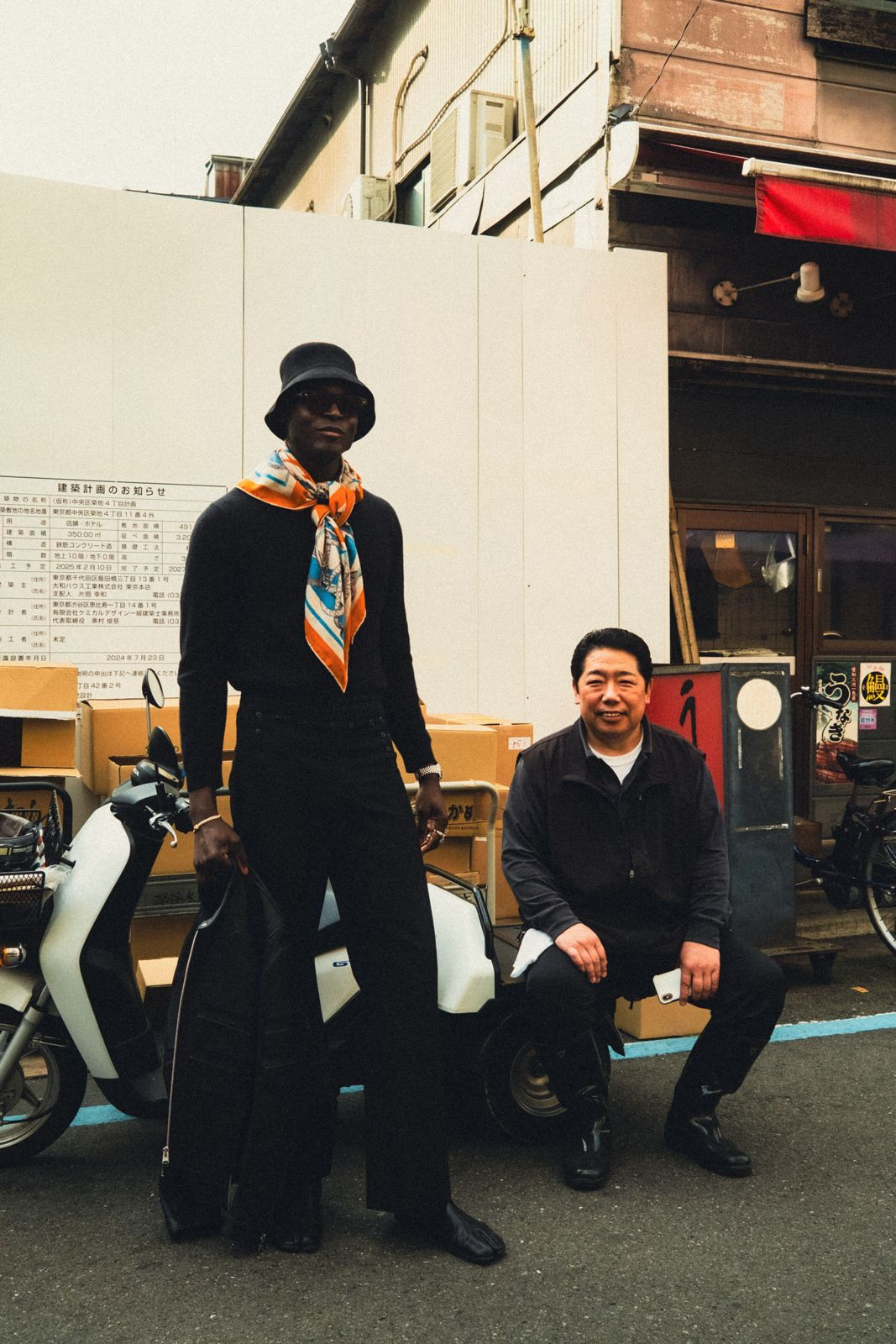
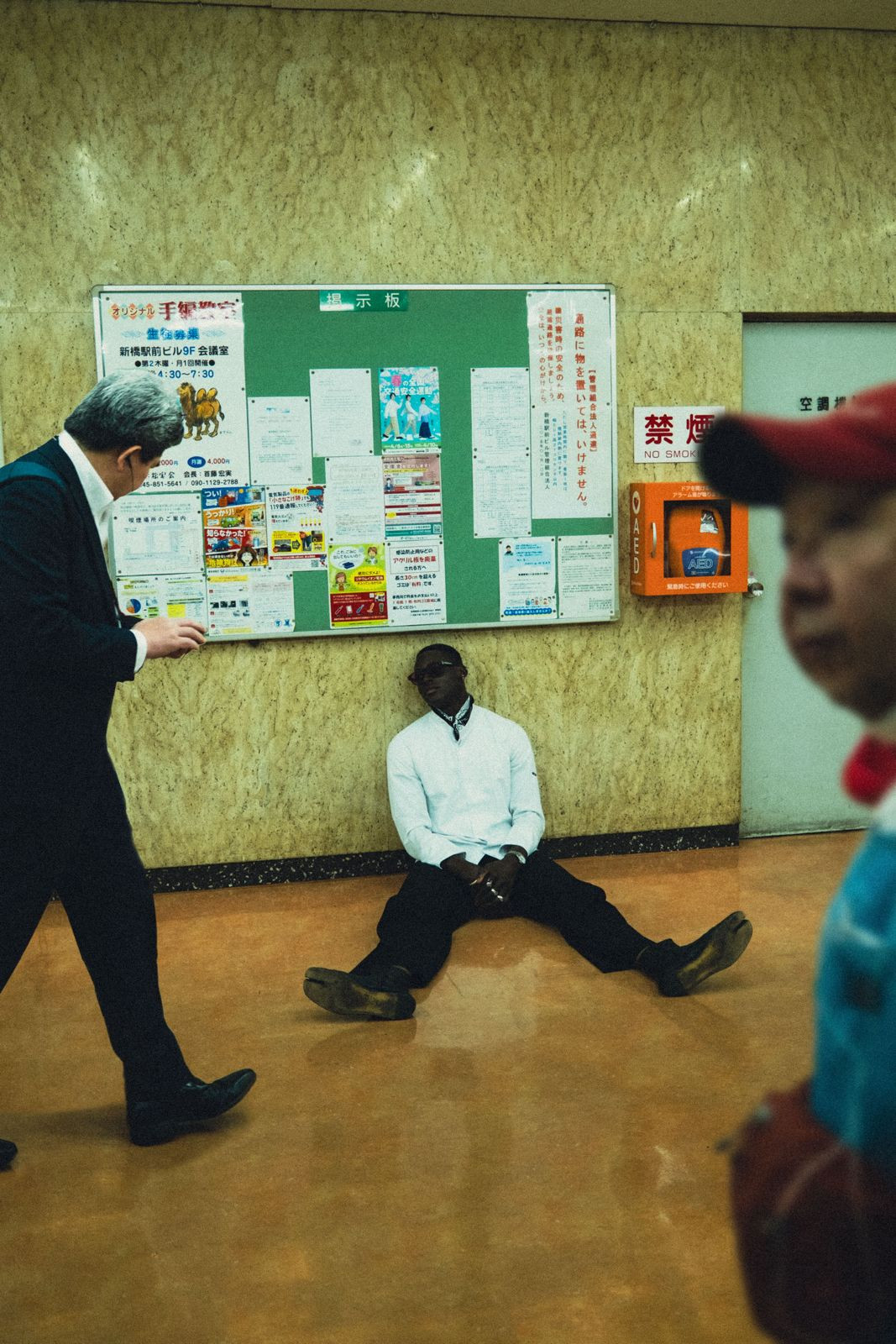
What fascinates me most about Japan isn’t just the food—it’s the work ethic behind it. There’s no rush, no clamor for attention. Just dedication, built over decades, executed with quiet mastery. Here, effort isn’t a struggle—it’s an art form.
So if you ever find yourself at Tsukiji, standing in line at Kitsuneya with a bowl of gyudon in one hand and a cold beer in the other before the sun has fully risen—don’t fight it.
Mary Lou’s feels like a fever dream in the middle of Palm Beach — what sparked the idea, and how did it all come to life?
My partners and I, whether born here, raised here, or moved here, all eventually found our way through the nightlife scene in New York City. That golden era of NYC nightlife was the inspiration—the one where people danced without ego, DJs played undeniable music, and every kind of person felt welcome—was a huge inspiration for Mary Lou’s. It was nightlife at its best: free, unfiltered, and alive.
Palm Beach always felt like this aspirational world—bright, colorful, and rooted in a lifestyle of leisure and beauty. But for all its affluence and vibrancy, there was never really a venue that matched that energy or gave people a space to fully express it. That contrast always fascinated me, and I felt like it was needed.
Mary Lou’s is meant to be multi-dimensional—a space that doesn’t dictate how you should act, dress, or dance. It’s a choose-your-own-adventure kind of night. Programming is a major part of the magic: live bands, unexpected acts, eclectic DJs, dancers, and rotating performances all working together to create something fresh and unforgettable every time you walk through the door.
But we weren’t in a rush—we wanted the right space. Then we found Berto’s Bait and Tackle, this beautiful octagon of a building with soul in the walls and history in every corner. It felt like it was meant to be.
From there, it was about building the right team. One rooted in trust, pedigree, and a family-like bond. Everyone involved has been a rockstar in their own lane, and honestly, without every single person showing up and putting in the work, none of this would’ve happened. Mary Lou’s is a dream—but it’s one that took a whole lot of hustle to bring to life.
Let’s start with the name. Who is Mary Lou — myth, muse, alter ego?
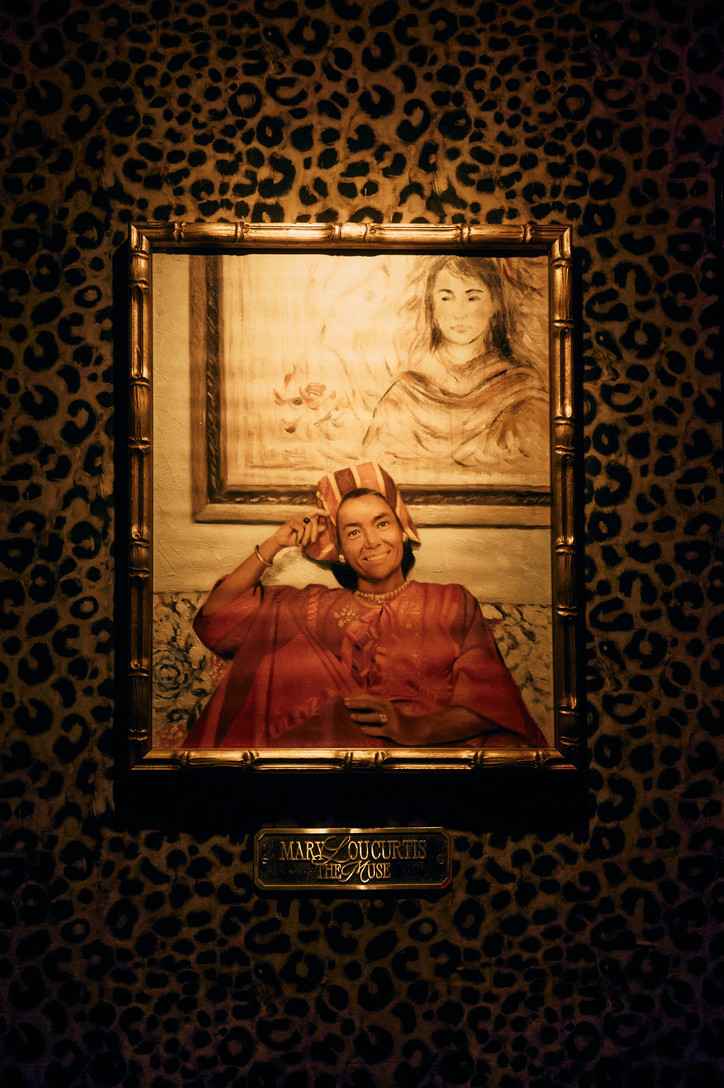
Mary Lou was my grandmother, but never “grandma”—don’t even think about it. To her family and friends, she was always “Mama” or “Mama Lou.” The term “grandma” felt too old, too traditional, and too far from the vibrant, larger-than-life woman she was.
A celebrated fashion designer and successful entrepreneur, Mary Lou carved her own path in the world of style and retail. She was the founder of La Shack, a bold and beloved fashion brand that expanded to 14 stores nationwide, including a flagship boutique on Palm Beach’s iconic Worth Avenue. Unofficially, she’s even credited with pioneering the now-standard back zipper on women’s skirts and dresses—a small but revolutionary detail that perfectly captures her forward-thinking spirit.
But Mary Lou was so much more than her business success. She was a hostess in the truest sense of the word. Her homes in Locust Valley and Palm Beach were legendary gathering spots, known for unforgettable parties filled with laughter, dancing, and a rotating cast of close friends. She had a unique sense of style that extended beyond her wardrobe into her jewelry, interiors, and every detail of her surroundings. Her presence was magnetic—every room she walked into became brighter, more glamorous, more alive.
Mama Lou has been one of the most profound creative inspirations in my life. But when I set out to create Mary Lou’s, I didn’t want the concept to be about her—I wanted her to serve as the muse. A mythical figure. A spirit that guides the essence of the space. Mary Lou’s is not a tribute, it’s a feeling. It’s energy. It’s flair.
Mary Lou’s is meant to be bigger than life—just like Mama Lou. And that’s exactly how we want you to feel when you step inside.
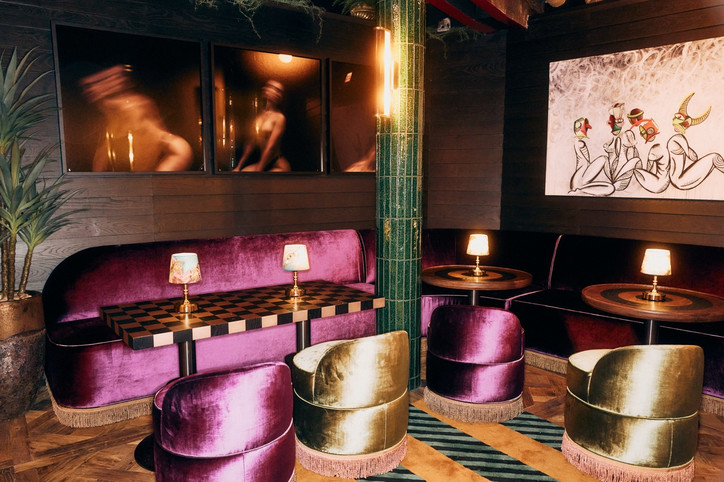
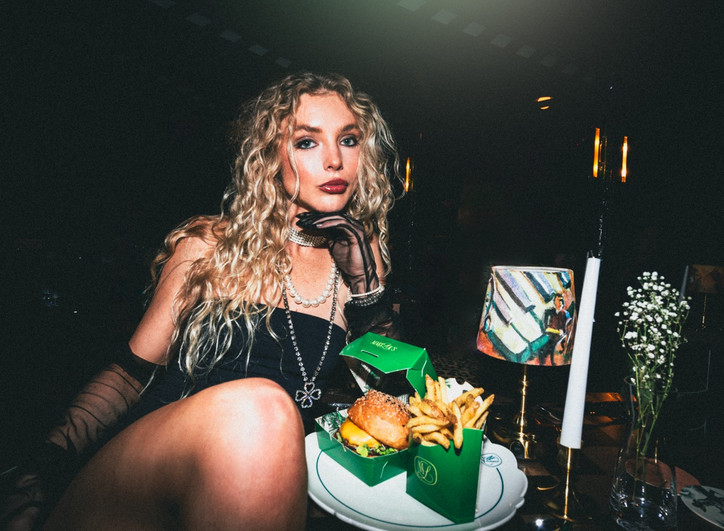
Palm Beach isn’t exactly known for its nightlife. What made you bet on it as the backdrop for your club fantasy?
Honestly, I always thought it was the perfect backdrop. Palm Beach is affluent, aspirational, and built around a lifestyle of leisure, beauty, and success. The people are vibrant, the colors are bold, the fashion is playful, and there’s an underlying sense of joy in the air. It has this almost mythical energy—think Gatsby by the beach.
It checks every box for the kind of setting that deserves an iconic nightlife experience. The only thing missing was a space that gave people permission to let loose and have fun.
How would you describe the energy of Mary Lou’s on a good night — in three words or less?
In the moment
Who’s showing up to Mary Lou’s right now — and who are you hoping shows up next?
Celebrities, socialites, tastemakers, creatives—people who don’t take themselves too seriously but still appreciate great style, great energy, and a great time. Mary Lou’s is for those who love to have fun, who walk into a room and light it up, who know how to throw a look and hold a conversation. We like it just the way it is—authentic, effortless, and full of life. If you're in the room, you're meant to be there.
What was the hardest part about launching a nightlife space in a town that sleeps early and dresses conservatively?
I think that’s a bit of a misconception. Palm Beach doesn’t necessarily sleep early—it just likes to party in private. The nights are long here, they just tend to unfold behind the gates of beautiful homes, tucked-away estates, and boats. People go out for a great dinner, have a few drinks, and then the real fun kicks in—just not always in public.
What Palm Beach has been missing is a space that invites you to stay out, let loose, and feel completely at ease. Somewhere that blends the charm and elegance of the town with real, unfiltered fun. Trust me, I’ve had plenty of late nights here—it just needed the right stage.
As for the fashion? I welcome it all—bold, conservative, classic, experimental. Palm Beach style is more eclectic than people give it credit for. And to quote Mary Lou herself: “It’s better to be overdressed than underdressed, sweetheart.” That energy lives in everything we do.
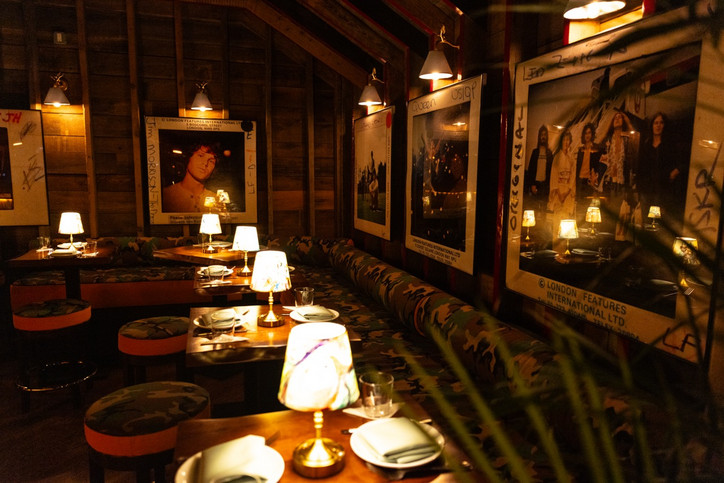
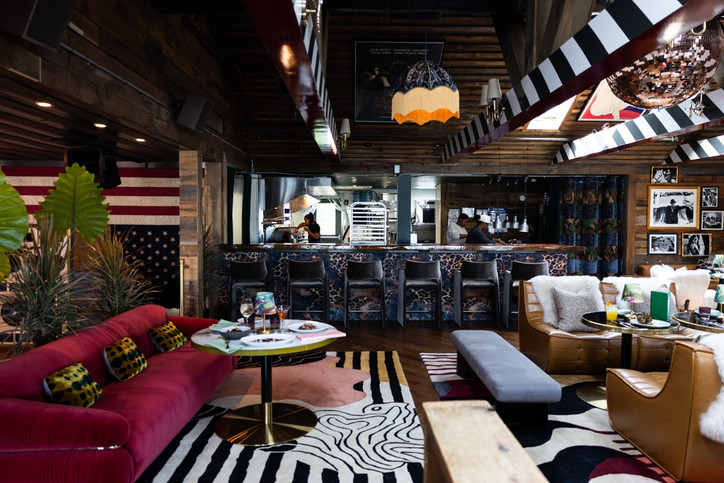
Montauk
Nightlife is all about taste. What’s your personal filter for deciding what belongs inside Mary Lou’s and what doesn’t?
One of my favorite quotes is from Rick Rubin: “I don’t know anything, but I trust my taste.” That pretty much sums it up for me.
I approach Mary Lou’s through the lens of a student—of design, of emotion, of experience. I’m constantly observing what moves people, what feels timeless, and what sparks connection. My personal filter is intuitive. It’s about trusting my palate, trusting the feeling something gives you when you walk into a space, hear a sound, see a detail. If it doesn’t elevate the vibe, if it doesn’t spark a little curiosity or joy, it probably doesn’t belong.
Mary Lou’s isn’t built by committee—it’s built from instinct. Taste, for me, is about curation with conviction.
Talk to us about sound. Who’s spinning? Who’s dancing? And what’s the sonic signature of the space?
Mary Lou's is a unique space that is multi-generational. That is not only translated by the crowd in the room but also our sonic identity. Our focus is always on undeniable timeless music -- the kind of music that makes you want to put your phone down, dance and create memories. We focus on a mix of well-known artists like Sofi Tukker, LP Giobbi and the Chainsmokers playing our intimate venue for a once-in-a-Lifetime moment and tight curation of up-and-comers like CASSIMM, Moonlght and Julia Sandstorm so our guest can discover new favorites.
There’s an air of mystery around Mary Lou’s — how do you keep it exclusive without being exclusionary?
The magic of Mary Lou’s is that it feels like a secret—but it’s one we’re always happy to share. We keep things exclusive by keeping them intentional: the energy, the people, the experience. It’s about showing up with curiosity, confidence and a willingness to lean in.
Come curious, come ready, and bring the energy. While we do welcome walk-ins, reservations are always your best bet—especially on weekends when the room fills up fast. Dress like you’re going somewhere worth remembering. Be open. Be bold. Be ready to play.
For visitors, Mary Lou’s is a fresh take on Palm Beach—playful, unexpected, and rooted in a sense of discovery. And for those of us who built it, it’s personal. It’s a place with soul, history, and a little mischief—where everyone’s welcome, as long as they’re ready for a good time.
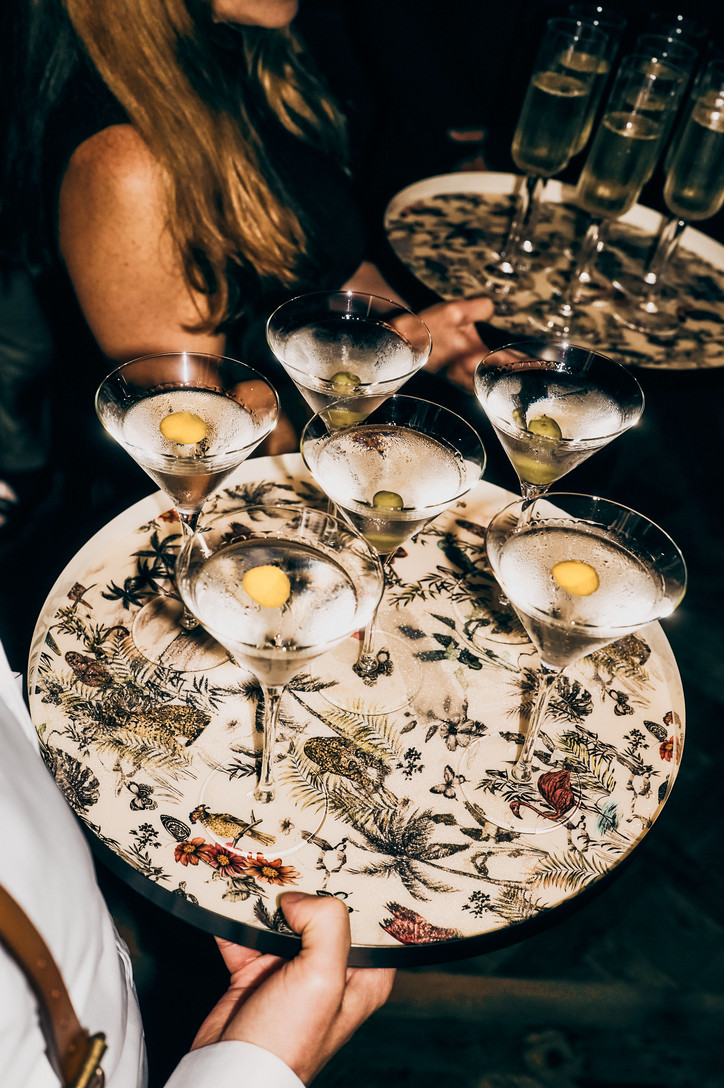
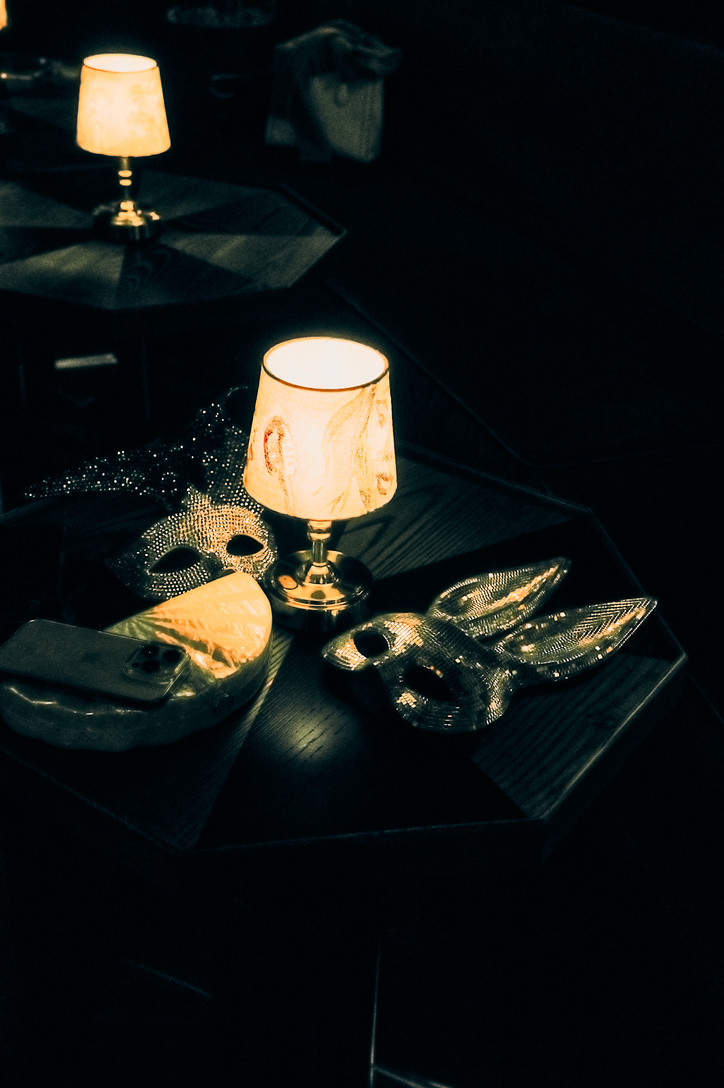
Paint us a picture: what does a peak moment at Mary Lou’s look like through your eyes?
Disco ball spinning, smiles everywhere. Not a cell phone in sight. People are dancing like no one’s watching—because no one is watching. It’s full release, total freedom. The kind of energy you can’t manufacture.
In my mind, it’s that perfect, surreal moment—Zoe Kravitz casually riding an alligator through the middle of the dance floor. Hands in the air, laughter echoing, every single person completely locked into the now. That’s peak Mary Lou’s. It’s magic, it’s mayhem, and it’s absolutely unforgettable.
Any stories you probably shouldn’t tell us… but will anyway?
We don’t kiss and tell.
Is Mary Lou’s a one-off dream, or the beginning of a bigger world you’re building?
Mary Lou’s has always been the foundation of a much bigger vision. In many ways, it’s the starting point of something new—but also a full-circle moment in the careers of my partners and I that’s been deeply rooted in hospitality, experience, and storytelling. It feels like the first chapter in the middle of the book.
At its core, our mission is simple: to create spaces and moments that make people feel something—that spark joy, connection, and a sense of escape, even if just for a night. Mary Lou’s is the spark, but the world we’re building around it is only just beginning to unfold. Stay tuned.