MIRRORS


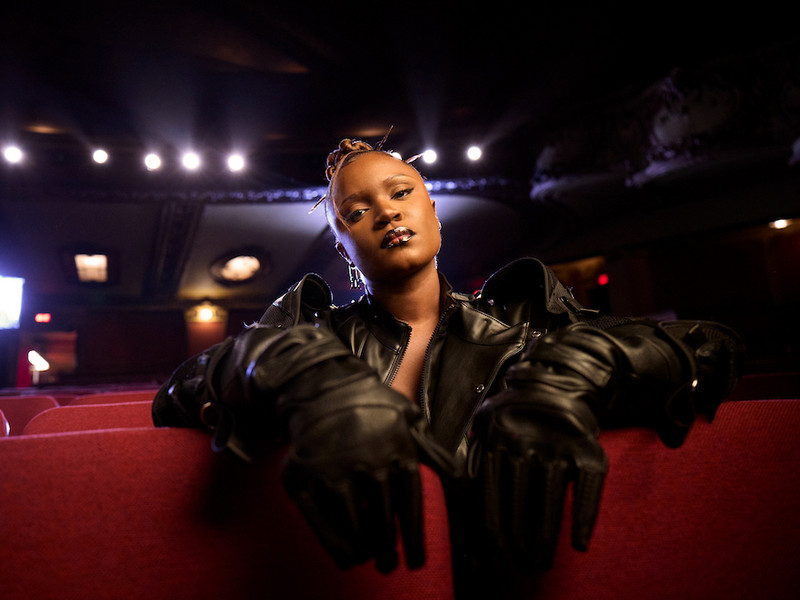
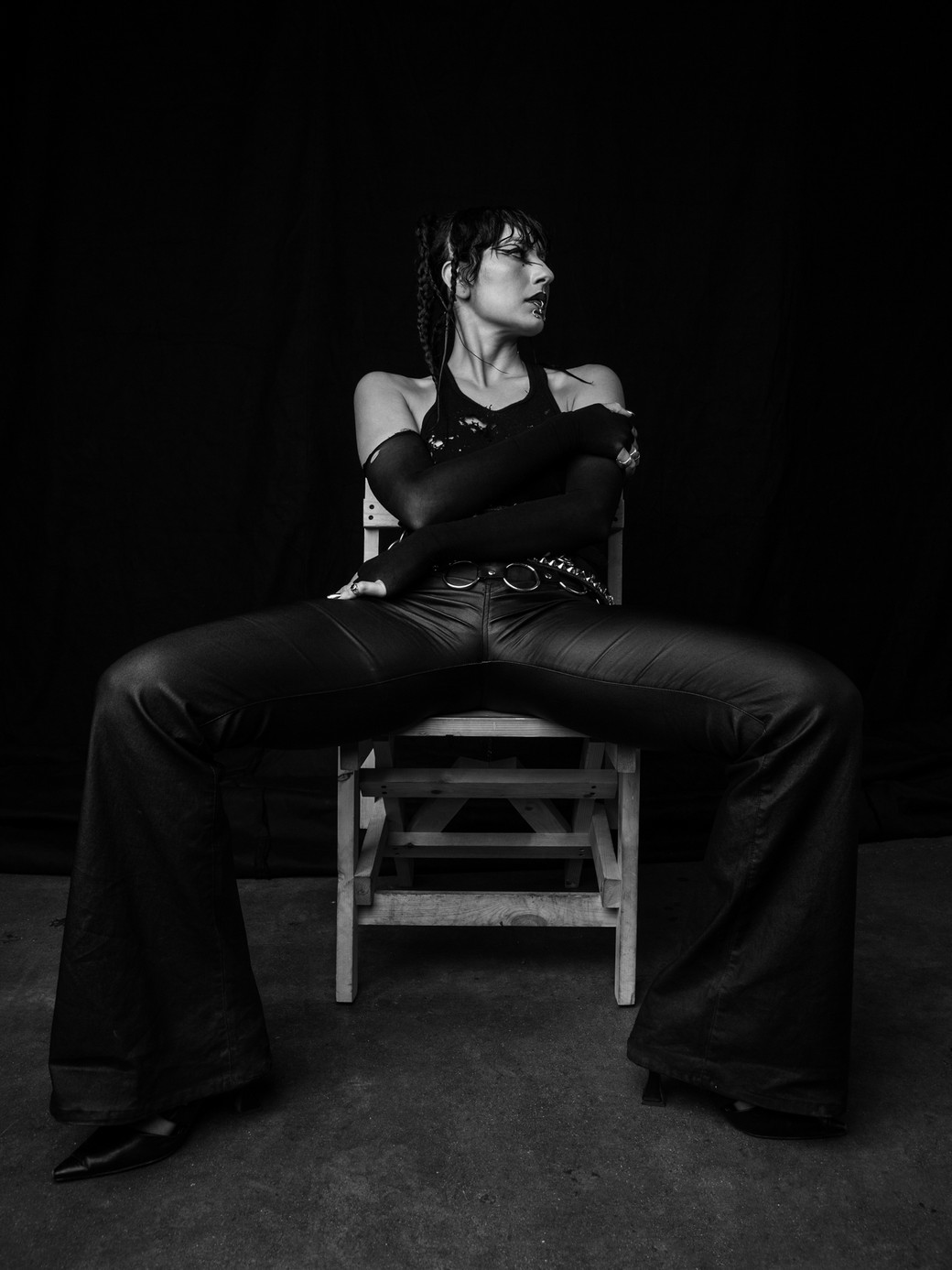
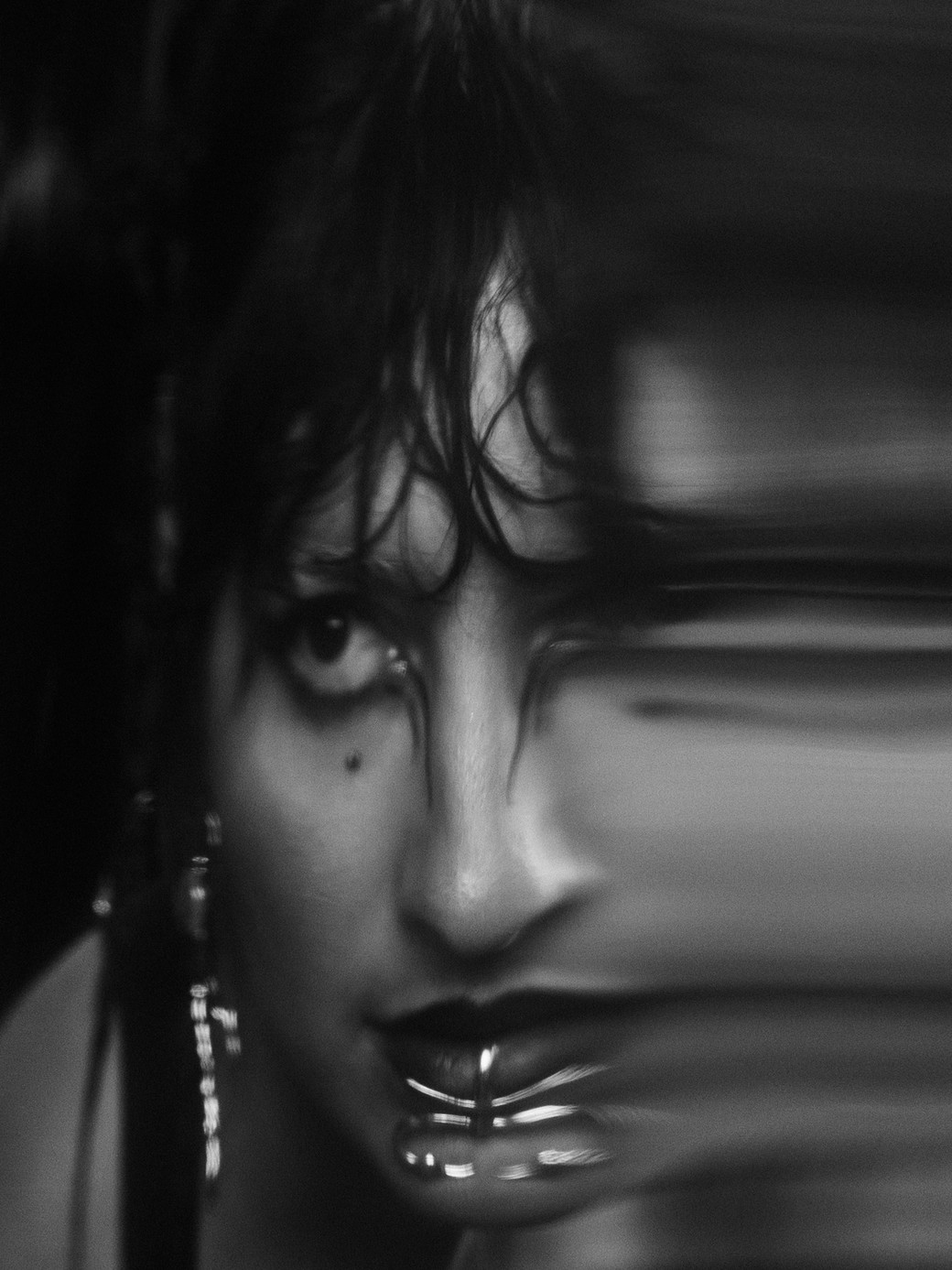
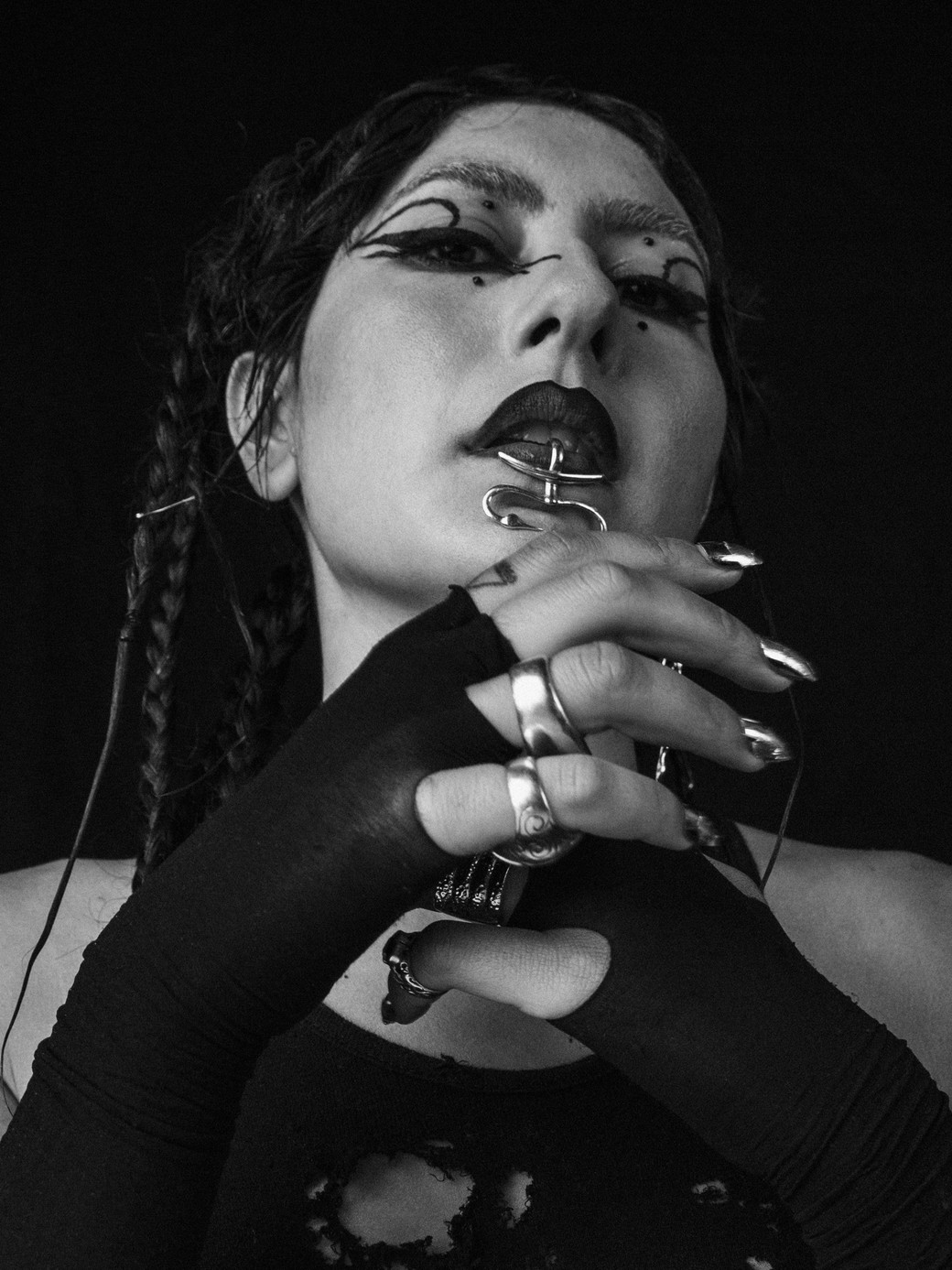
In her video for single, "Morning Star", she, as Lucifer and also an alter ego she created named Ashkar, croons and chants in an empty warehouse, smoking a cigarette and channeling a Joker-like persona. Having created an entire universe in which this project lies, King Woman invites you into a world where you’ll have to confront your sins, your innocence, your weaknesses, and your power alike.
She takes you to another plane, another dimension, and her talent is certainly other worldly.
How are you doing; how’s your overall state?
My overall state is good; I’m a little overwhelmed. I’m starring in a film, so I’m going to work on that and then I fly into the bay area to rehearse with my band. Then I have two record release shows in Los Angeles. But everything’s good, I’m very grateful.
You have a full plate?
Yep.
You have multiple musical projects - What inspired King Woman? The name and the vibe behind it.
I kind of broke away from church or Christianity. I had an experience when I realized how crazy it all was. The name King Woman just came to me and from there I got a band together. It just kind of happened, and it was a way for me to express my frustration and everything I’d been through, and just kind of express myself in general. It was, like, my first avenue of being able to express myself for the first time in a real way and reclaim my power in expression and agency as a human. Because you don’t really get much of that when you’re raised in those kinds of environments. It was my finally having a voice, almost.
So Celestial Blues is your second album under King Woman?
Yeah, so I did a 2-song cassette, a 4-song EP, and then our first LP. So this is our second full length.
How does it differ from the first one?
I had a lot of questions before. I was still working through a lot and trying to find some answers. I was a little bit more angry. In this one, I was able to play with the characters and archetypes that used to kind of control me and scare me. It kind of became this funny thing.
What does this album represent to you?
So many things. It’s about feeling stuck on planet earth, like your wings have been ripped from you and you’re stuck on this prison planet that you don’t want to be on. It’s about feeling uncomfortable in your body, and like your physical appearance doesn’t really match how you feel inside. So many things. But, I guess the main one would be isolation and the feeling that you don’t belong somewhere.
Where did you record Celestial Blues?
I recorded it in Oakland, California with Jack Shirley at Atomic Garden Studios.
Did it have a very different creative process to your last LP?
Our last LP was also recorded with Jack, but Jack built a new massive studio. We also had a lineup change. We lost a guitarist, so Pete was playing bass and guitar. But for some reason, this time it felt a lot less stressful. It had a lot more of a flow and a lot more grace around it. Last time was a little more difficult.
Right, which probably comes from having a little more experience.
Totally.
So tell me about this single, "Boghz".
It’s kind of a song about how love can be a war. Trying to fight for love with a person who doesn’t really know what that means and doesn’t know how to treat you. Just doing a lot and feeling like you’re giving to a black hole, essentially, and just being deceived and getting lost in someone’s arms who doesn’t have your best interest at heart.
What does the title mean?
It’s Farci. It’s kind of hard to translate, but it’s more of a feeling. Like a longing, or a pain in you that’s beyond words. It’s indescribable, I don’t really know how to translate it. It’s more a feeling.
That’s really heavy. How is the song sonically?
I don’t know, I was kind of going for a vibe of one of my favorite bands Power Trip - I’m wearing their shirt right now. It just kind of came out how it did, though.
What themes are you exploring in the album as a whole?
It’s about the unification of all these aspects of yourself. The dark and the light. Fusing them together as one.
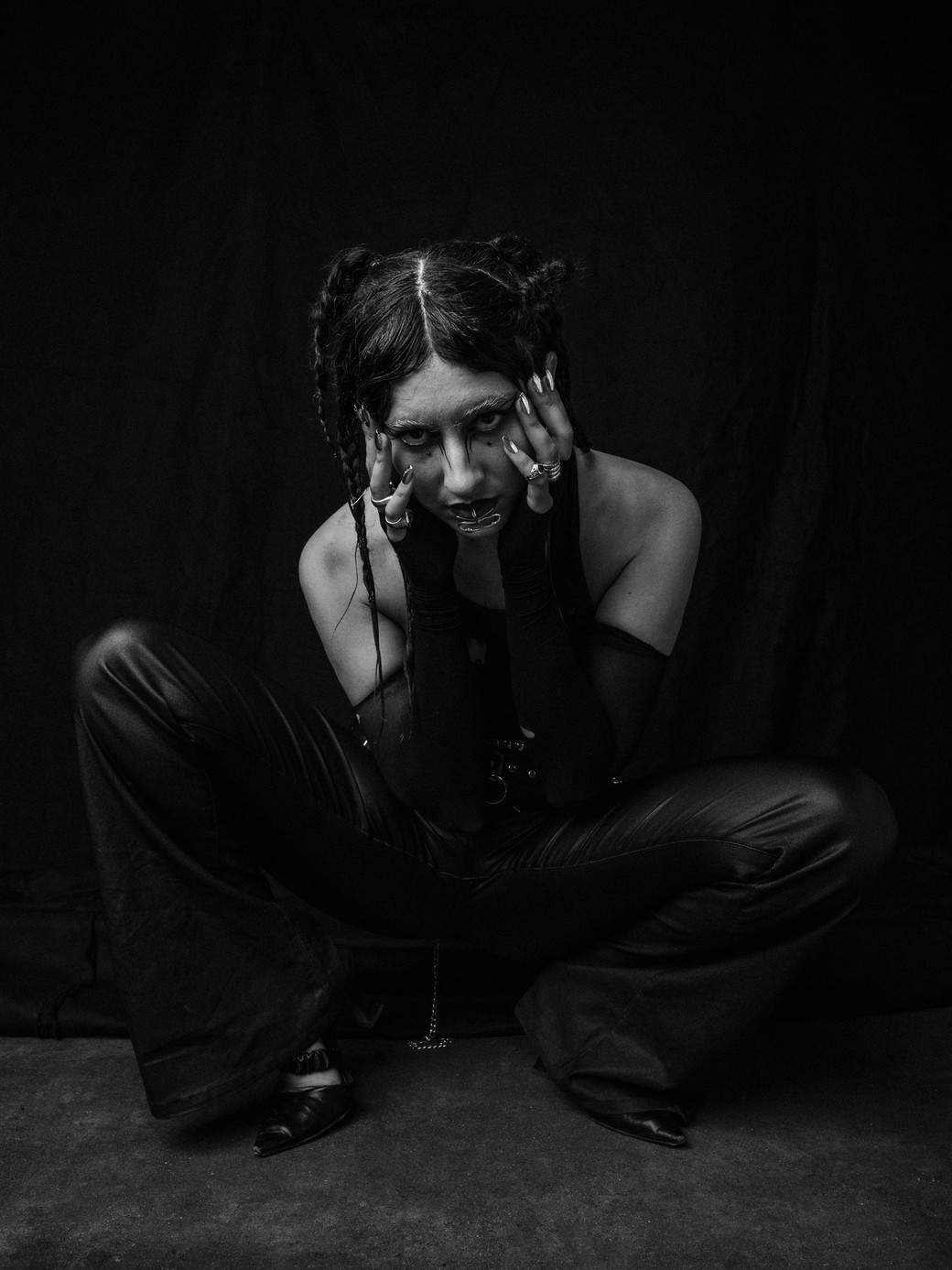
What inspired the cover art? It’s a very jarring image of you, very drastic, dramatic makeup —
Are you talking about the wings ripped out or the face?
The face.
Well, it’s from the video I did for "Morning Star," where I’m Lucifer, but, for me, it also represents going through experiences in life that take your soul into hell. And you come out on the other end of the experience kind of crooked, or a little bit off and a little not right in the head. Coming out on the other end as a Joker type character.
I changed Lucifer into this Joker, this androgynous character called Ashkar, who’s just like this menacing scapegoat. I kind of do things before I realize what I’m fully doing, so I’m still uncovering what it means to me. But it’s been a funny response; People are like, What the fuck is this?
And then the back is just me as Lucifer or Ashkar with my wings ripped out. I’m stuck on Planet Earth and I have the cigarette, ‘cause I’m just, like, Fuck it. But, I'm still figuring out what it means.
What can people look forward to seeing from you?
I have a few shows in Oakland, New York, and L.A. Just performing the new songs live. We haven’t performed in a few years, so I think everyone will be really excited to gather together and get out some expression and emotion. Connecting again.
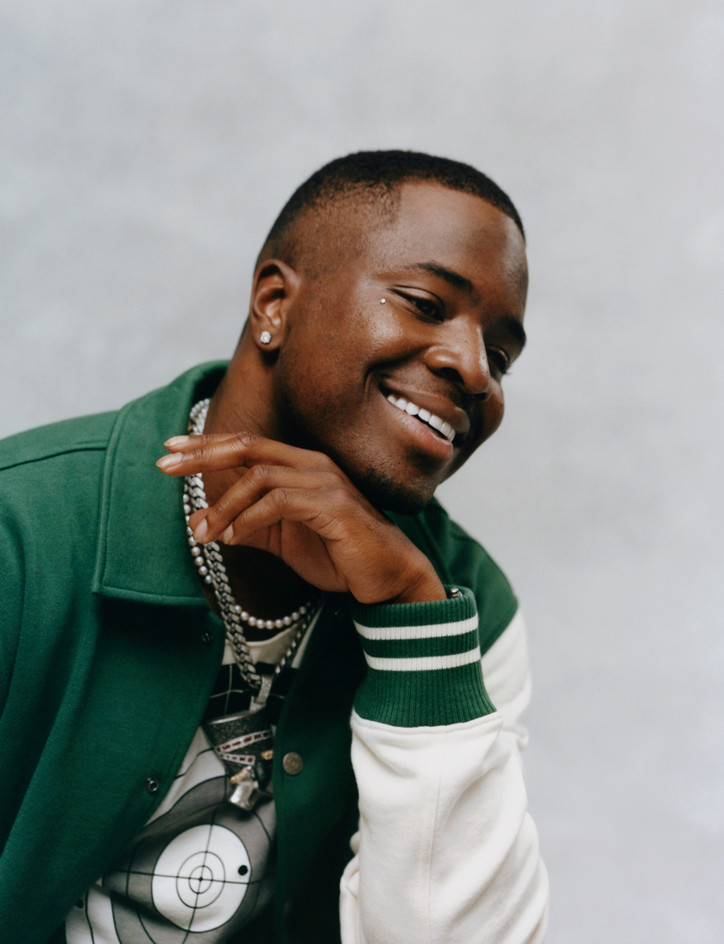
The seventeen-track album speaks to the artist's formidable craft and genre meshing abilities — spanning hip hop, experimental, and R&B, with a carefully curated list of features including Young Thug, Offset, The Neptunes, Rico Nasty, MF DOOM, and others to exemplify his incredible sound and progression.
The album details the complexities of love and wanting to be affirmed, heard, and understood. In an effort to heal his inner childhood wounds, the artist unveils an environment that limits his vulnerability and showcases his versatility through visceral lyricism and raw emotion — proving that IDK is out to make music that’s reflective of generations from the past, present, and future.
After digesting this multilayered project, office sat down with the artist with natural musical ability to discuss his process, growing up, and traditional masculinity.


IDK wears an Acne Studios jacket, Angelo Numa pants, and Celine shoes.
How did the music you grew up listening to shape your ear and curate your palette? What were some of the most life-changing memories listening to music?
Some of the most life-changing memories for me in music had to be, I say, when I started listening to the Jackson 5. That was my first CD, my mom had it. I think she bought it for me, actually, and I had a CD player. And I put it in there, and that was the only CD that I really had. So I started off with "ABCs," and "I Want You Back." But then after a while, you get tired of those same songs, you start to explore the entire album. And by a certain time, within a few months, I knew every lyric on every song of the album. And that was literally the first time I ever had control of the music that I listened to because before that it was just whatever came on the radio or MTV, BET, or whatever my mom would play, my mom and stepfather.
How did listening to the Jackson 5 curate the palette that you have now?
I think melodically, it would put me in a place where I wasn't afraid to explore. I think I probably like R&B and singing more than I do even rap. I know I listened to it more than I listen to rap. And I think that comes from the foundation of the Jackson 5, and things like that.
And was that the first album you ever fell in love with?
That was probably the first, yeah.
On this newest album, you have a crazy roster of names on your album. From the Neptunes, to Rico Nasty, and MF DOOM — what qualities and traits do you think you hold that make people want to listen to you and want to sign on to a track with you?
I think my ability to be diverse. I want to say I'm almost like a rap chameleon. It's like, I can kind of do any type of style, but still throw my sauce in it that kind of brings it back to who I am. I think everyone that makes music — it's important that if you do different genres or sub-genres, it's important that you have consistency in your voice and the things that you may say. And I think I keep that at a certain place for the most part.
And you were born in the UK, but you were raised in Maryland?
Yes.
Is there a way that you're tying those two sounds together?
Not purposely, but I do love UK radio. Man, their stuff is so amazing Their taste in music over there is impeccable. And I think that gives me a vibe. I think when I make "Radio Clue," I feel like that's the closest I can get to what they do over there, but still kind of even more weird than what's normal.
So are we going to hear like a Grimes track from you?
Probably. I mean, I would love to work with Skepta, and whatever that is, is what I would do.

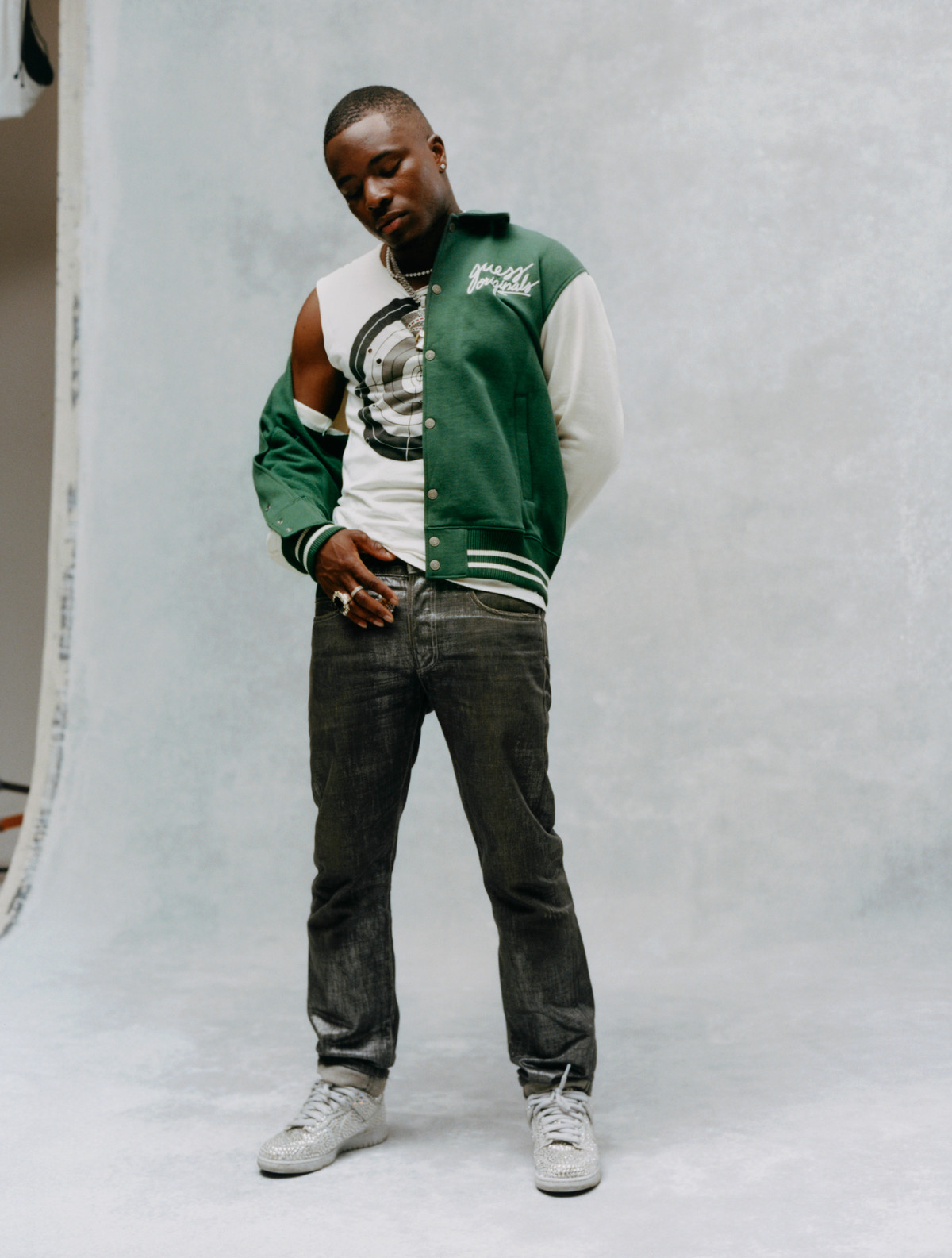

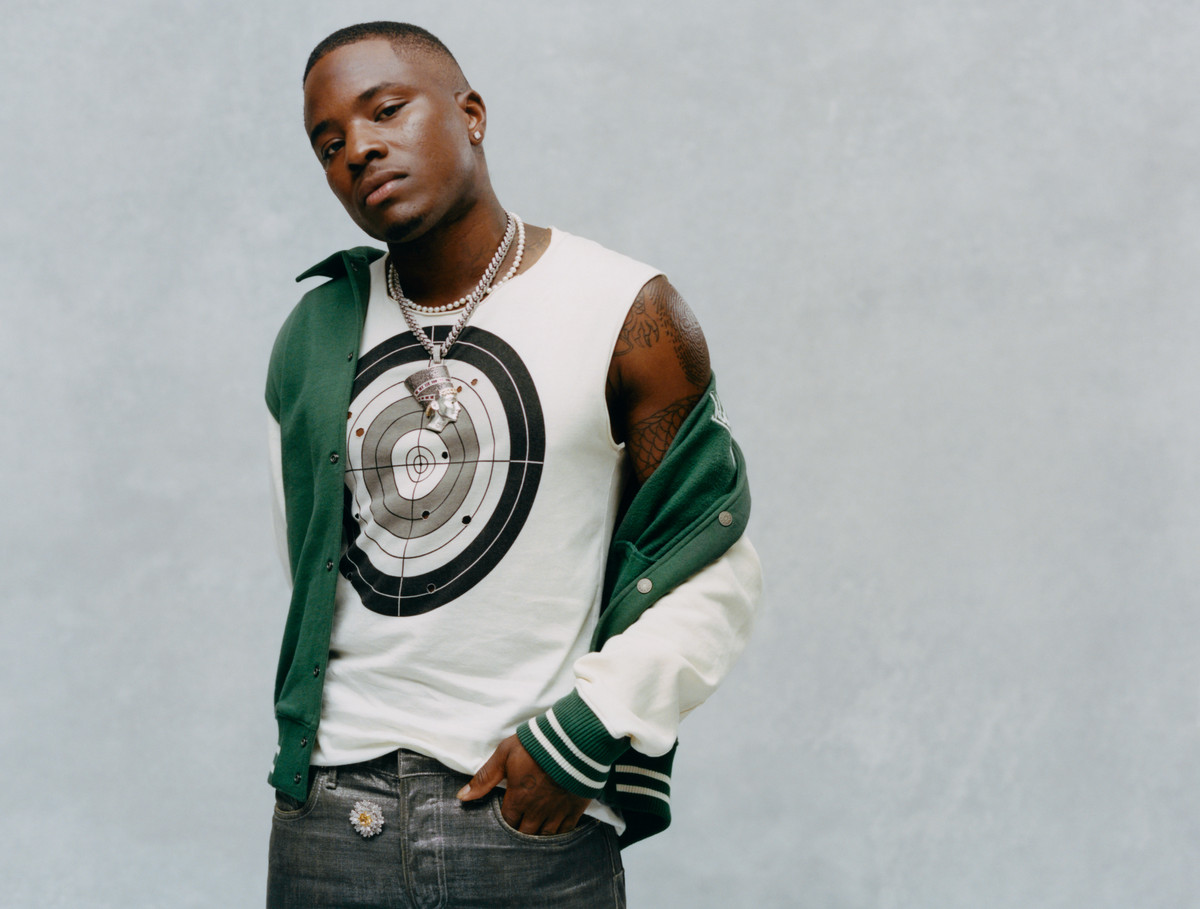
IDK wears a GUESS Varsity Jacket, a Margiela Shirt from Yourfashionarchive, Dior Homme Jeans from Yourfashionarchive, and Nike Dunks.
And the same thing, your parents are from West Africa. I believe your mother's from Ghana and your father's from Sierra Leone — so do you ever like seek out like Afrobeat inspiration from them or...?
Oh yeah. No, not from them, but just in general. I was going to go in the studio with Burna' yesterday. I have two songs with him, one already out, one that I just did. I love Afrobeat. I had my phases where that's all I listened to. So people like Fela Kuti, and even his son, Seun Kuti, they are people who basically are the foundation of what I like in Afrobeats. And then it kind of goes more into Afro-pop and fusion, and all those other genres, sub-genres.
Right. I love Nigerian jazz specifically. Have you ever listened to that by chance?
No, I haven't, not specifically jazz, but disco. Yes.
Oh yeah, of course. I'm assuming the title of your album, 'USEE4YOURSELF' is a sonic representation of you trying to prove what you can do in terms of music, culture, and improvement within yourself, etc. Do you feel like you're discredited or put in a box ever?
No. I think that I'm breaking the boundaries of what a box should be. Especially with this album. I think that people don't know what to expect from me, and I like that. I know some people like that in music. With me, I'm more for the people who like to be surprised. I try to create music in a way where I take the pieces from the things that you like, and you create your own vibe of who I am based off of who you are.
How often do you sacrifice the events that happen to you in your personal life to come across as honest in your music, is that ever therapeutic for you?
It's therapy. It's therapy. It's therapeutic. It's closure. It's understanding. I don't make music expecting the world to hear it. Because I make so much music that no one ever gets heard. And even when I put out music, it doesn't mean everyone's going to hear it, you know? So I just do what I do. And if I like it enough, I just put it out. If people like it enough— if I like it enough, it feels right. That's how I move, in general.
You talk quickly about breaking the norms of traditional masculinity. In some senses, people would obviously critique that — considering what you exemplify in your music videos or music, is not the most modern form of breaking traditional masculinity. So what does that mean to you to exactly to break traditional forms of masculinity?
I don't think my job is really breaking traditional masculinity. It's more finding how to understand the negative effects of masculinity within me, and then make my music based off of what I feel, and let the world see what they see and gain what they gain from it. I think when I say whatever I say in my music, it's a representation of who I am. I think that the difference and the part that's positive is the awareness, and then the understanding. And when I put that awareness and understanding to the music, that is really how I feel or have felt. Then, with that understanding becomes change, that brings change. And that's what I think I do.
But it's not intentional. It's very slightly intentional, if that makes sense. It's like, I know that it's important for people to start thinking in the way that I'm thinking, but it doesn't mean it's correct, or definitely the right way to do it. Do you know what I mean? It's just more like, I feel like I'm becoming a better person by understanding certain things. And then I project that to the world and let them kind of receive it the way that they receive it. But I want to elaborate on what you mean by non-traditional ways.
In some ways, when people read "IDK is breaking the norms of traditional masculinity," but then they see those same archetypes and tropes of traditional and toxic masculinity portrayed, it kind of contradicting in a way.
I don't think so. I think that's the problem with people. I think people think that to bring change the best way possible, you have to be of what needs to be changed. I think that the people that appear perfect and opposite of, or when they have an abstract way of thinking of something, they can change a small group of people who also can think in an abstract manner. But they can't change the people who don't think that way because they can't relate. Right? Like for instance, I grew up in an area that's terrible. It's the hood. It's a lot of things going on there. White teachers came to my classes and said, "Hey, stay in school, go to college. These are the things you should do." I don't care. Like, you're not me. I don't live the life you live. What you're talking about is unrealistic to me. I'll just listen to my friends and the people that I grew up around. But when a drug dealer or a former drug dealer comes and says "Yeah, I used to do this. I used to do that, all that stuff you're doing, I was the same way. But I'm seeing things this way now. And I'm not perfect, but I'm still changing." That's who I'm listening to.
So for me, I think that it's important to be real. All this like trying to be politically correct and perfect— No. I say things that could be misogynistic or considered misogynistic in my music, but guess what? The important part is what I said earlier —the awareness. Because with that awareness brings an ability to actually change, but it also can change the people who are the same way. Again, I can change certain people who are woke, who can think in the abstract, but the majority of the people are just going to feel a disconnect. And that's why I just keep it real. I just keep it real.
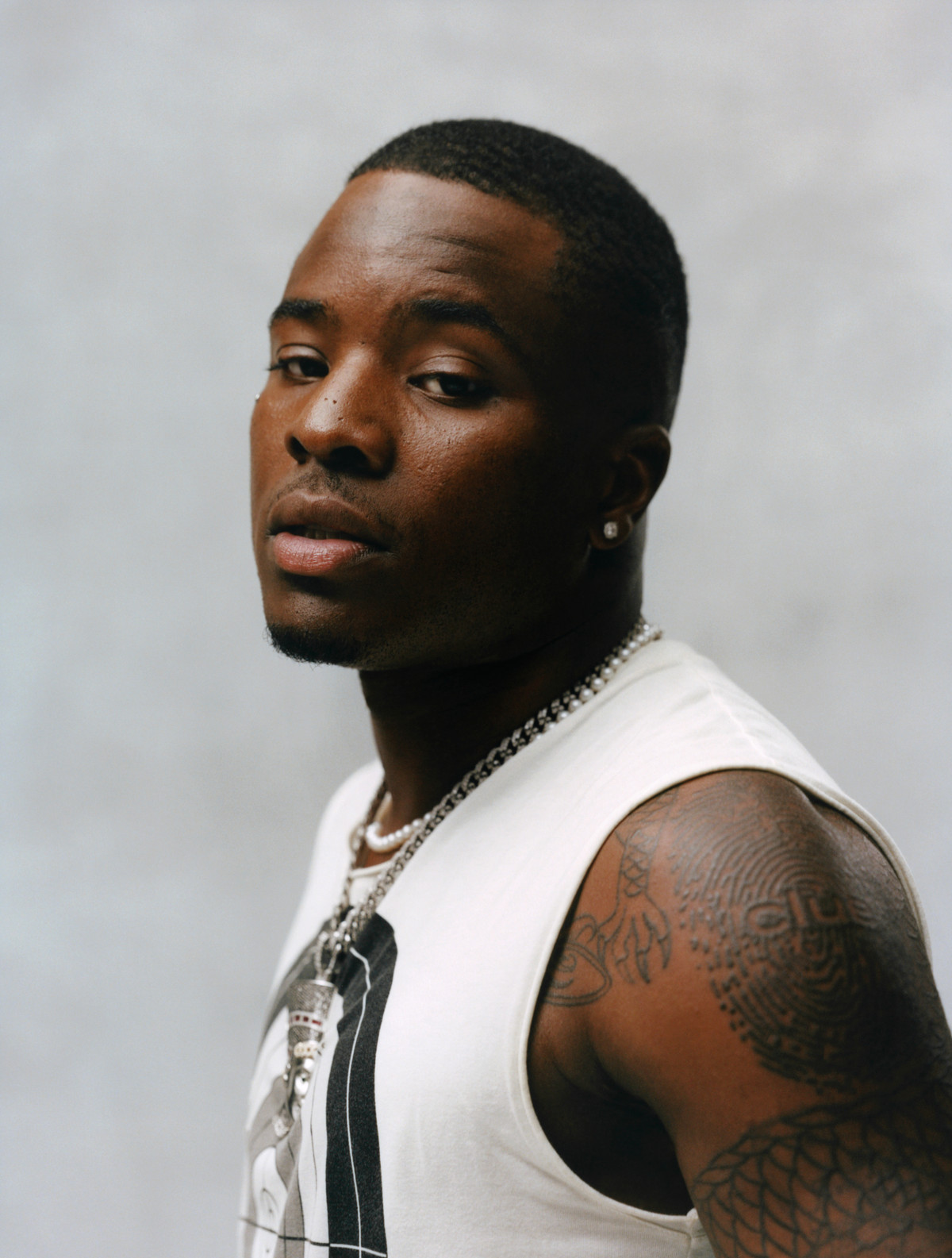
And to me, breaking those boundaries, in terms of masculinity, it's not only providing for others, but the ability to be vulnerable with yourself, take accountability, and actively working on your mental health. How are you exemplifying that?
Well, I started seeing a therapist who actually told me that he doesn't think I need to see him very often because he felt like in one session, he said to give it three more sessions to double-check, but he felt like in one session, he realized that I have a level of consciousness and a grasp on my being that he doesn't come across often. But outside of that, I'm looking at it like 'hey, anything can change, I've been through a lot of things. I'm doing a lot. I'm extremely busy. I'm more busy than the average human.' And yes, I'm an artist, and artists are busy, but I'm even more busy than the average artist because I'm not just doing the music, you know? And so I think I'm scratching the surface of something a little bit new. Whereas most people are scratching the surface of something that's also new, which is just fame in general. I think I'm taking it another layer deeper. And I think that it's going to affect my mental health if I don't know how to deal with it.
So for me, I'm trying to see him before things happen, not when things are happening, if that makes sense. Being proactive. So yeah, seeing a therapist is one of the things for sure. And then also awareness, man. Just talking to people, seeing people's minds, like understanding what they're thinking about, what they care about, or what they want. And then really soaking that in, understanding human beings, and understanding that life is simple. We are the ones that make this thing difficult. Everything, every problem that comes, there's a simple way to solve it, but we make everything difficult. And I think understanding that and truly understanding that helps a lot.
At the fitting, we talked about emotional intelligence, and I feel like maybe those two things go hand in hand, but can you explain briefly why actively practicing emotional intelligence is important to you?
I think practicing emotional intelligence is mainly important because we just don't get that, man. We, as in Black people. I just found out what the word "emotional intelligence" means. I'd never even heard that word two years ago. You know what I'm saying? We're talking about building black families, reproducing, enhancing, and strengthening the dynamic of a black home, but we don't have the emotional intelligence to even begin to start that healing process. I think it's very important for us, and for me, and I had to learn that by understanding the simplification of life, like understanding how to simplify the way we think of things. And that is probably the first big step to gaining emotional intelligence.
But it's important for us, man. It's probably the number one thing, if we're talking about the dynamic of the homes, because once the dynamic of the home is cleaned up, then the dynamic of the child's life coming out of that home starts to improve. And then when that starts to improve, society starts to improve. And when society starts to improve, it all repeats it. It's so important for us right now to do that. It's so important. It's like the number one thing, to be honest, because it's not about us. It's about our kids. Right now, we're not going to fix these things in our lifetime. We're going to start the change that's needed for it to happen possibly in the next lifetime. And if not the next one, if we start now, if not the next one, definitely the one after that. Emotional intelligence is everything.
Right. When speaking about things like emotional intelligence, or just modern takes on building black homes or the black family dynamic, Black children are often the odd one out. So when they're speaking about things, you can seem crazy, or like the black sheep of the family. Is that also how you grew up?
No, I didn't. I followed my friends more than my parents, and then my parents were second. I didn't learn until I started moving and traveling to places that were more diverse. Where I'm from it's just black people. My school had maybe five white people. It was just black people everywhere. You barely see white people. When I started going to New York and LA, I started seeing other people, and I started meeting people with different ways of thinking. And then I came back to where I'm from. And then I started being able to educate.
That is really what it all boils down to. Like I had to kind of leave to start seeing that. I didn't see that before. I just copied what was taught. I wasn't a black sheep because my friends were the same. Like I was the black sheep in the sense of getting in trouble, having guns. My family didn't have guns, my family never been in jail before. I was the first one. But I wasn't a black sheep in terms of trying to change toxic thought processes. It just was more like, whatever. I wasn't bringing anything positive to the table, if that makes sense.
I kind of want to bring it back to the music though, because you are coming up with the album, which is exciting. So to talk about your process a little bit more, when you're first making a song, do you start with the beat, the lyrics, or the chords, or the melody? You seem like a very like melodic rapper. So what inspires you to experiment with those different sounds?
I think that beat, yeah, definitely inspires me. It's always the instrumental, the more left the instrumental is, the more left what I'm going to do is. Or sometimes I find that balance of— let's say the instrumental's left, but I rap some just regular street shit on it. I just do that too. Finding that balance is also cool. But the beat dictates what I do, always. It just starts with the beat. Then it comes to the melody, and then I think about the lyrics.
What was it like working with the Neptunes and what was that process was in the studio?
Yeah, man. I was in the studio with them. I didn't know it was a Neptunes session. Pharrell was like "come" and I was like 'fuck it, man. I'm coming!"
I pulled up and Chad was there. I was like, "Oh, this is what we doing?" Okay. I got it. Shit, I'm not complaining. From there, we just cooked, man. Made four songs in one day. And I was supposed to come back the next day. But Pusha T was coming in. And he was like, "Yo, we getting in tomorrow?" Like, "if you say it, then yeah, I'll push my flight back."
He had another session that he didn't realize. We didn't get to do it again. But man, that was the best day of my life, man, musically. I've always wanted that. Pharrell's my favorite producer. I was like "Yo, I don't want to drop this album unless I have a beat from Pharrell" Like I need that. And I got lucky and got Neptunes. And they're killing it, that Brent Faiyaz shit. Man, that shit is hard, man. Reminds me of "you don't have to call, it's okay girl."
When you think about it, it's similar to that. So I'm so glad I did go on that thing and I'm so glad that I lucky enough to have a beat from them. And I was playing it for 'Ferg one day, and Ferg was like, "Bruh, he gave you a 'It's Hot In Here' record, bruh."
Did you get an iconic Pharrell speech that he usually does?
Hell yeah. Yeah, it's on camera. Yes, I did.

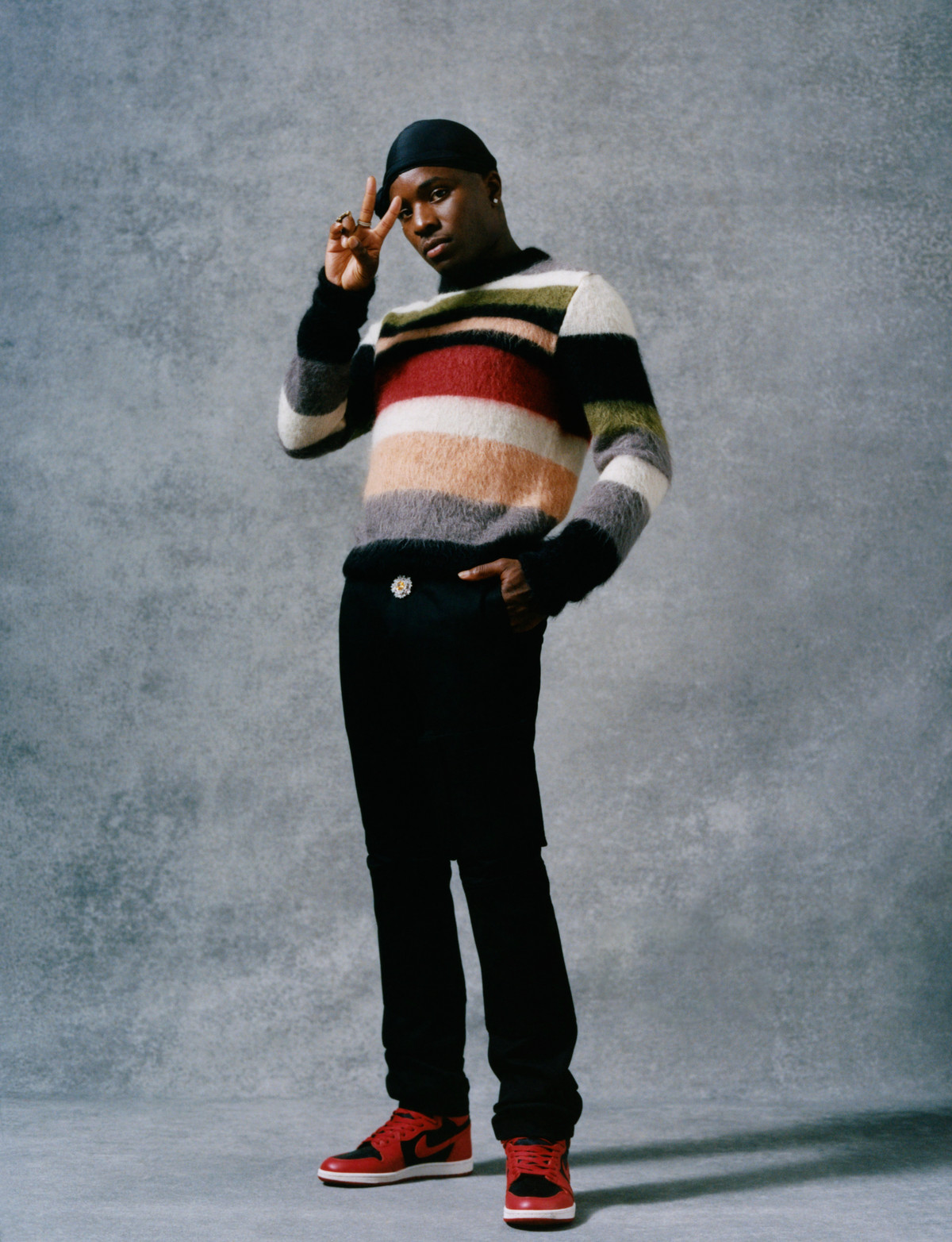
IDK wears a Saint Laurent sweater, Raf Simons pants, and Nike Air Jordans.
MF Doom is also on this album. What was that process like and what is a great memory you have of him before his passing?
Yeah, no. He basically did that a while back and cleared it before he passed, which, I mean, it was amazing. It was amazing that we were able to get that rocking like that. It was amazing. Like, I really, really, really, really am surprised that he did that for me. You know?
And when do you know a song is finished? Do you ever know, or is this something that you are gradually beating yourself up about?
I don't beat myself up about nothing that has to do with music because I'm blessed to be able to do this as my career. Nothing's ever finished. It just kind of ends up in a place where it's dope. It's dope or it ain't dope. You know what I mean? And then you just put it out or you don't put it out. I could think of many more things I could do to almost every song on this album, but it's less about that. It gets to a point where you're like, I don't want to fuck— Okay. A song is done when you're like, 'I don't want to fuck this up.' That's when it's done. A song is done when it gets to the point where you're like, 'all right, this is where it is. I don't want to fuck this up. I don't want to overthink this.' That's for me at least.
Where does your spark come from when it comes to doing initiatives and giving back to the culture?
Yeah, man, I feel like it's my duty again. I'm blessed. I have two homes. I was just in my house in DC. Beautiful, man. It's so nice. Oh, man. I love to see it. I decorated it myself. And the way I decorated it, it's just so me. And I get to go home and see that. And then I'm like, 'Oh, I don't feel like being on the East Coast. I might go to the West Coast.' I was at my album listening party yesterday— packed, full capacity. People couldn't get in. And my rep at Nike came up to me, he was like, "Hey, I know you're really, really busy and everything, but we have to get your approval on the shoe design tomorrow." And I'm like "I got you. No problem." That's my life, bruh! You know what I'm saying? Like what the fuck? Like my stress is getting a shoe design in on time. I'm fucking on a billboard. I'm designing my own jeans. It's my duty to give back. I can't fucking be out here doing all these amazing things and then complaining about it. And that energy that people take to complain about their amazing fucking lives, they could use that energy to help someone who has none of those things.
Man, I was giving out sneakers they sent me. I had shitload pairs of Supreme Air Dunks, right? The green ones. They're $1,500 on Stock X each. I was giving them out. I got them for free. I was giving them out to people in my neighborhood and they're like so ecstatic. They're like so happy. That didn't do nothing, it didn't cost me nothing to do that. But it changed the way somebody's life— like how they think about life. Understanding that there's a way to obtain this level of status, and then maybe they do the positive things to become that person that can get these things. And then give that to other people. That is so fulfilling to me. What I do with my music and shit, that shit's dope. My life I think is amazing. But, to be able to come back and do something that costs me nothing, but it's everything to somebody, I don't know what feels better than that. You know what I mean?
So that's kind of where it comes from. And I think it's my duty. I think it's every artist's duty. They can see how they want to see it, but it's every artist's duty to show gratitude for what they have. Anyone who's successful, honestly, should show gratitude for what they have, and you know, within their means, give back the best way they can.
Hypothetically, we're all living in IDK's world. What does it look like? What are the rules? Can you paint a picture of it?
I say, it's a poem. I live in a world where the skies are yellow, like the eyes of the malnourished. And basically, it's a representation of no matter how perfect things can seem, something's just never like completely right. Something's always off, and that sky is what's off. But it's okay that it's off because that's the part that makes you start to think deep, and makes you start to realize like, okay, I can't be fully comfortable. Whatever that thing is 'let me try to fix that. Let me try to figure that out.' Maybe it's just inspiration to do things differently.
Maybe that's off. But this world is full of lady durags tied to the side, diamonds in my face. And I might wear a tuxedo with Jordan's. Mixing 90% or 80% masculine energy, in terms of the way that I dress, with 20% feminine energy, when you see my pearls, or when you see this diamond in my face, or this lady durag, or the Louis Vuitton brooch— That's the world. It's a bunch of things that feel like they don't make sense together, but I make that shit look good. That's what I feel like that world is in. And it's full of people who either accept that or want to reach that level, or just admire it. That's what this world is.