MIRRORS


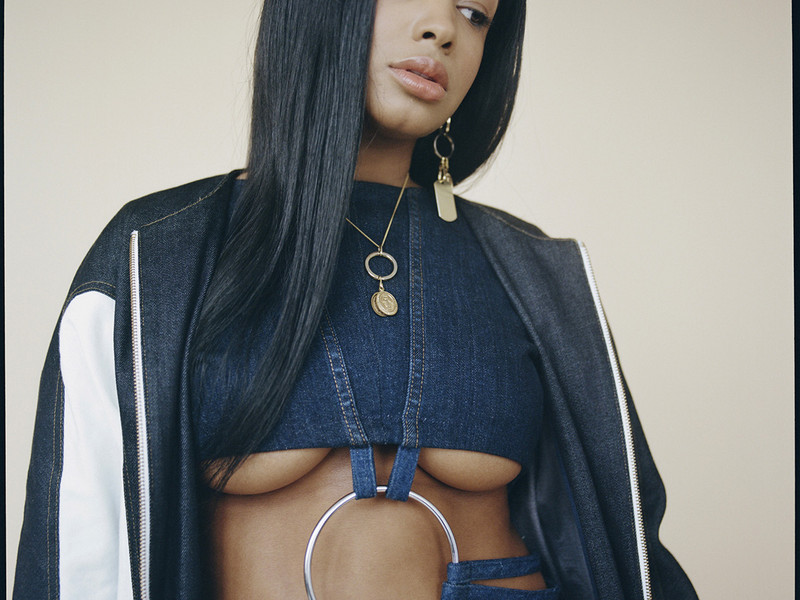
The viral rapper, whose real name is Suzanne, is a clear product of her environment. "Sleepin' on these cold floors made a bitch cold," she raps in "Next Level." Her storied upbringing, which includes being incarcerated for the better part of her teenage years, informs her raps and her unique perspective when compared to other MCs in the game.
After her song "Runway" blew up on Tik Tok in the early days of 2019—before "trends" on Tik Tok were a thing, mind you—Stunna Girl has been on a steady pursuit to prove herself. Her latest EP, STUNNA THIS STUNNA THAT, is the first of those pursuits. And she's just getting started.
We sat down with Stunna Girl to talk high school, Hannah Montana, and inspiration.
For those who don’t know you, who are you? Where do you come from? What do you do?
I’m Stunna Girl. I’m 22, from Sacramento, California. I rap and I sing.
How did you first get into rapping?
I first got into rapping, honestly, when I was eight. My dad had a studio closet, and he told me to record. I was already singing for my family and stuff. But ever since that one day, I always knew how to rap. It’s kinda weird. He showed me the recording process, and how to do my ad libs. I just never forgot it. So that one studio session stuck with me.
So you just all of a sudden knew how to rap?
I was already harmonizing. Well, I knew how to argue real good. It’s just funny. When I was younger, I had a smart mouth but I was arguing with everybody at my house. So they were like, “Just say all the stuff you normally be saying! Just talk!”
So it was just a different outlet.
Yeah. I went from singing to just talking, saying what I wanted to say.


What were you like in high school? Were you into the arts? You said you liked to argue, did you do debate or anything like that?
Honestly, for my high school, I was actually incarcerated. I did 9th grade, but after that I was incarcerated until I was 17.
What was that experience like?
At first, I didn’t understand it. I knew I was always getting in trouble, so eventually I was gonna be there, but I think that experience just got me down. It just really matured me and opened my eyes to a lot of stuff. It actually made me want to get out and be focused. I think if I was out, I would've been way into some deeper stuff. That time was a time for me to realize and think about my life. Stuff like that.
That’s super interesting. I feel like those ages—what, 14 to 17?—it’s such a formative time.
Yeah for sure.
Who did you look up to in your early teens? Both musically and just in general?
Well, I was named after the singer Sade. I always looked up to her. I thought she was so cool. So that was musically. And I would actually say my mom. She was really strong as a person. There were seven of us, and she wasn’t raising us off of government assistance—just strictly off the hustle. I always appreciated her for that.
I feel like you’re known for your rap stylings. It’s very in your face. In your own words, how would you say what you do is different from your peers? How is your music bringing something new to the table?
Well, firstly, I’m able to tell stories and talk about experiences that are unique to me. They actually relate to a lot of people. In the game, so far, it ain’t nobody that’s talking from my standpoint. For instance, you have some that rap about stripping, some that rap about boys and love. I rap about everything, and I can get into details about real life situations that nobody really talks about. So I feel like with that alone, it’s different.
Secondly, my voice is already different. Even my ad libs and everything, I’m just unique. I feel like those are the main two things.

How do you approach writing music? You said it comes pretty naturally, but do you have any specific processes or rituals in the studio?
Well, I’m able to do two things. I’m able to freestyle—listen to the beat, then go in and punch in what I gotta say. And I’m also able to take notes. For instance, if I’m at home or something, a melody will just come into my head and I’ll put it on my voice recorder so I don’t forget it. It’s like music is in my head all day, literally. It’s weird. Melodies are always coming to me, and stuff I wanna say.
Is there anything in particular you’re inspired by right now? Any TV shows or other forms of media?
I’ve always been in my own head. I don't really watch TV. Honestly, what motivates and inspires me is my little brother. I just be watching him. He just inspires me a lot because I’ve seen him grow into the person he’s becoming. He’s the one putting me onto new music and stuff. He inspires me a lot because he’s strong.
You talked about Sade, but who else did you listen to growing up?
I listened to a lot of R&B. I was really into old school music because that’s all my mom played. I liked Mary J Blige. It’s crazy cause my music is totally opposite from her, but that’s who I like.
Yeah, your speaking voice and your demeanor seems more shy than your rap persona. Is that something people tell you all the time?
Yeah, they always say, “We’ve never seen this other side of her! She gets all crazy and stuff and has this savage street side, but you have this warm, cuddly side of you that nobody knows.” But yeah, a lot of people don’t know that about me.
Do you listen to anything that would be surprising to your fans? Any weird indie music or classical stuff?
I actually be liking pop music sometimes. I like a few Hannah Montana songs. I like “Party in the USA” a lot. I don’t be remembering the dang names of the songs. But yeah.
Hannah Montana had bops.
Yeah, she sure did.
Tell me about your new EP.
Basically, I had a tape done three days after I was signed. And I was waiting on the tape to be released. I didn’t understand the business side of music. I was used to, like, oh, let’s just drop it. So I started learning, oh I have to get this cleared, there’s a sample in this, this takes thirty days, stuff like that. So my fans were looking at me like, girl, what is going on? And I was like, I’m learning this like y’all! So I wanted to show them that, basically, I could pop back into my savage mode like how I started. So I did another few sessions and was done with the next tape. It was really raw and uncut. I wasn’t overthinking anything. That’s what this tape is.
What would you say is the main thing you’ve been realizing about going from being independent to being signed to a major label?
I pretty much noticed that everything requires extra approval. Like, with the beat samples and stuff. It’s just more of a bigger thing. When you’re independent, you don’t know all that stuff. Being signed, they want to give me every detail and make sure I’m straight. Ain’t no loopholes. They just make sure everything’s gonna go down good.
How much live performing did you do before quarantine hit?
I did a lot of it—school appearances, all types of stuff. I was really active. When COVID hit, I stopped accepting stuff like that for a minute. But I’m about to start back up because I’m moving back to LA, so I’ll be more active again.
Do you like East Coast or West Coast better?
Definitely West Coast. But I actually have been doing some club appearances on the East Coast, just random club appearances. But I definitely like West Coast better. The weather is way better.
How did quarantine affect you most?
They were gonna put me on a promotional tour, and I didn’t get to go on that. So I feel like that is an experience that got taken from me. I don’t know, I’m pretty much a home body, so that part didn’t affect me. I don’t like to see other people in big groups like that, so that was fine for me.
I remember that “Runway” was pretty big on Tik Tok. What are your thoughts on the app and how it influences the music industry?
I feel like my song was one of the first songs that actually went viral, so it showed everybody what Tik Tok was. When it went viral on there, I didn’t even know what it was, but I saw the power it had. I remember a lot of people were actually making fun of Tik Tok. A lot of people had something to say about it. It’s crazy because when COVID hit, now everybody is all about Tik Tok. I’m like, all these people had all this stuff to say about me, but I didn’t even start the “Runway” challenge! I didn’t even put my song on Tik Tok. It showed people that this is actually another route for music. So it was all good from then.
Yeah, it really was one of the first viral trends.
Definitely. So I see the good and bad side of it.
Now, Tik Tok is the first thing people think about.
Yeah, they do. When I was making the song, I wasn’t like, ‘Is this gonna be good on Tik Tok?’ Now a lot of artists I be around be like, “Oh, they’ll definitely love this on Tik Tok, it can become a Tik Tok dance!” I didn’t think about any of that.
What’s your favorite lyric you’ve written?
Honestly, when I said, “Sleepin’ on these cold floors made a bitch cold,” that was like a metaphor for my life, when I said that bar. So imma stick to that one. If you know, you know.
Are you working on anything right now? What’s in the works?
Currently, I’m finishing up the videos for this last tape. I’m doing the visuals for the tape that already dropped. And then, the next tape is in the works.
Anything else you wanna say to the world and to your fans?
I just wanna tell all my fans that I appreciate them, I love them for holding a real one down, you feel me? And yeah. Follow my Instagram, go listen to my new tape and tell me what y’all think.

Check out our exclusive interview with the Head Cheerleader, frontman Mia Berrin below.
While making music can be therapeutic, how did you reconcile with yourself that making music isn’t the same as therapy when writing “Crying”?
I mean, I think there's a lot of myths about mental health and art. I grew up always hearing artists are tortured and every great artist had some kind of mental illness. For a long time, I just internalized this idea that making art or making music was how you took care of your mental illness and exorcise that demon. As I started to learn more about mental health, therapy, and medication, and all of the things that are actual self-care in a more tangible way. I remember I was really scared of taking medication because the other thing you always hear is it kills your creativity and it changes who you are, how you behave.
I've found that being medicated and taking care of myself properly is actually what helps me make the things that I make even better because I have the energy to do it. Something about "Crying" was getting to take that idea on, but coming at it with a sense of humor and coming at it from a sort of melodramatic, ironic perspective.
The director of the “Crying” video says it’s “a love letter to the all-consuming act of crying, as well as a confrontation with isolation." Would you say when you weren’t confronting your depression that isolation crept in?
I mean, I think when you're trapped in your head like that you have the kind of anxiety that makes it hard to connect with other people because I'm so caught behind what's going on here that no information can get out to connect with another human being, you know? I think it's extremely isolating. I think when you don't have enough energy for yourself it's hard to maintain relationships or have enough energy for other people.
So, now that COVID restrictions are lifting a bit, can you tell us a little bit about what you have planned for live performances? I'm sure you miss it.
Yeah, I definitely miss it. Performing has been such a big part of my identity for the past, like five, six years since I started playing in the band. I thought it was a huge shift in lifestyle. It was just like a shift in everything, obviously. It's super weird, I think, also being right on the edge of all these opportunities and going to travel and going on tour, kind of just like a punch in the face a little bit. But yeah, we're planning on touring with a band called Bully in August, and then we're going on tour with a band called Nada Surf later in the year. Just super, super exciting. That's the plan right now.
What was it about Film Noirs and the 50s/60s aesthetic that resonated with you enough to want to emulate them in your music video for “Crying”?
I mean, I think the thing that appealed to me about that aesthetic is the 50s and 60s, I think, for a lot of people for some reason it’s like an idealized time or it's kind of looked at us like the heteronormative, the heterosexual, “Oh, all the nice American neighborhoods and nice whatever.” It's creepy, the idea of that kind of idealized society pushing out any other social or cultural problems, you know, and just kind of taking what you find pretty about it. I don't know. I liked the idea of exploiting the creepiness of that aesthetic. I was thinking a lot about like David Lynch and suburbia and just queering these like idealized worlds or these sort of prim, proper perfect landscapes and replacing them with my body and my music and, you know, inserting that perspective.
That's really cool. Do you feel like you're becoming the pop culture icon that you wanted to connect with when you were younger?
Yeah, I think so. I think, you know, speaking of like feeling isolated, it's like I went to school, not in the south, but in the semi-south and, growing up, especially in predominantly white communities, my mom and my sister and I all got treated in a way that was my first introduction to my first light bulb of, "Huh, we're different than other people; we're marginalized." You grow up in pop culture and you're kind of looking for yourself in anything. I feel like I couldn't see a life for a gay girl of color who liked rock music. There's no model for that. So when I found Riot Girl punk, it was really meaningful to me, in that it was the first time I saw women making music or women being angry, but Riot Girl severely failed women of color.
It was all these white women making zines about how secretly racist they were and how guilty they felt about how severely racist they were. I definitely needed to see someone who had a different perspective and was coming at it from a different place. Someone who could talk about feminism, racism, homophobia, candidly and progressively. I want to be able to be that person. I resent the idea that every artist of color has to be the perfect representation of all people of color or that I have to be a mouthpiece for any kind of social or political anything. But I think one, I can't shut my mouth, so that's part of it. And two, I think normalizing that someone like me can make the kind of music I make. Someone like me can dress the way I dress. You can be femme and queer and make punk music and make orchestral arrangements. I think for so long, I've been trying to collage other pieces of media that fit all sides of myself, and now I want to make my own media that incorporates all sides of myself.
You talk about how this single is an unmasking for you, what were you hiding from prior?
I feel like maybe accountability in a way or the way that I behaved being mentally ill. I think I used to sort of feel like everything was happening to me. I was just not a healthy person and when you're hurt, you hurt people. I was just like an emotional tornado and I didn't do anything in particular, but I was definitely hiding from myself, hiding from taking any responsibility for my actions.
So we talked about how you've kind of grown from this aspect of having no control over your emotions or being chaotic emotionally. How have you evolved with the lessons that you've learned down the road, even with Pom Pom Squad, how has the music changed with your own personal evolution?
I think the music has changed in that I've learned to trust myself a lot more. I think I was seeking approval for a lot of the early part of my career and waiting for somebody to tell me that I was good or waiting to be accepted by a certain group of musicians. I was looking to assimilate, I think, more than anything.
I feel like part of my evolution has just been learning to contort myself to a standard less and focus more on what I want and what's meaningful to me. Especially being in quarantine, it forced me to not compare myself to other people simply in that there was nothing to compare to. Like no one else was doing shows at the beginning, people weren't releasing music.
I think especially in New York, the scene being so small, it's just so easy to constantly be looking around, like who's getting what press who's getting what. I feel like one, I got older, two, I got on medication and three, you know, I just stopped looking around so much and realized there's kind of like no objective right or wrong way to be. It's only what I choose to believe, you know, it's all just like objective.
You talked about "Crying" specifically being an act of your ego and you talk about not learning or making mistakes constantly. How have you grown from this? And what steps did you take if there was anybody else that was in the same position as you?
I mean, it's not going to go away. You know what I mean? I think maybe accepting that has helped. I'm never going to be perfect. Like you're never going to not feel jealous. You're never going to not have insecurities or anger or jealousy or whatever. You know, I said jealousy twice, who cares. I think accepting that that exists inside you and accepting what you can take responsibility for and what you can't. I talked a little bit before about my mental health kind of believing like, "Oh, everything was happening to me and every bad thing that happened was happening to me." You know, and instead, being more clear or trying to get more clear in my mind about what can I take responsibility for and what was just me doing what I could with the information that I had at the time. Like what was me doing the best I could and what would I never do again? I think when you're operating on ego, it's like, you're kind of a whirlwind and nothing's going to stop you because ego goes unchecked. So being the quality control of my own head in and becoming self-aware in a positive light.
Even you saying "ego goes unchecked" is really something that resonates. I mean, it goes without saying, but it's kind of just something that feeds you, it kind of keeps going for a while but you have taken the steps to kind of walk away from that and now you're entering your new era. How do you think your new era will change things for Pom Pom Squad and what narratives are there now that there weren't prior to this era?
Something that exists in this era that really didn't before was joy and love and lightness. I think in the past, my music has been really heavy and grounded and angry and grit and, there are still those moments but I feel like even in the moments of anger and the moments of sadness, there's still just more whimsy and more light. I think part of the reason is that I wrote it about a love story. Within that love story was my journey of learning to accept myself as queer and be able to say that out loud, and as corny as it sounds, be proud of that.
So, you're building a world where Pom Pom Squad is the foundation of it. What does it look like? What are the rules and how are you building those rules and that imagery into fruition in your real life?
Another part of the writing of this record, I was so removed from reality. When I was working on the songs, I was also removed from my bandmates, removed from playing shows. So, the kind of world that I created with the music felt kind of like it existed out of any physical space. Like I was making it all on my laptop and I was using instruments that I wouldn't have been able to use or wouldn't have had access to if I was just in my practice space. I came up with the cover image first, which was like, I'm laying under, I'm laying in like a grave under this big fake world with fake sky and fake grass and these giant floral sculptures.
I think kind of in processing my journey with queerness, I realized that at a certain point that I was just not living my own life. Like the life that I had been living before was designed around male attention and heteronormative standards and just like, shit I didn't actually want or relate to. So, when I was kind of thinking of that image and writing the songs around that image, I was really interested in artificial things. I started filling my space around me with fake flowers and fake grass and after kind of manifesting this image, like using it to create my physical space and starting to carve out those textures and make sculptures. Aesthetically, there was a huge shift from what I did before was I played punk shows dressed as a cheerleader, you know what I mean? And that's already interesting in bringing a really femme sort of character into that space that's so traditionally male, like dudes, gritty, ripped t-shirts, safety bins, whatever the kind of like archetype of punk is. I think I went from kind of bringing a female character into a male space to bringing a new, weird world into a heteronormative world.

Rebounder’s suave sound blends in with the emotive landscape of the 80s, providing a synesthetic experience for the listener. The debut single feels nostalgic and allows us to witness an exclusive view of the way Chenfield conceptualizes sound.
At the beginning of the video, Jesse Rutherford, the lead man from The Neighborhood, shares a cameo and verse throughout the track. In each scene, we are served a grit and angst that feels rare in our commercialized world. Collectively, the pair immerse us into a lofty, Summer ambiance, directed by Jimmy Giannopolous.
"I believe Dylan and Noah had started this tune back home in New York, or maybe on the plane ride over. We were writing a bunch together while they were in LA,” Jesse Rutherford said.
“This was probably the 3rd or 4th idea we had worked on. They threw me quite the alley-oop so all I had to do was dunk & score.” He added.