MIRRORS


Most of the album is in Vittar’s native tongue, but she’s made a serious effort to include her Latino and English-speaking listeners. Set to perform at the postponed 2020 Coachella Music Festival, she wants nothing more than to sing with her fans in their native tongues. Interviews like this one make for good practice. Her translator, who kindly waits on the line, ready to step in and help whenever the difficult pronunciation of an /ō/ vowel creeps up, is always welcomed by Vittar’s enthusiasm to learn. “English lessons today!” she exclaims.
Following the sudden leak of 111, and in anticipation of her debut Coachella performance, office spoke with Brazil’s most popular drag queen about San Paolo’s drag culture, her breakout performance, and her idol, RuPaul.
What compelled you to start performing?
I always wanted in my heart to sing and perform. My dream has always been to be on stage, like my icon RuPaul, my diva. She's an icon. She's my queen. I do drag today because of her. When I went into the neighborhood to play with my friends, I would always be a singer and performer. I had always wanted to be a star, like Britney Spears, and do my moves and choreography. I have always had these things in my heart. It's my destiny. I believe so much in this because God has a plan, and his plan for me is to sing, share my message, and make other people happy. To do what I do.
When did you begin calling yourself a drag queen? When did you start taking on that persona?
I took for myself the name Pabllo Vittar on my eighteenth birthday at a halloween party. And since that day, I never changed my name. I’m always recording my demos and albums with it. I'm here!
What attracted you to drag in the first place?
RuPaul's Drag Race. I'm obsessed with this show. I love that drag queens can be singers, can be models, can be whatever she wants to be. I always knew that I was gender fluid, and when I watch the show, I see all the other queens signing and modeling and I'm like, "Oh my god, I do this. I can do this." My eyes were opened, and I met another world.


Can you talk more about your fist performance as a drag queen?
I remember my first performance at a club in my hometown [San Paolo]. It was pretty amazing because all my friends sang with me my own song, written by me. The memory never went out of my head because it was like a dream come true.
When you were first starting out, what were the venues like that you performed at?
When I started performing the clubs had amazing energy. All my friends would go out with me in drag to these small clubs that didn’t have many people.
What’s the drag queen culture like in Brazil?
It's amazing. There are so many drag queens, so many people who are fighting for this message. I feel so grateful to be Brazilian and be part of this culture. It's hard to be LGBTQ in Brazil, but at the same time, I'm still happy because I have my sisters and my brothers, and we are family.
Was it always like that?
When I started to do drag in San Paolo, I didn't do myself up in drag, I didn't call myself drag. I was a young, gay boy. An androgonous guy, trying to be someone. Trying. Only trying.
How would you describe "Pabllo Vittar," your drag persona?
My drag persona really, really embraces the queer message. I always be trying to tell my fans my truth. My drag queen is one-hundred percent brazen and sexy and feminine. I love to be a fashion girl, I love to be a queer figure. Not only just a drag queen.
Who would you say has had the biggest influence on your music?
The biggest influences on my music are actually the new producers right now. Music electronica and Brazilian rhythm, especially. I love Baja, I love Samba, I love Bossa Nova. I love everything that sounds Brazil. I'm so proud to be Brazilian and work with this rhythm.
How'd you go about promoting yourself before you achieved commercial success?
I promoted myself, like everybody, through the internet, on my facebook page and social media. I always posted videos. This way I was able to meet other people, other drag queens. Social media has helped me from these days til now.
You broke onto the world stage when you performed the Whitney Houston classic, "I Have Nothing," on a Brazilian TV show. How'd you get that gig?
It was a small TV show that did a game on the streets. They said, "People, if you can sing, come on and sing for us to show your talent." And I said, "Oh my god I can do that and show my voice to the world." From this day, so many people in my city noticed me.
So your mom raised you and your sisters by herself for many years. Are you close with her?
So much. She always supports me and embraces me. She gives me a lot of love and kindness. My mom is my hero. I owe her everything.
Your mom was a nurse right?
She was, but she doesn't work anymore because I have worked a lot and give her everything she needs. She don't need to work anymore. And I feel so grateful for this! She carried me for so long.
What can drag do for the LGBTQ community in Brazil?
I think it can do so much. I'm a drag queen, and I'm one of the voices that's screaming into the world, "We are here. We need our rights." We fight for this. The drag queens in Brazil have an important role, and I feel so blessed to be one of these voices.
I would say you're probably the voice. What does drag mean for you?
Drag means everything for me. It's my job, it's what I do, It's my passion. I can't imagine my life without drag. In these days, during quarantine, I feel so sad to not be able to do this. Not to be close to my fans. But I'm still hopeful.
You've cited anime and comics as influential to your aesthetic, what is it about a show like Sailor Moon that you want to emulate?
My style is based in anime, video games, and old fashion magazines. I feel so gamer, and I love to introduce this world into my world—I love sailor moon hair. I love all the cute stuff in her clothing. I love to be sexy, but I love to be cute too. Anime represents 100% of that.
Why did you want to incorporate three different languages in your new album?
I wanted my album to be trilingual because I talk to so many people around the world. I love my North American fans, I love my Latino fans. I'm so happy about my first song in english with Charli XCX, "Flash Pose," because this song represents me and my passion. I wanted to make something for my english speaking fans. Now we have a song to sing together at Coachella. And the same with my Spanish fans. This album represents so much of me. Like my Brazilian culture when I work with rhythms like reggaeton. I always wanted to work with the rhythms of Brazil. At the same time, I'm so connected with other rhythms of the world, like trance and house music. I like to mix it up with the songs. And I think it says a lot about me, about my identity and personality. I think my fans will eat it up.
What do you hope for the future?
I expect these days will be gone and we will be born like a Phoenix. I expect beautiful days, festival days, and to drink so much with my friends and my fans! Thank you so much baby! Sorry for my English. I'm learning and trying!

Then there’s the shots of him, legs pushed up behind his head, between Ronald McDonald and Colonel Sanders, and getting head from a cop in front of the Hollywood sign. If you dig deeper still, you’ll see him surfing on a bloody maxi pad, or posing in a typical ‘80s glamour shot, featuring a guy with a mullet in an oversized suit riding on the back of a woman with a perm in a tacky wedding dress. When you look closer, you realize it’s all Tommy Cash.
Tommy first came across my radar three years ago, when a coworker showed me his video for a track called “WINALOTO.” I was working at a magazine, and one day, before our weekly pitch meeting, an editor pulled out her computer and called everyone over. “You’ve gotta see this guy,” she said, smiling. “It’s the best thing I’ve ever seen.” The video opens with the sound of a xylophone, and Tommy, staring blankly in front of a beige background, hitting four thong-clad asses to the simple beat. About 20 seconds in, he starts: “Oh, I think I win a lotto, can you believe me brother?” then half-whispers, “Like, for real.” The next three minutes is a mix of trap, rap and montages of Tommy with a cast of beige-wearing bodies twisting like pretzels. The sheer weirdness—or genius—of the video defies description. As with much of Tommy’s work, you have to see it yourself. Like, for real.
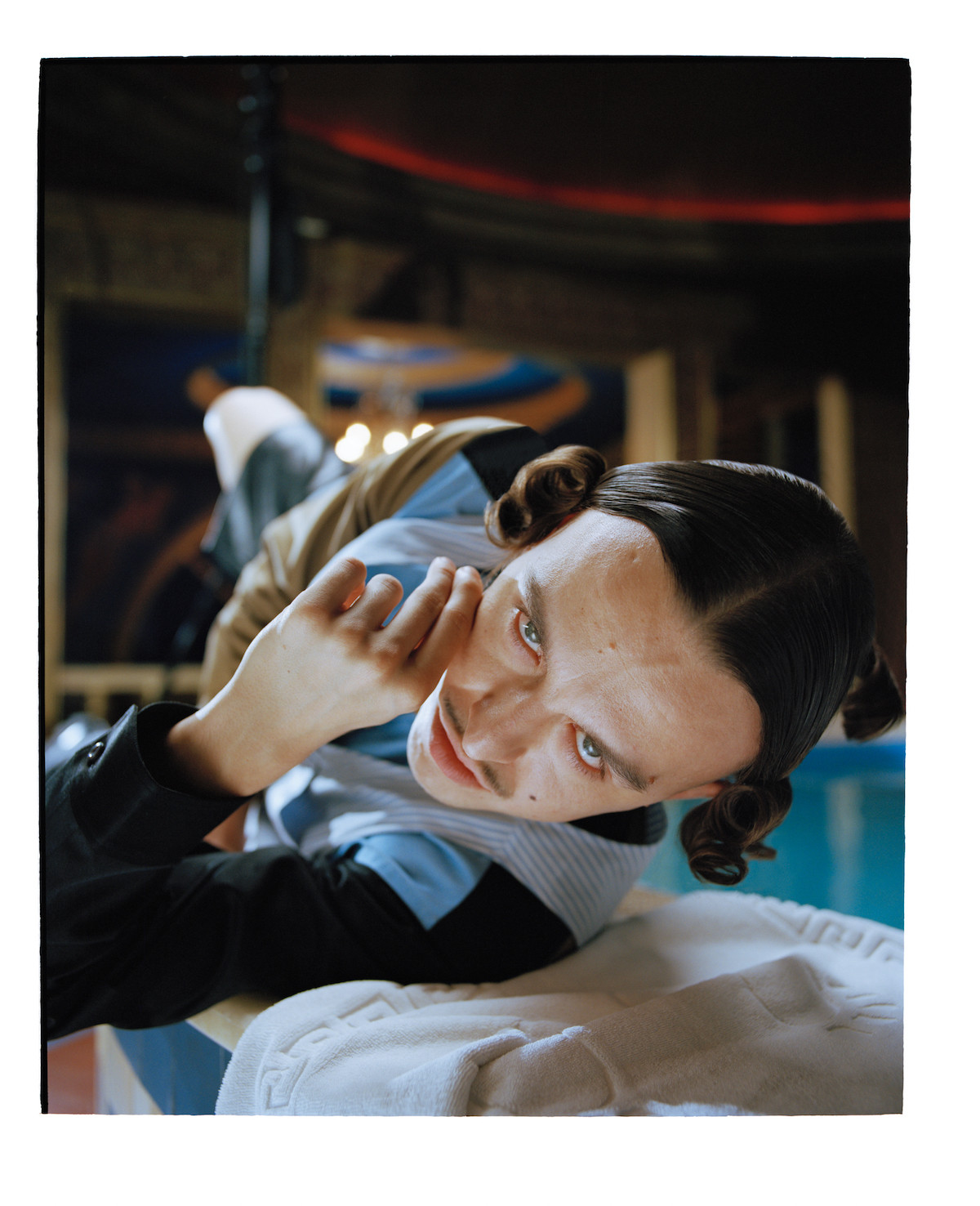
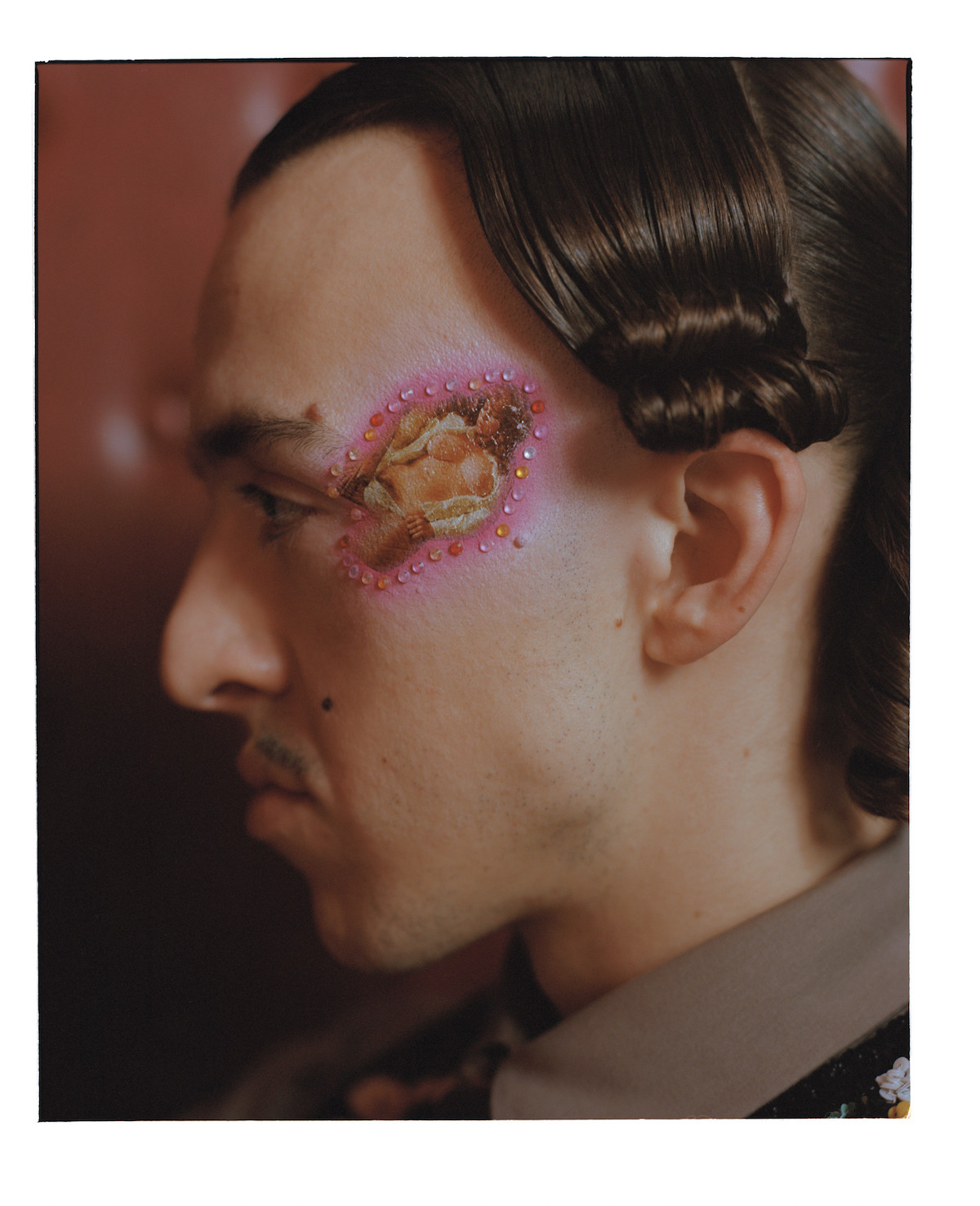
Cash is from Estonia, a small country that juts into the Baltic Sea, across the water from Stockholm and Helsinki, and about 600 miles WNW of Moscow. Unlike other Eastern European countries like Russia and Georgia, that have gotten a recent boost in our collective consciousness thanks to designers like Demna Gvasalia and Gosha Rubchinskiy, Estonia remains largely unknown—Google it and you’ll find that it’s “famous” for beautiful women, online banking and a hell of a lot of free WiFi. Google Tommy Cash, and you’ll find that he’s been dubbed the face of Estonian rap, though beyond him, it’s unclear whether the genre actually exists, or what it really stands for. Part of that might come from the fact that the Estonian identity, as Tommy asserts, “is all mixed up,” or because there’s not a huge art scene there, or because, like I said, it’s not so well-known. But Cash is a pioneer, both in his music and his imagery, and it’s hard to separate the rapper—and what he does—from his country.
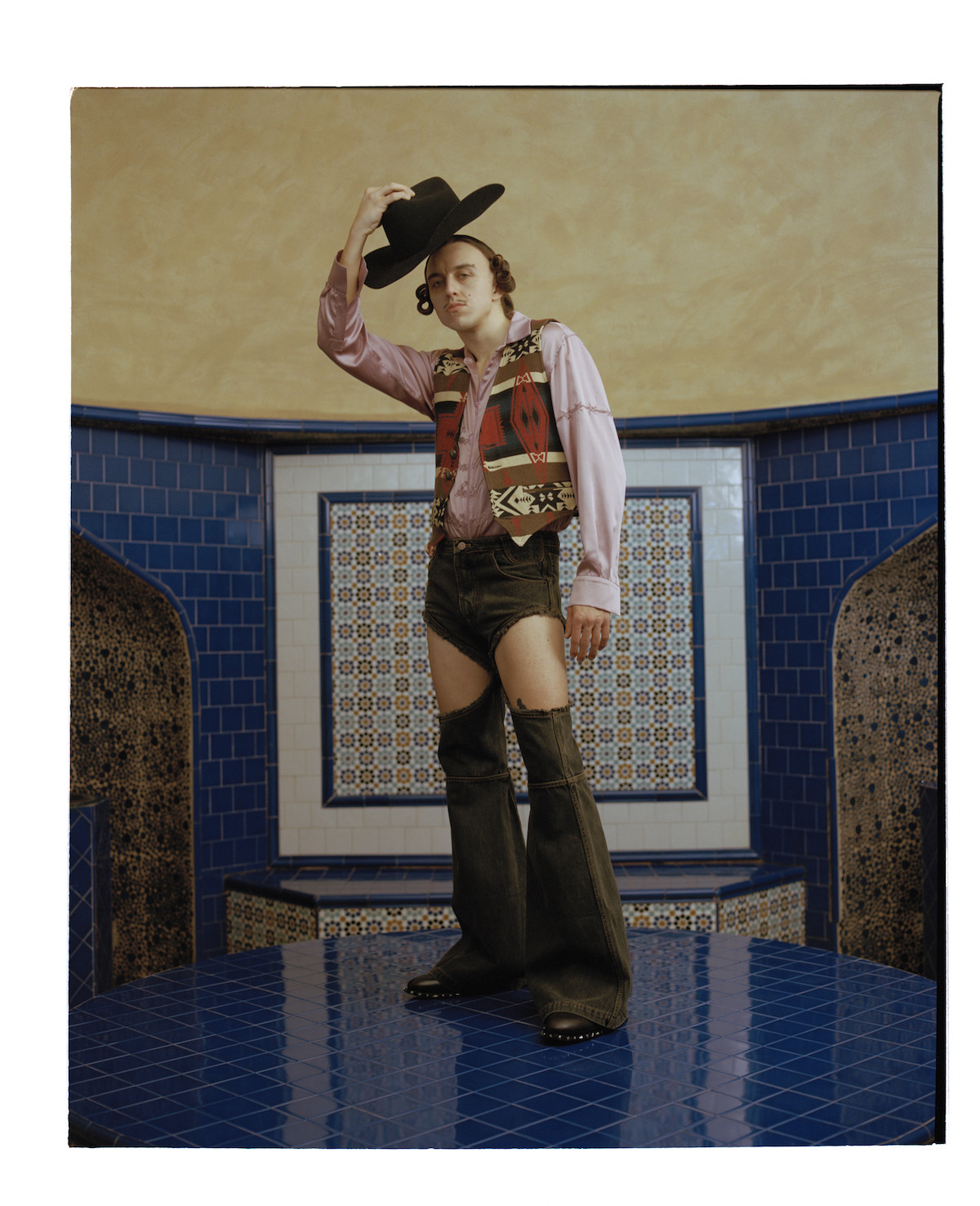
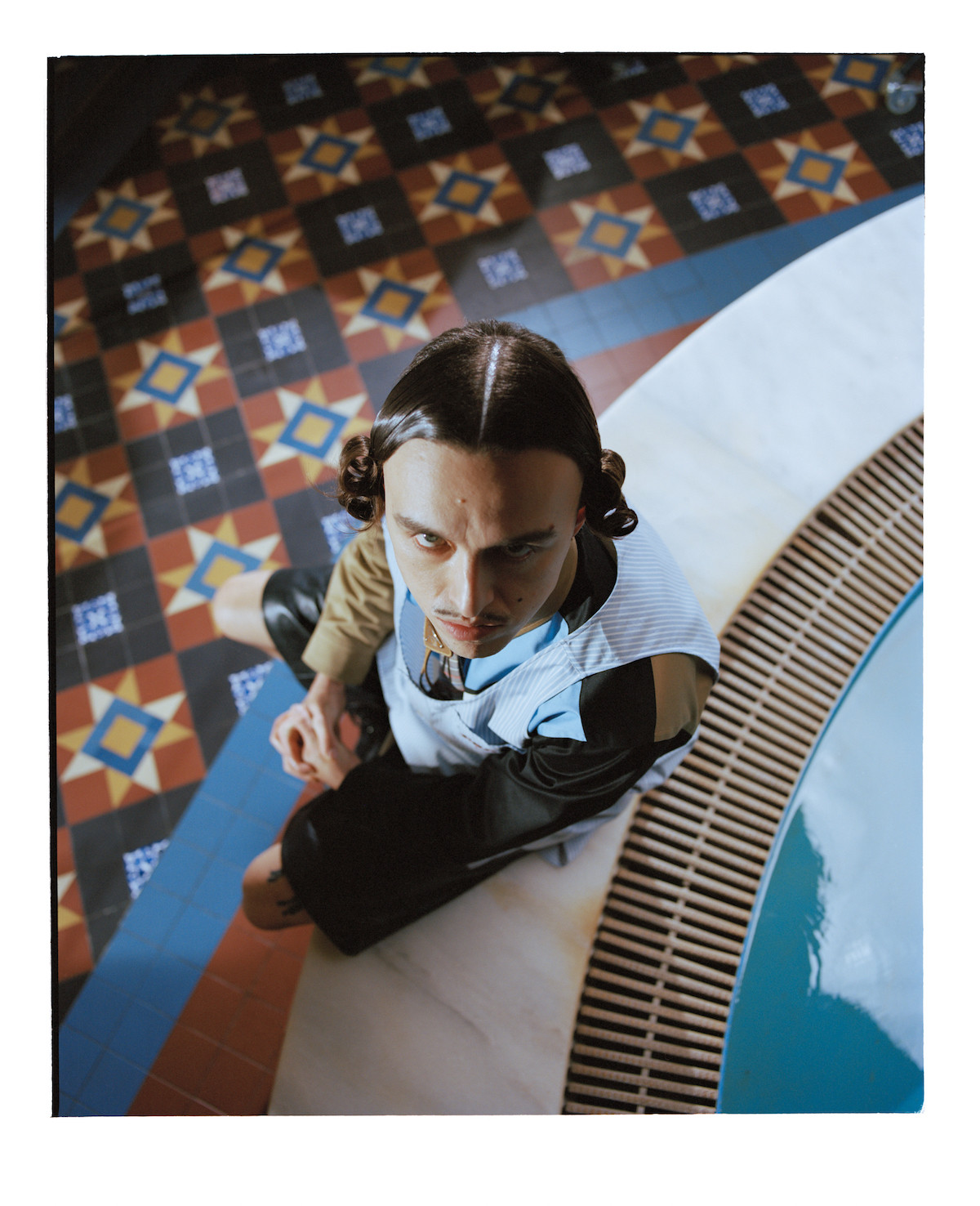
The diversity of the Estonian cultural legacy (“We’re kind of near Finland... or what you would call Baltics... but at the same time, we have a lot of Vikings here,” he explains) parallels the mix of influences in Tommy’s music, and the lack of a domestic creative network has led Tommy to produce everything in- house. Working with the same small team he’s had since he started, the 28-year-old has a hand in every single part of the process, whether he’s recording a track, shooting for his Instagram, or teaming up with Rick Owens on an exhibition that featured, among other works, a tank filled with 200,000 of his own sperm. Whatever the medium, Tommy creates his own brand of “controlled chaos,” making it hard for anyone to pin him down. Though that didn’t stop us from trying— twice. First, he spoke with our Editor-in-Chief, Simon Rasmussen; and then, for good measure, with his friend, the equally eccentric Michèle Lamy, who also happens to be the owner of Tommy’s sperm tank.
To continue reading, pre-order office magazine issue 12 here. Check out our preview video of this story below.

So it seems like your songs tend to be open letters to people. Do you often use your music as a way to communicate your feelings in ways words can't?
I feel like music, for me, is the truest form of communication. Sometimes when you are trying to talk to people, the people you love, sometimes the words don't come out right or things may have been misconstrued. But, I feel like music gives me an even playing field to not only voice my true emotions but be able to convey a certain emotion and tone that normally I couldn't or wouldn't be able to translate.
How is that usually received?
When my mom read "Piano Song," she was like, "So you felt this way?" But I think that they understand, and it wasn't like a bad thing. It felt like I'm putting a time marker or a timestamp on where I was. And being able to accept the fact that because I chose my career, there are a lot of moments that I missed in my life that I can't take back. And I feel like stamping that or putting a time marker as a song serves as a way for her to live that memory. It's just not, "Hey man, my bad. I'm sorry." It's something that actually lives on, and other people can relate to it too.
How have you been sitting on feelings of "Some Day This Will All Make Sense" being out?
It feels very timely. Like when I made it, who would have known that the title of the project would be so aligned, relevant, and parallel to the state of the nation? I also feel like it has a lot of relatability factors. But now that it's out in the world, I feel like anything that you work on or give to people, it doesn't belong to you anymore. So, I mean, like I'm happy that it's out—something that was worked on diligently for a few years, and it's good to see people are receiving it. But I also think it's like medicine for the soul. People can form their own perceptions of your work, even if that perception differs from your intention. I'm sure that can make you feel some type of way.
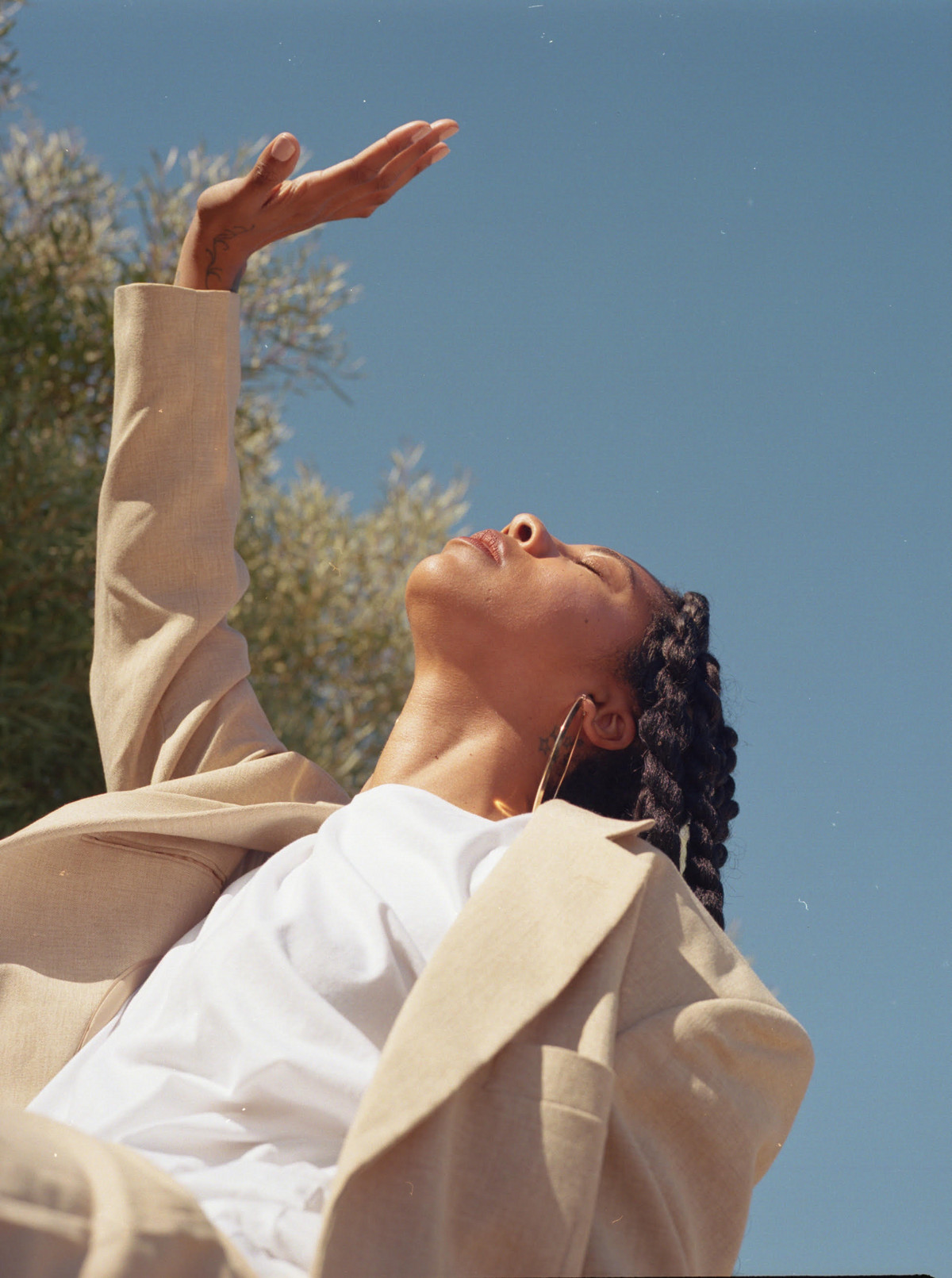
How do you handle it? Are you indulging in the reviews and the critiques, or do you give the music away and leave it at that?
I try to stay close to home with it; I'm not as into who's always writing about it. But I love to hear what the fans, my peers, and friends are saying about it and how it's relating to them. I check on the visibility part, but as far as checking the comments and looking at every intricate piece, I think that takes a little bit of the magic away from me. I feel like once I put it out, I've done my job. So from there, it's up to me to kind of just bring the community aspect to it by telling people who are listening to it, "Thank you for posting or re-blogging or retweeting or putting on your stories." I think that's it for me. That works because if it wasn't for the people listening to your music, nobody would really be knowing about it. So I feel like, that's where I kind of put my focus—connecting to my listeners and making sure that they felt appreciated too.
What did the beginning stages of making your project look like?
The beginning stages. So, it's very explorative and met with a lot of uncertainty. A lot of vulnerability, allowing yourself to go into the deepest depths of yourself, but also realizing that you're uncovering things about yourself in the process. And I think that's what I liked most about creating things. It's like going through the process of it and knowing the anatomy of how the different components that go into working on a project are, sonically and visually. You just go in there like, "All right, we're here to make something beautiful, to make something that's honest and true to you." But it's a lot of long hours. The creative process is a lot like foreplay to me, and putting the project out is like the climax of like when it's over. The process is very much of—it's very sensual. I don't know, making it is very parallel to sex for me.
You seem like a very passionate person, it seems like your music comes from the soul. Do you ever have to stray away or take a step back from making some songs too honest to create a barrier between your personal life and your audience?
I feel like you can try to put those separately, but I also feel like the more you become yourself in your art, it becomes one and the same. I think like in my earlier years, I tried to separate the two. But the more I unmasked and uncovered the persona of who Bosco is, I made it a little bit more relatable. It's an evolved, developed version of myself, but I wouldn't necessarily say that Brittany and Bosco are two different things at this point. It's kind of one evolved being that is continuously striving for better to advance all mediums of art, connectability and community. At the core of it, I think that's just who I am.
And when it comes to like the process of writing music or making music, what makes you feel most safe in order to have a successful and pride-worthy project?
I won't put out anything if I don't feel 100 percent about it. But then again, I'm a Capricorn, so I'm extremely hard on myself in general. So pray for me.
So throughout an album that is made, there are usually themes that run through the course of the album. What were some intentional themes that you placed throughout each song to make it a complete body of work, and what were some unintentional themes that you found after you ended up recording the project in full?
I think the common theme throughout the project is that I'm giving stories within the narrative of something that will make sense. But whether it's accepting the fact that you're an artist and you're missing time that you're away, you are accepting the fact that as long as I got my family and friends, and my bills are paid, that there will always be brighter days. "Attention" is kind of the same thing, where it's like you are a very independent woman, a boss in your own right. You don't ask for a lot, but when you need attention, that's what you need. It's kind of just scenarios within. It's a conference of like, "I'm doing all of these things, but at the end of it, everything will make sense. Everything in my life has led me to these defining moments, and I just have to trust the journey and the process that it took to get me there." I feel like a lot of people always try to calculate each move. But you know, the divine power in the universe already knows your steps before you make them. It's up to you to keep continuing through your journey and having that assurance within yourself.
And you've talked about this journey, so at the end of it all, what does that journey look like for you?
As long as I can continue to make a living off of what I do and have complete freedom to be a multidisciplinary artist, I think that's the ultimate goal for me. Yes, I would love to make millions and millions of dollars and you know, travel the world and do all of these things. But, I was watching Yonce's Homecoming, and she's, you know, the most successful person in this business. Success to me at this point in my life looks different. Like she has all these accolades and awards, but success to her right now is being able to like spend time with her family, her kids, her husband and also still have a career. Success to me right now looks like being creatively free to put out music on my own platform and giving visibility to other creatives that are like myself. That's what success looks like to me. Success looks like being able to replant my pot, you know, stress-free. You know, being able to take my family on vacation, that's what success to me looks like. It's kind of just getting out of that struggling artist phase and just really really putting all of my energy, all of my work, into the things that I believe in.