MIRRORS

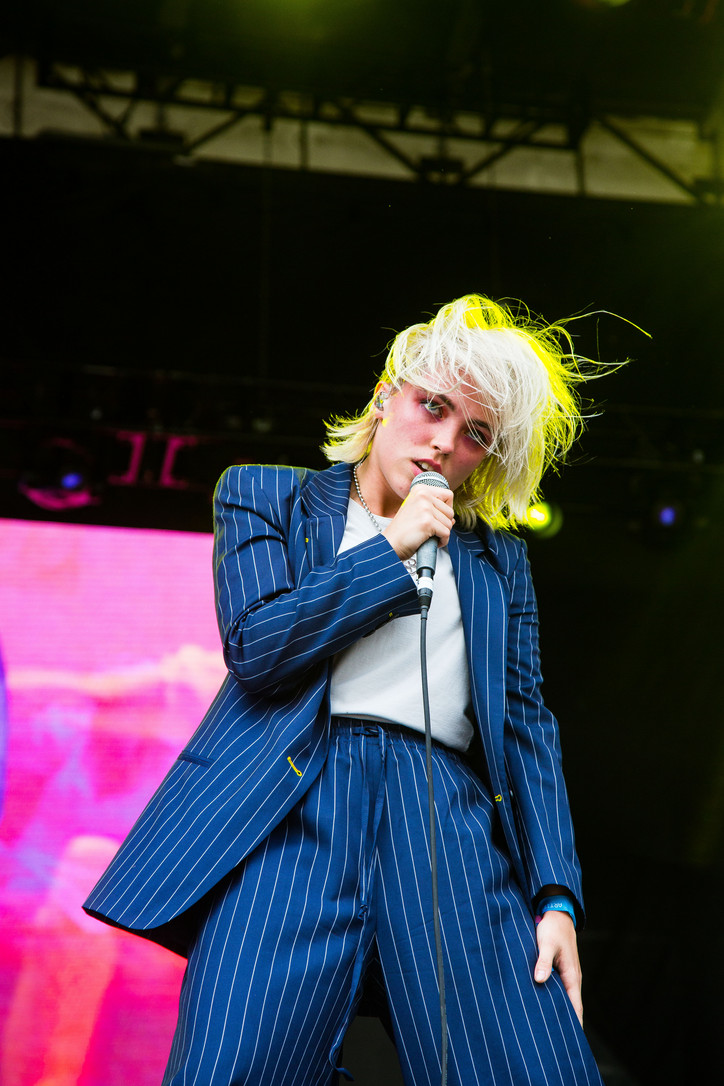
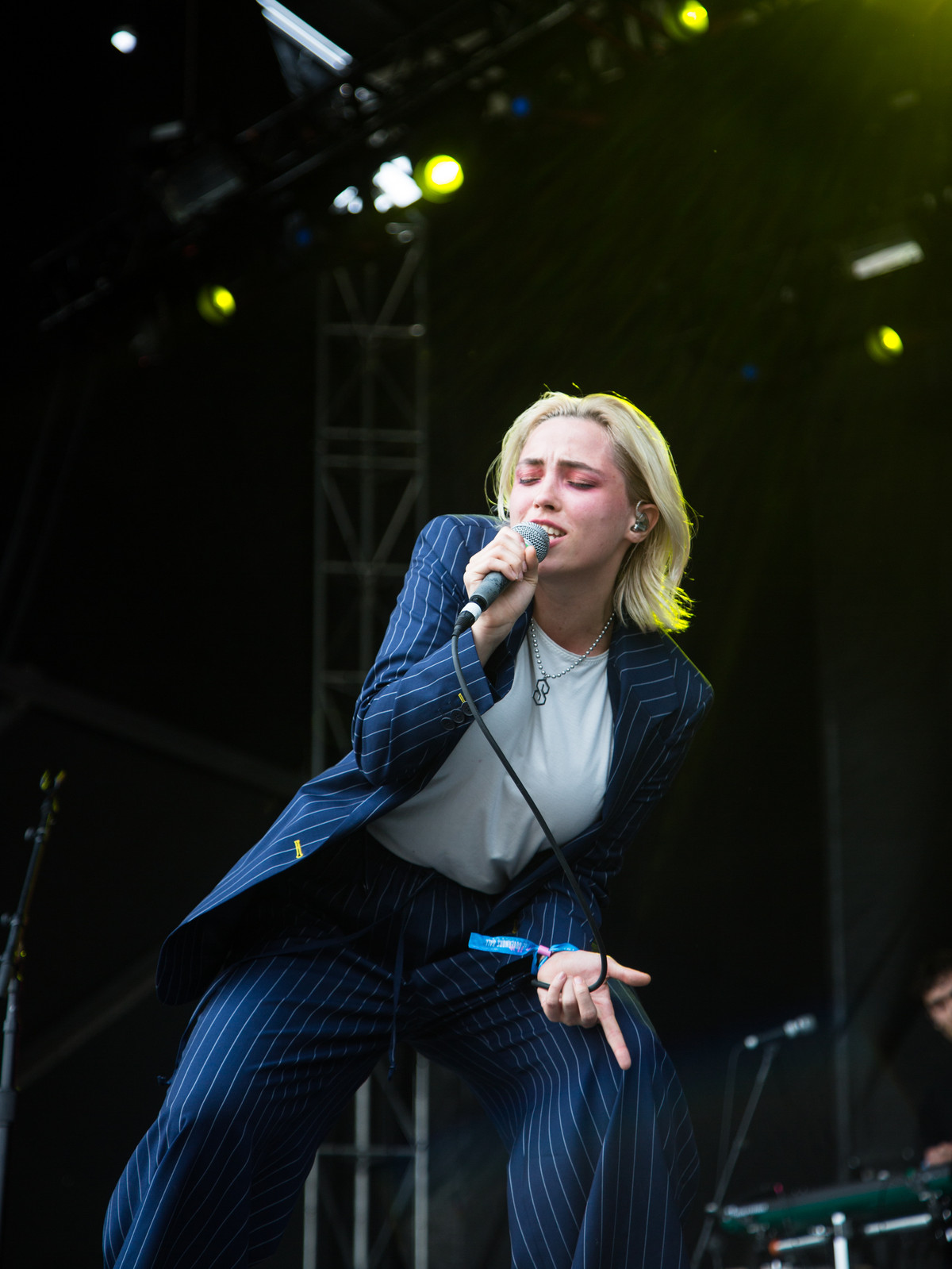
The 21-year-old London-born musician has all the rockstar vibes with none of the impenetrable ego. And at a time when the music industry is saturated with clout chasers and self-congratulatory SoundCloud rappers, Wu’s down to earth authenticity is a welcome respite. And it shows; even as a relative newcomer to the American stage, (being recently signed to Def Jam), her energetic live performance drew a crowd.
She grew up messing around on guitar at home and sneaking into underground raves, wanting a band from early on; but playing instruments “wasn’t encouraged” in the all girls’ school she attended. So she’d spend her time making songs independently, “imagining the band around me, what parts they’d play,” writing lyrics about being over partying and her own mental health struggles.
When she dropped out of sixform, she took matters into her own hands and signed up for a production class––breaking through the remnants of sexist industry customs in the process. “There’s a reason that girls are singers,” Wu told office, “[girls are] told to learn to sing, but nobody encourages you like they do boys to get on with the tech side. There’s an invisible wall in the music industry that men don’t like to address, but it’s very real.” And for her, confronting that wall never required a second thought––because making music is an inextricable piece of her identity.
Read our conversation with the artist, below.
How do you describe your sound?
I’d call it tomboyish fantasy, really. It’s a feeling for me. Most of my music’s got a very chaotic energy.
Tell me how you got into making music.
I think I was 5. I remember I was watching a video of Jimi Hendrix and he was slaying the guitar, and I knew I was so interested in it from that moment. I picked up guitar because my dad was playing it and started writing songs from then onwards. I was also in loads of choirs as a kid and I’m not religious, but probably the closest I’ve ever felt to a religious experience has been with a really good group of singers in a church.
So music came early for you, but when did you figure out you wanted to perform?
I was a bad kid in school, but when I would sing or do something, the adults and teachers would chill out on me a little bit. It was kind of my saving grace in a weird way, having a level of what I say in [the 2017 single] “Taken Care Of,” a place where I feel invincible, I feel that’s definitely something I found in school. All these things that you used to think of me, you can’t now, because this is me and I’m laying my heart out. I don’t mind or care. I’m happy with it.
So you still have the same relationship to performing?
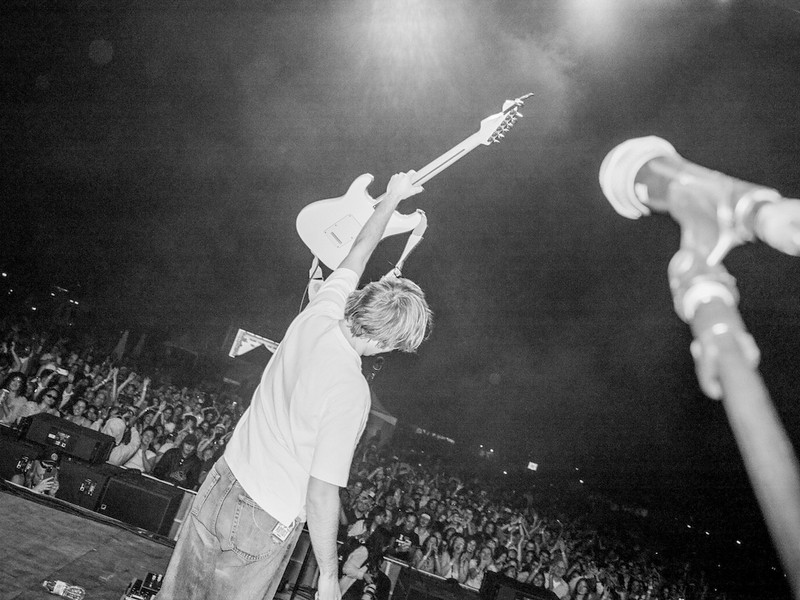
I feel like mine’s quite healthy compared to a lot of people’s. I have friends who want the whole world to love them, and that’s not really what I’m there for. For me it’s more about connecting with people and being able to give them the experience I feel when I’m in a crowd looking up at someone.
I feel like wanting the world to love you is the antithesis of your goal.
Yeah exactly. You get me. I want everyone to see me for something real, I guess. As opposed to idolizing me. Which can be tough when people are asking for your signature, because I’m there like, ‘That’s conceited, I don’t want to do that.’ But then I’m like, ‘I can’t be a dick, I better sign it.’
How’s that been, getting used to that sort of treatment?
It’s difficult, because it’s not in my nature to behave that way. I don’t expect people to get down on one knee for me. I think I’m a little bit too modest for my own good sometimes when it comes to stuff like that. So I’m starting to adjust with this American tour. If someone’s driven six hours to see you, you better sign their shit because it’s almost more conceited to be like, ‘That’s not my character.’ You know what I mean?
What’s the EP's single “Grim Reaper” about?
“Grim Reaper” was one of the most lyrically intense ones on the EP. I’m diagnosed with post-traumatic stress disorder, and what that’s well known to mean is that you have this feeling of death following you around. It doesn’t really go away. But for me that translated into this huge personality shift into being someone who goes skinnydipping in Lake Michigan on a night out without even thinking about it, from someone who couldn’t take the bus or get on a bike.
For me, trying to deal with that personality shift, I felt like I was watching this brave young version of me running around. That became conflated with my feeling of death following me around as well. I felt like there was this little version of me being like, 'Look what you can’t do anymore.' And that sort of manifested as the disorder.
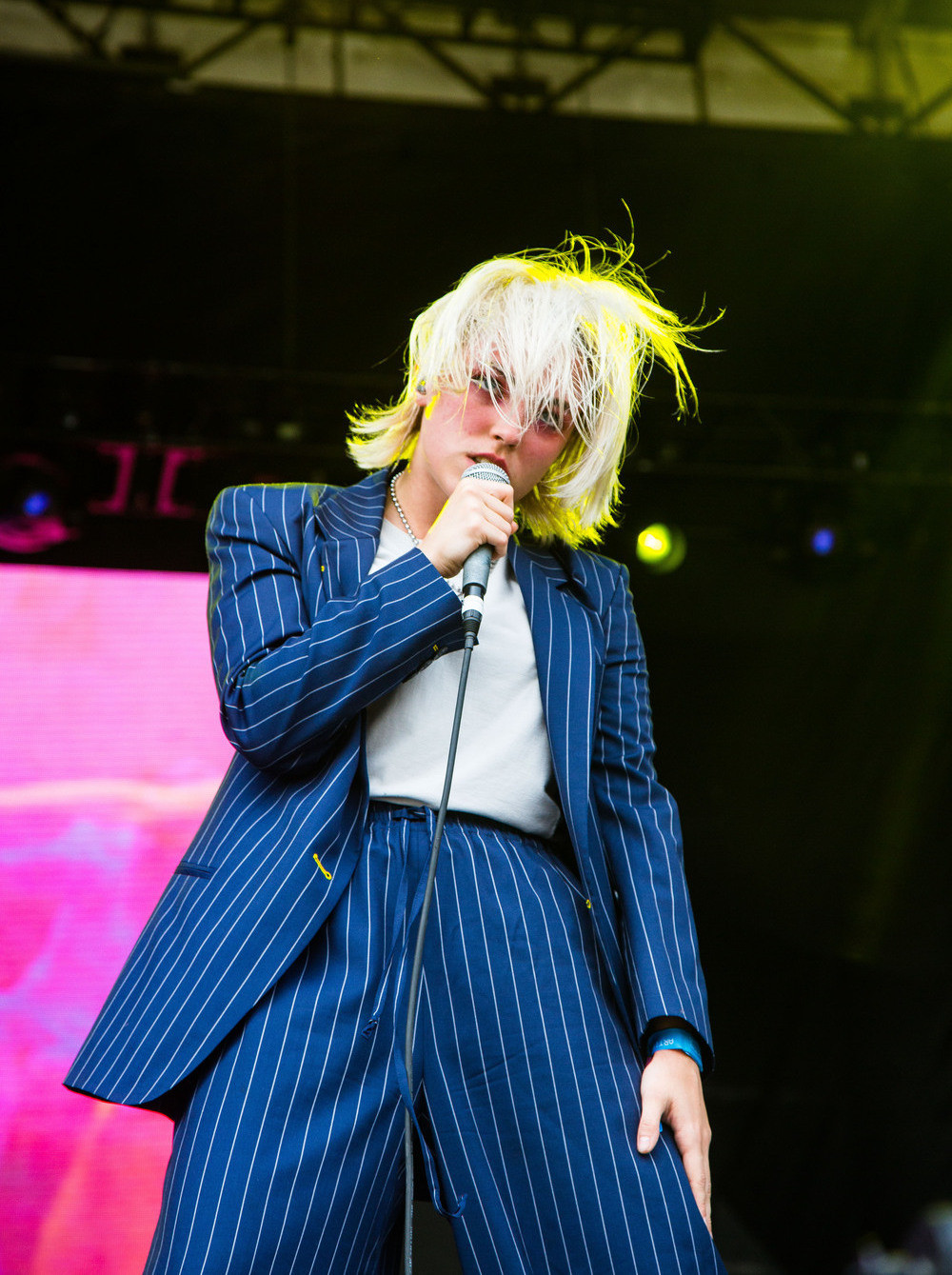
Do you feel a desire to look out for other girls in the music world?
So much. The journey through the music industry has taught me so much about how real the equality gap is and even more if you’re not actually a posh white girl from London. To get your voice across is so hard, and my goal is to learn how to deal with the tech myself because I think that’s like learning to hold a paintbrush. I think more women and LGBTQ and minorities should be holding that. They’re starting to, it’s changing. You’re starting to hear different narratives come across. But the fact that that’s so refreshing shows you how far we have to go, and I’m there for any other woman around me. Even if they want to shoot me down, I’d still be there for them, because I think we’re pressured so much to do that. I wouldn’t join in, you couldn’t make me.
What’s the motivation to become a touring musician as opposed to any other job in music?
For me it’s so accidental. I knew I wanted to do music for the rest of my life but I didn’t care if I was teaching it or writing it as a hobby from my bedroom for the rest of my life. My relationship to it really is I’ll see how far I can take this, but there’s no overarching goal for me to be a beast at the top of my game or anything like that. I’m like an actor that walked on set by accident, like, ‘Whoa. This is happening.’
How do you think growing up in the internet age has affected your views on the music industry?
It taught me the industry doesn’t have as much power as it used to, and that’s fantastic. The time when I grew up in, artists hadn’t realized their ability to tell their fans what they wanted yet. So you had a lot of over-sexualization and getting told, ‘That won’t work.’ The music industry got so cheesy and saturated in the 2000s because of that. And I honestly think it might have still been there if the internet hadn’t pulled it out of that hole it was in. So for me, the internet saved the music industry. A label person can tell you something won’t work. But you stick it up on Soundcloud and it gets a million hits, there’s nothing they can say or do.
What's making music about for you?
For me there’s no higher level of learning with it. I love bedroom producing which is a lot of what the industry is based on at the moment, because those people are not thinking about anybody else, they’re just making something. It gets abstracted and turned into this macho pissing contest, and for me [making music] is about getting rid of all that. Fuck that.
A lot of female artists like Grimes or Princess Nokia gravitate towards sounds that I know wouldn’t come from a male artist. And I think a lot of it is that they’re not afraid of being called novelty or kitsch, because they’re going to get that anyway. They’re more free with music.
What's the most important thing you hope people take away from your work?
You can still be successful and stable if you’re open about your mental health and what you’ve done in your life. It’s important to me that younger kids know that. It took me a long time to realize that there’s a lot of people with problems. I felt very isolated and alone as a kid, so I try to tell these stories that are pretty fucked up just to let people know, it might be grim and grimy, but it’s real life and it’s okay. And you can still be the cool one and well-adjusted and have those moments.

It seems an apt metaphor, given that Dizzy Fae and other young artists like her have come of age in the wake of the digital epoch, where a musical poet faced with questions about how to live her life must by necessity navigate an existence defined by a digital presence, and all the opportunities and dangers that that contains. Her lyrics confront anxieties that many young people face, most of them concerned with the fraught nature of relationships and independence, and what is “real” and what isn’t.
Her voice is both tool and toy in this existential exploration, a vessel she uses to communicate and then immediately blur the listener’s understanding of that communication. Decoding her lyrics and her intention is part of the fun, sifting through the filters and personas the aural version of deciphering what authenticity looks like in the age of the online profile. There are two distinct environments in Dizzy Fae’s mythology: the one she is building and the one she is responding to. Which is which is a matter for debate, even, you’re inclined to imagine, for the artist herself.
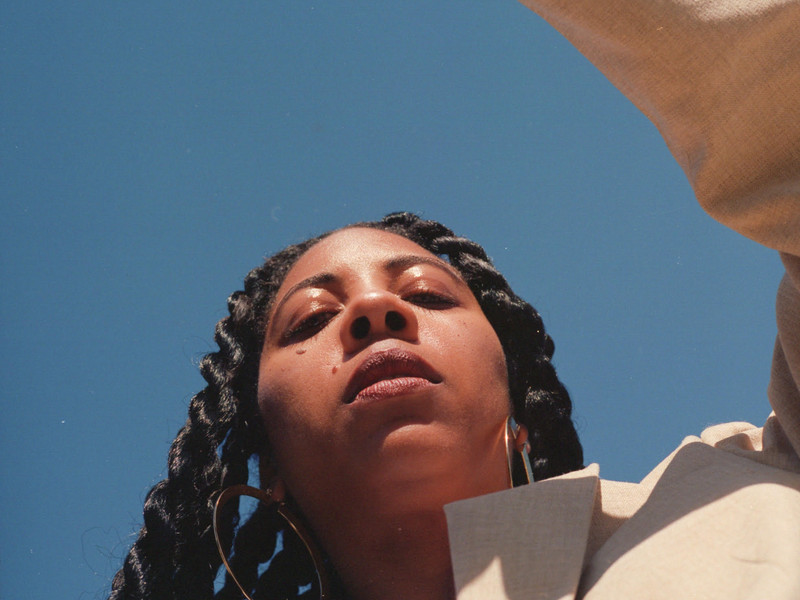
When I met Dizzy Fae, she was wearing a salmon-colored button-up dress emblazoned with hand-painted cats. She exuded an air of ethereal calm, uncomfortable with being the center of attention but at the same time seeming to be actively coming to terms with it. Our chat, once everyone else had emptied the room, was surprisingly frank, and I was surprised that she was from Minnesota—who says Midwesterners aren’t hip?


Above left: top by I Waited For You, jacket and shoes by Calvin Luo, jeans by KQK, earring by SVNR; Above right: turtleneck by Rag and Bone, bustier by Ricky King, pant by Nosense, boot by Okoko & Abel, earring by Pattaraphan.
So the album that I listened to, Free Form, is this recent?
It came out January last year, no wait, February. Sometime early last year, it was a mixtape. It was my first project.
How did that come about?
It’s kind of been worked up, so it’s a mixtape because those songs are all just collected. Those songs were made at different times, different places, different surroundings, environment, atmosphere, vibe, feeling, all of that, and it was all mashed into one thing which made it ‘freeform,’ and there never really was a ‘how did this come about,’ it just happened, and then we were like, ‘oh, we have a full product.’ I had two songs prior out in the world, and then I went on tour with those two songs and some random shit that was unfinished that I made in like a bedroom or some shit. My first tour was with Lizzo, it was her first headlining tour, which is very special because she’s blowing up now, and then things just started happening after that. The things that were happening before started to come to fruition.
I know what you mean by all of a sudden you have this fully-realized piece, you sit down and peck away at something and then all of a sudden you have this thing.
Yeah, and that’s how I like to work. Too much pressure on things, I don’t think you’ll get the most genuine authenticity of what your path is. Pressure isn’t really my thing.
It’s funny because I’m the opposite, I need pressure or nothing ever gets done. I thrive on a deadline, like, “I need this now!”
That’s some New York shit. I’m from Minnesota.
I have family there! Where are you from?
I grew up in the Twin Cities. I grew up in St. Paul and now I’m in Minneapolis.
Do you feel connected to…. what’s his name, the big one…
Prince.
Oh that’s right, Prince is from Minnesota. I was thinking Bob Dylan. Oh yeah, shit. Actually your music kind of feels like Bob Dylan plus Prince. So do you feel connected to Prince?
Absolutely. I’m twenty now and I literally live in South Minneapolis, which is where he grew up. And so right now I feel closer to him than ever.


Above left: top by Junya Watanabe, pant by I Waited For You, shoe by Havva, earring by SVNR.
I just heard that they’re doing a documentary or a biopic about Prince, and I was wondering how a modern, young musician feels about all this nostalgia right now—I just saw a movie about Elton John. What is your opinion of this?
I’m always down to learn more about Prince, because he didn’t really share that much when he was with us, physically. I didn’t know there was going to be another project coming out about him.
I heard it on the actual radio, on an oldies station.
I wonder how that’s going to be positioned. With Prince, I know he only fucked with real ones, so I’m interested to see how they’re going to place it up, if people are going to talk about him, or tour his crib. So he lived in Chanhassen, and he has this park called Paisley Park connected to his place. I think they’re trying to turn his place into a museum.
I think they already have—I read a piece where you can tour the house. I read some kind of essay where the writer talked about going through his place and it’s very odd.
Yeah, I’m not into it.
It’s odd.
I think it’s disrespectful and an invasion of privacy.
That was kind of the argument made in the essay, like what is the ethics of this.
That’s definitely something I’ve had conversations with people about. Like some of my friends I grew up with are like, ‘I can’t even be at Paisley right now,’ because you can feel it. If someone’s giving you something, that’s what you take, you don’t take what’s not given. And I think that’s what people are trying to do. But that’s what people do, though.
Do you feel that as a musician, sometimes?
I don’t feel that.
Not yet.
Yeah—I’m not huge. I’m sure big celebrities feel that with all the gossip and all that. I’m really training myself, self-care is my number one thing, if I’m okay with myself, I’ll be good with my surroundings.
Let’s circle back to your project. So I like to do little word games where I ask, in three words, how would you describe your music or vibe to someone who’s never heard it?
My vibe is authentic. It’s poised. And it’s…… that last one is tough, gotta make it worth it. Authentic, poised… Dizzy.


Okay, perfect. I love that. I was really interested in how you manipulated your voice in some of them, can you talk about that? It was startling.
You mean manipulated the pitch?
The pitch, yes. You went low and then another one where you went high, which I found really interesting.
I’m just trying to figure myself out. I think, I just really enjoy playing around with my self. I’ve always been, not weird, but it’s been kind of hard to figure out where my inspirations come from. I always thought that was a problem. There’s just no one I’m trying to be like or sound like. I draw inspiration from things and feelings, like one thing from a person or a feeling I get from listening to that person, and I think playing around with myself, it’s helping me inspire myself, because there are so many versions of us that are within us, and I think that playing with the pitch—I just like to do that with myself, I talk to myself a lot, so why not show that in my music, have multiple mes within me?
Do you feel like your music is just you talking to yourself?
Yeah, it’s really just everything out of my head. Everything in my head is coming out.
That makes sense. You seem particularly interested in fashion as well, I remember each song had a look.
Well, I grew up with wearing uniforms, and then I went to a performing arts conservatory high school, and I was just placed with people that naturally expressed themselves in different types of ways and around that time I started working a thrift store. It was my baby, for sure, it’s not there anymore, it was called ‘Savers.’ It was another way to express myself. I was always trying to figure out a way to express myself, how I know I can express myself, just always trying to dig deep. Fashion was something that helped me to dig deep without having to speak, you know? The expression of it was like, I can do whatever the fuck I want with what I wear, it’s my body—so really honing in on that. There are just a lot of elements of fashion that make up my identity.
I love that you say you can communicate without speaking. I was just talking about that, I have a friend who mentioned a comment I made in class, where I said everything is a costume. When you discuss clothing historically, you say ‘costume,’ ‘costume of the 1890s,’ or whatever, and I just loved that. Essentially everything is just a costume.
Everything is a costume. I love that, actually.
It’s just true. It communicates so much. I love that you said you worked at a thrift store—so what was that like? I’ve never worked in one but I might as well have.
Right? When I first started, I was like, I’m about to be poppin tags 24/7, I’m gonna know when the hottest things come and where they’re at, and I did get that, so that was a bonus and a plus and an upside, the downside I think was just the work of it. At a thrift store, everything is different. There’s a lot of cleaning up, people are messy in thrift stores, which is just part of a thrift store. The labor of it was not tight. I don’t think I was getting paid enough, but the clothing and what I got out of that experience—after I stopped working there I would go there and I just knew where all the good things were, so that was a big bonus. Yeah, it was really cool. There were a lot of things from working there. It gave me a better eye for going to thrift stores and vintage shops and knowing what I wanted. I got to really hone in on that and shape my vision a little bit better.


Do you still have things from that thrift store?
I got this from that thrift store.
The thing you’re wearing right now?
Yeah. Honestly, most of my closet is from that thrift store.
How long ago did it close?
Honestly, like a month or two ago. Pretty recent.
Now, how do you feel like fashion connects to your music? You mentioned surroundings and environments—do you feel like the outfit informs your performance in a way or maybe how you write? I don’t know if that’s a stretch.
I think when you walk out of your house—I usually, when I make music I go to the studio or I meet up with someone, it’s never in my own house unless I’m like writing, even then the environment always matters. I think with fashion, it’s like when you walk out of the house you have to feel a certain way, so I notice that what I’m wearing and how I look either complements or it completely has the mood I’m feeing. I think visually, with my music, it shows like, with the mixtape and the different songs, there’s variety, and that’s what I like to show. But I like to leave that to perspective, people can take what they want with it, when they see me and listen to my music. Because you know when you listen to someone and you’ve never seen what they look like and you’re like, oh, this is what they look like.
Do you think you’re going for that kind of? Like you’re almost trying to throw people for a loop with how you sound vs. how you look?
It’s fun.
Because with the voice manipulation and all that it’s like, who is this?
Yeah, I used to not think I was that important. It’s fun. I used to think I wasn’t too important growing up, but then I got passionate about music. And with clothes—when I walk out in this cat dress, I definitely get eyes, and the Leo in me really loves that. It helps boost my confidence.
You were saying that you almost like to play with different versions of yourself. Do you feel like you have personas?
I did this play called ‘Misbehaving,’ when I was a senior in high school, it was a musical, and I remember the director was like, you’re not acting, you’re just playing another part of yourself, and that’s kind of taken me to where I’m at today, and how I go about living my life. I think it’s all just me, I think when I try to separate it and categorize it, it fucks me up in the head. I just try to be me. Sometimes me is tired, sometimes me is super extravagant, it’s just all these different things. I have different feelings, I don’t know if I have different personas. I think with my deep voice, that’s kind of a different persona—if any of it is a persona, it’s my deep voice, and we call her Fizzy Tang. But it’s just another part of me.
What kind of girl is Fizzy Tang? or is she a girl?
She, they, he, what, there, when, why, she’s okay with anything, she doesn’t give a fuck. She really don’t give a fuck. He don’t give a fuck. They don’t give a fuck. Like we said, it’s 2019, what the fuck is a gender?

With the release of "Here It Comes Again," produced by Burke Reid, the group gears up for bigger and better things, teasing their upcoming EP, "Making Hay." But, for now, enter the dreamy haze of Sports Team where they romp around the English country, play in beekeeping suits, and the frontman, Alex Rice, gets stung.
Intrigued? Check out the video now.