MIRRORS

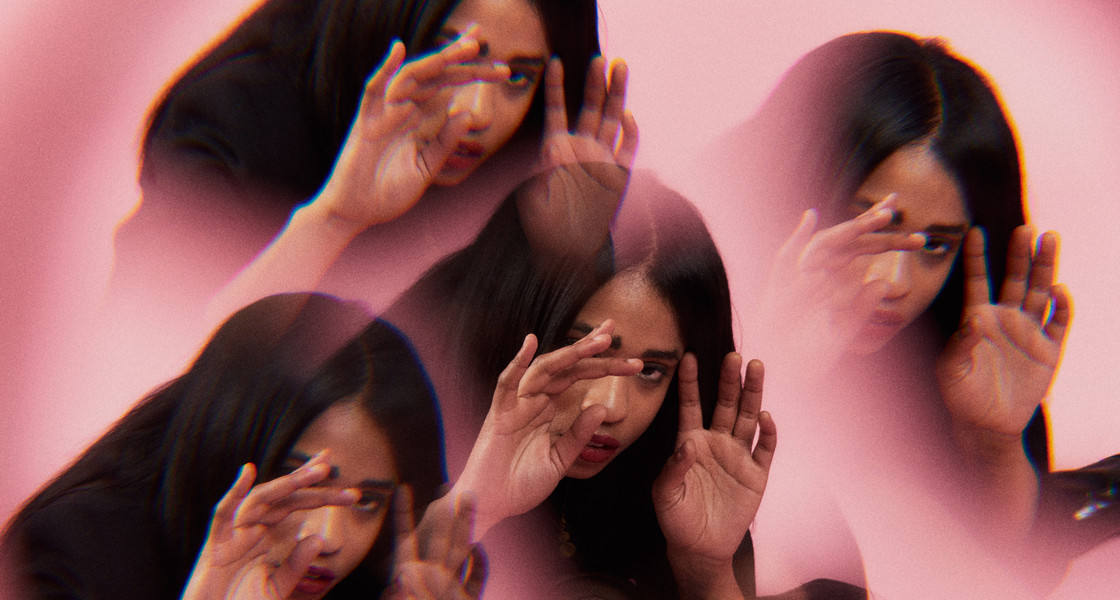
Her second album, Silences, is the result of having let the world in on a piece of herself that’s so central to her existence, losing that piece and fighting to reclaim it. “It’s about identifying all these things that are reaching to hold onto you, to compromise your voice,” she explained, “whether it’s religion or a relationship or drugs, or just the world at large. It’s about looking these things in the eye and realizing what they are, and what they’re for, and having to decide: between the world and yourself, who are you gonna love?”
We choose Adia Victoria.
Read our interview with the artist, below.
How do you describe your music?
I would describe my music as a companion for my human existence—what it feels like going through life in my body and experiencing the world around me. I consider myself a blues artist, and I say that not because of the sound that we typically associate with the blues, but I see it more as philosophically, really being an outlet for black community and black experience, that is often denied space to exist within ‘police society.’ So, I use the blues as a way to interpret the world that I’m navigating within a black body. It allows me to navigate the full spectrum of my existence in a way that other forms of music didn’t. It could have something to do with the fact that I was born and raised in the deep South, where there is so much ongoing unsettled history, and the blues gave me the ability to navigate my history and my place in the South.
You said something about how other forms of music are limited and you weren’t able to fully explore that range. Why not?
When I turned 13 or 14, I got cable for the first time. [I was watching MTV, where] you listen to pop, hip-hop, R&B, and I always found those forms of music catchy and I enjoyed it—some of my favorite artists come from those genres. I think there is this respectability at play in there, attaching value to money and material possessions and ‘Let me upgrade you,’ and bling bling, but I understand the human instinct with that. I understand that that is a way of procuring protection, especially for people who’ve been marginalized within our system. And certainly there is that in the blues—there are people bragging about the Cadillac or their money and whatnot. But I found that with the blues, it was more of a wink to the audience, a kind of thumbing of the nose—they know the world of material goods is bullshit and it doesn’t bring you happiness.
I found that was missing in a lot of the music I encountered growing up with MTV—a lot of the corporate pop music that was shoved down my throat as a kid. Even the stuff that claimed to empower young girls, it was all attached to what you could go out into the world and consume and buy. If you couldn’t, you weren’t an independent woman. If you couldn’t buy your own house and buy your own Louboutins, you’re somehow less than—at least, that was the lesson I took from it as a child.
It was the same with magazines for girls when we were kids—everything was about how you could change yourself to fit a mold. None of it was empowering.
It’s so shocking. I’m 32, so I grew up with Seventeen Magazine and Teen Vogue before it was this righteous, intersectional outlet. I grew up with very controlled images of what my girlhood should look like. And it looked nothing like me. It was a little disappointing that even my black teen idols that I looked up to, they were still preaching the same things––that I had to buy my credibility, buy my way into the game, then I would be respected. You know, I grew up quite poor, but I grew up in the mountains, and I didn’t realize how poor and unattractive and unaccomplished I was until I got MTV. Like, ‘Wait a minute, I suck!’
Being so lyrically-driven, how did you come into your sound?
I don’t think I have a particular sound, but I came into it with the blues when I was 21. I started playing guitar in Atlanta. I just needed some kind of outlet. I was a high school dropout working as a telemarketer and I had no creative stimulus, no fulfillment. So, I found the blues and I liked the idea of just having the guitar and being able to make songs that I could write and play with my guitar, and I didn’t need anybody else. My sound initially was this very solitary, sparse, lonely kind of music. But for me it was my companion—it was my friend. And I like the idea of being able to manage rhythms of words with the rhythms of the guitar. Any time I’ve gone into the studio and worked with different producers, it’s the same thing—we start small and we only add on what we need to. That’s something that’s been guiding me since I began doing this professionally.
What’s the most important thing that you project into the world about yourself when it comes to your art?
The most important thing I project into the world is a sense of questioning. I don’t know what this all means; I don’t know why I was born; I don’t know what life means. But nobody does. So, what I want to project into the world is a surrender of need for control—the need to control the way people perceive us and the way we perceive things, and kind of get back to that childlike state of awe and wonder, where you could be curious, where you didn’t have to pretend to have all the answers and everything under control. That’s what I’ve always wanted to project into the world.
I’ve always wanted to stand up against the authority that says, ‘If you do this, then you’re good, or you’re bad.’ I’ve just always wanted to question that authority and the people we give authority over our lives. These influencers and politicians—who gave you the authority to tell us what’s what? This is your first time doing life as well. Why should we listen to you? I want whoever listens to my music to feel that way. Nobody knows what’s going on, this is a very confusing experience. And it should be.
It’s interesting you brought up influencers, because now there’s Instagram, where all these influencers live and do the same thing those non-empowering magazines used to do for us. How do you feel about social media and how it’s affecting people’s ability to exist?
I understand—what I said about the songs I’ve listened to with bling bling and shit—I understand the draw toward things like Instagram, because like I said, being human is a very confusing experience. You’re never sure if you’re doing it right or wrong, we’re constantly looking for feedback and validation from our peers. And I needed that too when I was a kid and that’s why I was reading magazines and trying to starve myself to look like what I thought was important. But what’s so dangerous about social media is that we’ve now become agents of control for other people. Now it’s no longer Vogue telling us we need to look this way—it’s the girl sitting next to us in class who has power and followers, and her voice is now magnified. I think we’re magnifying voices that are very insecure, that are looking for the easiest way to fit in, to be accepted.
I think our issues with social media are indicative of larger issues that our society has already. We are not acknowledged and validated in our day-to-day life, so we’re looking for strangers on the internet to tell us that we’re worth something and that they like us. And it means nothing. Do you ever remember the next day what you even liked [on Instagram]? Does that experience sit with you? No! It’s all fleeting. It’s all fake. And it’s entertaining as hell—it’s delicious. But I think we need to start questioning ourselves: what emotional need is this addressing? What emotional lack is compelling me to put myself into such a consumable, digestible form for people to just scroll through, like and keep moving?
Beyond being consumed, it’s like, what is this scrolling doing for us in terms of filling the silence? It’s not just about being consumed—it’s about consuming other people in order to not sit with yourself.
Exactly. I realized I can’t make art when I’m doing this. And if there are people who can, God bless them, maybe you can teach me how. But it took away from me my ability to look at the world as an outsider, and that’s something I need to make art. I can’t make art if I’m in it, I need to step outside it and observe it. And with Instagram and all this culture, you’re so in it that you can’t see anything else. It’s like, ‘When was the last time I looked outside my window and saw the trees going by as I drove in the car, or noticed the way the rain sounded against the roof?’ Just small perceptual experiences like that that connect us to our lives—you don’t notice them when you’re scrolling. You’re dead to the world.
What has your journey in music been like from the beginning up until now?
Music found me. It allowed me to reconnect with myself at a time where I was very young and very unsure about how I wanted to go throughout this world. It kept me grounded in myself in a way that saved my life. And it continues to do that. It continues to pull me out of deep depressions, it calms me down when I’m anxious; it reminds me that I’m human and that my job is to create art out of this life. And give some purpose.
How does Silences compare to your past releases?
Silences was the result of some very hard knocks that I experienced between these two albums. [Beyond the Bloodhounds] took years to write—there were no expectations because nobody knew who I was. And Silences is the result of going out into the world, letting the world in your little quiet spot and having yourself taken away from yourself. And it’s the process of me desperately trying to claw my way back into my own skin and take ownership of myself again.
Thematically, what is the album about?
It’s about identifying all these things that are reaching to hold onto you, to compromise your voice, whether it’s religion or a relationship or drugs, or just the world at large. There are so many things, especially for women, that are trying to compromise our voice and put a hand over our mouths, a finger over our lips so we can’t speak. It’s about looking these things in the eye and realizing what they are, and what they’re for, and having to decide: between the world and yourself, who are you gonna love?
‘Silences’ is out now.
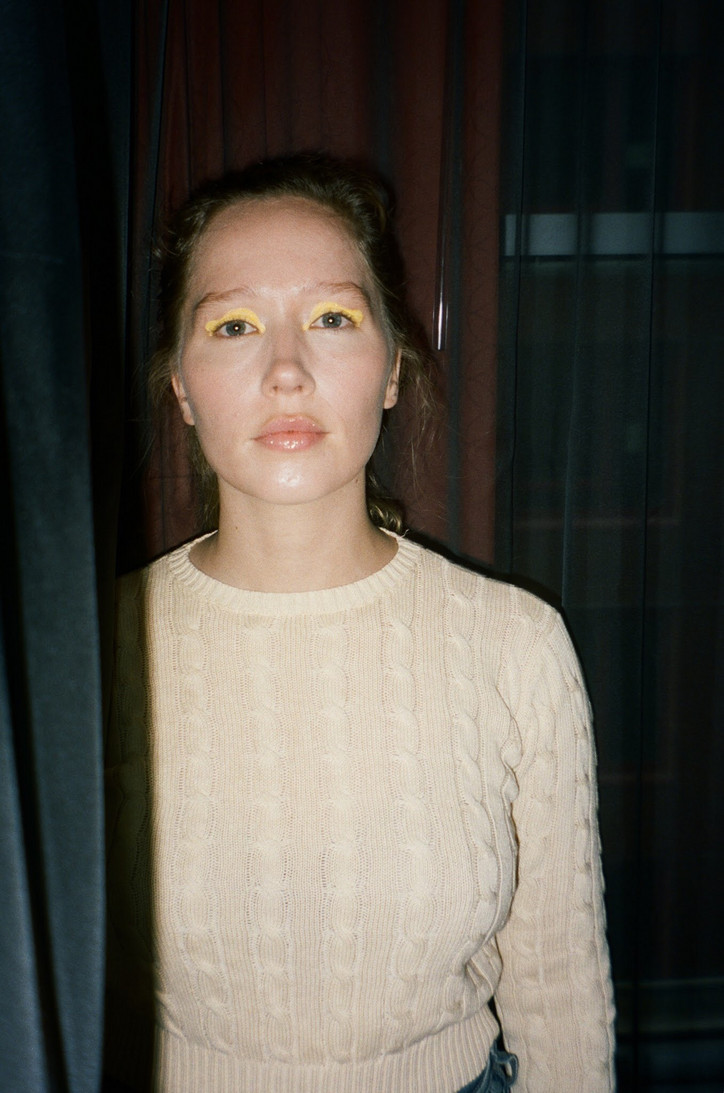
It’s been three years since your last record, and you're about to release your new album Crushing on February 22. Do you think this is a new Julia Jacklin era, or is it a continuation from the last album?
I don’t know. I don’t know how other people will see it. For me, it’s like, completely new.
Completely new?
Yeah, I’m just very different. I’ve just grown up a lot I think.
What’s changed since then?
Well, the last one I made, you know, I wasn’t a musician, really. I mean, I played music, but it wasn’t what I did for a living. I had never really been on tour before. It was all very fresh and green, whereas this one has come after touring for three years, and my whole life has totally changed.
You’ve been all around the world touring. What was your first tour like?
The first I did I was opening for Marlon Williams, a New Zealand artist, and it was okay. I don’t know. It was like six weeks in a van with a bunch of guys, and I was—it was my first experience touring. They gave me a bit of a hard time, kind of like—
Hazing the newbie.
Yeah, hazing the newbie. So, I didn’t have the greatest time. I love those guys but you know, it’s just like, I get it now. When you first start touring, you just have no idea how it works, and you have to kind of learn whilst doing.
The first three songs on the new album deal really physically with—I wouldn’t say body issues exactly, but just like seeing your body, and seeing how other people see your body. Did that come from a real experience? Is “Body” about a nude, or was I reading that into it?
Just the last line,.
It struck a chord with because I’ve had that experience where I’m like, ‘Please, please delete that picture. Delete it now.’
The song made me think about whenever women are shamed for sending naked photos, or whenever, you know, some celebrity gets their phone hacked, like Jennifer Lawrence, and it’s just laughable to me that that’s criticized—as if everybody hasn’t had something similar happen. Well, not everybody, but we live in a world where the way we communicate with each other is through images, and when you’re young—not even when you’re young, but especially when you’re young and you’re in love, it’s so beautiful how much you trust people, and how much you feel that you’re safe, and that you want to give people everything you have because it’s so beautiful to be in love. So, when that’s weaponized against people after the fact, it’s just sad and ridiculous. As if a lot of the dudes that are slut shaming Jennifer Lawrence haven’t received pictures themselves, or sent dick pics. Like, come off it.
And as if our senators aren’t doing the same thing.
Yeah, it’s just so annoying. So, I think that represents a lot of the record in a way of not just being in a relationship, but just how much you give to somebody, and especially if you mix that with a hectic touring schedule or whatever, it’s just like, ‘Where are we? What is yours anymore? What’s left for you when all your space is gone constantly?’ Also, the world I live in as well, it’s like you’re always going from small, shared hotel rooms, to small venues that are packed, to like small vans, and there’s never really—
It’s claustrophobic.
Yeah, and I love meeting fans after shows, I love talking with people, but definitely the way that I am interacted with, compared to my male bandmates—it’s different. Just the way people want to hug you, and touch you, and kiss you on the face, and all of these things that just start to get into your head. Like, how much do I have to give people of myself before, you know? I want to give people things, but even just being on stage and singing about your life is giving a whole lot. So, over the last few years it’s just been me being like, ‘Where are my boundaries? How can I set them? How can I stand up and enforce them? How can I deal with any backlash that comes at me for enforcing them?’ It requires a lot of strength to ask for what you need and to deal with pushback.
Do you see your music as political in some way now?
No. I find that any time someone who isn’t a white guy sings about their life it’s labeled political, and I try not to read internet comments and stuff, but I have noticed some comments under my music recently saying like, ‘Oh, here we go, Julia’s gone political’ and it’s like, ‘What?’ I mean, yes, I am a feminist, and of course I care about these things, but why is me just singing about my life political, when it’s always been about that? Folk music, singer-songwriter music is about sharing your experience. So, if you want to label it political, sure. That’s definitely not my intention. I didn’t sit down and think, ‘I’m going to make a statement. This is my statement album.’ I never want to be preachy with my music. It’s just me singing about things I’ve gone through, and if people are interested, cool.
You have some amazing tracks on the new record. It’s such an evolution from the last. I love “Good Guy,” in particular—that’s my favorite song on the album. Can you tell me a little bit about what inspired it?
A lot of the record is songs about reclaiming myself or standing up for myself, or as I said, kind of trying to process the idea of drawing boundaries. But then it feels like these days you kind of have to be like this strong person all the time. And if you contradict yourself by just one night being like, ‘Actually I don’t really care about drawing boundaries, I just want to go and be held by someone, and even if they don’t really care about me, I just want to pretend like they do, because it’s gonna make me feel better in the moment, then that’s what I’ll do.’ I know it’s probably not good for me, but I’m only human. So, I think that song is just about how exhausting it can be when you are just trying to be one version of yourself, when you’re just trying to be strong and independent—like, I don’t need anybody and I’m working out my shit, and it’s great.
But then you just want to be the little spoon sometimes.
Yeah, and then sometimes you just want to be like, ‘I actually just really want to be looked after and I want to be cared for.’ Even if, you know, that’s not playing into this narrative that I’m trying to build for myself right now and I’m projecting out there in the world. “Pressure to Party” is also about when you go through something like a breakup—it’s like nobody knows what they’re doing, everybody's got conflicting advice. At the end of the day, it just feels terrible and you just have to wait until you stop feeling as bad. And if you have to, whatever you have to do, just do it. You know, don’t be a shitty person, but it’s just so easy to dish out advice to people based off your own experiences, and that’s just not always going to work for somebody else.
Has it been hard to have a romantic life while starting to become a popular artist?
I think it definitely adds a different element to it, which I’ve been a bit wary of. You just sometimes maybe question people’s—
Intentions.
Yeah, or I’ve noticed—and I’m not really famous at all—but I’ve noticed that even at my level of slight profile, that people are a lot nicer to me than they used to be. I used to have to work a little bit harder for people to just be accepting and warm. So, now sometimes when people are immediately really friendly to me, I’m a bit like, ‘Why are you being so nice?’ Because I definitely didn’t experience that for the first part of my life. I spent a lot of my teens and early twenties feeling like the most awkward person in the room, wishing that I had more friends. So, suddenly, when people latch onto you very quickly, it’s kind of like, ‘Hmmm.’ But then it’s shitty, because sometimes people are just really nice. I don’t know, it’s just something you’ve gotta get used to, I guess.
You told me that your videos aren’t necessarily narrative, but do you think your albums have a narrative through-line? Or is it—well, I’m always reading a protagonist or something into it, but I don’t know if you would see it that way.
Yeah, I mean, they were all just from my perspective. I don’t know. I think the themes, to me, always kind of appear after the fact—after I make it. I don’t think there’s much intention in the beginning. To me, it was just like, ‘These are the songs I’ve written over the last year.’ They all ended up having a theme because that was my life for a year. But listening back, I realized that I said the word body in the first five songs. So, it wasn’t an intentional theme or anything, but you can learn a lot about yourself.
‘Crushing’ is out now.