MIRRORS

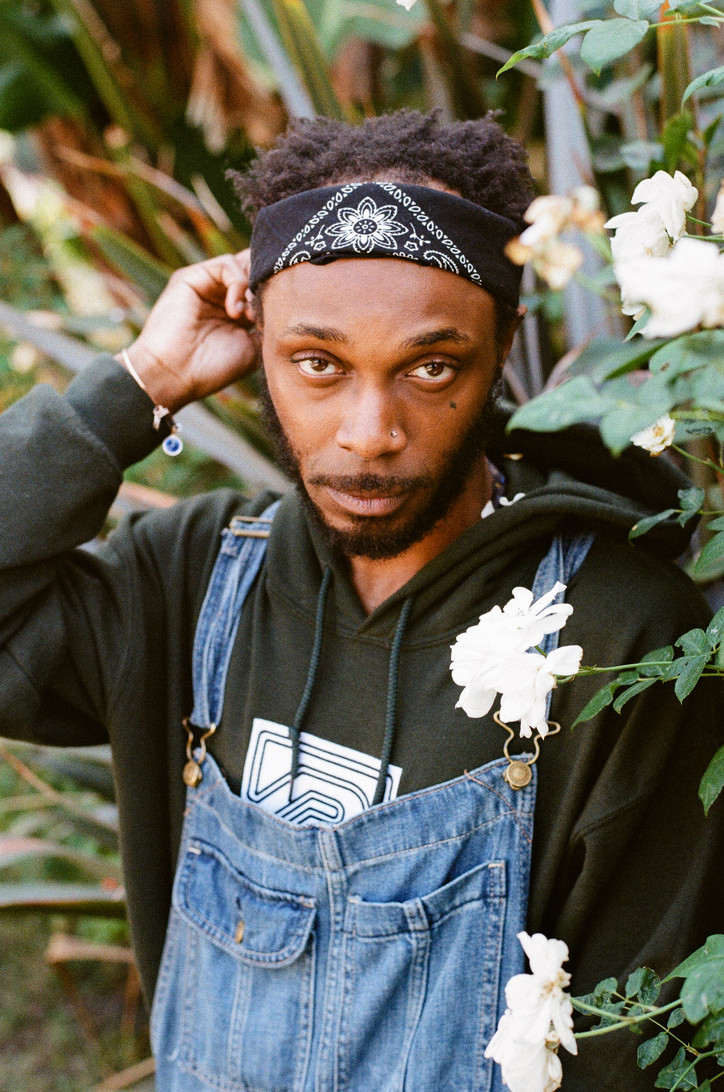
office caught up with the rapper to talk about politics, his future in music and Baltimore DIY space The Bell Foundry (RIP).
You released Veteran almost a year ago. So, what are you working on right now? I know you recently dropped your "1539 N. Calvert" video.
I like making music, so I’m just always making music—that’s what I enjoy doing. I mean, I’m always working on shit. I’m always in the state of creating. And when it’s the right time for me to release something new, I’m going to shift my focus to that.
It’s funny because that song—"1539 N. Calvert"—is an ode to [Baltimore artist loft and DIY venue] The Bell Foundry, which is also featured in the video. I’m super familiar with The Bell because one of my best friends moved to Baltimore a few years back, and she actually lived there. In The Bell. So, I was so sad when I heard it was being demolished.
That’s so crazy! I can’t believe you knew someone who lived there. No one who’s not from Baltimore knows The Bell. So, when I saw it on the news—on CNN and shit—I was just like, ‘Oh damn!’ you know? It was just this place where we always hung out—I never expected it to be on TV. But when I saw it on the news, with everyone using the wrong names and watching people judge the people who lived there without knowing anything, or what was actually going on—it put a lot of things in perspective. And sadly, that shit happens all the time.
Right. What I love about places like that, is just the environment—being able to live with artists, and around artists. It makes you feel inspired, and like you always want to be creative.
Exactly. And it’s kind of like, a friendly competition. When you see other people creating shit, you know you have to create more. I always have to be on top.
Are you from Baltimore?
Not originally. I am from New York—from Brooklyn—and now I live in LA.
Do you think that’s changed your music? Have each of the cities you’ve lived in influenced your sound?
For sure. The East coast is more—I don’t know how to describe it—it’s just more competitive, and harder to be a part of. New York is weird as fuck, yo. Like, when I’d be playing a show in New York, people would just be standing there. Then, when I started performing in LA, it was so different. It was just really hard for me to connect to a scene in New York. In Baltimore, there’s a big art scene and you get to meet so many creative people. New York—I mean, of course I love it—but it’s not like that. It’s more random and spread out. The energy is just completely different in LA.
So, do you think living in LA has had an impact on the songs you wrote for Veteran?
It has, especially because living in LA, I’m less stressed than I was in Baltimore. When I was living in Baltimore, I was more focused on other shit while I was doing my music. So, the music naturally came out harsher, and had a more aggressive feel to it. I mean, I think it still has it a little, because I have those feelings naturally. But in LA, because I am not that stressed, not living in the ghetto like I was in Baltimore, I’m just able to see more clearly. I’m more level-headed. But I will say this: Veteran was made in Baltimore, then mixed and mastered in LA. So, I made all of this chaos in Maryland, then I was able to really make sense of it when I moved to LA.
Do you think Veteran is more experimental than your previous work? A lot of reviewers were calling it your most ‘experimental work yet.’ But I really didn’t hear that—to me, it just sounds like you’ve grown.
I agree. It’s actually less experimental, to be honest—it’s my most straightforward, well put together album. To me, experimental means something out of the box, out of the norm, and there is definitely shit from my previous records that are way the fuck out there compared to Veteran. Veteran is just real—it lays it all out there. Something I always try to do is present a strange idea in a comfortable way, in a way that people can understand it. So, I took a lot of things that could be experimental, and put them together in a way that felt more straightforward.
How do you think you’ve changed as an artist since you first started?
A lot. I think as an artist, the core of who I am has stayed the same, but the way I represent my ideas has switched up a lot. Back in the day, in order to achieve a certain goal, I might say something straight up crazy because I knew I would get a reaction. But when I realized people didn’t get the intention behind what I was doing, I thought, ‘Maybe I should change the way I represent it.’ I’m the same person and have stayed the same person through my career, but the way I present my ideas is different—I’m conscious of the way I say things. I mean, I always say whatever the fuck I want, but now, I’ll present it in a certain way to make sure people understand where I’m coming from. Sometimes it work, sometimes it doesn’t, but at least there’s no confusion as to what the fuck I think.
Do you consider Veteran a political record?
Hell yeah! Not in the traditional sense of like, ‘Just go out and vote!’—it’s political in that it’s how average people talk about politics, how everyone speaks casually about politics in day to day life. So, I wanted to pose it from everyone’s perspective rather than this sort of intellectual, ‘Read this book and go vote’ kind of vibe. With everything I do, I just present my observations and people can make their own conclusions—that’s how I operate. I look at things and I take into account everything that’s going on, and apply it to my own life. So, yes, it’s a political album, but a millennial political album. It’s new age, for people like me.
Yeah, it’s interesting because we’re in such a different time when it comes to politics, and people speaking about politics. Even just five years ago, it was really only the people who were actively into politics that were regularly talking about it. But now, with everything happening in the world, everyone is reacting in a certain way. And millennials, in particular, are really focused on not just having a voice, but making sure its heard.
Definitely. I mean, life in general has been more politicalized, especially because the internet has the ability to spread everything quickly. Back in the day, I remember there was a time where it was not cool if I told some white dude, ‘Yo I play video games,’ because they would think it was weird. Like, ‘Oh shit, you’re black, and you play videogames? That’s crazy.’ But now, it’s not the case—no one would probably think twice. And it’s the same thing with politics. If you used to be into politics that meant you were into this, not that—you would be pigeonholed into a certain box. But now, because of the internet and how it works, everyone can look at anything, anyone can be into anything. So, politics have entered a new realm—it’s not like a fixed market anymore. So, to go back to your original question, yes, Veteran is a political album in the same way that everyone is talking about politics, and this is how I talk about it—my take on it.
But do you feel like there’s more urgency now for you to be speaking up? I mean, it’s always important, but in this climate, it feels especially so.
Oh absolutely. They are winking in our fucking faces. Like with Kavanaugh and shit—it was hard for me to watch that. It was just such a shitshow. I mean, realistically, they didn’t even need Kavanaugh—they could have put anybody in that seat to get what they needed to get done. Then they had this whole trial and basically told Christine Blasey Ford that she was wrong and what happened to her was just like ‘Nah, we don’t care, we are just men and we are doing this shit.’ So, at this point, they are just bald, white and crazy. The whole thing was just a ‘fuck you’ to anybody who doesn’t think like them. So, right now, more than ever, it’s super important to show them we don’t think like them, we never will, and we won’t take their shit, man.
I mean, it’s definitely clear you’re not afraid to say that—I mean, you’ve rapped about the alt-right and Tomi Lahren, and have a song called “Libtard Anthem.” But do you ever feel like there’s a pressure on you to be radical, or make political statements?
I’m sure there are people who are looking to me for that. I’ve seen at it my shows. But I don’t mind it, and here’s why: I don’t have an MO on my album. I literally just put down what I’m feeling at the time, and if it all comes together as ‘Fuck the alt-right,’ or ‘Word on the street you’re a Libtard,’ that’s cool. These are issues that I’m feeling and talking about now. But I was also talking about them when no one was looking, no one cared, no one was reviewing my songs. I’ve been talking about this shit since my first album, when I was 18. This is just what I care about and how I operate. So, if people want to put that on me, I don’t mind. But I don’t feel like I have a responsibility or owe anyone anything. If people see me as some flag bearer for ‘Fuck the alt-right,’ that’s fine, but people need to accept that I’m just being myself—I’m not trying to get likes or go viral. I’m just saying what I mean. I just hope that I don’t get pigeonholed like, ‘We want you to do this and nothing else.’
I know you were in the Air Force. What year did you join?
I joined in 2008, when I was 18, and got out in 2012.
To me, it seems like such a crazy transition to go from something as structured as the military, to being a rapper, and being on tour, where you have absolutely no structure, and no schedule, other than getting to the next show. Being an artist and being a soldier—they just seem like total opposites.
Yeah, they totally are. And most people who do one don’t do the other. But I’m the product of my circumstances. I joined the military when I was 18 and dirt fucking poor. I mean, I was poor as shit in deep south in Alabama, and going to the military was my way out. It’s not like I could afford college. So, that was presented as my only option—my only way out of this shitty, broke town. Literally. I didn’t have any other choice. I hated being in the military but if I hadn’t joined—I’m really high right now, so maybe this doesn’t make any sense—but look, sometimes it’s fucking real. I’m sure this has been said a million times by a million different people, but if I hadn’t joined the military, I would be dead, or in jail. That’s just the truth. It wouldn’t have happened immediately, but eventually—I might not even be alive right now. I’m not saying that the military saved me but making that decision—to get out of my environment—that’s what saved me. And I made a decision the second that I got in that I was going to fucking focus, I was going to hold my shit and get through it until I could pursue a music career. So, I used the time to hone my skill and do what I needed to do musically until I got it and could actually do it.
How did you get into music to begin with? Was it always something you always wanted to do?
It sounds funny now, but I remember a point in time where I didn’t really listen to music. The first music I really listened to and enjoyed on my own was the Hanson record. That “MMMbop” shit. That shit was everywhere. I was fucking in Jamaica, Queens bumping that shit. But that was the first shit I really remember liking on my own. Then, from there, I started listening to these dancehall records my dad had, and late ‘90s, early ‘00s pop music, like prime Backstreet Boys shit. I really started getting into music when listening to all of that, and I was just fascinated and curious about who was making these records, how it was actually happening. Eventually, one of my sisters had a Cam’ron record—it was either Sports, Drugs & Entertainment or Come Home With Me—and there was a song called “Dead or Alive,” which was produced by Kanye. I got into rap because of that track. I just remember being completely fascinated by how he made the song, and got obsessed with looking into it and how he used the Chipmunk samples. That’s really got I got into rapping and production.
But when was the first time you really felt like, ‘I want to do this as a career’?
When I was 18 and joined the military. I was like, ‘This is what I want to do.’ Before that, I knew I wanted to do music, but I just didn’t think it was realistic for me to pursue it. Like, here I am in deep south Alabama – how am I ever going to be able to do this? So, when I was 18, I had this epiphany and realized I really wasn’t good at anything except for music. I couldn’t keep a job, I’m kind of a weird person to be around—music is the only thing I have ever sat down and taken the time to appreciate, and just work on, and love.
So, I had this epiphany where I was like, ‘I am not good at anything else ya’ll!’ I was going into the Air Force, doing basic training and thinking, ‘I am 18, I’m in good physical shape and shit. I’m going to get through this, and when I do, I’m going to do music.’ All of the instructors were just yelling in my face and I just kept my mouth shut and pushed through it because I realized it was a way for my to do my music. I was just like, ‘I’m going to do this, this is what I want in my life, period. And if I don’t succeed, I will at least die trying.’
So, there was no backup plan?
Zero. I knew, no matter what, even if I pursued another career, I’d always be trying to make music on the side. I’d never have my heart in anything. So, that was it for me.
What do you think you’d be doing now if you weren’t doing music?
Honestly, I would be writing about it, like a music journalist. It’s that simple—if I weren’t able to produce, I would find another way to be around it.
'Veteran' is out now. Watch the '1539 N. Calvert' video here.
office sat down with the rapper to talk about ego, his debut mixtape and how the struggle really is real.
Where are you from?
Bed Stuy—the old Bed Stuy when it was insane. It was a tough place in the ‘90s—crime was high, there were a lot of shootings and robberies, and my mother would work endless hours to support us. That isolation allowed me to gradually construct my own perspective of the world. Seeing a lot of violence and seeing my family struggle as I was growing up, I think that actually pushed me to dig deep and it pushed me to find a way out.
Were you always so creative?
Growing up in Brooklyn, you’re either a basketball or football player, you rap or you sell drugs. I was fascinated with music and word play. We grew up listening to hip-hop at family gatherings and cookouts. Me and my cousins would rap to Dipset and DMX. But after a while, I stopped writing music. I hit this low place and started writing poetry.
How do you differentiate between writing rap lyrics and writing poetry?
Rap lyrics are written so that they match a particular melody or sound, whereas poetry comes from a stream of emotions and thoughts. But for the most part, they’re considered to be the same.
What made you stop writing music?
I reached this place where my understanding of my worth didn’t match what I wanted to project into the world. I was lost and found myself searching for this profound placement in life, when in all actuality that place of validation comes from within, and has to be discovered over time.
When did you get back into music?
In like 2014, I met an engineer and we started working together on an album, but it didn’t go very well. We’d get into arguments. I’d work really fast and there was animosity because he’d keep wanting to add to new songs. So, it’d never get out—there’d always be some sort of delay. Through that frustration, I just left it alone.
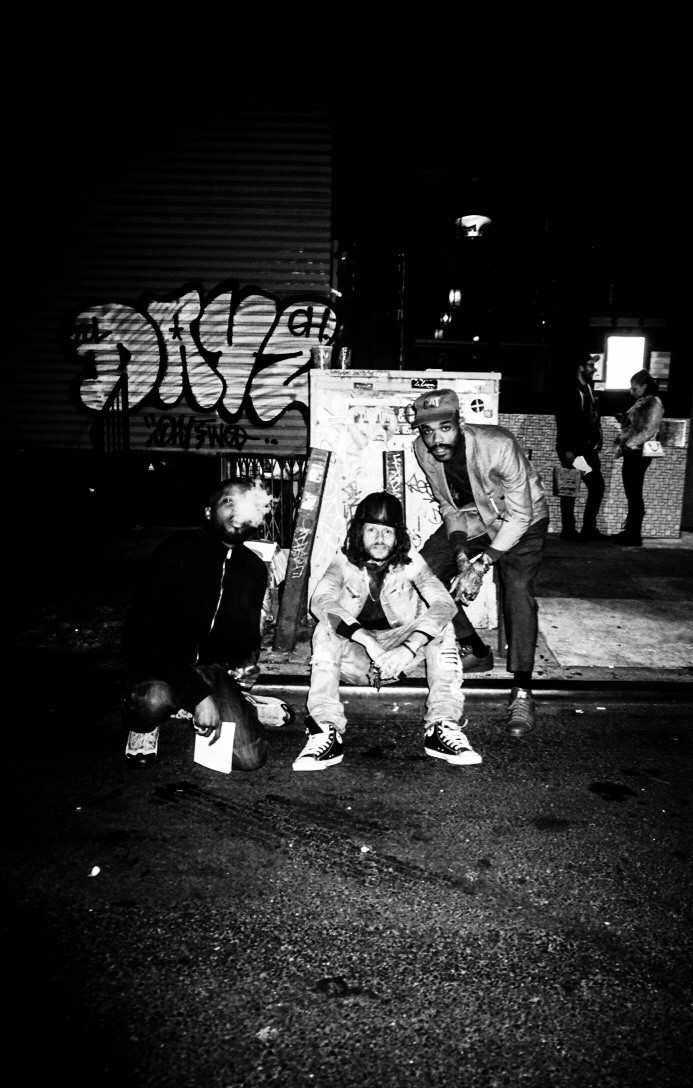
With any creative project, it can be difficult to find partners whom you can collaborate with for a sustained amount of time.
Yeah, I think it’s easy to find people, but difficult to find people without ego and pride. I think those things shift communication. You’re no longer looking at the genuine quality of a body of work. I think you want people that are open and honest and want to make good music. From a deep place, I personally just want to make people happy and feel good. I went through a really difficult experience in my life and I know for a lot of people, going through times that are difficult, it’s hard to see the light. With my music, I want to give people something to believe in. I think a lot don’t push forward because they don’t know what happens on the other side. I want to be that example for them—this is what happens when you believe in something. Nothing can stop you.
Can I ask what the experience was?
In 2011, I had viral meningitis and I couldn’t walk or do much of anything. And there was a moment, maybe 20 seconds, where I actually lost my vision. Going through that really gave me a new perspective. It slowed everything down for me and I started appreciating the simple things, and music was the reason I was able to walk. I had a woman who would come visit me every day and help me try to stand up. After two weeks of trying, she brought over Fabolous’ S.O.U.L. tape, which had just come out. I got goosebumps listening to it and took my first steps.
Music can be such a powerful force. What is it about your music that you think is different?
The music I’m writing is an expression of release. Most people spend the majority of their lives trying to find ways to separate themselves, but really, we’re all connected. I think that if people spent more time believing in a feeling rather than in obsessing over perceptions, they’d be set free from all worries and pain.
Who did you end up working with on The Loft Blue Tape?
It was all me. I bought beats from various producers. It was a culmination of all of the music that I’d wanted to release over the years. There was a specific sound I wanted to make that wasn’t out there yet. And in order to master that, I needed time to understand who I was. I wanted to make something raw and organic for people. I’m really here to shake everything up. So, I wrote the lyrics and recorded it in a studio in Brooklyn.
What’s next for you?
Towards the end of November, I’m releasing my second recording, Old Brooklyn Tape, and Paradigm is hosting a special dinner to celebrate it. I’ll be performing songs from the tape and some spoken-word poetry. I’m truly grateful to work with the Paradigm family.
'The Loft Blue Tape' is out now.

It was a blessing and a curse. Before the craziness, MØ was just a fiery Danish girl making pop music that served as an outlet for her inexhaustibly youthful energy, and that went against the grain. Then she became the grain. Her new album Forever Neverland explores this dilemma.
The album's title (as well as her Instagram handle @momomoyouth) conjures up ideas of endless adolescence, a theme prevalent in all of MØ's work, even in the early years as part of ruthless punk duo Mor. This sort of Michael Jacksonian approach, though, was complicated by her abrupt mainstream success. Suddenly, there were expectations, and with the world at her fingertips, MØ didn't really know what to do. "Success is such a vague word," she tells me. It's true—whereas the general public may have seen her sudden ubiquity as success, MØ didn't feel successful unless she stayed true to herself.
With the help of producer Stint, Forever Neverland encapsulates a sonic balance between mainstream radio pop/EDM and the raw, gritty nature of MØ's roots. In the midst of all this, it seems that MØ has also found a new balance between eternal youth and adulthood—that to simply be yourself is to fight the looming suspense of getting older. When I ask what she was like in school, she replies: "A very distracted, energetic and noise-producing child." Fortunately for MØ, I don't think that will ever change.


Dress by Adam Selman, tights by Maison Soksi, pendant by Bijules, stylist's own shoes.
You occupy a space not many artists have occupied—being suddenly thrown into intense mainstream popularity and having to navigate that yet still stay true to yourself. What was the hardest part of it all?
The hardest part was navigating it. There was just so much noise, and so many opinions, and I am unfortunately very bad at multitasking. I need to digest my thoughts one-by-one, so I found it difficult at times—especially back in 2015 and 2016. At the same time, I was also super psyched and pumped up by the whole adventure so I didn't want to just shut the door until I had figured out exactly what I wanted. I wanted action, so I engaged in the action even if I wasn't 100% sure where I was going in the beginning. It was fun but also difficult because I wanted to experiment and "ride the wave," but I was also constantly scared of not being true to myself and to my music. Everything is a process though, and I'm glad that I had the chance to experience and learn from this phase in my life.


Coat and pants by Maryam Nassir Zadeh, stylist's own top and shoes.
What’s your favorite lyric or combination of lyrics on this album? Is there one that made you jump out of your seat when you came up with it?
I do really like the lyrics in the last song on the album, "Purple Like The Summer Rain." I like: "This is what I wanted all my life / No one can take it, no / Pour me all the wine and let me picture that I made it, oh!" because that was just really how I was feeling at the time. This thing about "making it"—what does it even mean? Success is such a vague word. I also like this line from the same song: "This is what a universal fairytale is made of / Sugar in my veins, purple like the summer rain." How no single feeling (and nothing in life, really) is one dimensional. There's always a bit of blue to the red.
What do you think makes Danish female pop artists stand out and be so bold? Sometimes I feel like Danish female pop could be its own genre.
Yeah, I agree with you. We have some great girls. I don't know what it is, though. In my personal opinion, I feel like Danes like to be a little bit different, we like to stand out a bit, but at the same time, we're ambitious and we don't take ourselves too seriously all the time, which I think is a good thing. Knowing what you’re worth, but at the same time, having a bit of self-irony.


Coat and pants by Adam Selman, shoes by Alexander Wang.
If your voice was an animal, what would it be?
A weasel. Cute, rough and a bit weird.
Describe the role Los Angeles played in the making of this album. Is it really the City of Angels?
It's the city of some angels. Los Angeles and the songwriter/music production community that there is out there introduced me to a whole new world and new way of making music. It is much more collaborative than what I had been used to making No Mythologies To Follow. To begin with, it was scary because I wasn't used to opening up to strangers in a songwriting situation like that, and you really have to open up if you want to write a good song. I was so socially aware all of the time, completely out of my comfort zone and couldn't focus on the song. But I grew with the experience, got more and more comfortable, and found a handful of people that I now write a lot with. So, I'm happy that I pulled through the challenge.
I still have a lot to learn, though. I also learned that it's great to work with others but it's also, for me at least, important to still write songs completely on my own from time to time.


Dress by Saint Laurent, shoes by Alexander Wang.
What were you like in school?
A very distracted, energetic and noise-producing child. Hungry for attention and activities. But also a creative little daydreamer.
What’s the biggest life lesson you’ve learned since the release of your last album and Forever Neverland?
That it's important to have faith in your own abilities. I know it might sound banal, but sometimes—in an ocean of opinions, possibilities and stress—you can forget that the reason why you're here is because of you. It's important to listen and evolve, but you also have to nurture and believe in your own creative fire and visions and know when to say "fuck no." Also—work hard and be kind to people.
How did you experiment with new sounds or methods in the studio with this album, if at all?
We did, and my executive producer Stint really helped me find my sound for this album. I'm honestly not super technical when it comes to defining sound. For me, it happens in a very organic and natural way—I know what I like when I hear it, you know? I always love a blend of modern trends, simplicity, something kind of dark, a weird twist and then a blast from the past of some sort. And then I hate if things get too boring or if something repeats itself for too long or if it feels forced.


Coat and pants by Adam Selman, shoes by Alexander Wang.
office is all Danish, and so are you. How did Denmark influence your sound growing up?
The music that I have been the most inspired by throughout my life actually wasn’t Danish music—it was from the US or UK, except Aqua and Kim Larsen, which I listened to a great deal. But I lived my whole life in Denmark and every important step on the road has obviously influenced me somehow, so my output will be some kind of product of that. I am all Danish as you say. So, even if my music is globally-focused and inspired by global music back then and now, there will still be a big chunk of my Danish upbringing in there somewhere.
What does MØ’s future look like?
Hopefully bright, and stuffed with music and adventures.
Photo assistant: Caroline Brown; Stylist assistant: Jalil Johnson; Lead photo: Jacket by Ganni, pendant by Bijules, tights by Maison Soksi, shoes by Alexander Wang.
Forever Neverland is out now.