MIRRORS

What is your first memory related to music?
I was like 5, and MTV started blasting out Red Hot Chili Peppers' "Californication," and I was high on a cocoa drink my mother had made. I freaked out completely. The sugar rush and the thrill and the grandness. I could have died there and then, a happy kid. My mum had to call the doctor.
How did you guys start Ruby Empress?
We’re all from Gothenburg, Sweden. We were like 16-17 and searching for strange young people that wanted to be up late in dark clubs, who were into retro disco, classical music and psyche. That left the four of us back then..
Do you have any intention with your music? What do you want to offer to the music industry?
Ah, in a way. We are pretty eclectic and don't really follow any certain format, so I think we offer an alternative to the current algorithms. That is the offer to the industry. To people and friends we would just like to offer love, a good deal of drama, some grand historic elements and a retrospective of the future. All we can say is that we’re trying. We’re not there yet, but we’re getting better and better I think.
Where did the name come from?
“Ruby” was a shimmering and mysterious word to us, both male and female and both strong and beautiful, and so was “Empress”, an eccentric, ancient and exotic ruler. It made a lot of sense and described the band well. Of course we’re all guys, but the band is both male and female in a way.
Who is your role model, outside of music?
Our role models are people who are brave and wise, and who know a lot. It doesn’t have to be facts, but just intuitive knowledge: people and minds like Yves Saint Laurent, Alexander McQueen, Kawabuko and so on. It's humbling to watch creators take things to its edge, to see how some people challenge their courage and fears. I hope I can meet those people and work with such great minds.
If your band were a cartoon character, who would it be?
Easy! That would be Fletcher Hanks' character Fantomah--sadly rather forgotten. We should revive her.
Tell me about your new single “Kimono House".
Kimono House is a song about love, time and momentum. I saw this adaptation of Edward Hoppers paintings by Gustav Deutsch, and then I got into Hoppers' world. I knew what still-life was but this was more like still-time, I thought. There's this hope that we can defeat time, "We can do it if we try," repeated like a mantra in the song. A mad love, frozen in time.
What is your pump up song?
TS: How about "Pop Life" by Prince? Every time I think of "Pop Life," I get happy and must play it. It’s a curse!

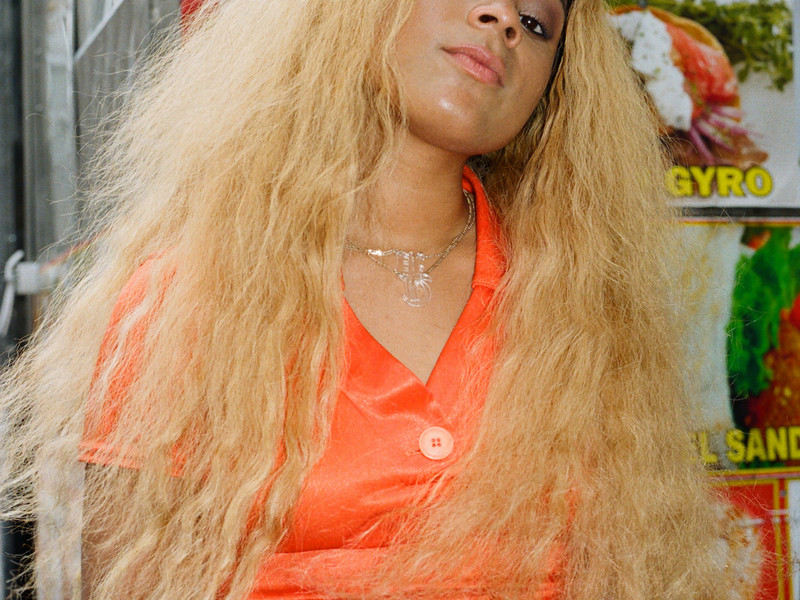
Born in Queens, where she lived until she was five, Yaeji and her family bounced around a lot, eventually spending a stint in her parents’ native South Korea. She returned to the States to study visual art at Carnegie Mellon in Pittsburgh before settling in New York.
“I came [to New York] not knowing anyone,” she says, picking at some avocado toast. “It was very lonely for a long time. I think what kept me going was my true passion for music. I would go to so many shows, like four or five a week, just because I was into the sound, and that led me to friendships.”


Like the self-titled EP on which “Feel It Out” appeared, her latest EP, EP2, showcases the duality that makes Yaeji special. Take “raingurl,” a throbbing highlight whose lyrics juxtapose carefree clubbing with spiraling introspection, an effect heightened by Yaeji’s bilingual rapping. The joyfully hedonistic chorus (“When the sweaty walls are banging / I don’t fuck with family planning / Make it rain, girl, make it rain”) is balanced by soft, lyrical musings in Korean (“All the suffocated memories…In a room with no windows.”)
This contrast extends to, and is manifested by, Yaeji’s identity as a Korean-American. “My whole life up until college I would say I was lonely,” she tells me. “I don’t have siblings, and my parents were always working very hard, and they still are. So I spent a lot of time alone and didn’t have friends. When I was in America (as a child), I just couldn’t relate; I wouldn’t get along with people. But it wasn’t that I was super Korean. I knew it was really because of how I looked.”
In Korea, the sense of isolation was different but no less present—she looked like everyone else, but had spent nine years immersed in American language and culture. “In that way,” she says, “my upbringing definitely made it difficult for me to feel comfortable.”
Things couldn’t be more different now. A year after moving to New York, Yaeji finds herself at the center of a supportive, diverse, and creative community of close friends. Pals from her college radio station—“all nerdy and really into music”—make up some of her crew, but she’s also picked up people along the way. The group uses her Bushwick visual art studio as a clubhouse of sorts.


“I have a studio because I wanted to have a completely separate practice from my music, and just have ideas flow that way,” she says, tapping her fingers on the table. “It helps me with my music. And then I realized that it was such a good hub for people to come and hang out. [The studio] definitely sparks so many conversations—late night conversations, which is really special for me because I had that in college. That’s my favorite way of getting to know someone.”
New York can be lonely, especially after graduating. But listening to Yaeji tell me about her makeshift family (which I’m desperate to be included in), I found some solace in having felt that sense of isolation myself, not only as lunch mates, but as two members of the same overly-connected generation. Though Yaeji’s work openly deals with feelings of isolation, she rarely writes about the most romanticized type of loneliness—heartbreak.
“There are some sad love songs I’ve written,” she says slyly. “But recently I’ve been feeling really great and really loved.” She agrees to tell me about the guy she’s dating, as long as I don’t use any names. “We were friends for a while, since I moved here, and he’s really a supportive partner—and I am to him, too. Maybe I’ll make more songs about that soon,” she says, pushing her glasses up her nose and smiling. “Maybe I’ll stop being so moody.”
Yaeji shies away from compliments, which is incredibly endearing. She instead tends to play off her growing success—write-ups in the New Yorker, rave reviews from Pitchfork, video plays in the millions—as simply another notch on the belt of her collective of friends as a whole. For someone who spent a lot of time by herself growing up, Yaeji’s appreciation for and cultivation of community is not only logical, but vital to her being. “I was really scared of getting bigger because I was raised in a culture that’s very private and very, very polite,” she says to me, sighing. “So for me, when something exciting happens, I’m very shy about sharing it.” She smiles like a proud mom talking about her kids. “I feel like we’re growing together.”
Yaeji's EP 2 is out now via Godmode.

Hess Is More's new album 80 Years, out December 1, continues this theme of time being a sort of bending machine. "Music often has this ability to forecast life in more or less direct ways."
Watch "It's Backwards No Matter What I Do," directed by Frederik Sølberg, below.
VIDEO CREDITS
Concept & Story: Henrik Vibskov, Directed by: Frederik Sølberg, Director of Photography: Linda Wassberg, First Assistant Camera: Caitlin Royse, Production and Set Design: Vibskov Studio, Gaffer: Viggo Grumme, Best Boy: Gabriel Stefan, Editing: Ricco Højland Hansen, Music by: Hess Is More, Grade: Anders V. Christensen, Online/mastering: Kong Gulerod, Film Stills: Alastair Wiper