MIRRORS

Fortunately, the rap album he’d impulsively dropped before going away had begun to make noise in the local community by the time he got back. Capitalizing on that buzz, he focused on making music and gradually built the business of his neighborhood T-shirt shop to earn an honest living.
Now, with his first full-fledged LP All Blue being heralded as the second coming of West Coast gangster rap, he’s beginning to taste the perks of success, splitting his time between the old hood and more upscale, secluded accommodations in the Hollywood hills. But rather than gradually distancing himself from the environment that once threatened to be his downfall, he’s committed himself to the community that raised him, seeing his newfound popularity and influence as a means of pulling his fellow bangers up out of their fraught and often all too brief lives of crime.
He spoke with us from LA.
Perico?
Yeeeah, what’s poppin’ man. My bad for being tardy, I just slid up out the mall.
No worries man. So listen, I think for anybody who’s learning about you for the first time, it’s pretty impossible to distinguish between you and your gang affiliation. A lot of attention is given to the sensationalized violent and criminal aspects of it, but I’m curious, do you feel being a Crip has actually helped you?
That’s a real big question right there, I was just talking to somebody about this. Actually I think that being a Crip, and just being affiliated with the gang shit, of course when I got involved I didn’t think nothing of it, the consequences. But me going through all the stuff, it kind of hurt me a lot, as far as life is concerned, but being a survivor, and still being here after all is said and done—which, I mean, you know life isn’t over, it’s still going, but like, just a lot of the shit that you go through, I survived it, so I exploit it to my advantage. So all the fucked up shit that hurt me, I exploit it to help me now in entertainment. I can speak on a lot of different topics and subjects, and then in the streets I’m respected. Even in the industry, people that want to hear about that crazy lifestyle, I’m respected because of all the fuckups I went through. In the streets, when you fuck up, and you do crazy shit, that’s like a trophy. In a different world, the regular world that everybody else lives in, it’s not good, but for you to be able to make it through it, it helps you a lot. Like, “Damn, he went through all this crazy shit, and he’s still here. He still talks somewhat, with a bit of intelligence.” You know what I mean, I’m still approachable and everything. So it’s like 50-50. It fucked it up but I turned it around to make it help me.

It’s funny, the language you’re using makes me think of war veterans, who come back with such damage done to them by the experience of going to war, but can take pride in it and can turn it into something where they’ve got qualities and behaviors that benefit them, and they’ve got a story to tell as well.
Exactly, so the whole thing is just using it to my benefit, because I got a lot of friends and homies that I grew up with and been around, and they’re survivors too, in some type of aspect, but they don’t know how to turn it into something good, to help them grow. People just stuck in that. And I’m not saying I’m fully, all the way turned around and completely in a good place, but I kind of stepped out of that fuckin revolving door. I’m almost out of it, you know?
Gangster rap as a genre, what makes it real, what makes it good is when it provides a true look at the gangbanging lifestyle. So then when some of these rappers get big and use their success to step out of that life, isn’t that a threat to the authenticity of the music?
That’s a good question, I was thinking about that the other day. I still be around the hood, all my people still stay in the hood, but I was thinking about that. Success, could it steal your authenticity, and your edge. In reality it does, because if you’re anything like me, and talk about experiences or conversations you might have down in the ghetto, or shit that you see on the regular, consistently, of course your outlook and your music will change if you’re fucking rich, and staying in fucking Beverly Hills or some shit every day. A lot of people, when you get introduced to a different lifestyle, that’s anything but the ghetto shit or the gangster shit, you’ll eventually be like “Man, what the fuck am I going back over here for?!” I think it definitely steals from your edge, I been thinking about that a lot. Because I can kinda taste it, you know? I be battling with myself, like I gotta still be in the hood, I gotta still be on the block, but my music gotta evolve. You know, when the time come, right now I’m still runnin around the hood and shit. But as the success come and I step into a different lifestyle, as an artist I gotta speak on that too. I’m living life, but I still got the gangster frame of mind, so it’ll just become next level gangster shit. Putting more people in a position to have shit. The story’ll definitely grow and get bigger. A lot of people, shit do get watered down and they get weak. But that just comes with losing sight of what’s going on.
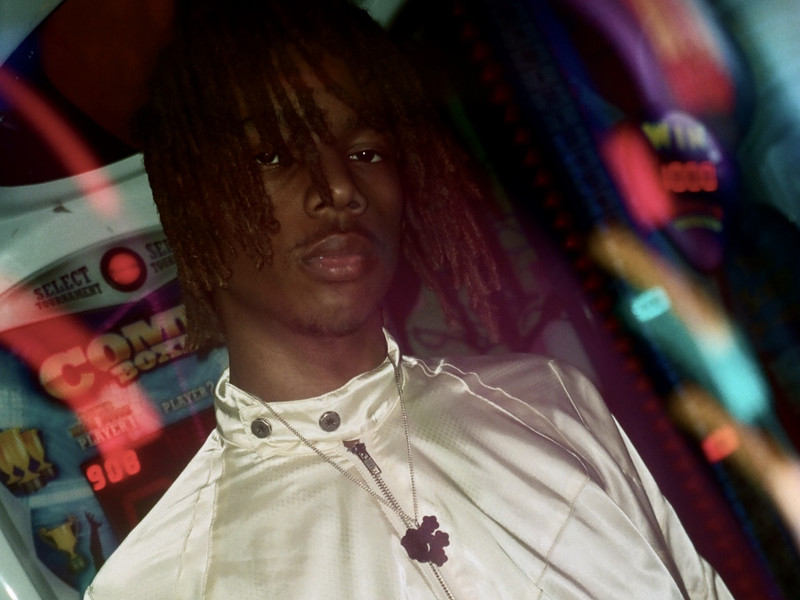
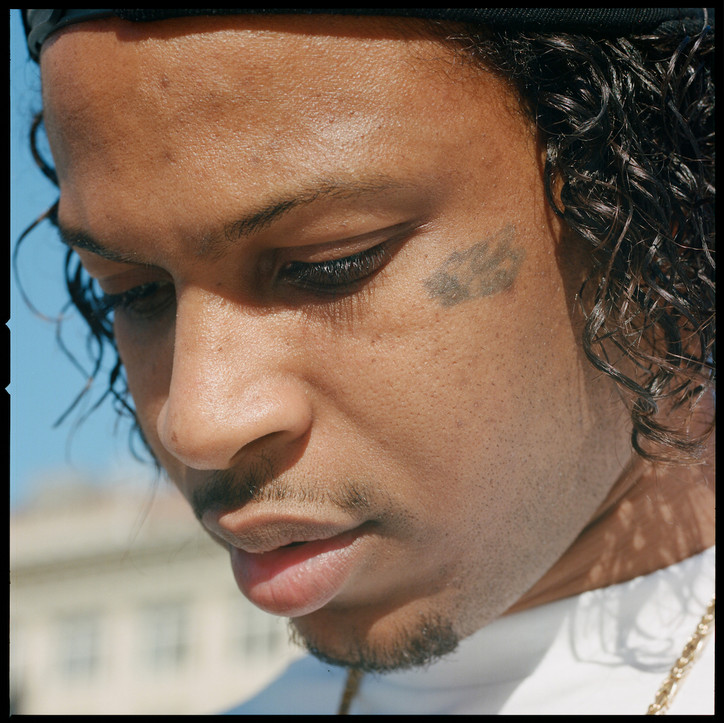
Getting too comfortable, maybe. So you were talking about the sorts of things you see every day in your neighborhood, in the area where you came up. Everybody loves to ask you about the Jheri curl, and you’re very quick to explain that it’s not just some rap image gimmick, for the album covers and photo shoots, but if that’s the case, then in your neighborhood if you see a local dude rocking the Jheri curl, what does that represent? It’s a bold hairstyle, it says something.
Me growing up, I was always labeled as a pretty boy, because of how I look. Light-skinned dude, cool features I guess, that’s the best way to explain it. So everybody that had curls and shit, when I was growing up, and the homies that still got ‘em, they like consider theyself fly, and a ladies man, somebody that’s having a little money in the ghetto. So it was kind of like a status symbol of being a fly person, you know what I mean? I’m about to get my shit fly, whipped, curled up, the girls are gonna love it. It was something like that. When I stepped off the porch, I was thrown in like a pretty boy, fly guy category. Which, in return, made me act up a whole lot. I come through and the older homies and shit, “Look at this pretty ass nigga right here.” And my cousin, we came around the same time and shit, he came on the scene a few months before me, and he black as a mu’fucka, he a little crazy, you know what I’m sayin? So when we would walk up they’d embrace him, and they’d be on my like I was a pretty boy. So it made me act up and do all the crazy shit. In return I went through a whole lot of shit for it, but naturally I was already in that category, already wore curly hair a shit. It’s pretty much just a symbol of fly shit.


What’s the current feeling right now in your neighborhood? Communities go through different phases, and I’m curious how socially and politically what’s happening in the country affects your community dynamics.
The feeling in my neighborhood is so much shit just wrapped up in one. It’s a serious disconnect in the ghetto in comparison to the bigger world. It’s like a superdisconnect. Right now it’s just like drugs have been hitting the area. Like meth, meth which was like, not a black drug, or a urban drug, hit the area so fucking hard. I would say it robbed the community of resources, and what I say by resources, like the people that come with those good ideas and help the community function. That shit fucked a lot up. And as far as politics of the world, the area is so disconnected. That’s where I come in at though, to try to bring some good back to the area, and help people be aware of what’s going on outside the area, in order to make the area better. But it’s just so disconnected with these drugs. The only thing that people understand about politics around here is voting for propositions and shit, the three strikes shit which passed, juveniles getting life and shit like that. Pretty much just laws that fuck the community up even worse, that put the community in a worse place. That’s really all people understand. As far as economics, shit that’s necessary for growth, in my community there’s not too many people that’s there—a lot of people that understand it then went crazy trying to help and preach that shit. I’m really like the voice, in my music and shit. Of course I get ignorant, but I got joints like Bacc Forth where I mix it in. I understand what’s going on, but I can’t come through and hit everybody with all this shit at one time, people would get scared. So I’m spoon-feeding it to the area right now. But my area is pretty much like any other area, it’s the east side of LA, low income range, the average income is probably fuckin, 30,000, 40,000 dollars maybe, if that. It’s like an island man, in the middle of one of the places with the best fuckin real estate in the world.
Tell me a little bit about your shop, So Way Out. Does it provide you with a link to the old neighborhood while you’re kind of straddling two worlds at the moment?
Yeah, So Way Out started off as just something for me to do, to stay out of trouble. I got so much energy and a lot of shit to do, and as opposed to me selling drugs and being out just gangbanging and shit full-time, I’ve got the store to put my energy into that, and to help my homies. When I got my store, a lot of different stores popped up in the area, smoke shops, T-shirt shops, markets and shit. A lot of my homies started trying to open their own businesses, even outside of the area. So that was a definite good thing. But I started it as something for me to stay out of trouble. I was fresh out of jail, all my homies just got indicted, street shit got real scary. What I mean by street shit got scary, not me being worried about what the next man from across the bridge or across the tracks would come do to me, or even the police pulling up on me and catching me with something, but people that I considered my friends…you know we call ‘em cross artists. Whether they be working with the police trying to set you up, or they be playing friend and trying to set you up to get robbed and killed. Me, just being a person, my whole thing’s always been just spread love amongst the homies, because at the end of the day the gang is really supposed to be like the community. In order for a community to operate right you gotta spread love and understand each other, and know everybody’s position. So that was my whole thing, and then once all this other shit came into the game, it was like, I know what I’m good at, I was only good at doing street shit, I was only good at hustling, I was only good at gangbanging, fighting and shit. So I had to step away from that, while still being in it. Right now I’m maybe a step away, but I’m still involved. The store helped me to stay away from that, and guide my friends in a different direction, because at the end of the day I know I’mma be alright. It’s just something for the community.
With so many of your friends over the years dying, going to prison, flipping on each other, do you end up feeling more and more isolated?
Yeah, at one point in time, a few of my friends was in prison and shit, and my best friend Corleone had got killed, and then my other close partner that I did everything with kind of stepped away from the scene, so I kind of felt by myself. Even though there was a lot of people around me, but I can’t really trust none of these niggas, I don’t know what they on, I don’t know if they leaving me and talking to the police, I don’t know if they got cameras in they chains and shit, and they just setting me up. So yeah I definitely felt like super isolated. But luckily I had the microphone, and I just put the same energy I put into gangbanging into the music, I think that’s why it’s been a success the way it is. Because I’ve been a super successful street dude, I’m a reputable person in the street even if I don’t rap, I’m fuckin famous in the city. So the isolation, the way shit changed and switched, forced me in a good way to put my energy into the music. And now here we are having a conversation.
What about when you come through New York? Are you getting a reputation out here, and is there a serious Crip presence here that you connect with?
Hell yeah, New York is super love, man. Soon as I hit New York people recognize me, it’s a lot of homies out there, it’s a lot of Crips out there. Outside of the Crip shit it’s just people and individuals I connect with. That’s really my whole thing, just to connect with the people. Because I got a crazy story, so I’m not a person to judge. I understand people. And New York definitely shows major love, from Manhattan all the way to the fuckin ghettos in the Bronx, Queens, Brooklyn, it’s major love.
And as your music career grows, are your aspirations growing with it? Are you trying to do bigger features and collabs, or trying to keep it local?
I definitely want to be the best, and be in the best situation. So yeah, bigger features, bigger production, bigger moves. Why not grow big in this shit? That way I can help more, the bigger I get the more people I can help. The more of my homies that got potential but really don’t have no direction, they might fuck around and get killed or get life. If I can help somebody from going down that road, then that’s what I wanna do. So of course I need to get bigger, I need to do the biggest songs, the best features, the best videos, the biggest shows. Everything that I could do, the biggest. Because when one person gets killed or gets life, that affects an entire family, and families affect the community. It’s like a chain of command. I feel like it’s my duty to be the best and the biggest I can be. So hell yeah, I wanna be the best shit.

When I was 11 years old, I was obsessed with Hairspray, so that’s where I know you from.
Of course, of course.
And when I think of you, I kind of think of this batch of LA artists who have been working in music since they were very young—JoJo, Tori Kelly…
Yup, but in a different way. They’ve kind of done music all of their lives, but when I was young I was getting deals for acting. This is my first venture as an artist, but they’ve kind of been doing the music scene since they were twelve or thirteen. I was too busy filming, but I was able to watch them, and over the years I watched them grow into incredible singers. They can both write, too.
When I think of them, I also think about the struggles they had. JoJo had so much drama with her label, and I know it took Tori a while to get to where she is. How do you think you are separate from that?
I think that when you’re very young, you don’t really know yourself as an artist. And so when you’re thrust into a world very quickly and you’re kind of figuring out who you are as an artist, people’s first impressions really matter. That’s why it took so long to come out with my own artistry—because I’ve seen my friends struggle with finding out who they are in front of everybody. And the main difference is that they don’t write for other people. Their brand is contained for just them. I’m not just an artist who happens to be a good songwriter, I also write for other people. And that was also a really key factor in finding myself as an artist—knowing that if I wrote for all of these artists, well, that’s not me. Figuring out who I am will take time.


I’m super interested in the songwriting side of things. You got signed to a publishing deal when you were 19, right?
Exactly. After Hairspray, nobody wanted to write with me because I refused to sign a deal. I didn’t want to be in messed up contracts at a very young age like some of my friends, so I tried to go in the completely opposite direction and stay independent for as long as possible. This first project is tailor-made for me—no label, no anything.
I guess it’s a question of finding visibility when you’re still young and everyone else having overwhelming opinions that keep you from expressing your own.
True. Especially when you’re working with so many types of people. At a very young age, [those girls] were working with heavy hitters in the game, so it’s very easy to get caught up in people’s opinions that you look up to.
Have you ever written a song for another artist that you wanted to keep for yourself?
This just happened recently. There’s a song that I wrote for Selena [Gomez], and I was like, “Oh, this is really great.” But I actually like her better on the song, sound-wise. And then there’s some stuff that I did for Janelle Monae that I really like. I have three or four songs on her upcoming album.
Janelle has also been breaking barriers by doing a lot of acting lately.
Exactly! She’s going the complete opposite direction, and she also has her label and other ventures. So she brought me to Atlanta, and over the past few months we’ve been going in just really trying to finish up this album. Same with Christina Aguilera. She kind of met me right in the middle ground of, “I understand you want to be creative, but I also understand your label—they want a hit.” So finding that middle ground for my project was actually a lot less complicated than I thought it was going to be. People are always like, “How do you have thirteen songs that aren’t yours coming out over the rest of the year and still have twelve songs coming out on your own project?” It’s literally just about staying focused and going back to knowing who I am at a very young age.
Since you’ve written for such a wide range of artists and genres, was it hard to compress this into your own sound for this album?
I think that since I’ve written for so many people, I was able to be like, “Okay, I’ve been down that road, and that’s not me.” I know I would never sing the same thing that I wrote for Fifth Harmony. Maybe 16-year-old Tayla would.
I’ve found myself by saying, “This doesn’t sound like anything that I’ve ever written for anyone.” And I’m not afraid of that now. I can just fall into it.
Interesting. I know Sia released a whole album of songs that were rejected by other artists. Yet she’s still been consistently on top of the pop game somehow.
Because people don’t know what a hit song is until it’s a hit song. There are so many songs that were passed on that massive hits. And so I really, really respect Sia because she is an artist that can also say, “Hey, I believe in this song regardless of whether this massive artist believed in it or not.”
I listened to your new album last night. It’s a very fresh-sounding R&B—the “new” R&B, if you will. Is this the type of music you personally listen to?
I listen to everything, yeah [laughter]. You described the album as this “new, fresh R&B,” and I kind of wanted to redefine what the “urban” space is because I’m not all the way Urban, and I’m not all the way Pop. I think I’m somewhere right down the middle where every day I wake up and somebody is saying that their favourite song [from the album] has changed. I love dance music. I love “feel good” music. I was listening to Kaytranada on my way over here and I noticed that. I also travel a lot, and when I go to London, for example, you can obviously hear those influences in my music.
There are so many different sounds on the album. Were there any favorite samples or sounds that you used?
Well, funnily enough, the song “Baby Blue,” came to be when I went on a date with this guy and he was like, “There’s this song that’s been stuck in my head all day,” and he started singing that Outkast hook, “Pretty pink, baby blue.” Fast forward two months later, and I’m sitting in the south of France in this castle just writing songs with incredible other writers like Adele. Just five people. I’m sitting there and I’m like, “What if we play a crazy bassline but take this hip hop song that is an Outkast album track?” Everybody who knew the track was so shocked, and the people who don’t know it thought it was so fresh. That was one of the most exciting, cooler songs I’ve sampled.


I think it’s cool that you got Syd on a track because it kind of reminded me of Syd’s latest record. But some of the sampling also kind of reminded me of Frank Ocean.
They’re mixing genres. They don’t care about what a girl’s supposed to say or what a guy’s supposed to say. They just care about relating to people. At the end of the day—no matter what color or sexuality—we all have the same emotions. You’re either loving somebody, hating somebody, getting your feelings hurt…those are all just human emotions.
When I think of current pop songwriters, they all kind of have a specific sound and work with the same kinds of artists, whereas you can work with any kind of artist and still make your sound fit.
Anybody. We don’t have to only do pop or urban. We don’t have to be locked in because I think that also gives you a creative block. Obviously, not everybody wants to cross genres, but I’m super, super happy I can because I think I would get bored. It’s very different writing for people who have a “box” that they’re in and that their entire team wants them to stay in. Lately I’ve been finding that people bring me in to break an artist out of their box yet still keep them, you know? I’m going into my own artistry and walking into the studio, and I ask myself, "What do you feel like saying at this moment?" Then I'll just go, “Play me the weirdest beat. Play me the beat that nobody could write over when they came in.” And don’t play it yet until I step into the booth, because it’s always going to be the first thing I do that’s gonna be like, “Got it.” When I try to revisit, it loses something that’s real. That’s what “In Common” by Alicia Keys was—a freestyle. And then the next day, her label had flown in and were like, “Yo, there’s the song.” I’m like, “I don’t even remember what I was saying!” It’s just mumbles that I blurted out, and then there’s a song. I don’t know where it comes from.
You said an album is coming next year. In preparation for that album, what do you hope people take away from this mixtape?
Well, this is just the intro to me. I want them to all have that same exact reaction that you had where they say, “Oh, what is this? This is something new and something fresh.” I’m excited to see what this continues to evolve into. That’s all I want people to do—hear something that makes the inside of your brain go, “Huh.” You can love it, you can hate it, but it’s going to make you think.
Tayla Made is out now.

I understand that you grew up in South Carolina. Where are you living now?
Oakland, California.
How long have you been out there?
Five years. I went there originally because I was together with someone, and it just felt right, especially being from the south. There’s a good mix of cultures, different ethnic backgrounds. I feel like the Bay Area is like its own little world with the bridges and the microclimates. Every time you see the bay it feels like a little Mario land. The vibe is really good and California always seems progressive to me. Being from the East Coast, I just really like the pace and the nature too.
Was there a group of people in the Bay Area that you were clicking with creatively that inspired you put down roots there?
When I moved out there, the band followed after. I didn’t have a scene or a community. It wasn’t until I met Anthony Ferraro who plays as Astronauts Etc. He was a gateway to meeting musicians in the Bay. It all built from there.
I know you are a multi-instrumentalist, a singer, and a producer. With the band is it a group process coming up with songs or more of a solo process?
The template has always been that I go in and knock out the songs by myself. If I’m going for live instruments I might hit up a drummer or a guitar player like Ruban Neilson. The live version of Toro is something different, it’s a situation where it might not sound just like the record but is something cool in its own way.
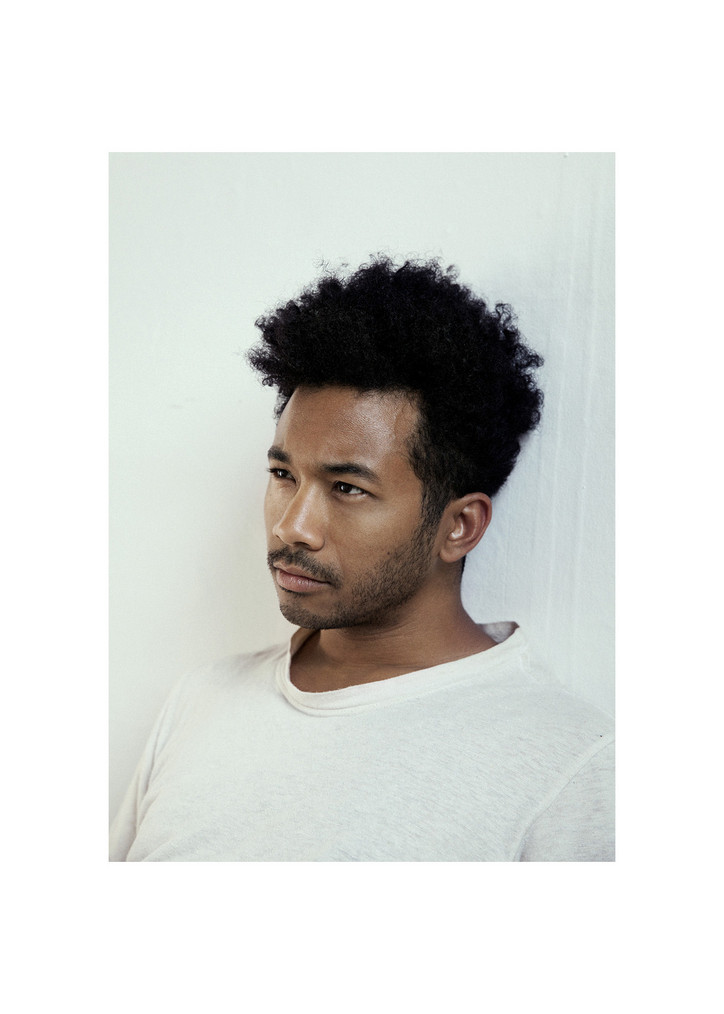
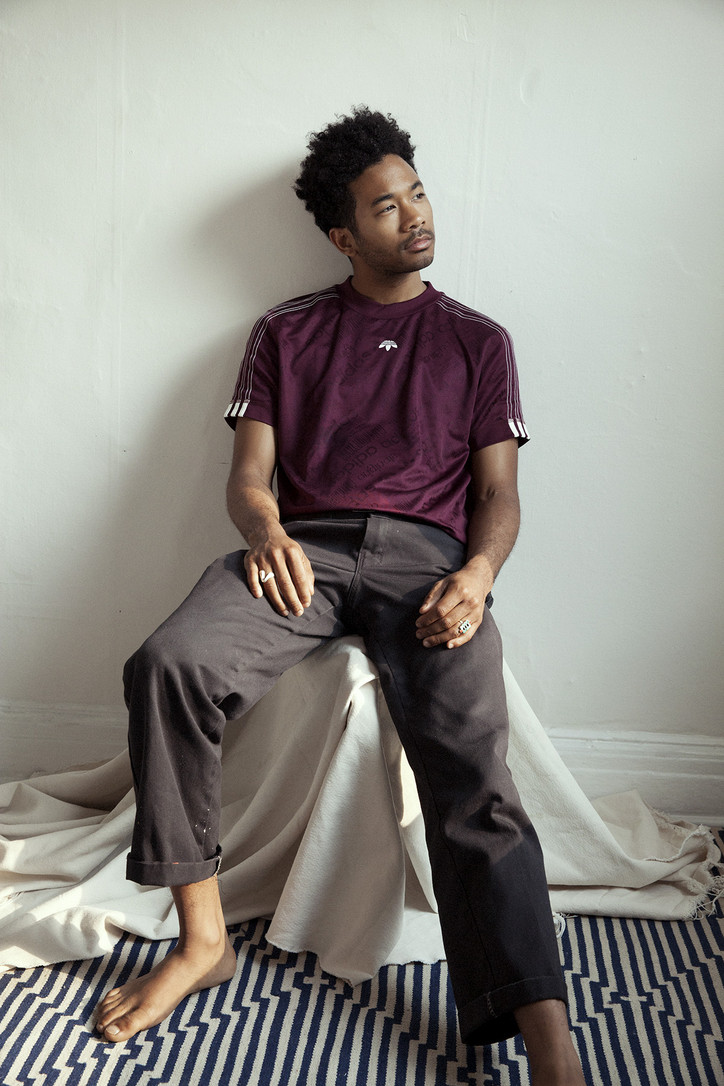
Taking it back to Toro Y Moi’s roots, I was wondering about when you were first coming up and being associated with the chill wave movement? Did you feel a connection to that group of artists and the mindset and philosophy that was linked to it?
When I first started to do electronic music it was definitely an awareness of wanting to reference something. I think having references is always key for something that is going to be released for a large audience to give something to relate to and to quickly put it into context. The same goes for visual art. You can get it and be drawn to it. As far as being associated with chill wave- the whole time it was happening I was very accepting of it. It was funny to see it develop into an Internet phenomenon, but at the same time it was like two years later and people were still asking about it, then five years, and then eight years later, so it’s a thing now, and I’m honored to be a part of it.
What is the title of the new record?
Boo-Boo.
Can you tell me the place that this record came from? You mentioned that it was a therapeutic process, and a way to deal with a period of personal upheaval?
It’s about relationships and love, coming and fading, and coming back again as a cycle. I wanted to document it from where I was observing it, seeing the space that’s created by the absence of someone who you have loved, and who has left. I feel like embracing space in all aspects whether it’s in sound or physical objects or walls is important to find balance and keep your head on, because it’s going to get crazier.
You talked about reaching the end of a seven-year cycle of releasing music, touring, and finding wider recognition- and then arriving at a place of reflection?
A lot of the lyrical content was about my personal life, but I feel certain things- like seeing myself dealing with fame, or which audiences were reacting to what, it was a moment, which boosted my confidence, to be like no- I’m not just Asian, I’m Black too- I like to make Black music. I think a lot of people just like to box people in, so it’s like no, you don’t really know me, here’s another side of me. That’s all I’m trying to do- show all my sides.
That being said, can you elaborate on your upbringing and your perspective from that?
I grew up in South Carolina. My Dad is Black and my Mother is Filipino. I grew up in a suburban neighborhood. I went to a mostly black high school. It was an eye opening experience for someone like me growing up in that environment because you’re constantly being told that you’re not black. You just shrug it off and find wherever you can to sit at the lunch table. I ended up with the skateboarders and musicians, and all the kids listening to the Misfits. I fell into this world of skateboarding and punk music, that’s mostly white culture in its background. That’s where I come from, which is embracing three different cultures, so it’s hard for me to judge or to side with anything. The thing is, is that I’m comfortable with who I am. I’ve kind of been the same since I was fifteen. I still appreciate subculture, and I think that being open minded to all sides of culture is a plus. I’m a bi-racial person of color, who comes from a nice neighborhood, so I have privilege, but then I don’t at the same time.
It seems that lots of times in discussions about race in our society there’s often disregard for complexity, and that people generalize and brush aside the fact that people’s lives have nuance and details.
It’s a difficult subject because no matter what you say you’re going to alienate someone, but at the same time if you’re hearing someone talk about it, you should be aware that that’s what’s going to happen when you talk about race. You should almost become a neutral vessel. There’s no easy way to talk about politics, sex, race, religion. It’s always been the same cycle and debate. I think you have to keep moving and find likeminded people that are trying their best to step out and be conscious and aware of how they should be in society. It’s one the things that drew me to California. I love the south but it’s behind in some ways.
Do you have plans to tour this record?
There’s not going to be a tour for this one. This was a cathartic record. I wanted to write it and get out of my system. It’s been awhile since I’ve sat down at a computer and just made something there. There’s no drum set-ups- just me, a microphone, and a my computer.
Were there any references that played a part in the process? You talked about listening to certain ambient tracks on repeat. Did this relate to the concept of space you were mentioning?
I think the thing that attracted me most to what I was doing with Causers, and the whole movement with what Washed Out was doing was the ambient and atmospheric elements. I liked the stuff in the background that came in to fill in the space. For this record the beats are pretty straightforward. I wanted to experiment with pads and making ambient environments because it helps me mentally- just to have me walk down the street a little bit calmer listening to an ambient track.
Are there any ambient artists you feel a tight affinity with?
I love Gigi Masin. He’s on the Music From Memory label. And I like Dream Carpets who are a cassette tape loop type of project. Brian Eno is always great, and there’s lot’s of Japanese ambient releases from the 80s. I feel like Oneohtrix Point Never has really revamped the melancholic type of ambient music, and that’s resonated with me so much for some reason, probably because I feel dark most of the time. I think that’s probably how most people feel- just dark. You’ve gotta wake up and deal with this struggle and do it again. I’ve also listened to a shit ton of Larajii. He’s amazing. He’s from New York. He would play on a modified electric zither in the streets and subway. He’s full on new age, saying quotes in his music- he was discovered by Brian Eno when he was playing in Washington Square Park, and his music was recorded as the third installment of Eno’s ambient series.
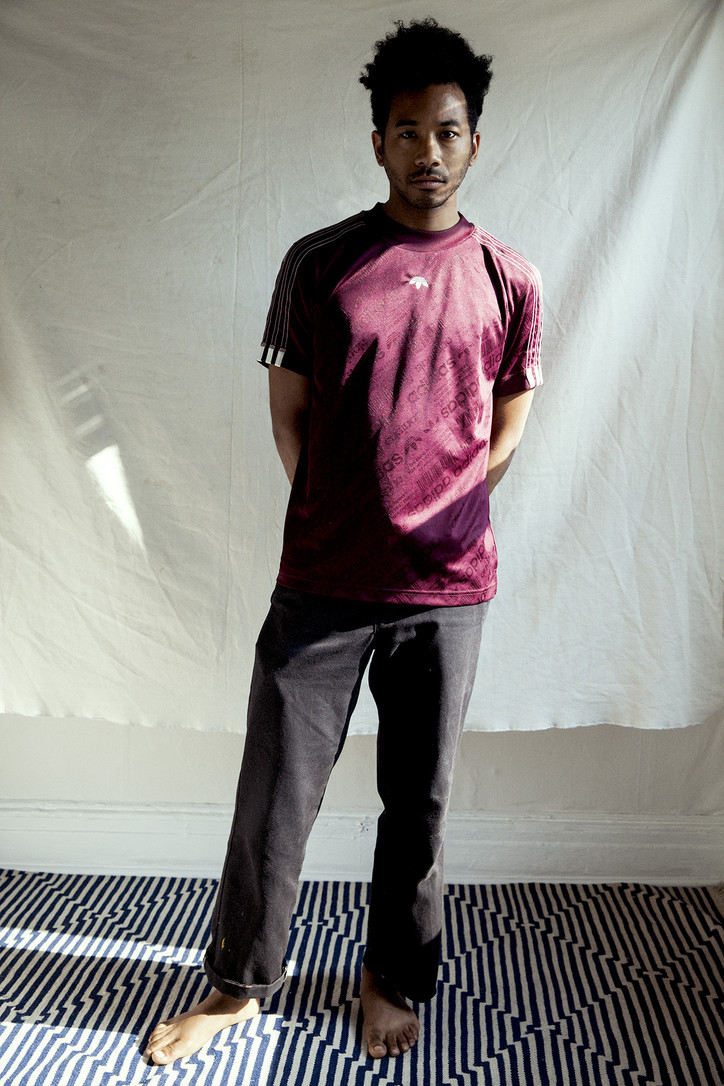
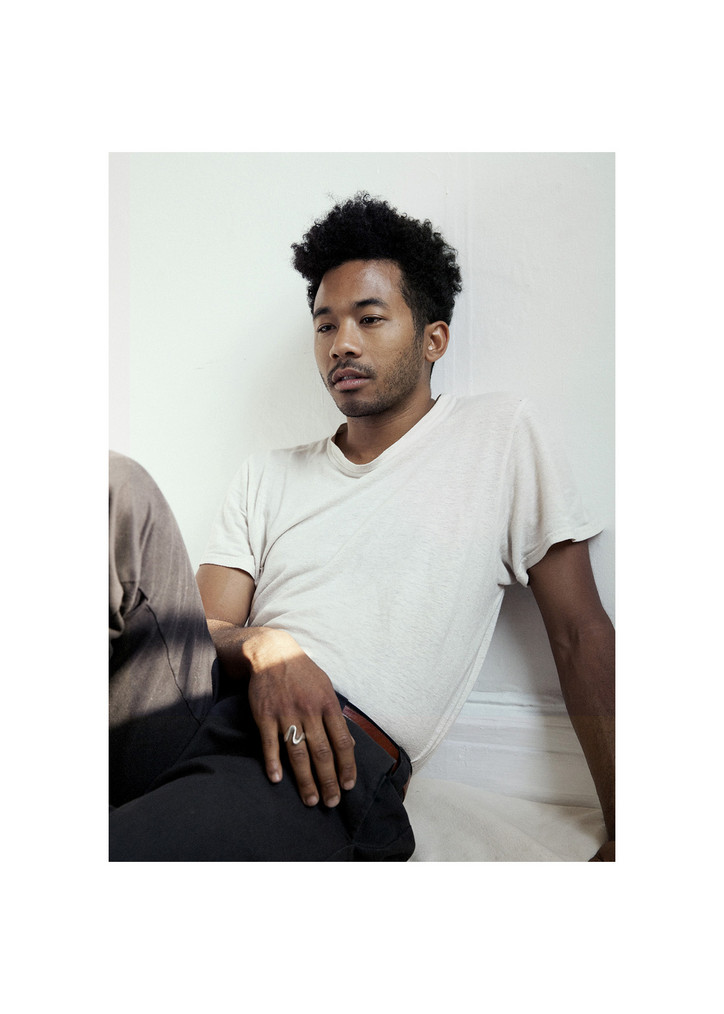
Is there anything you are reading that plays into your process?
I really love self-help books. I like The Book by Alan Watts. He said in the intro, this is the straight truth, the kind of thing you want to give to your kids. I listen to Alan Watts a lot, and reading him just reiterates what he has to say. I’m in the middle of reading the Philosophy Of Andy Warhol. It’s a great book where he makes diary entries in his voice, where he talks about things like beauty, money, and business. I relate to his style of writing, I do something similar when I write, where one sentence forms a whole paragraph.
Are there any film and video influences, or soundtracks?
Ex Machina, and Francois Ozon’s- Young And Beautiful. The music in that movie is really good. I would do a soundtrack for any French romance film immediately. I feel like something that’s missing in movies these days is actual music. I feel like a lot of blockbusters just use canned sound and music, and don’t have good theme songs. The best thing would be to make my own film first and then score it. I’m really inspired by Pierre Molinier and François de Roubaix, soundtrack library type of stuff.
Being that you won’t be touring on this record, I was wondering how you feel, as someone who has had extensive experience on the road, if you think that touring is as important as it used to be in today’s climate of viral culture?
Honestly I feel like a lot of musicians make their money doing touring and that’s what draws them to wanting to keep doing more and more, saying yes to all these festivals. But at the same time you just realize that you don’t have a life by the time you’ve done it for eight years in row. You don’t actually know anybody. I just reached a point where I want a social life. I’m single and I want to meet people and talk. The goal is to make it sustainable. I’ve realized if you want more, it can become more. You can really go for anything you want. I don’t want to just make a million dollars. I don’t think it’s going to make me happy, and it’s not what drives me. I just want to keep making music. If you listen to my albums you can tell I’m not top 40 even though my singles might be pop, and it’s for a reason. I don’t want to be a part of the TMZ world or the celebrity lifestyle. I really admire David Byrne. I don’t have to be Michael Jackson- I can be David Byrne.
That’s a good point.
Once you get too big you can’t focus on your community because you’re too busy. I feel like I’ve never really repped a city until now- the Bay Area. I just wanted to have a base for once, because I’ve been touring for so long. It feels like home and I want to focus on it and build something there. I’ve been doing small art shows and building a team. The Bay’s got to come up. I’ve basically moved my entire operations in house- with a full video camera set up, all of my merch orders, my label-Company Records, and selling paintings and prints. Everything is together- working out of a big warehouse space. Since I’m not touring this record, I could possibly make another one sooner than later. I honestly admire The Beatles for how they stopped touring. They just wanted to be able to make more good records.
Are there any tools particular to your work? And can you elaborate a little bit on your songwriting process?
My main DAW is Reason. The songs either start with a sample or drums. Lately I’ve been going into the studio for like thirty minutes or an hour everyday, record something, then save it in a file, and just jam. I go back to it like a month later and put all these different puzzle pieces together. That’s been the new process lately and it’s really fun to see how all these parts end up making the whole. Technology is just making it so much easier to flow.
If someone from the 90s was hearing the music of today what do you think their thoughts would be? Do you think they would be surprised that the music of today is the music of the future?
That’s hard to say. I think if anything, technology shines through the most in pop music. All the debate about the streaming world stuff is only relevant to those major artists because they’re the one’s who are making millions or hundreds of thousands off of their plays. I don’t make that much. I don’t even think I’m a part of that culture. I’m still hawking vinyl and cassettes- and it pays the bills. I think that people are starting to realize that boutique is the way to go. Quality over quantity- you know, print your magazine four times a year, not twelve times. I’ll give you ten great songs- rather than twenty-three that all sound the same. There’s so much media in the world that it’s forcing people to focus on quality.
Boo-Boo is out tomorrow via Carpark Records.