MIRRORS

I feel like the visuals you have are very distinct and definitely go along with your sound. What were some inspirations or references that formed your sound and identity as an artist?
It’s so hard to really say, because there are a bunch of phases you go through as a teenager. I definitely had my post punk, new wave, into shoegaze phase. Then I was like, “Fuck that,” and only listened to hardcore bands and stuff like that. Honestly, I feel like my biggest references points are 20th century icons of different eras: Michael Jackson, David Bowie, Prince (RIP to all). It was super crazy losing both of them last year because they’re both super influential in what I want to do. I think both of them leaving in the same year was kind of, not really a wake up call, but it was kind of a symbolic changing of the guard. I think of the late 70’s/early 80’s as long-ended. And I felt like, with those icons, we jolted into the future, and now it’s like we really are past that. Now these people are actually gone. I really love The Beatles. And I feel like on the Beholden EP, it’s kind of not really there. But the new music that I’m writing is very Lennon/McCartney-inspired.
I can also see how these icons passing away can open up a window for art that is inspired by their art to really prevail.
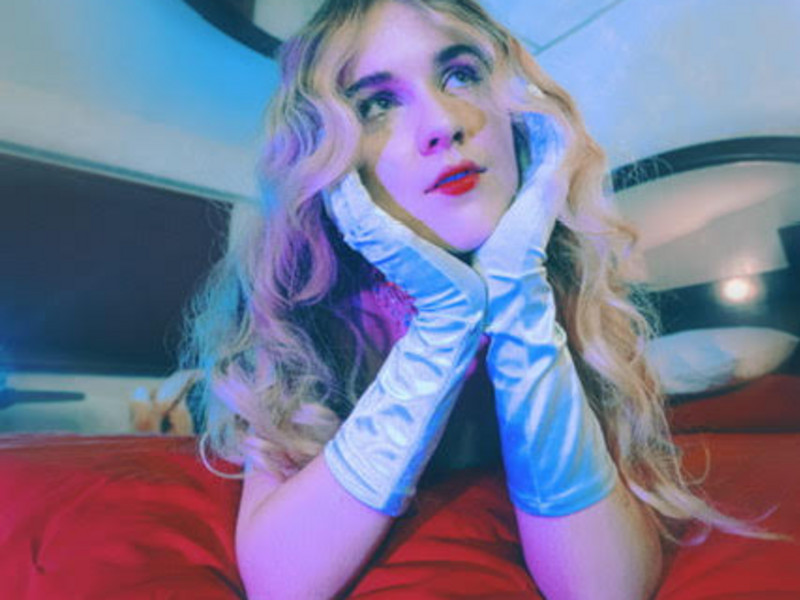
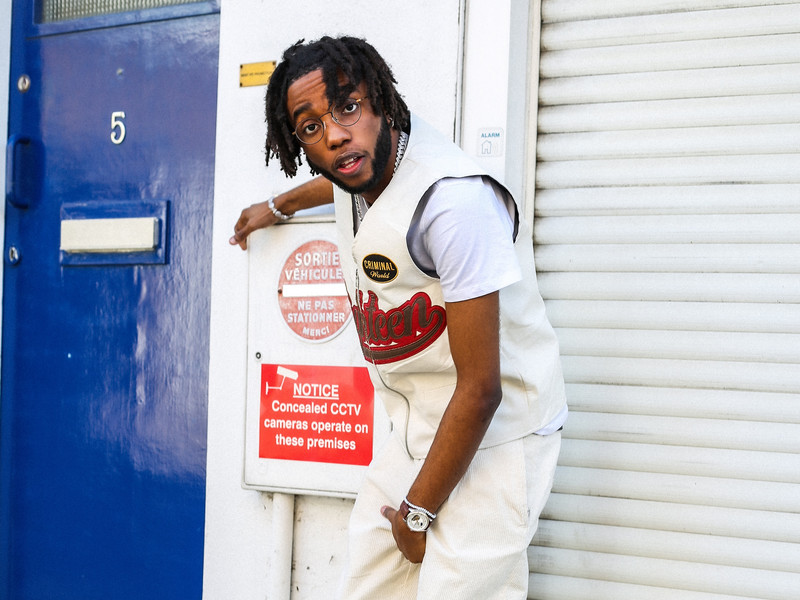
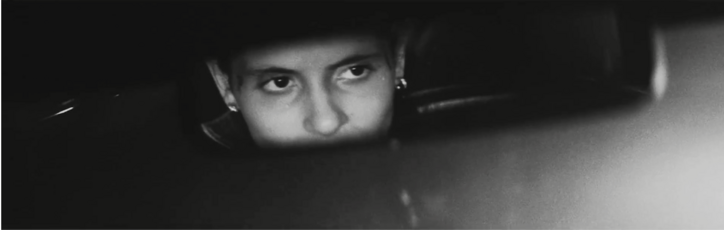
Yeah. It’s really weird because I was kind of revisiting both Prince and Bowie last year. I was starting to get really inspired by glam, and I don’t know if you saw the press photos from the EP, but I was really on this Japanese, Sci-Fi kind of glam/high fashion aesthetic. I actually got the chance to study in Berlin last semester, and it kind of just fucked up my whole world. I got really into the industrial sound of the music there. I was taking classes in Germany, so I started getting into these bands Kraftwerk and DAF. This emerging sensibility for Punk started to really influence me—kind of a more gritty, rooted-in-reality visual presentation of myself. I was on this super surreal, fantastical wave. Everything was happening in the socio-political sphere of our world, and I think it’s important that there’s more people that really show their personality and are a little less unreachable or aloof, which I kind of feel like I was. That’s kind of what the video is, too. It plays with that kind of extreme regal iconography. It’s really in your face and gritty in way—this "home video" kind of vibe.
What would you say a running theme through your music and visuals is?
It’s different every time. I feel like I keep prefacing everything with this, but I’ll say specifically with this project that I was super influenced by National Geographic documentaries. My friend Santangelo, who co-directed the video, sent me this National Geographic documentary on animals. And I kind of had this idea and location in mind to do this video, and it just clicked that we totally needed to make this “Feral child” sort of documentary—that’s kind of what we went off. Especially at the end of the video, we were very inspired by Jurassic Park and by this movie called Wild Child, which is basically the story of this kid who is raised by wolves. And I kind of wanted to do something like that.
Where was the video filmed?
The video was filmed in a place that means a lot to me.
Explain the name “Quiet Luke.”
I feel like this is a recurring question, and I kind of answer it differently every time.
What does it mean to you at the moment?
It has a lot to do with the aesthetics of the letters—just the way it looks—as well as it being my middle name. I feel like middle names are never really spoken about, and I just really thought the idea of using your middle name is very cool. I feel like artists use the middle name thing a lot because it’s partly something that’s “other” but also still very close to you. Right now, Quiet Luke is kind of like an empty beacon for me. It’s kind of whatever I want it to be. Quiet Luke is whatever, man. It’s protection.
Anything else you'd like to add about the "Escapist" video?
The video plays upon people's prejudices and fantasies. I wanted there to be this intersection of beauty, humor, and complete sincerity packaged in this post-modern sheathe of irony, symbolism, and self-awareness. A way for me to exert my personality under the mantle of performance.
Follow Quiet Luke on Instagram.

Your disco sound is so unique, and it feels like a throwback but still new and fun. What attracts you to that genre?
For me, my whole relationship with music, ever since I was kid, was just about how it made me feel. And when I listen to disco and soul and Chaka Khan—all these great artists like Diana Ross and Donna Summer—I just remember that feeling that I felt. It was what I connected with the most for some reason. And maybe it’s just because I’m naturally a more upbeat person and I love to dance, obviously, and I really connected with the image of what a disco diva looks like. [Laughs] I always just really loved those elements of freedom and fantasy.
I’ve experimented so much in music. I’ve been doing it since I was fifteen years old. I’ve dabbled in all different kinds of genres, and worked with a bunch of different producers and writers that all have their own niches. And now with what’s going on in the world, I think people really need that element of escapism in their lives somehow. I’m so into giving people the opportunity to kind of get lost in music, in dance, in kind of letting go. Disco-influenced sounds and that genre in general can get you lost and caught up in some happy stuff.
Could you tell me about other kinds of music you’ve experimented with?
I started off in little R&B girl groups in high school. [Laughs] It was a great experience, and that’s when I started thinking really seriously about songwriting. I learned so much about harmonizing and vocal producing, and I was just so young and wanted to soak up everything. Being in the studio and getting to record at that young age is such a great opportunity, and I really embraced it. And once I got to college, I certainly got more experimental in terms of what I wanted to sound like on my own. I’ve always been into indie rock and folk music, so I kind of tried to do a singer-songwriter thing for a while. [Laughs] I definitely experimented across the board. But I thought about what feeling I wanted to have when making and performing music, and what feeling I wanted people listening to walk away with.
For me, getting back to those basics really helped me streamline and hone in on the sound and my writing style. As an artist I think you can really be all over the place, especially when you’re like me and you listen to all different kinds of music. I’ve always been like that. But when I started to hone in on the intention for my music and the performance experience, I was like oh, ok, this makes a lot of sense. This connects with me, and I think this will connect with other people. It’s been a very trial-and-error process over the years, and I’m grateful that I’ve found a producer [Chris Hart] that I feel really understands what I wanted and how to make it, with retro and modern elements at the same time.

Photo by Tiger Tiger Studios
You’ve said you related to the look of a disco queen, which is pretty clear. Your performance outfits are incredible. Could you tell me a bit about them?
So I really love to dance, and I grew up getting most of my training in dance. I went to school for dance in high school, and I’ve just danced pretty much every day since I was eight years old. I was really obsessive, and I always thought that I was going to pursue that as my career.
I had the opportunity to go abroad when I was in college, and I chose to go to Ghana for the majority of the time because I was introduced to West African dance, and I just thought it would be the perfect opportunity to learn about traditional dances. I focused on traditional dances of the northern region of Ghana, in a town called Tamale. I got to dance and really just learn and be inspired and train with one of the dance groups in that town—the best one, in my opinion. It was a really life-changing experience. They trained me six hours a day, every day, for two months, and it was so amazing.
So when I got back and I was trying to figure out what kind of music I wanted to do and how I wanted to present myself, I decided to start doing shows. And because I had just returned from this incredible experience, I wanted to incorporate some of what I learned. It was ingrained in me, it was in my body, so it was very natural to replicate elements of what I learned in Ghana onstage. In my favorite dance there, a part of doing the dance involved this thick tassel belt that enhances all of your movements. So when I got back and I was trying to decide what I was going to wear when I was performing, I decided to incorporate that with fringe. It was that practical. I wasn’t trying to evoke Tina Turner or anyone, I just wanted to accentuate my movements the way they did in Ghana. And now that’s kind of evolved into me designing these different kind of costumes, it’s a whole process. [Laughs]
Then lyrically, was there a particular inspiration behind the songs?
Because I write everything, I think inevitably it’s going to be some kind of time capsule for that particular period of time in my life. And I like that! I like bringing in what I’m thinking and what I’m going through into sessions, and when I’m writing a song, I just like being honest and personal. Even if it’s just fun, it’s still coming from a personal, honest place. For one example, the day when I wrote “On the Line,” the first song on the EP, I was so frustrated with pursuing music, and I was so discouraged with my career path. [Laughs] I guess everyone can relate to that.
But I was just feeling really discouraged and really down on where I was in my life. I was looking around, and everyone else my age seemed to be getting married and having kids and at a certain point in their careers. And I was so not choosing to do that. [Laughs] But was that ok? Or could my alternative path work out? And that’s honestly where I was at, and I was just trying to lyrically express that as much as possible. It was therapeutic songwriting! [Laughs] And then “The Distance” was literally about an LDR, a long-distance relationship. So it’s all very honest, and the inspiration is just personal crap. [Laughs] I guess it pays off to be dramatic! And hopefully other people can relate to it in some way.
It’s so relatable! You’re saying all this and I’m nodding along endlessly. And this is a silly question, but have you ever seen the movie On the Line?
No, I’ve never heard of it!
Well there is this very terrible Lance Bass movie from 1999 called On the Line.
No way! That’s amazing! I hope people think I got the title from the movie! I love Lance Bass!
[Laughs] So, what are you up to now? Touring?
In between me going on tour with Tuxedo, the brainchild side project of Mayer Hawthorne and Jake One, I have some festival dates and some one-offs throughout the summer. I contributed to both Tuxedo records and I’ve been in the live band since the beginning, so I’m going to join them for a full US tour in May and June, and then I’ll do some solo gigs on my off-days from that. I’m just going to be touring a lot, and when I’m home recording and figuring out what’s next, whether it’s an album or an EP. I want to get something out pretty soon and just keep on performing! And I’ll probably do a small headline tour again in the fall. So that’s it!

Catch Gavin on 4/27 at The Changing Same in San Jose, CA, on 5/27 at the Ace Hotel in Palm Springs, CA, and on 6/25 at Mamby Festival in Chicago, IL. She'll also be joining Tuxedo on tour (dates here). Good Look for You is available on iTunes.
NICK ZINNER: So, this is probably the biggest thing you’ve put out into the world.
BARNABY CLAY: It is, it is indeed. I’ve done short films and gone to festivals here and there, and I did that documentary years ago in Russia for my friend’s band. I think that was in 2003.
NZ: When did you get into film, or filmmaking? Did you study?
BC: Yeah, I did. Well, first I went to art school in London. And at the time, basically if you wanted to study film, there were two film schools in England, but none of the other art schools or universities offered film courses. It’s crazy. Now, everywhere does it. But back then there was nothing.
So while I was at art school, I actually made my first proper film that I wrote, shot, edited. It was a twelve-minute kind of a horror, sci-fi, culty, weird film. But it was funny, because while I was doing it, all the teachers just thought I was skiving off the whole time. There were no film facilities at school, so I was just off doing it by myself. I don’t think they really believed that I was doing anything until the end of the term when I had to show it.
I was at art school, but as much as I liked what I was doing there, there was no real way to do film. And so I went to film school for a bit. Interestingly, and I said this in some interviews yesterday, my real film school was basically the place where the cover of Raw Power and Transformer were shot [by Mick Rock], the Scala Cinema in Kings Cross, London. When I was growing up, it was the coolest, most weird, skuzziest, punk rock venue. And they’d play cinema. Every Saturday night it was like all-night, psychedelic madness, and it was amazing. It was like three pounds fifty to get in for the whole night, and you’d just sit there, take acid and watch movies. That was really my education. [Laughs]
NZ: Yeah, I played there and went to a party there. I can really visualize it.
BC: For me it was really sad that it became a music venue even though it was one originally, and of course I flipped out when I found out that Raw Power and Transformer were shot there, because of course in my teen mind thought it was shot in some scuzzy joint in Detroit. And then Transformer I thought it was—
NZ: Max’s Kansas City or something.
BC: Yeah! And it turned out to be this place I’d been going to for all these years. But yeah, I’d go and see these movies and you’d hear the trains. I remember seeing Eraserhead and it was this whole extra element, a sort of industrial soundtrack. And the cinema would be shaking. It was so cheap to get in there and it was like a really run down area at the time, so you’d have homeless people coming in just to get out of the cold, to watch movies or just sleep.
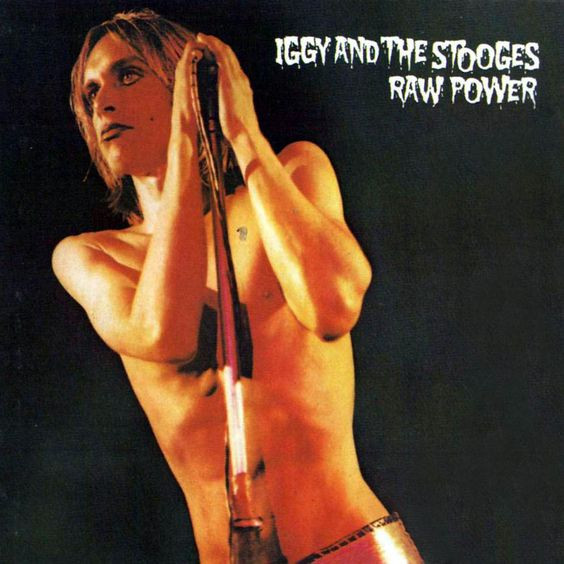
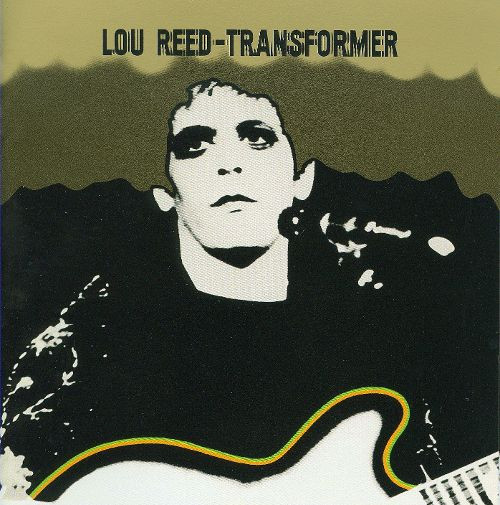
Album covers for Raw Power and Transformer, shot by Mick Rock
NZ: It’s funny how two very different aspects of your life could come from that place and return to that place. So, you’ve always been a music fan as well, we’ve talked about that a lot. Is that what lead you to do music videos after school?
BC: Yeah! I mean, I came in at a weird time for music videos. In my mind I came in at like the tail end of the Golden Age. It was when Spike [Jonze] and Chris Cunningham and all those people were kind of ruling it. I was just starting, but they were already there.
NZ: Mid-nineties?
BC: Yeah. And some amazing stuff was being made, so for me it was just a really interesting platform to learn about making films, or just filming in general, and the whole process around it. So much cool stuff was being made, and I would just look around and be like, holy shit.
Pretty soon after I started, and of course you're really familiar with this, there was kind of the Internet takeover and invasion of music. So everything folded, and the budgets started coming down. When I started, I did some videos with pretty decent budgets. The kind of budgets they use today used to be reserved for like the tiniest, tiniest bands, whereas now a pretty well-known band can still have a really low budget.
So I did manage to get involved in that in the very beginning, but very soon budgets started to drop. You can still do great, creative, work though.
NZ: Limitations are good.
BC: Yeah, they’re always good.
NZ: Well, I think they’re creatively good.
BC: Yeah, it forces you into certain places where you have to figure your way out of something, where you can’t just throw money at it.
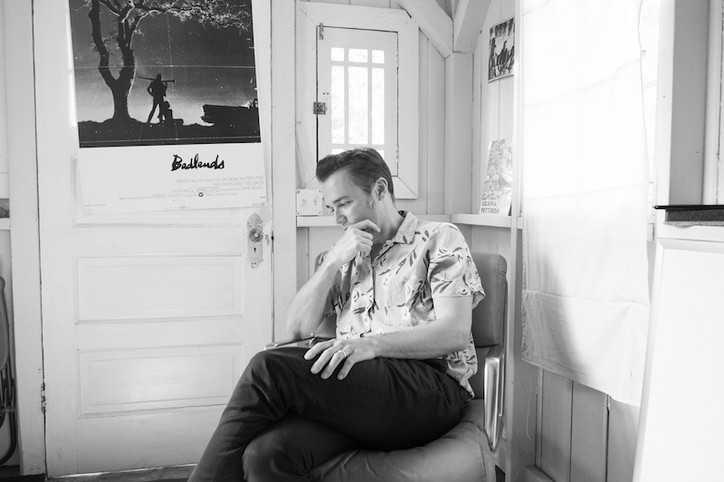
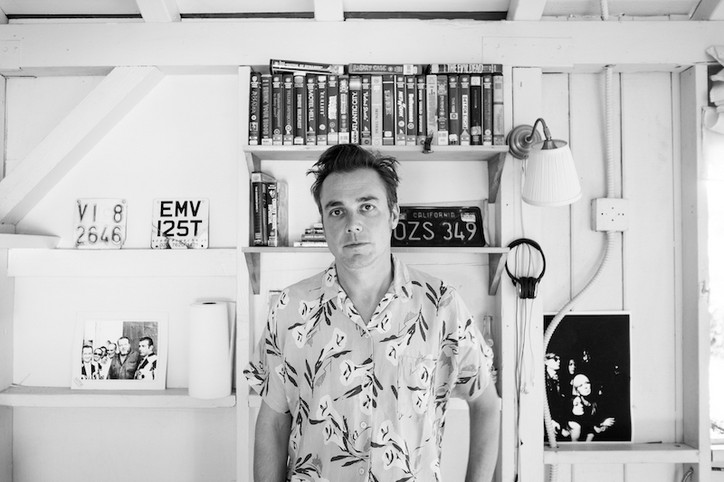
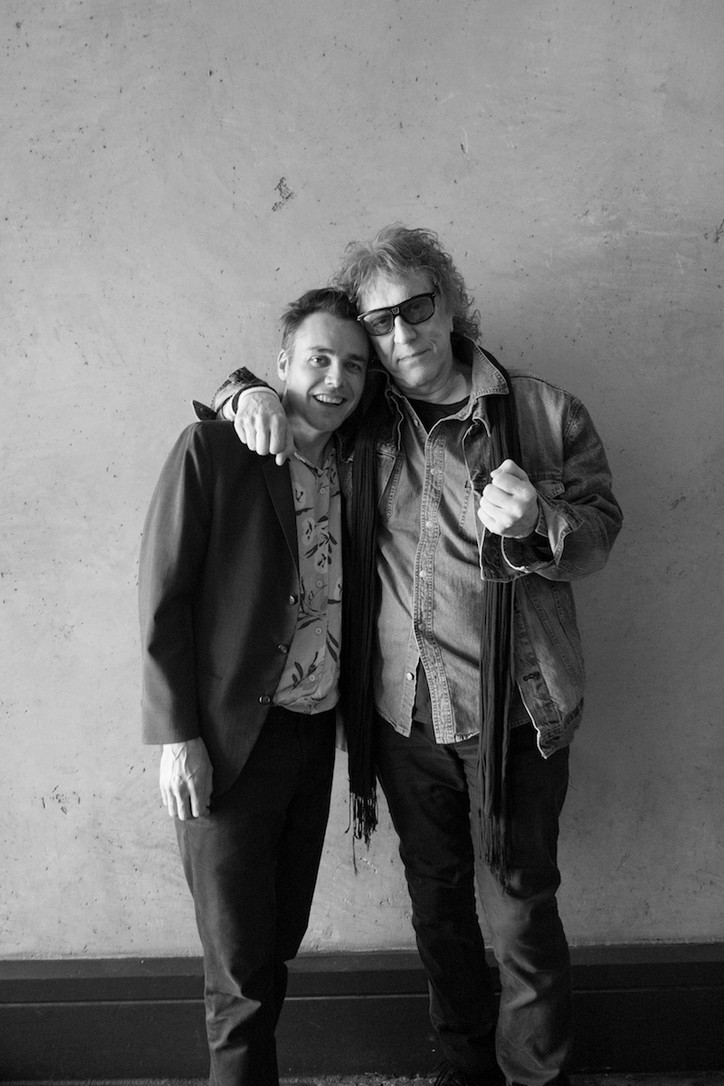
Barnaby Clay, shot by Nick Zinner
NZ: You have to be tough, when it’s your vision. So, what was your vision for this documentary?
BC: I really wanted to make a film, so I wanted to see if they would trust me to make something different. There were a lot of ideas, and there was one I was interested in that would have been pretty difficult—
NZ: Puppets.
BC: [Laughs] Yeah, puppets. No, but it was all going to take place in a diner or a dive bar or something like that in New York, and it was just going to be like—what’s the funny series of paitings? Rock Dreams? There was an artist [Guy Peellaert] who did all these fancy pictures of celebrities, some living, some dead, all hanging out in some places together. It was kind of like that in a way. So basically everybody in this diner or café would have something to do with the film. So someone like Iggy Pop would come in and sit down and have a chat with Mick, or Debbie Harry would be the waitress.
NZ: Recreating her job at Max’s Kansas City. [Laughs] I always feel like creatively, sometimes the most challenging thing is that first step, that first moment. It presents all the steps you need to take and the way the film wants to be.
BC: I think as long as there’s some people who recognize that you’re doing what you’re doing for a reason, and not just to look cool, it’s good. It never starts with that. It starts with, “how do tell a story differently?”
Ultimately, with Mick’s story, and as amazing a photographer as he is, and as interesting and funny character as he is, his story is a pretty old story. It’s been told a million times. It’s like Icarus, it’s the oldest story in the book. So how do you tell that differently and make it interesting? You have to try.
NZ: So how did you end up doing that? Did you have a vision for the entire film, or did you start somewhere and decide to see what would happen next? Did you plan things out with Mick, or did you work in chunks? Essentially, did you have a vision of the finished product from the beginning, or did it change throughout the process?
BC: I basically had the central idea at the beginning, which is that it’s going to take place in this space which I kind of saw as Mick’s psyche. We get taken into this operating theater at the beginning of the film, which is obviously a stylized version of Mick’s psyche, and that’s where we spend the rest of the movie. So that’s the basic idea. And then from there I was like, what else do we need to do? I want to show him going through his stuff, going through his work. I want to show him working.
NZ: But all within that space, right?
BC: Yeah, I liked the idea of being within that space. Obviously I couldn’t keep the entire film there because that would be too much, so I had to use another tool to get me out of there, basically.
The earlier cuts were way more arty and weirder. I was going for this memory-based approached, and it was kind of too weird for most people I think. I think if anything, the main things which changed throughout was just it becoming more chronological. More conventional in a way, I guess. Mick had done a lot of books, a lot of interviews, tv, radio, magazines, for years and years and years. He’s well-trodden in telling these stories. So he kind of thought it was just going to be that, that it was enough to just tell these stories about his work. But I think the biggest struggle was basically us—as in myself and the producers—persuading him that it needed to be more than that, that it needed to have a personal feel, that he needed to open up on the personal side of things. You can’t have ninety minutes of just talking about pictures. I mean, you can, and there are a lot of things like that.
NZ: From his point of view, it’s probably hard to let go of that idea as well. To his credit, I could see how that could be a difficult thing. It’s his life.
BC: Definitely. And it was really probably a year or two on and off of shooting, but most of the time was spent in editing. And much of that time was really a continuing argument between Mick and myself about those kinds of things. And some of it was me wanting to keep ahold of things that I’d shot because I liked them a lot, and some of that was Mick not being ready to open up. It was difficult. It was a constant process of argument and going back and forth, until the end, basically. I guess for me, when you’re in it you don’t really see it, and I had to remind myself—or Karen would remind me—that this is his life story, that this is somebody else’s life and you have to listen to them. Even though they have no objectivity, you have to listen to them because it’s their life. They’re the ones who have to live with it. And I mean my thoughts were that I have to live with it too, I’m a director and I’m going to be labeled based on my work. So it was difficult.
And that central theme of him nearly dying became very contentious as well. At first he was really into it, and he came to all the shoots and did all this stuff, and he was kind of intrigued by it. He didn’t really understand it. He was like, “why are you doing all this stuff when it’s about pictures?” But it wasn’t just about pictures, it’s about him. But then when he saw it, he began to kind of get more and more concerned by it, because he found it uncomfortable to see himself that way.
NZ: Another thing I was really curious about was how you achieved this balance between these classic songs that we all know, space, and the score that [Steven Drozd] did. Because I love the score, but it’s very difficult to make a score for a film about music and keep everything in balance without one thing overpowering the other. So what was your interaction with Steven like?
BC: I knew that the film needed a score beyond the rock songs, that it needed something to bind it together. And I knew that that couldn’t just be straightforward rock, because it would be too much. And we talked about influences, and [the score] kind of went for that period a bit, but more on the avant-garde side of it. We talked about Wendy Carlos, we talked about [Brian Eno]. And it’s actually really hard, because when you’re editing you’re always putting in temp music and you get very attached to that temp music, and then you’ve got to swap it out for something that has the same feeling. So you find yourself in kind of a situation where you’re kind of copying the temp music, and you shouldn’t do that.
I actually remember one point when I was working in the Flaming Lips studio in Oklahoma, and [Wayne Coyne] turned up. He’s quite challenging. He was basically saying how there was one piece of music he really liked, but there was another piece of music that we were working on at that time, and he was kind of complaining—rightfully, actually—that I was getting Steven, who’s a very talented musical mind who can do anything, to just do Queen. And that’s the temptation—oh, we’re in a kind of Queen era, let’s just do Queen. So after Wayne said that, we kind of threw that out and went back and tried to consciously do something that wasn’t just Steven mimicking these periods of music, and trying to actually make a concise score.
There were two sessions where we worked in their studio in Oklahoma. Those ended up being some of my favorite memories of making the film, because watching a multi-instrumentalist like Steven running around is amazing.
NZ: And it enables you to see the film from a different perspective.
BC: Completely. And you’ve done a lot of score stuff yourself, so you know—
NZ: That it’s a process. [Laughs] So, now that it’s finished, how do you feel? How do you feel about the fact that it’s going to be seen by people, that you can’t fix it anymore, and that it’s time to let it go and move on to what’s next?
BC: Well, I feel excited at the idea of moving onto something new. Obviously, and you know this from doing your records, that you can fix and tweak and change until the cows come home, until somebody eventually says “that’s it.” Even in my final sound mix, I was just sitting there and I’d have three pages of notes, I’d go through the whole film and do all those notes, and then there would just be another thing to fix. Shit man, it’s just never ending. They’re small details that maybe nobody will notice, but at the same time they make the bigger picture. But you do have to let go, and so I have let go.
I will say, to round it off, that through the hardest moments I had making the film, and the hardest hours, I would get into the edit, and I would be going through a sequence or whatever, and every time—this still happens—I’d be knocked off my feet by what Mick did. No matter what beef I had with Mick at any particular moment, his work really stands on its own. It’s amazing work, and it blows me away, the breadth of it and the accomplishment of it just being a visual encapsulation of a whole time period—arguably the greatest period in rock and roll. And he’s still going, still going strong. But I would just see those images, and it would just remind me of why I was doing this film. These pictures need to be talked about. They’re works of art, and it’s a pleasure to be the person who gets to tell the story.
Barnaby Clay's film, SHOT: The Psycho-Spiritual Mantra of Rock, is playing at Metrograph through April 20th. Tickets are available here. The film is also available on iTunes and Amazon video.