MIRRORS

Amara Korinko: This tour has been your first long term exposure to performing in the US. What are some key aspects you've noticed about American crowds in comparison to European techno culture?
Luca Eck: Actually yes, I really love the American crowd. I was surprised, because obviously Europe has a lot of thoughts about the U.S. and people usually feel like Europe is the “real deal”, but it can get into people's heads. Here, there's more of an exploratory energy. In Berlin, people tend to focus on one specific genre and are a bit less open to sets that are as genre fluid as mine usually are. Here, people are way more used to this hybrid crossover sound where I can play a trap song followed by an electrocrash song followed by some hardstyle and it still works and people are really excited by it.
I feel like in Berlin especially, but also other European cities, sometimes the people take themselves too seriously in the club. Especially at the scene-y parties with the new hyped artists, everyone is just standing, looking, scanning outfits. People are not letting loose as much. With this tour and the American crowd, everybody was not that pretentious and not that serious and people were really just letting go and a lot more open.
You and Miss Bashful are more than collaborators but genuine friends. Tell me what was the rose and thorn of producing Glamour Snobby? Did it reveal anything to you about yourself/your creative process?
It was a really, really enjoyable process throughout. We actually didn't know each other before we started working on the album. We had briefly met here and there, but it was when she wanted to produce a new album and was looking for a new sound that was more pop and experimental. Our mutual booking agent connected us and put us in the studio together, and we just really clicked from the first moment and became besties. In the beginning, we just wanted to make one song. But then every time we did a session, and we just wanted to finish the song that we started, we would make a new song idea. After a few studio sessions we were like 'Fuck, this is an album!'
It was a really great process. It was definitely a challenge to find time because we both have very intense schedules but we always found it. It was cute to have the tour there, also to serve as a deadline too like, 'Ok by the time the tour is happening, we want the music to come out'. With having ADHD, having deadlines always helps.
Also, with art I always think how can you ever say something is finished?
Absolutely, I could never, someone has to forcibly take me away.
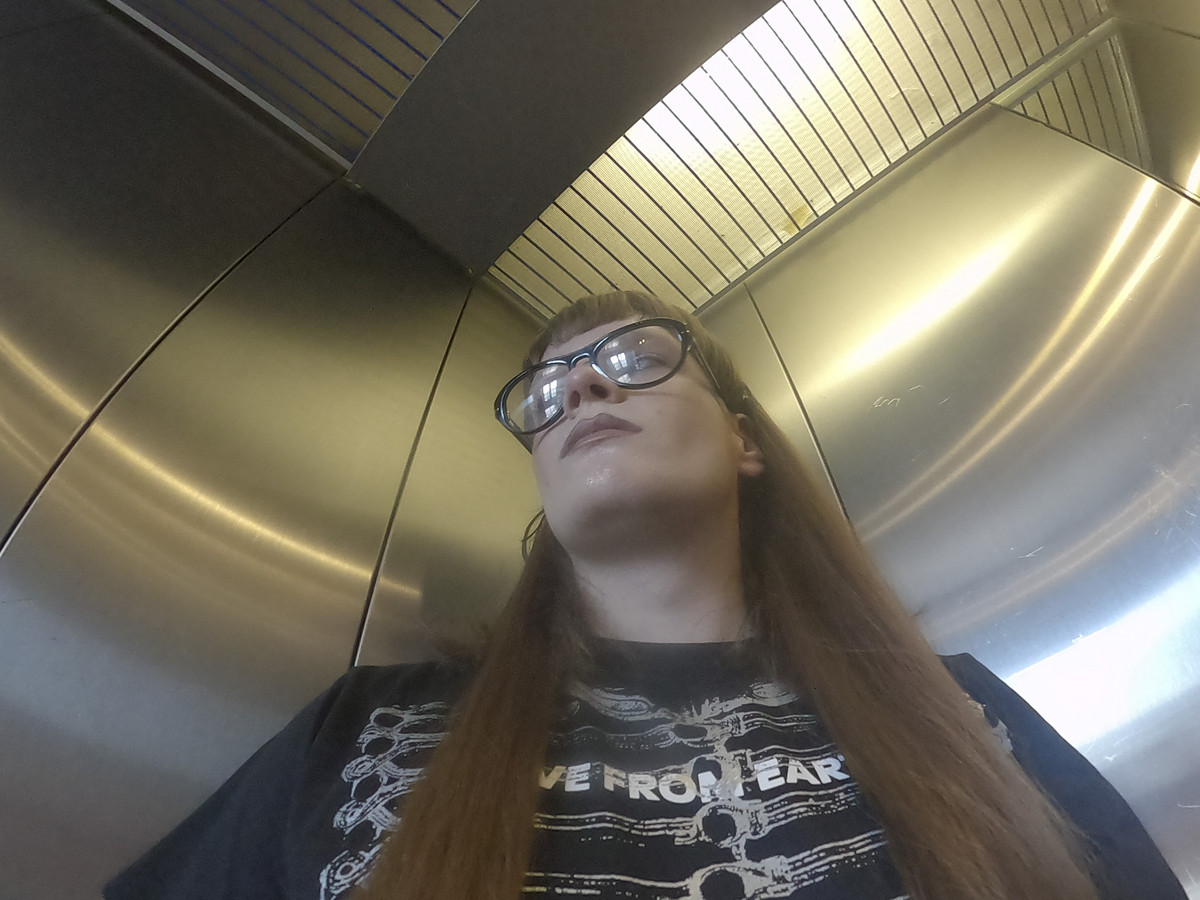
This album is full of provocative and humorous lyrics, reflecting the openness both of you share to vagarity. Do you have a favorite line?
I love "Fake Designer Bitch" the most. I love all the lyrics, I think it's very well written, all the wordplay on designer brands.
Mine is off "Girlz On Tour" — bitch, I can’t fuck, I got a vape in my butt.
Actually, that might be the one.
You’ve been speaking the language of music since the age of 5, and I love to ask multilingual people what language they think in. So, in your day to day, do you ever think in terms of musicality, or do you ever notice that your musical fluency influences the way you observe the world?
Absolutely. I think I constantly have some type of music or sounds in my head, could be a melody that exists already that is just stuck in my head on repeat. But it sometimes gets really exhausting, especially if I do work on music, my brain will get so into the flow and obsessively remember sounds and melodies and go on to repeat those uncontrollably.
I started doing mindful transduction courses last year and that helped me to ground myself a bit more in the moment because it was getting really overwhelming. I would have so much sound stuck in my head and it started affecting the way I listen to music to be honest. My friends always find it quite shocking because it's unexpected, but when Spotify Wrapped comes around I have the least minutes [of listening] out of all my friends because whenever I listen to music I can’t relax too much anymore. My brain automatically goes into the song, strips it into its parts, and then tries to analyze how certain songs are created, combined, mixed.
And so when I listen to music my brain goes into this analytic work mode. Sometimes I feel like making music has come at a cost of emotionally experiencing other people’s music. I really enjoy listening but it's more of a head rather than a heart thing.
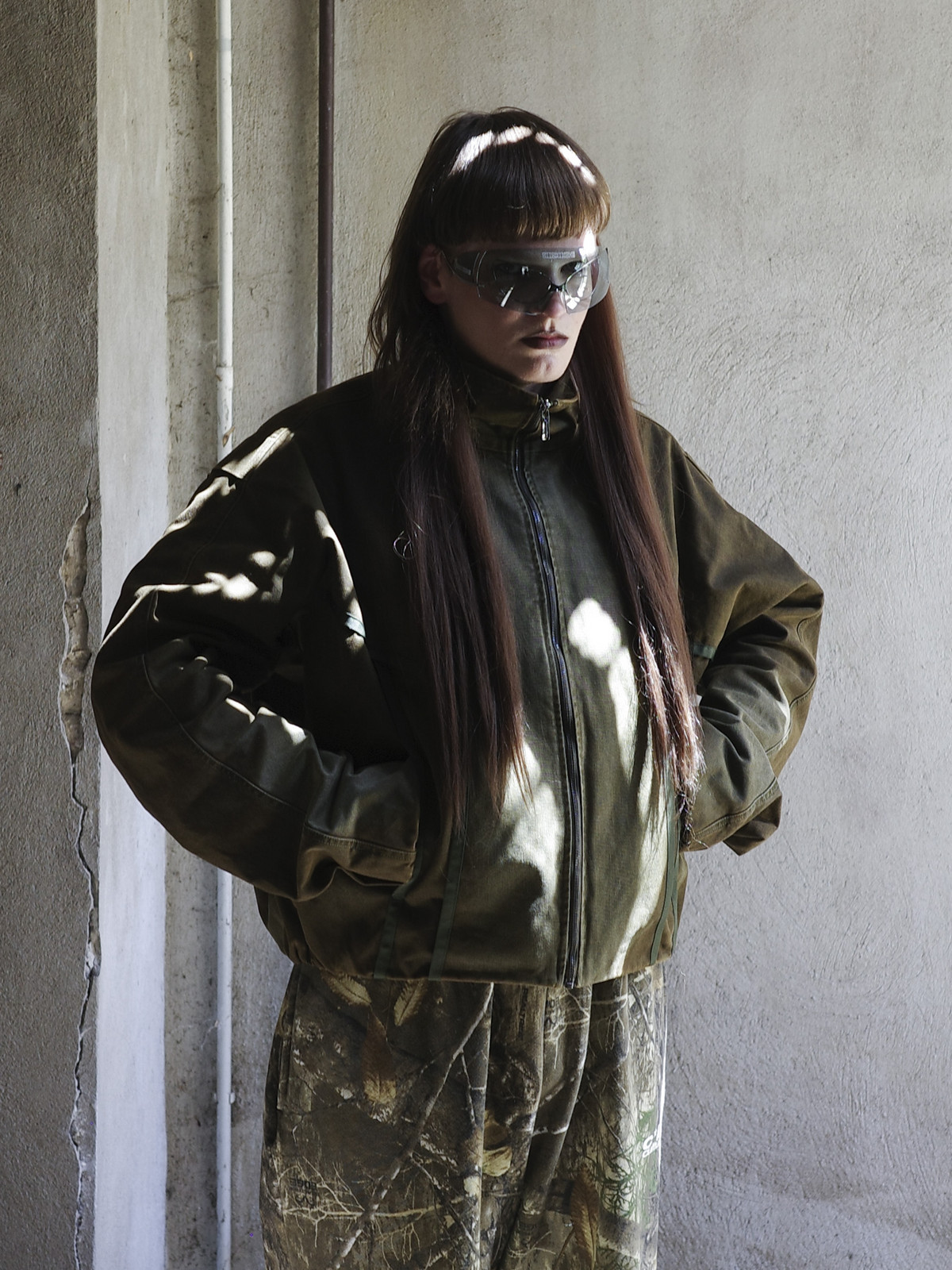
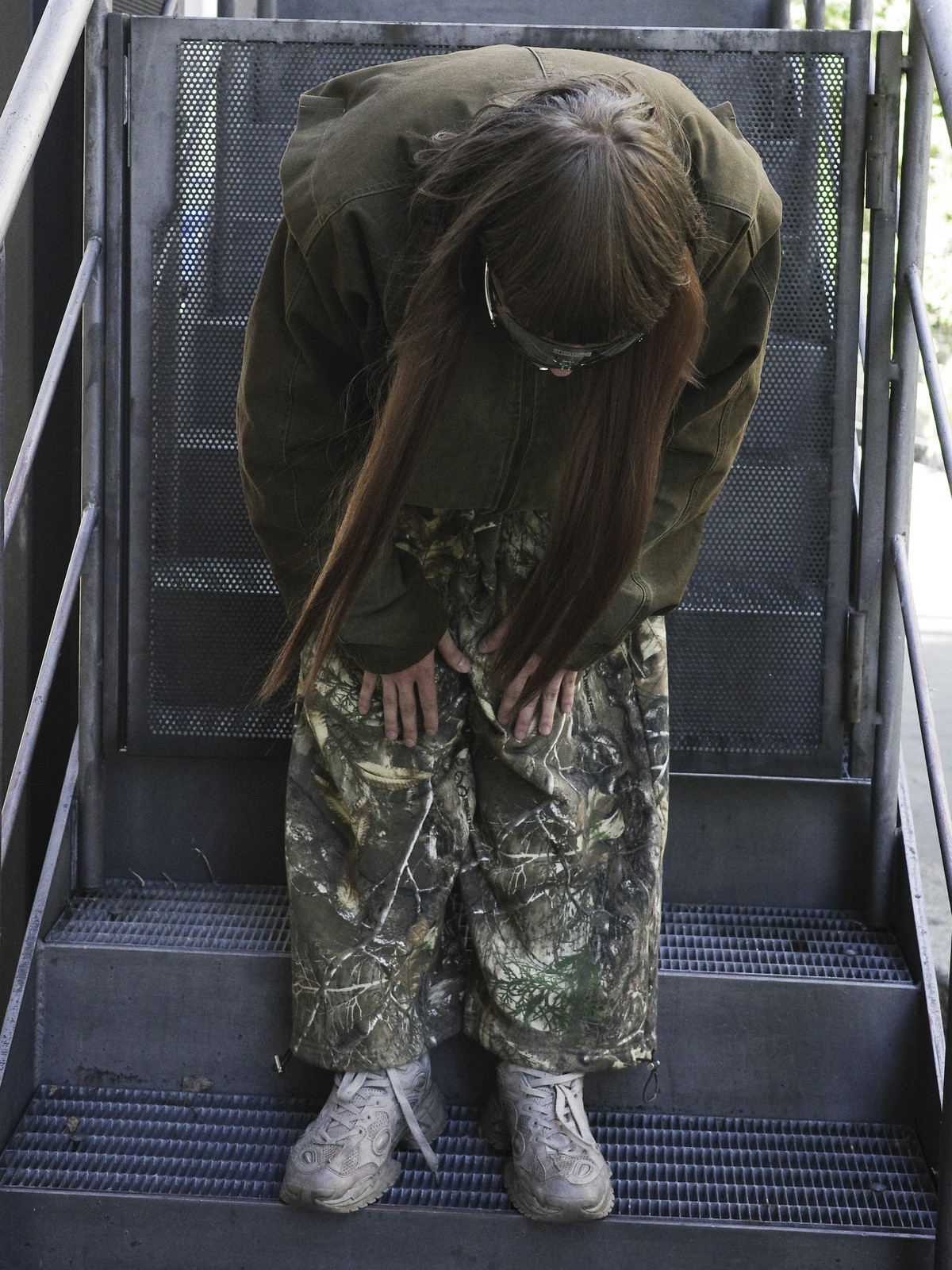
As a self-proclaimed workaholic, where do you seek your inspiration and motivation?
Really randomly, honestly. Usually by listening to music; I will always listen to something and then think about how I can bring this into my world. Or I will discover a new artist. That’s why I love doing collaborations so much because that’s where I really thrive artistically, in this kind of huge and hybrid realm.
That also somehow relates to being non binary because I hate to think in black and white. My whole life, I’ve always been drawn to things that are the inbetween of two things and not one or the other. So that serves as my key inspiration, this inbetweenness and the fusion of genres and cultures because I just love to work with artists from across the globe, especially from other queer subcultures.
There seems to be a lot of similarity in developing your own sound and also solidifying your own non-binary identity, in terms of people telling you to conform to one thing or another and choosing to exist outside the normative. You’ve claimed being non-binary has shaped your understanding of music, but has music shaped your understanding of gender expression?
I think being a musical artist has allowed me to embrace my gender identity more and be more comfortable embracing it and expressing it in everyday life. If I wasn't a musical artist then I would be working a day job where chances are the acceptance of that would be way lower than it is in the music industry, so it's definitely given me an environment in which it is easier to be out and open than in a lot of other work environments.
It's introduced me to so many beautiful queer people that made me learn a lot about myself and get this community feeling of 'Hey you're not alone, there's actually so many other people and they're thriving.' This really allowed me to find my people.
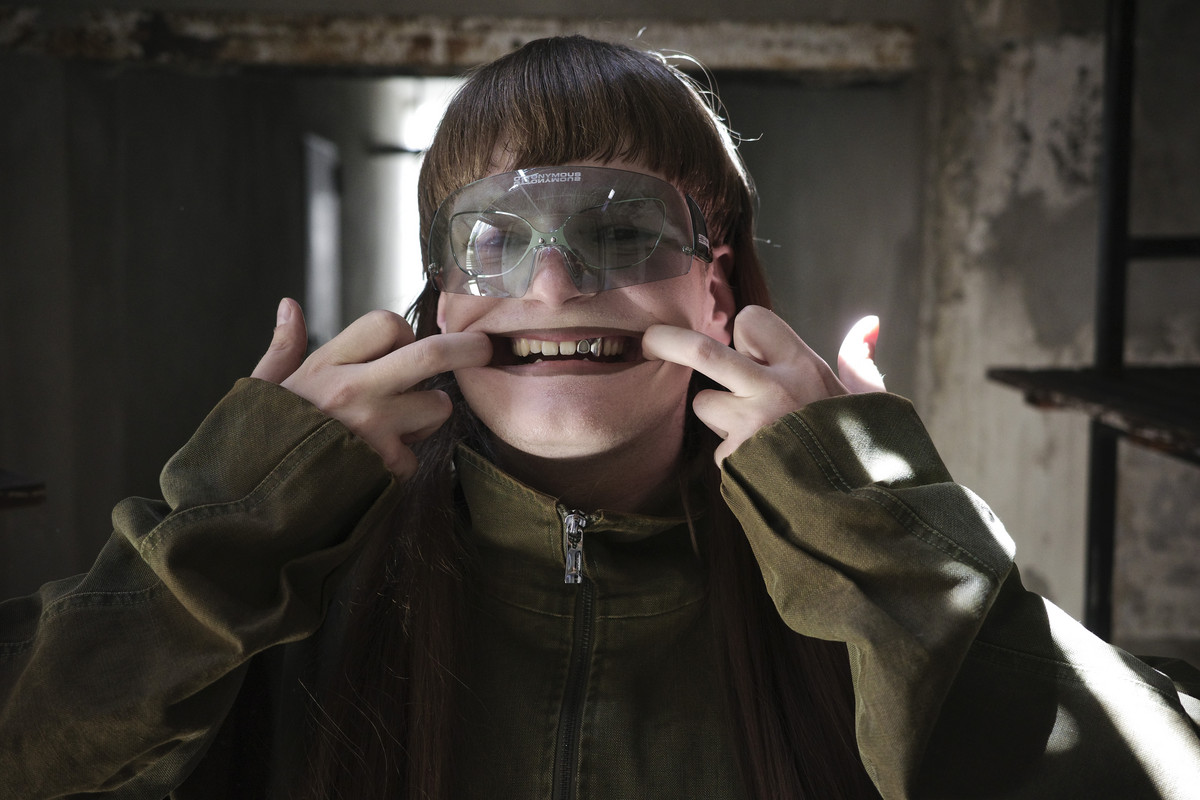
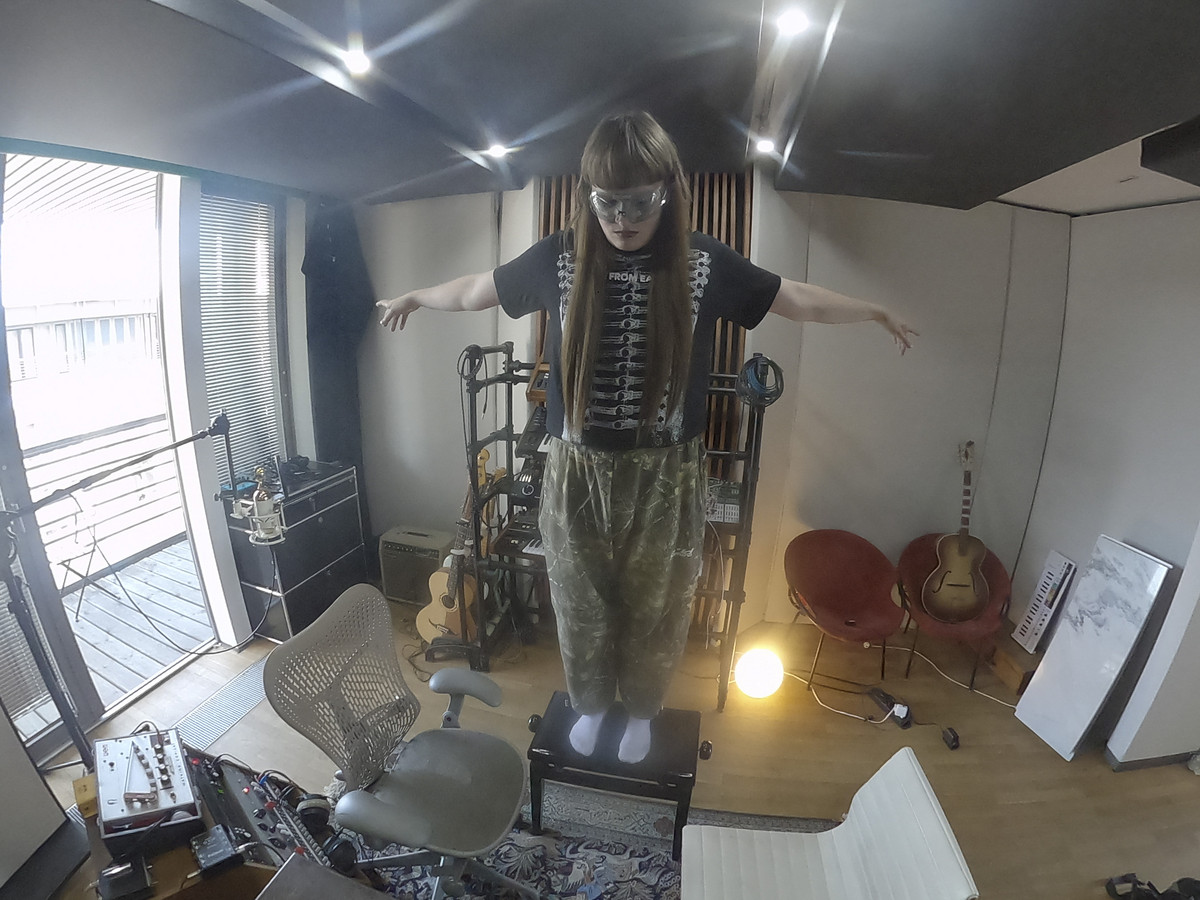
You once quoted, “we have such dark times politically and as a society, that I think we need some silly escape where we can be hedonistic.” I agree this should be the foundation of nightlife, a form of escapism, yet — as you also said — it cannot be a distraction to real world issues. Do you have any take on how the club can be a scene for change, or if that’s even necessary?
I think it’s absolutely necessary. All the subcultures are always born out of political unrest or some big societal change and by the time that club nights lose their political roots, they're not subculture anymore. By the time that you’re putting on the club night for financial gain and not for the political nature of it anymore, then that’s more capital related than creating a space for people.
I think that's why techno has also decreased a bit in its coolness in Berlin. I also produce my own events in Berlin and I can tell you that it is close to impossible to make a profit from an event if you want programming that's ahead of its time and have a production standard and pay everyone halfway fairly, whereas a lot of the techno events in the city can generate such a big profit but they're not as community based.
You have an app in development — Takt (meaning beat in German) — in Berlin and coming soon to other global cities that aims to be a more intimate, community-focused alternative to the likes of Resident Advisor. What is the core philosophy behind the app and its carefully curated applicant process?
I believe that people have really come to use the word 'gatekeeping' in lots of different ways and they've shed it in such a negative light where it doesn't really live up to the term anymore. There's a difference between not telling your friend about an event and not telling all of Instagram about an event.
A lot of subcultures die if they become only this commodified thing in the mainstream, so it makes sense to have some sort of control over who is in a space, also to keep it a safe space for everyone. People often say 'oh you shouldn't do door selection' and things like that but, for example, in Spain, to the best of my knowledge, it’s illegal to do door selection other than if somebody is super drunk. But because of that, you have all these straight men and party tourists coming into queer spaces and really ruining the space for a lot of people.
That's why I think selection can be a necessity. It's not about excluding people, it’s more about making sure the space can still be inclusive for everyone it was intended for. It’s more about rewarding those who always show up to the function and make a scene what it is. Guest lists always give to people who can afford the entry anyways and not necessarily to the people who are really shaping the community, so I think that's kinda the core idea behind that.
Not exclusion but curation. You can't include people without excluding someone, that's a simple paradox.
In Berlin, we were validating that idea now and it's a very tough place for it because people in Berlin notoriously hate new things and hate digital things, which I also respect in a way but it's just a bit silly.
You can make profit and actually do good things with new inventions. We’re really hoping to bring it to a lot of cities and have it be a global thing/community across cities, asking them to take part in the culture that they've been priced out of. I don't blame the people pricing the tickets either because you have to break even but, just thinking about new ways to let people party again without spending that much money.
You have a soft spot for 2010s music, as most of our generation does. For me, I believe this nostalgia-driven fondness for that era and its music stems from a longing for a more simplified time that we barely caught. They had just enoguh access to technology to give us electronic music, but not enough to have phones out on the dancefloor. Do you have any thoughts on this notion? Or what about that era of music is so profound for you?
I 100% agree with you. I think why I’m drawn to it is probably a very subconscious thing because that was the first time I was introduced to electronic music and also the first time that I started consuming music very consciously. Before I was a teenager, my music taste would be very dictated by the CDs that my parents had or what was on the radio. Then I discovered some CDs my parents had that were more that eurodance, 2010s electronic-leaning sound and that was the first thing that inspired me to become an active listener and intentionally consume music. I started digging for music for the first time.
It's a very important phase in our generation, that transition from childhood into adolescence. It makes sense that we are now very affected still by that sound, because it was occurring during the same time as such a transition in our lives.
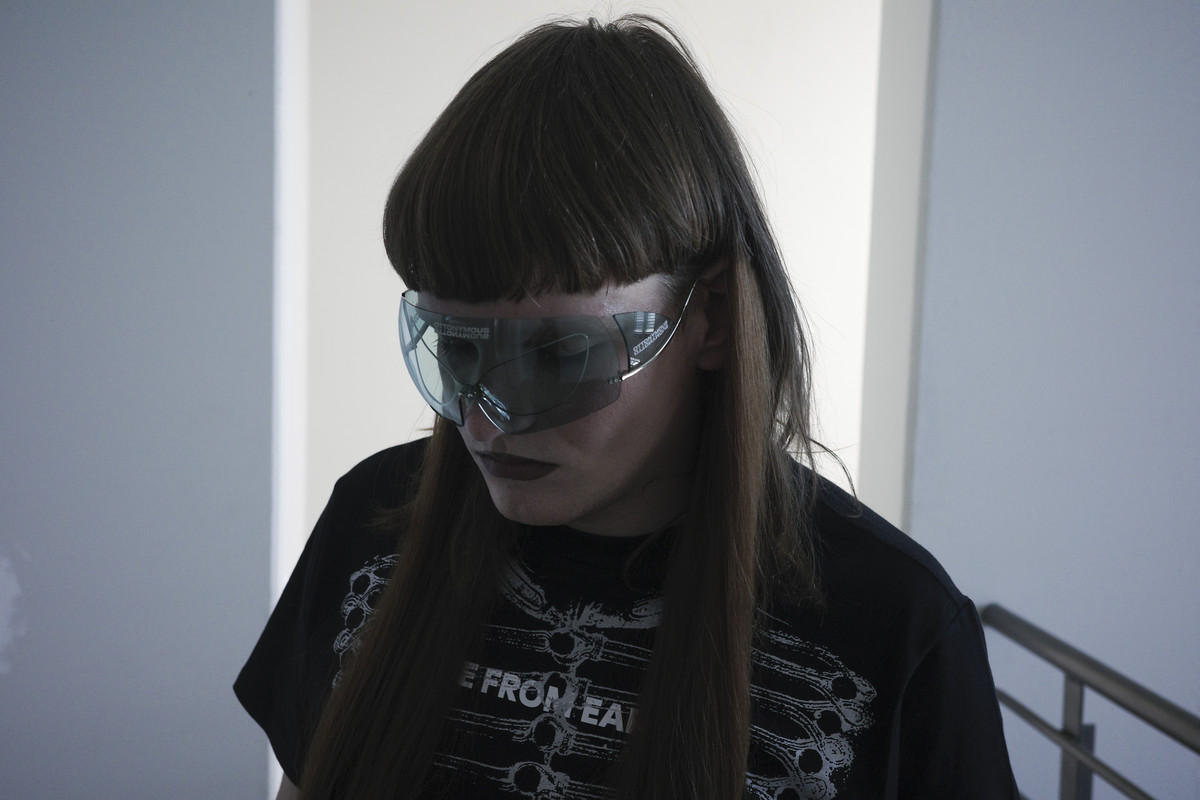
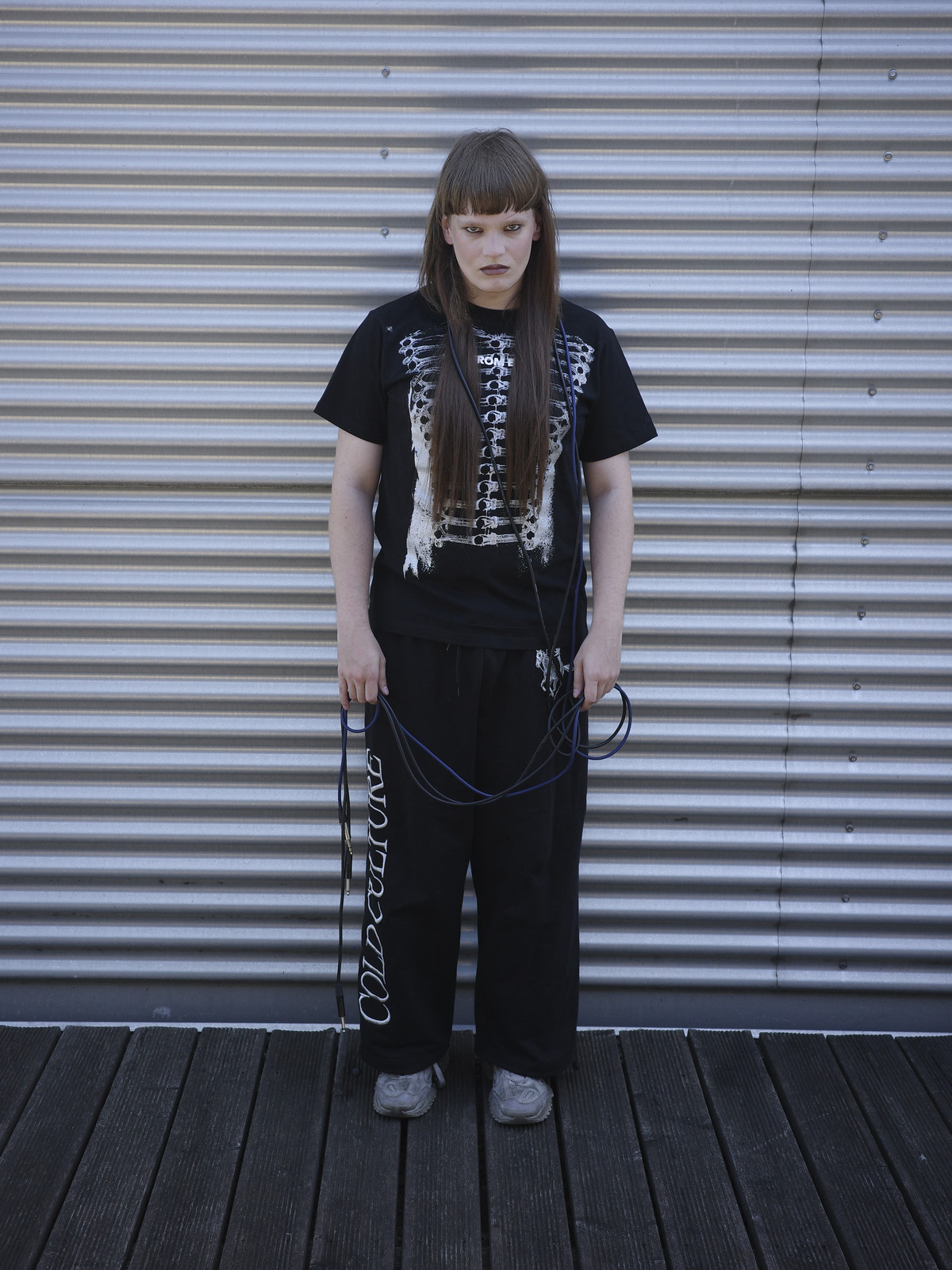
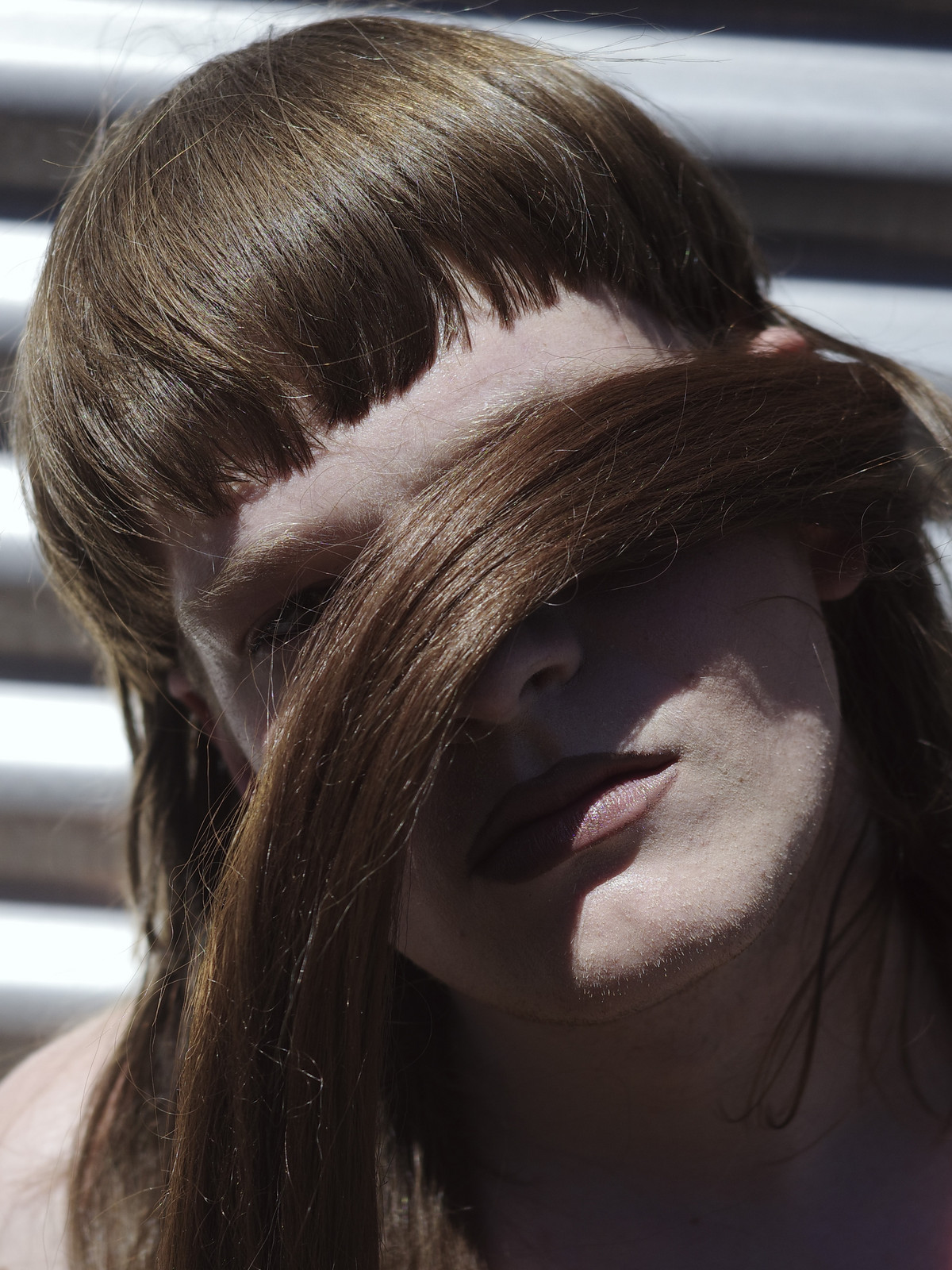
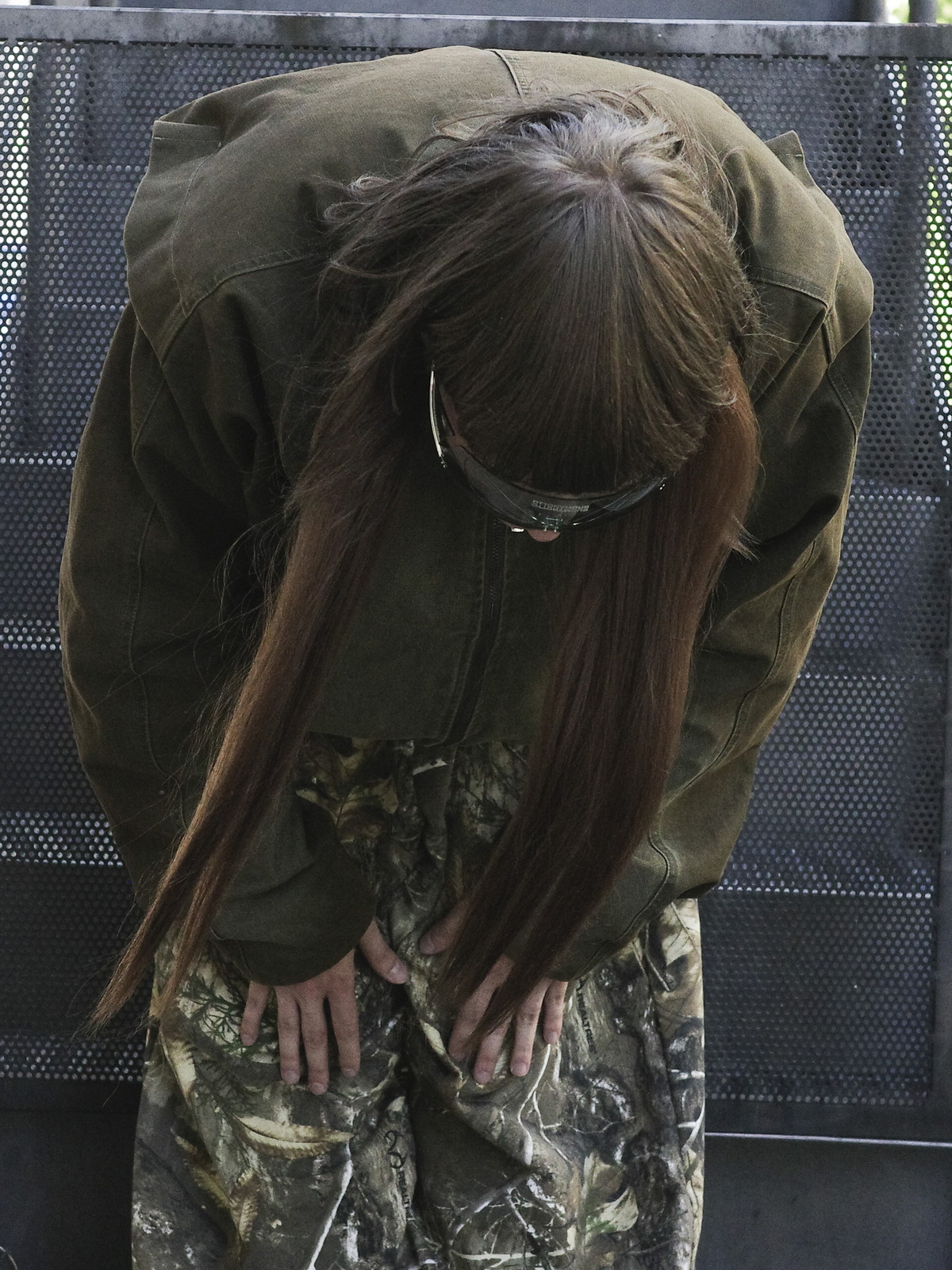
I love your look of sleek bangs and long extensions. Have you considered other hairstyles, or does this feel like your brand image, and what about it feels you?
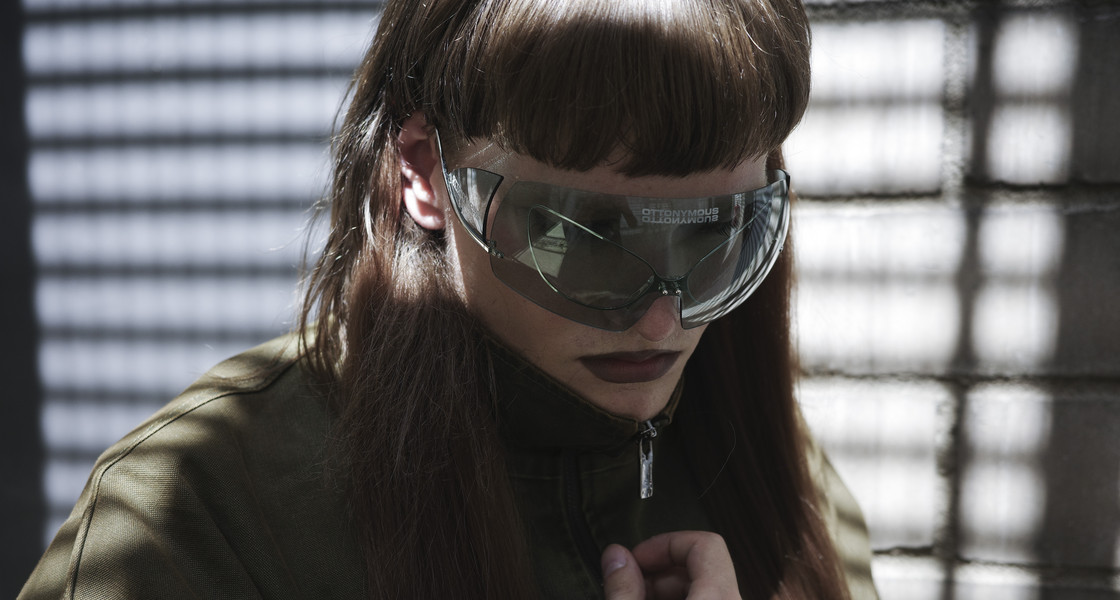
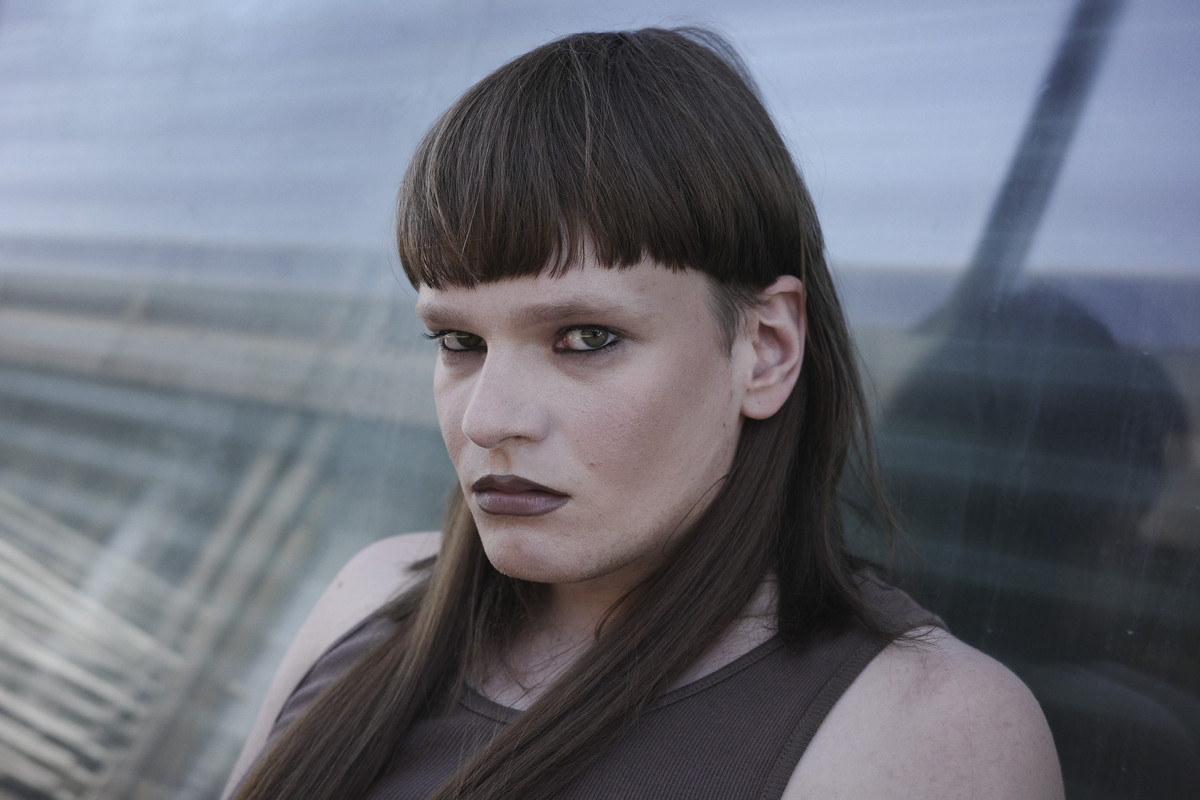
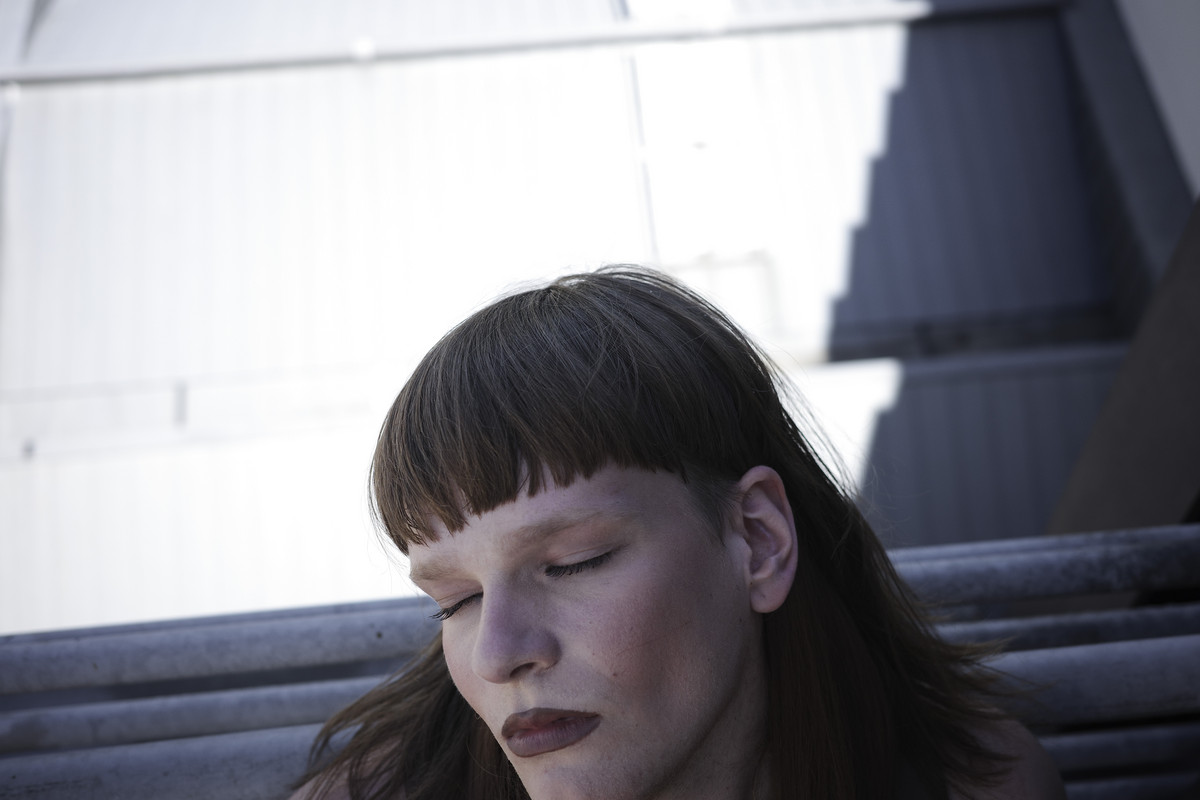
It’s me! I think I’m never gonna change it, I’m just gonna let it grow longer and longer. I’ve had this hairstyle in one form or the other for 12 years now. First, I had shaved in the back with the bangs and for 6 years now I’ve been growing the back. 2 years ago I started playing with extensions. The briefing I always give for photoshoots is that I want very femme hair and makeup but masculine styling so having long hair is very important for me gender wise.
Your last EP Flesh was your most vulnerable and musically-defining moment to date. In future works, what about yourself (or your music) do you hope to solidify/explore?
One thing I want for my future music is to go back to the very beginning and put some acoustic elements, especially string, into it. I want to pay homage to the first exposure to music that I had [which was more classical]. Generally with making music, I want to create something that is very representative of myself and I want to lean into childhood a bit more.
Also next year, I want to release an album and I actually want this album to just be myself, no features. I’ve gotten so comfortable doing a lot of features and I really appreciate it and it’s my favorite way to do music, but I always do like to push myself out of my comfort zone.
It scares me to put out an album that’s just me because I need to make myself even more vulnerable and show even more of myself since it’s no longer a hybrid of me and another person, and I think that scares me and I think that’s good and I think I need to confront that. It's going to be a very important process.
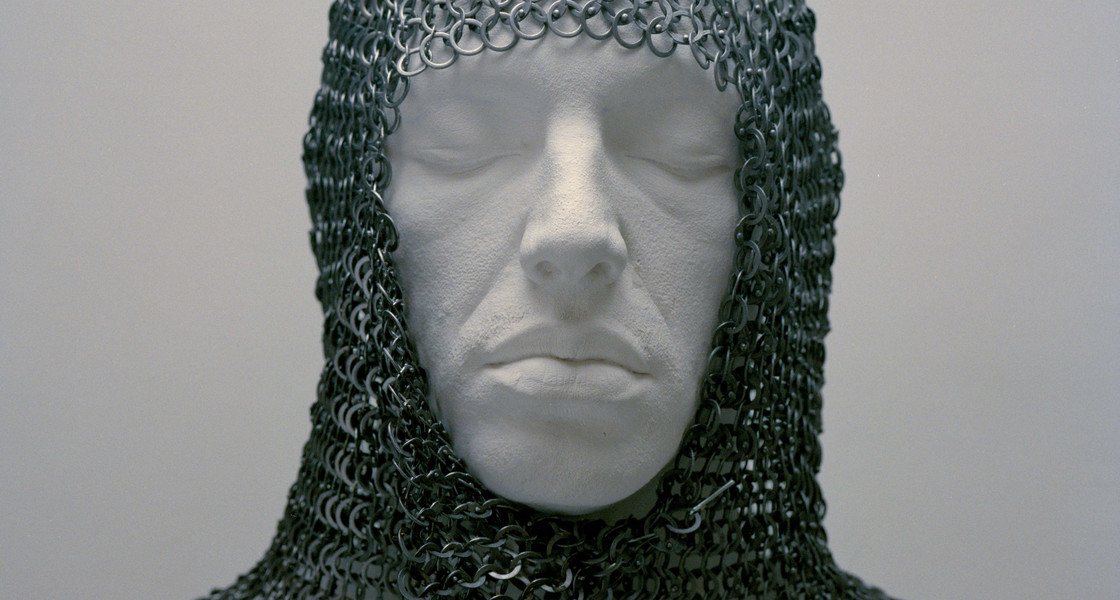
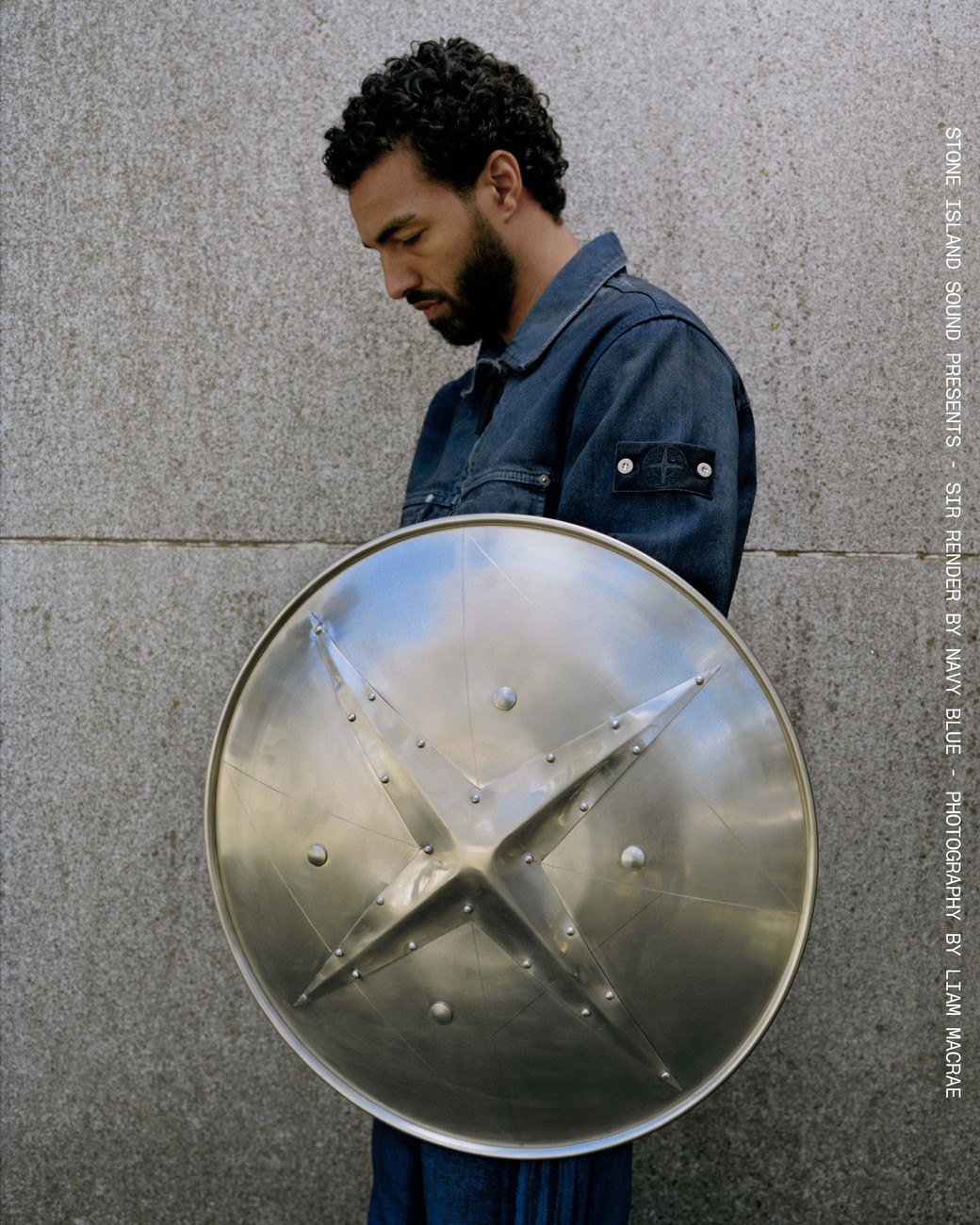
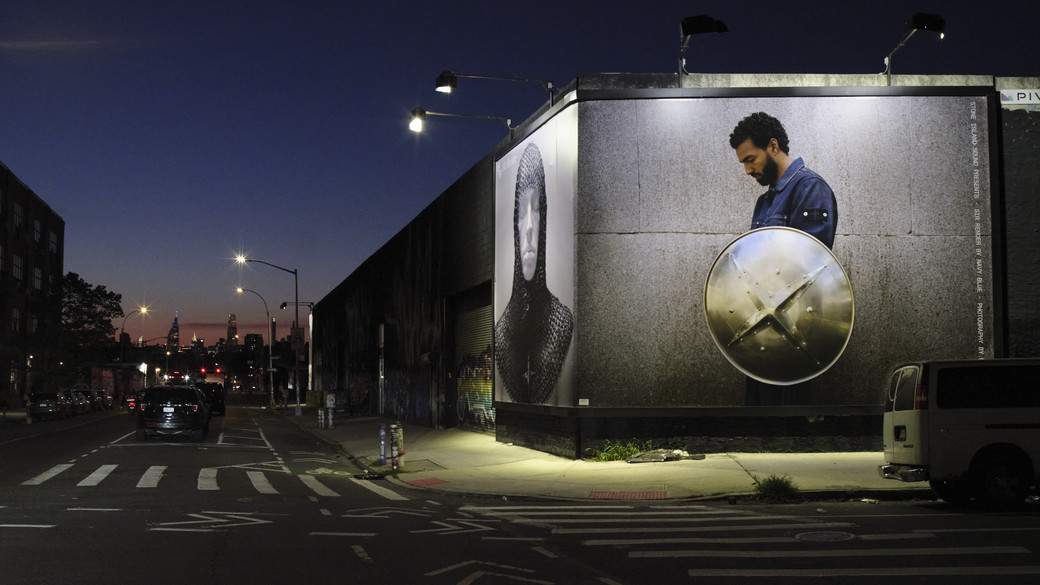
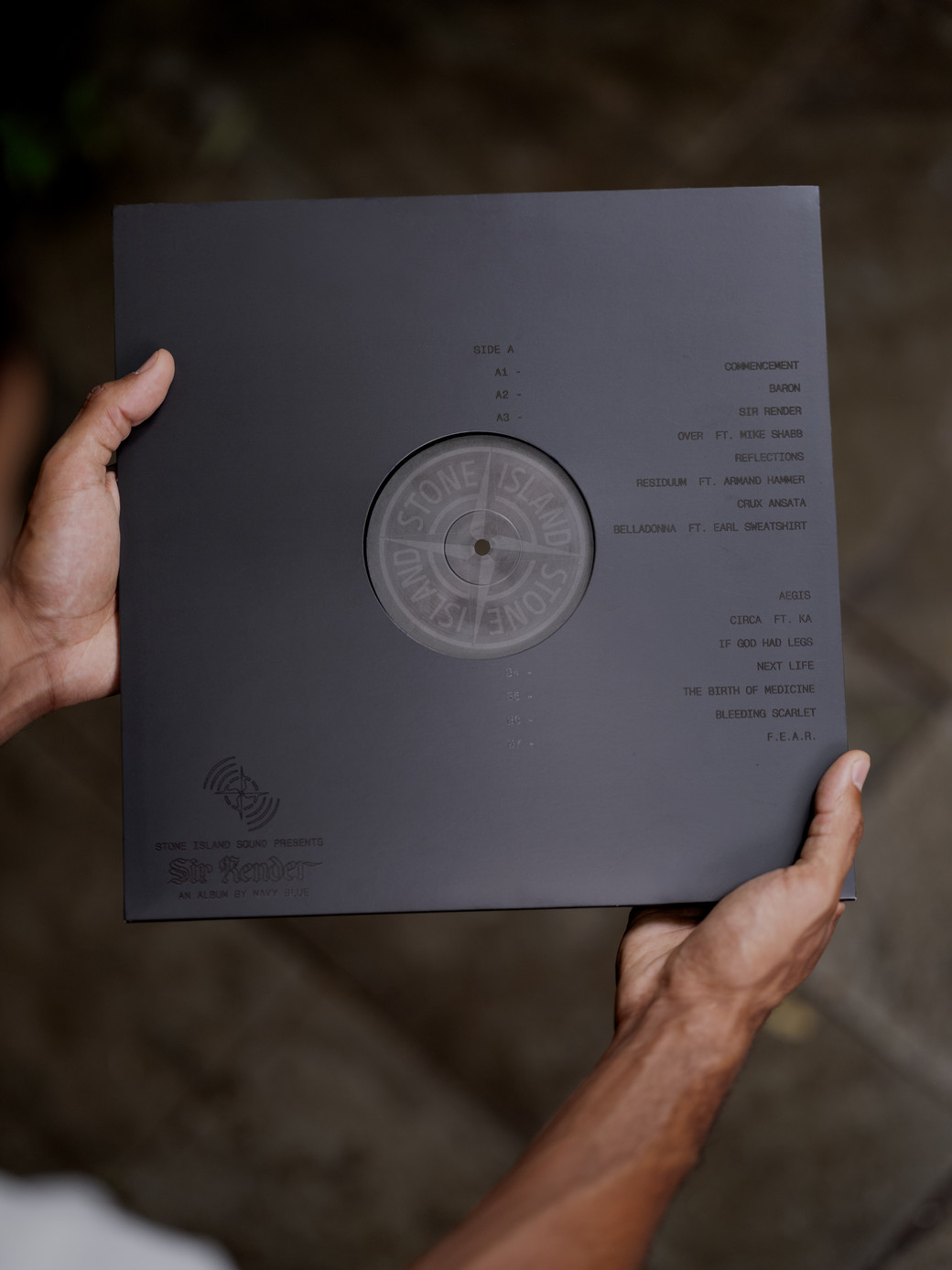
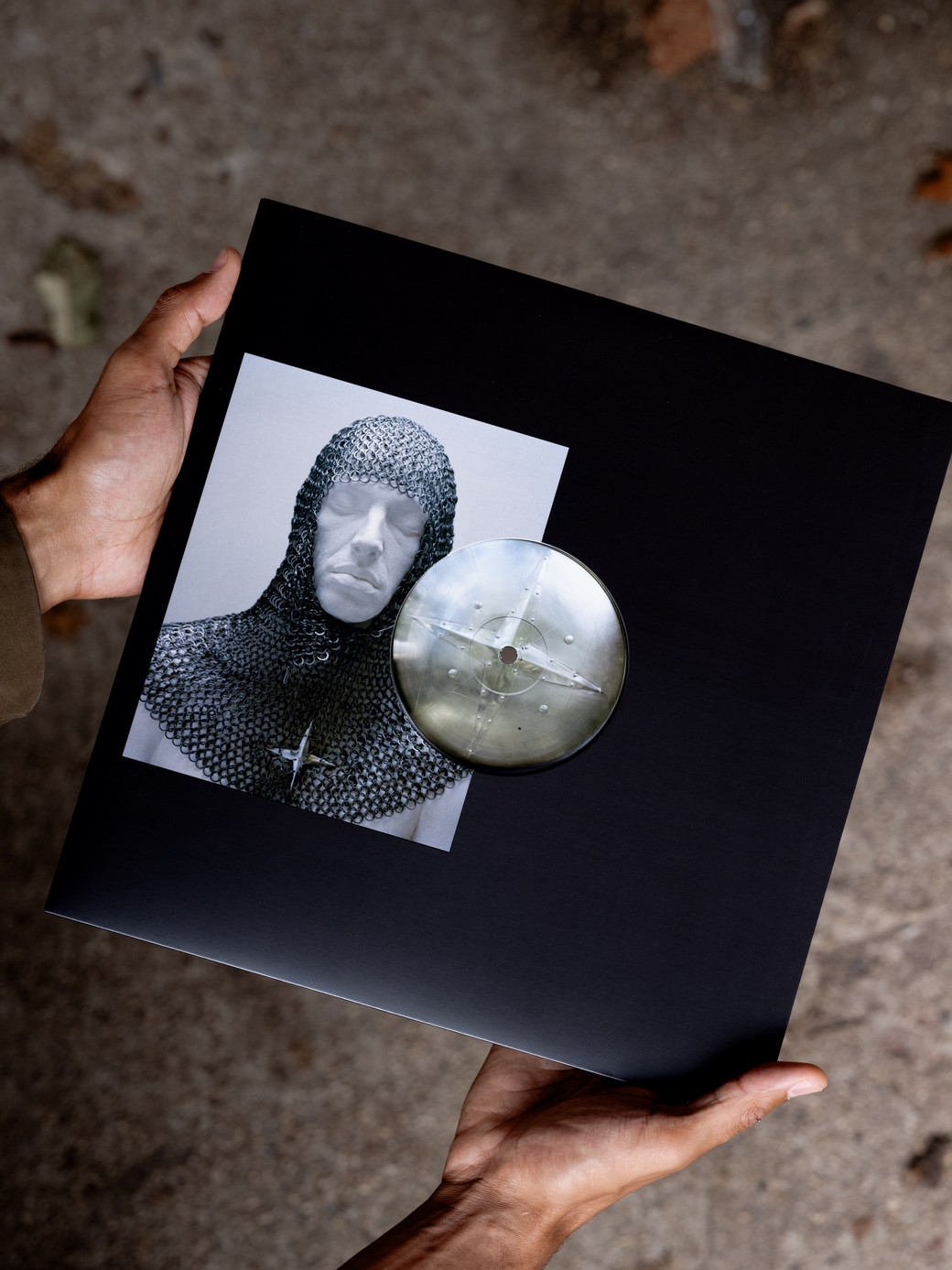
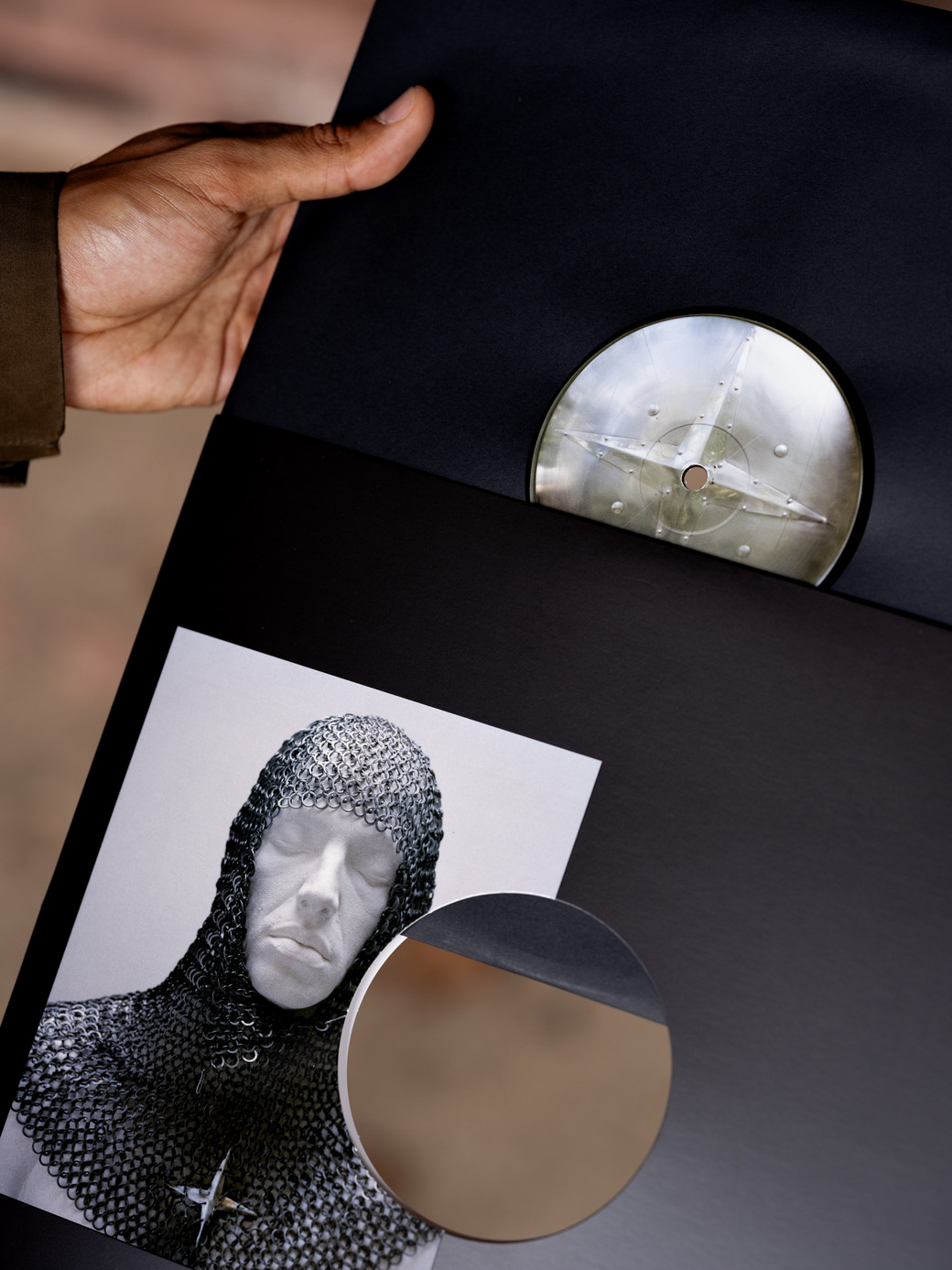
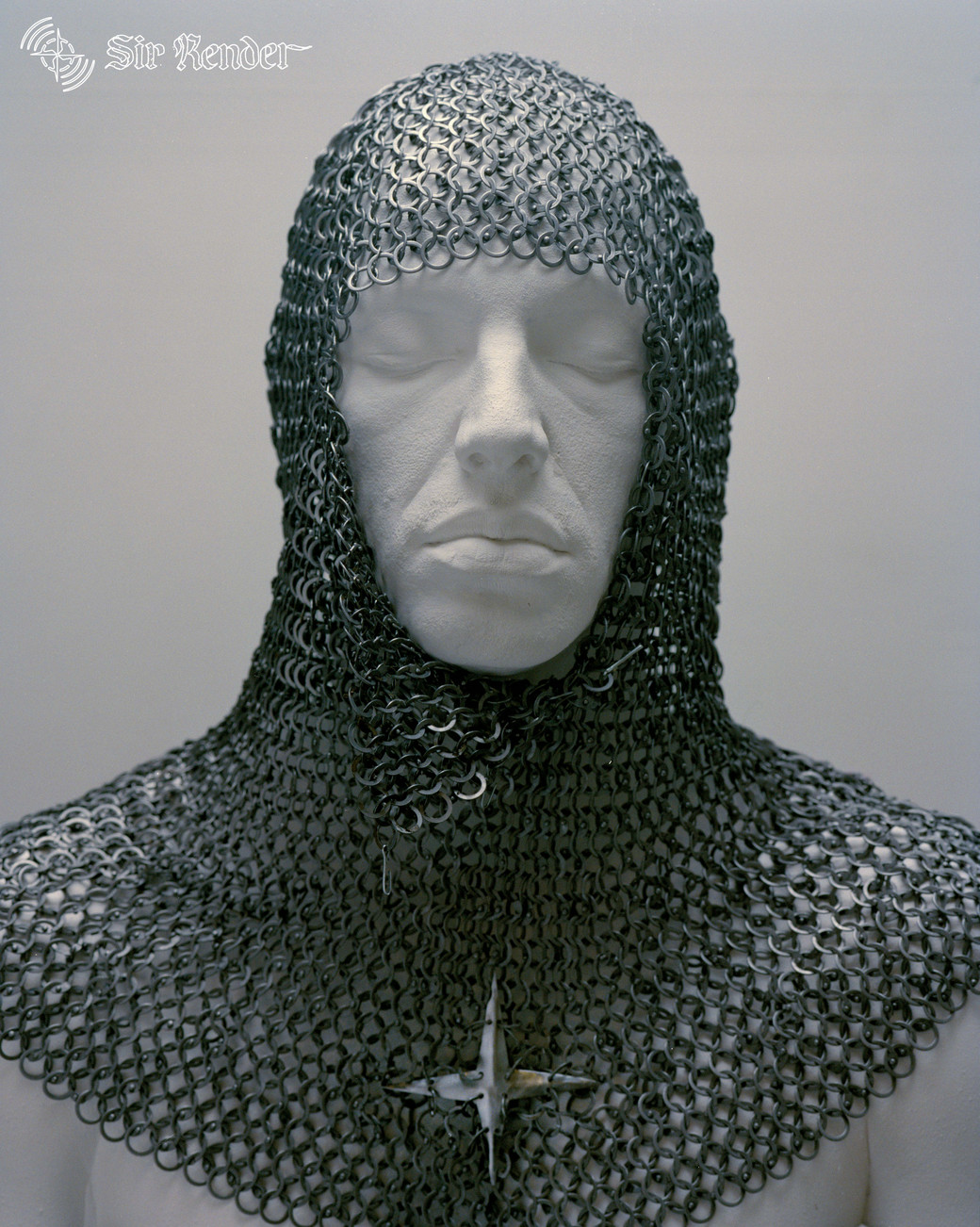
Stone Island Sound takes the sonic story Sage Elesser built in his most recent album, and turns it into a tangible item for fans of Navy Blue, something that can be kept, collected, and forever appreciated.
Sir Render reels in questions of spirituality, exploring various modes of connecting with the self. The narrative, while at times fictional, is deeply grounded in the real life of Sage Elesser. In this way, it teeters between a project that is autobiographical and a project that traverses worlds that are imaginary. The 15-track story takes us through moments of grief, a reckoning with trauma, a discovery of one’s own internal dichotomy, a lesson on how to ride from the ashes, and a finale where our character takes an honest look at themself and fully accepts who they are, surrendering to the gravity of their story. At its core, the story is about autonomy. Taking your life into your own hands.
Liam Macrae’s artwork positions the story as a diptych, showcasing the power in duality through sculpture. The chainmail evokes feelings of protection and power through armor imagery, alongside the custom shield created with Stone Island’s logo. Throughout the project, narration is performed by James Earl Jones. Other contributors included Earl Sweatshirt, Armand Hammer, Mike Shabb, and Ka. It also sees production by The Alchemist, Jason Wool, Shungu, and Sage.
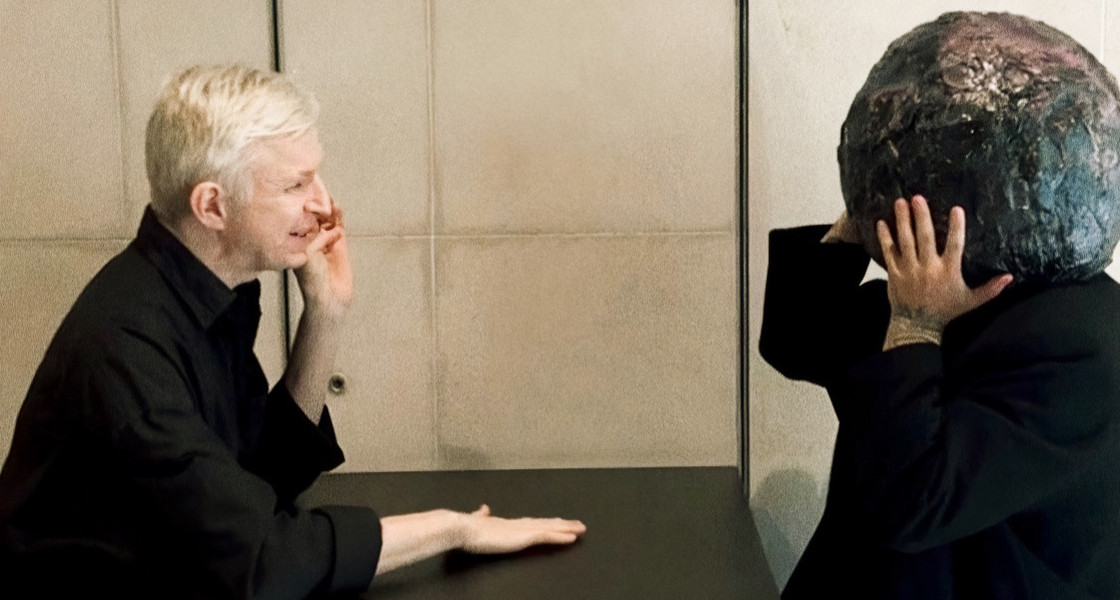
Andriy Zozulya: Your collaboration with Balenciaga resulted in a carefully curated 30-song playlist plus a new visual-art component. How did the idea come about, was it music first or the fashion world beckoning you?
Jay-Jay Johanson: Demna and his boyfriend contacted me about four years ago now, and that started a really lovely friendship. From there, many different ideas grew. I think the first thing that happened was when they used one of my pieces, The Girl with the Sun in Her Eyes, in the Balenciaga Fall 2022 campaign with Bella Hadid, directed by Nadia Lee Cohen.
I also remember them showing me how they sometimes used So Tell the Girls That I Am Back in Town. Then, well, I don't know how much I can say, but there were plans for me to perform at the Couture party a couple of years ago. Unfortunately, it was cancelled because of the riots in the suburbs, and a lot of fashion events were called off at that time. Loïc and I also started trying to make music together, testing different ideas and seeing whether we should collaborate. He joined me on stage at the Élysée Montmartre, and there were a lot of different things happening before this playlist project came back around.
I think the playlist was mostly a way of being generous to Balenciaga's followers, and also of creating a new playlist to play in the stores. So yes, there have been a lot of different things over the years.
I hope that answers the question.
In that Balenciaga mix you included tracks that clearly shaped your universe, personal favourites, influences, recent discoveries. Which three tracks would you call “the soundtrack of your inner life” right now, and why?
Three tracks. If we link it back to the Balenciaga playlist, I added one of my own songs as the final track, which became something like the title track of the playlist. It was also the piece used in the Balenciaga campaign promoting the playlist. It's a track I'm really proud of. It was a lot of fun to write and to rework Brahms's Symphony No. 3, transforming it from a kind of 3/4 tempo into a 4/4 beat. It was really exciting to cut it up and reconstruct it in that way. The first time we performed it was at the Royal Albert Hall in London, which was also a magical experience. So that's a song that's very important to me.
If I can choose two other tracks, then I think I'd have to go with soundtracks. Something that's been particularly important to me lately, although I don't listen to it all the time, is the Blade Runner soundtrack, both the original and the sequel from a few years ago. They make such beautiful use of electronics. I don't really use electronics myself very much anymore. I try to be as acoustic as possible: piano, bass, drums and voice. I don't really work with machines because there are people who are much better at that than I am. So if I want electronics, I usually invite other people to collaborate with me or join the band for a while.
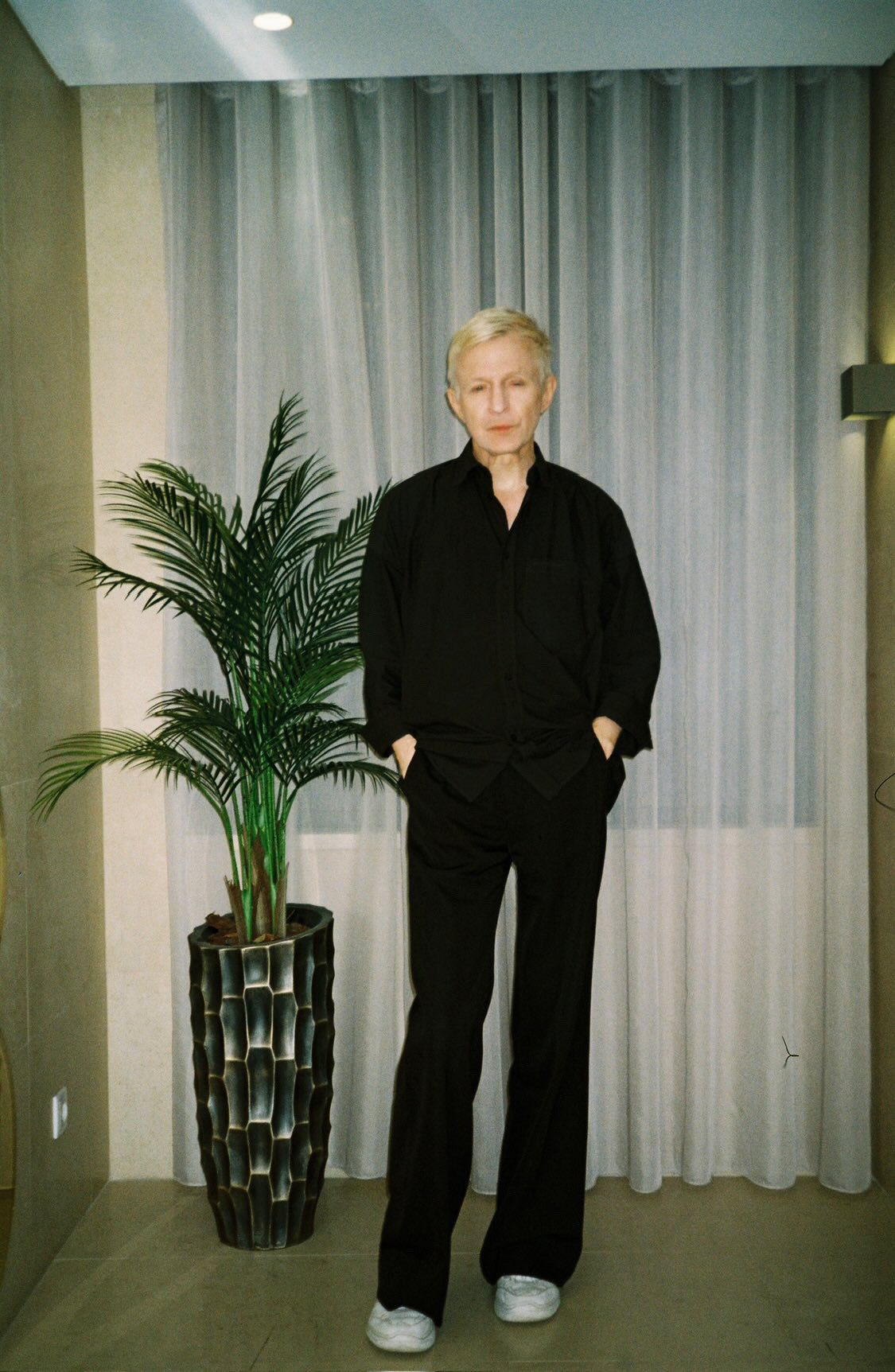
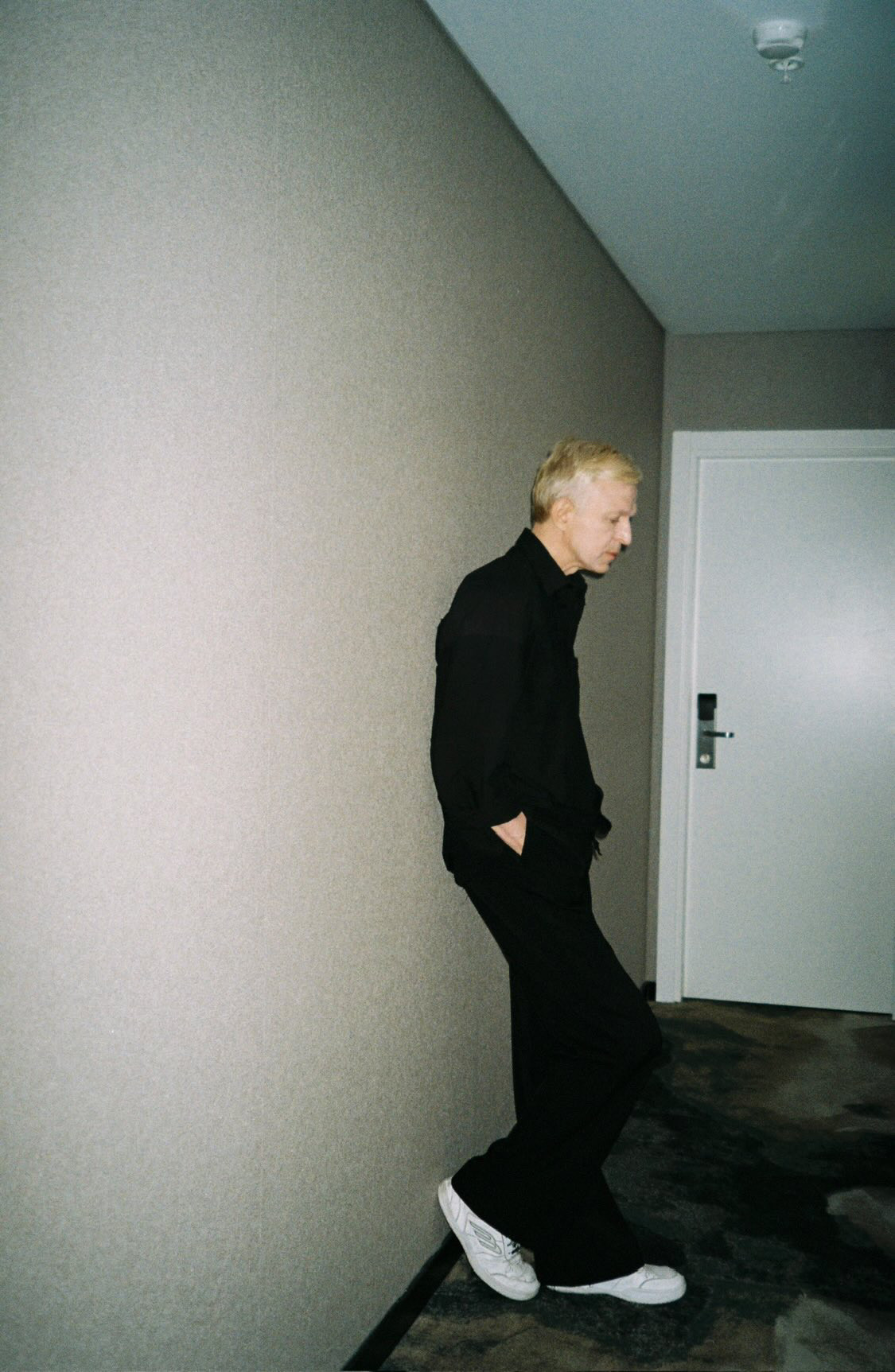
Your discography spans deeply melancholic jazz, electronic dreamscapes and minimalist songwriting. When you approach a new album, do you think of it as “film score,” “diary entry” or “mood-painting”?
How do I approach a new album? Well, I never really stop writing. I'm always writing fragments: small lyric ideas, melody hooks, or sometimes just a drum pattern that comes to mind. I write a lot of things down on paper, in hotel rooms, in airports, here in the kitchen, or sometimes, when I'm out walking, I have to sing an idea into my phone's voicemail.
Because I never really stop writing, I think that every album I make is a natural continuation of the previous one. Sometimes it's even difficult to decide where the border between records actually is. I usually know what the last song I record for an album is, but that same song could almost have become the first song on the next album.
For me, it's never really obvious where to draw the line between albums. Maybe it's easier for the listener to feel that distinction, but for me, it's an ongoing process that never really stops. Each album kind of bleeds into the next. Of course, there is a certain evolution. Time brings new equipment, new studio ideas, and new ways of working. I still work with many of the same people I worked with 30 years ago, but we work differently now. Our methods have changed, and our focus has shifted.
My writing has also changed because I'm getting older. I see things differently than I did 20 or 30 years ago. But in many ways, it's still all rooted in the same heartache, even if I'm looking at it from different angles.
Fashion and music often intersect, but rarely so intimately. How does working with a fashion house like Balenciaga change the way you think about your music’s identity and audience?
Has working with Balenciaga changed the way I think about my music's identity? No, it hasn't changed the way I work or the way I think about music at all. It's simply been a funny and exciting glimpse into a world that, honestly, I knew very little about.
Of course, I've been involved with fashion houses and designers ever since I started. Even back at art school in the early 1990s, I was studying visual arts while the fashion department was just next door, so we were already very close to designers.
When I released my first album, I was immediately invited by fashion brands to attend shows, create soundtracks, and even walk in runway presentations. Many designers reached out to me. I remember José Lévy being one of the first. It was funny because Hedi Slimane was working as his assistant at the time, and that was the first time I met Hedi.
I met Jean-Paul Gaultier many times during the 1990s. Later, when Hedi started at Dior, I spent a lot of time with the Dior team, as well as with the Giorgio Armani team. Hedi actually made my wedding suit. Then, when he moved to Saint Laurent, I began spending time with the Saint Laurent team as well.
My wife and I were also very involved with Balenciaga during Nicolas Ghesquière's time there. We lost touch with the house during the Alexander Wang years, but somehow found our way back when Demna arrived.
And then there's Comme des Garçons, of course. I've always been close to them, and I still am. I think it's a great brand.
But none of this has changed the way I work, or the way I think about my songs, my lyrics, my audience, or my concerts. Not at all. I see them as two completely separate worlds.
You’ve described music as “a cocktail: sparkly, dramatic, a little sad.” If your last album were a drink, what would it taste like? Bitter, sweet, smoky, fizzy?
A drink? A cocktail? I don't know. My first album was called Whiskey, and back in the early 1990s, I was drinking a lot of Whiskey Sours in the bars here in Stockholm. A Whiskey Sour is still a drink I really love. It's strong, it has attitude, and it's bold. I like that. Maybe it reflects something about my work. I still drink whiskey on stage at every show, it kind of soothes my voice a bit. But I also really love champagne, or Prosecco. Those bubbles are probably my favorite drug. I get high on champagne, and I love that. So yes, those are definitely my favorite drinks.
If I were to describe my music through drinks, I would probably say that the soundtracks and the beats are as bold as whiskey, while the arrangements, the strings, and the samples from old soundtracks are the champagne. And then there's the sadness in the voice, the sweetness of the lyrics, that would have to be another drink. What would that be? You tell me.
Maybe that's red wine.
Your sound evokes a timeless blend of nostalgia and modern darkness. Does age or history matter when you make music, do you listen back to your older work as someone else entirely?
I don't really listen back to my older records. But before we go out on tour, I sometimes have to revisit them to see if there are any hidden tracks that I haven't thought about in a while and that we could bring back into the setlist. We don't want to play exactly the same songs on every tour.
Of course, there are certain songs that I know the audience wants to hear, and I'll always play those. But we try to change at least a small selection of songs on each tour and also introduce a lot of the newer material.
What's funny, though, is how naturally the old songs and the new songs fit together on stage. On the last tour, the Backstage tour, we finally played So Tell the Girls That I Am Back in Town alongside newer material, and it's almost 30 years between some of those songs. Yet they fit together beautifully. In a way, they sound remarkably similar, despite everything that has happened in between.
So history is a funny thing. But no, I'm not really thinking in those terms when I compose or when I work. And normally, no, I definitely don't listen back.
What’s the most unexpected feedback you’ve gotten from someone who discovered you through a fashion-music crossover rather than a traditional record release?
Well, there were definitely people who discovered me through my collaboration with Balenciaga, especially in countries where I'm still not that well known. For example, in the United States, and also in Japan, where I still feel I have a lot of work to do.
In both of those countries, there were people who discovered me through Balenciaga and then realized that they had actually heard some of my older music before, but had never really connected a face to the person behind it or figured out who it was.
So yes, at the Balenciaga shows, I met a lot of people who discovered me through the playlist and through my work with Balenciaga. And honestly, any opportunity to reach new audiences is amazing. I love that.
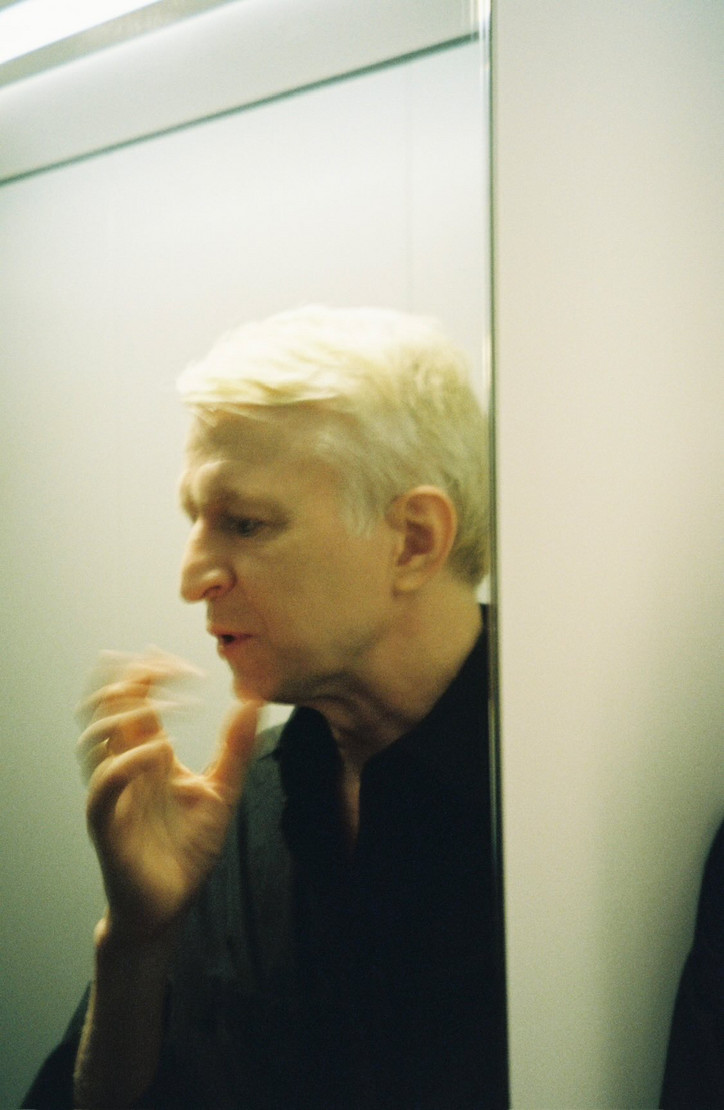
If you could collaborate with any designer or brand (past or present) for a sonic-fashion project, who would it be, haute couture, streetwear, art-wear, and what would you bring to the table?
Oh dear. Well, I don't really set goals or expectations for my work or for the future. I've never really functioned that way. And honestly, I'm happy about that, because it means I'm rarely disappointed when things don't turn out as you might have hoped.
I try not to hope too much and instead stay positive about the things that actually do appear. But if we're talking about a fantasy collaboration, well... Yves Saint Laurent, of course. Alexander McQueen was amazing. I'd also love to meet John Galliano and see if there might be something interesting we could explore together.
I'm also a big fan of the Belgian designers. My wife is from Belgium, and that whole scene is just so unique. I really love it.
So, I don't know. I really don't know. But honestly, with the work I've already done with Balenciaga, I feel like I've had much more fun than I ever expected. I never planned for any of that to happen. It was already a huge bonus in my life.
You’re known as a visual artist as well as a musician. Do you sketch or visualize while making music now, and if so, does the medium change the tone when you switch from brush to mic or synth?
Yeah, I mean, first I did four years of architecture school because I thought I wanted to become an architect. Then I did four years of art school and definitely thought that I would work with art in some way.
At one point, I worked at i-D magazine in London, and in the evenings and on weekends I worked for a Swedish music magazine. For a while, I thought that maybe that was what I was going to do. My father was a typographer, printing books and catalogues and things like that, so I also thought that perhaps I would become a graphic designer rather than a painter, because that felt like a profession that suited me. And I really liked it.
Luckily, the job I have now, making music, also gives me the opportunity to work with visual art through my record covers. That's where I get to bring that side of myself into the process. I paint some of the covers, and I really enjoy working with typography.
Very often, I approach typography in much the same way we did at i-D magazine 35 years ago, before everything became digital, when we worked with wax machines, scalpels and glue. I still like that process. It creates something a bit more raw, a bit more street, a bit more punk, and I really enjoy that aesthetic.
Once I start accumulating a group of songs and an album begins to take shape, I also start thinking about what the album should be called and what I want it to look like. I think about how it can differ from previous album covers without becoming too different, because I don't want it to suddenly look like another artist or another genre of music.
But yes, I really enjoy all three parts of what I do: making the music, creating the artwork, and touring. They're three wonderful aspects of the job, and I genuinely love all of them.
Looking at 2026 and beyond: do you see more of these hybrid projects or are you retreating to purely musical spaces?
2026 is a special year because it's the 30th anniversary of my first album, Whiskey. Since we're currently on tour, we're also preparing a few special concerts to celebrate that anniversary, where we'll perform the entire album.
There will also be a couple of exhibitions this year, and I'll be taking part in some film festivals again, perhaps with a few masterclasses and talks as well. As for standalone exhibitions, I'm not entirely sure yet. Fashion projects are also still open questions at the moment.
To say yes to these kinds of projects, everything has to fit within the touring schedule, and sometimes it does, sometimes it doesn't. But I'm constantly curious, and I really enjoy collaborating across different creative fields.
And of course, there's film as well. I would love to act more and work on more soundtracks. It's been a few years now, so please don't hesitate to get in touch.
Thank you so much.