- Become a Model Citizen here.
Stay informed on our latest news!

What is your ideal office?
I’m fortunate enough to have my ideal office… it’s with hard-working creative individuals I’m honored to have as my team and is located close to my wife and daughter.
If you were a shoe, which would you be and why?
I would be an Air Max 95. If I were a shoe, I’d want to be considered as being ahead of my time. The Air Max 95 embodies that. It was so cutting edge when it came out, that it becomes more relevant with every year that passes.
What was the last thing you typed into a search engine?
“The Source’s Unsigned Hype columns yearly database”
What is your greatest source of creative motivation?
Traveling and experiencing different cultures around the world.
What was your favorite childhood snack?
Frosted Flakes with chocolate milk and crushed-up Linden’s double fudge cookies.
What is something you learned growing up that you hold onto today?
It’s something my team has heard me say ad nauseam… you can’t go from A to Z without the alphabet.
What is the best insult?
While I don’t have an answer to this question, it reminds me of something my mother told me… if you don’t have something nice to say, say nothing at all.
If a New York City block was named after you, which would it be?
Horace Harding Expressway & 188th St.
If God is real, what do they smell like?
A new car.
Who did you idolize as a teenager?
The same person I idolize today, my father.
What are you most proud of?
The team we’ve been able to build at Kith. It’s really special and keeps me motivated every day to come to the office and be the best I can be.
What is the most important item in your closet?
The custom Knicks chain that my good friend Teddy Santis gave me as a congratulatory gift when I became the Creative Director of the team. The back of the pendant is engraved with the saying, “Only one of us needs to make it.” It’s what I told him twelve years ago when I opened my first store and has been something we’ve joked about ever since.
What is the best bite in New York?
Sadelle’s for breakfast. Cafe Mogador for lunch. My wife’s cooking for dinner.
If you could describe yourself in three words, which would you choose?
Perfectionist, Passionate, Decisive.
What is your go-to method of transportation?
Driving is one of my true passions.

We planned to meet for a coffee the next day to chop it up, but understandably, they were exhausted (as was I after fashion week), so instead we texted about it! Read the exchange below:
Tell me about the Jazz band that opened the night, that was fun.
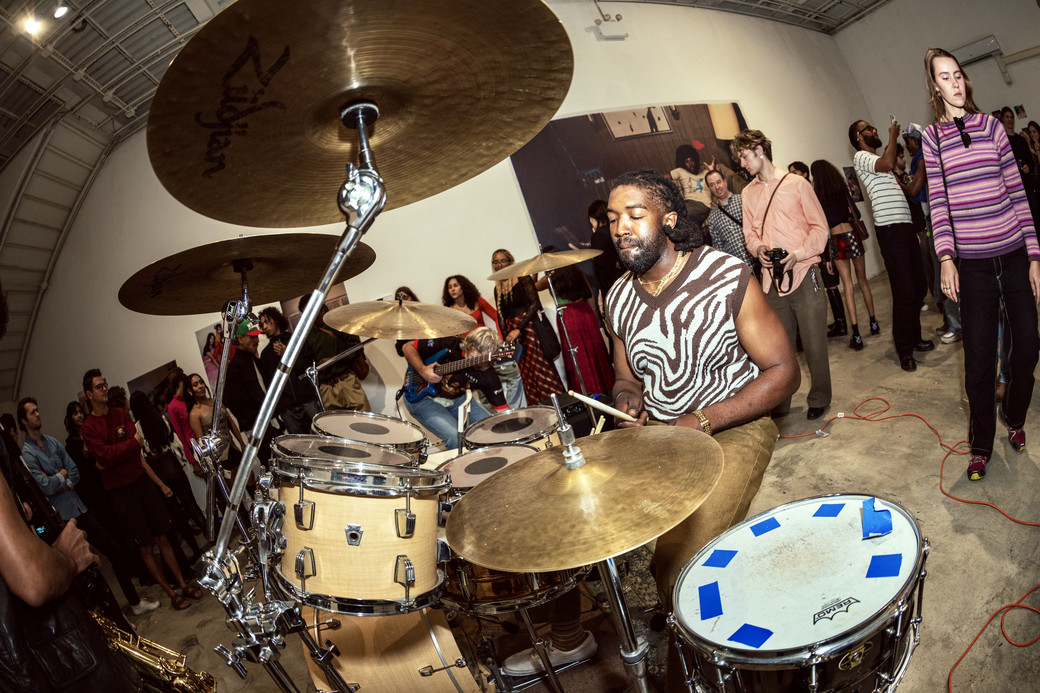
Iza El Nems— and I went to elementary school together (PS9). I remember him at 5 years old, carrying around his saxophone all around town, which at the time was the size of his whole body. Emilio ended up being a crazy tenor saxophonist and composer and is currently the lead sax player in the bands of Stanley Clarke N 4EVER and City Blackman Santana.
He was a member of the late Wallace Roney’s Quintet for the final three years of his life, sharing the bandstand with Ron Carter, Jimmy Cobb, Buster Williams, Stanley Clarke, Patrice Rushen, Lenny White, Gary Bartz, Steve Turre, Christian McBride, Rene McLean, Antoine Roney, Donald Harrison, and so many more. He’s always on the road with Jazz at Lincoln Center Orchestra on the road in the United States.
Okay enough gassing but just giving credit where credit is due. Anyway, when it came time to put the show together I literally was like there is no one else I want to do a live performance on opening night and called him up immediately. He was on tour when I called but timing worked out and he graciously agreed to perform with a few of his bandmates. It was a full circle moment. Brought tears to my eyes. That shit was beautiful. Can’t believe we were running around causing havoc during recess together. Two of us curly haired kings.
Sophia Wilson— The jazz band was completely Izzy’s idea! Emilio is Izzy’s friend from childhood. The second she suggested to him I was immediately sold. Live music brought the perfect elegance to the evening, and Emilio was even a born and raised New Yorker.
What was the process like for selecting the images and the ways in which they were presented?
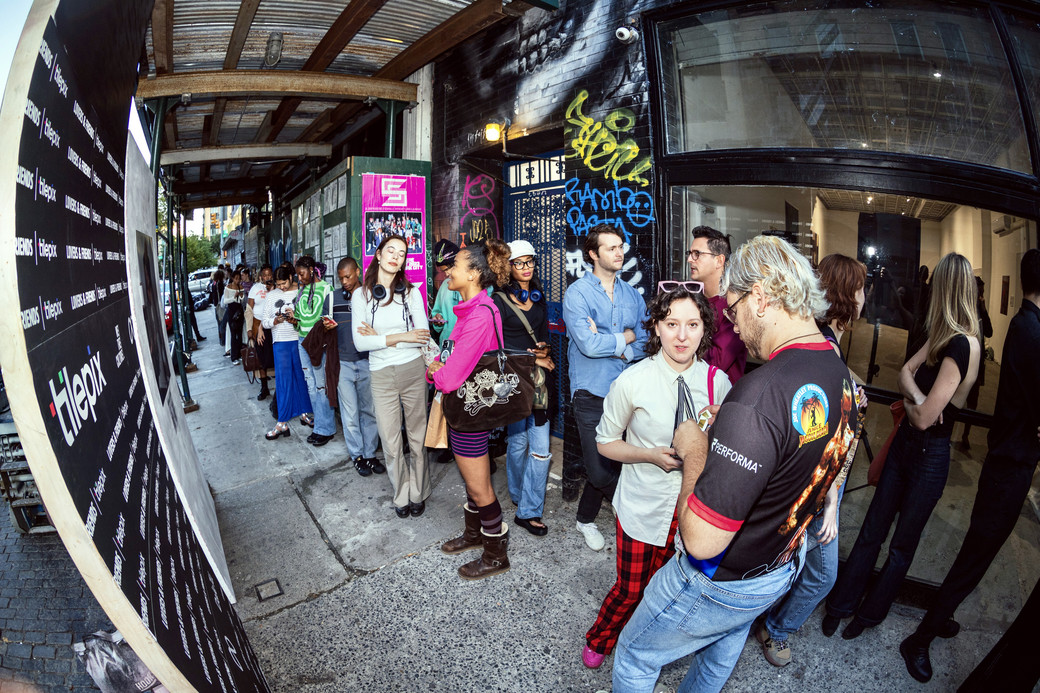
IEN— We wanted the majority of the photos to be billboard size — sort of this attempt to reclaim space. TilePix, our sole print partner for the event, gave us a range of amazing mediums to use (lenticular prints, inkjet, glass, etc.) so we chose mediums we thought made the most sense for the images at hand. They've been super supportive throughout the entire process, which is nice. We wanted the works to make an impact and speak to the true nature of the series.
SW— We knew from the start that we wanted our work to be as large as possible in order for us to take up space in our city. Having the portraits of our native NYCers take up as much space as possible was at the heart and soul of our project from the very beginning. Given some time restraints and some bumps in the road, many of the prints ended up being a bit smaller than intended, but we are definitely still thrilled with the outcome. A lot of the decisions of which prints would be what size was instinctual, and it would hit us at the same time that a certain print needed to be made a certain size.

Was it different to see it physically in a space rather than digitally which is how most of your audience has encountered the images so far?
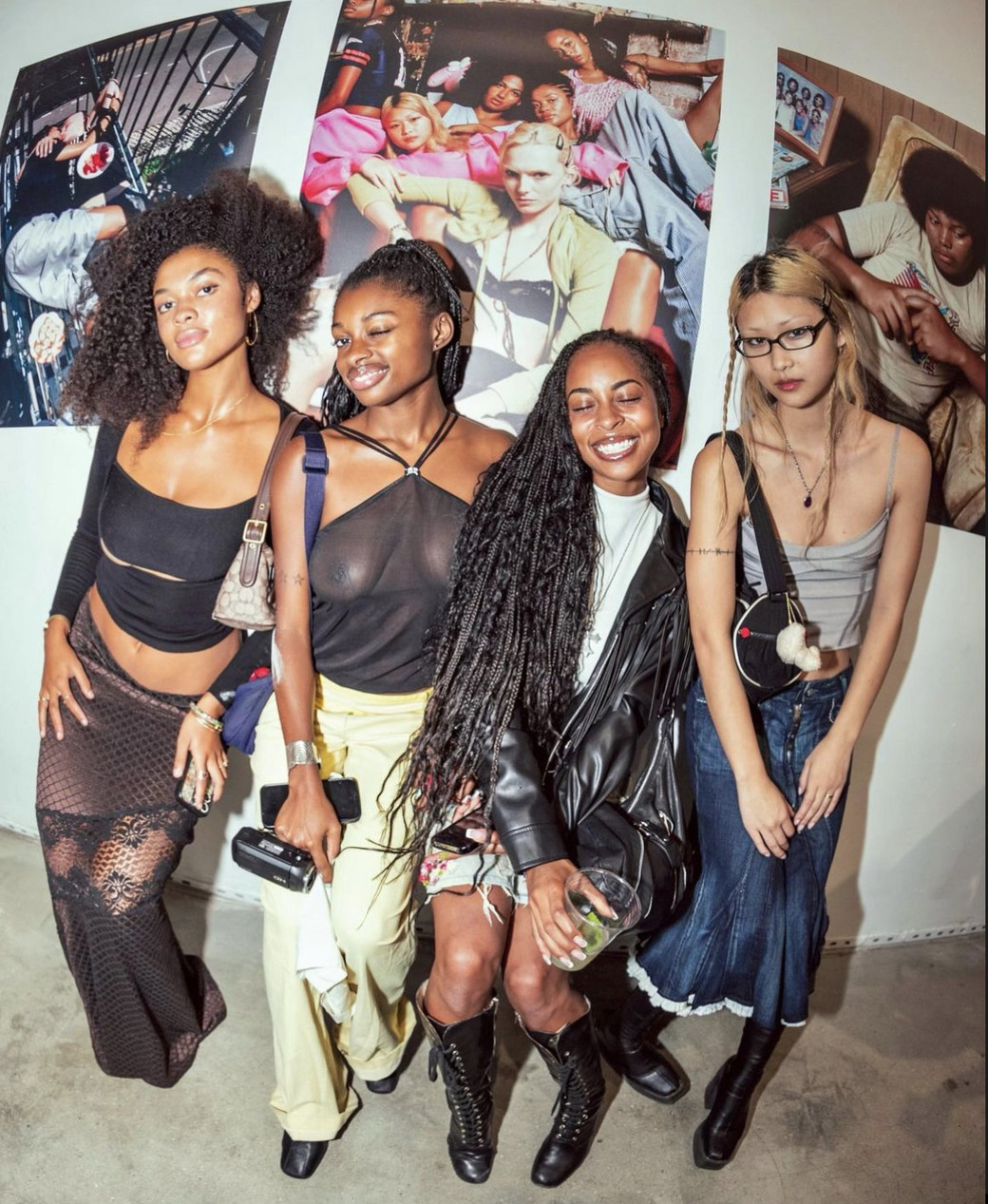
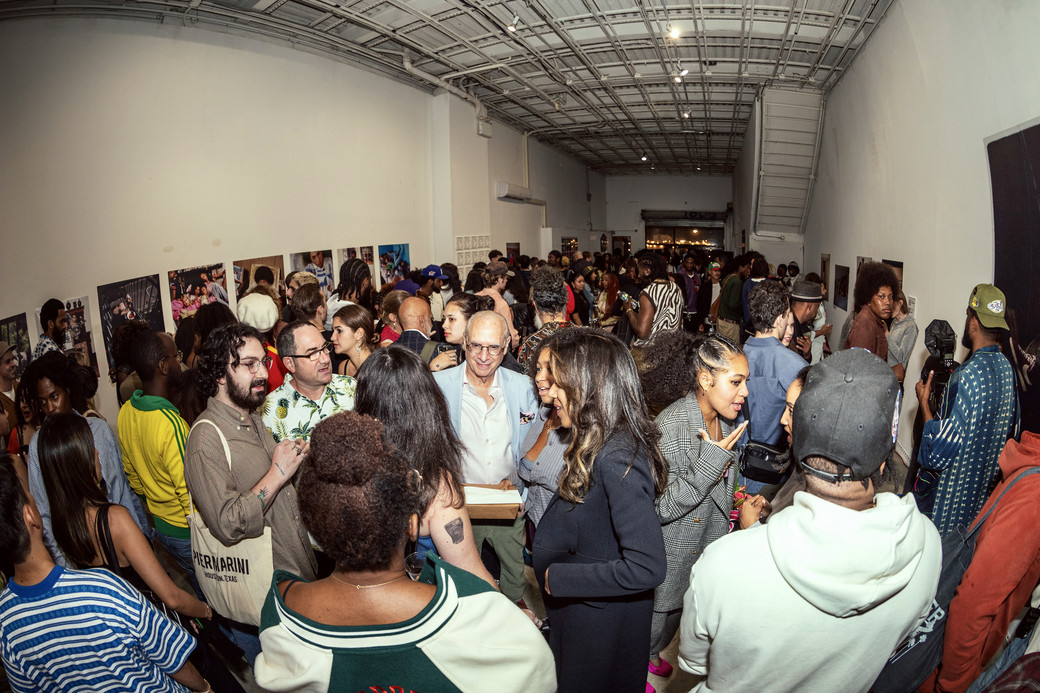
IEN— Absolutely. It was seeing an idea that was born from Sophia’s studio come to fruition, seeing it come to life after all the trials and tribulations. We ran around the city like little kids in a candy store, jumping from shoot to shoot, titties bouncing baggy pants dragging, mid laugh or mid cry, we stood connected, grounded in our vision and driven by our motives. Our outfits alone took up enough space to fill a stadium. In those first few months both Sophia and our project gave me light, it allowed me a moment to breathe during a time where I had never felt more suffocated, stifled creatively, unable to grow and undeniably heartbroken.
As we worked I began to write. I wondered why now when I’d never been more unsure of what I had to say. Our subjects helped me just as much as Sophia did. And once we started speaking we did not stop. To see Sophia smiling ear to ear running up and down the block, it brings tears to my eyes. We worked so fucking hard. You have no idea how hard we worked. To be 22 in the city that never sleeps I struggled with where to swim in a swamp swarmed with the sea creatures of my past and demons that lay down tracks in my mind. It’s like we swam to the gallery. New tracks were created. Beautiful songs. Strong, potent, and powerful.
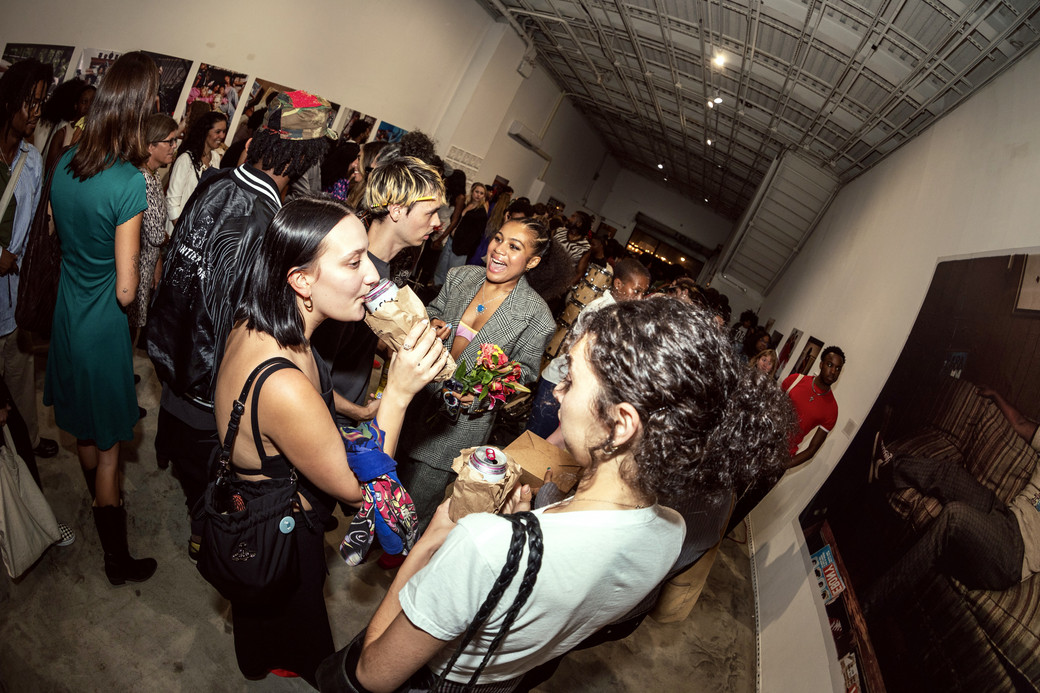
SW— One thousand percent. As a photographer who prints everything by hand in the color darkroom, I am really attached to the importance of physical art and an analogue process. Being able to blow up my color darkroom handprints felt like an exaggeration of my photo process, which only felt natural to Lovers + Friends.
When people see photos on a screen, you’re not able to view the original hues, or the textures at hand, and the papers we chose were all so intentional. Even for instance, the lenticular print which was one of my favorites – there is just no way to show something like that on a digital screen. There’s also just something about seeing these people congregate around your art in real life that you can’t feel over social media. You can have a billion followers and feel lonely, but when they all come together in real life it’s a completely different feeling that leaves you so fulfilled. It’s art in itself getting to watch everyone’s faces as they look at our work.
As PoC & women artists, there are so many obstacles that can arise, but together you’ve been able to establish a standard and a great foundation from which to build upon. What do you see as the next step?
IEN— There have been a lot of lessons learned in this process — and many, I'm sure, left to learn. I think the magnitude and scale of this project in such a short timeline is a testament to our team, the way we work individually, and more importantly, collectively. For every person that believed in us there were 100 that didn’t. That’s fine. We’re moving and shaking.
As an Arab NYer I value spontaneity and improv., working in stride as a homage to the generation of Ab-Ex painters who came before me, once filling the streets of the city with colors and movement. In short: I’m a fucking nut, born from the belly of a heartwarming mother, stemming from the seed of Militia Men and streetwalkers, a product of my generation that looks outward hoping to reach a dimension that cannot be seen outside of my dreams, except when I paint it, forming those thoughts into a reality of color on contact sheets or canvas… or Lovers & Friends.
The next steps? We’re going international with this show. Already working on the creative templates for our next few projects. Don’t want to stop.
SW— Thank you! This has definitely been anything but easy. Getting people at large companies and publications to treat us as they treat our male counterparts has been a huge challenge which is crazy to me because I've been working in the industry for over 10 years… Also, what Izzy and I have put together has been so monumental already and we have the stats to prove it. As far as next steps, we want to take this show to other cities! Paris is at the top of our minds currently. A lot of the works are still for sale so getting those sold is definitely a next step, too. We would also love to do some sort of spin-off campaign and we are in talks with a few major houses about that currently. Not to mention we also both have our solo careers to attend to.
Has it gotten easier? Considering you had to contribute your savings to even make this possible.
IEN— Everything has its ups and downs. Everything is hard work. I’m just proud of us. Really really proud of us.
SW— Why does it feel like it’s only gotten harder? Haha. I guess the bigger you get the bigger the hurdles get.

“A lot of my decisions of creating immoral, unlikeable, repulsive characters was because I feel like that’s more real,” Kazemi says of his debut novel New Millenium Boyz. A teen drama set at the beginning of Y2K, the book follows Brad, a senior who meets two new students, Lusif and Shane, during his last year of high school. Constantly watching MTV, idolizing people like Marilyn Manson and the aforementioned Columbine shooters, the three boys gaybash, hurl racial epithets at students, mutilate rats on their Handycams, all in an effort to escape the blandness of suburbia. Each shocking action escalates as they attempt to surprise themselves, and the sheer plunge Kazemi must have done to create each grotesque thought is one of the most consistently astounding facets of the book. “I took out this new book on Hitler at the library, but I got too hard reading it,” Lu, the worst of the three, admits. “I ended up just jerking all night.”
Kazemi’s characters are horrendous and heavy to read, and it wasn’t easy to sit with them during the book’s long writing process. “It’s not a happy thing every morning to work on this. I’m dealing with very intense, dark things,” he tells me. It’s bursting with pop culture references — what song is playing on the radio, food items the characters eat, what band is on everyone’s shirts — one reference took about two or three hours to fact-check, he says. “Probably the reason why it took ten years was the fact that it was a period piece and the research was done in libraries, university databases, messageboard archives, archive.org, YouTube home videos, pictures.”

The early 2000s, Kazemi says, was the most recent period we were all tuned into the same content. Brad and his friends constantly call each other up, ask if they saw what just happened on MTV. “I was trying to capture this last moment of adolescent culture that was controlled by an arena of systems. It’s not like your generation with a billion different algorithms brainwashing you and separating the culture around your peers. You might not know a Twitch streamer your friend really likes, or even a porn star your friend really likes from OnlyFans or Twitter. Everyone gets their different cultural reality, and it never really merges people together.” Whatever I scroll past daily is likely completely different from my friends. “So much of cultural camaraderie came from that glue and that system of pop culture being simplified,” he says.
New Millenium Boyz first showed up on Tumblr as a snippet titled “Yours Truly, Brad Sela,” where it attracted the praise of artists who were online at the time and took notice in Kazemi’s drive and pivot to artistry after working as a music journalist. People like Marina Diamandis, Lana Del Rey, Charli XCX, the trifecta of melancholy sad gay pop. He no longer keeps in touch with Del Rey, but in recent years, has expanded his celebrity repertoire — he’s on a first-name basis with Bret Easton Ellis, whose American Psycho feels like it harbors New Millennium Boyz as a prequel, and in 2018, Taylor Swift invited him to come backstage to chat before her blockbuster Reputation Stadium Tour.
These chance encounters are due to the occult study of magic — he’s an open practitioner of Kabbalah, and allegedly manifested the Swift meet-up, a creative partnership with Marilyn Manson and Ellis, and more. His first book, 2020’s Pop Magick, detailed the experience of visualization, rituals, and sigils in order to bend reality to your will. Madonna posted herself reading it, something Kazemi visualized, and he attributes much of his career success to his practices. (Surprisingly, he sat the recent ‘Super Blue Moon’ out: “lots of planets are in retrograde,” he explains). “Everything is because of magick,” he says, “I visualized talking to you.” He points at the image of me on his computer screen, but I can’t be sure if he says this to every person who interviews him.
Pop Magick also documents his terminal offline-ness: rare for a young person, a writer, but also for someone so invested in culture. “You have to unplug the IV drip of the internet when you’re writing a book,” he explains.


He’s surprised, then, when I mention the current mainstream literary skew towards fiction that soothes or acts as a comforting blanket rather than excites or provokes. Think of the willfully uncritical revisit of Lolita that sparked discourse last month, or the countless Emily Henry reads that promise a satisfying conclusion over intrigue or human flaw. A Little Life author Hanya Yanigihara was very publicly critiqued for writing intricate, traumatic novels where gay men undergo countless hardships and pain, “only so she can swoop in and save them.” A recent Lux Magazine piece found flaws in Jen Beagin and Melissa Broder’s latest novels depicting bisexual women — Milk Fed’s narrator, the author writes, “treats the object of her desire as an abstraction rather than a person,” which is the point of the book. The narrator doesn’t see her partner as a human, which makes for an exploration of fetishization and the underbelly of our psyche. Is a healthy, normal relationship really the most interesting plot for a novel?
Kazemi has no desire to write a candy-coated revisionist book. “I think that’s very dangerous. I don't think morality should be a part of fiction or characters,” he says. Part of the inspiration for New Millennium Boyz, he says, was borne out of seeing John Greene books like The Fault In Our Stars when he was younger. “I wanted to subvert [those books]. That was my first reaction, being like, ‘Fuck this saccharine, sanitized version of being a teenager. I’m gonna make the dirtiest, worst depiction of adolescence that I can figure out.’”
True to his word, Boyz is a heavy read — test readers had to take several breaks. He wrote “really depraved, fucked-up things that haunt me,” for example, when the boys ambush a girl with Down’s Syndrome, attacking her with SuperSoakers full of their urine. “That was so gross and horrible, so sad,” he says, but to make a complete, final product exposing people’s nostalgia of Y2K, and the horrible cruelty of teen boys at the time, he had to push creatively to see how deplorable he could make these characters. “If I choose to make a really gruesome portrait of something, I always want there to be a sense of purpose or intention or meaning. I’m not interested in vapid shock for the sake of nothing. I hope that every calculated shocking decision through the prose and the narrative was meant for a reason, for the story.” During the scene where they carve open a rat, Brad notes, “Boys feed on the lust of other boys.”

When I bring up the cultural climate of the internet he’s missing out on, the quick-to-cancel, high alert Twitter users that are happy to misread a work of satire, instead projecting the novel’s themes and behaviors onto their author, Kazemi isn’t that nervous. “Maybe someone will go after me in that way, and just be totally offended by it,” he admits. “But I think if anything, a liberal person or a feminist should read it and see that I’m exposing a lot of the corrosive animated aspects of growing up as a young man in the Y2K era.” Already, there are one-star Goodreads reviews, lamenting the book’s misogynist dialogue and latent homophobia. “If someone is just gonna be reactionary and outraged about it… I mean, there are smart readers and there are dumb readers,” he sums up. “Also, it’s a weird fucking time. Don’t straight girls read The Sluts by Dennis Cooper on TikTok and stuff? It’s a totally bizarre time.”
Most of the boys’ horrendous actions are on camera. In their suburban environment, the boys lust for something more, and start videotaping themselves acting out — on drugs, carving ‘SATAN’ into each others’ forearms with knives — producing Marilyn Manson-esque snuff films. Of the three of them, Brad is the most self-conscious, to a debilitating effect, which produces the novel’s most interesting ideas about identity. Brad has fun on camera, but that isn’t the real him, he insists, he was simply inhabiting a separate persona.
“You’re a victim of your own hoax,” the astute Lusif tells Brad in one scene. “Your life was so meaningless that not even your own manufactured storylines could save you from the emptiness that consumes you.” He goes on to warn, “At some point, you are going to slip, embarrass yourself, and it’s going to hurt so much worse than if you were honest from the start.”
The event that kicked the writing process into full-speed, Kazemi says, is the infamous call between Taylor Swift and Kanye West that leaked in 2016 and went on to define each of the performers’ careers, forever. “[The call] really changed everything for me, of trying to understand the private and public self and performance of the self. We all know all people at that level of being in the public and controlling your image, wanting everything to seem so seamless, but I always wanted to be transparent about that stuff.” Using Brad as an avatar, Kazemi interrogates this exhausting need to craft a meticulous image of yourself — it really shouldn’t be surprising that Snapchat and Instagram lead to Machiavillian behavior, he says. At the end of the book, when Lu threatens to shoot up the high school’s prom in an effort to occupy the same mystique as the Columbine shooters, he blackmails Brad into keeping quiet about it, or else Lu will release the tapes they recorded. “I don’t care who gets hurt as long as I become the vision that I have of myself to this world,” Brad admits. He doesn’t tell anyone.


Despite the long road of rejections and rewrites, magickal rituals and visualization, Kazemi is cosmically cool about how the book will enter the world. “I can do my best by trying to influence the universe through magic and my will and my work ethic, but whatever ends up happening, I can’t really control that.”
We’re talking about Tumblr during one of our many asides — through our conversation, he asks me questions, too, my opinion on recent novels, what I thought of his ending, as if I were a beta reader instead of someone with a finished product — when he says, “Alex Kazemi is kind of like Electra Heart, in a way.” Electra Heart is the alter-ego of Marina and the Diamonds, a persona she donned for her 2012 album of the same name. So is Alex Kazemi a façade? Did he write New Millenium Boyz, or did the person I’m speaking to? “My soul channeled NMB,” he answers. “Alex Kazemi is definitely someone who is an avatar or vehicle for me to challenge facets of culture and to get people to think and question things. But of course, my art is a part of him, for sure,” he ends.

Persona or not, it’s admirable Kazemi sought out to write about one of the scariest things we can experience — reality. The novel is obviously overly provocative and absurdist at points, but his main goal was to dig deep and re-enact what teenagers were actually talking about: cruelty, crassness, and atrocities included. “I don’t know if I derive joy out of being a provocateur,” he says. “I think it’s sort of sad that we have a literary climate where a book like this could be provocative. We should be engaging with the shadow self and the darker side of the human psyche and our cultural psyche.”
Kazemi’s words often remind me of when Lu uses his masterful insight on the world to make a real point — when his broken, horrible clock is right twice a day. “One thing I hope you learned from me is that reality is a horror show,” he tells Brad one day. “It’s worse than anything you could imagine. It’s too gruesome to be portrayed in art. You have to be there for it. Alive. It’s all around us. It’s beautiful. It’s going down, right now.”