The Modern Muse


Stay informed on our latest news!


What’s your favourite ingredient?
Flour is one of the most important ingredients as it is so versatility in everything we cook in the kitchen, but we are more and more conscious of guests own allergies and dietaries, that we always have to have something else in our back pocket.
I have always loved bread: it has been part of my world as far back as I can remember, from soft squidgy bread to hard crusty rolls and to sourdough. I have been very fortunate to have made bread under the guidance of some excellent teachers such as Pierre Koffmann, Richard Hart, Emmanuel Hadjiandreou and Michael James, all amazing bakers.
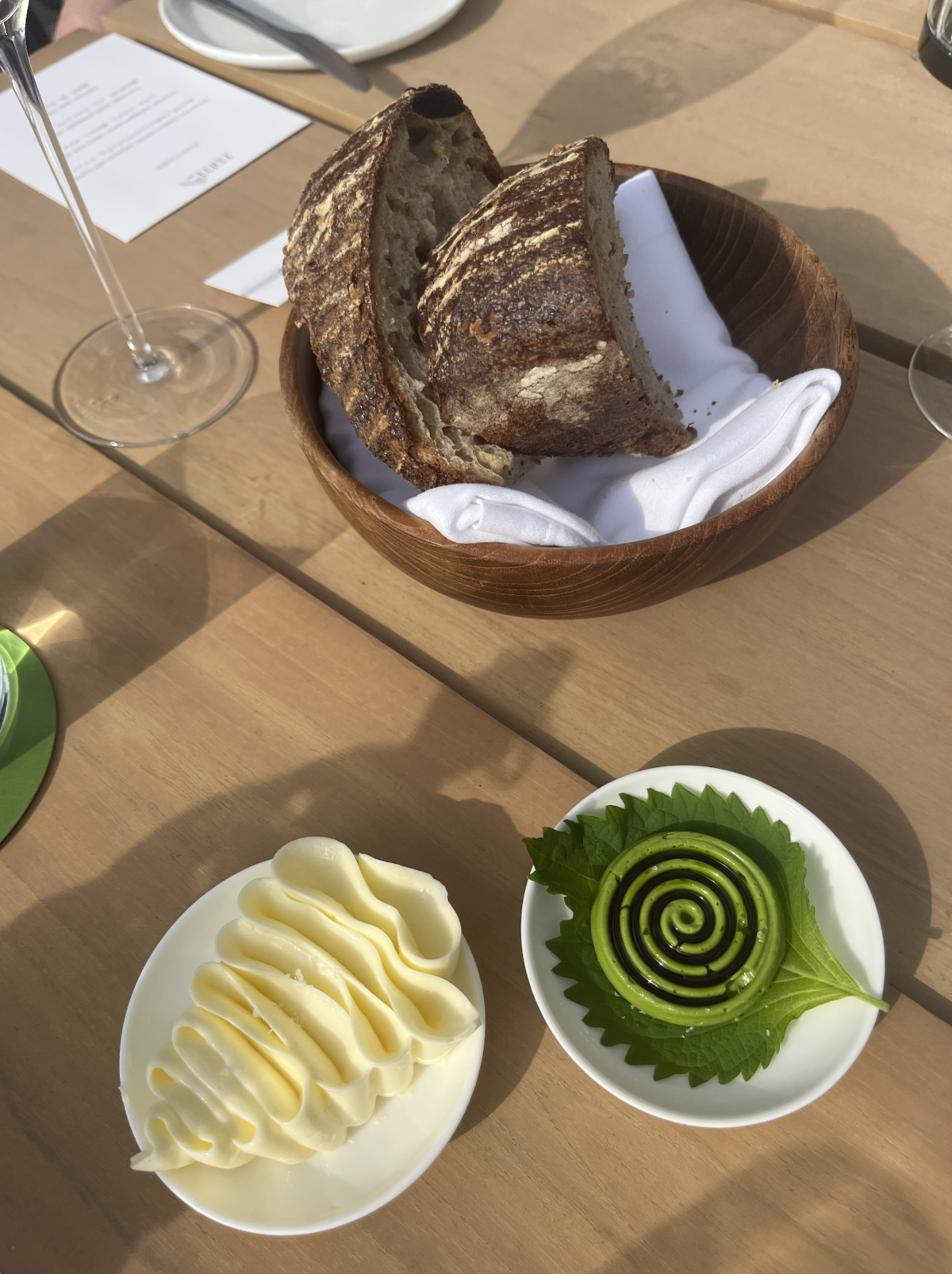
The one thing that I have always loved making the most with flour is bread, particularly sourdough. There is something truly comforting, rhythmic, almost hypnotic about making sourdough. You never become a complete master at it , as you are always learning no matter what.
An amazing thick skinned Amalfi lemon is not only beautiful to look at but full of flavour. Whether using the ski or juice into a sauce, vinaigrette or onto a piece of cooked fish can make a huge difference using the very best lemon. , or adding a little micro-planed lemon zest can also add a little extra citrus taste. Use the very best lemons you can find as it will give better flavour all round.
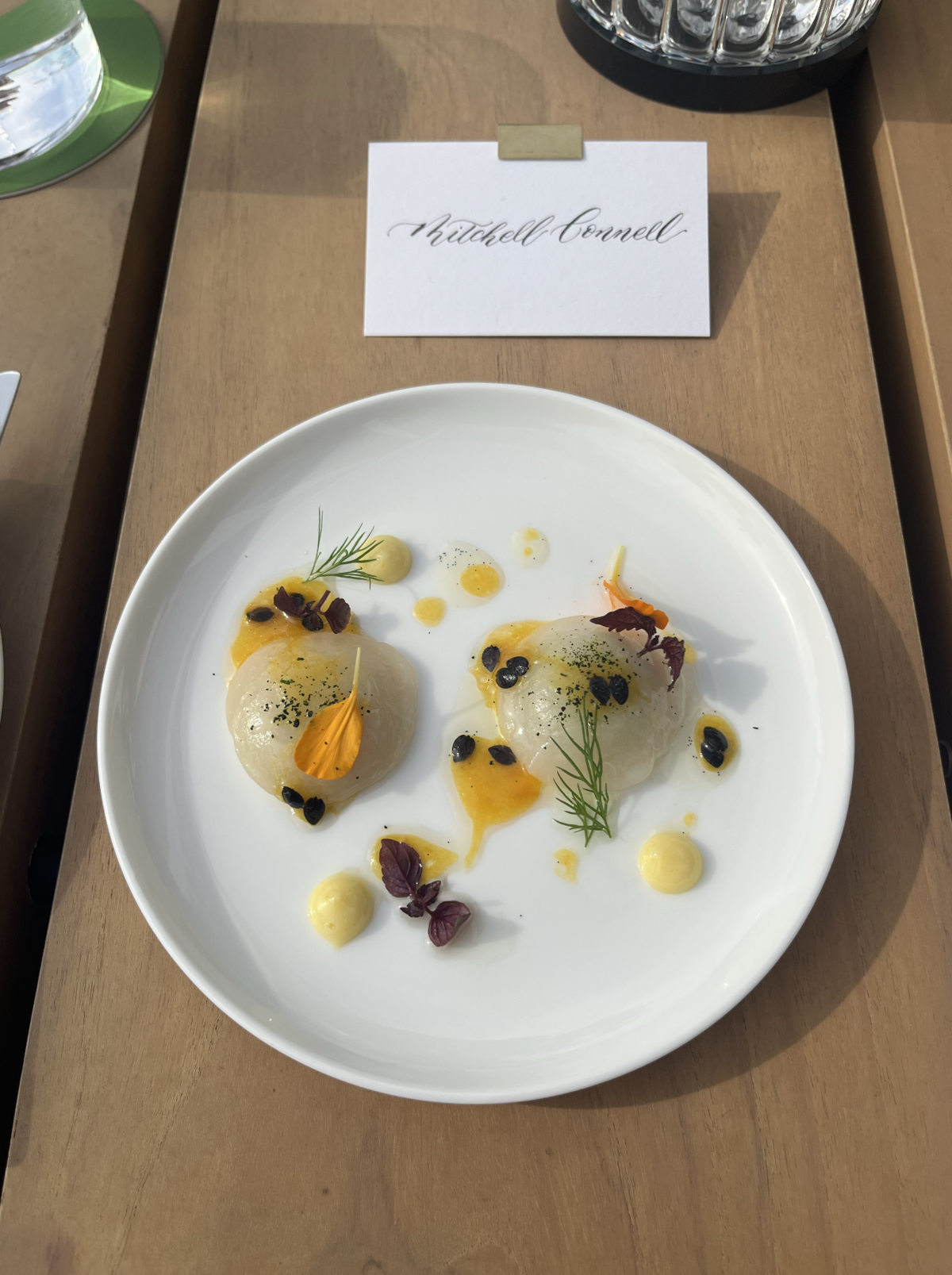
Scallops hand dived also are one of the tastiest shellfish species, they are sweet, juicy and they can handle a multiple number of flavours, from acidic, sweet, salty and savoury. They taste great grilled, poached, barbecued, or blow torched and even raw. I like them cooked simply just over hot coals, cooked in the ½ shell, with little olive oil, Maldon salt, butter, lemon zest, picked thyme, razor blade sliced garlic. Place a tsp of butter in the bottom of the shell, place the scallop on top, drizzle in a good olive oil, mircro-plane the lemon over, picked thyme leaves and garlic. Place onto the fire, making sure the butter goes nut brown only, then baste the scallop for 3-4 minutes. Finish with a squeeze of lemon juice.
What’s the first thing you steal from the EDITION mini bar?
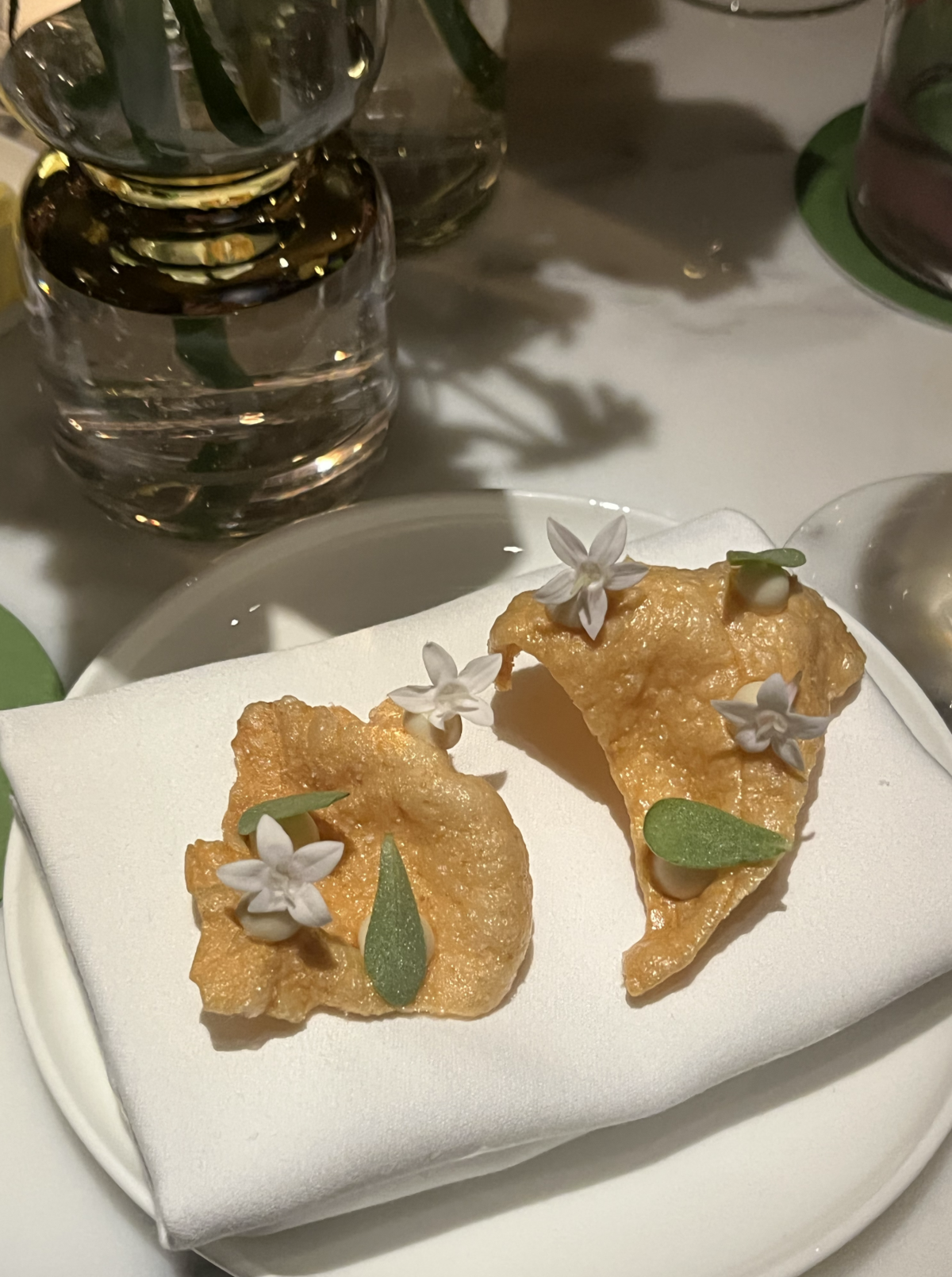
There is a super tasty snack that I tried recently from the Edition Tokyo minibar, which was these freeze-dried truffle chips, which were unusual but rather Moorish. I don’t have a sweet tooth; however these were rather good I have to say!
How would you describe the perfect dish?
Great food is key to making a lasting impression on someone. The perfect dish does not have
to be super gastronomic; it can be simply done and perfectly executed with great service and an enjoyable atmosphere. Mystery and intrigue are what lead the dining experience, so a culinary journey should be at the forefront of any menu. Each dish should be well thought-out with a clear reason as to why it appears on the menu. This leaves a lasting impression, creating a nostalgic, feel-good experience for each person to reflect on in their own way – food is so personal, after all.
Which dish or ingredient is criminally overrated?
This ingredient isn’t necessarily overrated, however the one ingredient I see too often in most cities when it’s completely out of season is asparagus, and I don’t know why as there are so many amazing seasonal products that could be used as an alternative. The British love asparagus, but sadly it’s been allowed to grow all year round in some far-flung warmer climates.
What’s been your experience eating and working in Tokyo?
I am impressed how Japanese people carefully handle ingredients and the respect they pay to them. The same is true of the staff, who work very hard and memorize each recipe precisely. I have worked all over the world, and I have found that the Japanese have a very high level of awareness and skill. I just want to thank the staff. The unique Japanese culture is wonderful and fascinating, but I am especially impressed by the passion of the Japanese people.
There are a broad range of Japanese ingredients that can be used for all sorts of seasonings from Dashi broths, ferments, pickles, dried fish & shrimp, soy, a whole range of vinegars, dried kombu & kelp. Using very seasonal ingredients that are of the highest quality & even between the seasons, you have produce that comes into season for just a matter of weeks only. I think Japan is one of the top 3 countries to work in" for chefs around the world. It is so attractive because of the abundance of seasonal ingredients. Compared to the UK, Japan has far more varieties of fish and vegetables. Meat is classified into smaller categories.
There are a vast number of amazing restaurants that are always very consistent in cooking and creativity. Tokyo has the largest number of Michelin restaurants than any other city, so you can understand why!


What is the biggest mistake a chef can make in a kitchen?
Not listening or paying attention. You must be 100% focussed in everything you do to make sure that you are consistent in your cooking.
Being from the UK, cooking in Tokyo and other parts of the world. How do you gain an understanding of local cuisines?
Each time I build up a concept and curate new menus for a part of the world I am new to cooking in, I lead a thorough study of the market I am creating the concept/menu for beforehand to understand what the local market trends are, what is missing from that dining scene, what the locals needs and wants and what I could bring to the table. It is of course incredibly important to visit the city in question to get the answers to all these questions, therefore a full research and development trip is carried out which is the fun part. I will visit local markets to research what local produce is available, dine at local restaurants in the area to carry out a competitor analysis to experience first-hand what other restaurants are doing and doing well or not so well at. I talk to chefs who have been working in the city, finding out which suppliers they use and what they recommend in terms of ingredients. The quality of the produce and the food cost plays an essential part in the creation of a new menu, as I try to source my ingredients locally wherever possible.
Is there anything you refuse to eat?
When I was in Japan for the first time, I was given some soft poached milt (whale sperm) which I would not want to repeat! I also have a dislike to smoked salmon.

If you weren’t a chef, what would you be?
I consider myself as a bit of a thrill seeker, so I would probably be a professional jockey. My cousin was a profession jockey, winning the Cheltenham Gold cup 3 times in a row and so I used to spend a lot of time with him on occasions. For fun, he did some mild training with me and then let me loose on the tracks with one of his racehorses, which as you can imagine was insanely fast! I am surprised I managed to stay on the horse considering the speed, but it was a huge thrill, my adrenalin was sky high for some time after that.
What is your best food memory?
When I was 12 years olds, on a particular trip down to France, my father booked us into a Michelin Star restaurant/hotel, by complete accident. My father never used a guidebook as everything back then was recommended by word of mouth, or a notable place to go and try out. He only realised the magnitude of what he had booked when we arrived at the hotel to find our car surrounded by four guys wearing white gloves in white jackets and bow ties. That evening I had the most amazing meal that I have never to this day forgot. It is one of those inspirational gastronomic moments that I will always remember, ask any chef and I think they will have a story that is similar. 1984 so It was still the era of nouvelle cuisine, tiny little portions delicately put together with the tiniest of details.
The tastes and flavours were stunning. I had the most beautiful simple tomato salad with a stunning fragrant olive oil, basil, finely diced shallots, course sea salt, black pepper and chives, all these flavours I remember as if it was yesterday. For main course I had the most tender fillet steak that melted in my mouth – a tall tower of beef fillet that had been larded with beef fat, it was sublime and perfection in one, we also had the best chips ever, an accompanying stacked tower of perfectly cooked and cut potato, that had been cooked in proper beef dripping, crisp, golden glistening chips that where perfection.
The waiters lifting endless cloche after cloche for my parents with course after course of frogs legs and snails, which I of course thought was really weird eating garden animals. Then the pudding arrived, simple poached peach, raspberry coulis and a big ball of vanilla ice-cream that was just out of this world, my god I was now in seventh heaven, this was the first time that I had eaten real vanilla ice cream, can you imagine the taste explosion, I was in heaven and as I say I’ll never forget it.


Best advice you’ve ever gotten?
Follow orders thoroughly, work hard, have self-belief, be patient and persevere - sometimes working as a chef involves taking steps backwards and forwards to get to where you want to be.
Do you have a favourite fast food?
A great chicken burger!
What’s a must do in Tokyo?
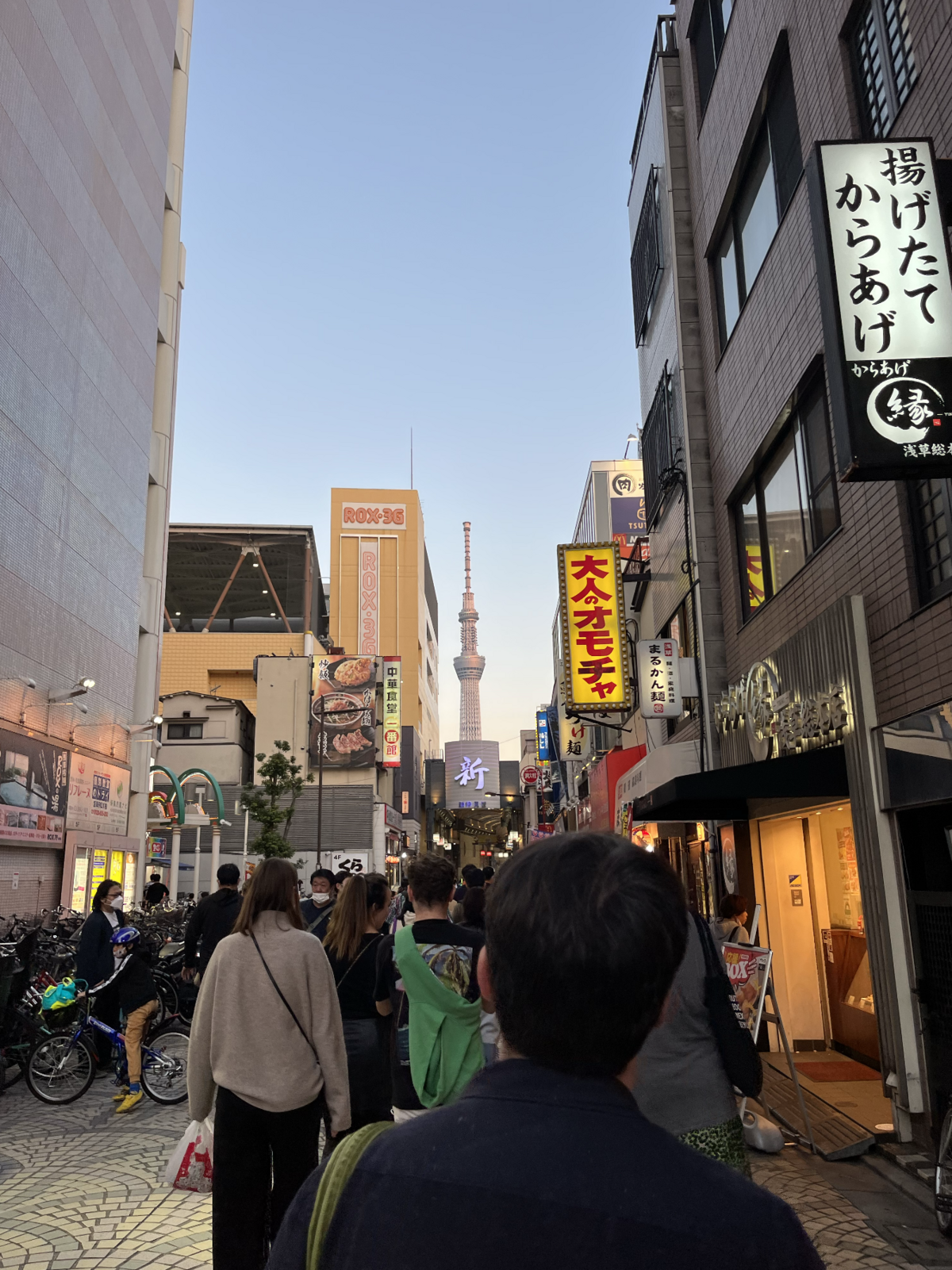
There is so much to see and do here. Tokyo is an amazing city of both old and new as ancient shrines are surrounded by modern buildings. There are shrines, museums, marketplaces, a huge number of restaurants, literally no end of places to go and things to see, you could spend years exploring Japan.
Best hangover feed?
A good old fry up has plenty of ingredients packed with energy, carbs, and protein but sometimes I’ll opt for a warm hearty porridge for the ultimate start to the day.


What’s something you look forward to every single day?
A fresh new day always has something new to achieve and be better at. The simplest thing that can make a difference in your positivity for the day, knowing that I cannot really ever be in a bad mood, as it effects the outcome of a lot of things and it stops positive things from happening. My mantra is stay happy to fuel better energy for everyone around you.
What’s next for Tom?
My priority is to make sure that all my restaurants around the world are run smoothly and remain at the same standards of quality and service they strive to achieve. 2023 is shaping up to be an incredibly busy year with some very exciting new projects in the pipeline, so watch this space! There may even be some double trouble twin cooking happening!

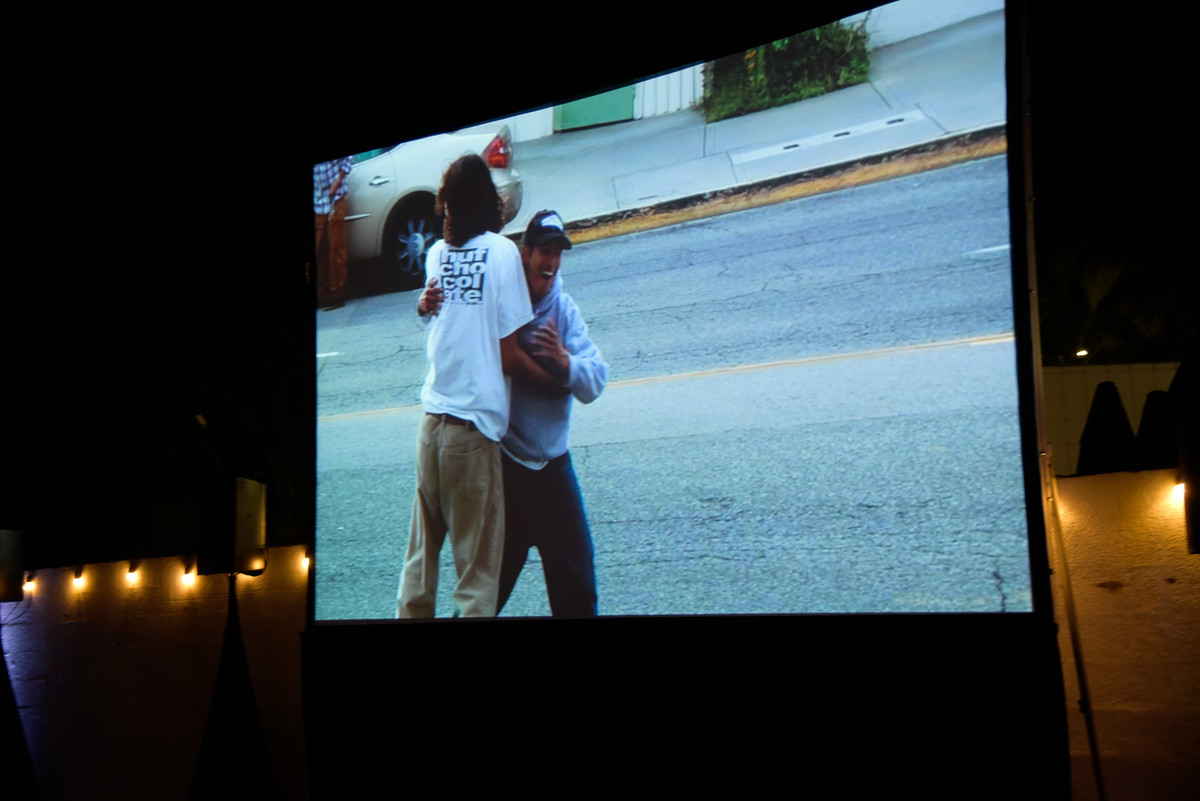
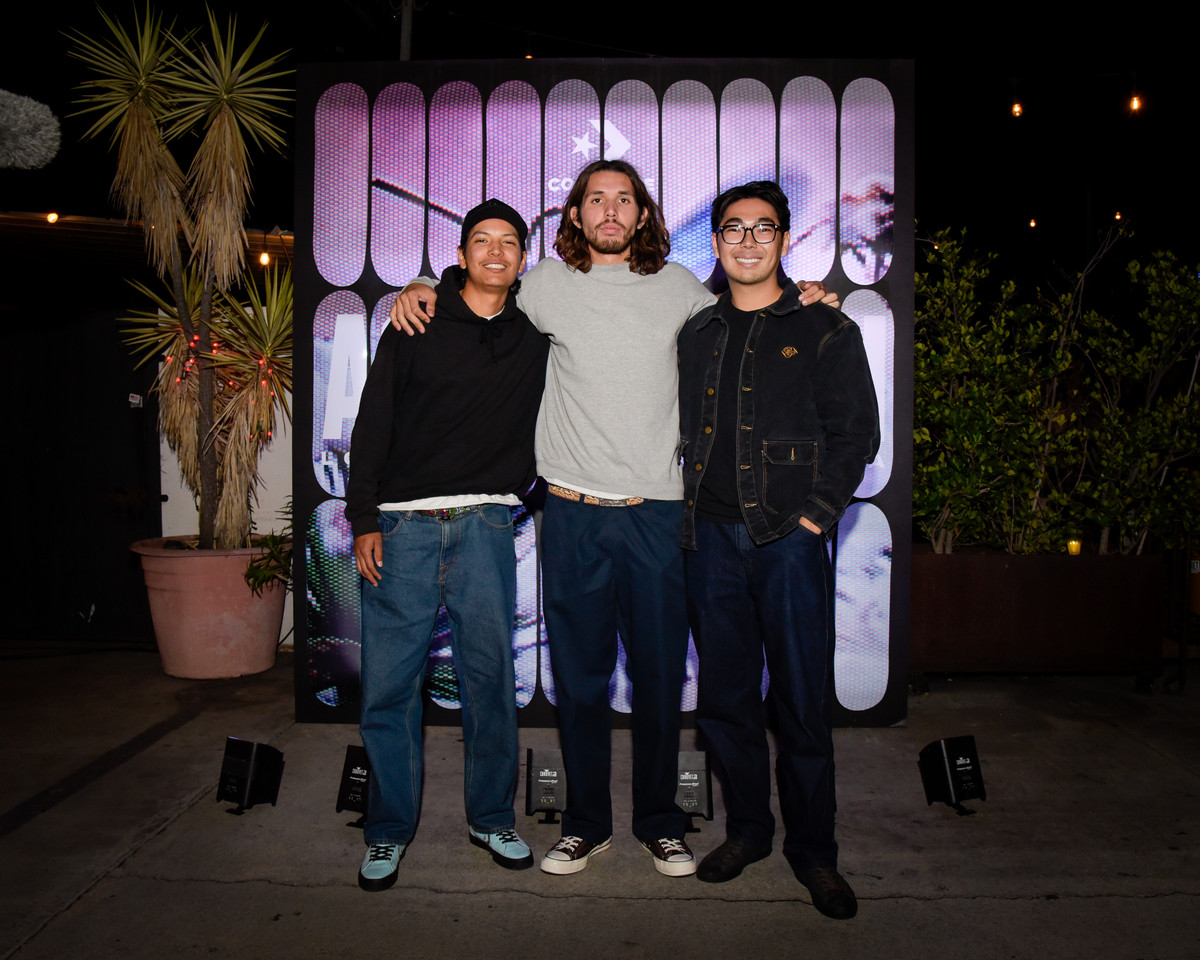
The film, filmed and directed by Ryan Lee presented the legendary Los Angeles native Louie Lopez, who has been a sponsored skater since he was no less than seven years old. Alongside Lopez, and the CONS team, the film presented a part with Erik Herrera's — the young, rising force in the skate world who was surprised at the screening with the title of "pro". Over tacos, Lee, Lopez and Herrera — gangly, excited, maybe a bit nervous — spent some time with me the night of the film's debut, chatting about the yearlong process of creating the film, the tricks they landed, the ones they didn't, friendship, escargot and Parisian rails.
Anna Zanes— Louie, what was your first memory of skating?
Louie Lopez— My first memory of skateboarding is pretty classic story, but my older cousin had a skateboard, it was a plastic everything and barely even rolled, but I was just like, "Oh, what's that?" And if my older cousin's doing it, I was like, "I'm doing whatever he's doing." And I remember we just would go watch X Games, stuff like that. You'd see Tony Hawk and it just caught my eye. So I'd say that's where my first memory of skating comes from.
AZ— How old were you?
LL— Five. I was five when I started skating. So yeah, it's been a while. 27 now.
AZ— How do you feel your relationship with the skate park has changed since then? Since your first time going onto a skate park.
LL— Yeah, when you're younger and you're going into a skate park, it's actually pretty funny because I remember I was scared to step foot into a skate park just because I was like... Luckily my mom would film me with a camera or whatever and I could watch footage and I'd just have a helmet, a Hot Wheels helmet. Huge pads and you're just intimidated to step foot when you don't really know what you're doing. And I remember it just took one kid coming out because I would always skate outside by myself, and it just took one kid coming out to just be like, "Yo, come inside, I'll teach you." And I remember that like it was yesterday.
AZ— Do you try to do that with kids now?
LL— Yeah, the skate park's such an interesting place because you get people from all over. People that have been skating forever, people that have just picked up a board. And like anything, if you go in somewhere that people are experienced, you get intimidated. So I think if you are at a high level of skating, it means a lot to go up to a kid and just be cool with him.
AZ— Can you talk about the relationships that you like performing, making this? It's just the team, right?
LL— I'd say for this video, what separates it a bit from some of the other Converse videos, there's some new guys on the team, they're a little younger, they're newer to the scene and it's just cool to be able to just be on the road with them and have that fresh energy. A lot of them, it's their first time doing a lot of stuff like that. So that was refreshing and helped me and you feel like the big brother in a way. Although they're taller than me or whatever, but in a way.

AZ— Okay, Erik, so when did you start skating?
Erik Herrera— Since I was a baby, pretty much. But I stopped in middle school, for the whole middle school and then got back into it in high school.
AZ— How do you feel like your relationship with skating and the experience of being in skateparks has changed since you were a kid?
EH— It's changed a lot, because there was not that many skate parks back then. And it was... I don't know, more core, but now it's like everyone's filming on the phones. And it's for Instagram, TikTok, and all this. But back then, it just felt much more natural. Like a little cooler. But kids are getting super good now, since there's so many skate parks all around the world.
AZ— What's it been like for you personally? Your journey and your experience, as a skater, since then? Has it become something more serious? Has your passion about it changed?
EH— I mean, now since it's more of a job, not really, but it is, I don't know, it just makes it a little more stressful. Skating and filming a park, you don't really go out and have fun really. You're focused on what you want to do next, what tricks you want to do. But other than that, if you're not filming for anything, then it's still fun.
AZ— What was the process of this project like for you?
EH— Super fun. Just traveling everywhere for a year and just hanging out, meeting the new team because I'm pretty new to Converse.
AZ— Yeah. What was the best part of it for you? What was the best moment?
EH— I'd say maybe in Paris, just hanging out with the European people and the skaters over there, and just hanging out and skating, eating good food.


AZ— So, tell me about the process for As You Wish on your end, as the filmer.
Ryan Lee— It was hard. I don't know. There's so much footage and trying to whittle it down into a three minute song or whatever. So, I don't know. I guess just for me, it's how to cut it up and show what's important and also highlight the skaters. And also just the past month, I was like, it's not really about me. It's about highlighting these guys. So I was like, "I have this shot that looks awesome," but I was like, "It doesn't make sense.”
AZ— That's what it's like for me being an editor.
RL— Okay, that's pretty cool to hear. In what way?
AZ— If I'm editing my own writing, whether it’s an interview or profile I have to challenge that desire to have a my writing and my insight be what’s shaping the narrative, and remember it’s not about me. It’s not about creating the best piece of writing by Anna Zanes. It's putting forth the best, most focused highlight of the the person I'm talking to or talking about. Without losing your own voice.
RL— Exactly. That a good way to put it. Well, this was my first time of trying that. And I don't know. I'm content with it.
AZ— Are you a good skater? What’s your relationship with skating?
RL— I don't know if they told you. I'm like, every time I step on the board to skate, I definitely get smoked. Maybe after this I'll take it back up.
AZ— Skating is a lot about the culture though. I mean, obviously not to detract from the fact that it's a sport. It's so much about the culture.
RL— Yeah, it is for sure. It's just hanging out with friends and stuff and not quite about just... This is a different realm, though, of pushing yourself really hard. Street skating, what they do. You don't have to have all your friends around with you. It definitely helps, but it's more about trying for hours. That's what they did, you know? They did it really well, so I'm happy for them.

With over 1,600 members worldwide, including founding artists Nate Boyce, and Lorna Mills, the DAO has collective goals of uplifting artists, creating community and building modes of collaboration. Refraction DAO (decentralized autonomous organization) looks at the festival model as both an opportunity for tangible experiences, but also as a system that needs reinvention. And if you’re going to take a construct and blow it up, the best way to do it is with the help of 1,600 people.
Festivals are a model for collective experiences: encompassing artists, staff, partners, volunteers, and audiences. By focusing on community participation and ownership, Refraction is taking the traditional festival model and flipping it into a platform for expression and progress — and for their debut at Miami Design Week, they did just that. Contemporary artists, cutting-edge musicians and on-chain creatives gathered at the Future of Cities Climate + Innovation Hub to experience the pillars of the DAO IRL with musical acts including Yaeji, Jimmy Edgar, Sel.6, Space Afrika, Debit, Marie Davidson, Doss, INVT.
Over 60 visual artists, including Alex Gibson, Andy Rolfes, Elna Frederick, Laya Mathikshara, Mark Dorf, Raphaël Moreira Goncalves, and Suren Seneviratne + hypereikon created site-specific works that were minted live throughout the festival. Central to the dynamic works was curator Dina Chang. Diana Chang prioritized Refraction’s core value for the season–Creatives First”–with the help of Refraction co-founder Malcolm Levy, and selected artists that embody Refraction’s mission to promote diversity and support underserved communities. “I believe in artists, and I believe in art,” said Chang. “The best thing a person in my position can do is champion the voices and talents of others. In short, I’m always a fan, of those I meet and of those I know.”

Chang drew on subcultures and historic movements for inspiration, including legendary artists that have been active in the space since the '80s and '90s, like Krist Wood from Computers Club. Whether fresh or historical, established or lesser known, Chang’s curator style balanced progressive emerging talent, including the best new creatives coming out of Latin America, with more familiar names in the digital art sphere.
Many of the participating artists were recipients of Refraction Season 03’s Creative Grants programme, where artists are awarded across 3 funding tiers allocated across events, community programming, and commissions for the Refraction collection and editorial platform, totalling up to 100K $USDC. The projects chosen represented and lived alongside the previous projects collected, performed and facilitated by the DAO.

Andy Rolfes, 'Formentation'
Included in the exhibition was visual artist and director Andy Rolfes. Using performative and interactive toolsets alongside traditional methods, they work extensively across industries to build stills, animations, performances, and interactive experiences. Rolfes is a rising star in the visual art world, having worked with everyone from Lady Gaga to SSENSE to MoMA. Their portfolio only speaks partially to their mastery.
When reflecting on the work, Rolfes remarks: “As I played with dreamstates and concepts of euphoria, I found a place of thinking about ourselves merging with nature and how we reflect off each other. The key, though, came from watching a close friend deal with the loss of a family member, causing me to reflect about the beautiful ephemerality of some of our relationships in life. Things and people sweep by, making it all the more important to appreciate the beauty in front of us before it too fades off into another form. I didn't want to make this a piece about grieving, though I have my own family members I've lost through recent years. No, I wanted this balance to focus on the bright beauty that can be reflected out of that time.”
To design the exhibition, Refraction partnered with Nike and Virgil Abloh-collaborator Craig Barrow. With Barrow’s unique point of view and meticulous attention to detail, the Future of Cities Hub was enveloped in mirrors, light installations, and modular elements evolving over the course of the event. Responding not only to the artwork, but to the space itself, Barrow focused on taking advantage of the foliage by incorporating reflective materials to optically expand its presence, and carving out sections through design in an otherwise corner-less lot.
“With exhibition design, first and foremost, the artwork on display has to be clear and look good. It’s not about what I'm designing; the artworks on display have to shine through. My task is to enhance the artwork but also guide and engage the viewer; show them how best to experience a piece and give them the opportunity for moments of reflection with the art,” said Barrow of his practice.

Andy Rolfes, by Jason Gorelick at Gray Area in San Francisco
As a Berlin-based designer, Barrow was excited to visit the “Magic City”, and took inspiration from the surroundings he imagined would line the street. “It’s flashy and luxurious and at the same time rough and gritty, whilst remaining playful and fun. It may sound a bit obvious but for me having never visited Miami before, it’s my only understanding of the city and I wanted to reflect on this in the exhibition design. I wanted to create something lux but still a little tongue in cheek.”
Tonight, Refraction Festival moves from to a new location at the Frost Museum’s iconic planetarium for a one-night only world premier of Miami-based electronic musician Danny Daze’s Blue, a sonic art experience and live performance. Intentionally created for high tech planetarium environments, Blue is an immersive audiovisual work based on Daze’s forthcoming album. The 33-minute piece features meticulously crafted sound design and all-new original music by Daze. Its visual embodiment was created in collaboration with Sensory Works, Joseph Nickson, and Konx Om Pax. The experience is heard via a premium 40,000-watt, 16-point surround sound system and viewed in ultra high 8K definition on a seamless 67 foot dome screen.

Festival Curator, Dina Chang
While Refraction Festival’s Miami takeover might be coming to a close, the future of music festivals is opening up swiftly. By enablingweb3 infrastructure, Refraction has made it possible to transform the technology into a tangible, communal experience. The benefits of the web3 infrastructure are made clear when you enter their space and network. From the merch booth, to buying artworks, to joining a community with thousands of the most culturally tapped in people you can think of, Refraction makes web3 a space of possibility for those whose digital wallets are filled to the brim, and those who are simply crypto-curious.