The Modern Muse


Stay informed on our latest news!


The film premiered at the Tribeca Festival last Thursday, June 11th. Office sat down with the pair to talk about their new project among other things.
What came together first, the story or the cast?
Nico: The cast always comes first in everything I do.
Are there any New York Nico characters you didn’t include that you wish you had?
Nico: Yes definitely. I didn’t want to blow my load on my first film though. Have to save some of my aces for the feature.
Kareem: The NCU (Nico Cinematic Universe) is very, very powerful and ever expanding. There are a few that didn’t exist in the NCU yet…notably Bobby and Cuge. They would have been really amazing to have in the film.
Were there any films that inspired Out of Order?
Nico: I had Kareem watch After Hours and Good Time before he set out to write the film. I wanted something with the energy of those films, but with a more silly sense of humor.
Kareem: I had never seen After Hours but Nico referenced it in our first conversation about our film. He told me to watch it so I did, and boy was that a perfect reference for our film. I absolutely loved it and agreed with Nico that a stupider, more slapstick version of that film would work and play well to audiences and the type of comedy / filmmaking that we are both interested in.
What did you enjoy the most about making the film?
Nico: Being able to work with my friends who were acting on screen for the first time ever.
Rank the boroughs.
Nico: I can’t answer that question on the record because it will make a lot of people angry. But we all know the best and worst borough in nyc…
Kareem: Look, I enjoy vacationing in the West Village as much as any other tourist but Brooklyn is hands down the best borough.
Now that you have a short film under your belt, is the next step a feature length?
Nico: 100% percent. It’s all I can think about.

Which member of the cast surprised you the most in terms of acting?
Nico: Tiger Hood. He crushed it. Took him a minute to remember his lines, but once he did, he was golden.
Kareem: Yo Chill and Big Time Tommie we’re really surprising scene partners for me. They’re both super authentic and knew their lines but also improvised heavily based on their own personalities. I think they both took the roles seriously enough to memorize the lines but also knew how to make their scenes better.
Are New York Nico and Nicolas Heller the same person?
Nico: More or less. Although, Nicolas Heller has more of a private life that NY Nico.
View the trailer for Out of Order here

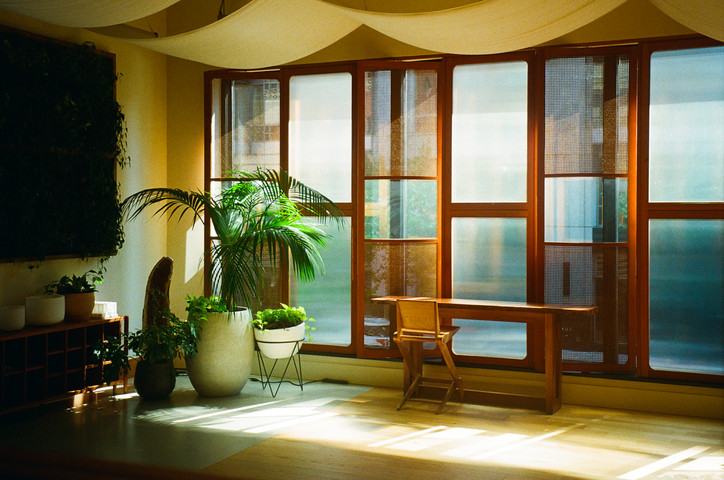
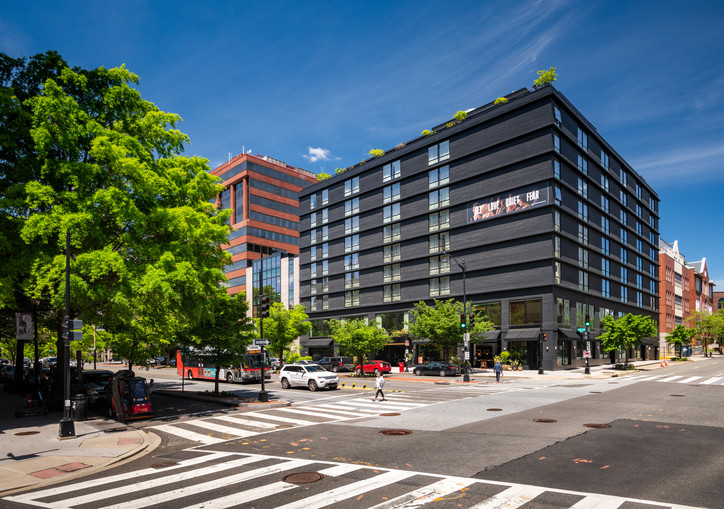
On Washington D.C.’s K Street–a stone throw away from the Capitol, Chinatown and the housing encampments in Samuel Gompers Park–lies the Eaton Hotel. Rooted between disparate cultures, communities and classes, the Eaton aims to be a point of confluence.
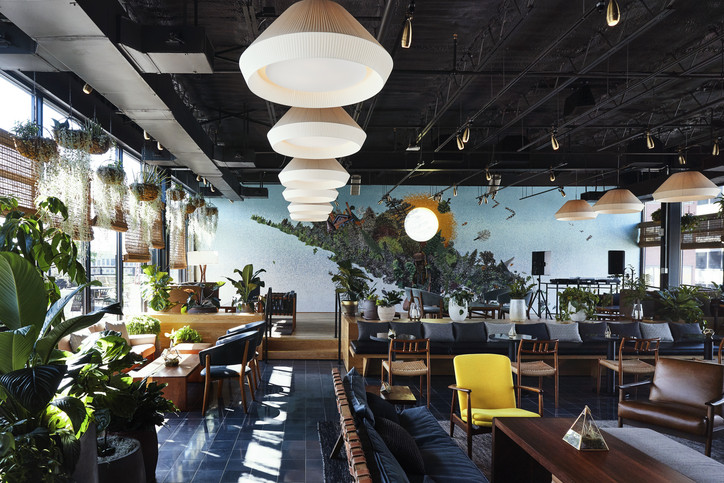
The lobby opens on one of Khalil Joseph’s BLKNWS installations, while music from Eaton radio hums through the hotel walls. In each room, designed with an homage to the building’s history first as a printing press, then a 70s era bus station, guests will find hand selected books, vinyls and a record player, as well as the U.N. human rights constitution in the place of the Bible. Throughout the hotel, are communal gathering and work spaces like the open-access ‘Library’ and membership based Eaton House work and meeting spaces.
Built around the pillars of Hotel, House, Wellness, Culture, and Impact the Eaton is rethinking what it means to host. The hospitality industry has been due for a reckoning with big name developers displacing locals, destroying cultural and environmental landmarks, and white-washing, no pun intended, their neo-colonial endeavors to curate ‘luxury’ experiences. Founder, Katherine Lo, was no stranger to the intricacies of the hospitality industry.
Daughter to Langham hotel founder, Lo Kah-shui, Lo was tasked by her father to make a hotel for the future. Pulling in her own experience in creative and organizing spaces, Lo realized the opportunity to create hotels that were cultural epicenters, reflecting and enriching the spirit of the cities they inhabit. Having studied anthropology and worked in social and environmental advocacy, as well as creative spaces, Lo’s biggest influence in Eaton were the communities she’d worked with throughout her career.
“I think that was a big inspiration for Eaton,” says Lo. “Creating this ultimate gathering place under one roof where we really nourished every single aspect of being human–from art, culture, music, wellness, film, impact, and even to the design and architecture and food and beverage.”

Eaton D.C. is home to a live broadcast radio station, an in-house cinema, a gallery space, a public library and a wellness studio, making space for individual expressions of creativity and the social glue that comes with them. Their business model is local-facing, with flagships in D.C. and Hong Kong, and anticipated openings in Toronto and Seattle. The D.C. space, located in the political hotbet, albeit cultural void, of Washington D.C. 's K-Street has drawn the taste-and-change-makers of D.C. back downtown.
“I think so many of our audience and community members are all surprised by the location because K Street is known for like political lobbyists and much more like mainstream–who or what you think of when you think of D.C.,” says Lo. “A lot of the more up and coming cultural areas would be U Street and H Street. And so my team and I joke about how we're bringing U Street to K Street.”D.C. initiatives are largely focused on the unhoused, sex workers, and the AAPI communities fighting the gentrification of D.C.’s Chinatown. The interior and architecture of the space reflect and aim to uplift these locally marginalized identities, while also paying homage to the history of D.C.’s downtown.
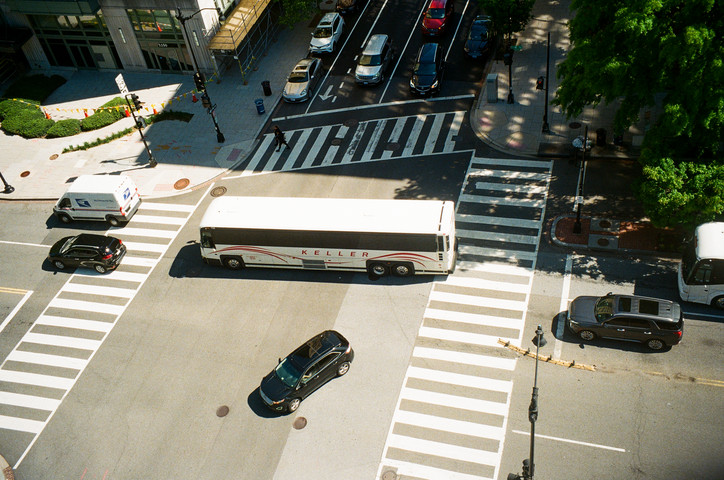
Once known as “Chocolate City,” D.C. had one of the highest concentration of black population during the ‘70s, peaking at 71.1 percent. At that time, the space the Eaton now in habits was a point of convening. Then, a bus station, the Eaton now pays homage to its history in its interior design and key details–like all-gender bathrooms, and locally-curated art installations– accumulated throughout the hotel to signal, by way of mutual recognition, that the Eaton itself is a safe space, and a home.
“Until 20 or 30 years ago, there wasn't that big of a population here,” said Eaton’s impact director, Katie Petitt, “So it was built like a small town. And it was Chocolate City then. So now. A lot of money, like all over the world, it's coming in from developers, and the city loves it. But the city's not taking care of its people and definitely not taking care of all the marginalized folks and the people who are working to help the marginalized folks, like artists and activists and healers and musicians.”

The week of May ninth, to commemorate AAPI month, Eaton D.C. hosted said artist and activist Curts Chin, for a series of workshops, and a screening of his film Vincent Who?. The film tells the story of Vincent Chin, who was murdered by two white autoworkers in Curtis’ hometown in Detroit in 1982, lighting a fire under the Asian American civil rights movement in the city and beyond. Having grown up in Detroit, surrounded by loss–both in his friends and community but also in his space as buildings were routinely burned down and lots left vacant.
“When a city is burned down like Detroit, you just end up with empty lots,” said Chin. “And yeah, maybe you might see a potential of what would happen there…I don't think cities should stay stagnant. Because that's not a good thing, either. I think they do have to reinvent themselves all the time. But it's a question of how you're reinventing yourself and does that gentrification actually cause more harm and displace in a really negative way? So it is much more complicated.”
It wouldn’t be hard to draw juxtapositions between the city in decline Chin was raised in in Detroit, and the gentrification pushing out Eaton’s neighbors. The opening of a boutique hotel would usually connote a neighborhood fast-tracked towards gentrification, and the Eaton is ready to reckon with the reticence of community members to embrace the space, but by investing authentically in the community, it has invested in them too.
For their neighbors in Chinatown, in particular, the Eaton committed itself, early on, to work with local housing projects in Union Square, known as one of the last bastions of D.C.’s Chinatown community and a leader in housing activism across the country. “That's one example of ways that we're always trying to integrate the space that we have,” said Pettit, “because that's really the gift and offering we have to give the community what it needs.”
The space was equally important to Chin, opening a dialogue across communities, and generations. “I feel like it inspires me definitely meeting other artists and also artists of different generations,” says Chin. “You know, it makes you reflect on the things you've done, but also where you fit in this world. There are people here who are much younger [than me]. They're obviously thinking about different things, and having different conversations and being in a space where we can engage in that all has been so meaningful.”


The Eaton, in that way, is a conduit. It is not, itself, a force of action. It is a boutique hotel, and it knows that. A standard room rate is $259 per night, wellness services range from $75 - $275, food, and beverage is billed separately–to the average guest. But those standard fees contribute to the sliding scale opportunities for people who wouldn’t otherwise have access to such services. Locals can stay at the Eaton at a 20% discounted rate, wellness services are reserved and offered for free to community members, space is free to use for local organizers and activists, and the Eaton gives platform and agency to local creatives to rebuild D.C.’s downtown culture. As wellness director, Tara Purnell put it “activists need to chill too.”
The Eaton recognizes the system it operates under. It needs to make money, but Lo has circumnavigated traditional revenue streams to create symbiotic, rather than exploitative relationships between “service” and “good”--allowing both to restore their humanity under the roof of the Eaton. The space, whose personality, ethos, and legacy are malleable in the hands of those who mold it, allows for disparate experiences (and clientele) to find common ground and move towards a place of greater understanding during their stay, and inspiration after check-out.

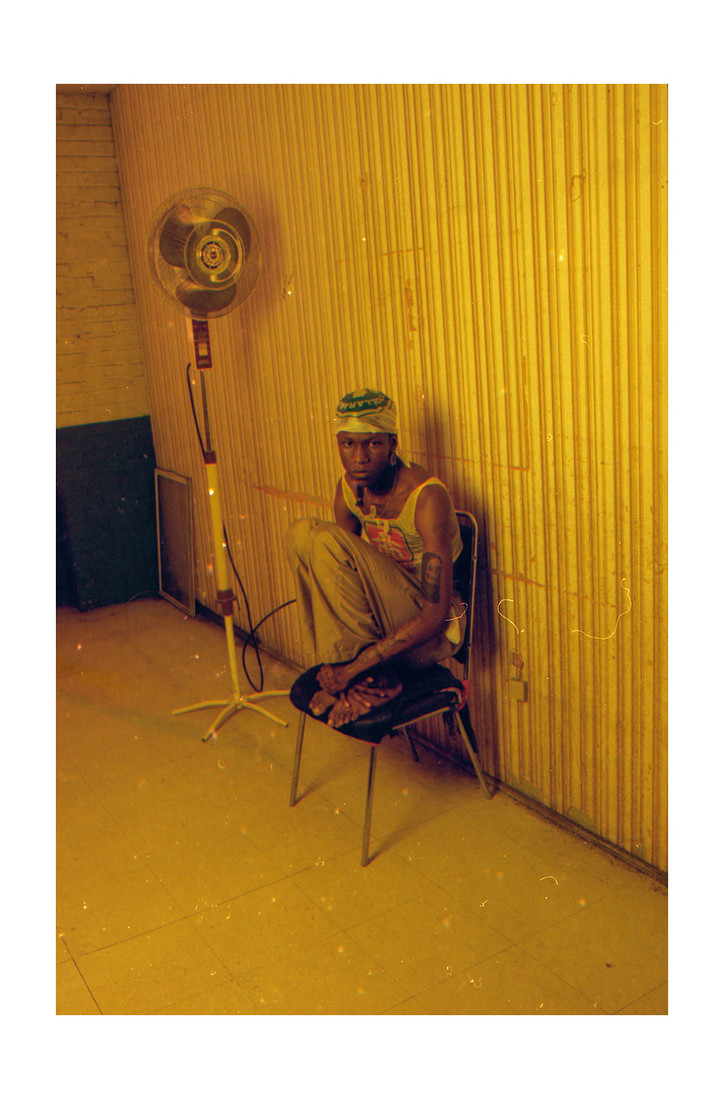
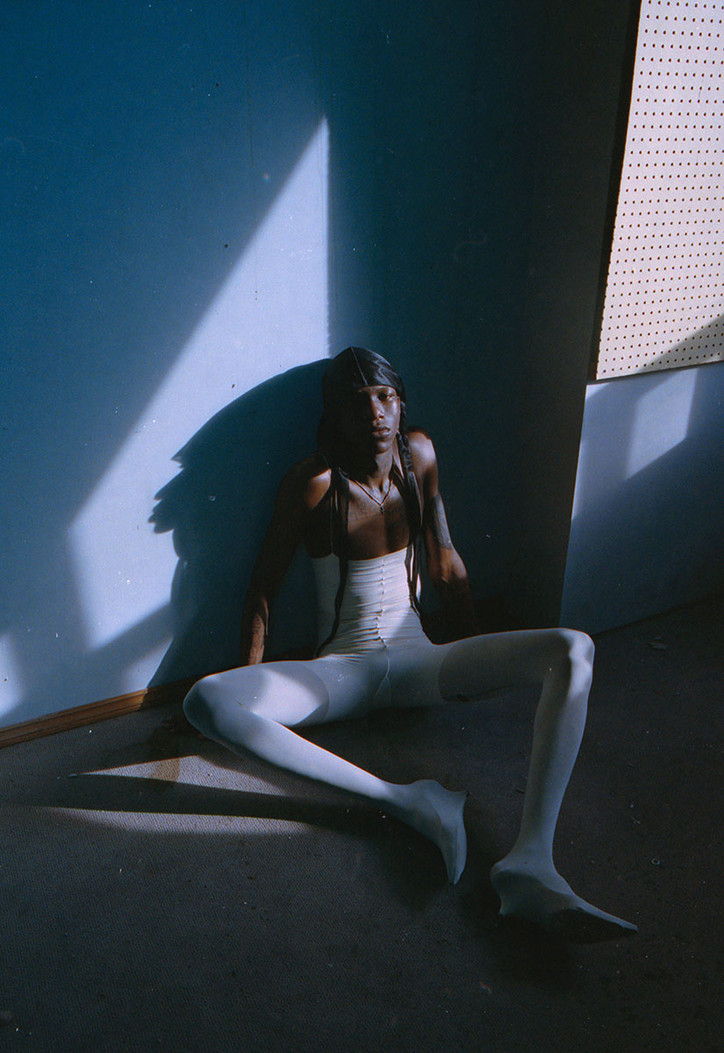
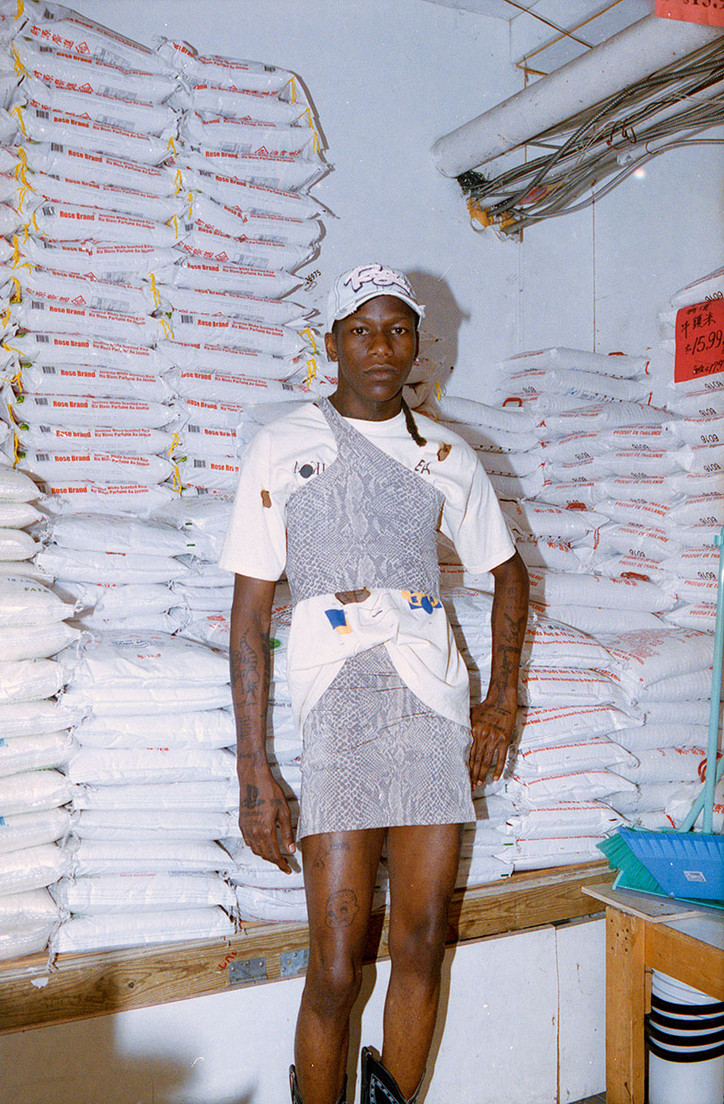
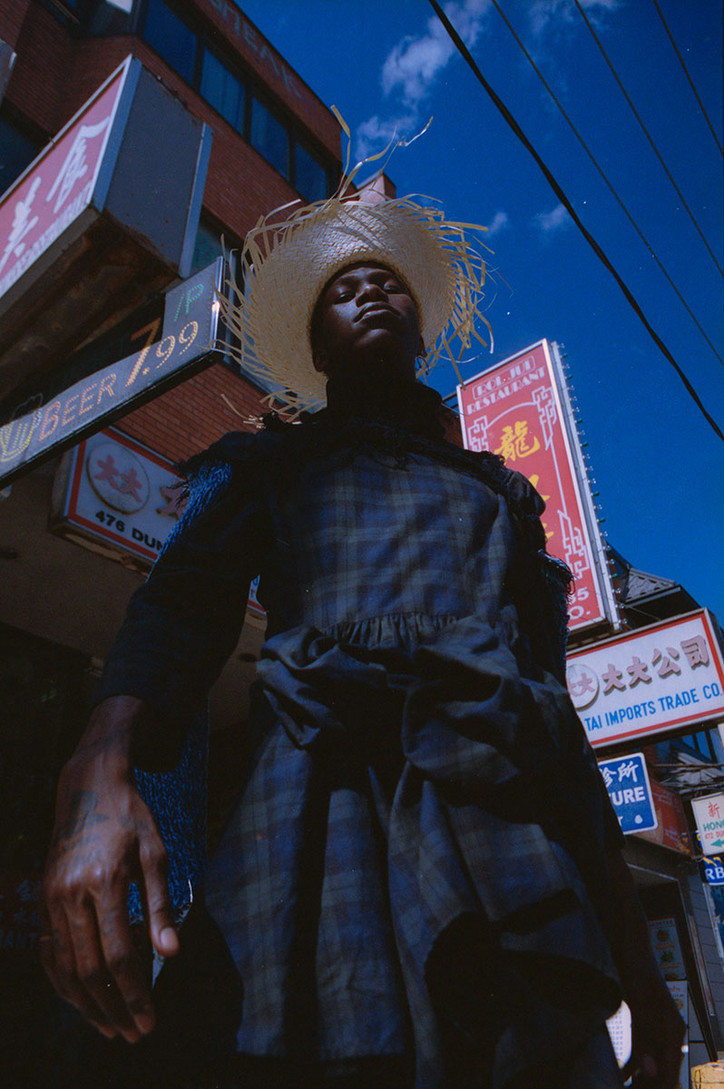
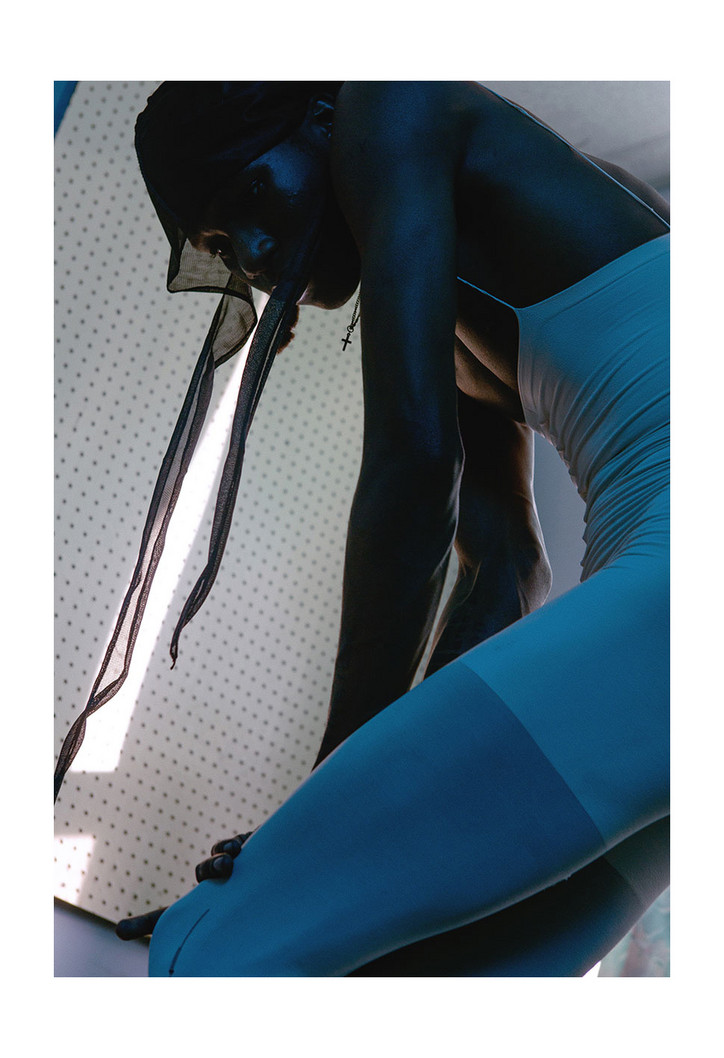
Renée is styled in various pieces from MI Leggett's gender-free, anti-waste label, Official Rebrand.
What was it like growing up in Hell’s Kitchen?
Growing up in Hell’s kitchen on the edge of the Theatre district was Totally a difference compared to many. My mother had a store on 44th St. we lived behind the store I slept on a fold away cot my entire youth. My mother had a wig and toupee Business with many clients in the theater. I was the delivery kid for my mother. I was fortunate growing up to meet so many interesting and creative people and the workers who lived in the SRO hotels who taught me much about life. This was when Times Square and Hell‘s kitchen was a much more integrated neighborhood than now. And much more working class of Black, Latinx, Queer many of which work in the big hotels as service people elevator operators and maintenance but were also artists and creators in their own rite.
You’ve mentioned before that New York has lost its edge. What do you think has contributed to this dulling and how could the “edge” of the past be revived? — Give us a blueprint.
I would say that yes New York has lost some of its raw creative edge of reality because of the influx of wealthy white people that has raised the cost of living beyond reach for many people. But the edge of New York still exists it’s just more scattered around the city and it will come back because I’m sure that when the next financial collapse comes and it’s coming many of these shallow expensive but insignificant institutions that have predominated many historic districts and neighborhoods will be stopped in their tracks in terms of restaurants bars high-rise apartments that will now be out of reach for even the upper middle class.
What role does style play in your life?
Oscar Wilde once said it is style that is more important than substance. I’m paraphrasing. Quentin Crisp answered I disagree. What’s more important is to have both substance and style. So The way I express myself partly in life is reflected in how you compose Your appearance. And for me you are telling the story with every step you take when you walk down the street. For us especially in the Trans/GNC/Non-Binary Community For every one of those steps we take in our proud in existence every one of those steps takes us further to the revolution.
You recently modeled for an incredible Walter Van Beirendonck x Chris Habana campaign in which clips are pinned all over your body and face. What was this experience like and how is your skin holding up?
well I must say after many Fashion shoots I have to say that shooting for Walter Van Beirendonck x Chris Habana Was one of my favorites Because of the atmosphere in the shoot is very empathetic. It is so easy to model for them. We always seem to be in complete alignment and sometimes have said to me Renée You know what we want you to do before we ask you what to do! As far as that particular shoot frankly I enjoyed the clips all over my body I love doing that which is against the grain. We need more exceptions to the so-called norm. And those shoots are a significant exception to the so-called norm. My skin is fine maybe let’s just say I’m used to experimentation and I welcome it. Frankly I enjoyed the clips all over me.

Throughout your life you’ve been fighting for a variety of causes, has a common thread appeared within the variation?
Oh yes. The most common thread that weaves thru every element in society is Racism as the #1 crisis in the US. Capitalism could never survive without their number one tool Which is divide and conquer. Without using racism everywhere capitalism could never survive. The fight against racism is Paramount and none of us Black, white, Queer, straight, will never be free until it is wiped from the face of this country.
On the Vietnam War
What caused me to switch my stance was the war! The Blood! The war crimes committed by the US military!!! The slaughter! The genocide! The dead children! We were not fighting the wrong side, we were the wrong side. My PTSD haunts me every night. I dedicate myself to undo any contribution that I did in oppressing the Vietnamese people.

As someone who has tricked on and off for nearly 40 years, could you give us some insight into your experience with sex work?
I will sum this up quickly. I drove a taxi for 27 years. Every night when I did not make enough money on The meter… I made it in the backseat.
What was it like shooting with Emmie America?
Shooting with Emmie America was one of my favorite projects with MI Leggett and Official Rebrand. Let me say this about MI. All designers are influenced at one time or another by others. What stands out with MI is when they are influenced their interpretation is so original and completely their own in their creations. That is significant in the world of fashion design that many others do not possess. It is an honor to model for them.
If Renée Imperato was given the opportunity to craft a perfect outro for this interview, what would she say?
True freedom is breaking out of the jail cell that is the size of your own body. I will put it in one simple phrase….. When you worry what other people think of you…. You will Always be their Prisoner. Time for Jailbreak!