The Modern Muse


Stay informed on our latest news!


"NOTES FOR A POEM ON THE THIRD WORLD (CHAPTER ONE)," 2018
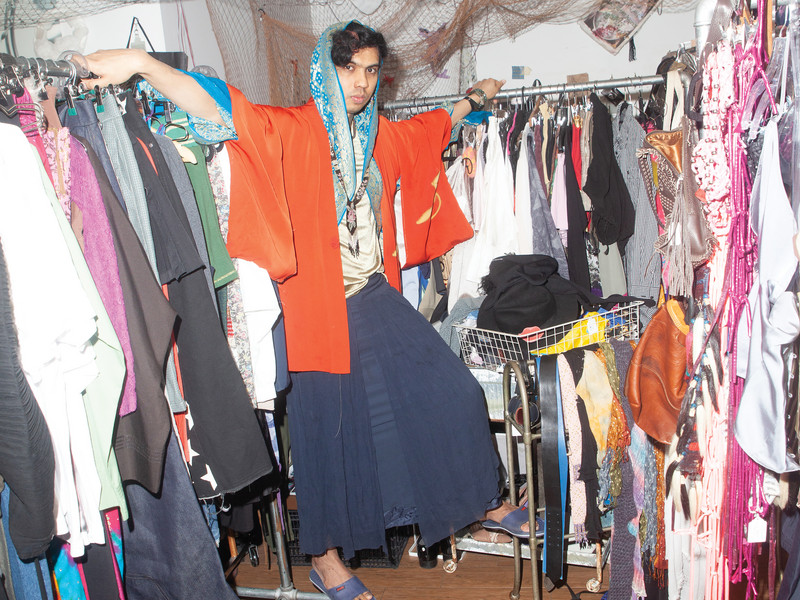
Like most artists, I started out hoping I would have something to “say.” Something spinal enough to make your eyes widen as your neck snaps back from the page. Squirmy enough to make your feet creep inward and pigeon-toed under the table. While in the process of finding my voice, I realized I had become a messenger for someone else, an intravenous therapy administering the claims for some cause or another, writing to tell the stories of those in need as opposed to needing to share something about myself. The work of Black artists is often the work of service to Black stories, as is the case for Glenn Ligon; Our wretched history, discriminating pain, our God rearing hope. As artists and Black men in White America, Ligon and I also share the disorder of a double consciousness. We “stand-in” for our community, whenever we stand out, and we’re perceived as threats to be put down wherever we show up. In both circumstances, the stakes are highly charged, though in the latter the charges are routinely dropped.
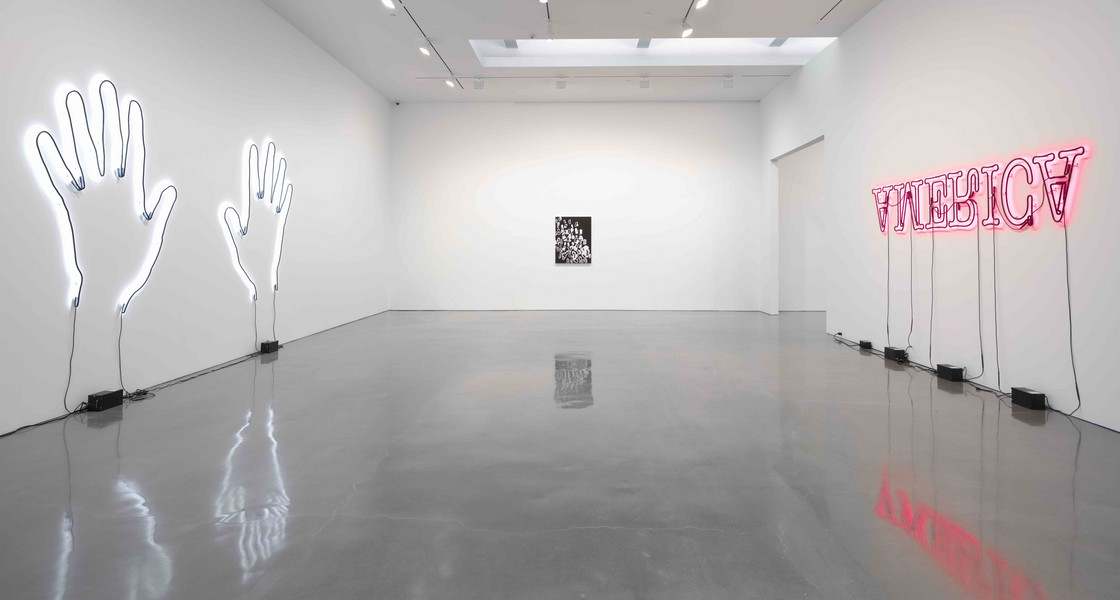
"Notes for a Poem on the Third World (Chapter One)," 2018 on view at Regents Projects LA (2019), figures two giant neon hands raised at 84 x 155 inches, mounted on the back wall in the gallery’s second room. Ligon has applied a layer of black paint to the face of the neon tubes, which consequently throws a ‘shadow’ of escaped light back against the wall producing an outer glow. The large-scale sculpture is in fact a trace of Ligon’s actual hands. Their painterly, adolescent line calls up the act of tracing one’s hands as a child when learning how to draw. In this way, he offers no fingerprints to mark his DNA. No major or minor lines of the palm to determine his health, a path his life will take or the depths of his intelligence. No lifeline, headline or heartline for some esoteric palmistry zealot to speculate. What his hands lack in forensics they provide in language. They shout, anxiously, “HANDS UP, DON’T SHOOT!” and in their startled angst give shape to too many wretched bodies that have echoed through the hearts and minds of a vexed diaspora.
These hands are painted black, like me. Raised high against and swallowed up into a vacuum of whiteness, also like me. Like two mirrors set face-to-face to reveal a number of images in infinite, Ligon’s hands draft a domino line of reflections. In his hands I see my own, in my own I see the outstretched hands of a community.
TURBULENCE
"Notes for a Poem on the Third World" is Ligon’s first figurative neon sculpture. In offering this work as a figure, it embodies the formal readings of a painting. By way of analogy, Gregg Bordowitz states in his analysis of a text-based painting by Ligon, "Untitled (I Am a Man)," 1988, “The great challenge a painter must meet is to distill motion into a significant form so that the viewer may sense, feel, and anticipate all the possibilities of motion suggested by the formal elements of the painting. Through line, color, and composition, the artist creates a compelling sense of turbulence, strongly felt by the paintings viewers.” He goes on to describe how “turbulence” is experienced in a third space, a space of thinking and making connections, mediated by our existence before we encounter the work and our relationship to it and the world after we leave it behind.
Applying that logic to "Notes for a Poem on the Third World," my third space draws up the figure of Michael Brown, an unarmed black teenager who was shot and killed by a white Ferguson, Missouri police officer on August 9, 2014. That shooting mobilized a community into protest, transforming Brown’s show of surrender into a weapon of resistance and a national movement that rallied behind “HANDS UP, DON’T SHOOT.”
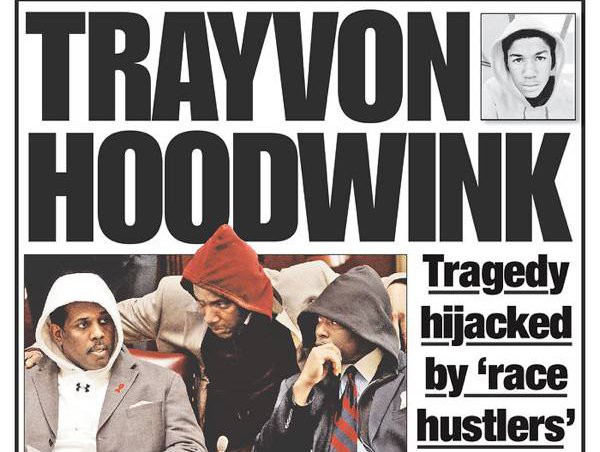
It reminds me of my dad Bill Perkins, then State Senator of New York. His signature fedora replaced by a hooded sweatshirt, flanked by Senator Kevin Parker and Eric Adams, who were also wearing hoodies as they walked into the senate chambers on March 26, 2012. They chose to wear hoodies on that day in solidarity for the family of Trayvon Martin, the 17-year-old who was shot in Florida for wearing “suspicious” clothing. Lampooned on the cover of the New York Post the next day, that photo is framed by text, scandalously, “TRAYVON HOODWINK. TRAGEDY HI-JACKED BY RACE HUSTLERS.”
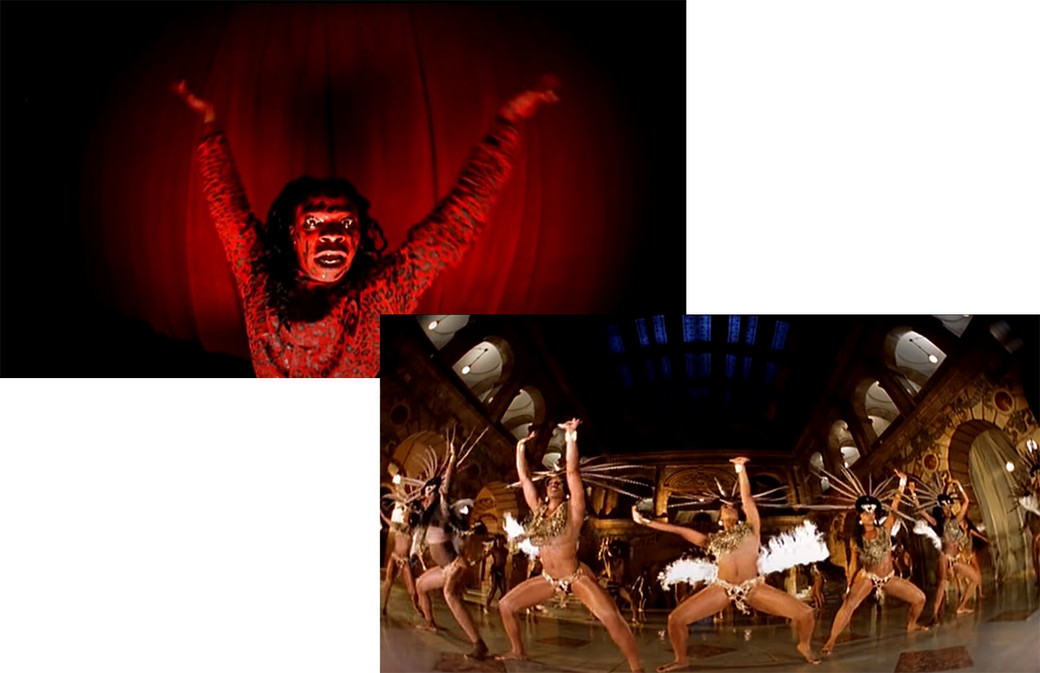
But I’d be damned if the souls of those ghastly bodies don’t dare to groove and shake. Together, Michael Brown, Trayvon Martin, my dad, Senators Parker and Adams, dance out their rage to the Congo drum of Busta Rhyme’s “Put Your Hands Where My Eyes Could See.” They pose centerfold in the juicy wet melee of Hype Williams’ fisheye lens.
My third space is a black space. A double consciousness of both trauma and redemption. Where adversity is re-imagined as opportunity, transformed into a feat of endurance. This is how Blacks in America make Life Matter.
NOVEMBER 3, 2020.
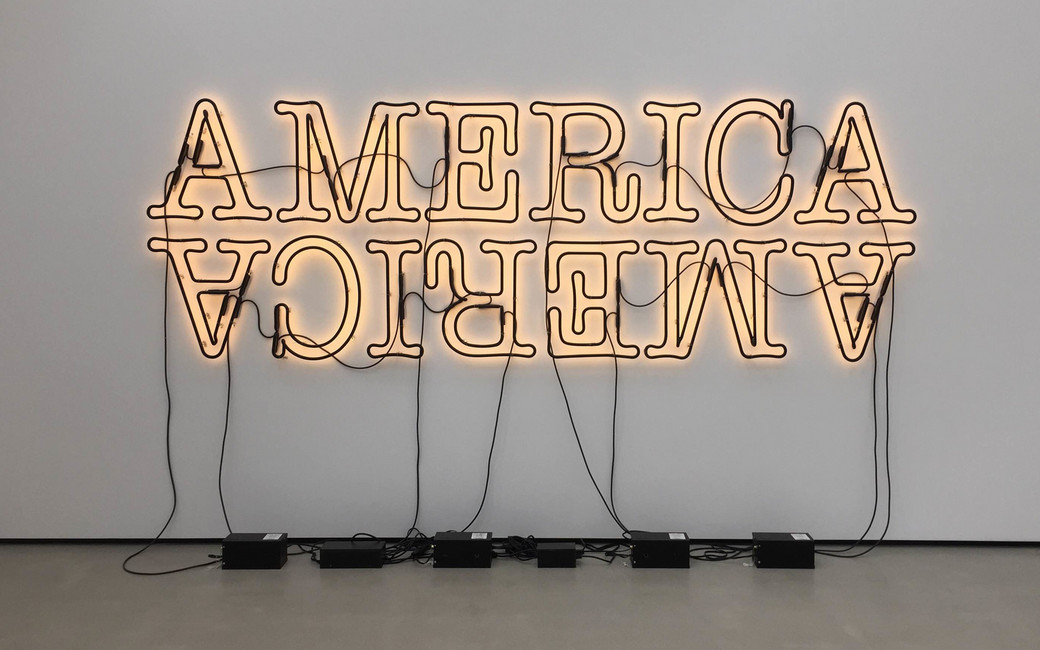
Mounted opposite "Notes for a Poem on the Third World" is "Untitled (America)," 2018, a black neon sculpture painted red that spells out the word 'AMERICA.' Displayed upside down, this work builds on a series of neon sculptures that also spell out 'AMERICA’ in large capital letters of a light-weight typewriter script, a letter form that also appears as a stencil in Ligon’s text-based paintings. Each individual letter in "Untitled (America)," 2018 is comprised of a single neon tube mounted against a white wall as if free-floating. Two electricity cables looping through the letters form the only visual and structural connections between them. The cables drop neatly to the floor and along the wall to intentionally visible power supply units. In other sculptures, ‘AMERICA’ has been spelled backwards ("Rückenfigur," 2009), and also backwards and forwards in "Double America," 2006, with two stacked 'AMERICA' sculptures presenting a mirror image of each other.
Born in Bronx, New York in 1960, Ligon is best known for text-based paintings and neon sculptures like these that draw inspiration from literary works by writers such as James Baldwin, Zora Neale Hurston, Ralph Ellison, Richard Pryor and Jean Genet. He redirects excerpts from their texts to resurrect new meaning; to reveal the ways in which the history of slavery, the civil rights movement, and sexual politics inform our understanding of America. In the 'America’ series, he splits the country into two, exploring the dualities found in a country that has become increasingly bifurcated along social, political, sexual orientation and economic lines.
Described by curator Scott Rothkopf in the catalog for Ligon’s America exhibition at the Whitney Museum of Art (2011), "AMERICA (2006) looms large and powerful, yet its letters are thin, open and permeable suggesting a national portrait of the country’s power and fragility.”
"Untitled (AMERICA)," 2018 corroborates another truth. Also looming large, hung upside down, it reveals America’s unchecked anger, hell hot and boiled over. "Notes for a Poem on the Third World" is pushed up against the opposite wall, nails chipped as America casts its shadow. From darkness, the whites of our eyes illuminate motifs bound to the metamorphosis of the exquisite experience of a color. From chained bodies, hanging nooses, German Shepherds and firehoses, to our outstretched arms and hands. The national portrait of Black life in America today.

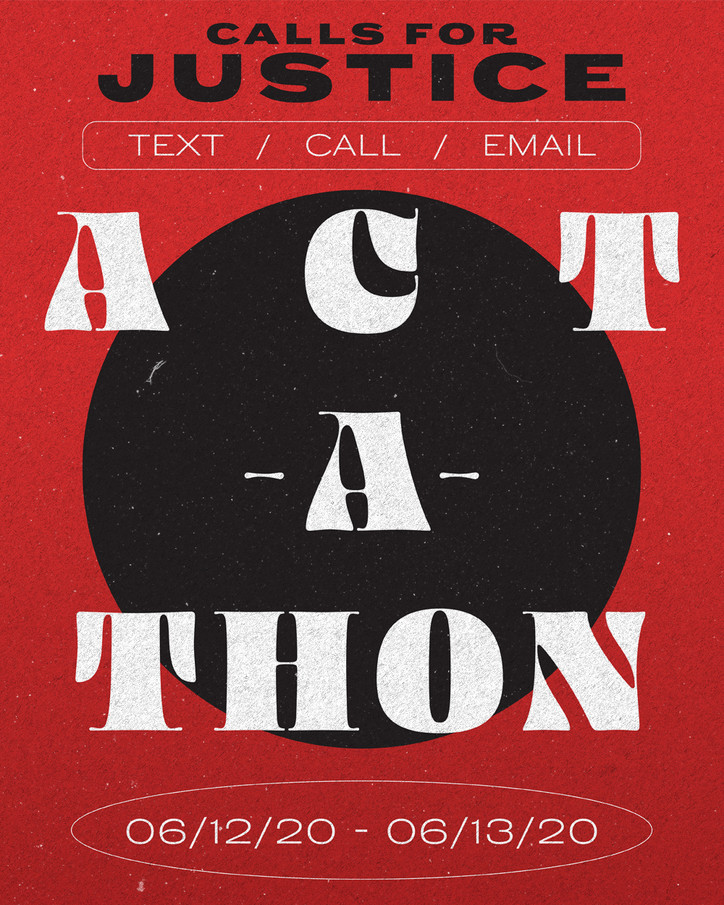
During the course of these two days we ask that you commit to our virtual ACT-A-THON, contacting at least four of your own state elected officials via phone call or email, in addition to contacting state representatives and police departments across the nation. During this time, we challenge you to take action and be a part of creating the change that so desperately needs to occur. We believe that it’s time to make efforts beyond the internet, beyond posting black squares. This is not the time for silence: we must use our voices to directly stand up against the institutions that are upholding systemic racial injustices. We believe that if 11 million people can post a black square on Instagram, then our collective power as active voices taken to the state can be truly effective. Join us.
HOW TO PARTICIPATE
- Repost and share this information.
- Sign up for a day and time slot that you will be working on our sign-up form.
- Go to actathon.com on June 12 - June 13 during your chosen time.
- Find your home state on our website, which will direct you to call/email/script information that you can use to contact four of your state’s elected officials for large reform issues, along with state representatives and police departments across the nation for individual reform issues.
- Tune in to our Instagram live from 12 p.m. to 6 p.m. EST on both days of the event for entertainment and education from various performers, DJs, speakers and hosts.
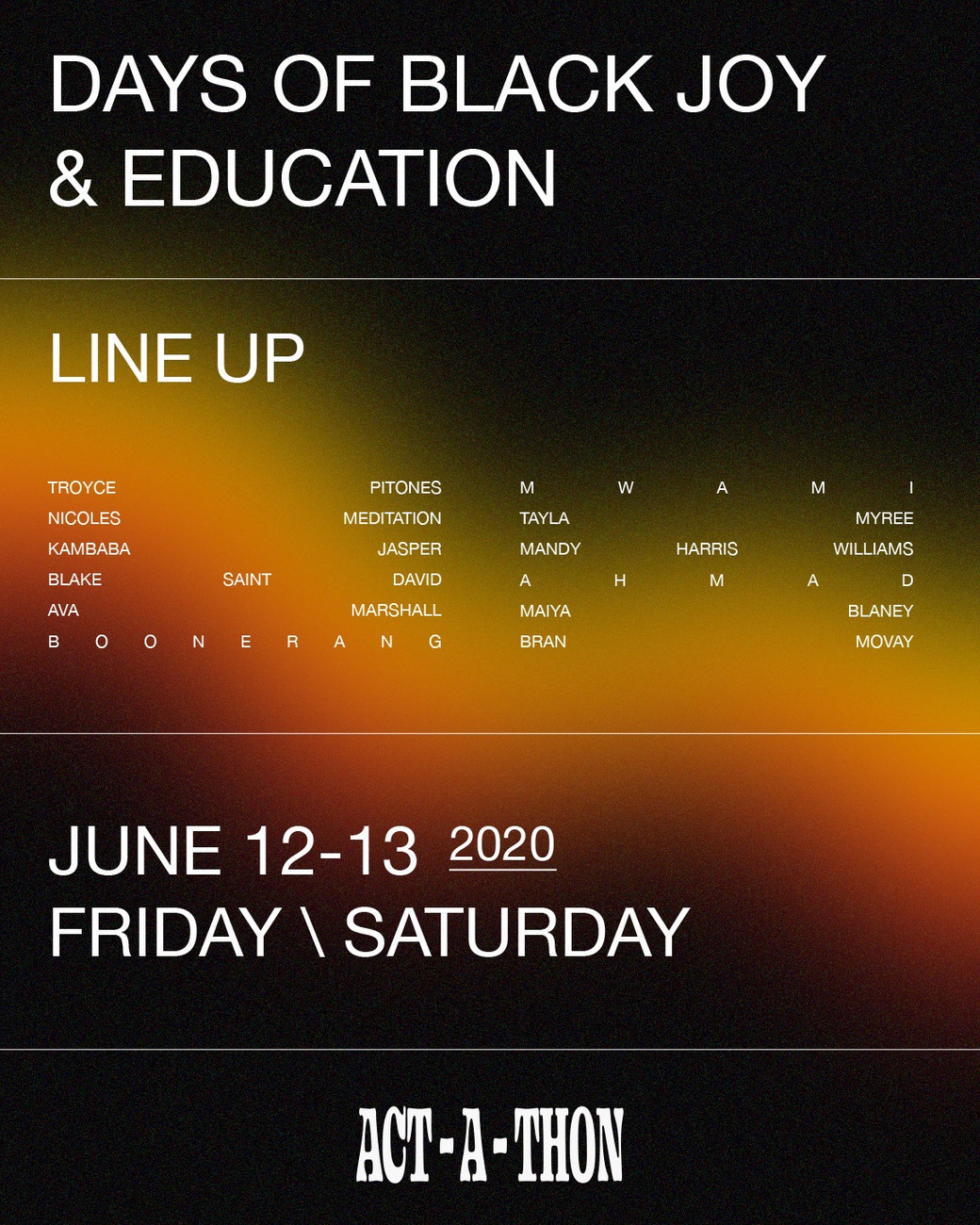
LINEUP

office has compiled a guide on how to use your privilege to challenge the systems that oppress the Black community.
ON SOCIAL MEDIA
- When sharing graphic images and/or videos of Black death, think about what your sharing first.
Videos of George Floyd’s corpse attracted virality and spread across the internet. In both life and death, physical and virtual, George Floyd has no claim over his body as a Black American, like so many others. As important as this video is, Black death shouldn’t be commodified for likes and retweets. Black lives are already devalued, and sharing videos of Black death normalizes these actions and desensitizes us from the brutality. So many videos are already out there for viewing, and your Black peers’ mental health will not sustain at the visual of their peers dying due to the color of their skin.
- Be aware of everything you post and see on social media.
When black squares flooded IG timelines on #blackouttuesday, the initiative was criticized by many voices in the Black community. From countless people misusing the #blm hashtag to promoting silence at a critical time for information, a lot of damage could have been prevented if people had properly done their research on the subject and made informed decisions on whether or not to participate. So please, please do your research first, and continue using your presence on the Internet to share postiive resources that actually help the cause.
ON DONATING
We encourage you to donate if you are in a position to do so, because every dollar counts. We'll update this list, but here are some places that you can contribute to:
- George Floyd’s memorial fund is set up to cover funeral and burial expenses, mental and grief counseling, lodging, and travel for all court proceedings. All proceeds will go directly to George Floyd’s family.
- Ahmaud Arbery’s fund was designed to assist Ahmaud's mother, Ms. Wanda Cooper-Jones, and her immediate family with financial support during this extremely difficult time in their struggle for justice for the murder of Ahmaud Marquez Arbery.
- Justice for Regis supports the Regis Korchinski Paquet's family in their quest for justice against the officers responsible for her death. Regis fell 24 floors to her death after police were called to her home in Toronto.
- NAACP Legal Defense Fund aims to "protect voting rights, reform our criminal justice system, achieve education equity, and ensure economic justice for all."
- Brooklyn Community Bail Fund secures the freedom of New Yorkers who would otherwise be detained pre-trial due to their poverty alone and their inability to pay bail.
- Tony Mcdade Fund was founded to treat funeral and burial expenses, mental and grief counseling, and to support Tony's family in the days to come as they continue to seek justice. On May 27th, 2020, Tony McDade, a Black trans man was shot and killed by a Tallahassee Police Department (TPD) officer.
For other funds or more information on donating, please visit https://blacklivesmatters.carrd.co/#donate.
ON EDUCATING YOURSELF AND OTHERS
The act of understanding or acknowledging your privilege will not be easy, but it is necessary. It’s not enough to not be racist; it’s taking the steps on educating yourself, challenging oppressive systems with your privilege, and correcting your family members and peers when they are being oppressive. Learn about George Floyd’s case and the officers involved, pay attention to the numerous amount of Black lives being affected daily, and prepare for the hard and uncomfortable conversations that need to happen in order to take a step toward solidarity and unity.
Good places to start:
- Three activists—Tatum Dorrell, Matthew Herndo, and Jourdan Dorrell—have compiled a list of resources called the “Anti Racist Allyship Starter Pack,” which consists of a multitude of books, articles, and films that provide the education of Black history, allyship, protests, and white privilege.
- The Black Lives Matter Movement has a podcast series called What Matters, which combines documentary narratives with interviews to illustrate particular, appropriate subjects, aiming to create a conversation about the promotions of freedom, justice, and democratic liberation.
- The “Anti-Racism Resources For White People” is a guide that serves to provide resources for white people. This document is intended to provide methods that help white people and parents unlearn internalized racist ideologies to deepen their anti-racist work.
- Patia Borja, founder of @patiasfantasyworld on IG, compiled an extremely comprehensive database designed to help people dismantle systemic racism.
ON USING YOUR VOICE
When using your voice, it is important to avoid making this issue about yourself. As important it is to empathize and relate with those who are struggling, do not make the narrative about your personal experiences. This is harmful and takes away from the severity of the situation and from those who are hurting.
Vote
The first step to enact change is using the power that can really influence the system—by becoming a registered voter and playing your part in electing officials who stand for a stronger, diverse and unified future through radical reform.
Petition
You can use your voice as a weapon by signing petitions, correcting and confronting racism in active conversation with your family, sending emails to administrations, posting links to donations, and physically speaking out with messages on social media. Sustain the legacy of the victims’ names and hashtag #BlackLivesMatter to show your allegiance to the cause.
Some petitions even allow you text and sign. The following text messages help sign petitions, demanding that all the police officers responsible for the murder of George Floyd are arrested:
- Text “JUSTICE” To 668366
- Text “FLOYD” To 55156
- Text “ENOUGH” To 55156
Contact Government Representatives
Get in contact with the District Attorney and Minneapolis Mayor. Leave a message for them DEMANDING that the four officers, including Derek Chauvin (Badge #1087) and Tou Thao (Badge #7162), be arrested for the Murder of George Floyd.
Minneapolis Mayor, Jacob Frey...... (612) 673-2100
Minneapolis District Attorney, Mike Freeman..... (612) 348-5550 or citizeninfo@hennepin.us
Minneapolis PD E-mails:
police@minneapolismn.gov
minneapolis311@minneapolismn.gov
policereview@minneapolismn.gov
Internal Affairs Number...... (612) 673-3074
Breonna Taylor was murdered in her house by police who raided the wrong house and was shot eight times while she was sleeping. Call or e-mail the Louisville Mayor’s office and demand that the chief of police be fired.
Louisville Mayor, Greg Fischer..... (502) 574-2003
ON PROTESTING
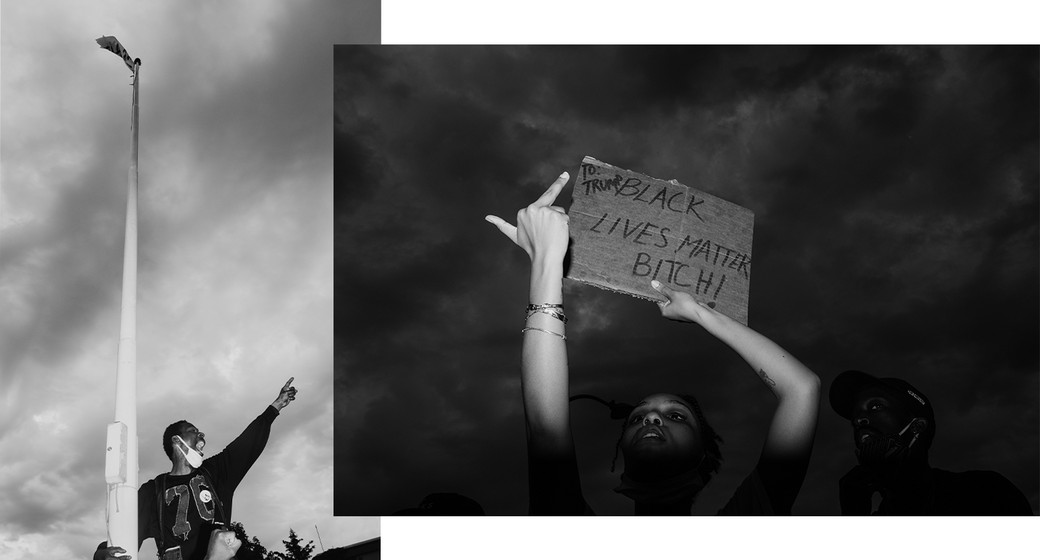
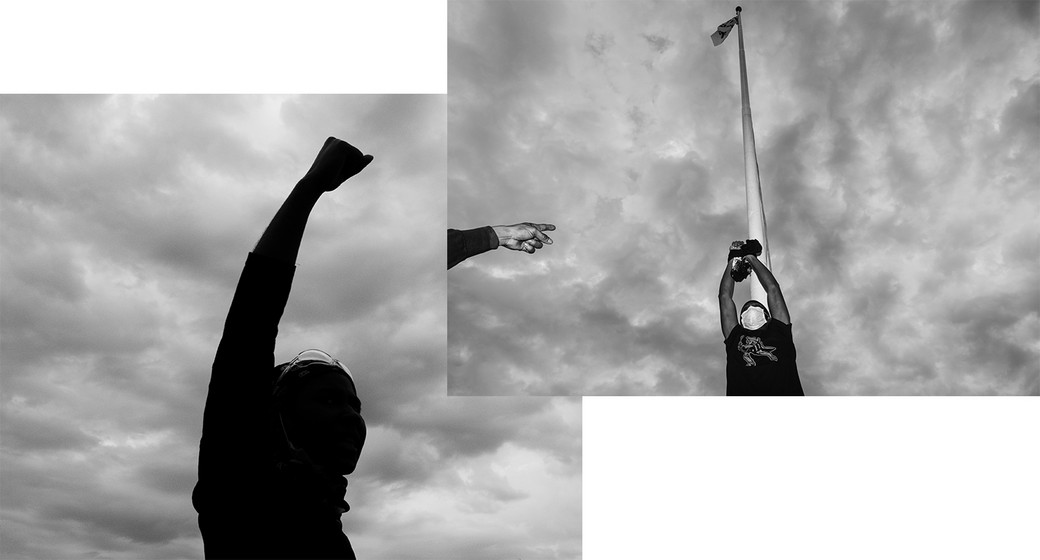
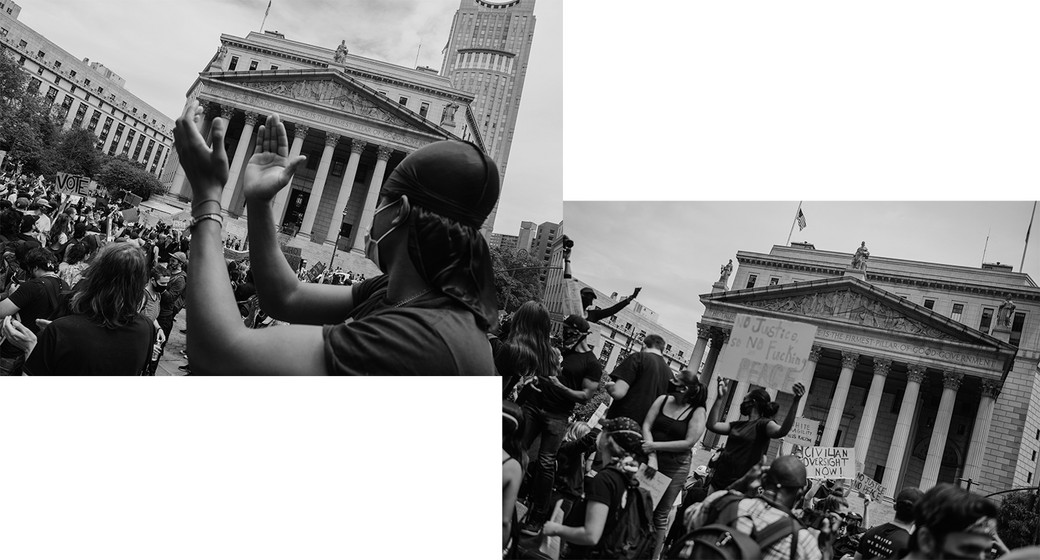
A great way to display your alliance for your Black peers is by showing up physically. Go to local protests in your area and let your voice be heard in the streets when marching. If it comes to it, use your white privilege as an ally. Exercise your privilege as an active barrier in front of those most targeted and try to diverge violent situations with the police and other people of color. Do not make the protest about yourself by looting and causing obstruction, as this only does more harm to the Black community. Pay attention to your surroundings, notice and become familiar with undercover cops and transfer helpful messages to your peers. Show up, support, and listen.
When protesting, it is important to record and photograph active brutality that is happening as this can be applied as a political influence on the media. But ensure that you are not exposing the faces of the protestors as this can be used to identify and harm them. If you have photos or videos, blur out the faces of protestors and anyone within the scene. If you are using Photoshop, the clone stamp tool is much more effective than using the blur tool for this purpose.
As an alternative, if you are not considering protesting, aid those protestors in supplies and care. Buy masks, water, milk, goggles, a first aid kit, etc to ensure the wellbeing and safety of those putting their life on the line to make a change. Write down the number to your local national Lawyers guide or bail fund on your arm or in your phone to help those arrested.
More tips and helpful research surrounding protests can be found here.
ON SUPPORTING BLACK-OWNED BUSINESSES
During the riots, numerous amount of Black businesses have faced damage among big corporations. With showing your allegiance, it is important to give back to these businesses that have been affected through donations.
ON CHECKING UP ON YOUR BLACK FRIENDS
With the multitude of events taking place surrounding the ongoing pandemic and injustice to their community, your Black companions may feel exhausted, overwhelmed, and helpless. They are fighting their own battles on top of this issue and are still being asked to show up and perform like an active and functional citizen in America. In reality, your Black friends want your alliance. Shoot your friends a call or a text and check up on their mental well-being. Be there for them in their time of need, recommend them mental health resources, and sympathize and listen to them in this difficult time.
_________________
Using your voice and doing your part is absolutely essential in order to combat the countless injustices you see taking place. Silence and inaction are deafening to your Black peers and speaks volumes about your lack of consideration for their Black lives. If you choose to remain silent, not only are you picking the side of the oppressor, but you are using this silence as a representation for your anti-Blackness.