"MY SHADOW"

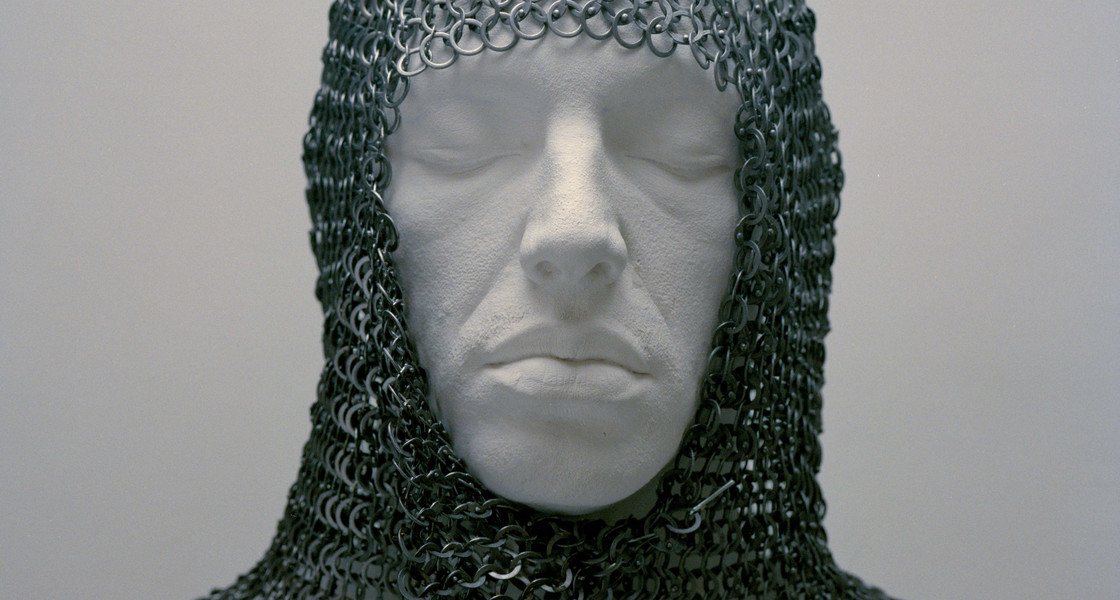
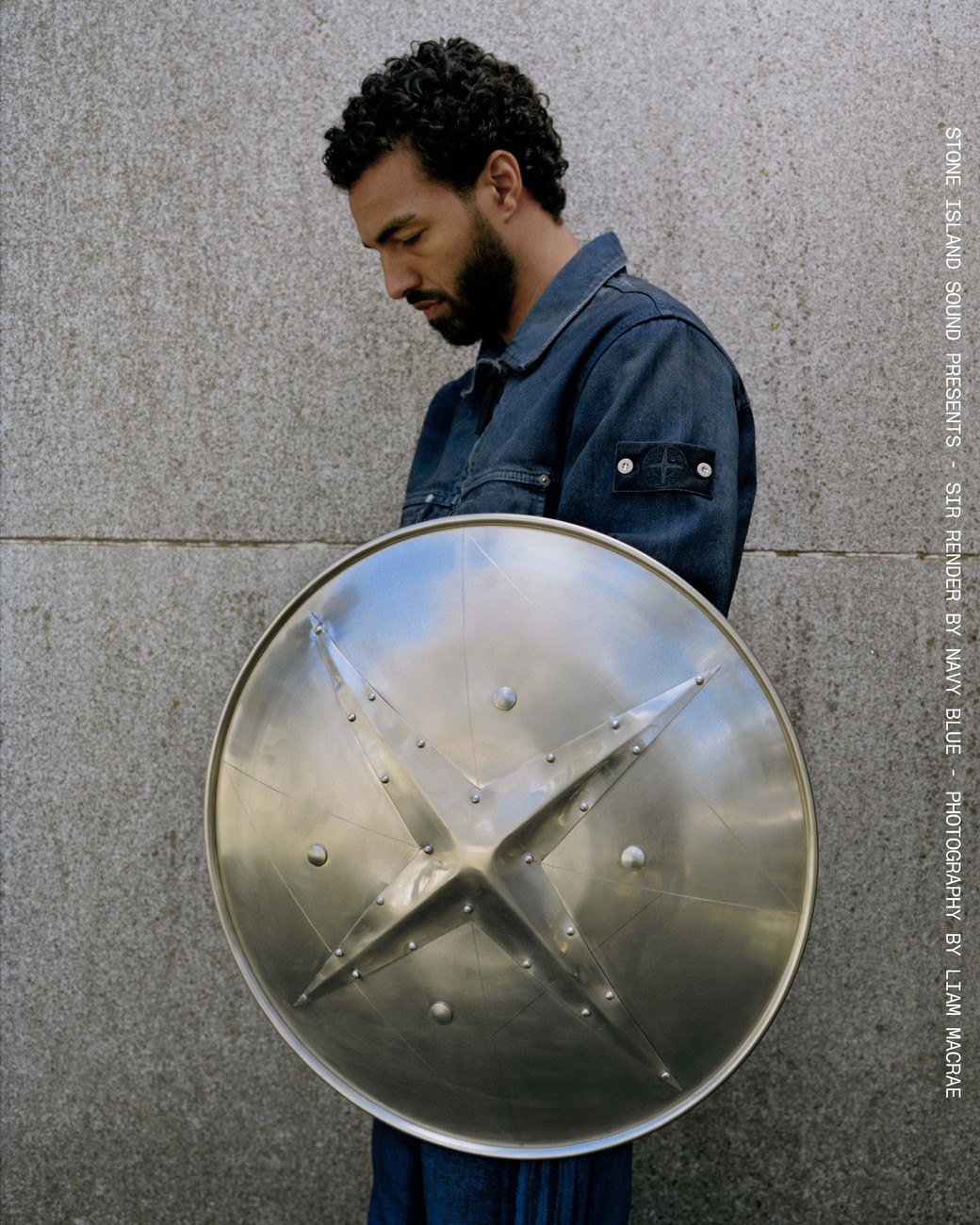
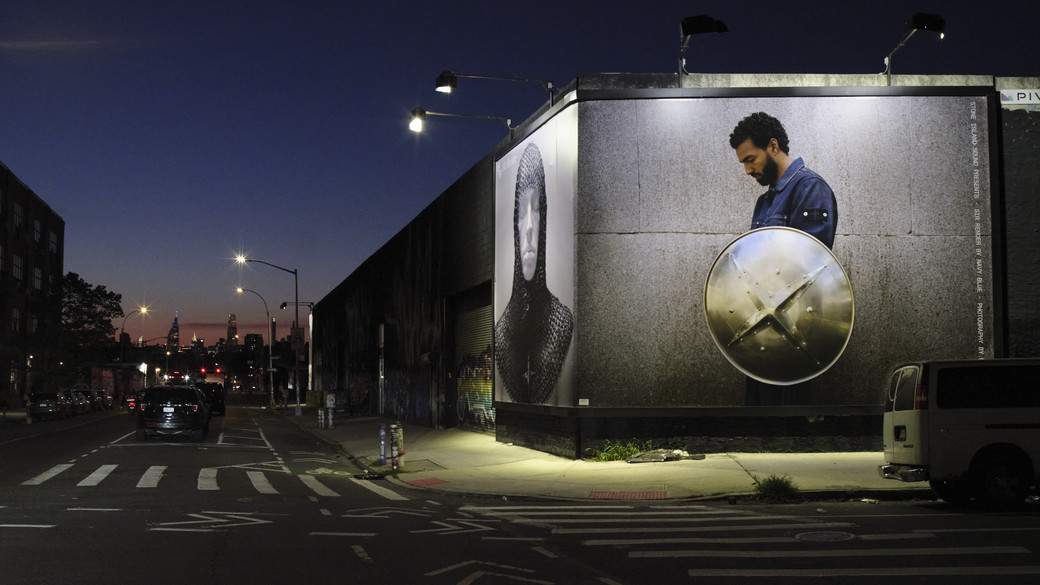
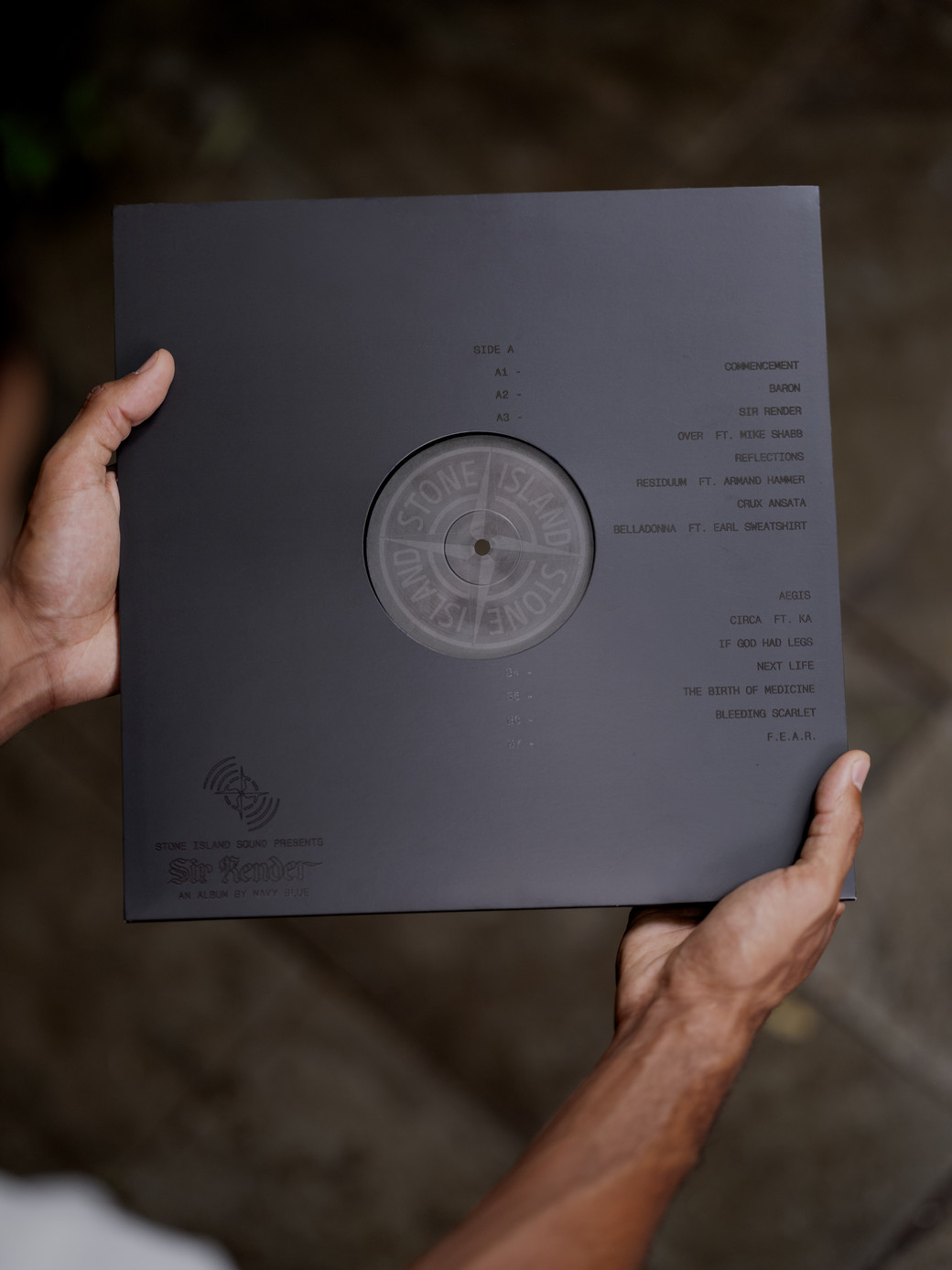
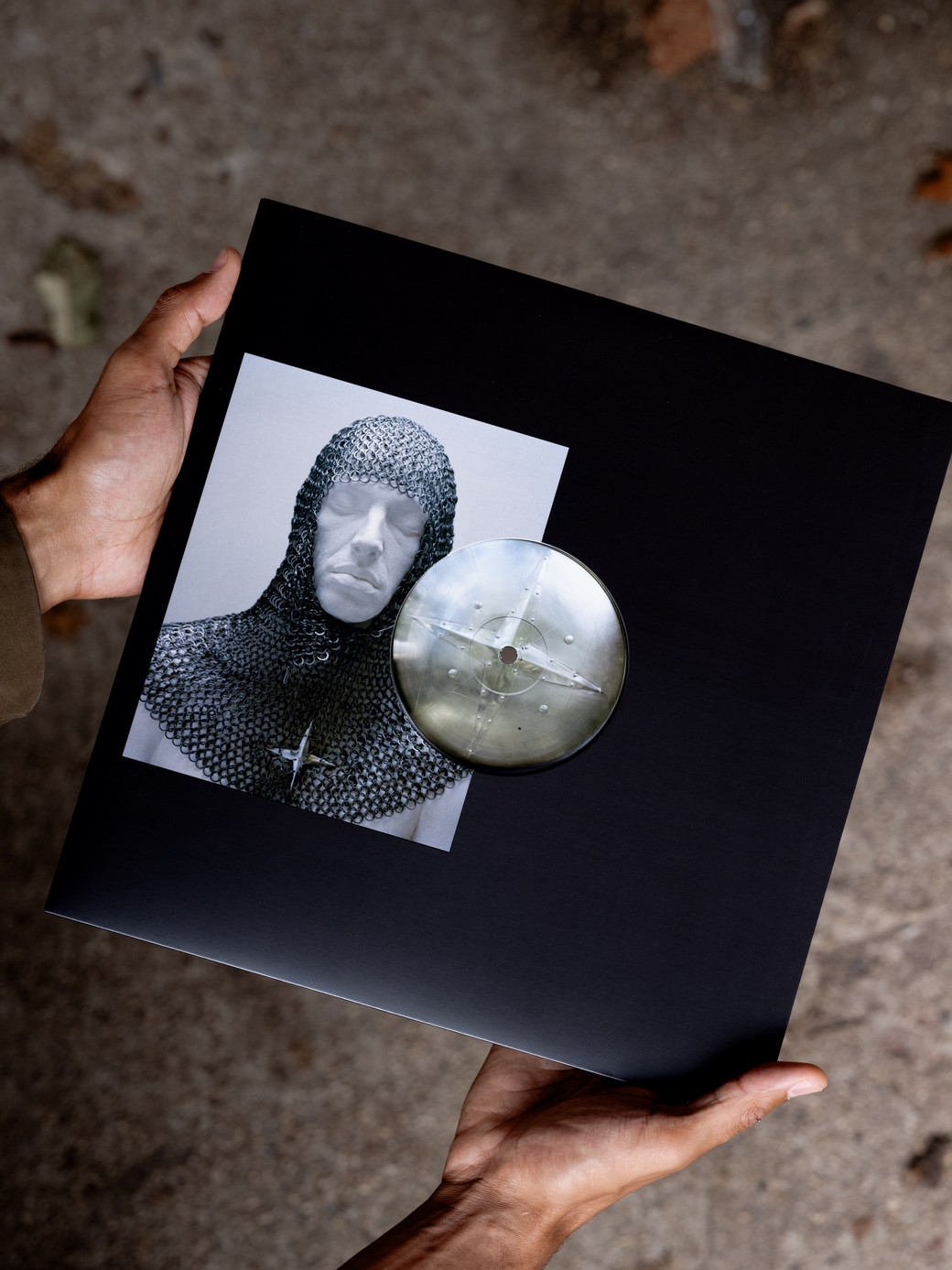
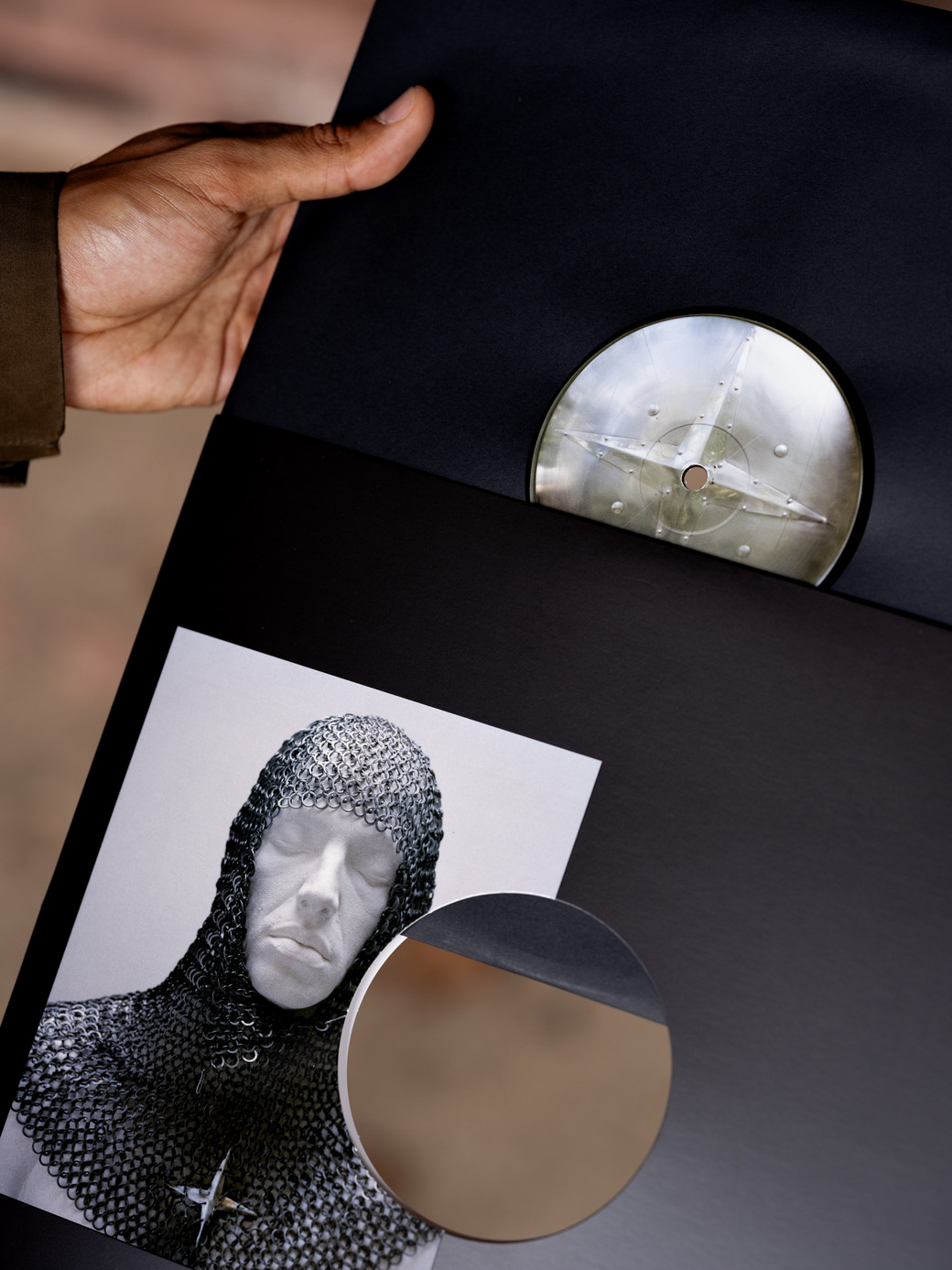
Stone Island Sound takes the sonic story Sage Elesser built in his most recent album, and turns it into a tangible item for fans of Navy Blue, something that can be kept, collected, and forever appreciated.
Sir Render reels in questions of spirituality, exploring various modes of connecting with the self. The narrative, while at times fictional, is deeply grounded in the real life of Sage Elesser. In this way, it teeters between a project that is autobiographical and a project that traverses worlds that are imaginary. The 15-track story takes us through moments of grief, a reckoning with trauma, a discovery of one’s own internal dichotomy, a lesson on how to ride from the ashes, and a finale where our character takes an honest look at themself and fully accepts who they are, surrendering to the gravity of their story. At its core, the story is about autonomy. Taking your life into your own hands.
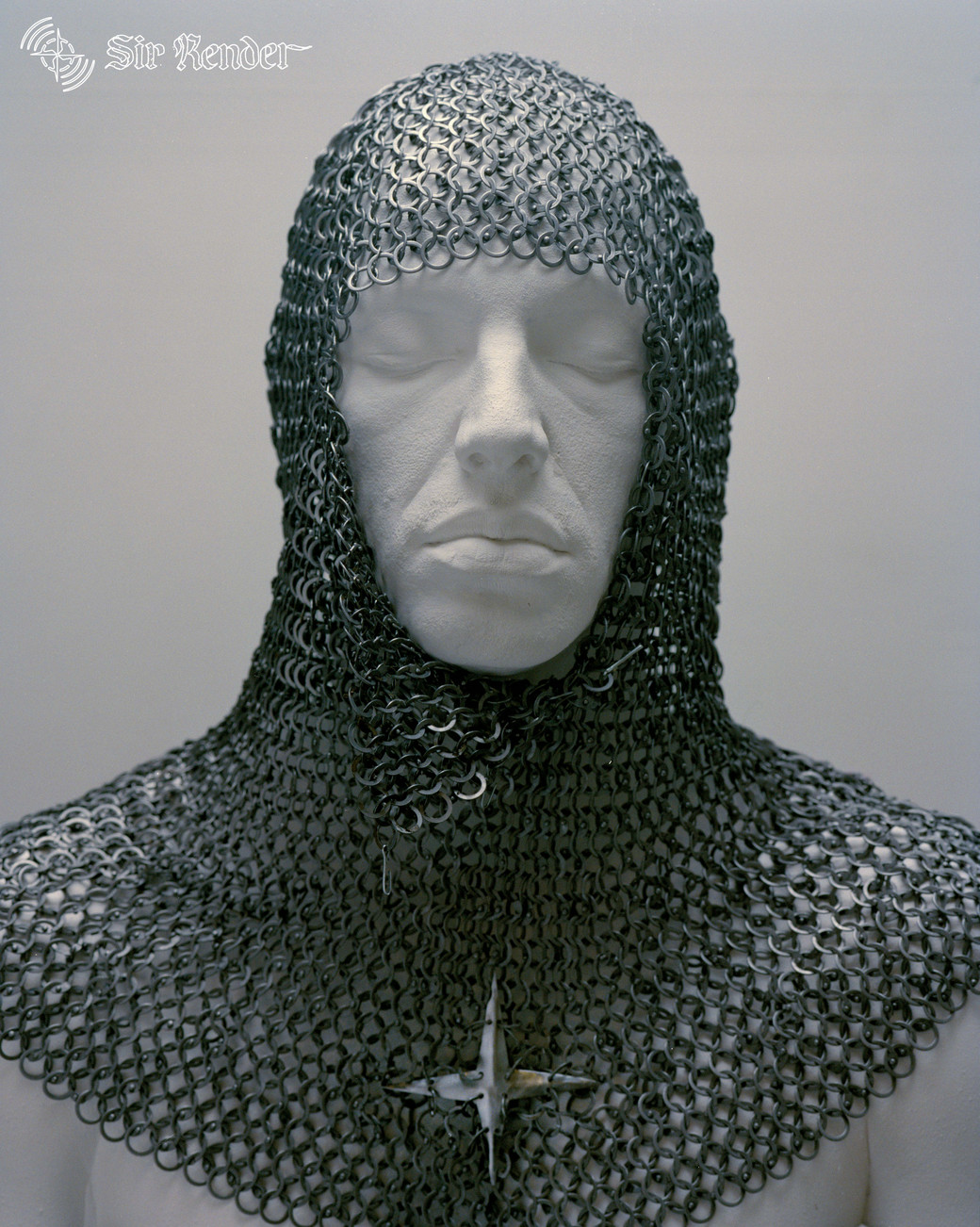
Liam Macrae’s artwork positions the story as a diptych, showcasing the power in duality through sculpture. The chainmail evokes feelings of protection and power through armor imagery, alongside the custom shield created with Stone Island’s logo. Throughout the project, narration is performed by James Earl Jones. Other contributors included Earl Sweatshirt, Armand Hammer, Mike Shabb, and Ka. It also sees production by The Alchemist, Jason Wool, Shungu, and Sage.
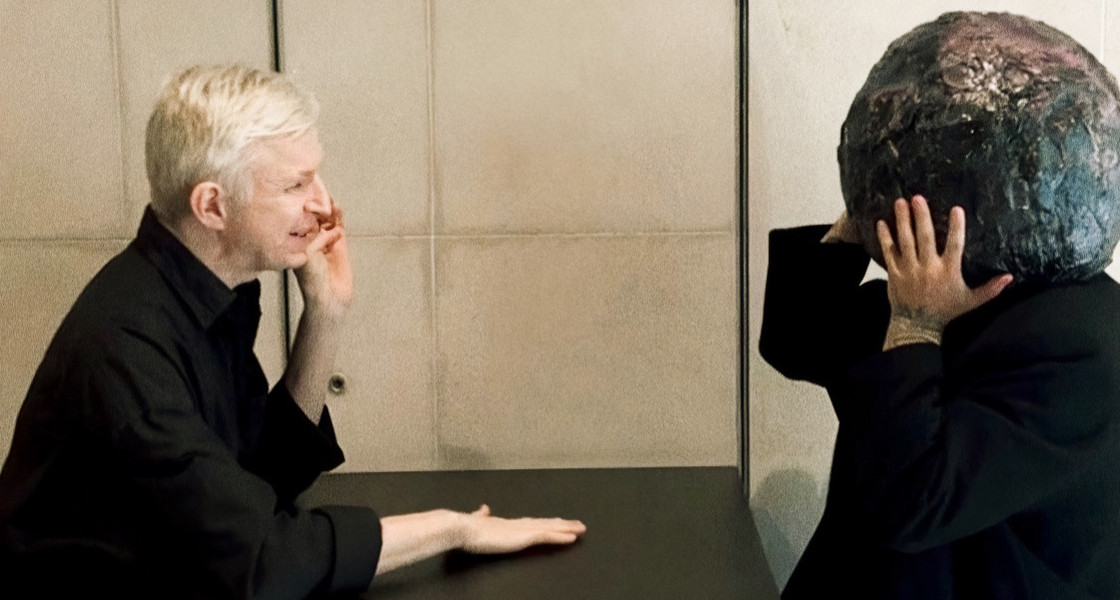
Andriy Zozulya: Your collaboration with Balenciaga resulted in a carefully curated 30-song playlist plus a new visual-art component. How did the idea come about, was it music first or the fashion world beckoning you?
Jay-Jay Johanson: Demna and his boyfriend contacted me about four years ago now, and that started a really lovely friendship. From there, many different ideas grew. I think the first thing that happened was when they used one of my pieces, The Girl with the Sun in Her Eyes, in the Balenciaga Fall 2022 campaign with Bella Hadid, directed by Nadia Lee Cohen.
I also remember them showing me how they sometimes used So Tell the Girls That I Am Back in Town. Then, well, I don't know how much I can say, but there were plans for me to perform at the Couture party a couple of years ago. Unfortunately, it was cancelled because of the riots in the suburbs, and a lot of fashion events were called off at that time. Loïc and I also started trying to make music together, testing different ideas and seeing whether we should collaborate. He joined me on stage at the Élysée Montmartre, and there were a lot of different things happening before this playlist project came back around.
I think the playlist was mostly a way of being generous to Balenciaga's followers, and also of creating a new playlist to play in the stores. So yes, there have been a lot of different things over the years.
I hope that answers the question.
In that Balenciaga mix you included tracks that clearly shaped your universe, personal favourites, influences, recent discoveries. Which three tracks would you call “the soundtrack of your inner life” right now, and why?
Three tracks. If we link it back to the Balenciaga playlist, I added one of my own songs as the final track, which became something like the title track of the playlist. It was also the piece used in the Balenciaga campaign promoting the playlist. It's a track I'm really proud of. It was a lot of fun to write and to rework Brahms's Symphony No. 3, transforming it from a kind of 3/4 tempo into a 4/4 beat. It was really exciting to cut it up and reconstruct it in that way. The first time we performed it was at the Royal Albert Hall in London, which was also a magical experience. So that's a song that's very important to me.
If I can choose two other tracks, then I think I'd have to go with soundtracks. Something that's been particularly important to me lately, although I don't listen to it all the time, is the Blade Runner soundtrack, both the original and the sequel from a few years ago. They make such beautiful use of electronics. I don't really use electronics myself very much anymore. I try to be as acoustic as possible: piano, bass, drums and voice. I don't really work with machines because there are people who are much better at that than I am. So if I want electronics, I usually invite other people to collaborate with me or join the band for a while.
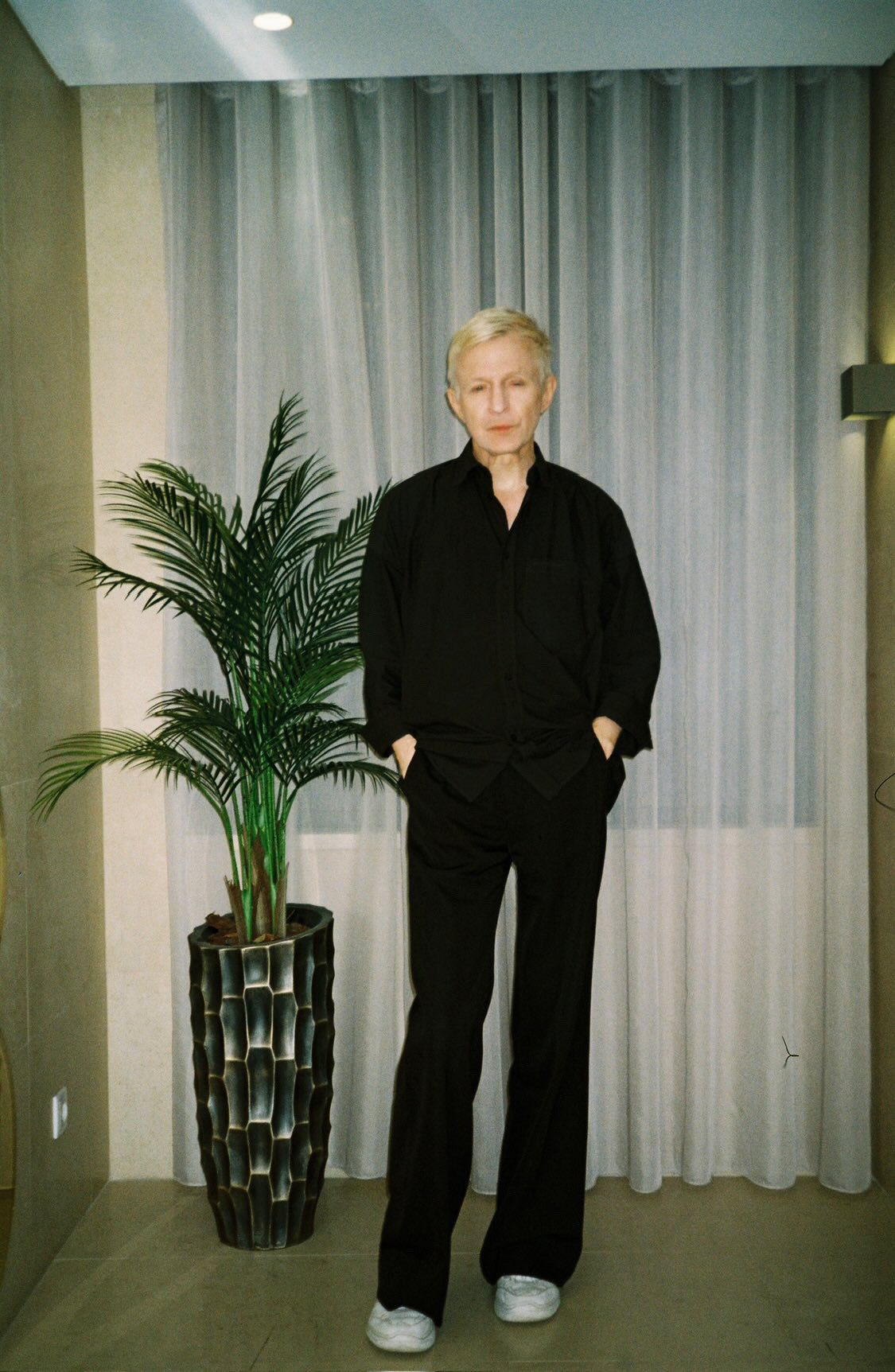
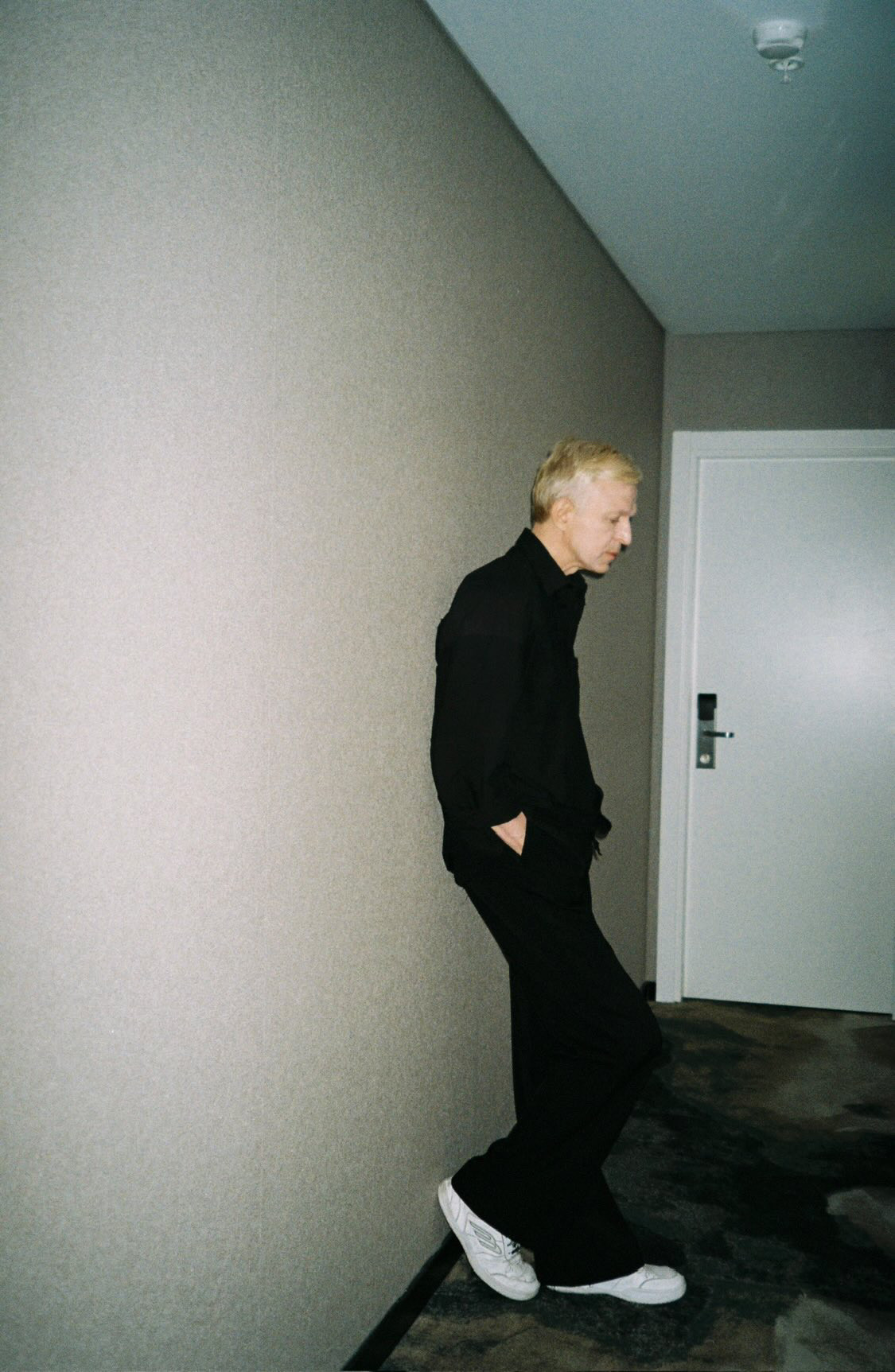
Your discography spans deeply melancholic jazz, electronic dreamscapes and minimalist songwriting. When you approach a new album, do you think of it as “film score,” “diary entry” or “mood-painting”?
How do I approach a new album? Well, I never really stop writing. I'm always writing fragments: small lyric ideas, melody hooks, or sometimes just a drum pattern that comes to mind. I write a lot of things down on paper, in hotel rooms, in airports, here in the kitchen, or sometimes, when I'm out walking, I have to sing an idea into my phone's voicemail.
Because I never really stop writing, I think that every album I make is a natural continuation of the previous one. Sometimes it's even difficult to decide where the border between records actually is. I usually know what the last song I record for an album is, but that same song could almost have become the first song on the next album.
For me, it's never really obvious where to draw the line between albums. Maybe it's easier for the listener to feel that distinction, but for me, it's an ongoing process that never really stops. Each album kind of bleeds into the next. Of course, there is a certain evolution. Time brings new equipment, new studio ideas, and new ways of working. I still work with many of the same people I worked with 30 years ago, but we work differently now. Our methods have changed, and our focus has shifted.
My writing has also changed because I'm getting older. I see things differently than I did 20 or 30 years ago. But in many ways, it's still all rooted in the same heartache, even if I'm looking at it from different angles.
Fashion and music often intersect, but rarely so intimately. How does working with a fashion house like Balenciaga change the way you think about your music’s identity and audience?
Has working with Balenciaga changed the way I think about my music's identity? No, it hasn't changed the way I work or the way I think about music at all. It's simply been a funny and exciting glimpse into a world that, honestly, I knew very little about.
Of course, I've been involved with fashion houses and designers ever since I started. Even back at art school in the early 1990s, I was studying visual arts while the fashion department was just next door, so we were already very close to designers.
When I released my first album, I was immediately invited by fashion brands to attend shows, create soundtracks, and even walk in runway presentations. Many designers reached out to me. I remember José Lévy being one of the first. It was funny because Hedi Slimane was working as his assistant at the time, and that was the first time I met Hedi.
I met Jean-Paul Gaultier many times during the 1990s. Later, when Hedi started at Dior, I spent a lot of time with the Dior team, as well as with the Giorgio Armani team. Hedi actually made my wedding suit. Then, when he moved to Saint Laurent, I began spending time with the Saint Laurent team as well.
My wife and I were also very involved with Balenciaga during Nicolas Ghesquière's time there. We lost touch with the house during the Alexander Wang years, but somehow found our way back when Demna arrived.
And then there's Comme des Garçons, of course. I've always been close to them, and I still am. I think it's a great brand.
But none of this has changed the way I work, or the way I think about my songs, my lyrics, my audience, or my concerts. Not at all. I see them as two completely separate worlds.
You’ve described music as “a cocktail: sparkly, dramatic, a little sad.” If your last album were a drink, what would it taste like? Bitter, sweet, smoky, fizzy?
A drink? A cocktail? I don't know. My first album was called Whiskey, and back in the early 1990s, I was drinking a lot of Whiskey Sours in the bars here in Stockholm. A Whiskey Sour is still a drink I really love. It's strong, it has attitude, and it's bold. I like that. Maybe it reflects something about my work. I still drink whiskey on stage at every show, it kind of soothes my voice a bit. But I also really love champagne, or Prosecco. Those bubbles are probably my favorite drug. I get high on champagne, and I love that. So yes, those are definitely my favorite drinks.
If I were to describe my music through drinks, I would probably say that the soundtracks and the beats are as bold as whiskey, while the arrangements, the strings, and the samples from old soundtracks are the champagne. And then there's the sadness in the voice, the sweetness of the lyrics, that would have to be another drink. What would that be? You tell me.
Maybe that's red wine.
Your sound evokes a timeless blend of nostalgia and modern darkness. Does age or history matter when you make music, do you listen back to your older work as someone else entirely?
I don't really listen back to my older records. But before we go out on tour, I sometimes have to revisit them to see if there are any hidden tracks that I haven't thought about in a while and that we could bring back into the setlist. We don't want to play exactly the same songs on every tour.
Of course, there are certain songs that I know the audience wants to hear, and I'll always play those. But we try to change at least a small selection of songs on each tour and also introduce a lot of the newer material.
What's funny, though, is how naturally the old songs and the new songs fit together on stage. On the last tour, the Backstage tour, we finally played So Tell the Girls That I Am Back in Town alongside newer material, and it's almost 30 years between some of those songs. Yet they fit together beautifully. In a way, they sound remarkably similar, despite everything that has happened in between.
So history is a funny thing. But no, I'm not really thinking in those terms when I compose or when I work. And normally, no, I definitely don't listen back.
What’s the most unexpected feedback you’ve gotten from someone who discovered you through a fashion-music crossover rather than a traditional record release?
Well, there were definitely people who discovered me through my collaboration with Balenciaga, especially in countries where I'm still not that well known. For example, in the United States, and also in Japan, where I still feel I have a lot of work to do.
In both of those countries, there were people who discovered me through Balenciaga and then realized that they had actually heard some of my older music before, but had never really connected a face to the person behind it or figured out who it was.
So yes, at the Balenciaga shows, I met a lot of people who discovered me through the playlist and through my work with Balenciaga. And honestly, any opportunity to reach new audiences is amazing. I love that.
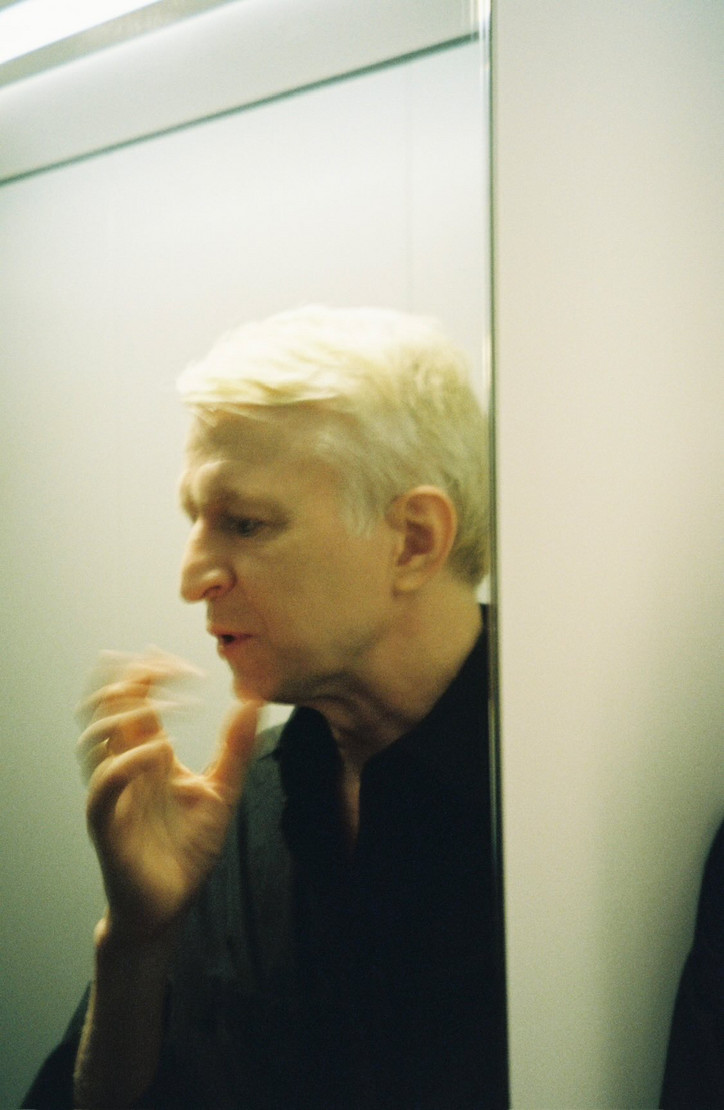
If you could collaborate with any designer or brand (past or present) for a sonic-fashion project, who would it be, haute couture, streetwear, art-wear, and what would you bring to the table?
Oh dear. Well, I don't really set goals or expectations for my work or for the future. I've never really functioned that way. And honestly, I'm happy about that, because it means I'm rarely disappointed when things don't turn out as you might have hoped.
I try not to hope too much and instead stay positive about the things that actually do appear. But if we're talking about a fantasy collaboration, well... Yves Saint Laurent, of course. Alexander McQueen was amazing. I'd also love to meet John Galliano and see if there might be something interesting we could explore together.
I'm also a big fan of the Belgian designers. My wife is from Belgium, and that whole scene is just so unique. I really love it.
So, I don't know. I really don't know. But honestly, with the work I've already done with Balenciaga, I feel like I've had much more fun than I ever expected. I never planned for any of that to happen. It was already a huge bonus in my life.
You’re known as a visual artist as well as a musician. Do you sketch or visualize while making music now, and if so, does the medium change the tone when you switch from brush to mic or synth?
Yeah, I mean, first I did four years of architecture school because I thought I wanted to become an architect. Then I did four years of art school and definitely thought that I would work with art in some way.
At one point, I worked at i-D magazine in London, and in the evenings and on weekends I worked for a Swedish music magazine. For a while, I thought that maybe that was what I was going to do. My father was a typographer, printing books and catalogues and things like that, so I also thought that perhaps I would become a graphic designer rather than a painter, because that felt like a profession that suited me. And I really liked it.
Luckily, the job I have now, making music, also gives me the opportunity to work with visual art through my record covers. That's where I get to bring that side of myself into the process. I paint some of the covers, and I really enjoy working with typography.
Very often, I approach typography in much the same way we did at i-D magazine 35 years ago, before everything became digital, when we worked with wax machines, scalpels and glue. I still like that process. It creates something a bit more raw, a bit more street, a bit more punk, and I really enjoy that aesthetic.
Once I start accumulating a group of songs and an album begins to take shape, I also start thinking about what the album should be called and what I want it to look like. I think about how it can differ from previous album covers without becoming too different, because I don't want it to suddenly look like another artist or another genre of music.
But yes, I really enjoy all three parts of what I do: making the music, creating the artwork, and touring. They're three wonderful aspects of the job, and I genuinely love all of them.
Looking at 2026 and beyond: do you see more of these hybrid projects or are you retreating to purely musical spaces?
2026 is a special year because it's the 30th anniversary of my first album, Whiskey. Since we're currently on tour, we're also preparing a few special concerts to celebrate that anniversary, where we'll perform the entire album.
There will also be a couple of exhibitions this year, and I'll be taking part in some film festivals again, perhaps with a few masterclasses and talks as well. As for standalone exhibitions, I'm not entirely sure yet. Fashion projects are also still open questions at the moment.
To say yes to these kinds of projects, everything has to fit within the touring schedule, and sometimes it does, sometimes it doesn't. But I'm constantly curious, and I really enjoy collaborating across different creative fields.
And of course, there's film as well. I would love to act more and work on more soundtracks. It's been a few years now, so please don't hesitate to get in touch.
Thank you so much.

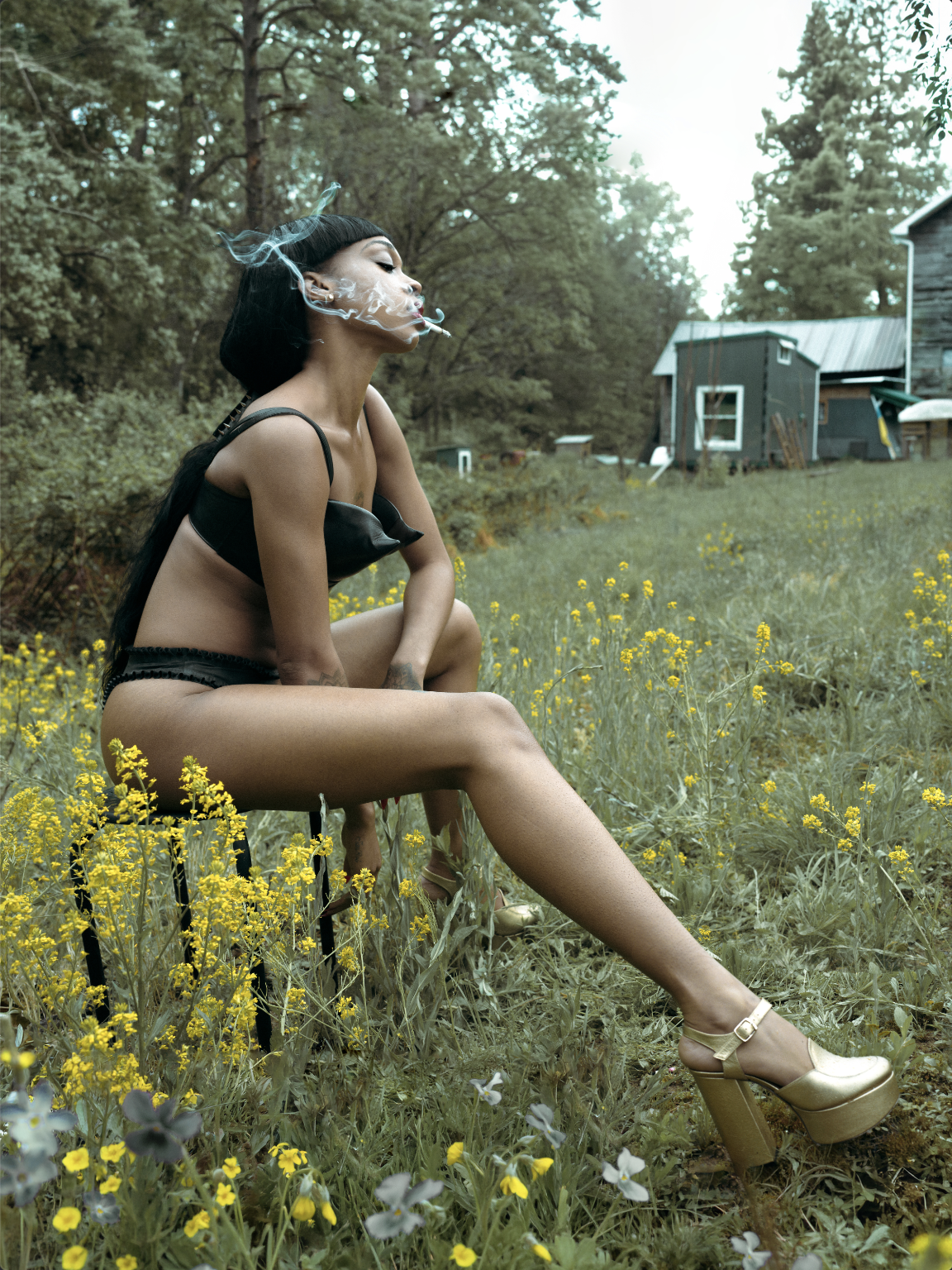
SADBOI wears BRA by LETTONNE, PANTIES by FINLEYS, JEWELRY by MARTINE ALI, STUDDED HAIR PIECE by DANIEL MATVEEV, SHOES LIBERTINE ℅ APICCAPS.
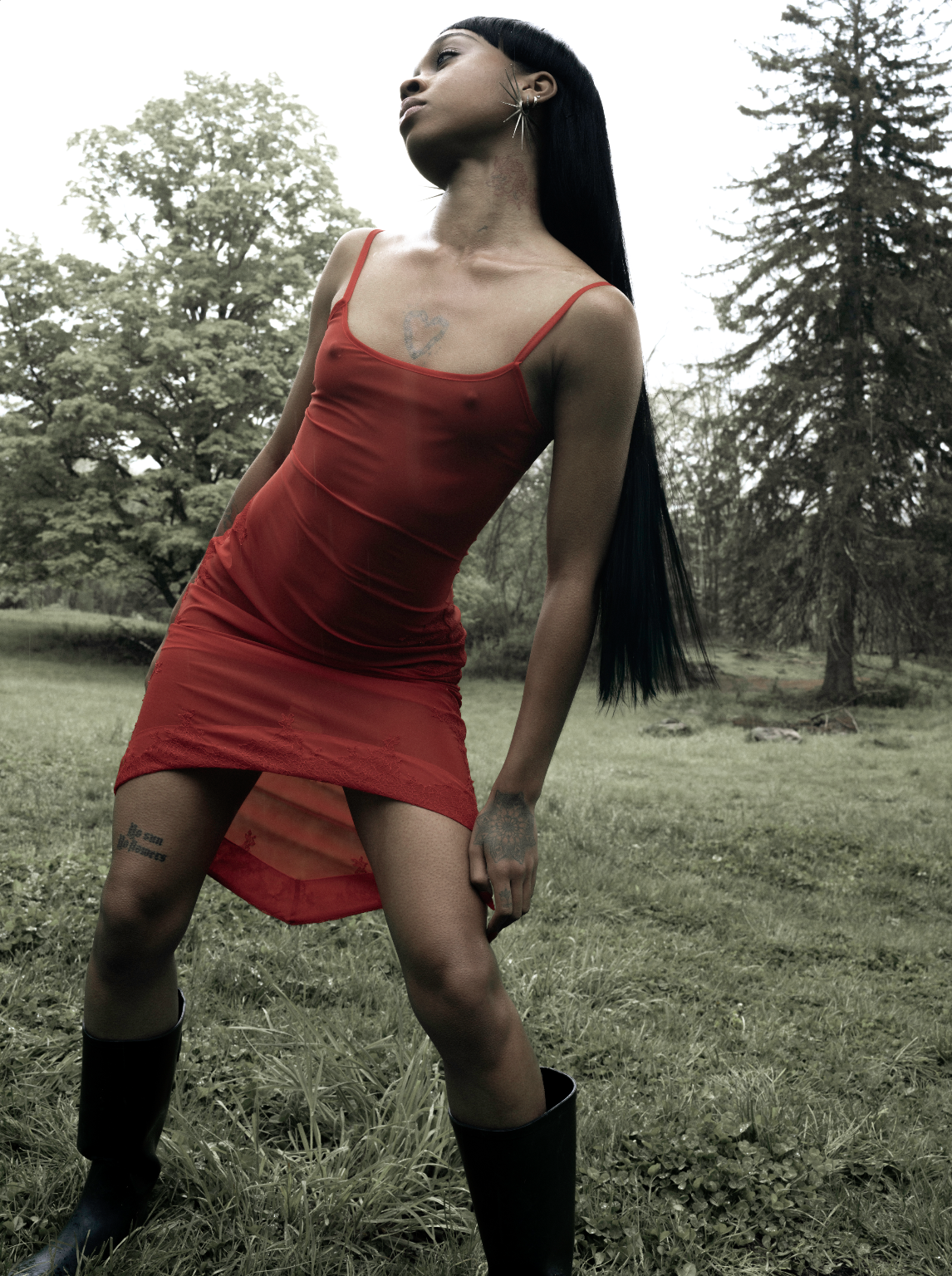
SADBOI wears DRESS by FANCÌ CLUB, EARRINGS by CHRIS HABANA, BOOTS ARCHIVE.
The Toronto-based artist, born Ebhoni Jade Cato-O'Garro, is coming off a big first half of 2026. As we begin to talk through her upbringing, career, and personal life, she tells me matter-of-factly that she wants to be the biggest. I believe her. Who wouldn’t? Her intensity and poise demand my confidence. She's a versatile cross-over artist capable of both singing and rapping at a high clip. An international model, her strong cheekbones and name-appropriate tear-shaped eyeliner have graced stages like the JUNO Awards, where she recently won the Best Rap Album/EP of the Year trophy. Today she’s sporting all black, her favorite color, with a sleek leather jacket matching her black bangs. With her mother by her side, who doubles as her manager, she speaks to me fondly about how she got to this moment, and who propelled her forward. “The majority of my family is women, and I feel like that’s why I’m so strong… we're all so independent, but we're all very close.” That familial self-sufficiency carries into her relationships, and by extension, her art.
A discography as eclectic as SadBoi’s could only be the product of a wide array of musical interests. Growing up, her father played hip-hop a ton, and SadBoi would rap along to artists like Big L and Biggie. When her mom ferried her to dance class and school, they would listen to rap, pop, R&B, and everything in between. The first time she ever got drunk, she danced to Death Grips, which makes a strange kind of sense. Fittingly, she shares a similar tendency to reveal beauty within chaos as the experimental rap group, making a point to bring them up, and even saying, “I would love to do a song with Death Grips.” Her music is definitively more pop-leaning, though, one of many complexities in her persona. The SadBoi discography is littered with songs made for the hedonism of the club, yet she is constantly clad in a cross necklace, a contrast she revels in. Despite identifying as straight, her community and fanbase are mostly queer. She's Sagittarius, with a Scorpio Rising, and a Scorpio Moon. “When people meet me, they’re usually intimidated by me. They say I have black swan energy. Which makes sense.”
She makes sure I’m not intimidated, but I can tell it’s a choice. SadBoi’s music is confrontational and unapologetic, balancing introspection with takedowns of opps and exes. The lyrical content is often brash, as she scorns past lovers, expresses regrets at decisions she’s made, and flaunts her beauty and worth, like an embittered outcast cursed with a bewitching vessel and dealing with the consequences of the attention it receives. There’s an undercurrent of contempt in her anthems. Songs that are club-ready bangers are also extremely vulnerable and true to life, with the subject matter of a lovelorn singer-songwriter. They’re often written in her washroom, with a glass of wine in hand. Evidently obscured by the blaring, upbeat context they’re made to be heard in, these are, at their core, love songs. With a laugh, she remarks, “I'm a hopeless romantic.”

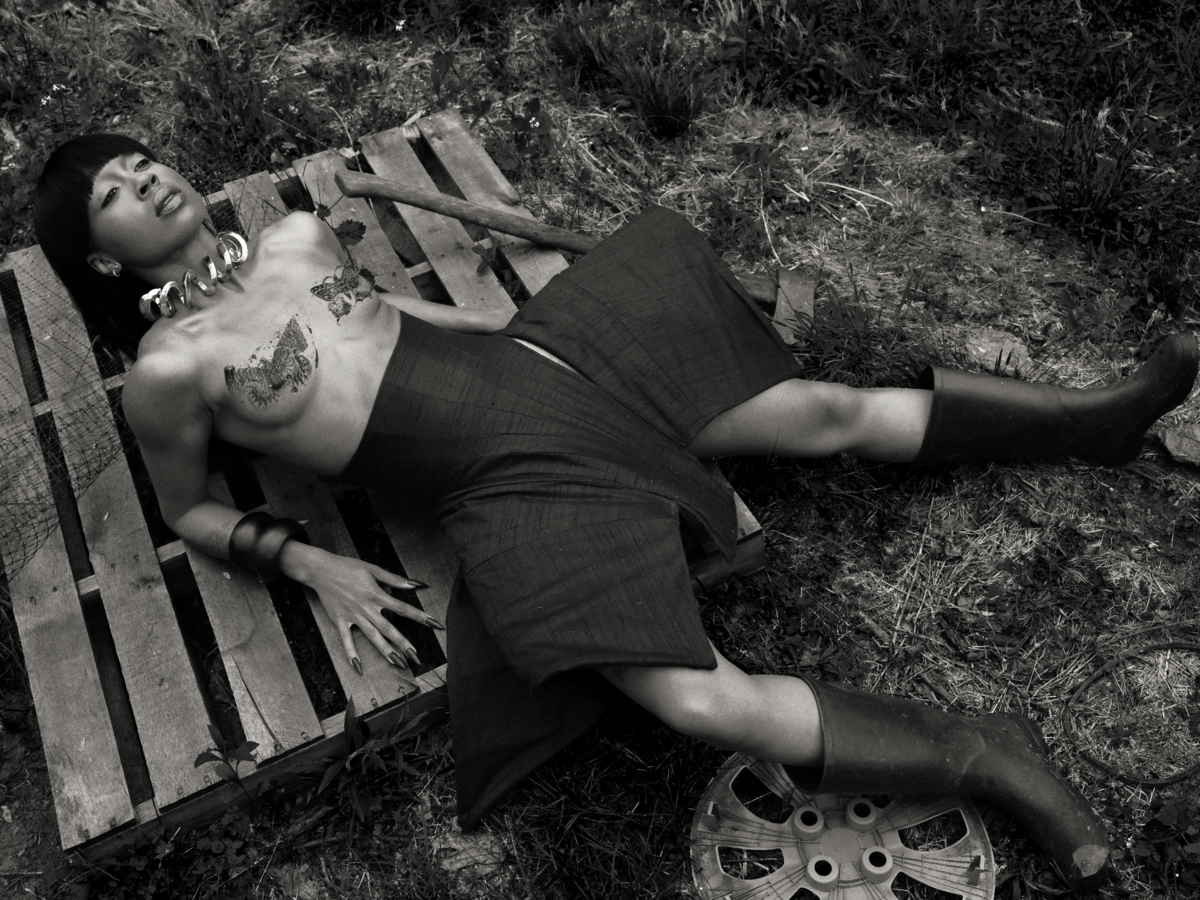
SADBOI wears DRESS by ALEXANDER WANG, STOCKINGS by FALKE, BOOTS ARCHIVE.
SADBOI wears SKIRT by ANA MARGARIDA FEIJÃO, NECKLACE by ALEXANDER WANG, BRACELET by DINOSAUR DESIGNS + MARTINE ALI, BOOTS VINTAGE.
Drama and chaos have been too close for comfort. Her relationships tend to be on-again off-again, admittedly toxic and always passionate. She reflects on this habit, explaining, “I think before I was drawn to bad boys who also treated me bad. But now I want the person that's good. Like, yeah, let's still get fucking wasted, but also, treat me like a princess.” Consequently, growth and maturity are the inevitable outcomes of such experiences, and at 26, she’s entering a new phase of adulthood. As a self-professed late bloomer, her early forays into romance were tempestuous. And as an outsider, it seems like perhaps the emotional highs and lows some young adults experience as teenagers manifested in her early 20’s, and she spoke on her coming of age, saying, “I remember all my friends had boyfriends and were in relationships, and I just didn’t care.” That also could have been the case due to her proximity to older people. As a result of being bullied in school, Ebhoni took solace in online spaces like Tumblr, meeting friends that she described as older, left-of-center kids that were into art, and weren’t too concerned with being cool. The ostracization in school got so bad that her family even considered homeschooling. “I wasn't social until like, two years ago. I did not know how to talk to people. I remember my friends going out with me, and I was just so awkward.” Still, she ended up at Toronto house parties, overcoming her introverted nature and finding herself in some sketchy places. When discussing the rise of The Weeknd, Ebhoni compared her experiences to the brooding music videos of Abel’s early work. Her mom, apparently, was none the wiser.
As a young adult, she started finding herself in more tricky situations. She flashes a wicked smile when she explains her impulsivity, and the trouble it’s gotten her in. Her mother seems resigned to it, and tells me SadBoi has always been rebellious. What’s the craziest thing she’s done for love? “Probably wait outside my ex's house at 3 a.m. to catch him cheating.” She’s learned to raise her standards, and she’s far from desperate for a white picket fence and nuclear husband. Ebhoni still leads with her heart, but her independence is non-negotiable. Still, she thrives in the chaos of it all. “I think drama appears when I want drama to appear.”
There’s a chip on her shoulder, despite her conviction. She changed her name to SadBoi from her given name, Ebhoni, in part, due to an ex-lover. It was also a calculated decision in presentation, a type of designed contradiction. She’s more vengeful than sad, and she’s definitely not a boy. A tantalizing femininity oozes from her subject matter and appearance; she knows she’s hot, and she wants everyone else to know. At school, she’d shun the dress code, as she explained, “I'd wear a miniskirt, and it'd have to be super short. Like, why not? I’ve just always been like that, and it’s never been for attention. It was just so funny to see the amount of people it would make uncomfortable.” This attitude has been evergreen for her, and when we discuss the confines of the music business, she declares, “In this industry, it is so common to run into people that tell you what they think you should be.”
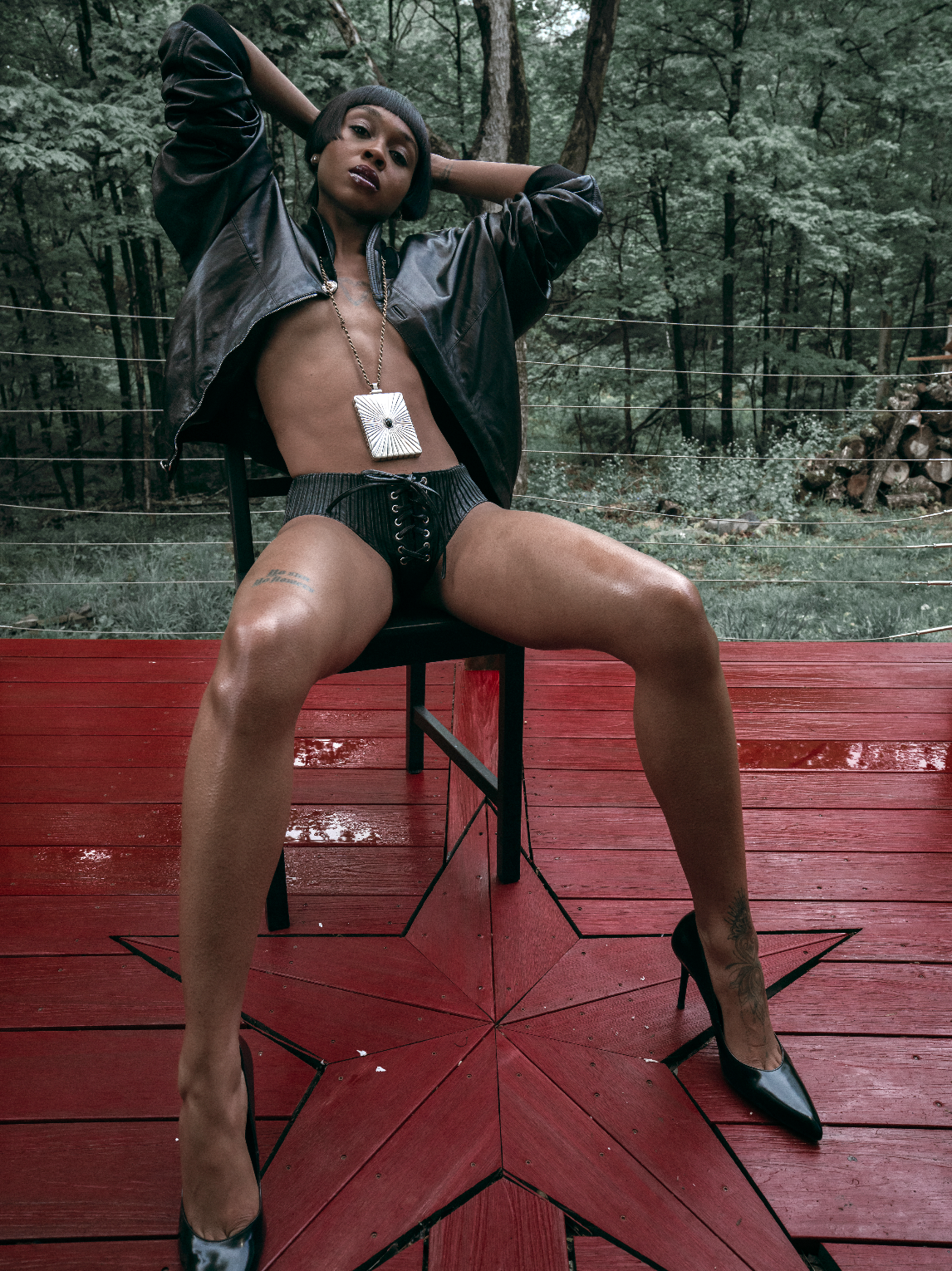
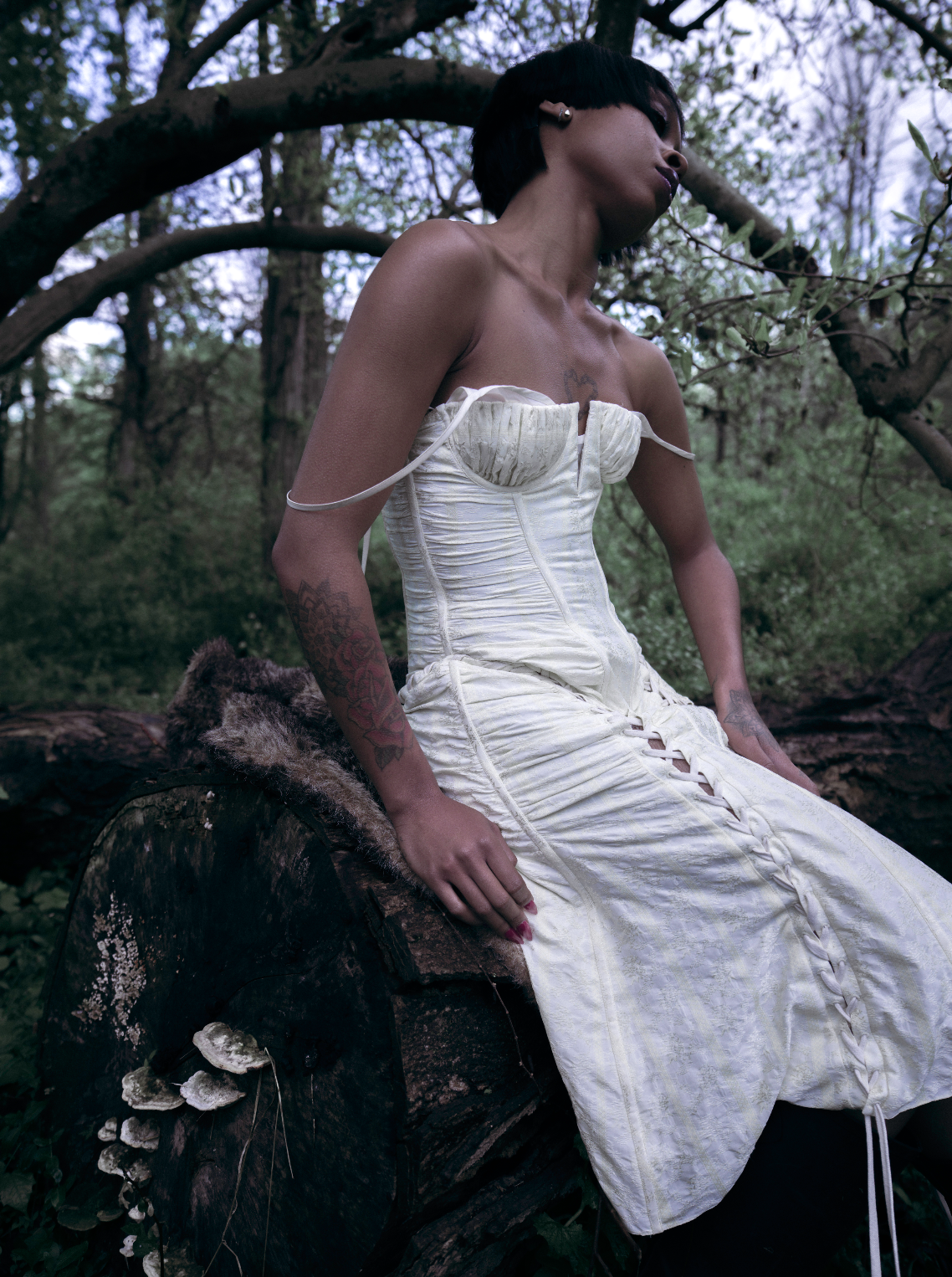
SADBOI wears JACKET and CHAIN by VERSACE, EARRINGS by MARTINE ALI, LEATHER PANTIES by LETTONNE, HEELS by VERSACE / WILLY CHAVARRÍA ℅ APICCAPS.
SADBOI wears DRESS by ALEXANDER MCQUEEN, EARRINGS by MARTINE ALI, BOOTS ARCHIVE.
Not one to pander to the male gaze, SadBoi seems to simply enjoy the thrill of provocation. In her JUNO acceptance speech, she simply stated that everything she does is for the girls. Being naked and put together at the same time comes hand in hand with battling the men who’ve wronged her on record. She also just loves to be naked. “I always go to bed naked.” I ask her, why does she love to be naked? “Because I think I’m hot.” Also, according to SadBoi, is it actually legal to be topless in Toronto? Canadian laws aside, her mother chimes in to tell a story about an event in Paris that gave her pause. In a see-through, latex dress, she was worried her daughter would be judged, only to see how easily it was accepted in an artistic space. They both point out the inconsistencies that the differences in environment posed. Outside, she’s ostracised for being herself without concession, but in a high-art space, nobody batted an eye.
Lady Gaga is a reference point held up to equal esteem by SadBoi as her beloved Death Grips. Her next album, God Forbid I Have Fun, is an appropriately varied exploration of that motley of influences, and she’s enthusiastic about what it means for her artistry. “I feel like this is the most fun that I've had creating a project. I just didn't feel like I had to stick to one thing.” It’s a labor of love. She’s a workaholic, and she struggles to take time off from recording, touring, and performing. Every morning, she’s on the treadmill, and she’s incorporated Pilates into her routine. She’s still headstrong to a fault and brutally honest with her circle. Sometimes, her mom wishes she was a little less honest about how draining her relationships can be. Watching someone you love suffer is difficult, especially when you know that their decisions are those of passion, and not always self-preservation. Nonetheless, SadBoi persists, forging ahead despite the bumps in the road. First and foremost, she trusts herself. I ask her if, despite the ghosts of her past and the betrayal that made great song fodder, she still trusts her instincts. Without hesitation, she leans forward and says, “My intuition’s always spot on.” Not needing assurance, she turns to her mom. “Would you agree with that?” Her mom smiles and agrees. I believe them.